

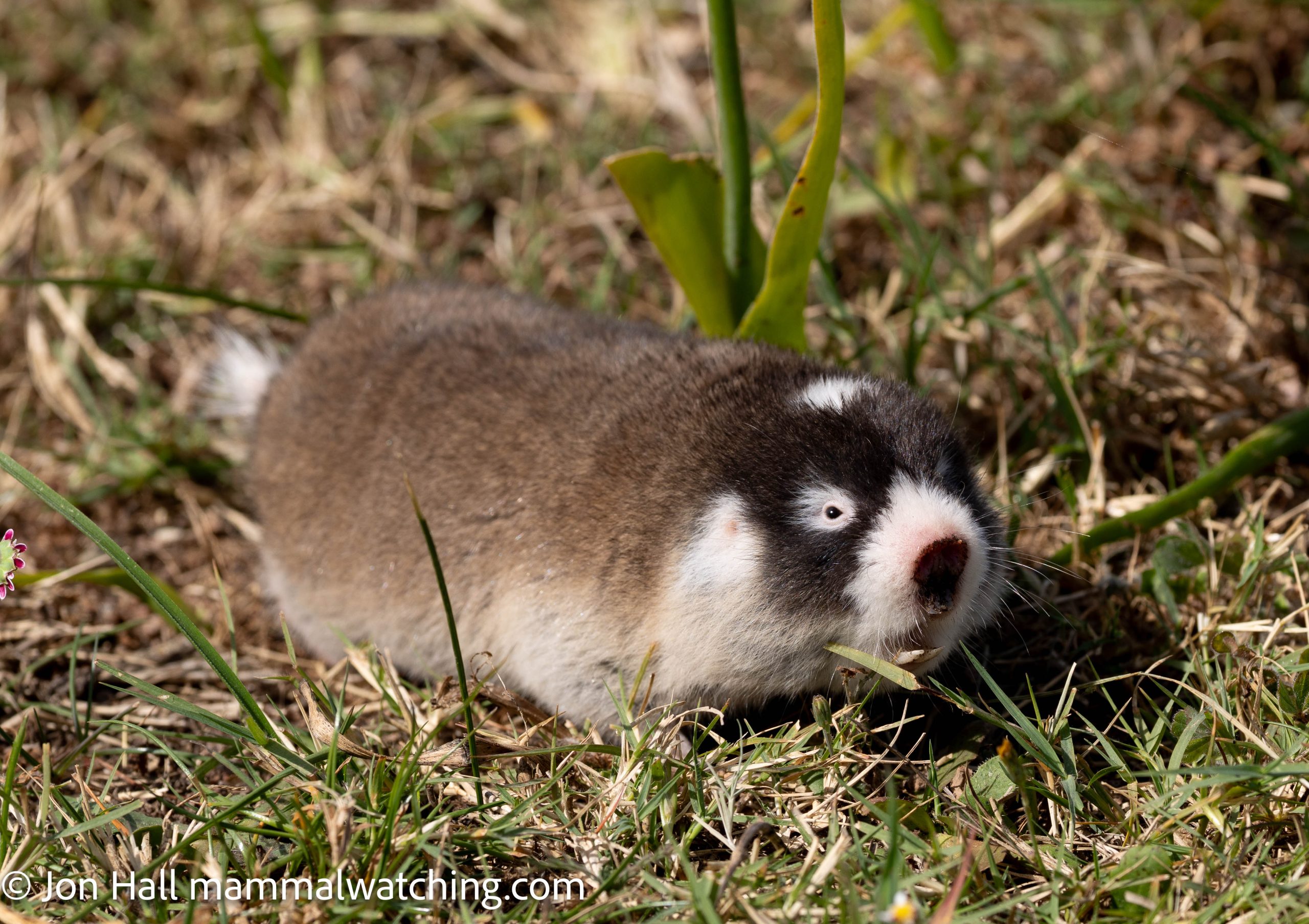
Mainly Mole-rats: Cape Town to Jo’Burg, August 2026
In late August 2026 I was supposed to be to the DRC looking at Bonobos. But an Ebola outbreak got in the way. Well, technically, it was not the Ebola outbreak that got in the way. What got in the way was the USA’s decision in July to require anyone who had been in the DRC to spend three weeks elsewhere before entering the States. Half our group were Americans. The trip was postponed for a year.
I’d been travelling almost non-stop since April and had just been gifted two free weeks before I needed to be in Kenya. ‘Sensible Jon’ should have made use of his time windfall to work on developing the mammalwatching charity and my new mammal tour company.
But that plan was short-lived. Because ‘Mammalwatching Jon’ made a counter proposal: why not travel to South Africa instead to look for mole-rats? I was wavering, until my alter ego reminded me that any African mole-rat would be a new mammal family for me, and that this would also be an opportunity to do some scouting for a group trip I will be running to South Africa in November 2027.
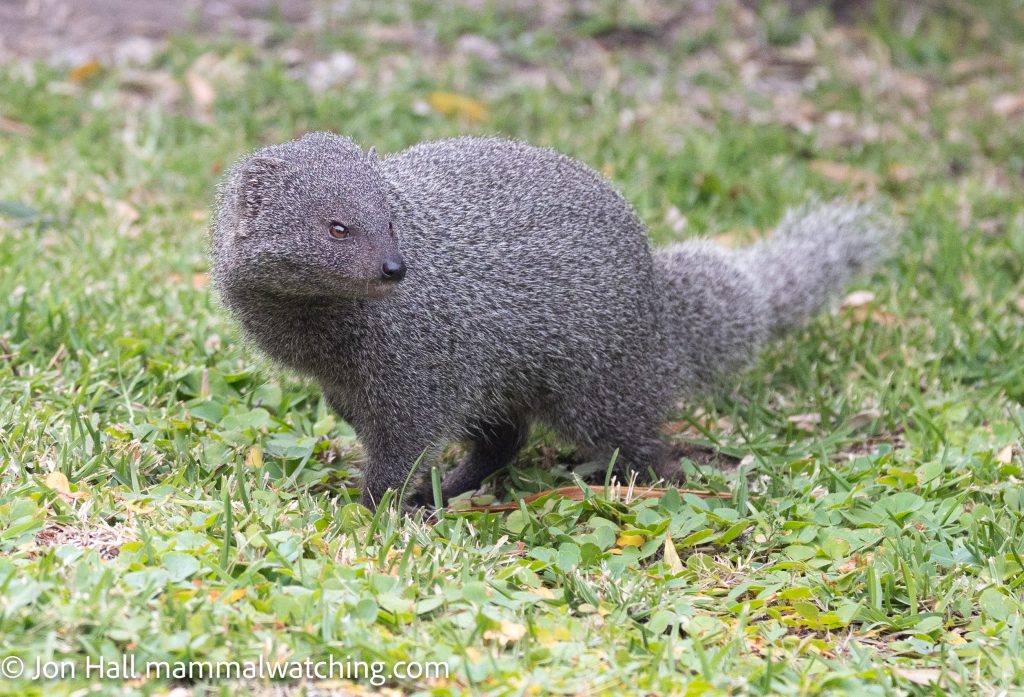
Cape Gray Mongoose (Herpestes pulverulentus), Betty’s Bay
And so it will likely come as no surprise to anyone – other than me – that I started making plans for 12 days in South Africa.
I wrote to Kyle Finn, a mammalwatcher and mole-rat researcher, to see if we might be able to team up somewhere. Turns out Kyle was no longer in South Africa and have moved to Sweden. Damn.
But I was on my way to Sweden when I wrote to him, so we decided to meet up for a beer in Stockholm. Before our glasses were empty Kyle decided to come along on the trip. His mammalwatcing persona seems as persuasive as mine.
Three weeks later we met in Cape Town.
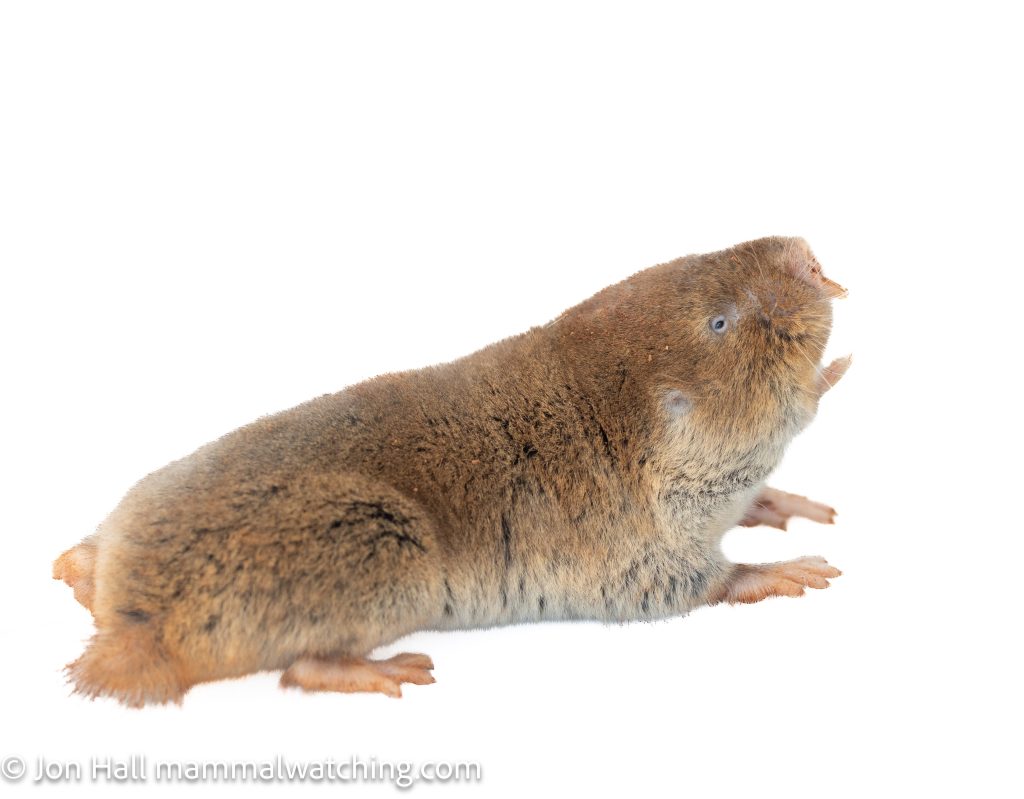
Common Mole-rat (Cryptomys hottentotus), Loxton
We’d sketched out a 12-day trip from Cape Town to Jo’Burg that would explore some spots off of the mammalwatching beaten path, visit friends, maximize our mole-rat potential, and take in the Khoisan Karoo Reserve about which I had been hearing nothing but good things. We did not book very much in advance so we could adjust our plans according to what species we found.
There were two mega-mammals in South Africa I still wanted to see: Temminck’s Ground Pangolin and Striped Weasel.
I was saving the pangolin for my 2027 trip. And I worried that seeing a Striped Weasel without Charles Foley standing next to me might strain our friendship to breaking point. So I decided not to pay particular attention to either species, which is not to say I would have closed my eyes had either animal walked in front of me.
I instead came up with a hit list for this trip of around 20 less glamorous species. My patented lifer-prediction algorithm estimated I would see 13 on the trip.
Spoiler alert: I didn’t see a pangolin or a weasel. I did see 13 lifers.
Our final itinerary ran like this.
August 25 & 26: Betty’s Bay
August 27: Gourikwa Nature Reserve
August 28: Prince Albert
August 29: Loxton
August 30 & 31: Khoisan Karoo
September 1 & 2: Glengarry & Lesotho
September 3: Malolotja National Park in eSwatini
September 4: Heidelberg
South Africa is an easy country to travel around with plenty of information online – including from the many trip reports here – so I won’t get into too many details. One thing I discovered on this trip was the Lekeslaap website, an accomodation booking engine which many of the rural properties and guest farms use. I also include a bit of additional information about driving over the border into eSwatini and staying in Malalotja National Park.
The Trip
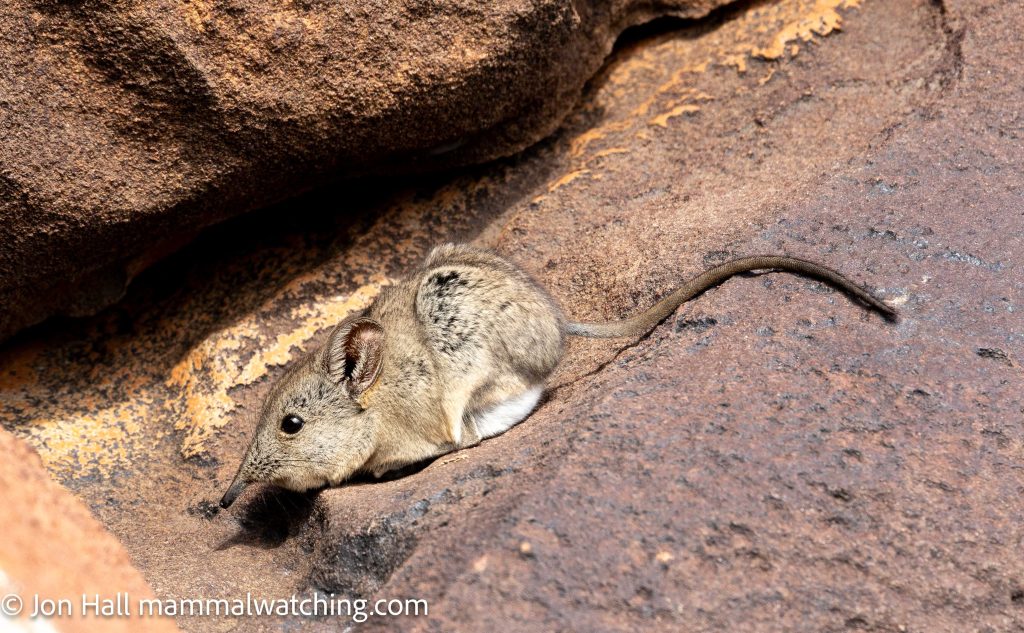
Karoo Rock Sengi (Elephantulus pilicaudus), Loxton
Cape Town Botanic Gardens, Western Cape
After picking up a rental car at the airport we drove 20 minutes to Cape Town Botanic Gardens to say hello to Sisa, one of the gardeners there, who Alex Meyer had put me in touch with. Sisa frequently finds Cape Mole-rats – and occasionally Cape Golden Moles – in the gardens. And he is ready – for a suitable reward – to try to catch one to show to visiting mammalwatchers. If you want to contact him please email me.
Kyle was confident he could catch me a Cape Mole-rat. But the golden moles are more difficult to find so I offered Sisa the standard $50 bounty for a golden mole. He explained he saw them about once a week, usually early in the mornings and especially when it was wet. He promised to let me know if he was successful.
There was plenty of evidence of both mole-rats and golden moles in the gardens but the only mammal I saw was an introduced Eastern Grey Squirrel.
We headed to Betty’s Bay, hoping that the Sisa would be in touch soon to claim his $50. Sadly he didn’t find a mole until a week later, but which point I was hundreds of kilometers away.
Betty’s Bay, Western Cape
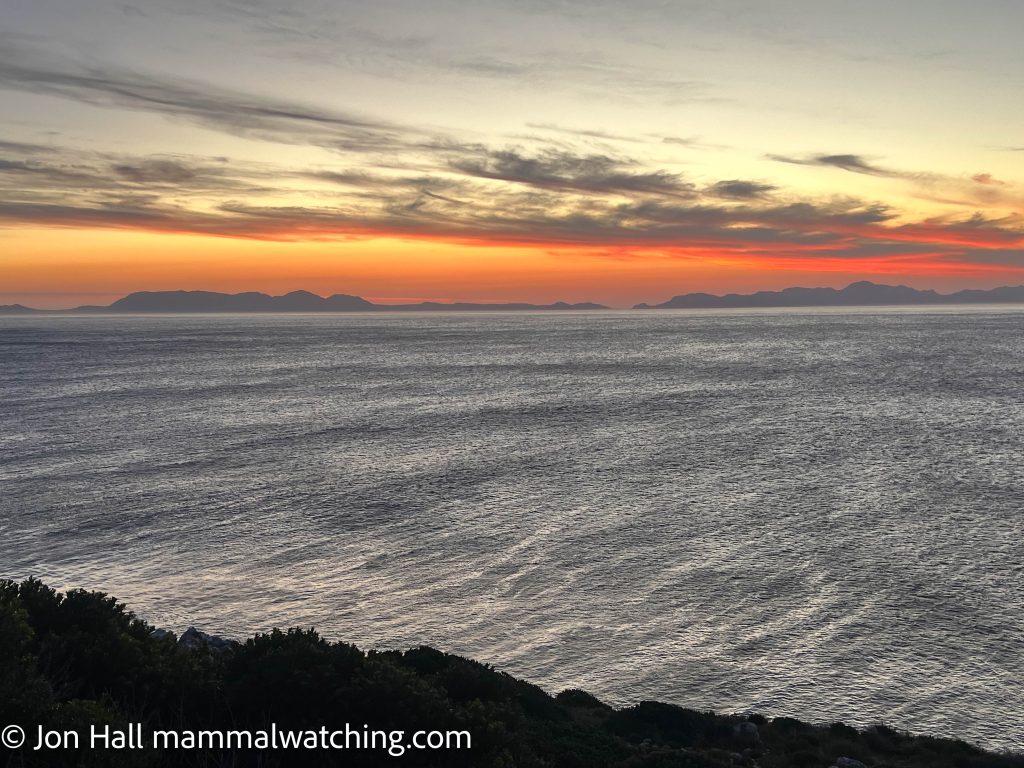
I’d heard about the beauty of Betty’s Bay from my friends Nik Sekhran and Chrissie Lippai who’d given me an open invitation to stay with them there. And I am not one to turn down open invitations, especially if they come with mammals attached. It was great to catch up with Chrissie and Nik and enjoy their fabulous hospitality. I was having so much fun (wine) that I almost lost interest in looking for mammals. Almost.
The drive to Betty’s Bay along the ocean from Cape Town is one of the most beautiful in the world. And the small community, nestled in the fynbos, is every bit as beautiful as Nik and Chrissie had promised.
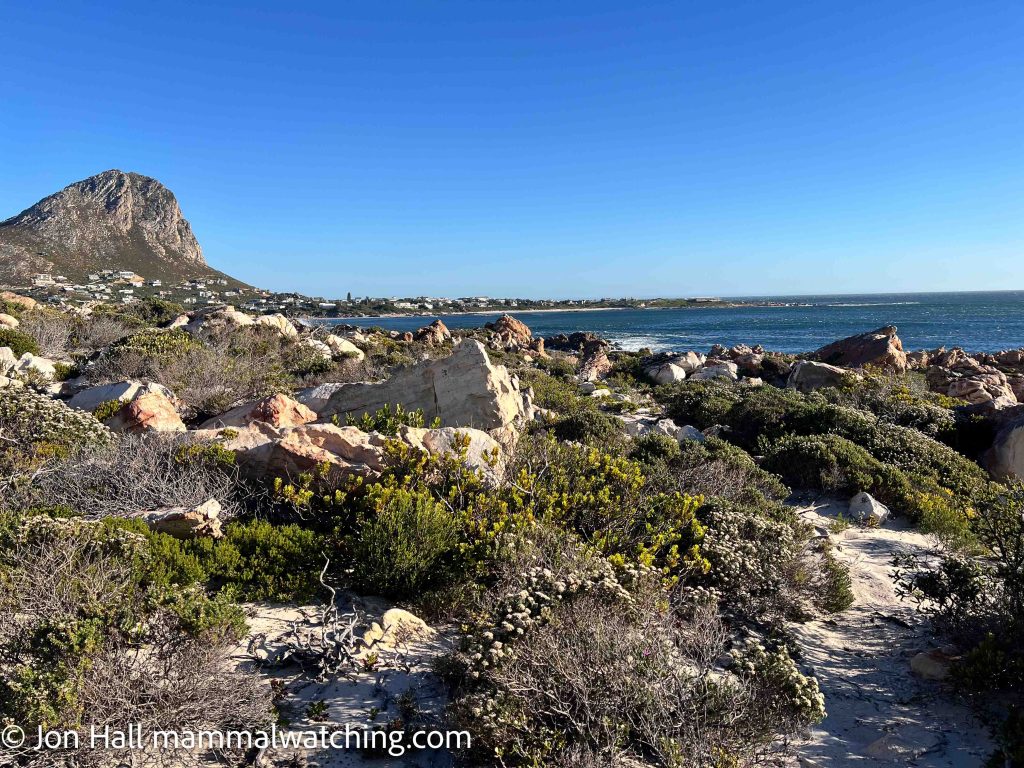
Cape Rock Elephant Shrew habitat
Kyle and I tried for Cape Rock Sengi at the Rooi Els reserve near town. Sengis are occasionally spotted by birders looking for Cape Rockjumpers. We saw a rockjumper during a brief stop in the late afternoon and returned for a sengi the next morning.
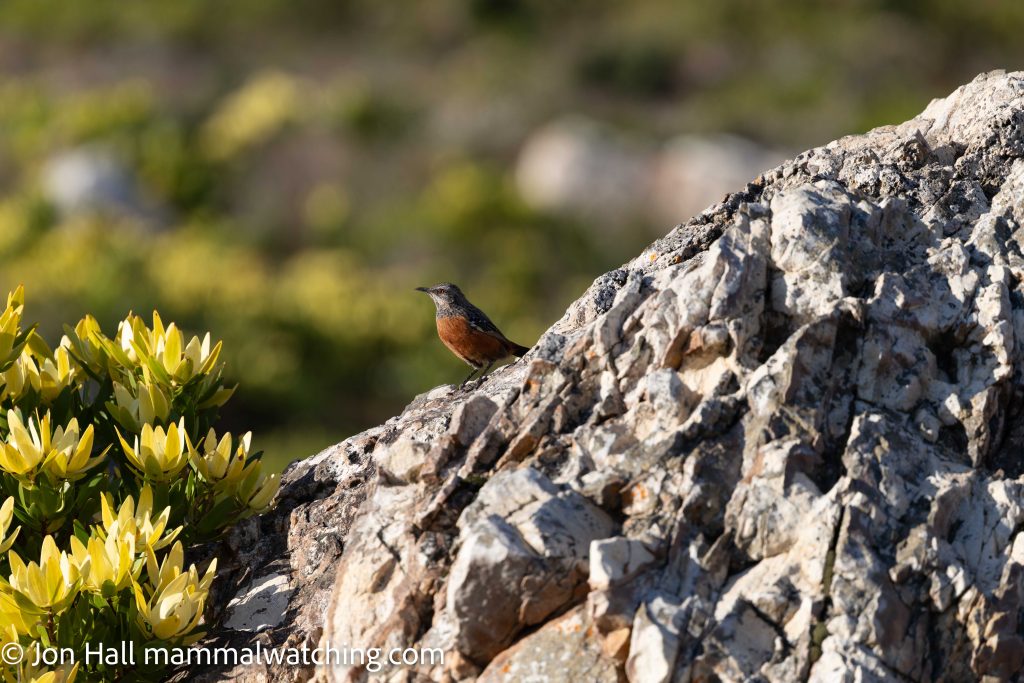
Cape Rockjumper
Very strong winds may have been the reason we couldn’t find the sengis the next day even with thermal scope assistance. We tried for the sengis the following day too at the Betty’s Bay Botanic Gardens. They have been recorded along the track up to Leopard’s Kloof. We dipped again. I suspect Rooi Els is a better place to look and I will return next year.
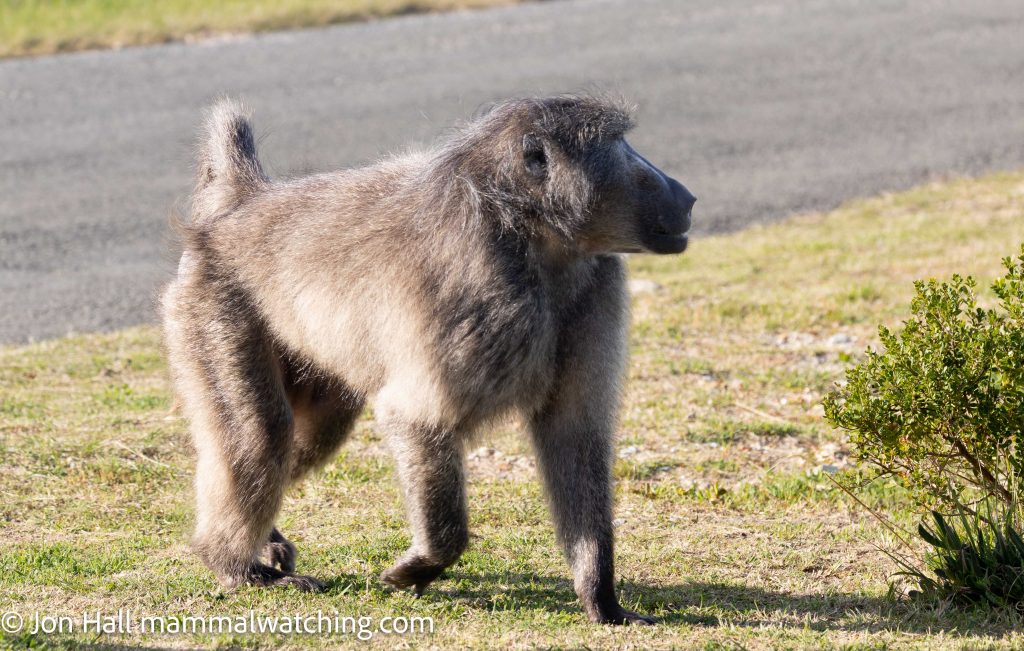
Chacma Baboon (Papio ursinus)
Chacma Baboons are common around the community and wander around town like they own the place. Some of the locals enjoy their company. Others do not. The baboons have been as polarizing as a US election.
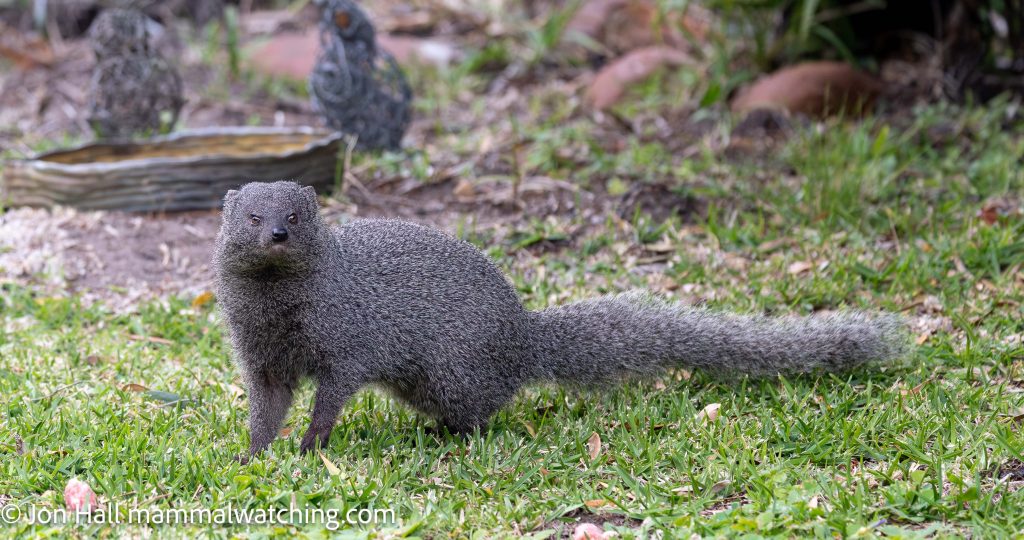
Cape Gray Mongoose (Herpestes pulverulentus)
In and around Betty’s Bay we saw several Cape Grey Mongooses. And a beautiful Cape Genet, a species I wanted very much to see again, visited Nik and Chrissie’s garden after dark. With more time I would have looked for Brant’s Climbing Mice which can be found in long grass and reeds around town.
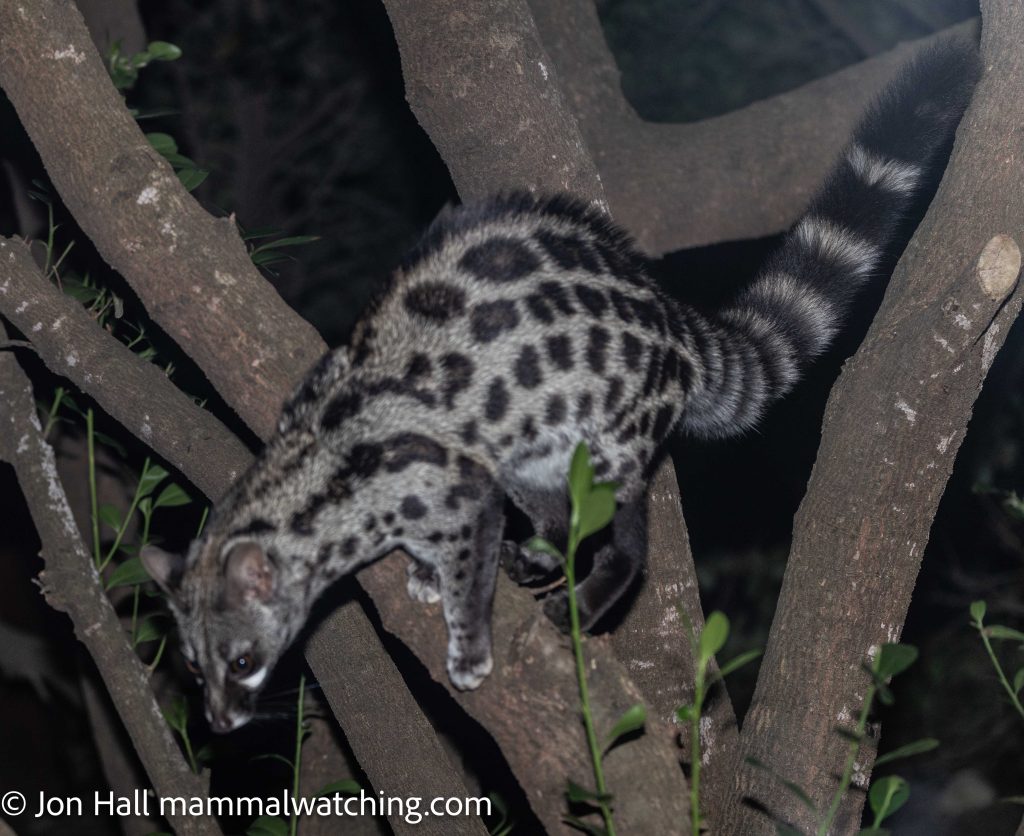
Cape Genet (Genetta tigrina)
Darling, Western Cape
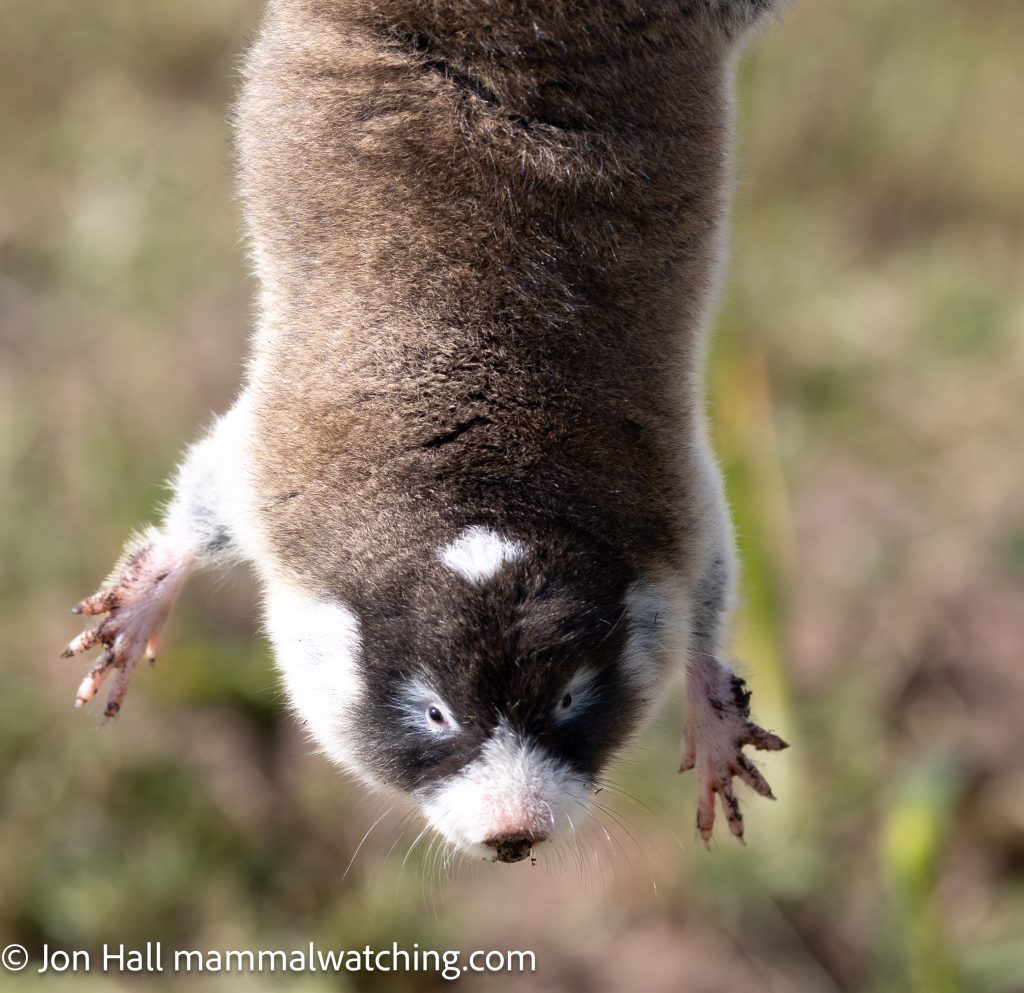
Cape Mole-rat (Georychus capensis)
Kyle and I visited one of Kyle’s mole-rat study sites on a farm just southeast of Darling, about three hours from Betty’s Bay.
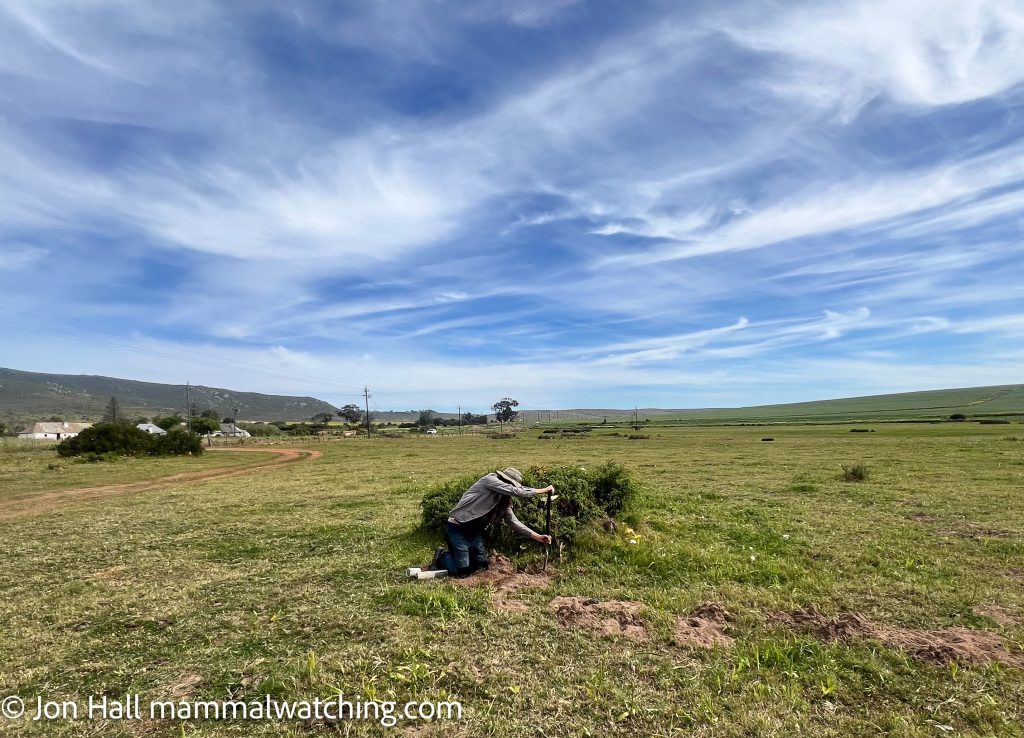
Kyle at work
The farm isn’t open for tourists. But there are lots of mole-rat and golden mole burrows all along the roadsides around the area (try the R315 that heads south east out of Darling for example).
It took Kyle less than 30 minutes to capture this gorgeous Cape Mole Rat, perhaps my favourite species of the trip.
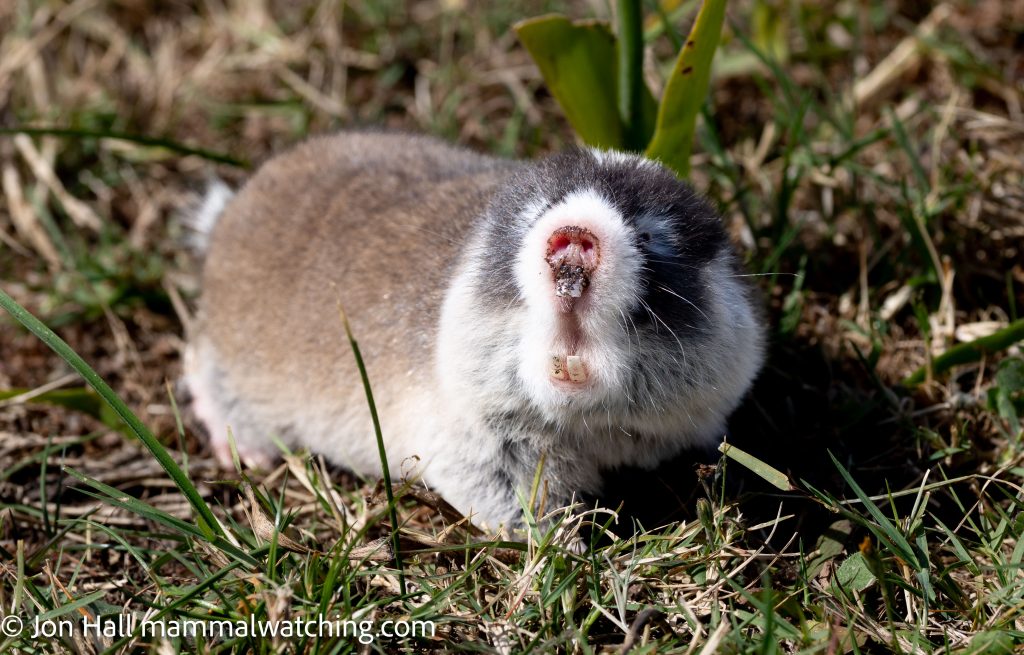
Cape Mole-rat (Georychus capensis)
The massive Cape Dune Mole-rats are also common here. At up to two kg they are at least five times the size of the Cape Mole-rats and too big for Kyle’s traps.
So we abandoned the traps and gently opened up a few burrows. One was quickly resealed and so I diverted my attention to this active hole, opened it up again and waited. It didn’t take long to watch the mole-rat appear briefly at the edge of the burrow before retreating to reseal the tunnel.
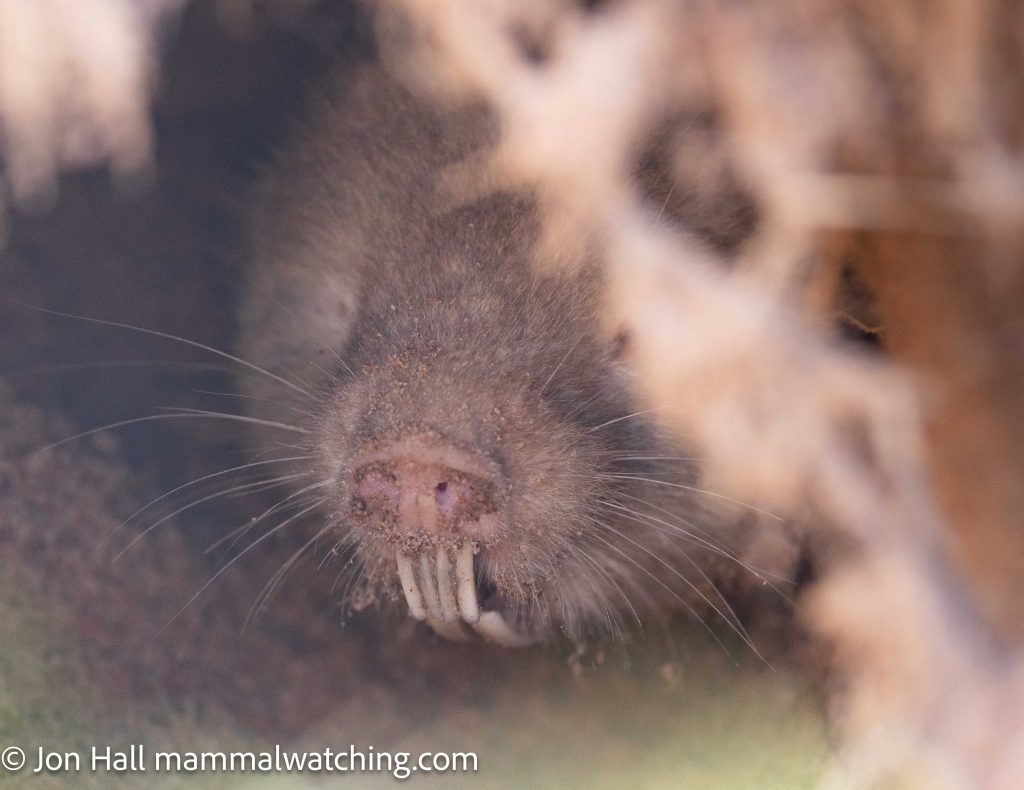
Cape Dune Mole-rat (Bathyergus suillus)
If you try this technique then please don’t forget to reseal all the tunnels you have opened before leaving: an open hole is an invitation to a snake or other predators to help themselves to a meal of mole-rats.
After we left the farm we saw an Egyptian Mongoose cross the road, another species I had only seen only once – and poorly – that was high on my my Want to See Again list.
Gourikwa Reserve, Western Cape
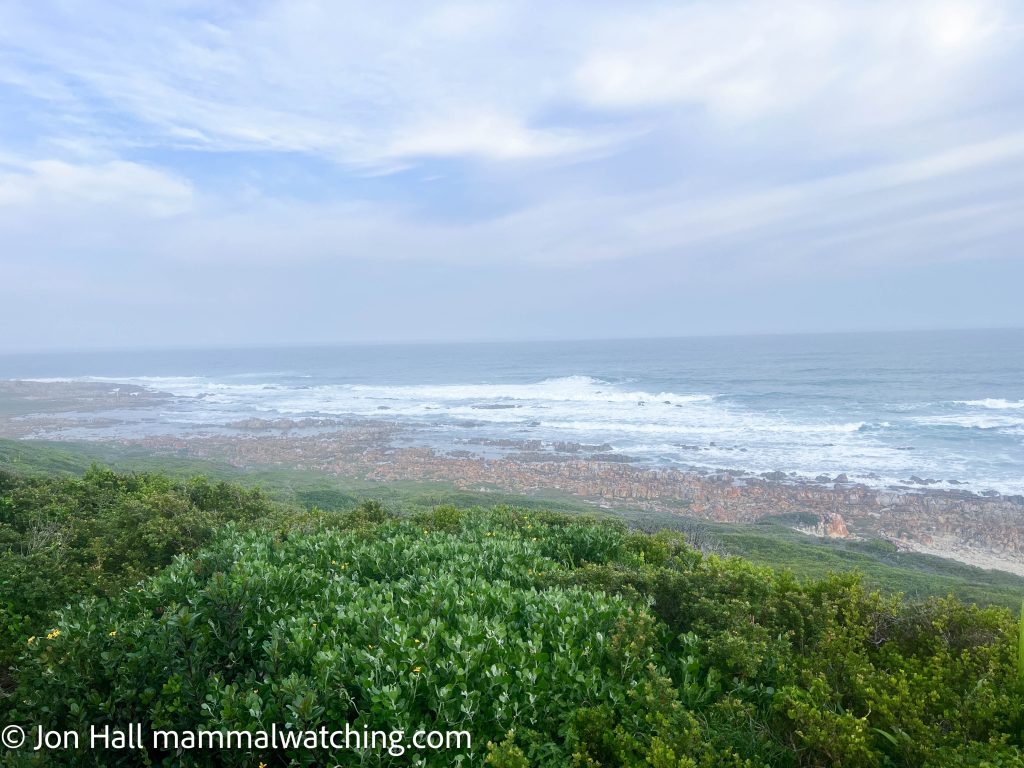
Paul Carter’s report from 2024 inspired a night here. Paul had seen multiple Grey Climbing Mice and a Pygmy Mouse here along with other species. This isolated and windswept reserve is on the coast close to George. See Paul’s report for all the details.
It was a cold night. Kyle and I each saw a Grey Climbing Mouse with the help of our thermals, while we were searching the same – open area – in which I think Paul had found his animals. My view was prolonged but very obscured and neither of us managed to get photos.
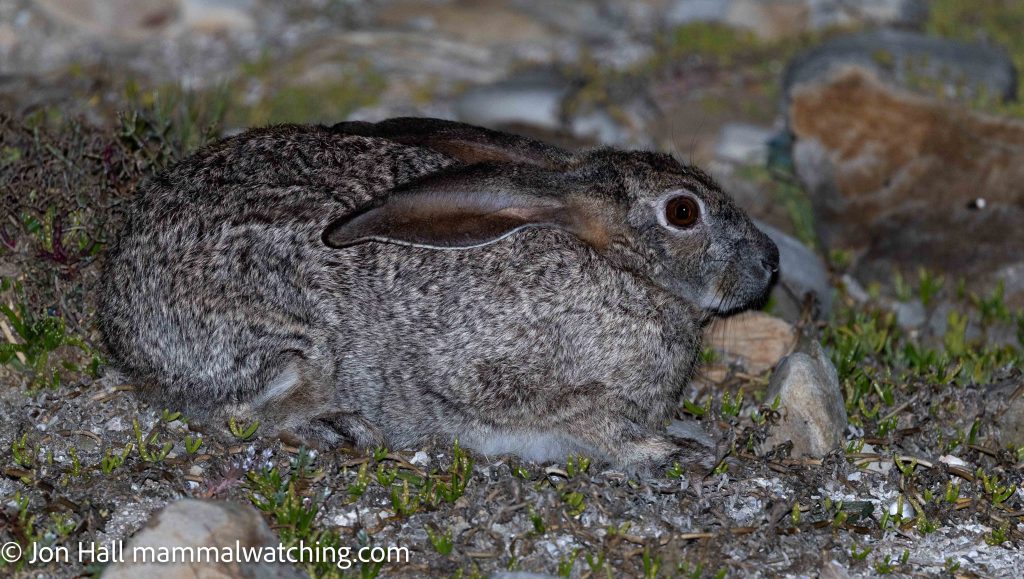
Scrub Hare (Lepus saxatilis)
Other mammals here included, after dark, a pair of Zorillas along the road into the reserve’s eastern gate after dark and several Scrub Hares between the Eastern Gate and the lighthouse. At least I assume they were Scrub Hares from my photos and the habitat, but I struggle to separate them from Cape Hares. We also saw a sounder of Bushpigs near the lighthouse.
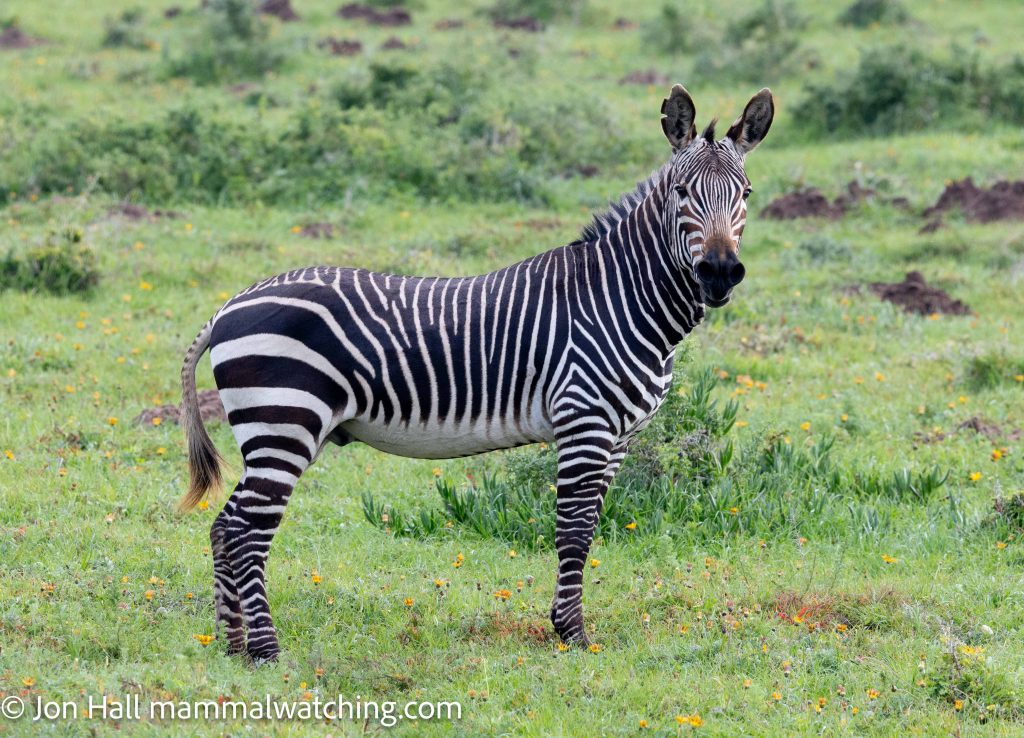
Mountain Zebra (Equus zebra)
In the early morning we saw a few Mountain Zebra, another Cape Grey Mongoose and one or two South African Vlei Rats.
After leaving Gourikwa en route to the Karoo I had planned to visit the bat caves at Montagu to try for Temmminck’s Myotis (see Zac Babbit’s report). But when I called the hotel to arrange a visit to the caves they said they no longer had a guide to take people to the caves (though they are trying to recruit a new one).
Prince Albert, Western Cape
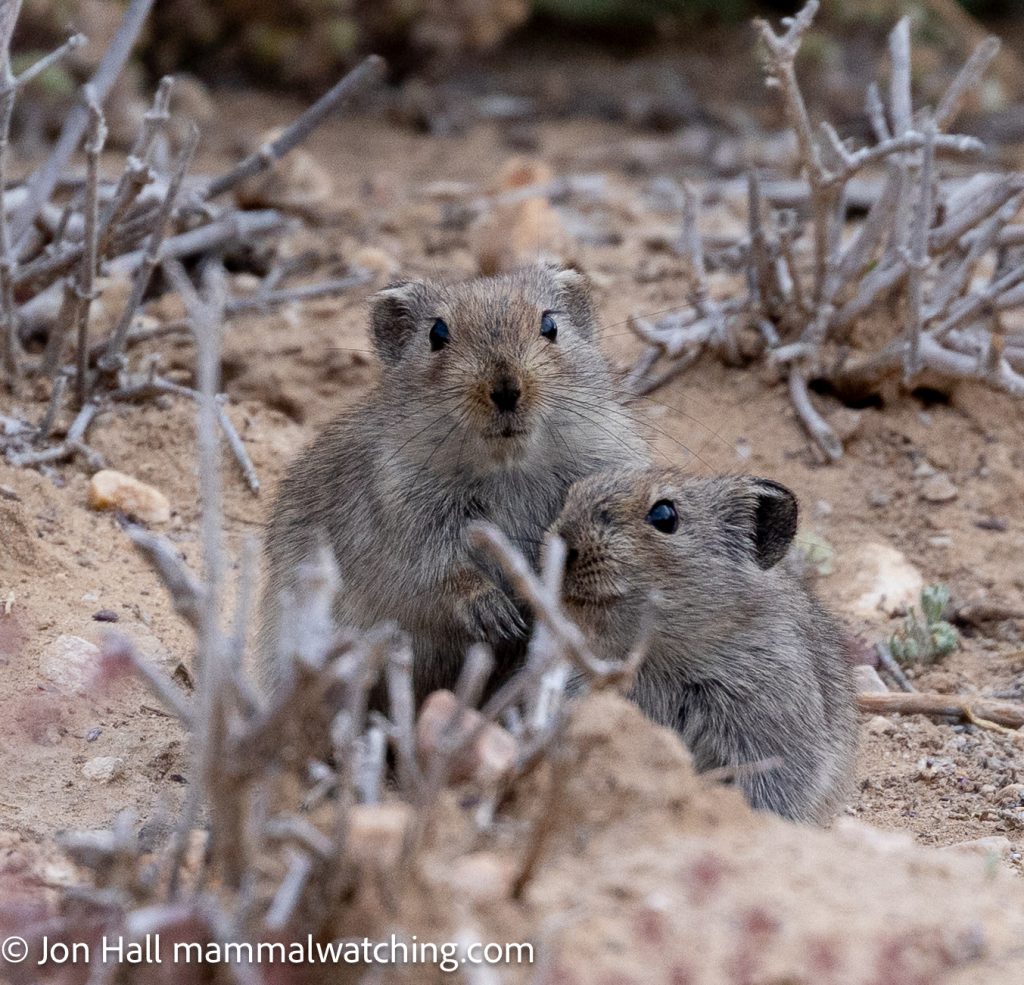
Brants’s Whistling Rat (Parotomys brantsii)
A night in Prince Albert, at the edge of Karoo, was a last-minute addition to our plans. There are some interesting iNaturalist records around here, with several potential lifers around town including Cape Elephant Shrew, Karoo Round-eared Sengi and Brant’s Whistling Rats around town. Many of them were from Collette Hurt, an Instagram buddy of Kyle’s, who kindly offered to take us into the private Wolwekrall Nature Reserve just north of town. We spent the afternoon together in search of round-eared sengis and whistling rats.
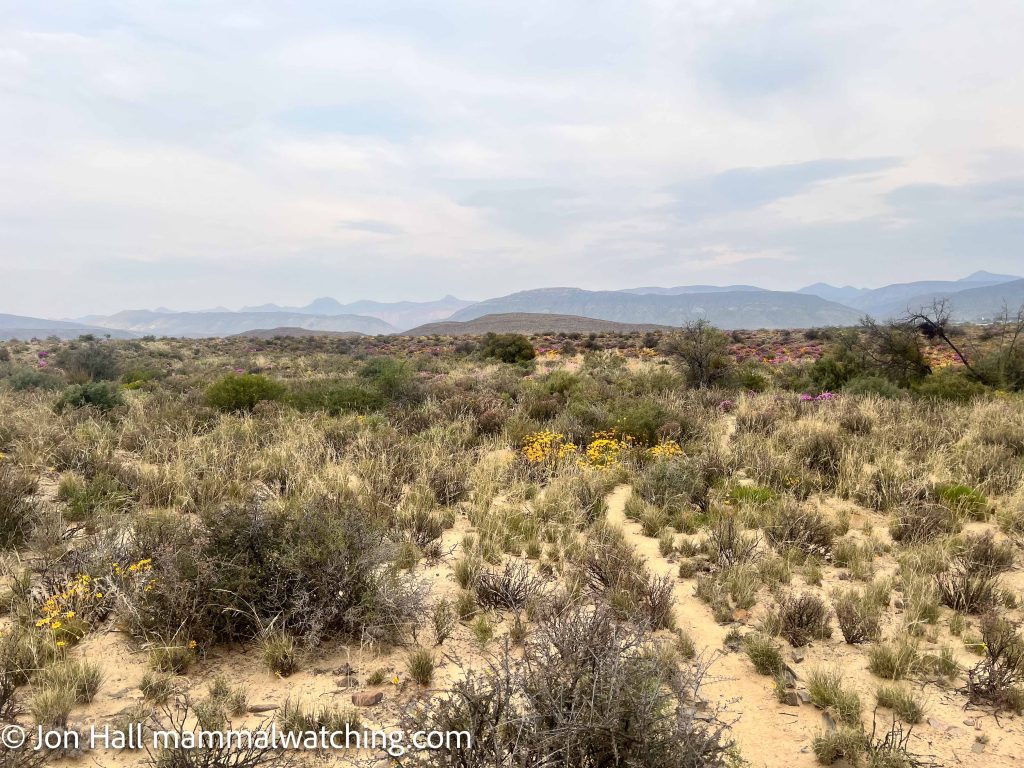
Karoo Round-eared Sengi habitat
We patrolled a sandy depression in the reserve where Collette had seen the round-eared sengis occasionally. But despite wandering around for a couple of hours we didn’t spot any mammals. I had more success with the whistling rats. Collette took me to their burrows – a hundred metres away – and it took less than a minute to see some.
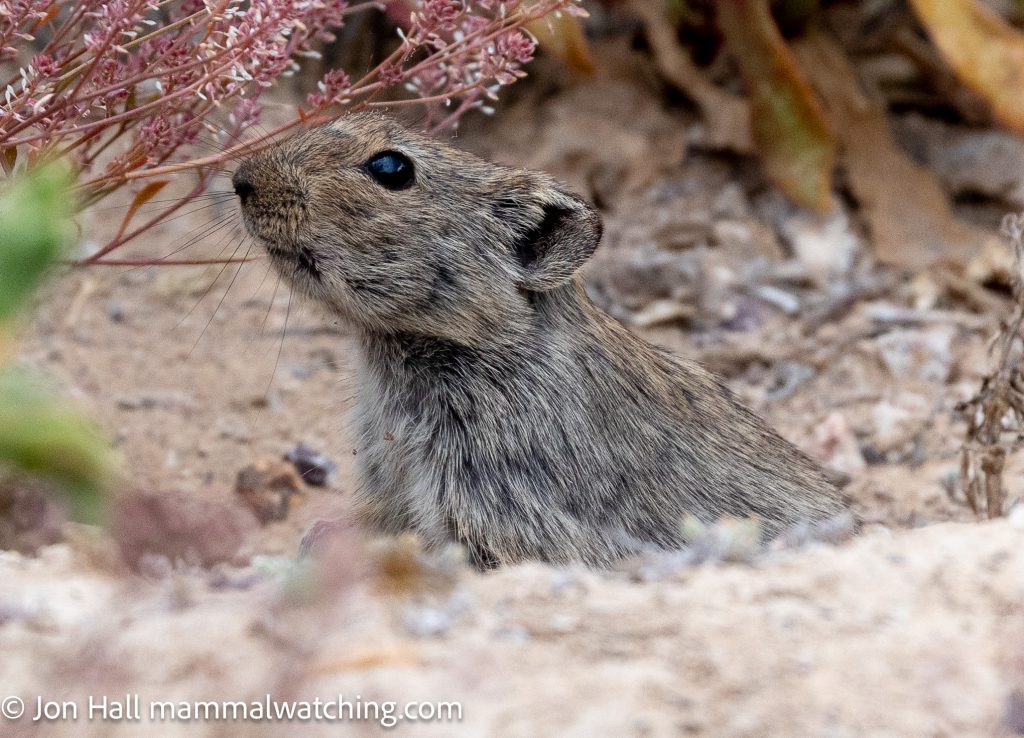
Brants’s Whistling Rat (Parotomys brantsii)
If you would like to visit the reserve reach out to Collette on Instagram.
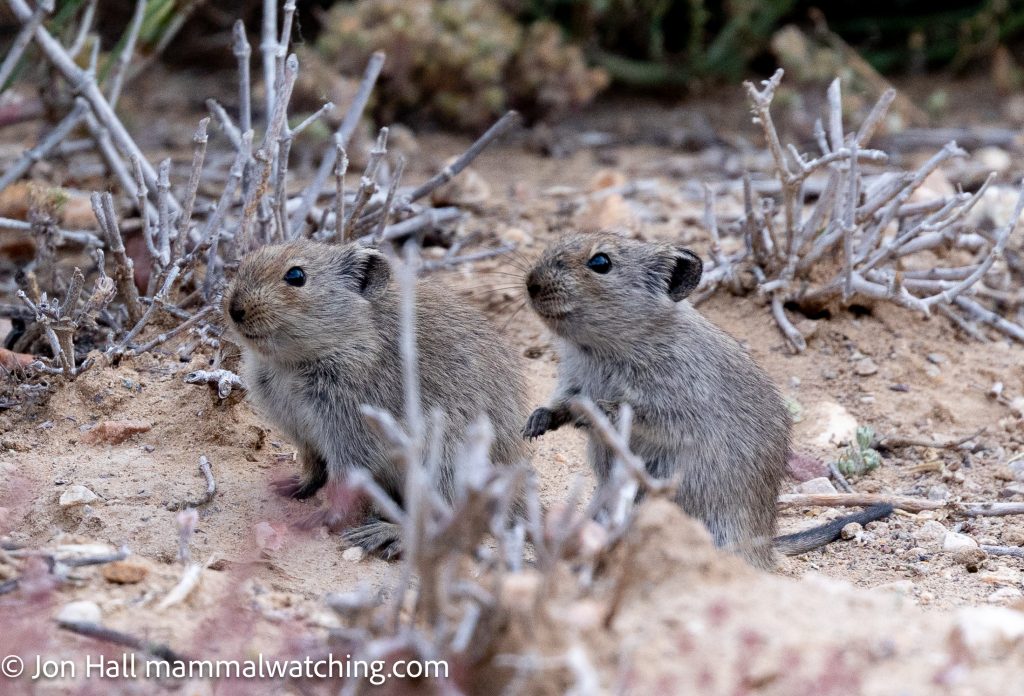
Brants’s Whistling Rat (Parotomys brantsii)
Kyle and I set a few Sherman traps in public land just outside of town at dusk. And we saw a mouse that I tentatively ID’d as a Grant’s Rock Mouse just after sunset.
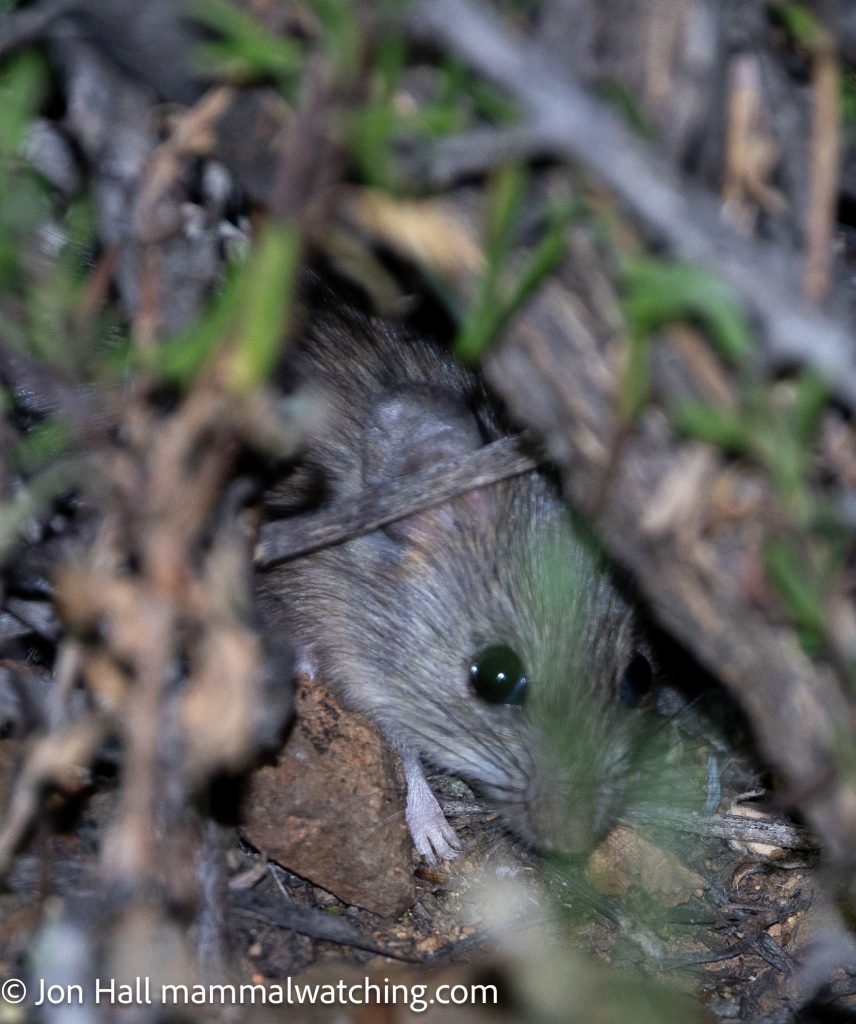
Grant’s Rock Rat (Micaelamys granti)
The following morning we had caught two animals. Their tails – about the same length as their head-body – ruled out the similar but longer-tailed, and often abundant, Namaqua Rock Mice.
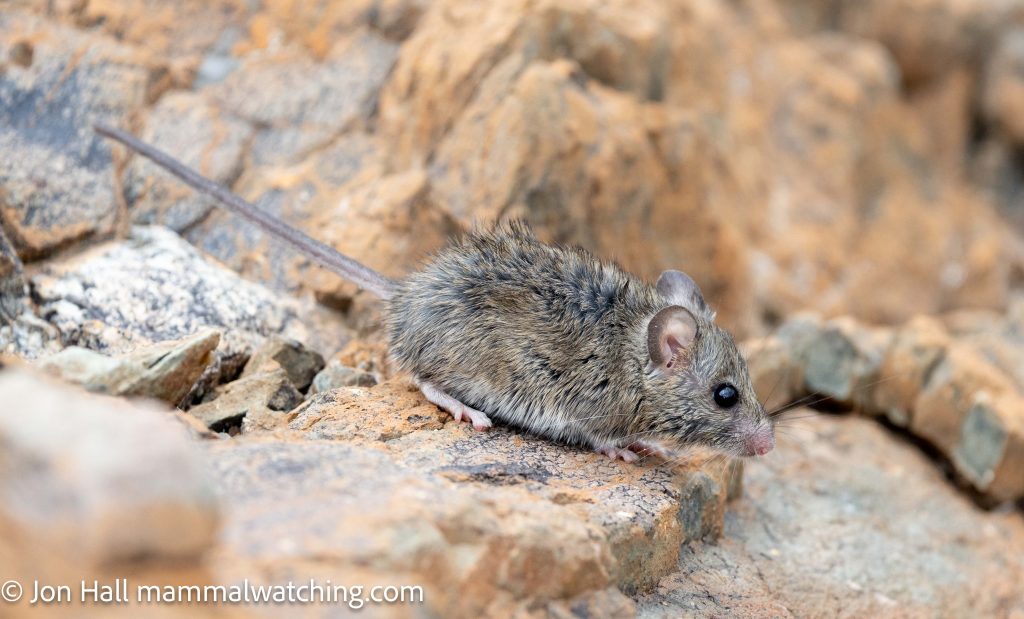
Grant’s Rock Rat (Micaelamys granti)
After dinner Kyle and I took a drive back down the Swartberg Pass to look for Cape Rock Sengis: they had been recorded by herpers at a chameleon hotspot close to the top of the pass.
It was another windy night and we didn’t see any mammals at all during an hour or so searching the road with thermal scopes. But at the viewpoint at the top of the pass (here I think) I found a Hewitt’s Red Rock Hare sheltering under a boulder, and saw -only thought my thermal – an unidentified small mammal moving through the rocks. I imagine that both the sengis and rock rabbits should be present in all suitable habitat along here.
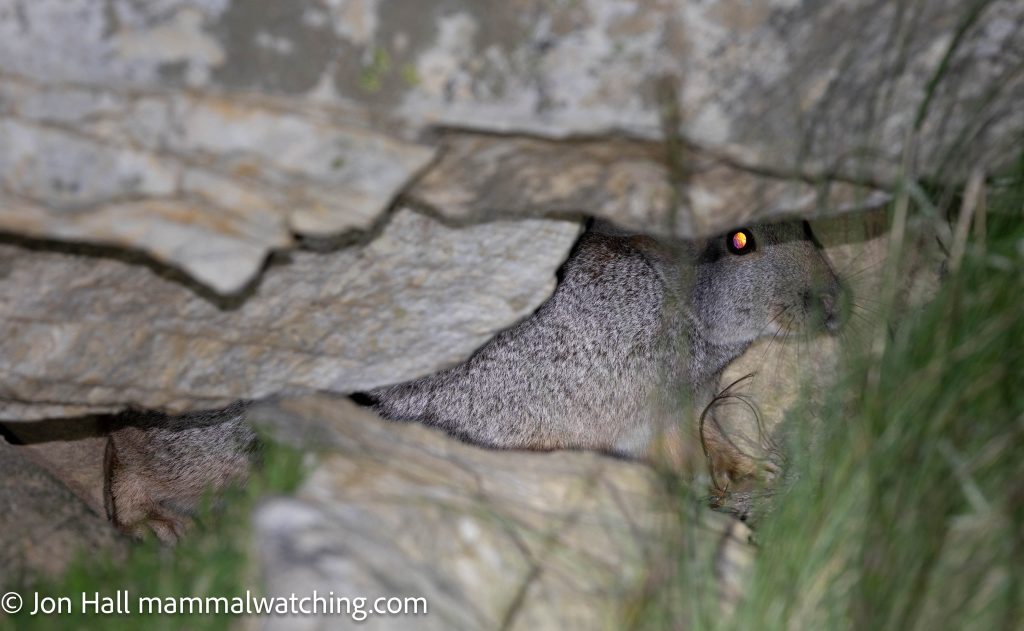
Hewitt’s Red Rock Hare (Pronolagus saundersiae)
At midnight we saw a Klipspringer on the road close to town.
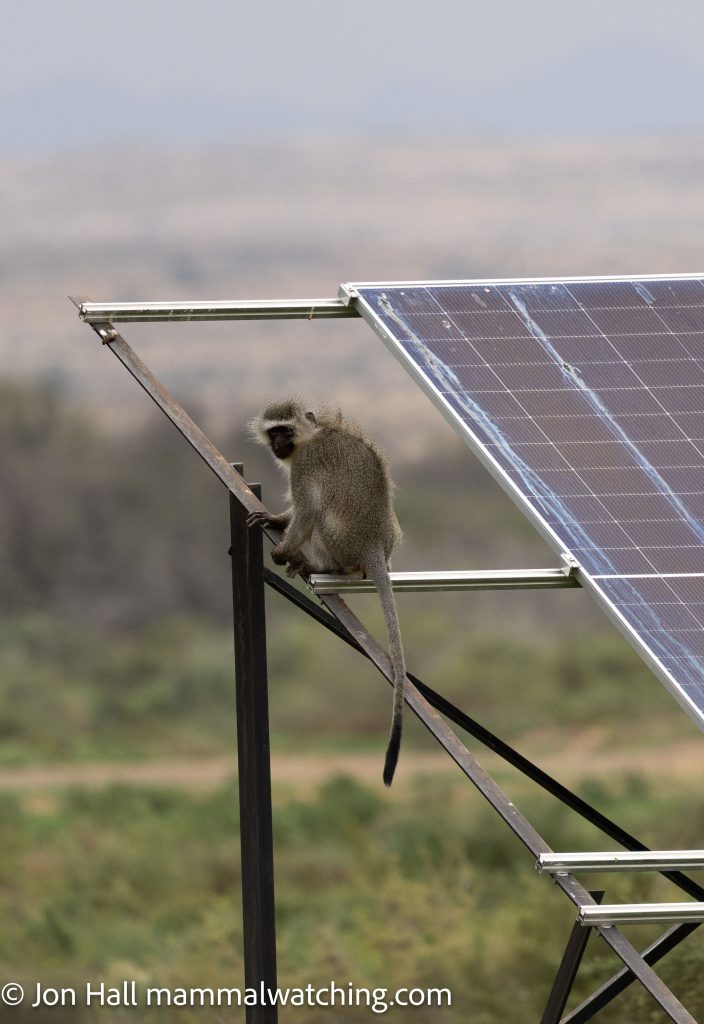
Vervet Monkey (Chlorocebus pygerythrus)
The following morning we drove north towards Loxton and saw a few Vervet Monkeys – just outside Prince Albert – looking out of place in the Karoo landscape.
Loxton, Northern Cape
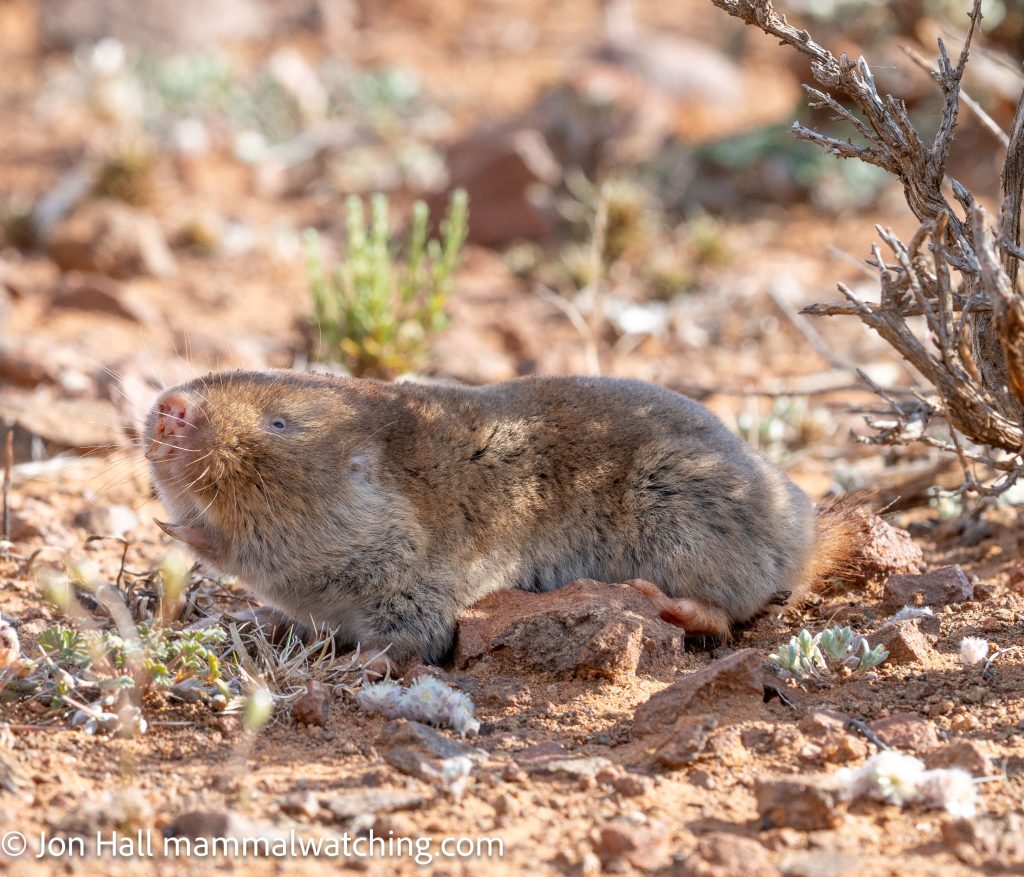
Common Mole-rat (Cryptomys hottentotus)
I’d wanted to visit Loxton for over ten years since I first corresponding with Loxton-locals Chris and Mathilde Stuart, of the mammal field guide fame (listen to them on the mammalwatching podcast here). Chris passed away in 2024 and I greatly regret that I never got the chance to visit Loxton to enjoy a bottle of red wine with them both (sharing a bottle of red appeared to be one of Chris’s great passions in life, after mammals and Mathilde of course).
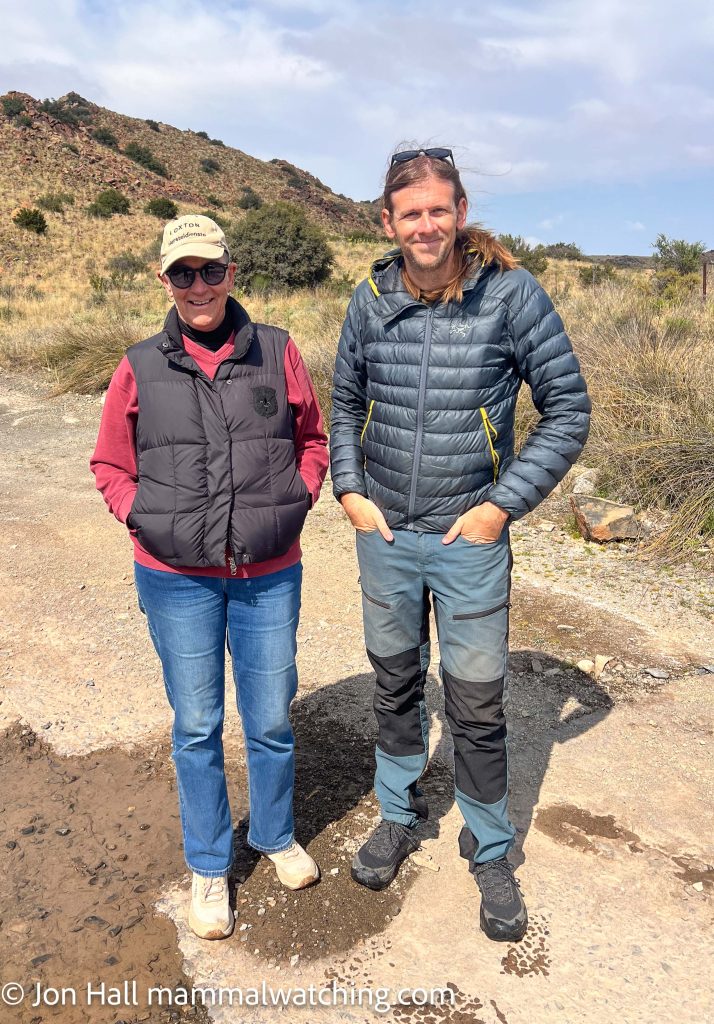
Mathilde & Kyle
Mathilde had just returned from an overseas trip and so we had the opportunity to meet her in person. We stayed at rooms next to Die Windpomp pub. The Sprinboks were playing rugby and the pub was having a brai. This was peak South Africa: a good steak in what might be the world’s friendliest pub (ten people greeted me as I walked from the door to the bar!). The icing on the cake was South Africa beating the All Blacks.
A visit to Loxton would have been worth it for the pub and Mathilde alone, but of course there were mammals.
On Mathilde’s advice we drove 30kms along a dirt road to two low rocky hills here, the type locality for Karoo Rock Sengi. Mathilde was with Galen Rathbun when he first spotted a sengi here and figured it might be a new species. He went on to catch one and describe it.
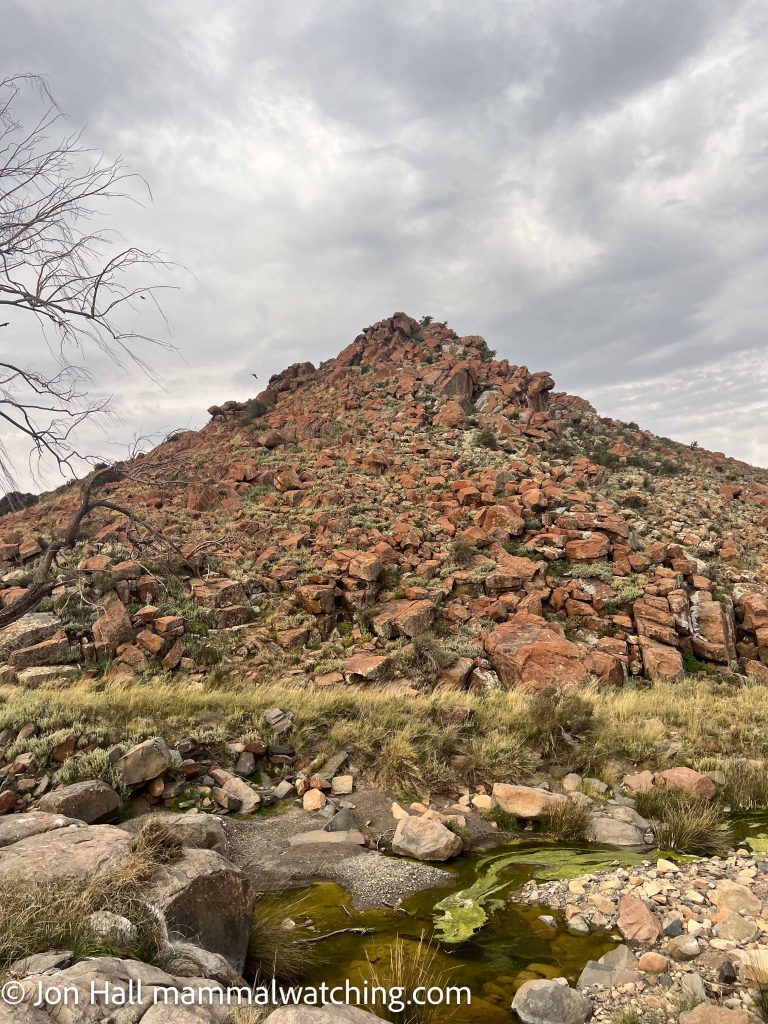
Karoo Rock Sengi type locality
Along the way we also set traps for Common Mole-rats – there were plenty of burrows – along with Shermans for Karoo Round-eared Sengis and Intermediate Grass Mice in suitable habitat. All should be quite common according to Mathilde.
The following morning most of the Shermans were empty. But Kyle scored with one of his mole-rat traps.
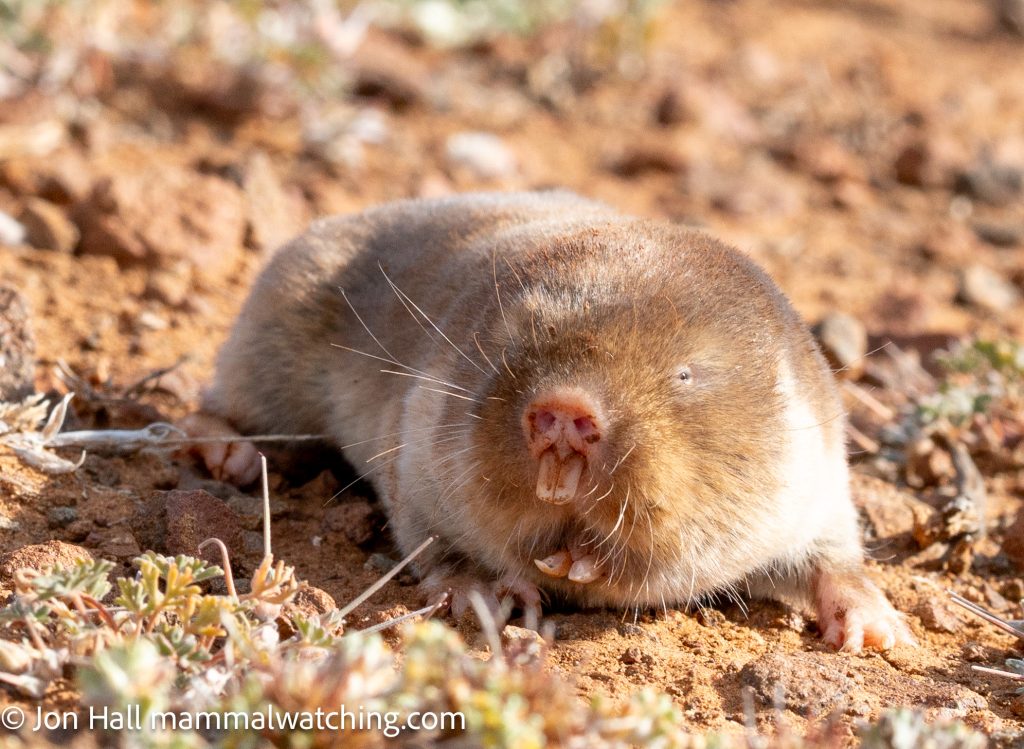
Common Mole-rat (Cryptomys hottentotus)
After a lengthy photo shoot, we headed to the rock sengi hill where our only captures were a couple of very fluffy Namaqua Rock Mice. At least that is what I assume they were on the basis of their size and very long tails.
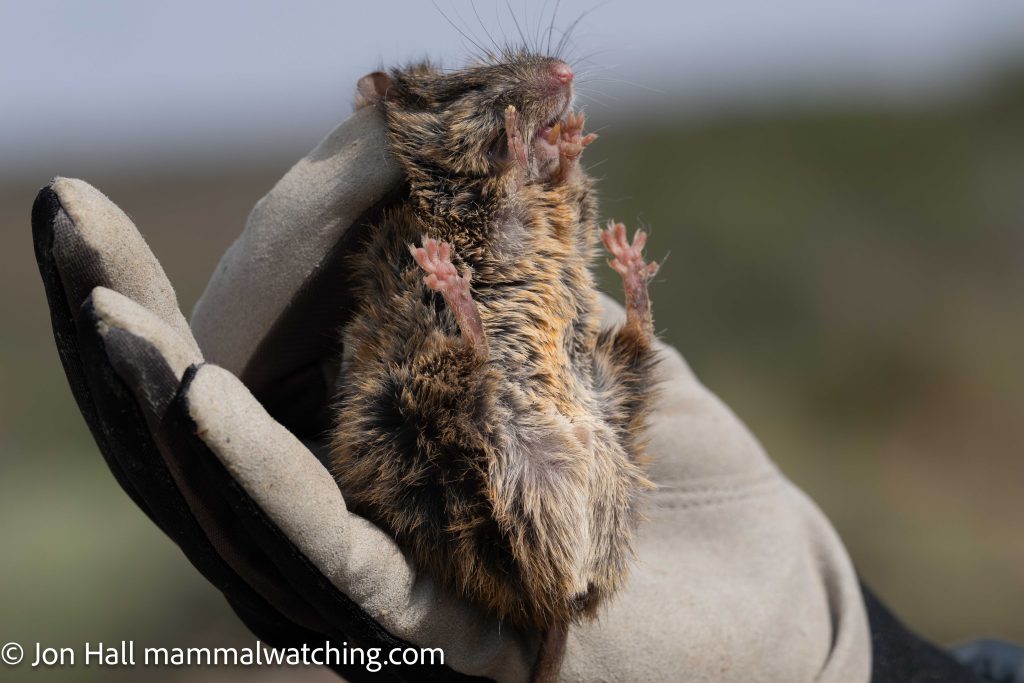
Namaqua Rock Rat (Micaelamys namaquensis)
But they don’t look much like the other Namaqua Rock Mice I’d caught before.
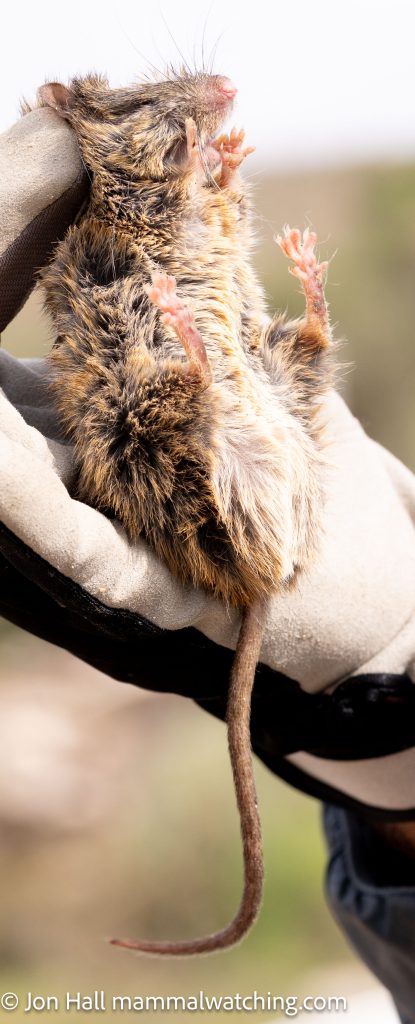
Namaqua Rock Rat (Micaelamys namaquensis)
Mathilde headed home after confirming that the Karoo Rock Sengis were diurnal, and so we clambered around the rocks in the mid-morning.
Kyle spotted one sitting out in the open and came to get me. Miraculously it was still sitting in the same place ten minuites later. It remained motionless as we approached to within a few metres; so close that I was beginning to worry that it might be dead and untickable. It finally took flight
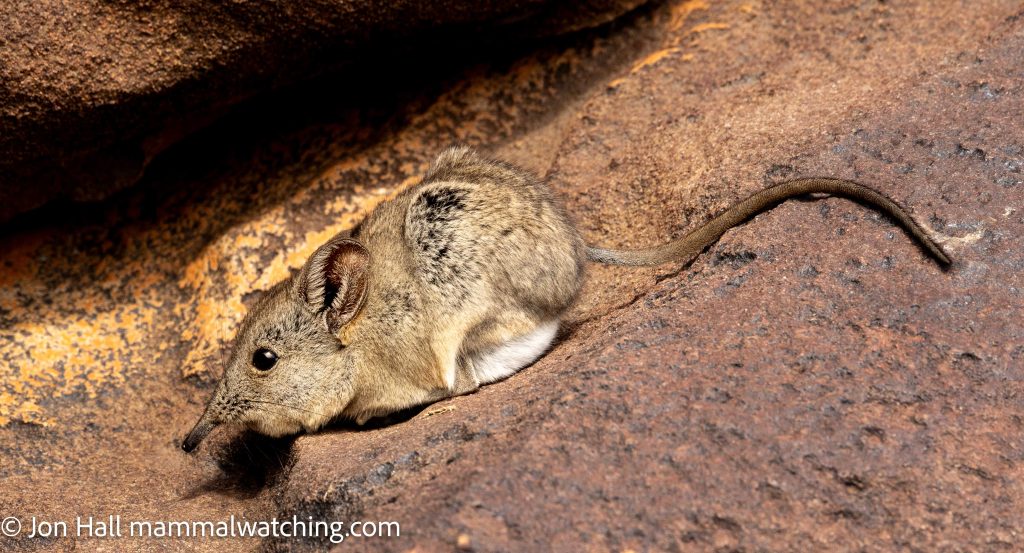
Karoo Rock Sengi (Elephantulus pilicaudus)
We saw Cape Grey Mongoose, Meerkats, Bontebok, Springbok and Southern Reedbuck along the road between Loxton and Victoria West.
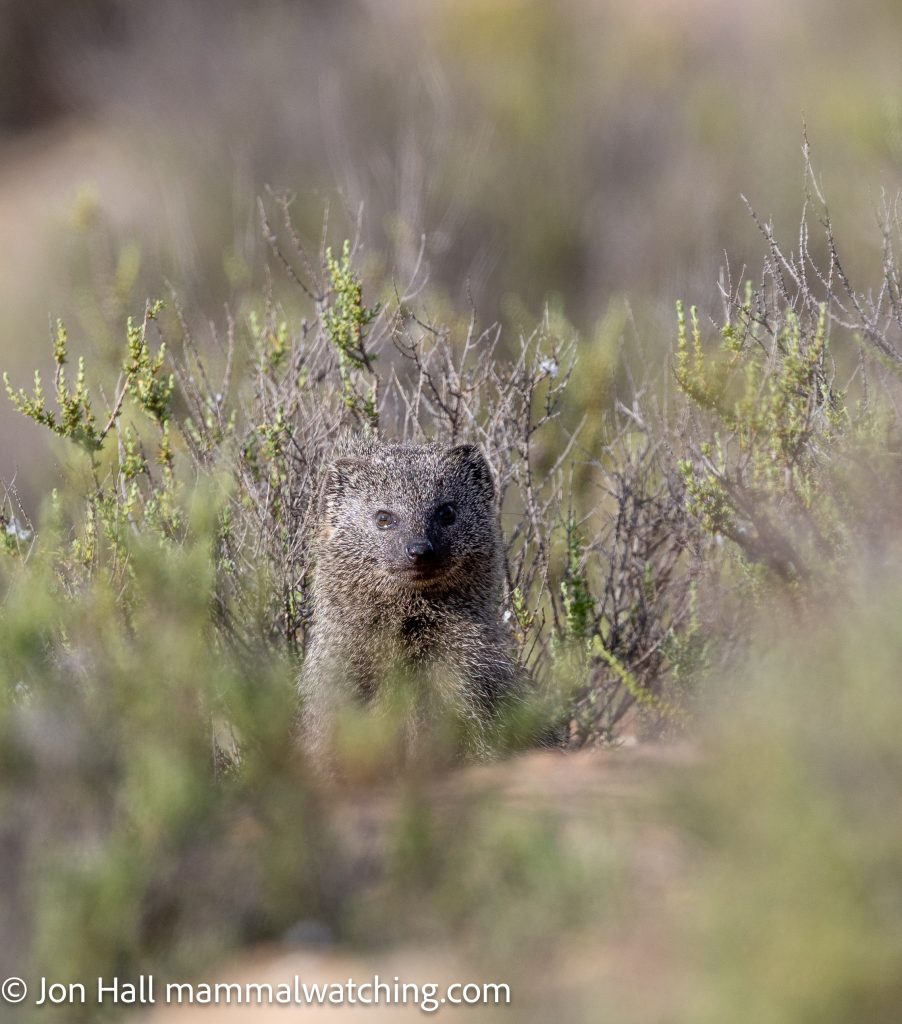
Cape Gray Mongoose (Herpestes pulverulentus)
As well as proof that Caracals were present, and unpopular with ranchers.
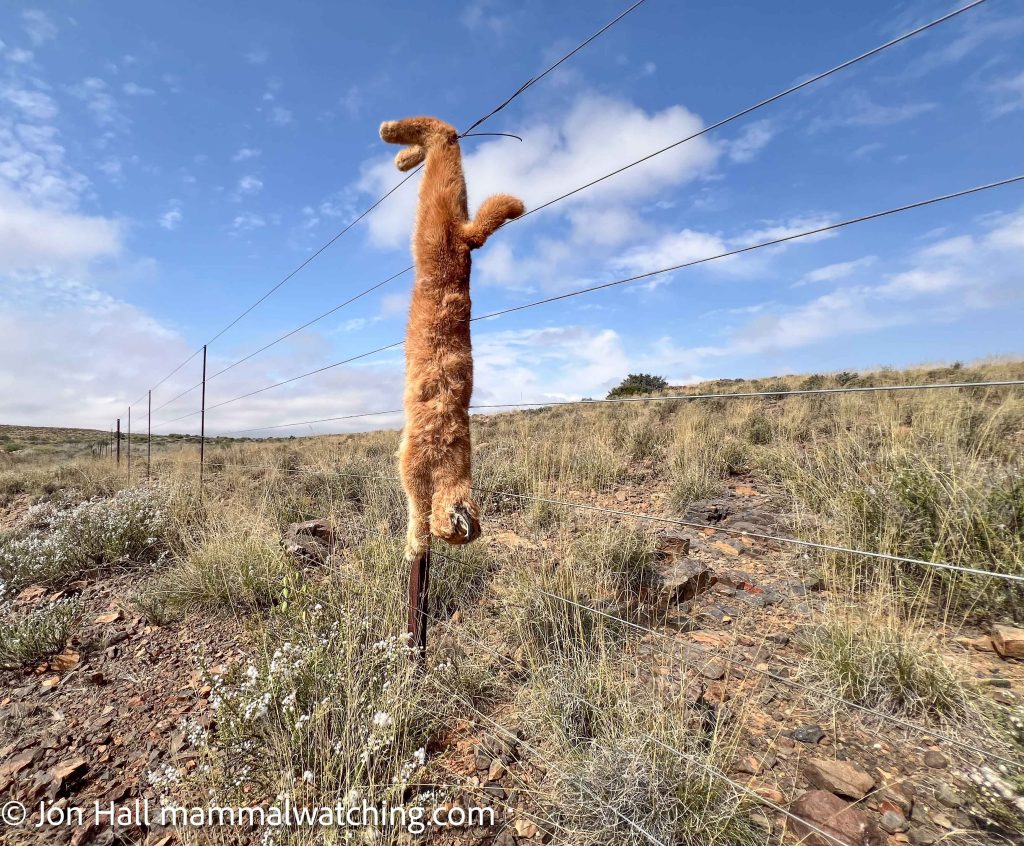
Caracal ‘trophy’
Khoisan Karoo (New Holme Conservancy), Northern Cape
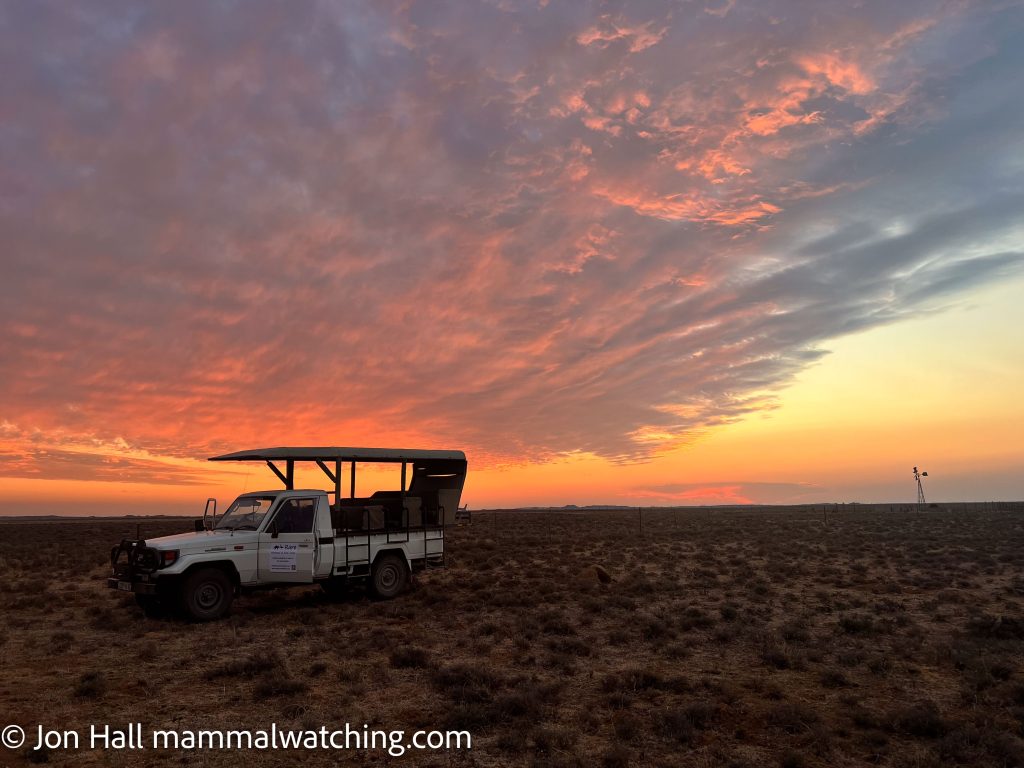
I’d been looking forward to visiting Khoisan Karoo after meeting the owner – Piet Cronje ‘PC’ Ferreira – at the UK Birdfair. I’d been struck by the mammalwatching potential in his place and PC’s enthusiasm for conservation.
The conservancy is an 8,000 ha. slab of prime Karoo bushland. It’s a working farm, but is increasingly looking to ecotourism as an alternative source of income. It has a range of accommodation options and can sleep 86 people.
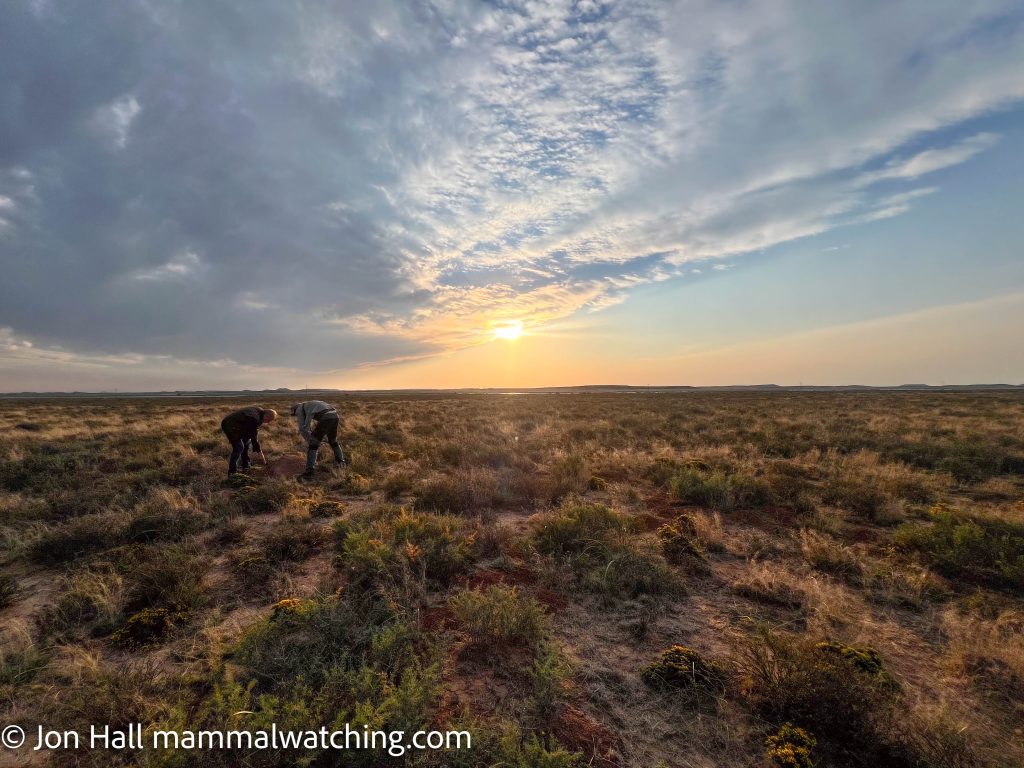
It is indeed a great place, as other mammalwatchers have already noted in recent trip reports.
First, it is home to almost all the species that you can see at Marrick.
Second, the accommodation and food are excellent.
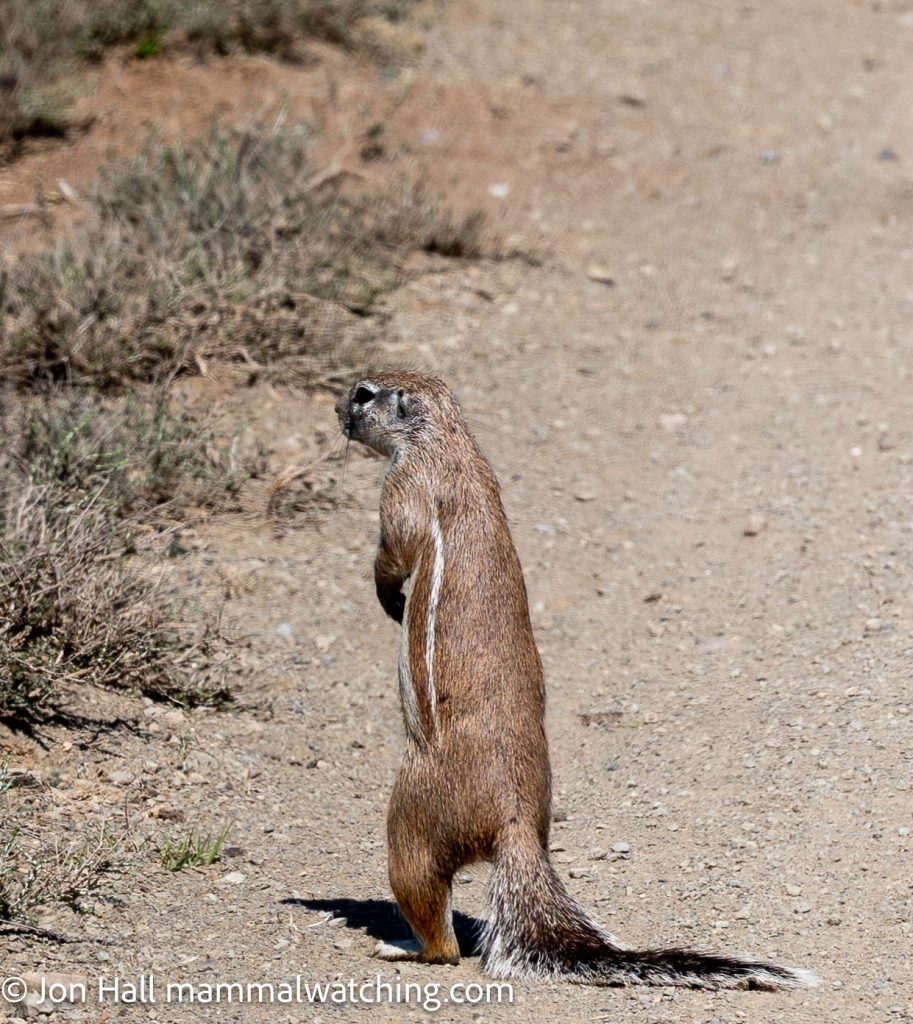
South African Ground Squirrel (Geosciurus inauris)
Third, PC’s determination makes me think that there are going to be all sorts of opportunities here to see interesting species. For instance, the farm is home to Striped Weasels, Aardvarks and Black-footed Cats. PC is already collaborating with Black-footed Cat researchers and they have one collared animal which visitors can search for. However, seeing a cat is not yet straightforward (see below). But if the researchers could collar two or three more cats then finding an animal ought to be much more feasible in a short visit.
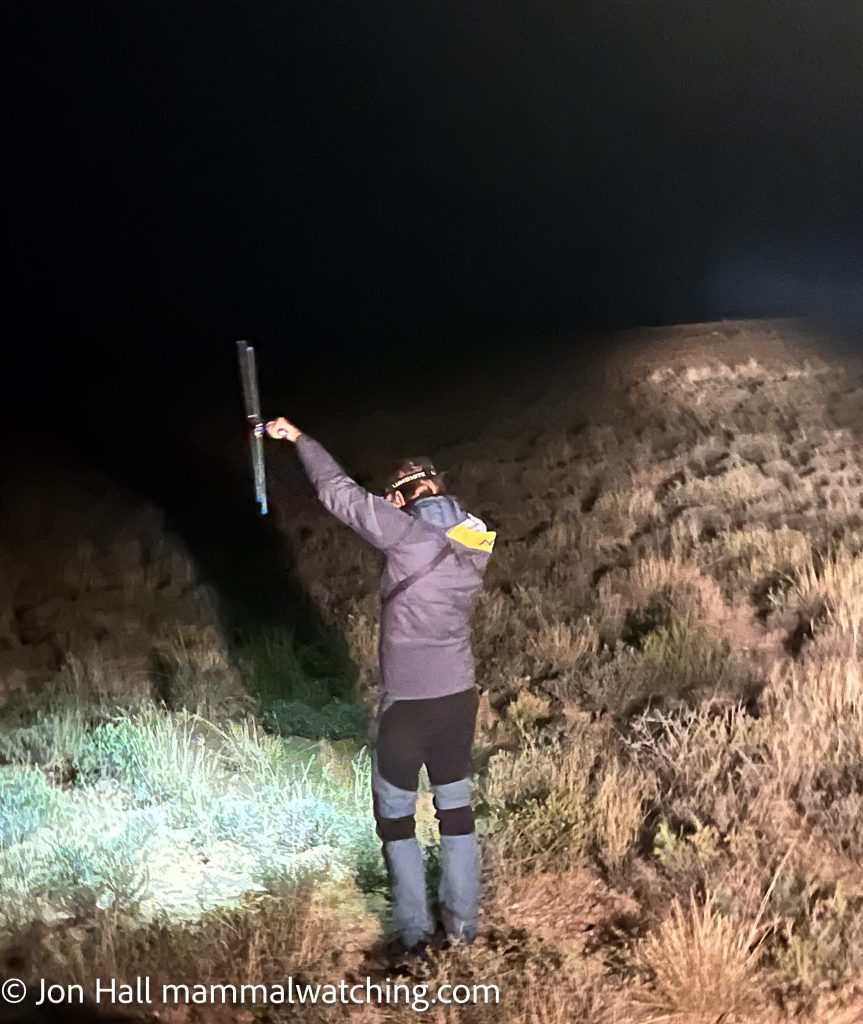
We went out both nights. Our first night was a drive with a couple of guests who particularly wanted to see an Aardwolf. On the second night, Kyle and I went out with PC to try to find the collared Black-footed Cat.
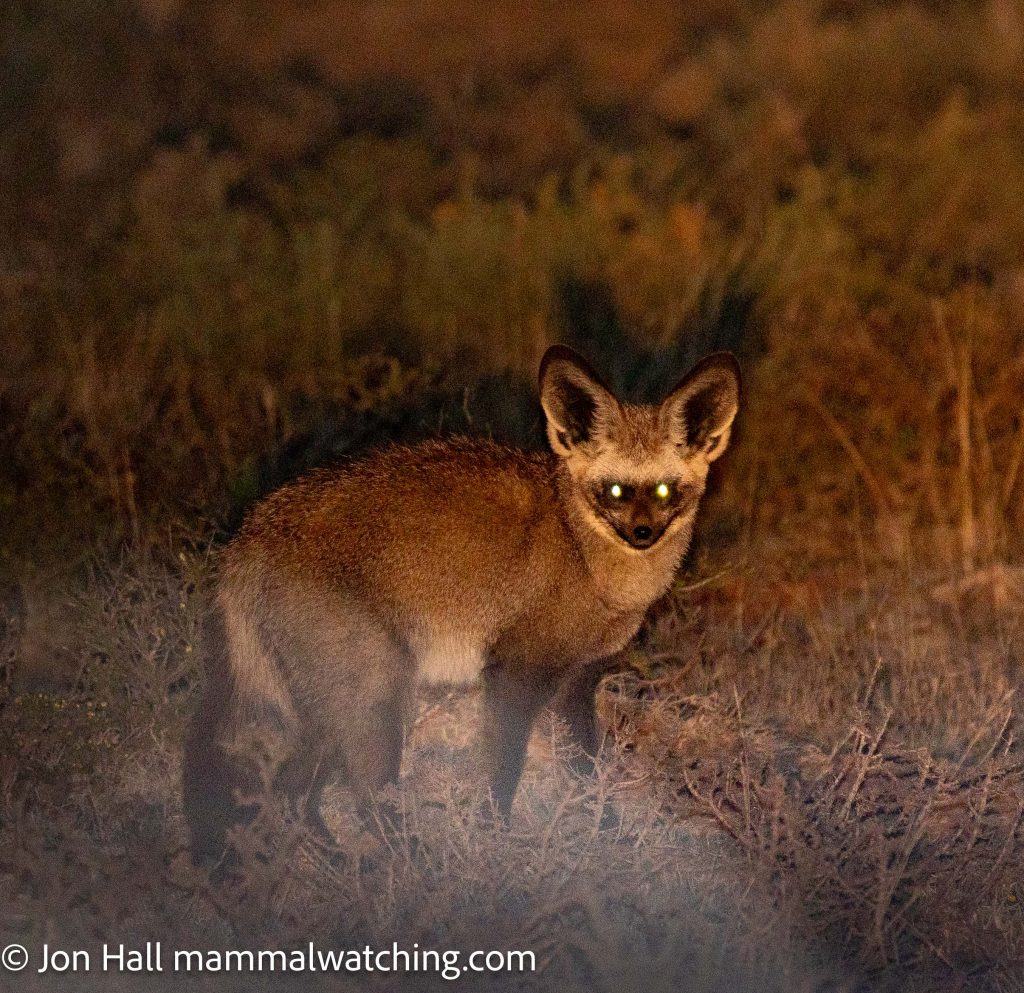
Bat-eared Fox (Otocyon megalotis)
We weren’t successful with the cat, but saw plenty of other mammals. With numerous Cape Porcupines and Cape Hares, abundant South African Springhares, Bat-eared Foxes, Southern Waterbuck, Springbok, and Steenbok each night.
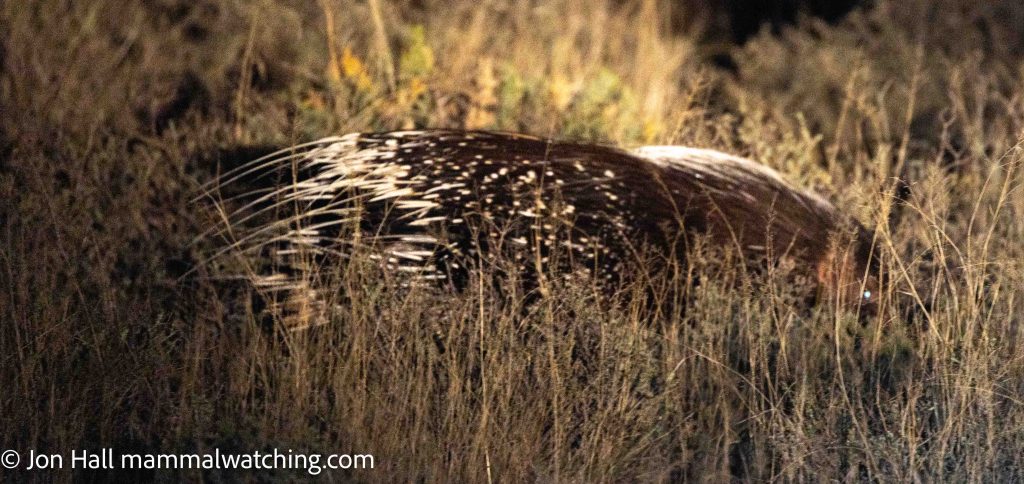
Cape Porcupine (Hystrix africaeaustralis)
We also saw an Aardvark, an Aardwolf and the very cool Large-eared Mouse each night.
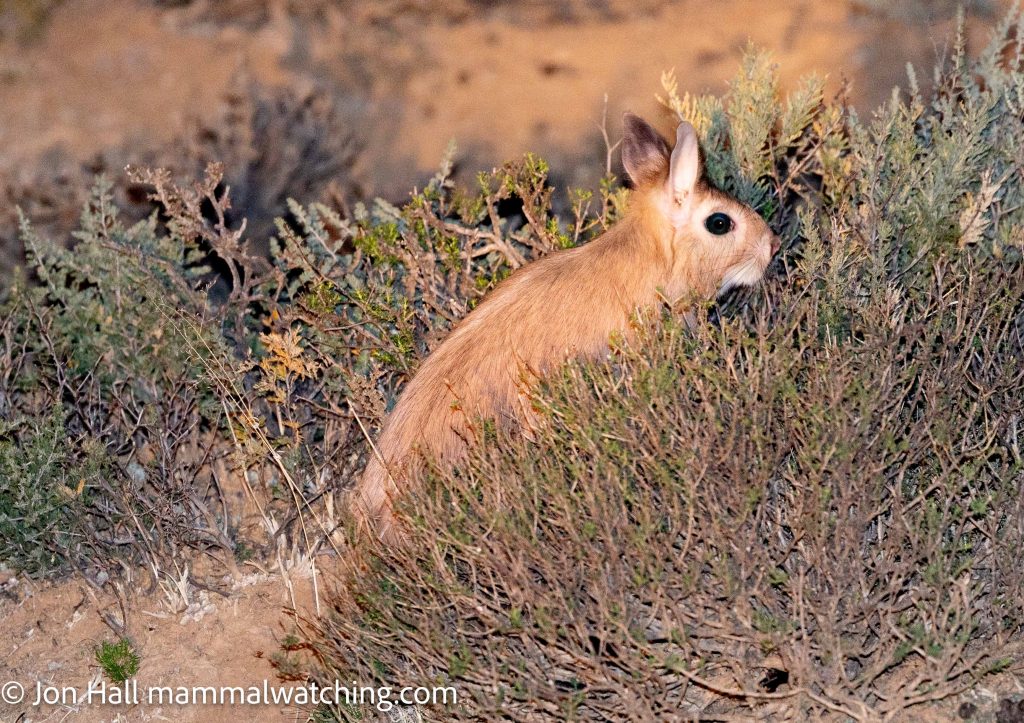
Southern African Springhare (Pedetes capensis)
Plus we spotted a Zorilla, a Smith’s Red Rock Hare and a Cape Short-tailed Gerbil which Kyle athletically caught by hand as we drove along the airstrip (an excellent place to thermal for rodents).
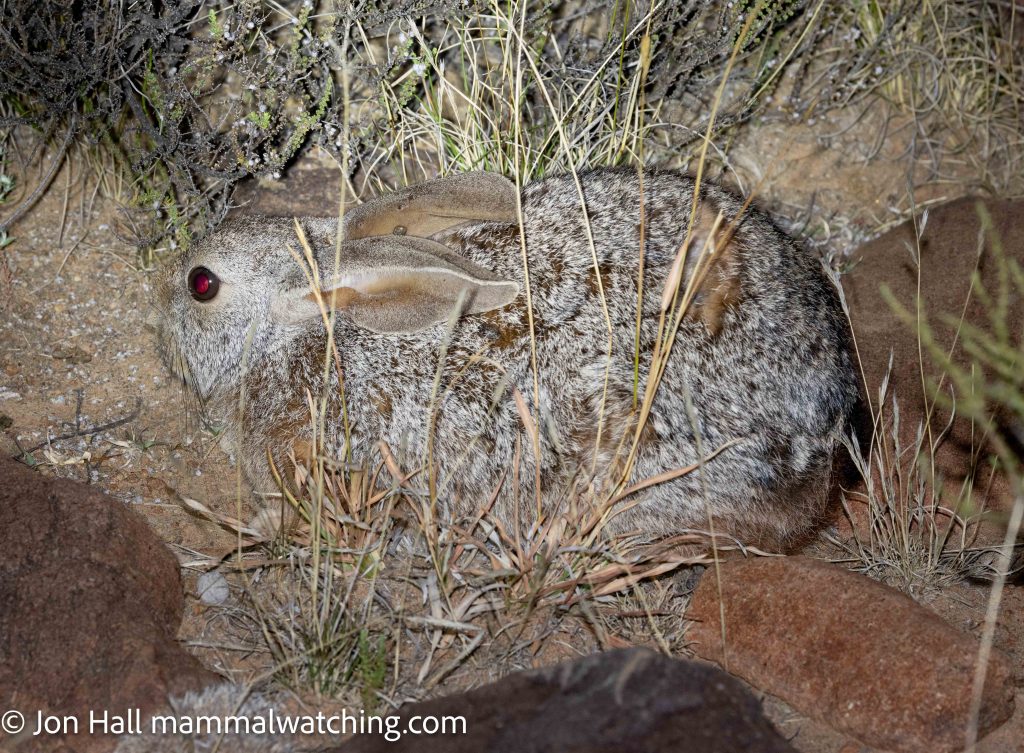
Smith’s Red Rock Hare (Pronolagus rupestris)
We missed South African Hedgehogs (occasionally seen in the alfalfa next to the house) and Highveld Gerbil, which from camera trap images appear to the species living in a colony 20 minutes from the lodge. Eastern Rock Sengis are also seeable but we didn’t make any effort to go look for them. Striped Weasels are here, but apparently as rare as everywhere else, though PC had seen one a few months ago with the visiting Black-footed Cat team.
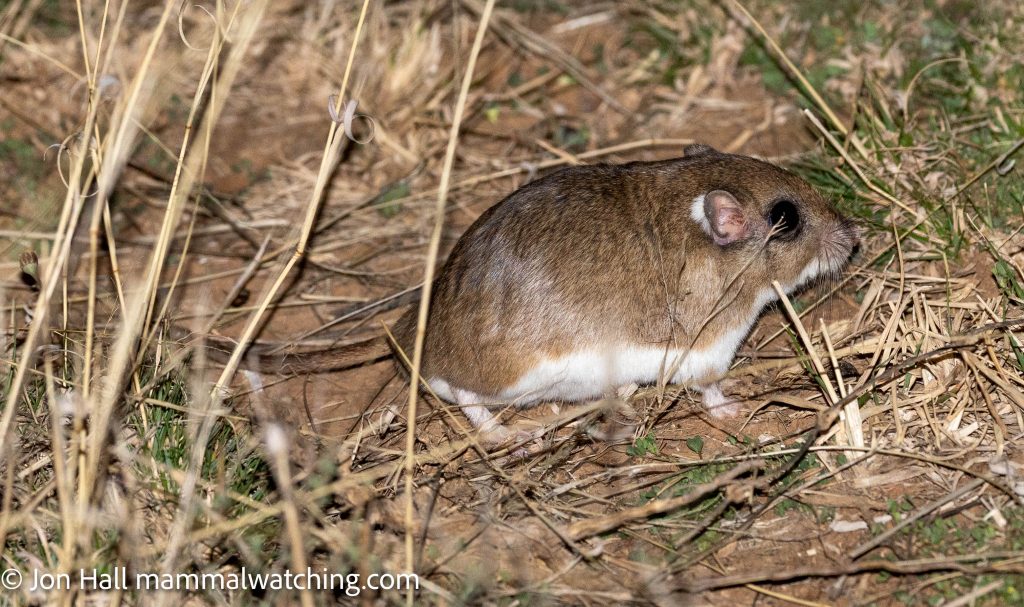
Cape Short-tailed Gerbil (Desmodillus auricularis)
I am not going to lie: looking for the Black-footed Cat was hard work, especially at the end of August when it’s a bit chilly to spend five hours in the back of a safari vehicle. Although we were unsuccessful we ended up within 100-200 metres of the collared cat. PC and Kyle had gone out in the afternoon to locate the animal’s den to know where to start so we headed in that direction. By midnight, after many twists and turns the cat was only a few hundred metres away. The trouble is there are many fences, few tracks and even fewer gates on Khoisan Karoo so driving in a straight line is impossible. We eventually gave up the chase when we figured out the cat had crossed into a neighbour’s property where we couldn’t continue our search.
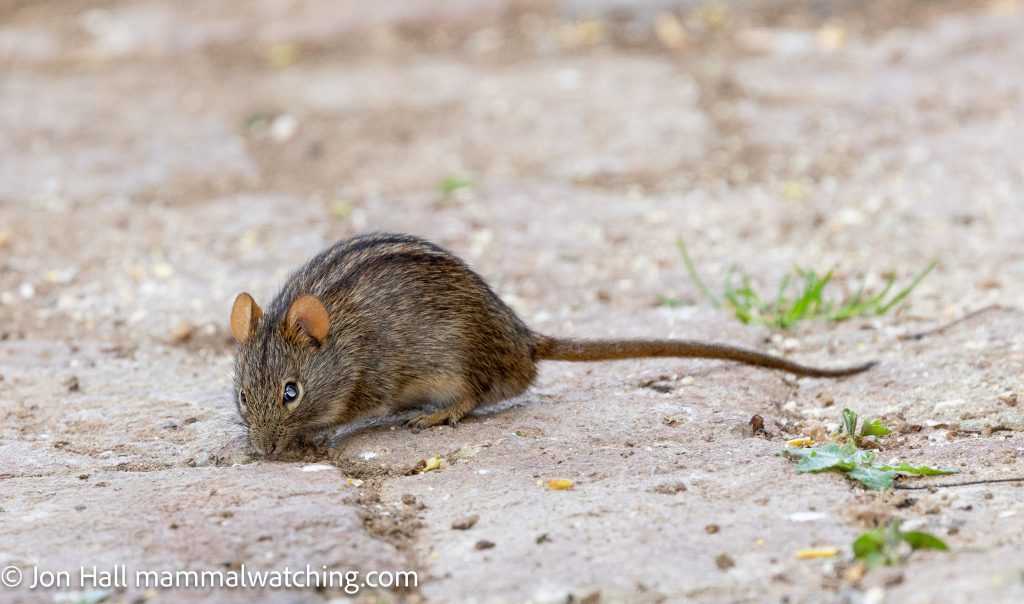
Karoo Four-striped Grass Rat (Rhabdomys intermedius)
During the day I saw my lifer Intermediate Striped Mice. They are easy to spot near the dining room at breakfast time where they look for seeds under the birdfeeder, and along the path to the small pond next to the dining area. We also had Yellow Mongoose, habituated Meerkats and South African Ground Squirrels in the late afternoon and early morning.
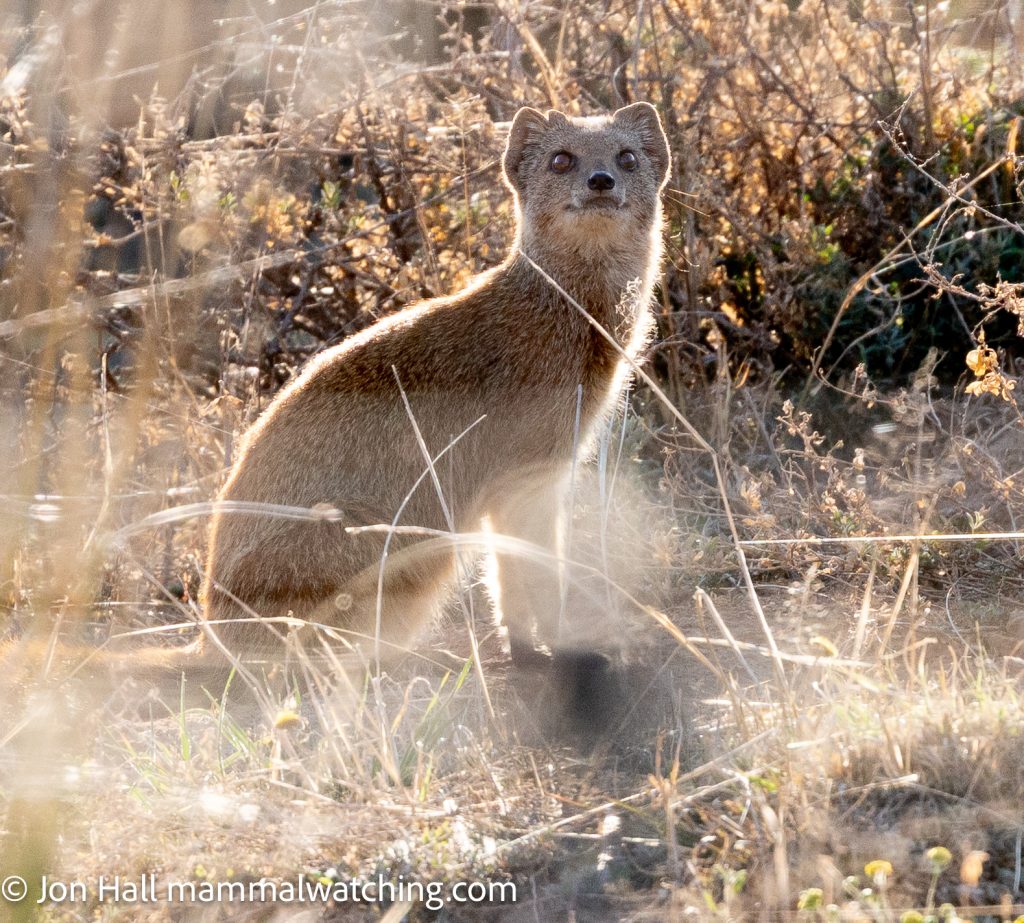
Yellow Mongoose (Cynictis penicillata)
A few Sherman traps along the base of a rocky hill caught two rodents. From the measurements they appear to be very fluffy Namaqua Rock Mice. We were unable to catch any of the gerbils – likely Highveld Gerbils – in traps set around their burrows.
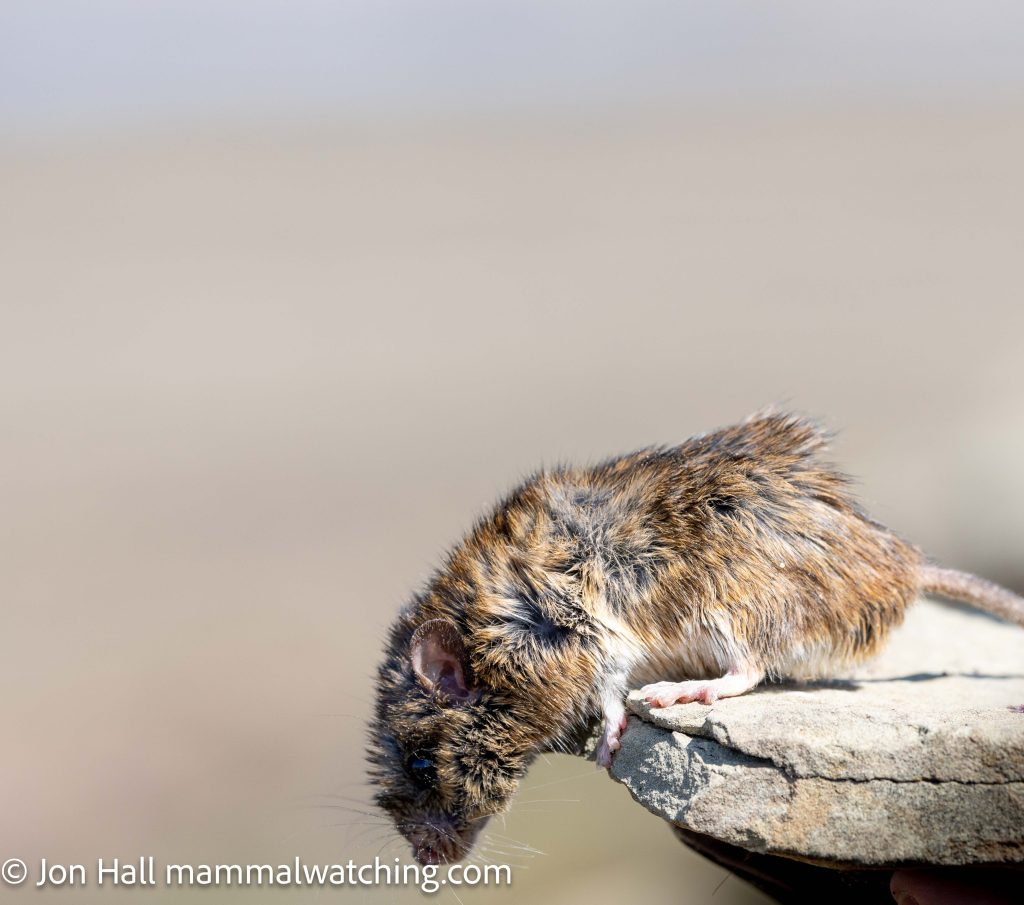
Namaqua Rock Rat (Micaelmys namaquensis)
Given the almost total overlap in species between here and Marrick Safari I don’t see much benefit in visiting both places on one trip. It has been almost 20 years since I was at Marrick so things may have changed, but my impression is Khoisan Karoo is more comfortable.
Being able to offer Black-footed Cat tracking is a selling point for many mammalwatchers. But with only one collared cat the chances of seeing it in just one or two nights seems quite low given the logistics of travel across the property. That said the odds are probably better than anywhere else I know of, and will be higher if the researchers are able to collar more animals.
Glengarry, KwaZulu-Natal
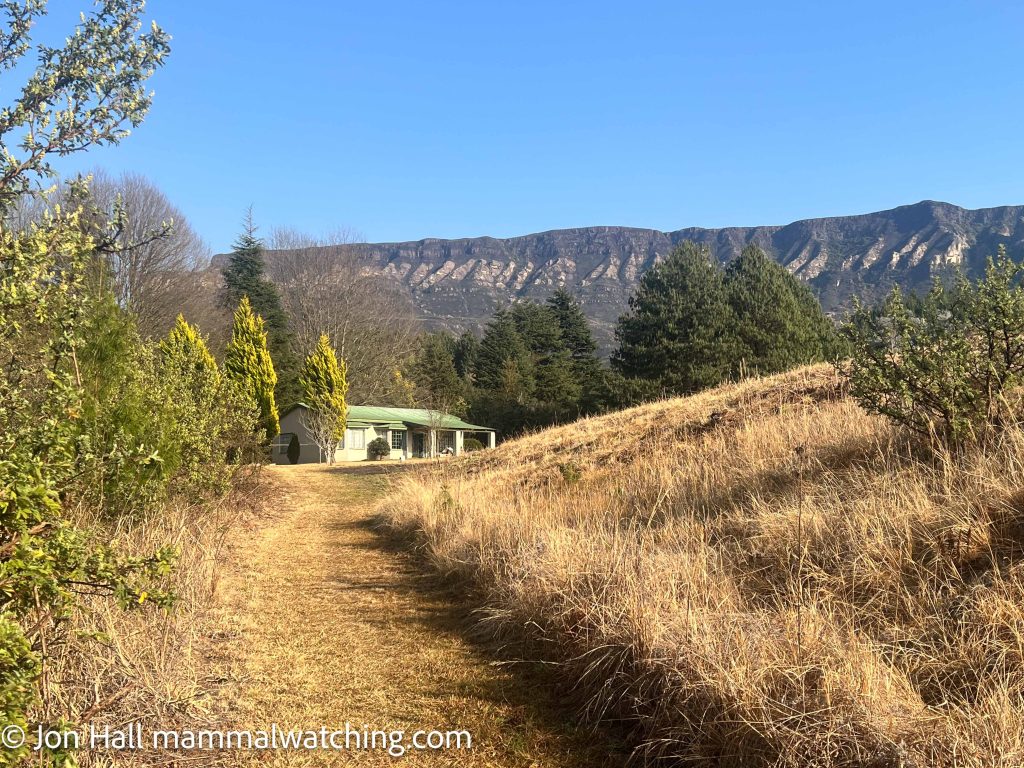
It took a full day’s drive north east to our next stop near Nottingham Road, where we stayed with friends of Kyle – Gary Nicolau and Emily Jackson. Gary and Emily, two biologists, had generously offered to put us up and we had a fun two days talking about – and looking for – mammals.
A few years ago Kyle had spent time at the Glengarry Guest Farm, next door to Gary and Emily’s place, catching Natal Mole-rats and Hottentot Golden Moles. He hoped to catch those two species while I explored Lesotho for a day.
The animals were much harder to catch than Kyle anticipated. Despite two nights here he didn’t manage to catch either species. He now believes that the tunnels he set traps in belonged to the golden moles, which are generally much harder to catch.
The mammalwatching around the property was otherwise good. It took me five minutes to find a beautiful Brant’s Climbing Mouse here: I hadn’t even brought my camera with me and thought I would just turn on the thermal scope for a quick scan. Great views but no camera. The next evening I saw another – again soon after dusk – which bolted as soon as I shone a light on it.
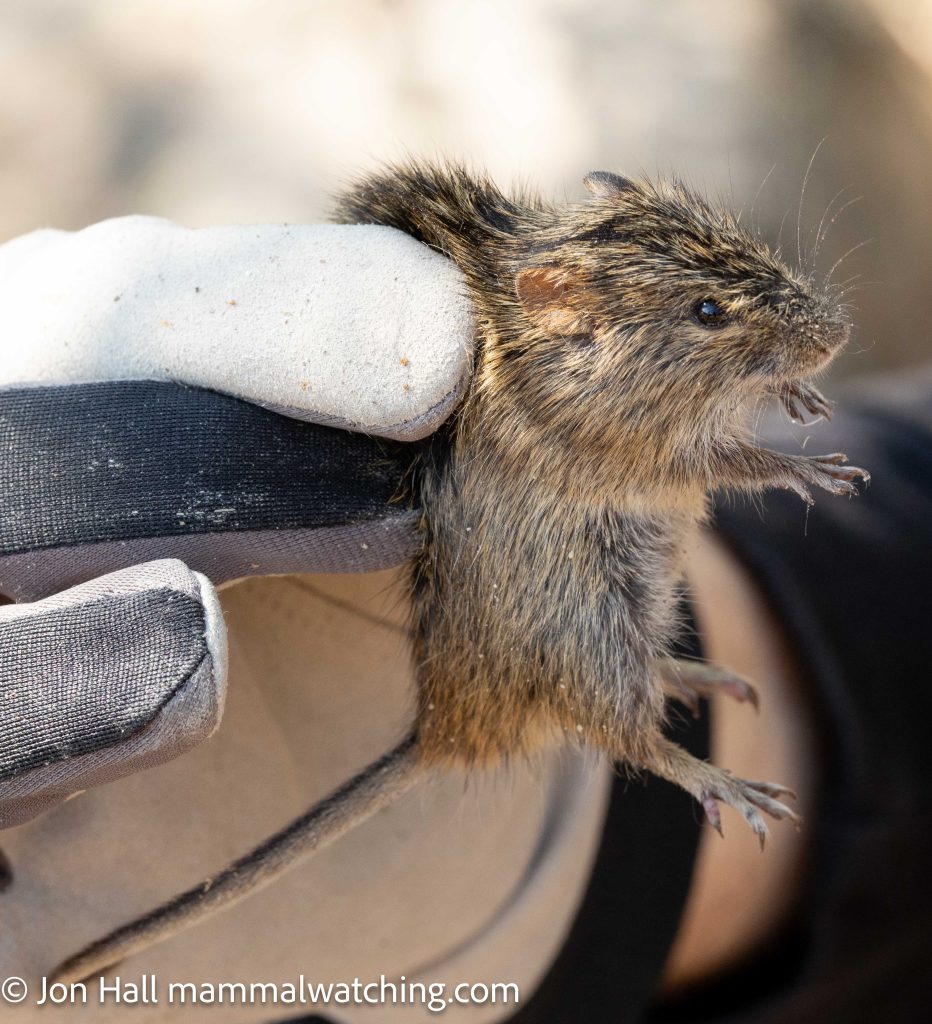
KwaZulu Natal Four-striped Grass Rat (Rhabdomys chakae)
If – like me – you are confused by the various iNaturalist records of climbing mice that look identical but come with different identifications then it will be useful to know that Chestnut Climbing Mice are no longer found in South Africa. Brant’s are likely a complex of species (but for now are all Brant’s). The other option here – Grey Climbing Mice – seem to be much greyer (surprise!) than the rich red brown Brant’s species.
A night walk and night drive also produced Common Reedbuck, Cape Porcupine, Black-backed Jackal, Rhebok and a cat that might have been more wild than domestic.
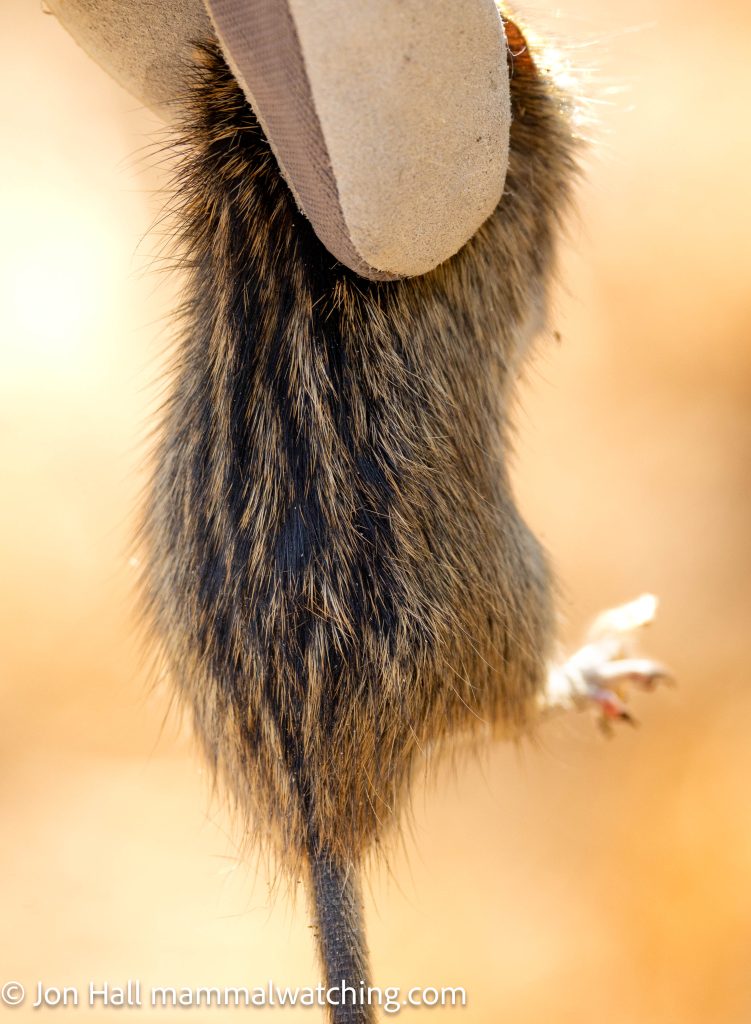
KwaZulu Natal Four-striped Grass Rat (Rhabdomys chakae)
Sherman’s in the garden caught several of the local KwaZulu Four-striped Grass Mice, a lifer for me. And a Cape Clawless Otter was using the dam the morning we left.
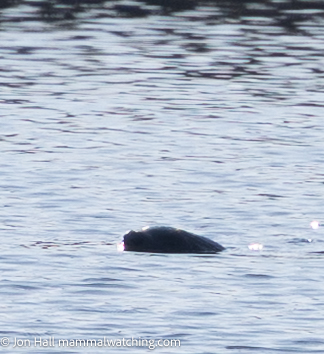
African Clawless Otter (Lutra capensis)
Lesotho
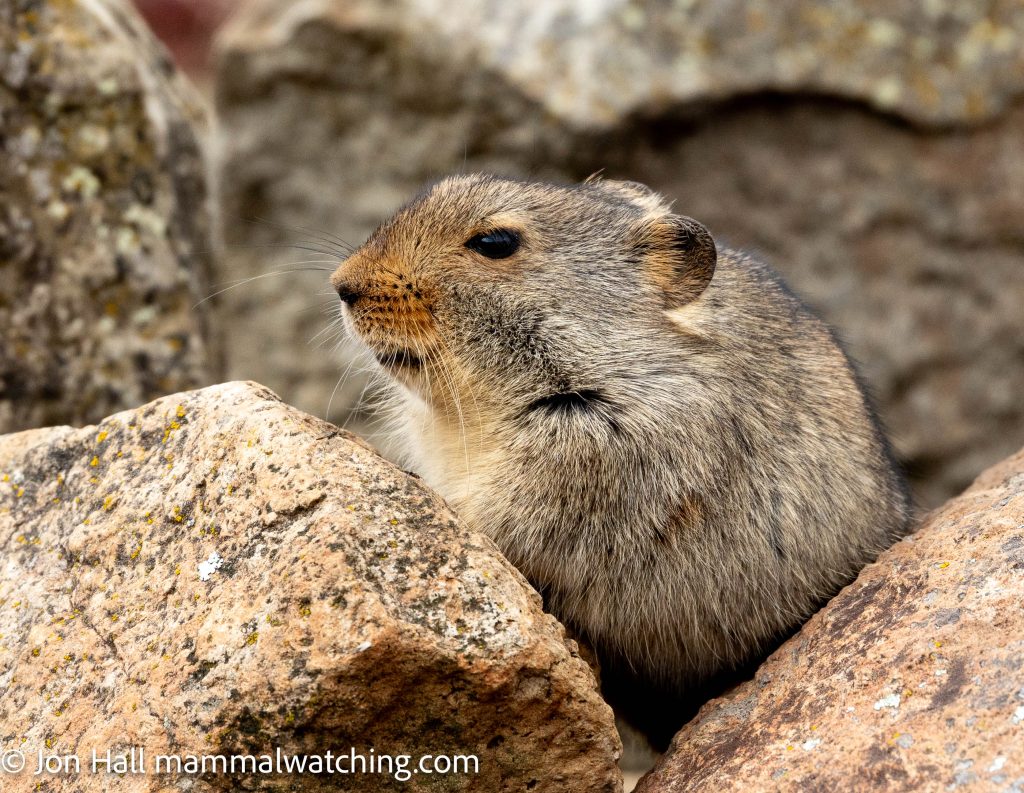
Sloggett’s Ice Rat (Otomys sloggetti)
The main reason, of course, to visit the tiny mountain kingdom of Lesotho is to see Sloggett’s Ice Rat.
I’d tried to visit in 2009 but ran out of time and vehicle power to get over the border.
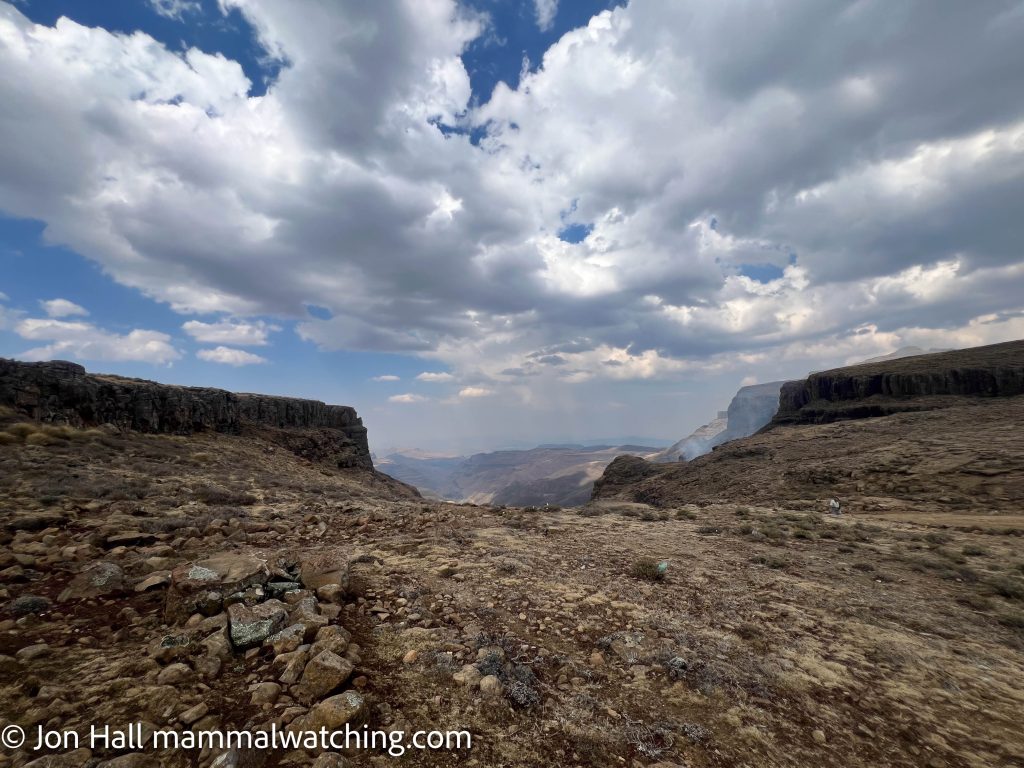
Sloggett’s Ice Rat habitat
This time I decided to enlist the help of Himeville-based bird and nature guide Stuart McLean who runs day trips into Lesotho. He was recommended to me by both Kyle and Valentin Moser and I add to their recommendations. He’s a great guy, very knowledgeable and after driving up the road into Lesotho I’m glad I didn’t subject my rental car to the trip. Not something to attempt unless you have taken out full insurance cover. He also has some great stories about his army days – and how to combine soldiering with birding – when he served with Rod Cassidy of Sangha Lodge fame.
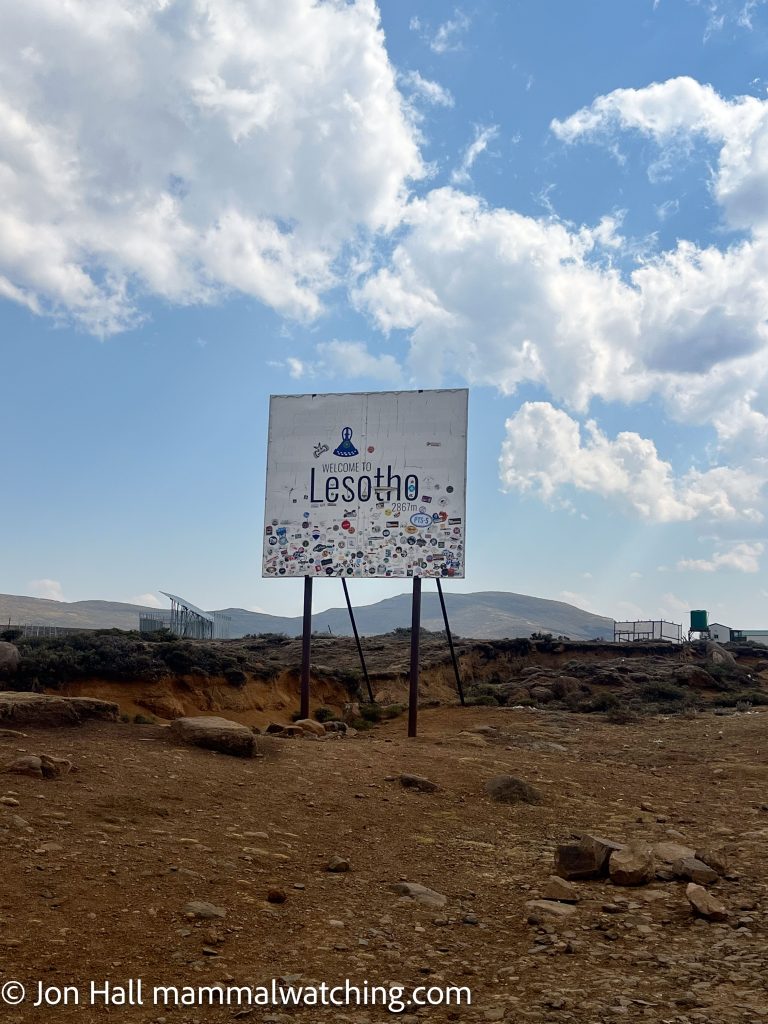
As Stuart predicted the ice rats were easy to see around the Lesotho border post. Note that the Lesotho border post is, unlike the South African border post, at the actual border. It is a bone-juddering eight kilometers up the Sani Pass from the South African checkpoint.
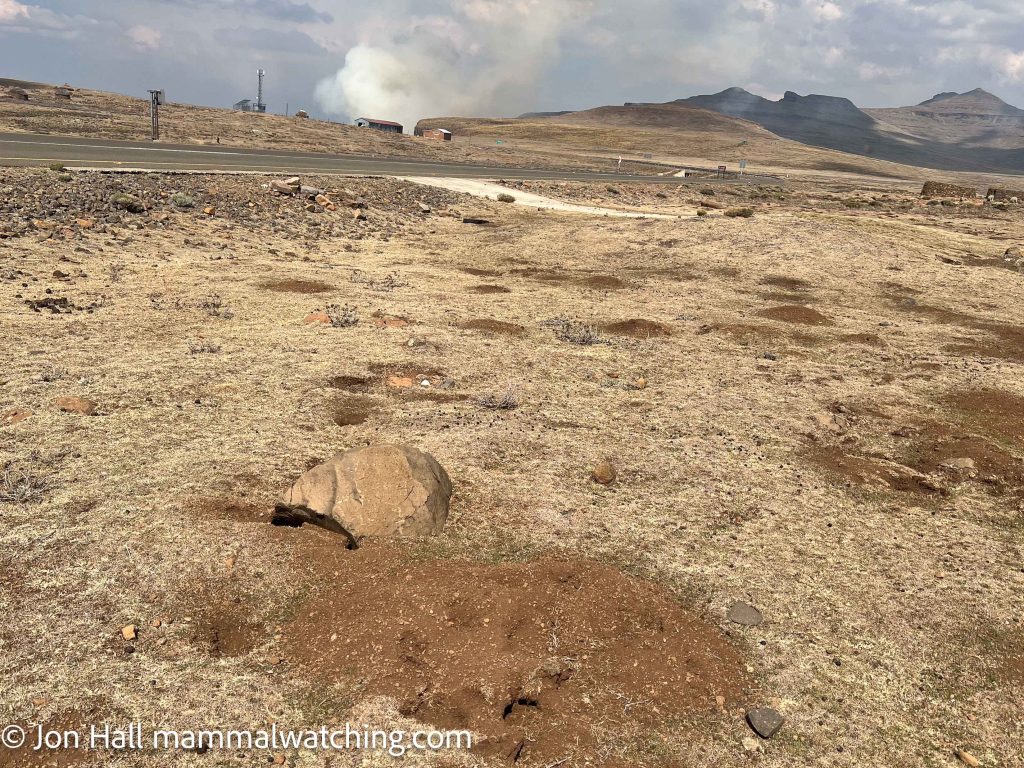
Sloggett’s Ice Rat burrows
The area around the pub and just below it is a very good spot to see these diurnal rodents. If you want to eat at the pub you now have to arrange that in advance.
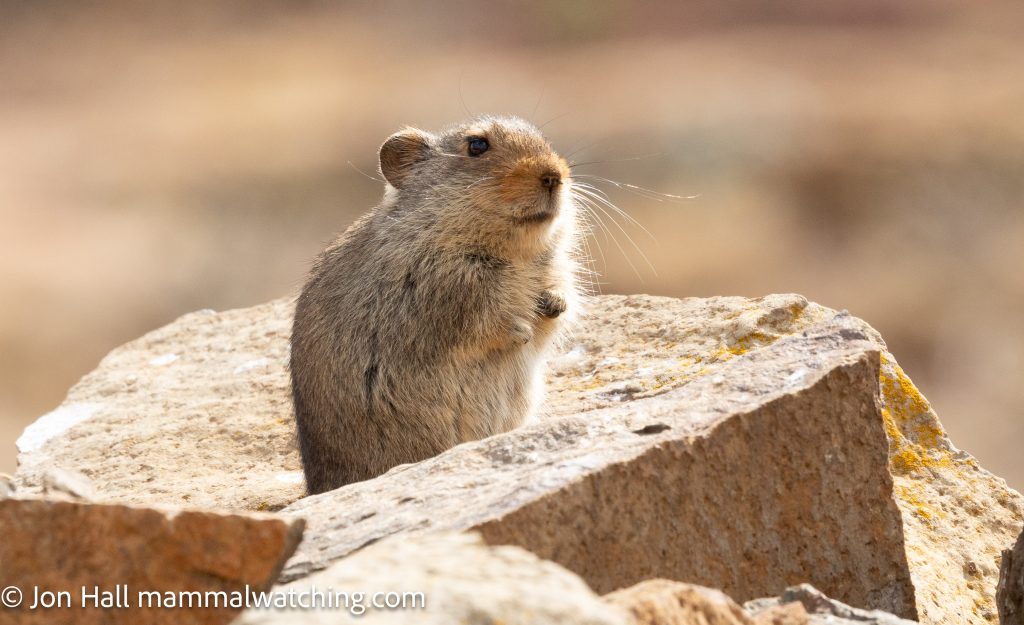
Sloggett’s Ice Rat (Otomys sloggetti)
We didn’t see any other mammals up there, though we did investigate plenty of mole-rat mounds and kept an eye out for the Striped Weasel that Stuart had seen once a few kilometers into Lesotho running along the road on a foggy morning.
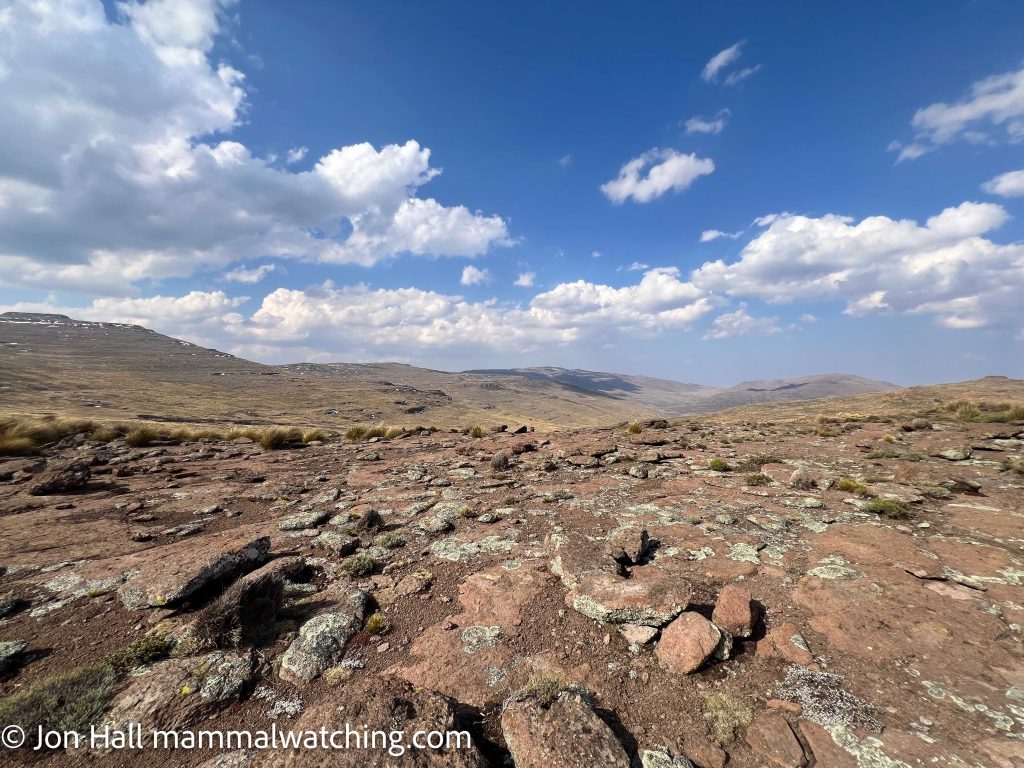
Red rock rabbit habitat
We also explored a rocky hill next to the road here where Stuart had seen red rock rabbits (probably Hewitt’s but possibly Natal). No sign of the rabbits in the mid-afternoon but there were several middens full of fresh poop.
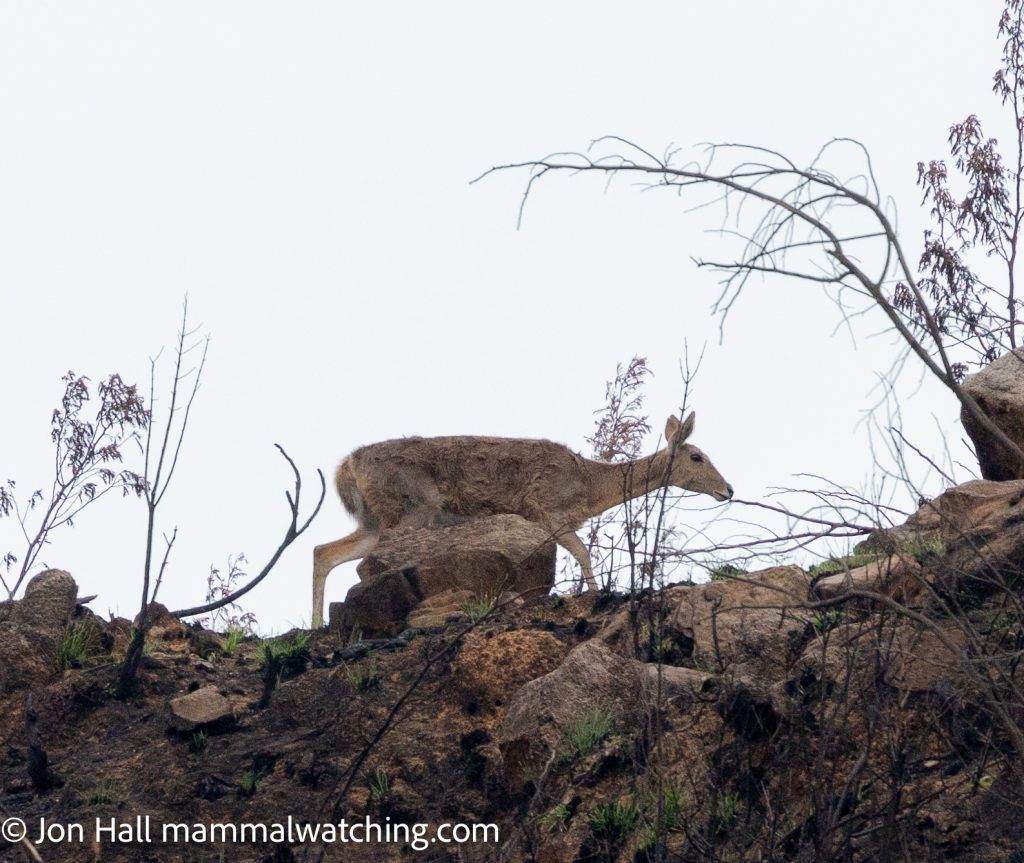
Southern Reedbuck (Redunca arundinum)
On the way back down to Stuart’s place in Himeville we saw Chacma Baboon, Eland and Southern Reedbuck. Stuart was very surprised not to see Rock Hyrax.
We quickly scanned a couple of ponds around Himeville for Spot-necked Otters which are quite common up there, but I wasn’t lucky. I only spent five hours with Stuart and with more time I am sure we would have seen more.
One tip. Beware that my international call phone plan didn’t cover Lesotho – one of only a handful of countries not covered by T-Mobile. So I started getting alarming texts from T-Mobile telling me my data was being charged at $2 a mb. I turned off my phone. Back on the South African side I made the mistake of turning my phone back on before I was back in Himeville and got connected again to the Lesotho network but didn’t realise for several minutes. I am too afraid to look at the bill.
eSwatini (Swaziland)
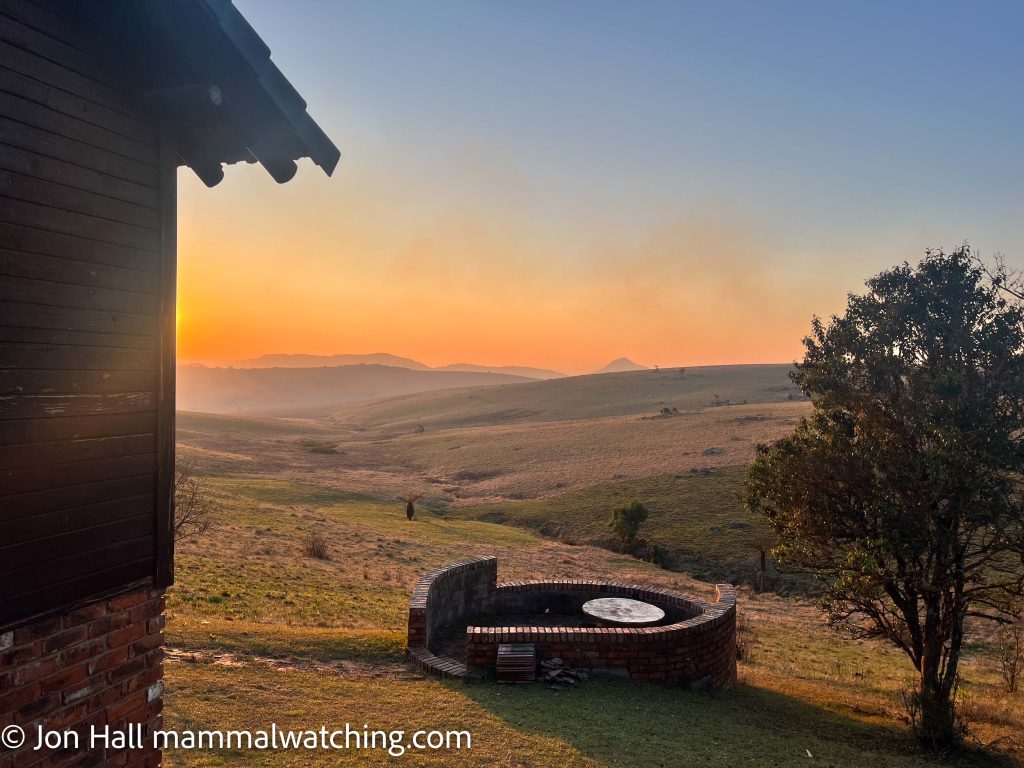
Natal Red Rock Hares were a target for me on this trip, but information on where to find them was sparse. There were a handful of “research” level records on iNaturalist but it isn’t at all clear whether any of the IDs are correct. Natal and Hewitt’s Red Rock Hare overlap for parts of their ranges and look almost identical. At least one piece of research claims that the Natal species do not occur as high as Hewitt’s. So the records of the Natal species from the top of Sani Pass and Golden Gate, for instance, are more likely Hewitt’s.
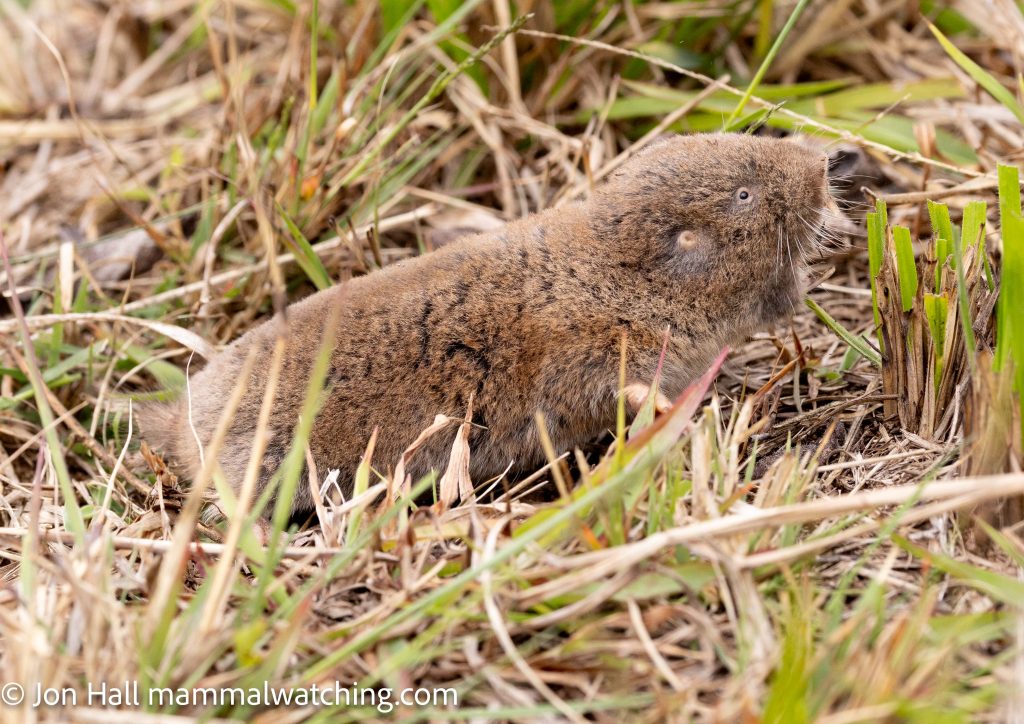
Natal Mole-rat (Cryptomys natalensis)
The only reliable report of the species on mammalwatching that I could recall was from Dominique Brugiere’s 2013 trip report where he saw “six very confident” Natal Red Rock Rabbits around the campground in Malalotja National Park. Here, at least, only the Natal species is in range.
So off we went. Even if I dipped on the rabbit I would get a new country tick.
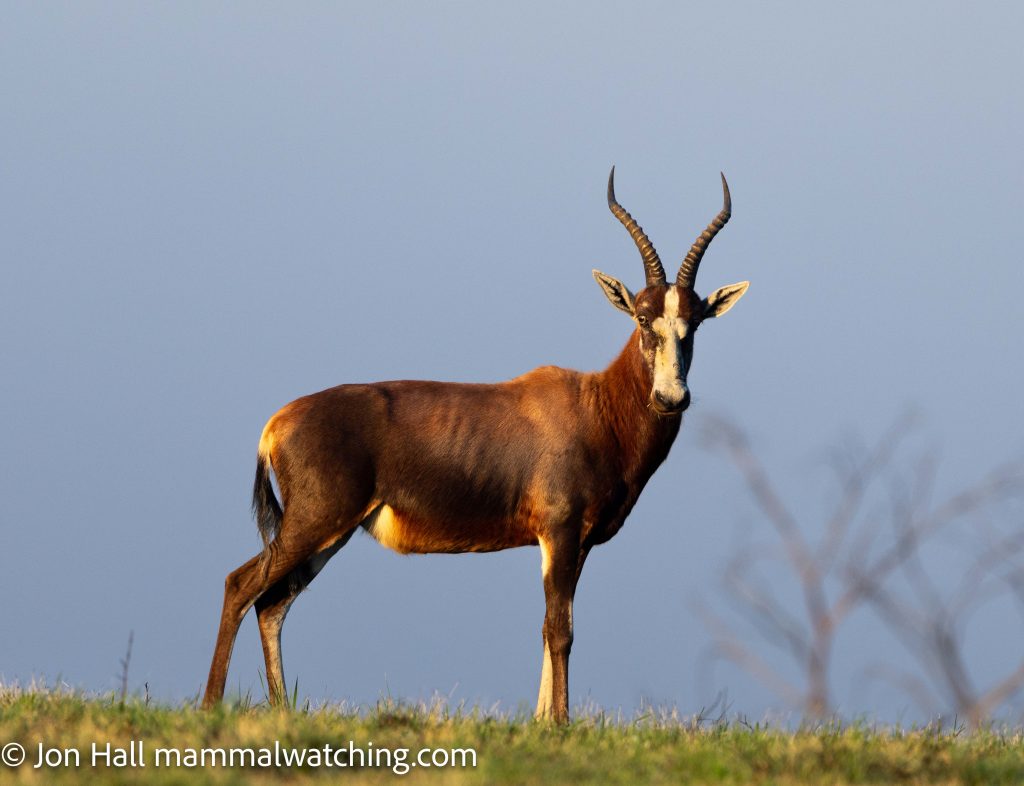
Bontebok (Damaliscus pygargus)
It took about an hour to get through the Oshoek Border Post. It would have been quicker had we arrived five minutes earlier to pay our vehicle tax on the Swaziland side and avoided the painfully slow shift changeover.
If you are taking a hire car from South Africa into eSwatini you will need to ask your rental company for a letter granting permission. Woodford Car Hire were happy to issue that to me for a smallish fee. No one at the border asked to see it.
On the eSwatini side you need to pick up a piece of paper for your car first and hand that over to the immigration agents who stamp your passport. After that you need go a pay a few dollars of import duty (and possibly wait half an hour at the shift change while the new customs officer organises her phone, sunglasses and keyboard into the perfect position) .
The national park is just 30 minutes from the border. It was scenic and largely deserted. The staff at the gate were super helpful and confirmed there was no problem at all driving around the park at night or visiting the campsite. We had booked a cabin about 10 minutes drive from the campsite. To book a cabin you can chat with the very responsive park staff on WhatsApp here.
Oh and my T-mobile plan didn’t cover eSwatini either but there is wifi in the cabins.
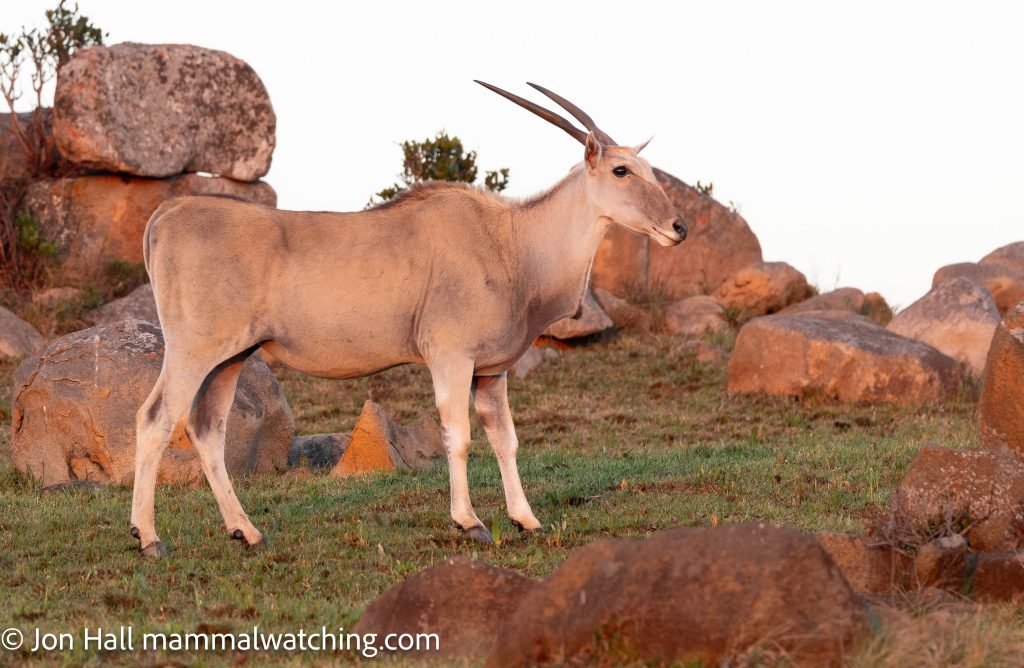
Common Eland (Tragelaphus oryx)
We spent an hour in the campsite at dusk, another hour or two there after dark and returned again early the following morning. No rock rabbits. The habitat looked pretty good but there was no sign of the animals themselves. They may not be as abundant as when Dominique visited but they must still be there: there is a July 2026 iNaturalist record of ‘Hewitt’s’ Red Rock Rabbit from the campsite.
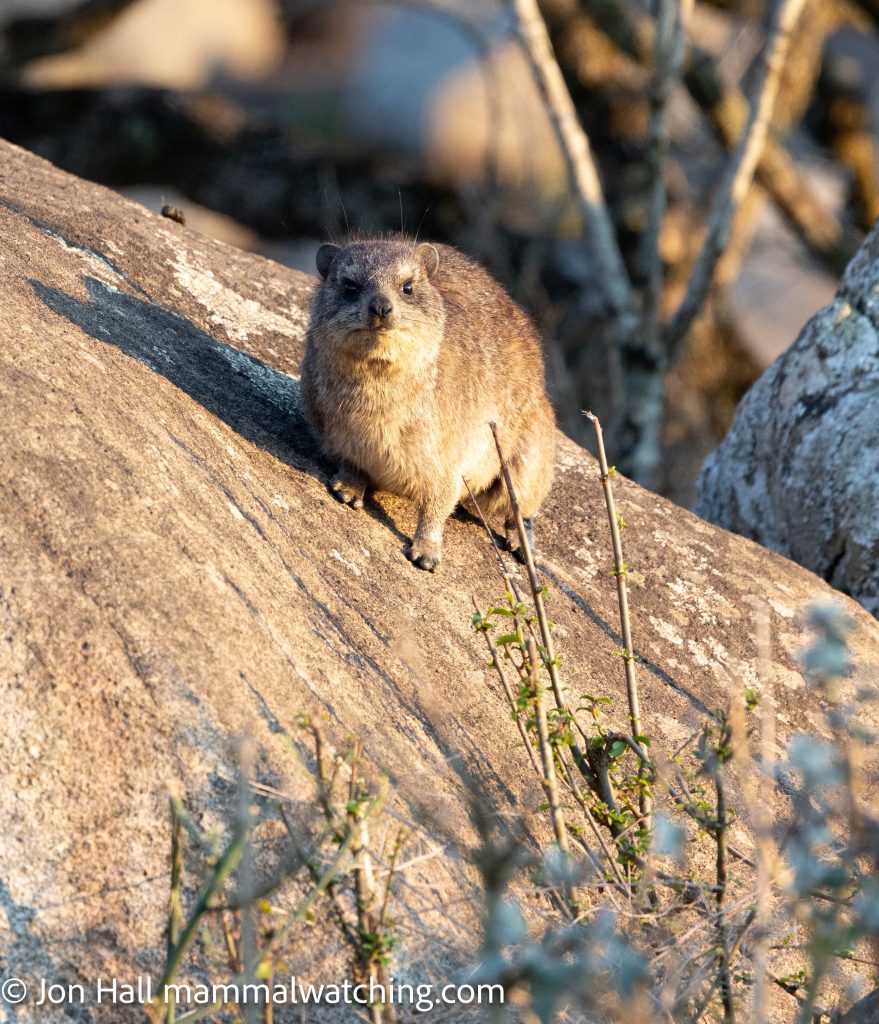
Rock Hyrax (Procavia capensis)
We did see plenty of Rock Hyrax at the campsite, as well as abundant Bontebok and Eland in the park. I saw a Bushpig at dusk, while Kyle saw Rhebok and Warthog in the early morning.
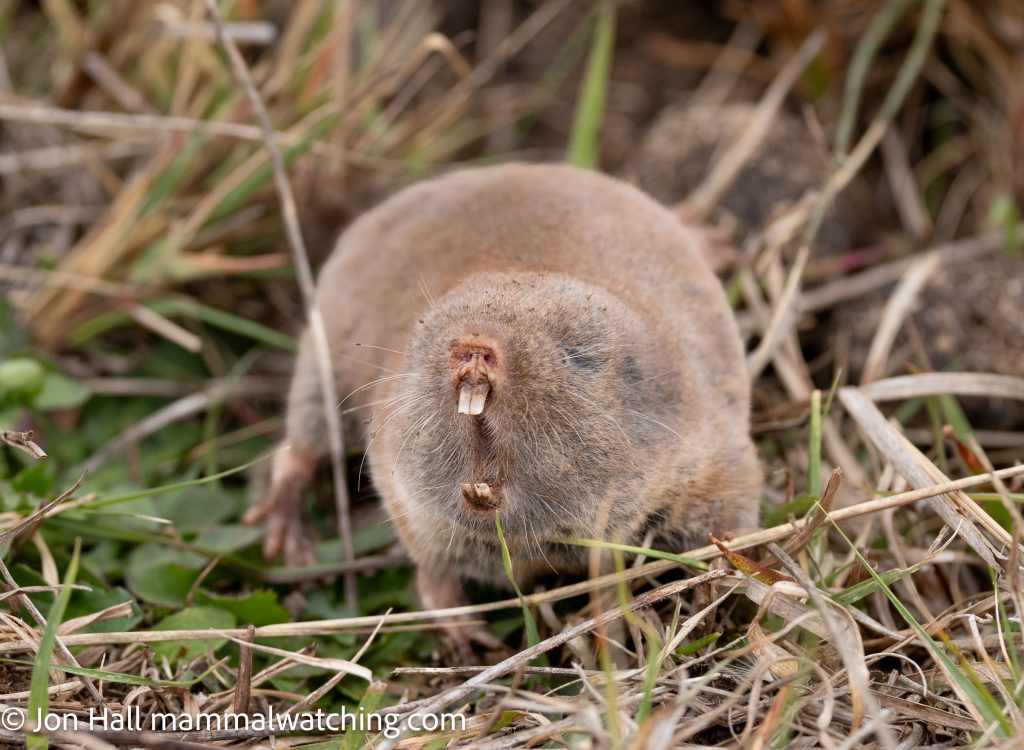
Natal Mole-rat (Cryptomys natalensis)
Best of all, Kyle managed to catch a Natal Mole-rat – the species we had missed at Glengarry – in a trap just outside the park. The fourth mole-rat of the trip!
Heidelberg, Gauteng
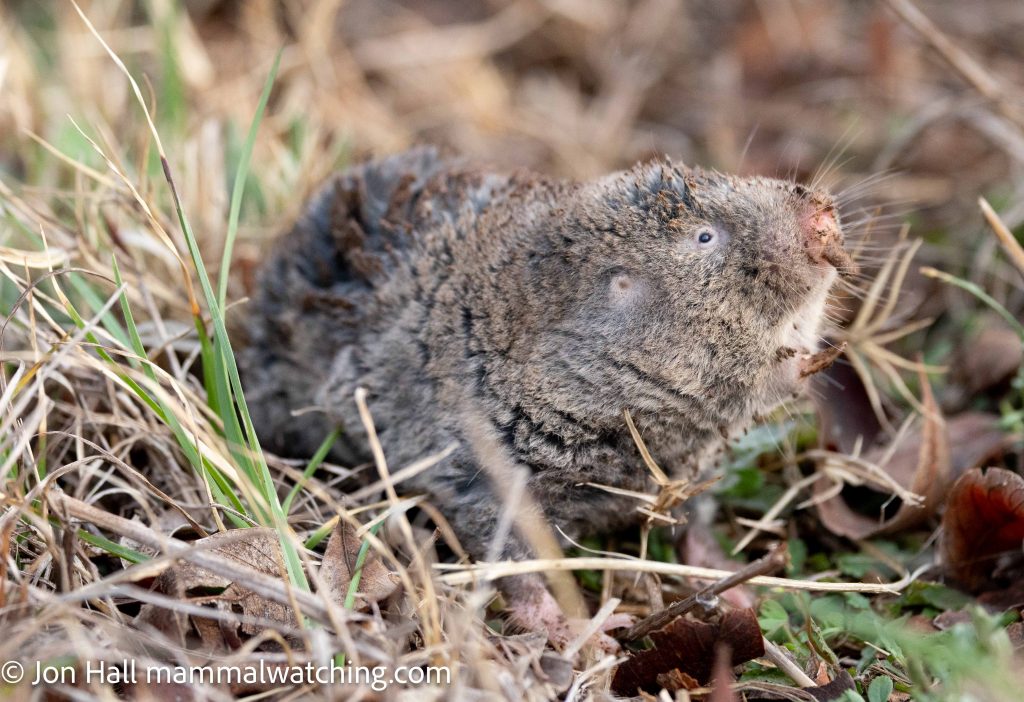
Highveld Mole-rat (Cryptomys pretoriae)
We spent our final night near Heidelberg, close to Jo’Burg airport and convenient for our flights the following morning. We rented cabins at the Tuin van Eden Guest Farm.
The weather was awful – very strong winds and rain – but Kyle set three mole-rat traps along the drive into the farm in the faint hope we might catch a Higheld Mole-rat. We checked the traps twice in the evening and there was no activity. So I had little hope when we stopped to collect them early the following morning on the way to the airport. But we had a capture: Highveld Mole-rat! What a great way to end the trip.
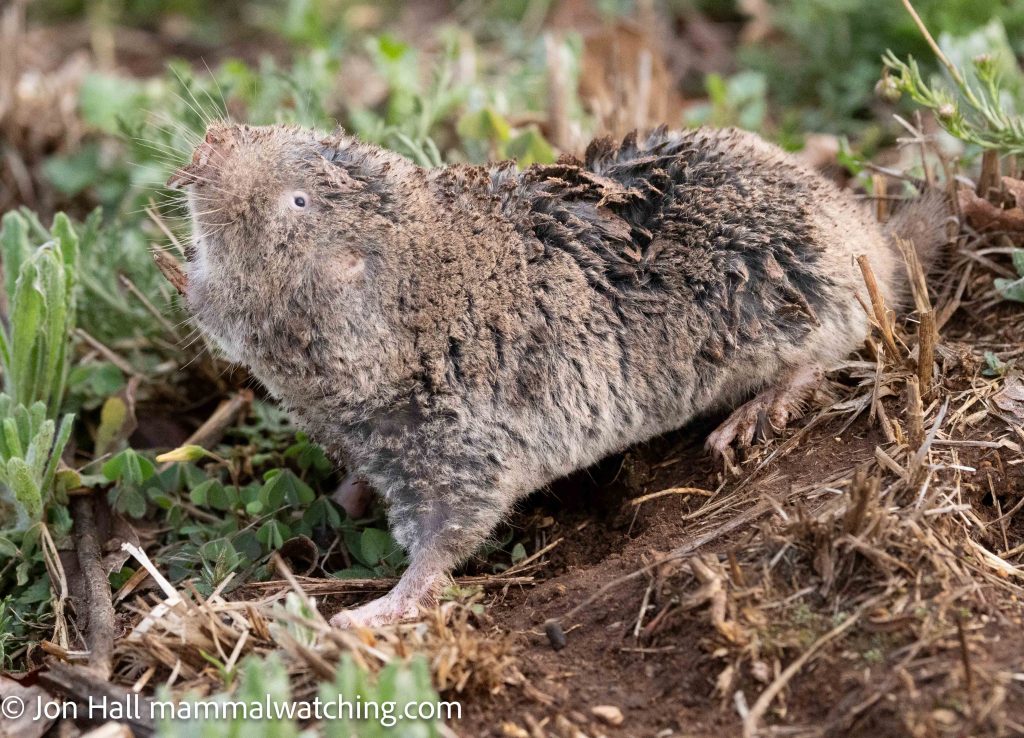
Highveld Mole-rat (Cryptomys pretoriae)
I will be runnning a tour to South Africa in November next year. I am still figuring out the details but am hoping to bring Kyle along to target some of the smaller mammals, including mole-rats, as well as chase some of South Africa’s rarer megas including Black-footed Cats, Riverine Rabbit and Striped Weasel. If you are interested please let know and I will send you details as they take more shape.
Thank you
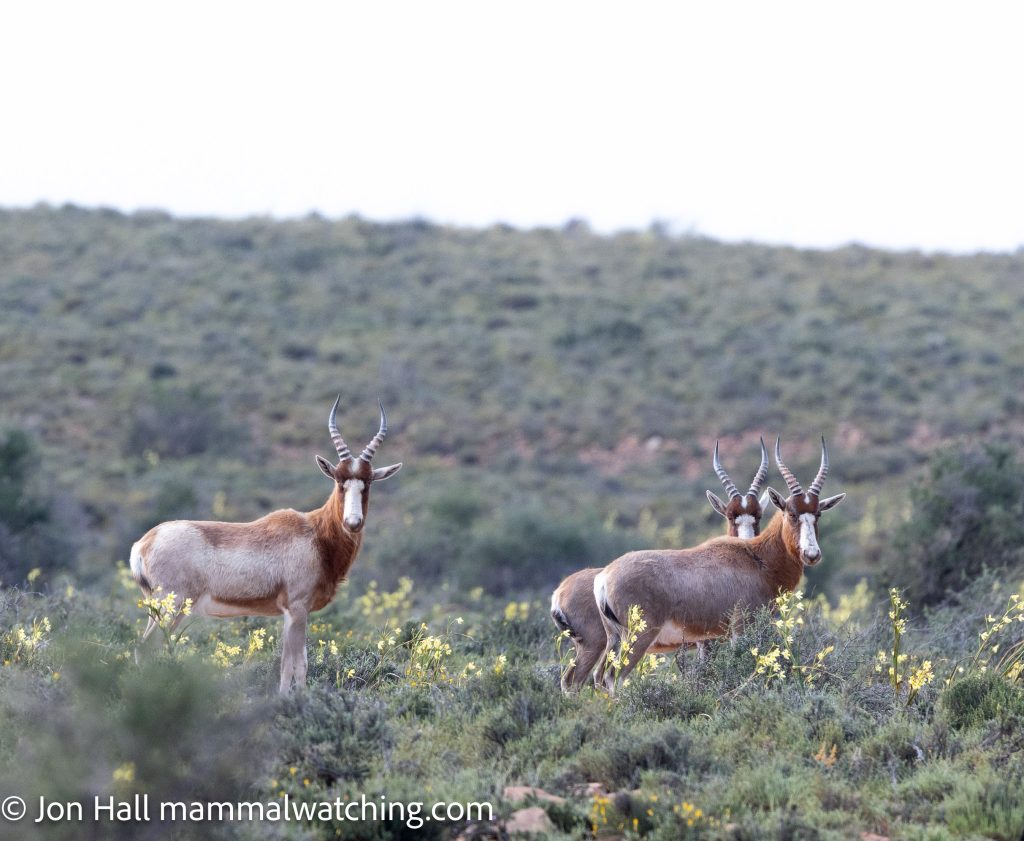
Bontebok (Damaliscus pygargus), Gourikwa Reserve
I had lots of help and hospitality during the trip. A special thanks to Nik and Chrissie in Betty’s Bay, Gary and Emma in Glengarry, and PC in Khoisan Karoo and Mathilde Stuart in Loxton for looking after us so well. South African hospitality is legendary! Also many thanks to Collette Hurt in Prince Albert for showing us around, and a shout out to Zac Babbit, Valentin Moser and Paul Carter in particular for their very helpful trips reports which helped inspire this trip. But the biggest thanks of all – of course – goes to Kyle for travelling with me, doing more than his fair share of the driving and catching all those mole-rats!
Kyle is an academic but might be available to guide trips occasionally, and we are planning to join forces again for the trip I will be running next year. You can reach Kyle on Instagram (@herping.birder).
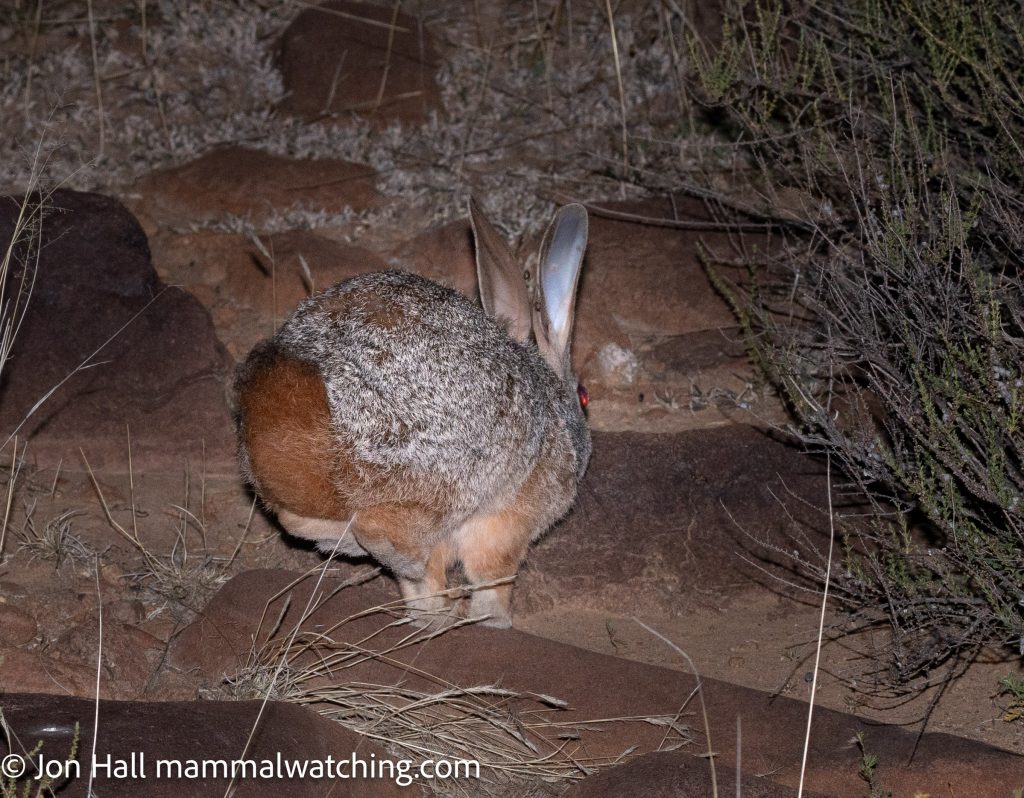
Smith’s Red Rock Hare (Pronolagus rupestris), Khoisan Karoo
Trip List
Karoo Rock Sengi (Elephantulus pilicaudus) – endemic
Aardvark (Orycteropus afer)
Rock Hyrax (Procavia capensis)
Vervet Monkey (Chlorocebus pygerythrus)
Chacma Baboon (Papio ursinus)
Cape Hare (Lepus capensis)
Scrub Hare (L.saxatilis) – endemic
Smith’s Red Rock Hare (Pronolagus rupestris)
Hewitt’s Red Rock Hare (P.saundersiae) – endemic
Cape Porcupine (Hystrix africaeaustralis)
Cape Dune Mole-rat (Bathyergus suillus) – endemic
Common Mole-rat (Cryptomys hottentotus) – endemic
Natal Mole-rat (C.natalensis)
Highveld Mole-rat (C.pretoriae) – endemic
Cape Mole-rat (Georychus capensis) – endemic
Eastern Gray Squirrel (Sciurus carolinensis) – introduced
South African Ground Squirrel (Geosciurus inauris) – endemic
Southern African Springhare (Pedetes capensis)
Cape Short-tailed Gerbil (Desmodillus auricularis)
Grant’s Rock Rat (Micaelamys granti) – endemic
Namaqua Rock Rat (M.namaquensis)
KwaZulu Natal Four-striped Grass Rat (Rhabdomys chakae) – endemic
Karoo Four-striped Grass Rat (R.intermedius) – endemic
Southern African Vlei Rat (Otomys irroratus) – endemic
Sloggett’s Vlei Rat (O.sloggetti) – endemic
Brants’s Whistling Rat (Parotomys brantsii) – endemic
Brants’s African Climbing Mouse (Dendromus mesomelas)
Long-eared Desert Mouse (Malacothrix typica)
Gray African Climbing Mouse (Poemys melanotis)
Zorilla (Ictonyx striatus)
African Clawless Otter (Lutra capensis)
Black-backed Jackal (Lupulella mesomelas)
Bat-eared Fox (Otocyon megalotis)
African Wildcat (Felis lybica)
Yellow Mongoose (Cynictis penicillata)
Egyptian Mongoose (Herpestes ichneumon)
Cape Gray Mongoose (H.pulverulentus) – endemic
Meerkat (Suricata suricatta)
Southern Aardwolf (Proteles cristatus)
Cape Genet (Genetta tigrina) – endemic
Mountain Zebra (Equus zebra)
Bontebok (Damaliscus pygargus) – endemic
Springbok (Antidorcas marsupialis)
Steenbok (Raphicerus campestris)
Bush Duiker (Sylvicapra grimmia)
Klipspringer (Oreotragus oreotragus)
Rhebok (Pelea capreolus) – endemic
Southern Reedbuck (Redunca arundinum)
Mountain Reedbuck (R.fulvorufula)
Common Eland (Tragelaphus oryx)
Warthog (Potamochoerus africanus)
Bushpig (P. larvatus)
52 species, 13 lifers in bold

Post author
Leave a Reply
You must be logged in to post a comment.