

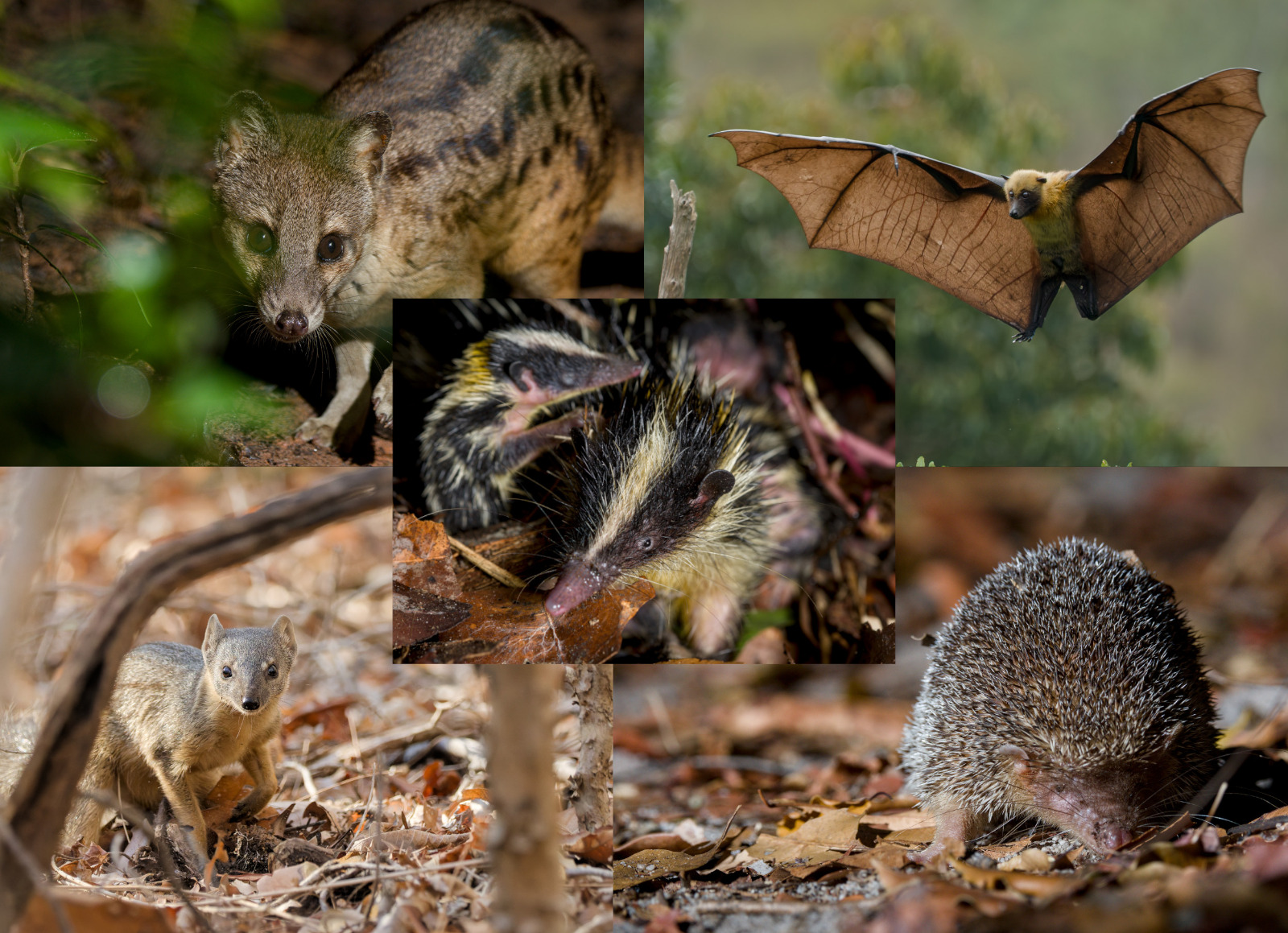
Madagascar 2025: On overthrowing a government
Even way before I got into wildlife observations, many years ago when I only started travelling for general adventurous purposes, Madagascar intrigued me. I almost went a few times, but something got in at each occasion and luckily, Madagascar waited for me till I got deep into wildlife watching, gained more experience, got more into wildlife photography, bought a better photography gear and stopped travelling on a shoestring, all of which made the trip way more enjoyable than what it were otherwise.
As this was an independent trip, I try to include as much practical info as possible, so if you are only interested in sightings, just scroll till you see colourful letters in bold.
I went to Madagascar with my friend Sara from Italy, whom I met during my Erasmus exchange programme. Originally we (pre)planned going with guys I went to Chile in 2019 with, but they all chickened out for more or less credible reasons, and as I did not want to go alone given necessary costs and means of travel in the country, I asked around and got a lone Italian gal, to which arrangement of travel my wife graciously agreed to. So kids, go to Erasmus, you might go to Madagascar because of that. And kids, marry well, just as I did 🙂 . At that time, I had everything planned and I was a bit worried if Sara will enjoy a wildlife dedicated vacation (I was pretty sure that at least some of the “Chile guys” might not), but more on that later.
We arranged most things independently, travelling in three blocks:
– Andasibe from Tana, we travelled to and from by a taxi, but if schedules were suitable, this could be done by public transport
– Kirindy – Anja – Ranomafana – Tana, which we did with a driver
– Ankarafantsika, which we did with SoaTrans, including a night bus back
I considered also Isalo, Ifaty and Palmarium, but the latter is a zoo and I did not want to spend too much time just on aye-aye, and the other two are not so interesing on a mammal front, and even if I were to focus on herps (which I was not), this was not the season. We went late September to mid October, 20 days including travel (17 nights), and from what I gathered, going in second half of October might be better, as herps are more active, and so are many non-primate mammals, such as tenrecs. On the other hand, it only rained once in Antananarivo, and we got to see many fresh lemur babies.
I estimated, that the trip when going in pair would cost 1620 € per person plus flights (2184 € if going single). In fact, it cost 1629 € 😀 . Plus 220 € flight to Morondava, so total costs after entering Madagascar were 1872 €. My estimation was not that on spot, though, we spent way less on food and accommodation and quite a bit more on guides. Anyway, per day basis this was my second most expensive vacation after Kenya.
I was not quite sure of the photogear to bring, but eventually I had:
Nikon D500 + Tamron 150 – 600 G2
Nikon D600 + 24 – 120 f/4 + Tamron 90 mm macro + Laowa 15 mm f/4 macro
Godox V860III + X2T remote controller + a small softbox
Monopod
Xinfrared T2 Pro
I did not use the wide angle lens neither the monopod at all, probably because I do not generally use them much at home. The thermal camera also did not get as much use as I would expect.
I was not sure if to bring 100 – 400 or 150 – 600, but I think there were more times I was glad for reach (mostly for sauropsids, but sometimes mammals as well) than those I wished I had closer minimum focusing distance or wider angle of view (for lemurs). If I wanted to change between the macro and 24 – 120 in a jungle, the wide angle angle (ha ha…) would dissapear.
Here is a focal length distribution of photos I kept, excluding those for iNat identification purpose only:

And focal length of those I considered remotely decent:

This was my first tropical vacation with 900 mm eq. reach, before I travelled with 400 mm and once with 600 mm eq., so I cannot compare it to anything, but I felt that wildlife here definitely was closer than other places – lemurs mostly do not care and chameleons do not have any means to run away.
Gluten free side note: Madagascar is surprisingly easy to travel gluten free. Most of local food is safe, except for obvious things like noodles and soy sauce, and you would get gluten mostly in European dishes such as baguettes or (other) different takes on French cuisine. For a quick snack or breakfast, mofo gasy is a small fried rice cake, quite tasty, especially when warm.
Here is a list of useful contacts for indepentent travel (chronologically):
Bablo Mada Tour; +261 32 28 534 82; Tana based travel operator, offering transfers for good rates (in cars of variable quality) – a poor man’s Madassist
Divana; +261 34 28 467 76; a good guide in Andasibe
William; +261 34 16 116 28 a good guide in Andasibe and Maromizaha
Kirindy Forest Office; cfpfmva20051@yahoo.fr, +261 20 95 938 11, +261 32 40 165 89, Whatsapp +261 34 10 816 06
Patrick Randrianantenaina; +261 34 71 864 33; excellent guide in Ranomafana, also can arrange transport, accommodation and other things
Angelo Andrianiaina; +261 34 89 704 88; a bat researcher, who helped us to find the new fruit bat roost site near Ambositra
Maneva villager; +261 34 99 333 87; a local who could guide you to the fruit bat roost near Ambositra, only one call in Malagasy
SoaTrans; +261 37 37 370 01; English speaking Whatsapp contact, can book tickets, but payment needs to be done in an office, or via mobile payment
Ankarafantsika NP (Bungalow booking 8 am – 4 pm); +261 34 23 469 93
Modeste; +261 34 34 581 55; a good guide in Ankarafantsika
And here is a list of driving times in hours:
Ivato – Andasibe, 3:30
Andasibe – Ivato, 4:00
Baobab Alley – Kirindy Forest, 1:30
Morondava – Miandrivazo, 4:45
Miandrivazo – Antsirabe, 5:30
Antsirabe – Ambositra, 2:20
Ambositra – Fianarantsoa, 4:50
Fianarantsoa – Ambalavao, 2:30
Ambalavao – Fianarantsoa, 2:15
Fianarantsoa – Ranomafana, 1:40
Ranomafana – Ambositra, 5:30
Ambositra – Antsirabe, 2:15
Antsirabe – Tana, 5:45
via Soatrans
Tana – Maevatanana, 7:00
Maevatanana – Ankarafantsika, 2:45
Legend:
Mammal
Herp
Bird
Other
The rough start
I flew from Vienna in the evening of September 25th. My train arrived only 2.5 hours before the departure time, which, retrospectively, seems too bold, but everything worked out. When sitting at the airport, I got a fairly austere message from Bablo Mada Tour, whom I used to book a taxi to Andasibe: “Good evening, do you know the situation here now?” I researched a bit and found out that protests broke out in Antananarivo, and possibly elsewhere. Situation was fairly unclear, and from media it seemed any development was possible. In 2024, we were in Kenya during the country turning inside out, including getting in the middle of the tyre-burning stone-roadblocking angry-large-black-guys situation in Kisumu, which was fairly unpleasant, so I sort of hoped to avoid that now. Anyway, I flew into Addis Abbeba to find my flight to Tana postponed first by one, then by two, and then by four hours and ten minutes after this it was cancelled “because of the situation in the country”. Later I learned that the airport was closed and most other (longer) flights landed on Mauritius. What spiced up things for me was the fact, that Sara flew from Frankfurt a day before me and was waiting for me in Ivato, so even if everything catched on fire, I could not quite well decide to abandon the trip. She decided to escape the heat and went to Andasibe with our prearranged Hillux, while I spent a night in Addis Abbeba. We booked the transfer with aforementioned Bablo Mada Tour (+261 32 28 534 82), who can arrange transfers all over Madagascar for decent prices, and does not force you into car rental – he is sort of like a poor man’s MadaAssist. Our (now Sara’s) transfer was 70 €, but a month ealier he also offered 60 €.
So Sara went to Andasibe and meanwhile, I unwillingly discovered surprisngly good Ethiopian cuisine.
My substitute flight was scheduled at 9 am on the next day and during the evening and night it was moved a few times, so eventually the reception woke me up at 4:30 and we left… I don’t really recall when, but we landed in Antananarivo shortly after 11 am on September 27th. I stepped into the worst queue at immigration, as usual, so it took me quite long to get through. Having eVisa makes no difference, you stand in the same line and only skip one counter at the end. It is not possible to pay for eVisa in MGA, but in cash it is much cheaper.
As there were two days of flights coming in one and the country’s administration sank into panic and chaos, ATMs at the airport were both empty. That meant I could not even get a sim card. Armed with information, that the taxi to Andasibe should be like 40 €, or even 30 € (but that I did not believe), I did not preorder transfer and tried to get an official taxi on site. I tried hard, and way too long, but I could not push the price under 90 €. At least I got a comfortable small new Renault sedan with seatbelts. It took just 3.5 hours to reach Soanala lodge in Andasibe, the driver was sometimes going too fast, while being, just as all local drivers, surprisingly dilligent with turn indicators.
Andasibe
The reserves in Andasibe area are all open 7 am to 4 pm (you could probably stay a little longer if your guide is for it).
Here are prices for National Park:
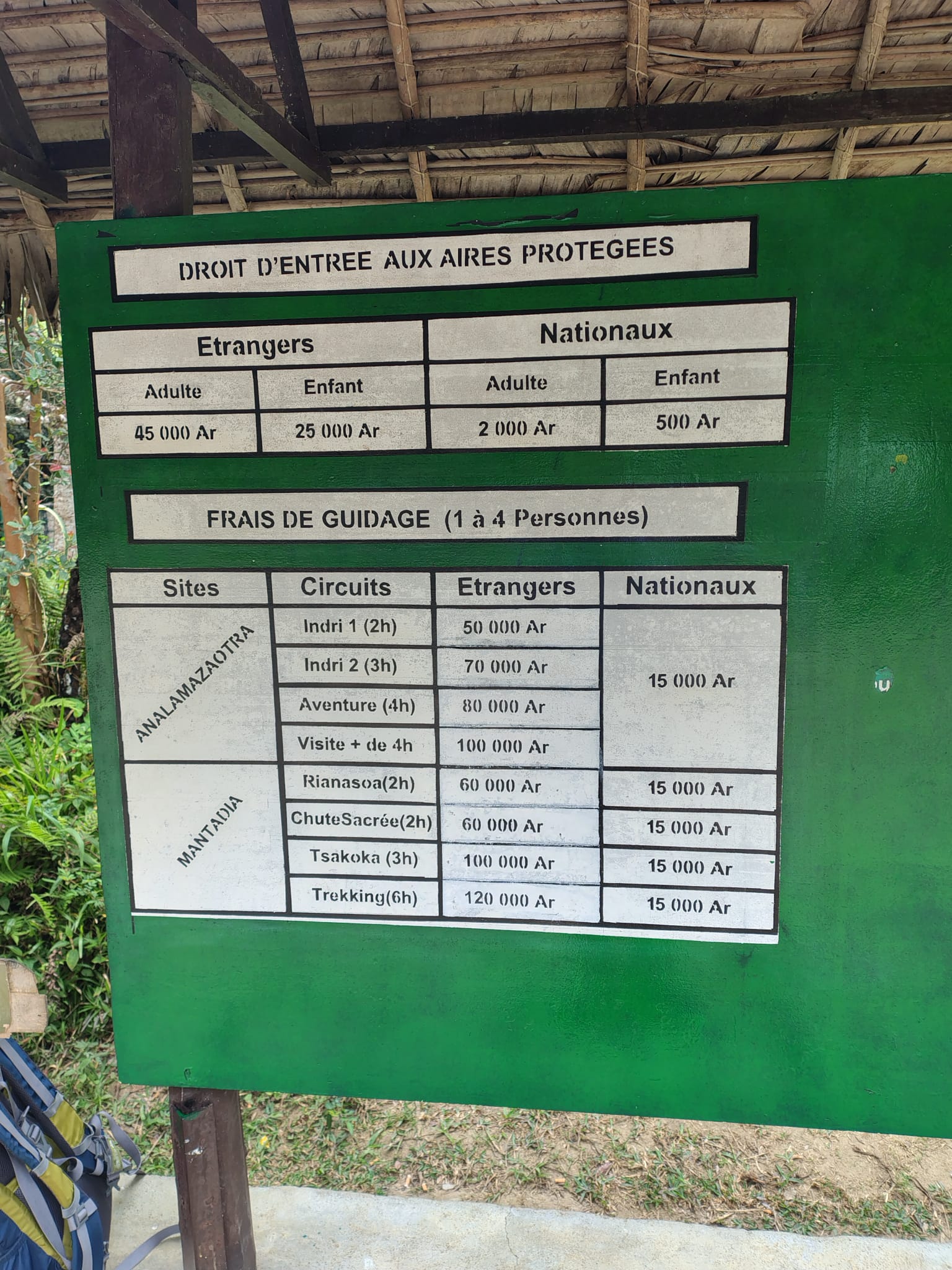
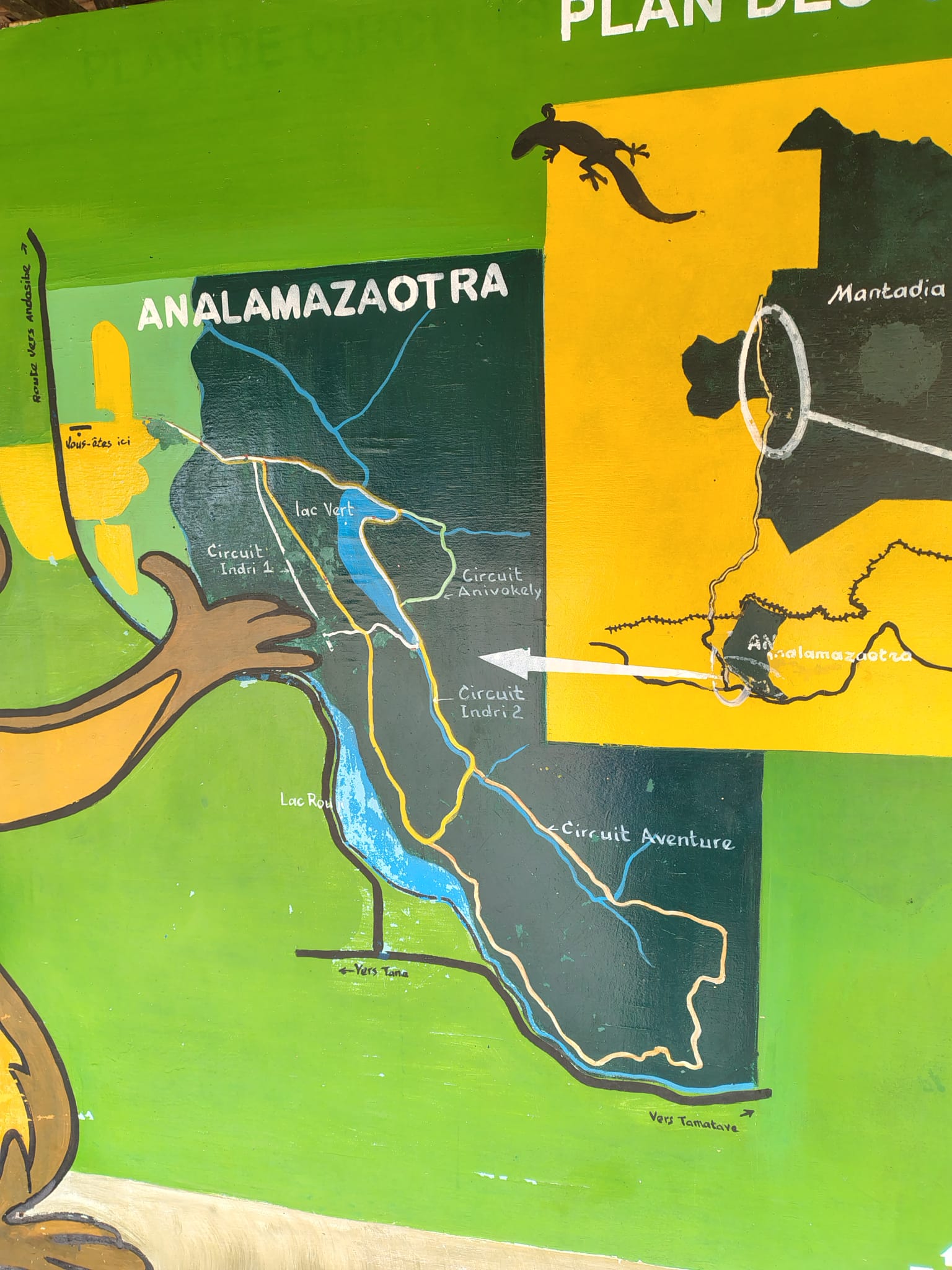
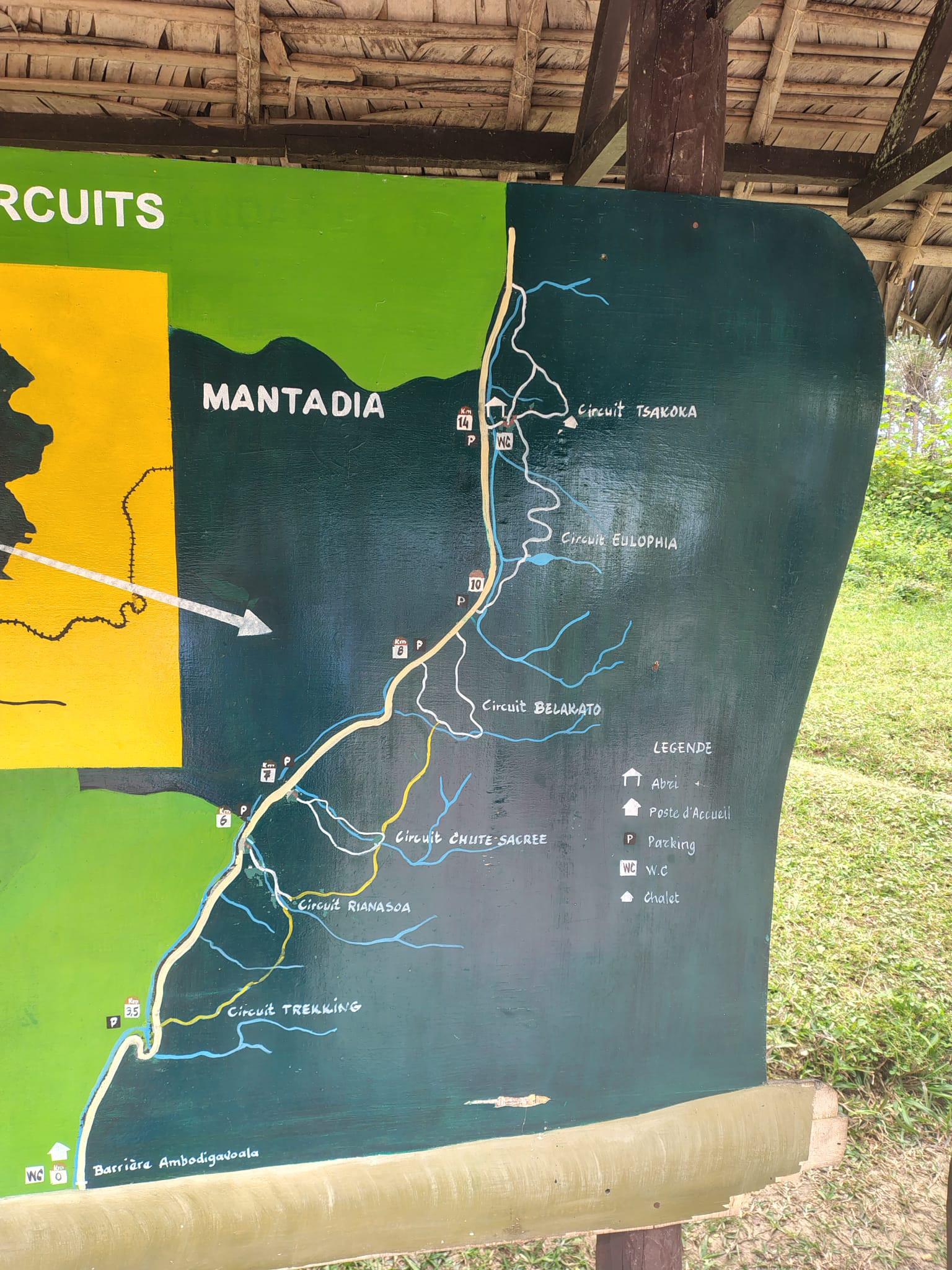
And Mitsinjo:
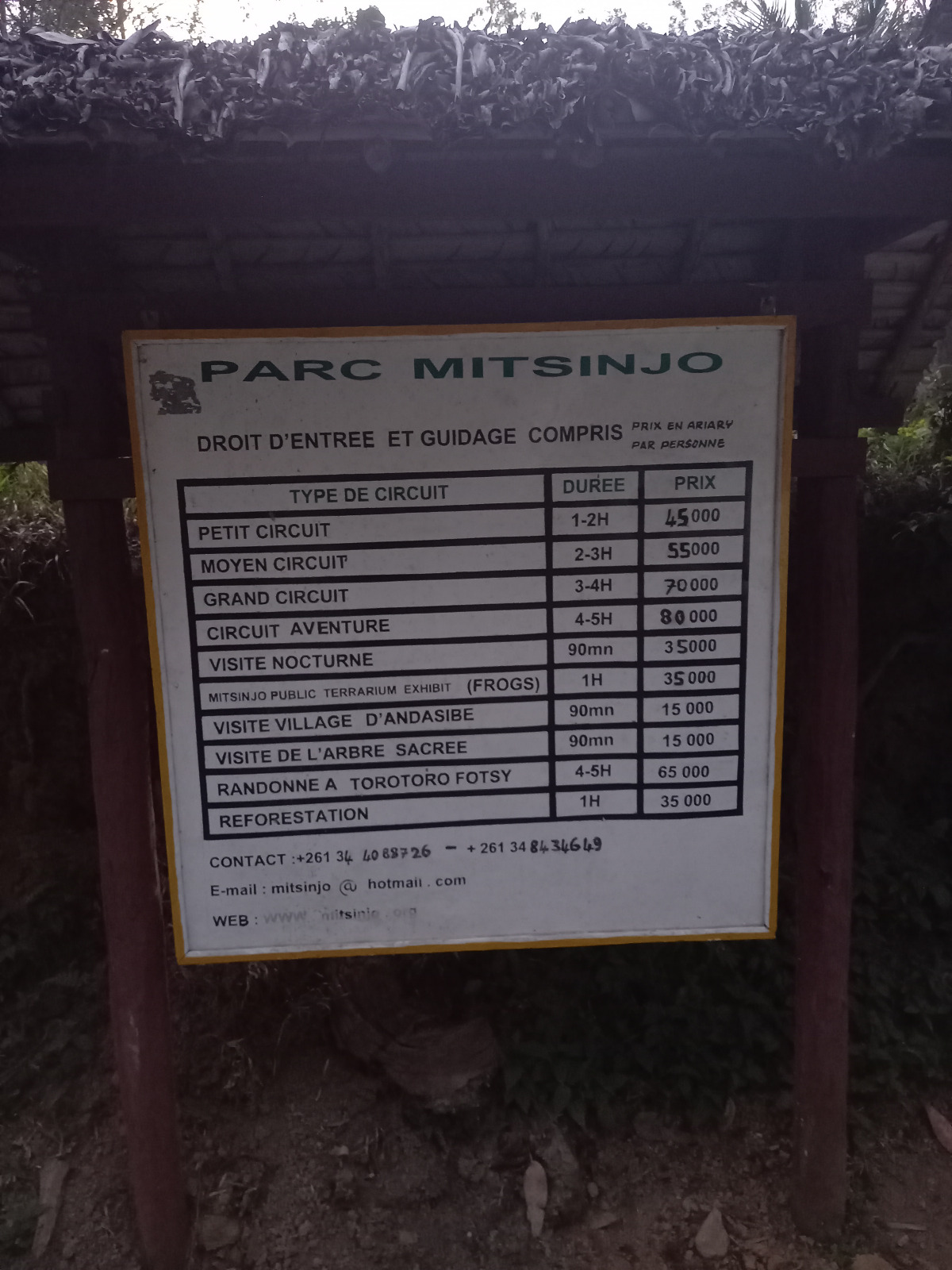
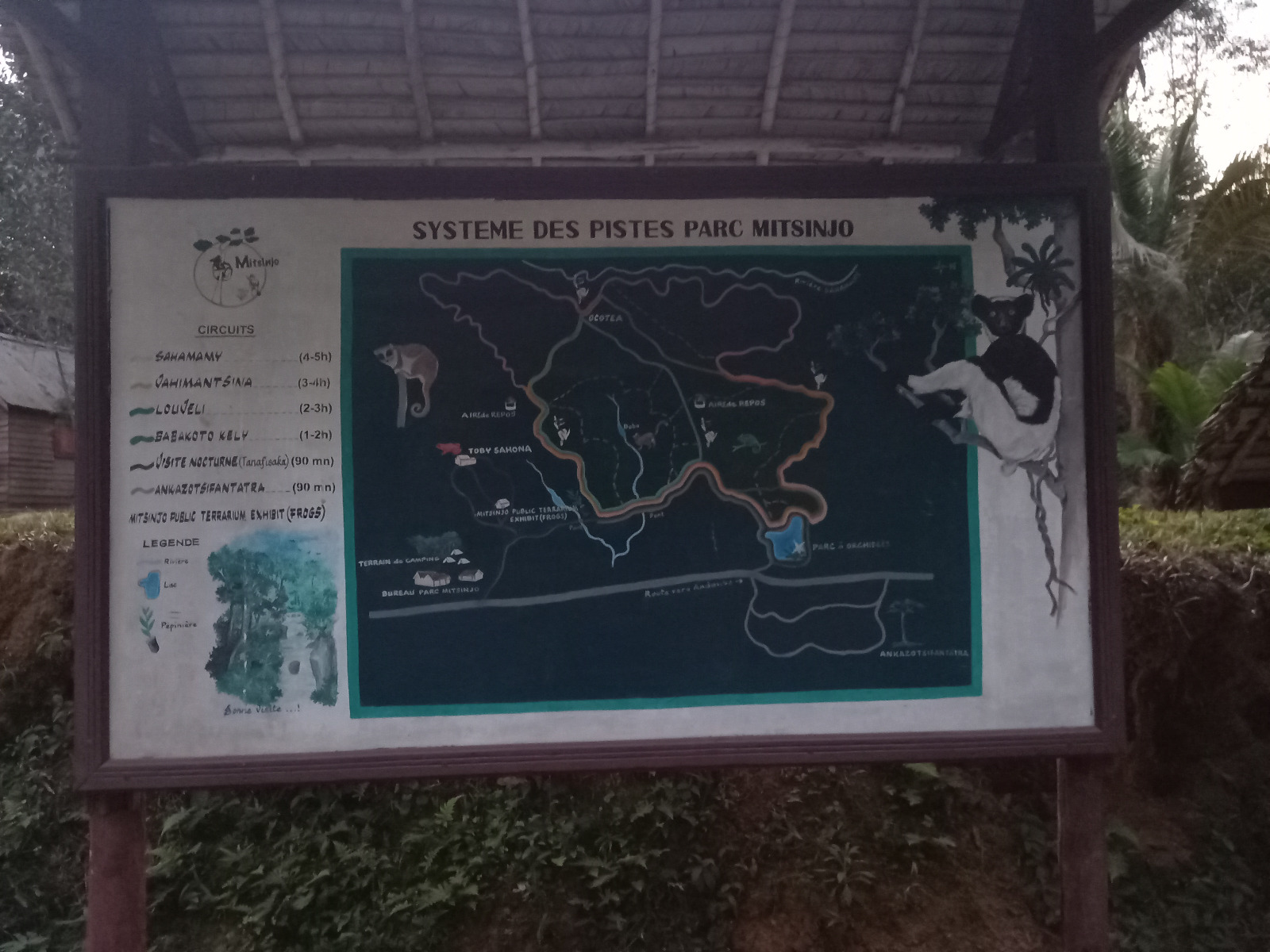
As we discovered later, since September 2025 you can also do night walks in Anamalazoatra (and most other national parks as well), but except for 30 or 40 000 guide fees, you need to pay a steep 95 000 entrance fee, which is valid for the night walk and the following day.
Also mind, that in most parks you pay for time inside and it does not really reflect, where you go (but it might reflect, where you are able to go).
When I arrived, Sara was at the night tour and as all the SMSs I sent her were not delivered, she took room keys with her. I walked around the garden, not finding much, and had dinner. She arrived shortly after, greeting me with “I saw four species of diurnal lemurs and two species of nocturnal lemurs!” and with that sentence, I knew that my worries were false and she might make a wildlife nerd yet (which she did). She had already visited Anamalazoatra that day, and as in our hotel there was a guy from Hong Kong whose name was not Fred, planning on visiting Mantadia and looking for people to share a car with, we went with that.
Actually, my original plan was doing one day Anamalazoatra, one day Mantadia and one day VOIMMA. What I learned during my visit was that VOIMMA is really not that recommended, as it is small and does not have sifakas, and I obtained conflicting info if Mitsinjo is just like Anamalazoatra, or significantly worse (during both night and day). Given how our programme turned out, I cannot compare these two reserves directly.
Our guide for the day, and also Sara’s previous day, was Divana (+261 34 28 467 76). He really seemed good at spotting, especially during the night walk, he even showed other guides what he found and many other groups just seemed to follow his discoveries.
That said, I would not really recommend visiting Mantadia, unless you are after some really specific species you cannot see elsewhere. The area is spread out and so is the wildlife. Getting there is over 2 hours by car via a terrible road, the car costs 250 000 MGA.
We first did the Tsakoka circuit, supposedly the best for lemurs. After more than an hour, we found a group of three red-bellied lemurs. There is also a site where black and white vari lemurs go feeding on tree blossoms, but we missed them. Apart from that, just a few birds. After that we did a very short circuit to water pools, finding our first group of indris. I also find a pair of giraffe weevils by the brook, only ones we saw in Andasibe, and another giraffe weevil Trachelophorus ardea visited when we were having lunch. We arrived back to the hotel at 3:30 and relaxed before the night tour in Mitsinjo. During the break, Fred went for a walk and saw a group of indris crossing the road.
The Mitsinjo forest was quite crowded, as, again, two days of flights arrived in one day, but we did see a few of Goodman’s mouse lemurs, and also 4 chameleon species: Parson’s, short-horned, common leaf and a tiny Calluma cf. nasutum (pimple-nosed) . Chameleons are easier to find during the night, but sleeping animals do not make for good photos. Apart from that, a sleeping Madagascar tree boa, in a hole, not all that well visible, is of note.
Next day, October 29th, Divana was not available and we decided to go to Anamalazoatra, grabbing a guide at the entrance. Our guide’s name was Mamy (quite common name), he was quite decent, but did not stand out.
When entering the reserve, you first go through a patch of flat forest, then cross a river lined with bamboo, pass a small aquaculture area and then go on to a hilly forest where lemurs are. We did not find any bamboo lemurs in the bamboo, and ventured first to the fish ponds, where there was a Madagascar tree boa under a roof of a small shelter. Apart from that, a small Parson’s chameleon and a pair of Malagasy kingfishers. We continued on and shortly found a group of indris. We shared this observation with quite a few large groups, coming and going, demonstrating the weakest point of Anamalazoatra. Mamy kept insisting, that if we wait, indris come down and we see them even closer up, but we eventually wanted to go on, as the group chain did not seem like it would ever break. Mamy found a mossy leaf-tailed gecko close to the fishing farm, and eventually we caught up with a group of diademed sifakas. Here our guide seemed fairly good in predicting their movement, and the lemurs put on quite a show, coming very close, scuffling on the ground, but once more, people kept gathering (and this time not really leaving). Anyway, we stayed for quite a while and left the park only at 12:30 pm.
During the morning, Mamy also mentioned an option for the night tour inside the park, but when we found out about the price, given Sara had already done Anamalazoatra twice, we needed to think about it. After a quick lunch at the guides’ eatery, I also approached a group of guides, asking about Baron’s Mantella. They burst into laughter, but then one (another Mamy) said he knows a mantella place (he was super secretive, but there were not many other options than Maromizaha), also mentioning a few other interesting herps, but we would need to pay for two guides 200 000 MGA. We said we would let him know and ventured to the park again for the afternoon walk. This time, we found grey bamboo lemurs on both way in and out. Just after crossing the bridge, we saw a ring-tailed vontsira – unfortunately I did not manage to take a photo, as I was behind, but I did see the animal quite well: not a common sighting in Andasibe. We also got a glimpse of a small pale snake, but it dissapeared quickly. Mamy said it was a hognose snake, but it seems a wrong habitat for the blonde one and wrong colour for the giant one. Later we also found a group of common brown lemurs in the western part of the reserve, and, serendipitously, a resting eastern woolly lemur. So, the day was quite succesful on the mammal front! Unfortunately, the success meant we left the park after 4 pm, the office was closed and we could not have bought tickets for the night tour.
We dragged ourselves back to the hotel and after a short break, ventured for another night tour in Mitsinjo. Mamy got the (not incorrect) impression that we would like to see some frogs, so we did another circuit than the day before, but except for few frog species, the walk was pretty dull, with no mammals. Earlier Mamy proposed we would just walk by the main road, which actually might have been way better (and is a standard modus operandi in Ranomafana). Anyway, I stayed a bit behind Sara and Fred on the way back, looking for insects and herps, and saw a Crossley’s dwarf lemur.
On September 30th, Fred returned to Tana, and Sara and I started at 6 am and went to Maromizaha. When we tried to book the tour with another Mamy (the mantella guy), he said he had already got booked and forwarded us to his friend William (originally the 2nd pair of eyes – +261 34 16 116 28). New Mamy had insisted that we left that early, as the mantella spot (there is actually a “Mantella circuit”) is quite far and when the sun hits it in 9am, frogs go into hiding. The park actually only opens at 8 am, but we went into the office in Anevoka, some 25 minutes from our lodge by tuktuk to get tickets, and as it was prearranged, it was open (and immediately closed again). The entrance to the park is maybe mid way, and demands driving up a steep mud road, where our tuk tuk broke down.
It was quite foggy in the morning, and the cloud forest really seemed to be by far more beautiful than the national park’s. William was a good spotter, and we were meeting some other locals, which I am not sure if they were there as our spotters, or just minded their business and shared with William what they saw meanwhile. Anyway, the herping was very satisfying, with the promised blue Parson’s chameleon, brown brokesia again, satanic leaf-tailed gecko, and Malthe’s chameleon as a bonus and about 7 frog species. We also saw two species of Zoosphaerium (largest pill millipede in the world). Given all this, we only got to mantella place at maybe 9:30. William was really trying hard to find one, and found two other frog species, but no Baron’s (or other colourful) mantella. We only ventured back after 10:30, meeting a group of diademed sifakas and also a forest water snake. Tuk tuk waited for us already, the whole vehicle affair cost 70 000 (instead of advertised 20 000). Normally, you would spend the whole day in the park, and returned not to the same point, continued to a valley, supposedly good for lemurs, and exited in the village where the office is. But we had to go to Tana in the afternoon. I would definitely recommend visiting Maromizaha, for sure over Mantadia, as the opening times are flexible, it seems like a more varied environment and also we saw a lot with no other tourists around. On this matter, I had consulted Patrick Randrianantenaina on this, and he said “Anamalazotra is the best and Maromizaha is also not bad.”
When we arrived to the hotel for lunch, the driver Stephen, who had brought Sara here originally, was already waiting for us. It took 4 hours to reach Ivato, mainly because Stephen was driving normally and there were more trucks on the road.
We arrived after 6 pm: As there was a curfew at 7 pm (maybe 8 pm), we rushed into a small restaurant across the street. Soon it started raining, the road changed into a river and we had to ford it to get to our gate. My GTX shoes held well, though.
Kirindy
On October 1st at 6 am sharp, we sat into our hotel’s overpriced airport transfer (50 000 MGA for 7 km) and set off, only to ask to turn around at 6:03, as our flight was moved to the afternoon (we got this message during the night and only thought to check too late).
At least we used our host’s mPesa to pay our bus tickets to Ankarafantsika, which eventually required like 12 phone calls to 5 different numbers. I also tried to book a transfer from Morondava airport to Kirindy: Originally we aimed to take a taxi, as we would not be short on time, arriving at 9 am, but now I wanted to be sure to get there (and preferably do a night walk as well). Eventually I got a few offers for steep 400 000 MGA, which seems to be the standard price for this transfer in a 4×4. I quickly checked with a taxi driver at the airport later, and 400 000 was his first offer, so I imagine the correct price for a saloon is around 250 000.
Anyway, we made it to Ivato airport after lunch, I finally got a sim card, finally got rid of Yuans I got during a stopover in Beijing in January and we were ready to go. The same was not true for our plane, as after a short roll we returned and waited for a technical check in the cockpit. But shortly after 4 pm, we finally took off. Madagascar does not seem like much from aerial view, but western plains, flat area with lonely baobab trees sticking out, looks quite interesting.
Our driver was waiting for us at the tiny Morondava Airport. At 5:30, we reached the baobab alley and asked to stop, with which he had, luckily, no issue. So we got one baobab sunset for free compared to the original plan. On the way to Kirindy, the driver drove as if he had stolen us (a saying in my language), his Terracan was skipping over sand waves like a speedboat and we reached the forest in just 70 minutes. The drive was still quite comfortable, though (not for pedestrians in the clouds of dust we were leaving behind us).
We had booked our bungalow in Kirindy via email (cfpfmva20051@yahoo.fr) about a month in advance, contrary to the reports they responded swiftly, and are also available on phone (+261 20 95 938 11, +261 32 40 165 89, Whatsapp +261 34 10 816 06). The bungalow was comfortable, with its own bathroom and the reports you can find online on their teribbleness seem unjustified.
Here is a price list of Kirindy:
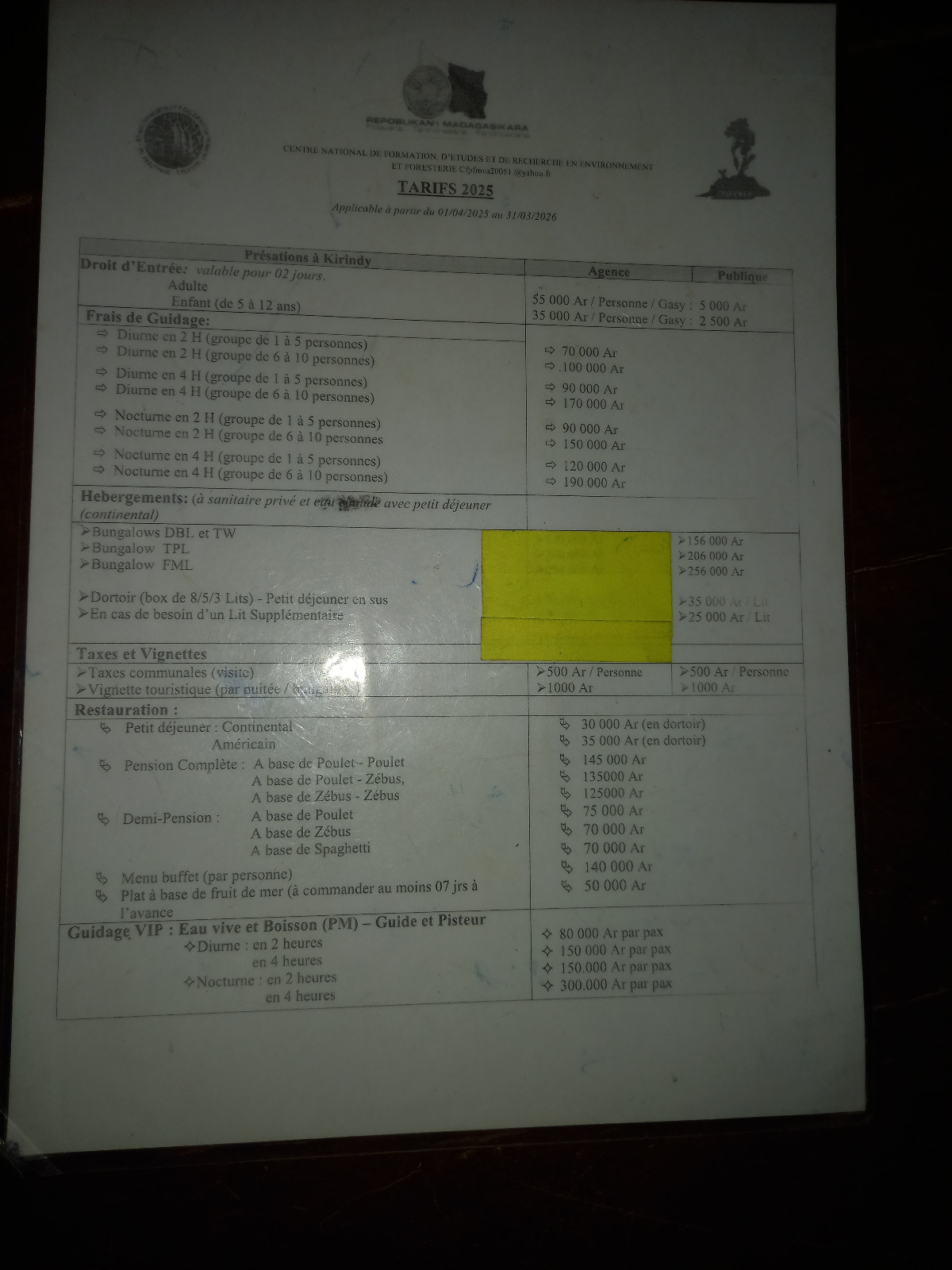
We ordered dinner and went for the night tour. There are three (two and half) options to choose from:
– Night walk about 2 km in the forest, which is what everybody does, many people only come in the evening for the night tour,
– Giant jumping rat stake out, where you wait at a hole some 30 min walk from the campsite,
– Night walk in the forest around the campsite (where you do shorter day walks),
Later I really tried hard to understand, what is the difference between first and third option, but everybody told me you can see the same species. Maybe they just do not want crowds of people walking around campsite at night. As we did not have a car, we just went in the campsite area.
In Kirindy, you always get a guide and a spotter. We got assigned Jessie. I am keen on female nature guides and over the course of two days, Jessie was really trying hard to provide the best service. She did not seem best for herps spotting, but we were also out of the season, so it is hard to say. During the night walk, we quickly found three nocturnal species: grey mouse lemur, pale fork-marked lemur and red-tailed sportive lemur. Fat-tailed dwarf lemur is the last common species, but Jessie said it was still hibernating. We did not see any other mouse lemurs. Two Oustalet’s chameleons were sleeping in a large tree in the middle of the campsite.
Curry rice with zebu was one of the best meals I had during this vacation, but it progressively got worse during our time here, especially after kitchen staff changed.
The next morning, Jessie proposed we’d leave at 7 am. I was just sitting in the bathroom, while Sara came back from her morning coffee and said “Oh, I forgot my hat. And I saw a fossa.” Note, how she perfectly managed to sort the pieces of information by priority! 😀 Anyway, till I got ready, the fossa left from behind the kitchen and was away. We could not find Jessie for a while, but it turned out that she kept track of the fossa in case we had not seen it, luckily! The tracker lead us to it and it was just us four there for a while, before it decided to withdraw deeper into the forest.
During the 4 hours morning walk, we quickly discovered both (only) diurnal species: Verraux’s sifaka and red fronted brown lemur. Apart from that, the birdlife seemed rich (or maybe just felt rich for the lack of mammal diversity) and some species are particularly colourful. Not so colourful, but nice to see, was a sleeping Madagascar scoops-owl.
In the heat of the afternoon, we tried to find the narrow-striped vontsira. About mid walk, we found a group of three – Jessie said she saw them just six times this year (which does not correlate with iNaturalist numbers, but what do I know…). There was another couple who caught up with us, and their guide baited the boky-boky with sardines, but the best views we got before, when we were alone (not trashing through bushes and having spotters scaring them towards tourists and stuff). Nearly back at the campsite we found another chameleon, Jessie said it was a different species, but I am quite sure it was Oustalet’s.
There were already many cars in the parking lot, getting ready for a night tour. Behind our bungalow, there was a sleeping fossa and approximately 30 people. Apparently, behind 5 and 6 is its favourite sleeping spot.
At night, we tried for the giant jumping rat. You walk about 30 minutes west-north, and there is a giant jumping hole. The guides put peanuts in front and you wait. We were three pairs of tourists there, but the rat did not seem excited and stayed put (or had left before). We had a few western tuft-tailed rats coming, with one girl having a thermal scope always very excitedly saying “It is there! It is back!” – and my “it” meaning the tufted tail rat.
Anyway, after three hours, we were the last group to leave. Another fossa came to the campsite during our dinner.
Our last morning in Kirindy we dedicated mostly to herps, sort of a vain endeavour given the dry season, but we did see a Bernier’s striped snake, a pencil snake and at the very end, our main target for the morning, a Madagascan collared iguana. Quite large western girdled lizards are common in and around kitchen, and also in our bungalow during lunchtime 😀 . When we returned to the campsite, another collared iguana was on a tree in the middle, and there was also a group of Verraux’s sifakas, which stayed till maybe 2 pm.
We were picked in Kirindy by our driver, Kenny, with whom we were supposed to spend the next week. I approached a few agencies and also freelance drivers, but eventually booked from Patrick Randrianantenaina, because he seemed like a reputable agent with many recommendations, and also, not unimportantly, he was the cheapest. He was charging in USD and not adjusting for the Trump’s exchange rate, and also because he charged us only 1 extra day instead of 2, as Kenny was probably driving from Antsirabe. It was only later that I discovered, that Patrick is not a middle aged big boss with a robust travel agency, but a young fellow with a lot of (very) convenient contacts. Another great plus of taking Patrick’s offer was, that we had him on line and could discuss with him guides, our plans and wildlife targets.
On a less bright front, Kenny spoke only very basic English, and understood even less, his car was Hyundai Starex, which definitely could not match comfort (and speed) of a Land Cruiser-like car, and which did overheat a bit sometimes, so AC use (when most needed) was not possible. But the car aside, Kenny’s services were impeccable, he was very polite and pleasant. I would still recommend you, when booking a car, to make sure it is a proper off-road, as the price is the same, but the experience and swiftness of travel is on a different level (judging by cars overtaking us on rough patches and also our Terracan ride to Kirindy). It took about 90 minutes to reach the baobabs, we enjoyed another sunset and went to our hotel in Morondava. A small bitter spot was, that my sim card stopped working – which is important for the rest of the story (ok, not so important, but I will mention it).
The long drive
The next morning we went for the mangrove boat trip from the port. It was easy to arrange, but not so ease to convince them (and by them I mean Kenny) we want to leave after sunrise, not before. All hotels would probably have means of connecting with boatmen. The boatmen are definitely no birding (or herping) guides, they just offer the boat experience. In a middle of the trip, they tried to take us to a village, but we managed to communicate to go back “to” the mangroves. You actually go mainly around the forest, not really in a channel like you might in other places. We saw a few species of birds, all quite common here, and for me, the most interesting observations were barrred mudskippers, a species I saw before in Asia. But it beats being in a car the whole day.
We left Morondava at 7:45. The road to Miandrivazo is good, surprisingly good, but the landscape is fairly dull, especially as you get futher from the coast. The weather was very hot, and Kenny’s car was running hot as well, so we could not use AC and went in maybe 40+°C most of the time. In Miandrivazo (arrival 12:30), Kenny took us to a sort of “upscale” restaurant, where we got the smallest duck leg I have ever seen, it was more like a pigeon, and was not too good either. We explained, that we do not need this kind of tourist establishement and had mostly good lunches from now on, if sometimes in a bit sketchy eateries. I also went to Yas to reactivate my simcard. Apparently, my signature on the form did not match the one in my 2016 passport. I filled out a new form and they promised they would activate it within 24 hours.
We left Miandrivazo at 13:45. The road gets terrible and sometimes you need to drive in a walking speed (you might not need to in a proper offroad). The weather got even hotter and the ride was very far from comfortable. We arrived to Antsirabe at 19:15, only to find that because of a curfew, the cook went home early, so there is no dinner, “but you can eat breakfast here”. 😀 Luckily, we shortly found another restaurant, as the curfew was not really so strict.
On October 5th, we left Antsirabe at 7:15, reaching Ambositra at 9:35 and continuing to Ankazomivady Reserve, where we arrived at 10:45. To visit this reserve was Patrick’s proposal, as this is the best place to see the carpet chameleon. We did not manage to convey our goals clearly, so we first walked for nearly an hour through the forest, it was cold, wet and dark, but at least atmospheric, even though we did not see nearly anything. During the walk, we did succeed to impart our chameleon wish to the guide (actually not a guide, just a caretaker, guide was somewhere off), and when returning to the entrance, there were 3 carpet chameleons brought to a small shrub by the entrance, with 3 more coming. Not the way I would like to see my wildlife, but what do you do… After a short while, red fronted brown lemurs appeared, but I decided to focus on the chameleons. The price was 30,000 per person. We only left at 13:10, and then took another 45 minutes for lunch, which meant that my idea of visiting Anja and photographing lemurs in setting sun shifted from overly optimistic to science fiction category. It was cloudy anyway… We went through Fianarantsoa at 16:30 and only reached Ambalavao at 7 pm.
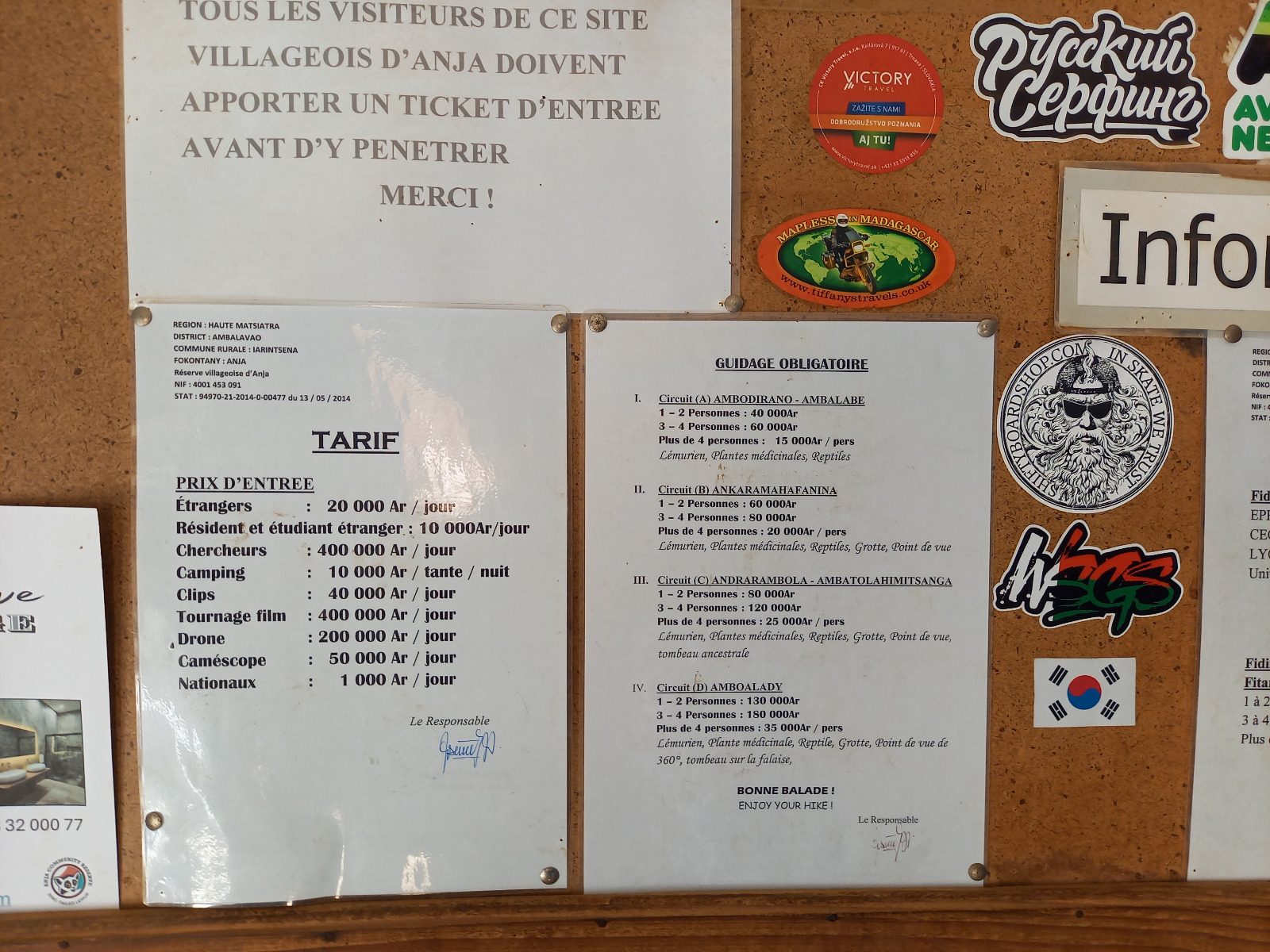
The next morning we left at 5:40, as Anja Reserve is one of few which open at 6 am already. Once again, guiding fees are sort of fluid, we paid for the 2nd longest circuit, but eventually only stayed quite near to the office:
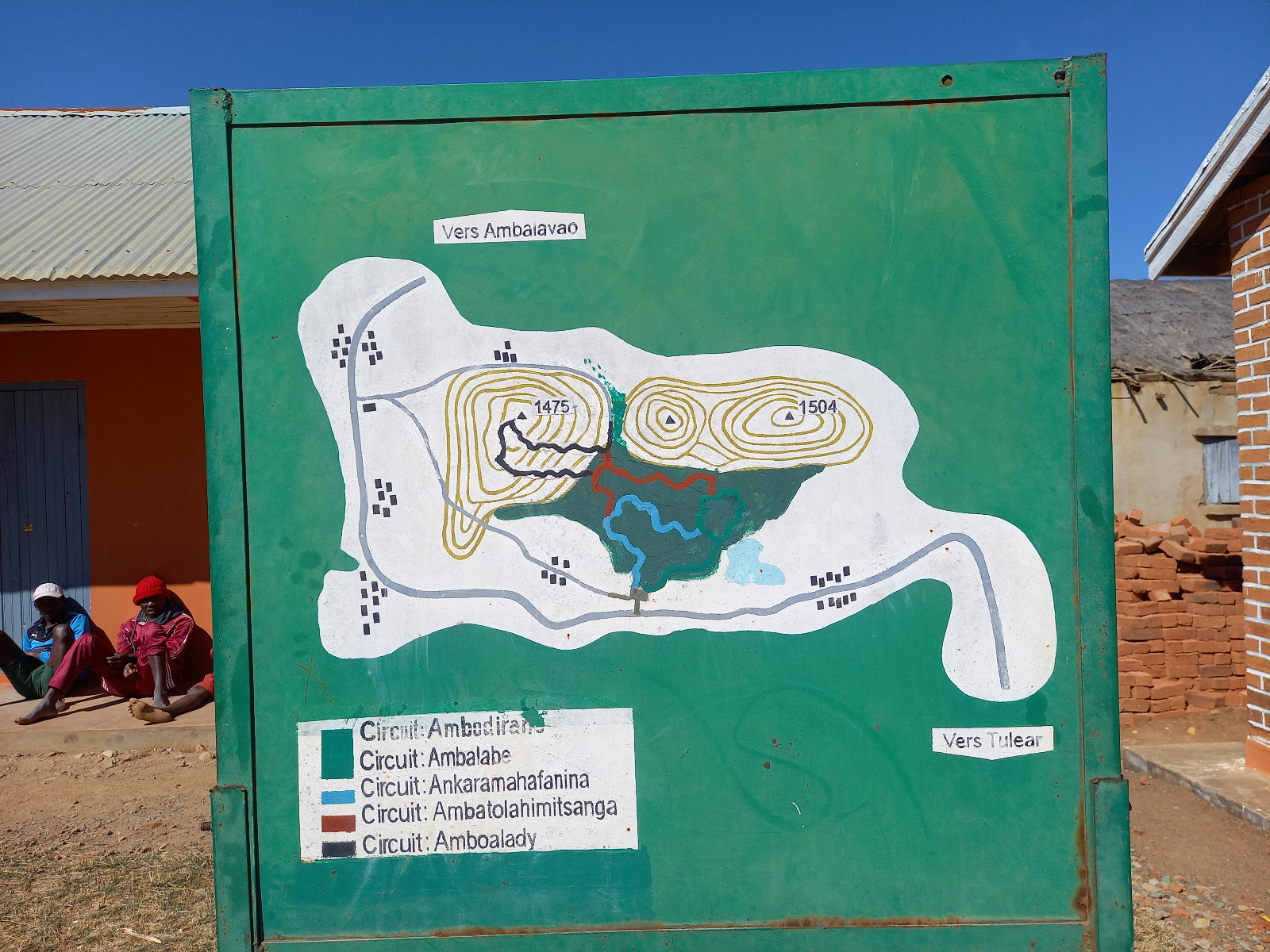
My plan to photograph lemurs in the sunrise also failed, as there is a huge mountain right east of the reserve. Anyway, we saw scores of ring-tailed lemurs, freshly born babies, and early in the morning the lemurs were quite active and often on the ground. Next group of two tourists arrived maybe at 8 and we only met them once. As sun hits the trees, they climb up and bask. Around 9, first buses of tourists arrived, our sign to leave. The guides (we had three) said that the lemurs are active in the morning and evening, but in the evening there are always many people, whilst we were alone. We also saw a few Oustalet’s chameleons, the guides have that trick when they feed them with grasshoppers impaled on a stick, to show their tongue, which is quite interesting to see.
We got some mofo gasy and went back north. My sim card still did not work, so I stopped at Fianarantsoa Yas office: apparently the signature still was not ok, so the lady in the office took my passport and copied the signature on yet another form. Obviously, a very useful mechanism of signature checking they have there. She said it would take 72 hours to activate the sim, to which I protested, and she managed to get it through in next few hours. I also needed to print some photos in the city, and we had lunch (where I ordered henakisoa, pork meat, and got sofikisoa, pork ears 😀 ), so we spent 2 hours in the city in total and only at 3 pm, we reached Ranomafana.
Ranomafana
This might have got forgotten, but the country was still in a bit of peril, there were daily protests in Antananarivo, curfews, by now even my country advised against all but essential travel (probably copying from others, as nothing was really happening outside of Tana centre) and, quite importantly, many international flights were cancelled. So when I asked Patrick for a Ranomafana guide recommendation a few days ahead, he said that the trip he was supposed to go to was cancelled and that he can guide us.
Ranomafana is the most expensive park we visited:
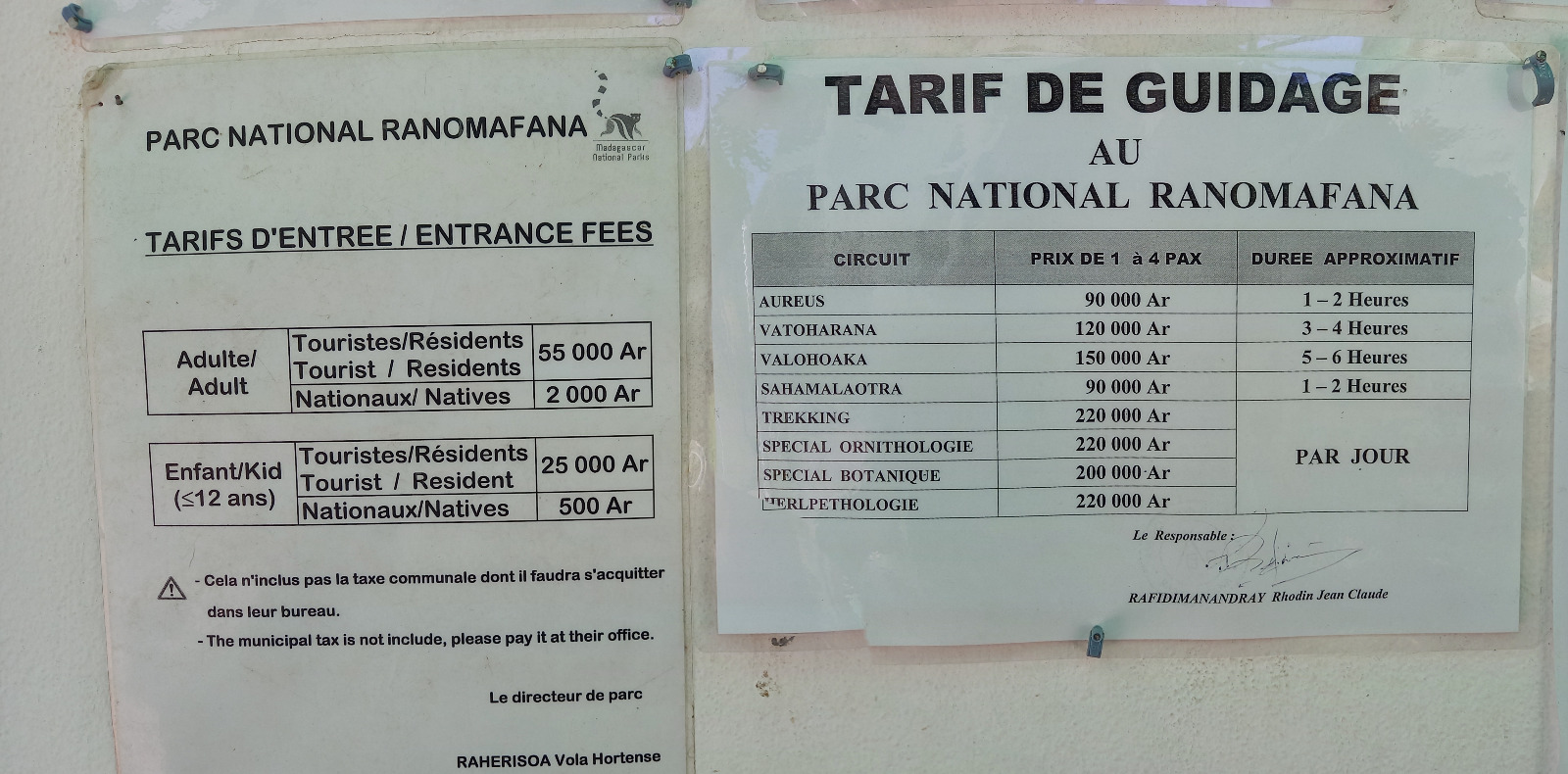
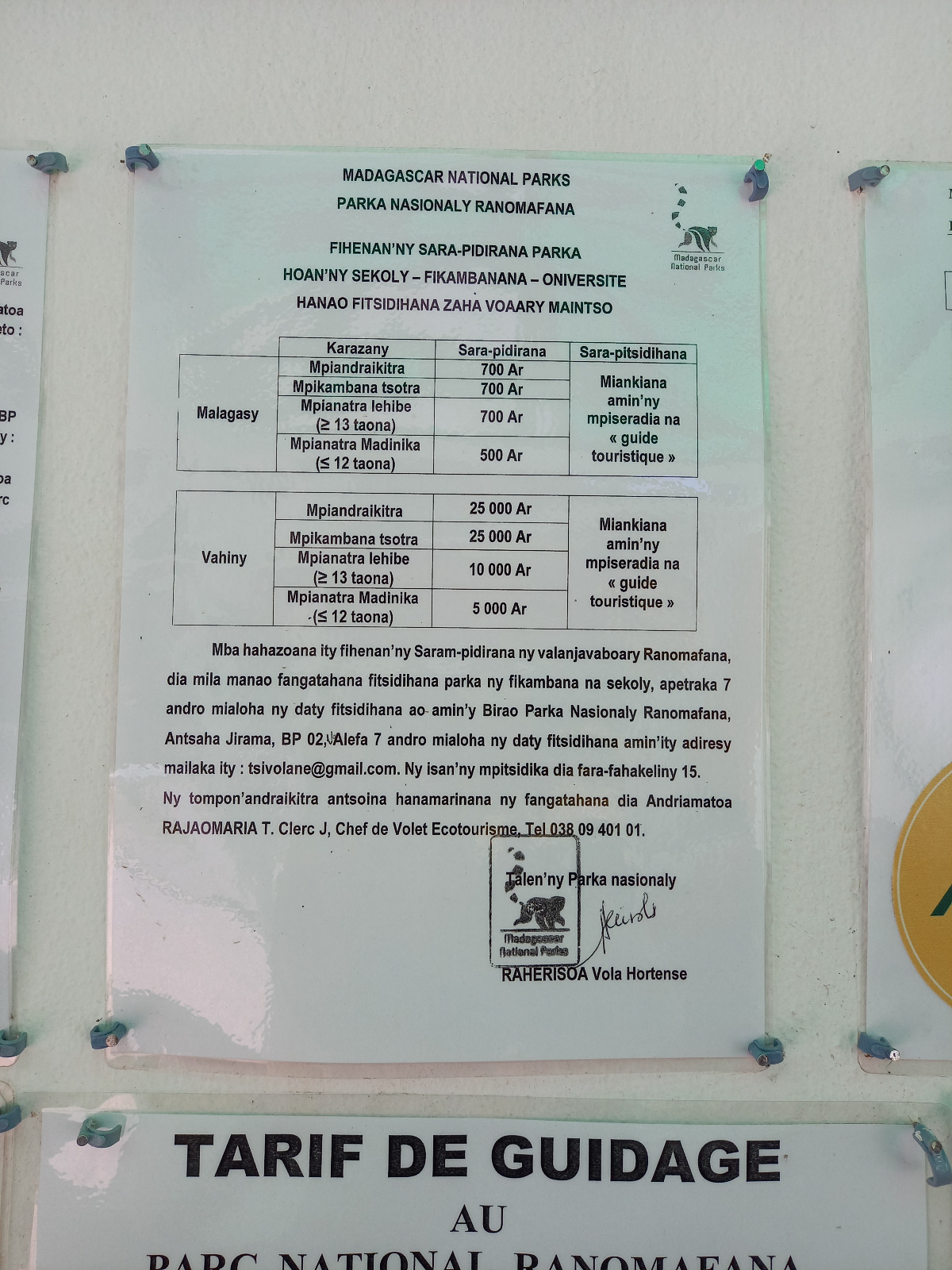
Those ornithology, herpetology and other specials mean, that you can do whatever you want during the day, so if you want to do more than 2 walks, it usually pays off. The park opens at 7 am and you should leave at 6 pm, last entrance 4 pm.
You get a guide and a spotter.
On the day of our arrival, October 6th, I asked Patrick about the plan, so that we would know how to arrange things. He proposed, that after the afternoon walk, we would stay in the national park for a night walk “to find the spotted fanaloka and woolly lemur”. So he is playing the big cards right away, I thought, and was quite sceptical about fanaloka chances.
Anyway, we entered the park at maybe 3:30 pm. Shortly, we (Noel) found a two banded chameleon (F. balteatus), two mossy leaf-tailed geckoes and a satanic leaf tail gecko – we actually saw many of those during our stay. Not long after that, we found a group of golden bamboo lemurs and after enjoying them enough, we went to a resting place of two Peyrieras’ woolly lemurs. A good start, and we continued to fanaloka stake-out. Patrick has his own know-how on how to see the animal, which I will not reveal here, but we had very good views of three spotted fanalokas. It was drizzling, so we went back, not stopping much.
The next morning, after having breakfast and observing red fronted brown lemurs in our lodge, we ventured into the park at 7:15, doing the longest circuit – again, you pay for hours, not kilometers. First we tried for the sole greater bamboo lemur, but no luck. We did see, eastern red forest rat, though, and a ring-tailed vontsira – once again too fast for photography. We were quite far out west, when vari lemurs were spotted in the eastern part. Luckily, we catched up and got to see a large group of black and white ruffed lemurs, a species very high on my list (on not so easy to see, either), and one of three lemur species I knew well since I was a child (the other one the red vari). Half an hour later, we found a group of red-bellied lemurs, meeting red fronted brown lemurs on the way. Around 11:30, we went to the viewpoint, which is good for ring tailed vontsiras, who used to scavenge there when people used to have picnicks. A vontsira was already there. Soon we got a report of Milne-Edwards sifakas 5 minutes way from the viewpoint. When going back, we saw another spotted fanaloka, hiding far in shrubbery. Happy with the morning, we left the park.
We rested in the restaurant at the entrance. Patrick proposed to spend the afternoon by the main road, looking for chameleons, and also continue there for the night walk. We saw following chameleon species: Calluma tjiasmantoi , C. fallax, C. crypticum, C. glawi and of course C. oshaughnessyi, and also another giraffe weevil species, Trachelophorus cf. humeralis.
At dusk, another guide put banana on a bush to lure a rufous mouse lemur, which provided very prolonged views. We saw some more chameleons, a Ranomafana big headed snake, two Groves’ drawf lemurs and one introduced black rat.
On October 8th, we went to Vohiparara sector to try for the Baron’s mantella. By the road, there was a Madagascar tree boa resting on a tree. Vohiparara sector is less hilly than the main site, with more streams. Usually you can see lemurs as well, but we did not get any. We saw a few interesting frogs and birds, giraffe weevil close up and Noel was great again and did actually find the Baron’s mantella. This is a rather brief description, but I did enjoy the walk. Vohiparara is a location for a small-toted sportive lemur, but we did not see any. I proposed going here for a night tour, as herping must be excellent there, but apparently there is some illegal (and armed) mining activity in the area and it is not safe after dark.
After, we visited the Major’s long fingered bats’ cave. Sometimes you can also see the malagasy mouse-eared bat, we did not. When going back, I, excited by the mantella, said that we would also like to see the starry night leaf frog. Patrick did not hesitate and said that those can be seen easily in an arboretum, and that they also have tenrecs. It is not like I did not mention tenrecs fifteen times before, so for disclosing this only now, Patrick got a small insignificant pitch black minus.
After short lunch in a village’s “better” restaurant, we visited a vanilla “plantation” (more like a large garden). My main aim was to buy vanilla cheaper than from street vendors, but plantation prices are very expensive. Street price for vanilla as of September 2025 were 1000 ariary for a pod or 100 000 ariary for half a kilo. Plantation goes double of that and you pay for a visit as well. Spice prices are even more inflated. They have two large Parson’s chameleons in the garden, and also another species, which they did not find. I also sent some postcards from the village’s post office, which was surprisingly easy.
We tried for the greater bamboo lemur in the afternoon again. Noel did not dissapoint once more. The only specimen left is a female, whose father died a few years ago, so she hangs around golden lemurs and waits for her time to come. Quite a sad story. They are trying to relocate some groups from elsewhere, but so far it did not really work. Anyway, we were alone with this pathetic, yet quite beautiful (at least as far as bamboo lemurs go) animal for a long time before we ventured off. At around 5, Patrick and Noel tried to find another species of nightjar, going out for 5 minutes, but it was over half an hour before they came back, unsuccesfuly, and because of a bird… Well…
There are more greater bamboo lemurs in Kinjavato, 50 km east, but Patrick said the entry fee there is 550,000 ariary per person. I am not sure it is correct and would be quite keen on someone confirming this.
For a night walk, Sara rested and we went by the road again. No mouse lemurs, but we did find the infamous Parectatosoma echinus stick insect, another Compsophis sp. snake and quite a few of Groves’ dwarf lemurs.
Given the new tenrec intel, our plan for our last morning was quite clear. The arboretum, some 10 minutes drive east of the village, opens at 8 am, but Patrick made a call and we were able to visit at 7 already. We saw some common birds and two Parson’s chameleons, when our guide heard a lowland streaked tenrec under a palm. He removed some old leaves, and it turned out, there was actually a nest, with at least 4 very young animals and two parents. The sighting was amazing, and the animals calmed down quickly and did not seem in a hurry to hide, but revealing a nest is not the way I would prefer to do my sightings 🙁 . The guide actually said they found them eslewhere a day before and they relocated: A repeated relocation might probably lead to increased offspring mortality. We also saw a few starry night leaf frogs and another Boophis sp..
Excited, if a bit bitterly, by the tenrec observation, we continued back to Forêt Austral for uncommonly late breakfast, packed our things and went to meet Patrick for the last time. The choice was either to try the small-toothed sportive lemur again in Vohiparara, or have a look at vontsiras again. The amount of cars in the main parking lot steered us towards Vohiparara (where there were 3 cars already). Unlike the day before, the area was teeming with lemurs: First we saw a Ranomafana grey bamboo lemur, ticking off the last common diurnal species in the park. Then red-bellied and sifakas. Noel and Patrick checked all the sportive nests they knew of, but no luck. We did see an eastern Madagascar water snake. When going back, we met a group of birders who found a new sportive lemur nest. Their guide was a bit reluctant, but eventually led us to it, giving us the small-toothed sportive lemur, which went to sleep shortly after we arrived.
We said goodbye to Patrick and Noel and set off. For me, Ranomafana was the best reserve we visited. We saw 11 lemur species, heaps of herps, including the Baron’s mantella, two carnivores and tenrecs. I mean… Could one even wish for more?
The bat crime story
We reached the hotel Le Miamiam Glou-Glou just after Ambositra before six, for the first time arriving before sunset. I would actually recommend this hotel, it was very nice, clean and modern rooms, and the food is good, even though it is more of a french cuisine. And the room price is super cheap.
When researching for the trip, I found quite a few Madagascar fruit bat observations around Ambositra. Most of them were made by a single user: It turned out the user is Angelo Andrianiaina (+261 34 89 704 88), a bat researcher who studies bats in the area. Not a single agency I contacted because of car rental did know about the place. Angelo said that the site is quite special, as you can see Madagascan fruit bat (Pteropus rufus), Madagascan rousette (Rousettus madagascariensis) roosts in a nearby cave and Madagascar straw-coloured fruit bat (Eidolon dupreanum) can also be sometimes seen here. Those are three megabat species right there on a palm of your hand.
As we needed to get to Tana on this day, we arranged for an early visit at 7:15. At 6, I unfortunately received a message, that there is an emergency in the Maneva vilage (the bat site). When I asked what kind of emergency, I learned that somebody was murdered there and his body was hidden by the roost. That does not happen to you every day… We called the village as well, and they confirmed it might not be possible to visit. We decided to go back to Ambositra, as Brilland Andriamirindra from Madacartour gave me a tip on bats in a church near the Artisan Hotel in the city (when I was trying to find the fruit bat location). We reached the church, where a guide caught us. We explained we want to see the bats, and he said “of course” and started with “The church was built in 19th century…”. Eventually, I changed my “chauves-soir” to correct “chauve-souri” and he understood (he spoke English though). The bats are actually not in the church, but in one of the “kolejy”, a church secondary schools, here: https://maps.app.goo.gl/Pv7b8LpctQKuXNCX8
Getting to bats is not easy though, you have to climb on school desk and chairs through a hole in the ceilling and then cross a super dirty attic:
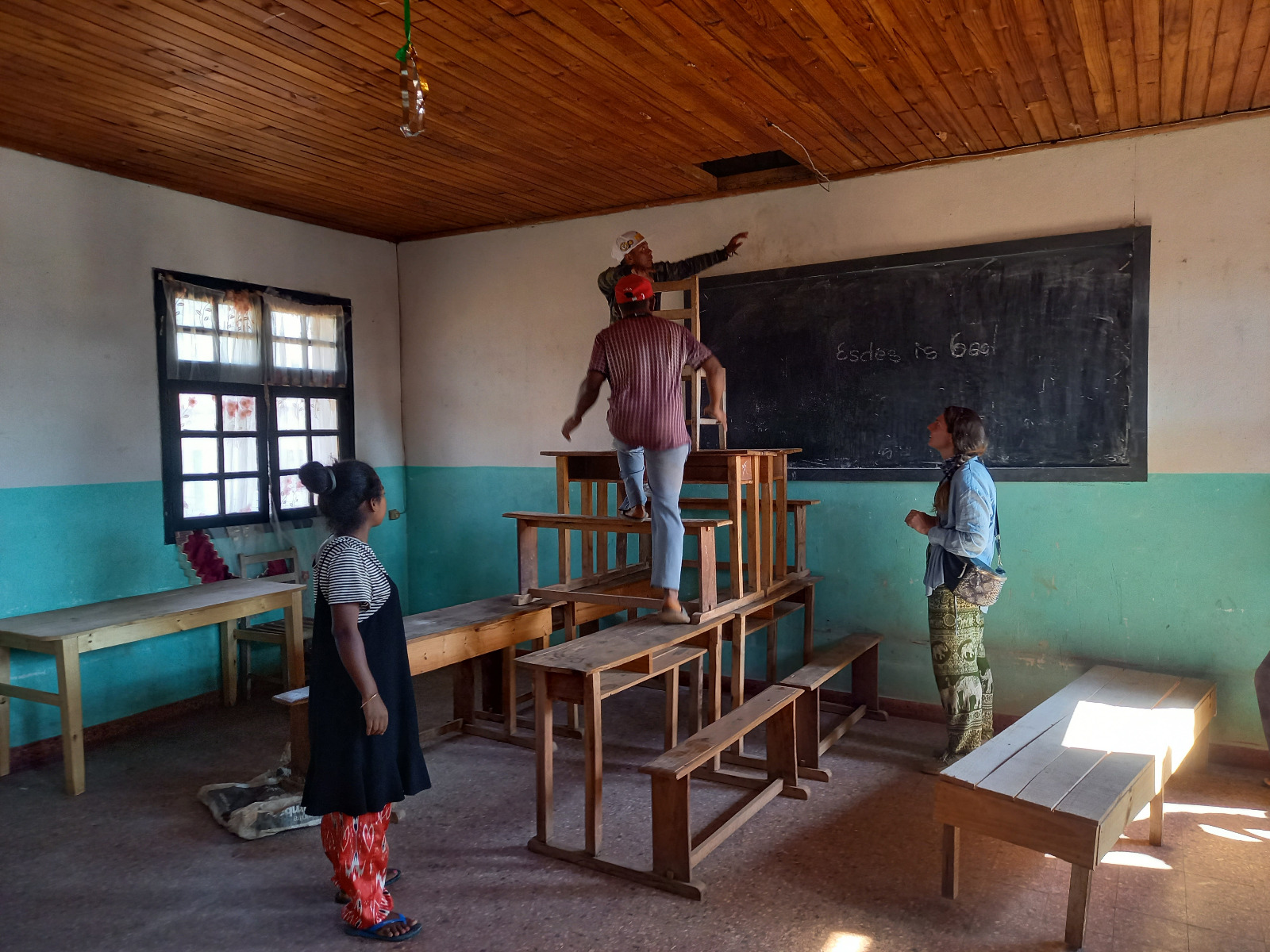
On the other side, there are Peters’ wrinkle-lipped bats. The guy who showed us the bats wanted just 5000 ariary.
When going back, our guide said that there is also a site with big bats nearby and that he actually comes from Maneva. We explained the situation to him, but he called the village and said its ok to visit (which we might have tried to do anyway).
Here are Angelo’s instructions on how to reach the site:
“The exact coordinates are: -20.466574, 47.212779. Access from the national road is not very far, making it relatively easy to reach. We have been conducting research at this site since 2023. There are two options to reach the site:
Option 1:
Enter here: -20.456034, 47.231237 and park at -20.469186, 47.229964, which is also the starting point of the hike. From there, it takes around 25–30 minutes to reach the Roost. I would rate the hike as medium difficulty.
Option 2:
Enter here: -20.467424, 47.245713, then drive about 20–25 minutes to the village (-20.477295, 47.226916), which is also a starting point for the hike. From there, it’s about a 30–45 minute walk, and I would rate it as easy to medium difficulty. (You need to turn right here -20.474701, 47.241443).”
We chose the easier path, which is not so easy on the vehicle: This is the only strech we took, where I would say a high clearance vehicle is absolutely necessary. An older fellow offered to lead us to the site. There is a local community organization VOI Fivoarana (+261 34 99 333 87), which manages the site, but I am not sure if the old man had anything to do with them. The entrance and guide fee was 30 000 per person. It took 45 minutes to reach the site… And there was nothing there. Our guide was obviously lost, so he went back a bit to ask. After a few minutes, I saw some familiar shapes on a tree quite far out. Just a moment later, we saw a few Madagascan fruit bats flying there. Sara did not hesitate and went to explore, and found a good vantage point with good views. The old man returned with another fellow, which might have been our original contact. Not sure.
The cave with the corpse (and now probably a lot of police as well), was obviously inaccessible, and also probably at least an hour of walking away. Happy with our one species, we went back, seeing a scorpion (cf. Teruelius limbatus) on the way. We were quite late, so I did not even unpack my macro set. We only left Maneva at 11:30. With a lunch break and a short stop at ATM in Antsirabe (14:15), we reached Tana only at 8 pm (after curfew, not that it would mean anything) and after 8 days said goodbye to Kenny.
These two weeks would have had already made for a great wildlife holidays, but we had still one destination to go to.
Ankarafantsika
Motel d’Antananarivo was 10 minutes walking from the Soatrans (+261 37 37 370 01 – English speaking Whatsapp). Some staff at the hotel said walking is ok, some said we should take a taxi because of pickpockets while doing a stabbing movement, but it was via the main road and at 5:30 there were many people going about their business, so it seemed perfectly safe, and as there was only one super small super old beaten-up Peugeot as a taxi in front of the hotel, we walked and lived to tell the story. Soatrans only had a VIP service in the morning, which apparently includes some basic breakfast. I got mofo gasy, though (at 200 a piece!!).
The ride was smooth, fast and comfortable, except for the two children in front of us, who kept throwing up, and as their mother or grandmother (given her constitution she could have been both at the same time plus an aunt) was either sleeping, and not caring much, even took plastic bags from one one them, it did not make for a pleasant experience – especially for the poor boys. Luckily Sara got us the far back seats.
We reached Maevatanana at 1 pm, having 45 minutes break for lunch, and were dropped of at the park office at 4:30. Patrick made the reservation for us in advance, but an English speaking receptionist is at the office between 8 am and 4 pm, which is the time to do (or confirm) a booking (+261 34 23 469 93). Anyway, a few bungalows were available the whole time we were there. The chalets themselves are super large, clean, light, have new mosquito nets… I might even call them luxurious! (You would not.)
Here is the price list of Ankarafantsika, but mind that those combinations are not always applied and you pay for separate circuits even if you combine:


During the afternoon, Cocquerel’s sifakas were hanging out at the campsite and during dusk, a small group of lemurs came, which I later identified as mongoose lemurs. Also, in the trees between the lake and the campsite, there are bambillions of mosquitoes.
Patrick recommended us a guide called Modeste (+261 34 34 581 55), but we could not reach him and were assigned Guillermo. Guillermo did not understand English well, and had some other flaws which I will mention later, but at least was very pleasant and polite. We started with a night walk, finding some Oustalet’s and rhinoceros chameleons, an Ampijoroa tree snake and on mammal front, quite a few of golden-brown mouse lemurs and western woolly lemurs. Later at night, I heard some noises from our bungalow – there were many Milne-Edwards’ sportive lemurs outside, and also some common brown lemurs.
October 12th, we spent the morning combining the Coquerel’s circuit, and the canyon. We were not able to get the combination price and needed to pay for each circuit separately. Quite soon in, Guillermo found a Madagascar leaf-nosed snake, which is not commonly seen. The rest of the morning was fairly dull, though. We found one Milne-Edwards’ sportive lemur, two Bernier’s striped snakes and, after 90 or so minutes, went towards the canyon. You walk through a savannah, where there were many Madagascan bee-eaters – I imagine the canyon is an optimal nesting area for them. Guillermo went alone quite upfront, and even more so on the way back. The canyon itself is nice, but the scorching heat on the way is unforgiving. When we reentered the forest, Guillermo once again galloped somewhere at the front, missing two Coquerel’s sifakas percherd right by the path. Unfortunately, I think Guillermo was the worst guide we had in any of the national parks – still much better than some (most?) guides you get elsewhere.
We decided we should change the guide and tried Modeste again. After his arrival, he was very hesitant on taking “his friend’s job”, but agreed when we told him we want to swap Guillermo in any way. When we arranged that in the office, we empathically said hat we need a guide with better English, as it is hard to communicate (which was true as well), but the story of us changing a guide seemed to cause quite a stir and might still be talked about there now. Felt sort of soap-operish…
Meanwhile, on a little more significant front, the president started talking about a coup that was supposedly being prepared and some military units started joining the protesters on this day. Emirates cancelled all their flights, as did many western airlines.
We had already prearranged a boat trip with Guillermo, which luckilly was not too awkward. Guillermo said that the mid-late afternoon is the best time to go, to which I was skeptical, but we still went. We saw a few species of birds, including Malagasy fish eagle and its nest, but no crocodilles. One large Oustalet’s chameleon on a reed cattail, which seemed like and interesting combination. I asked if it is possible to do a sunrise boat ride, but the captain only gets there at 8 am by a park’s aranged vehicle. We said goodbye to Guillermo, checked sifakas at the campsite and went to prepare for what was probably the most surprising night tour of the whole trip.
Our main aim for the night walk was the fat-tailed dwarf lemur and also the grey mouse lemur: I did not put much effort into Microcebus research and did not realize it was the same species as in Kirindy. Anyway, we saw a plenty of both and also golden-brown mouse lemurs. Another interesting observation was an active Madagascar scoops owl, and a Paroedura sp. gecko, which Modeste said is difficult to see. We were already heading back, when Modeste stopped by a small ballish thing next to a path – a greater hedgehog tenrec! We stayed with it for quite a while, unfortunately, when it escaped, Modeste went after it and with a stick he pushed/minigolfed it back (as it is probably spikier than a hedgehog). Poor tenrecs… Upon returning, a few meters from the campsite’s border, Modeste nearly tripped over a beautiful Malagasy ground boa. What a night! Quite weirdly, we did not see any chameleons, but who needs chameleons with a boa and a tenrec?
In the morning of our last day, October 13th, Modeste picked up the boat captain by his motorbike, so we were able to start at 6:30. To my surprise, we did not see more birds than the day before in mid afternoon, but we had a better look on a fish eagle and also saw one (and half) Nile crocodille.
After breakfast, we did lake and baobab circuit combination, this time getting the combo price. Both Modeste and Guillermo said that the circuit is good for reptiles, which manifested themselves (apart from rich birdlife including Madagascar green pigeon) in a truly giant Madagascan hognose snake, northern pencil snake, Madagascan collared iguana (easily seen also around campsite), Koch’s phelsuma (seen all over), and a western girdled lizard (once again also hanging out around camp’s kitchen), but we missed on a quite common golden hognose, a western tree boa (which went to hiding after a kill, probably) and once again on chameleons except one Oustalet’s near the campsite. The lake circuit ends at baobabs, which Modeste says are crossbreed, and not able to procreate, so the park staff is trying to find a way to make offspring viable (not sure why, with a crossbreed), but iNaturalist says its Adansonia za.
As Modeste missidentified my (poor and dark) mongoose lemur photo as a brown lemur, we focused on trying those in the afternoon, walking the Coquerel’s circuit again. Once again, it seemed sort of lifeless, but as sun was setting, we found active western woolly lemurs, resting scoops owl and at the campsite border a large group of common brown lemurs. And finally, at the bungalow area when it was already dark, there was a small troop of mongoose lemurs (soon to be pushed out by the larger brown lemur species).
We had our last dinner and Soatrans picked us on time at 8:30 pm. The “normal” car was not as comfortable as VIP, but at least no one was throwing up and we both were able to sleep quite well. There was a dinner stop at around 10 pm. We reached Tana around 8 am, had them drop us near a hotel and had a very long breakfast there. The hotel also called us a taxi, I asked the receptionist how much it should be, and she went to ask the driver… Of course, he tried to rip us off at 80 000, but eventually ripped us only a bit at 50 000 (price from the centre to the airport): The car was a super old falling apart Peugeot 205, but we survived.
On this day, the military finally took control of the country, so our job here was done and we could leave with peace in mind.
……………………………………………………………………
All in all, I feel this was a very succesful trip. We saw 40 mammal species, including 4 carnivores and 2 afrosorcid species. Before, I had only seen 41 primate species, which jumped to 70. I had seen just two Elliot’s chameleons in the wild, now I have 13 species. Just like in Australia, nearly any animal you see you cannot see (and had not seen) anywhere else. Plus we found that new fruit bat site. From the “common” mammals, we only missed the weasel sportive lemur and the giant jumping rat.
The travel is tedious, long stretches on bad roads, but for me, forged in public transport of India, Nepal and alike, it was easily dealt with. Food was ok, and people nice and not really invasive at all like in many other countries. I mean, all in all, Madagascar seems like a great place to visit: Provided you are after wildlife, as I did not feel there is much else to see.
And last but not least, we did actually manage to overthrow the government, and… who else can say that?

Post author
5 Comments
-
-
Asanoth
Hello,
Patrick said it was Groves’. He actually said there are two other species, but they are further up the mountains. I do not think he is exactly right, but Groves’ is supposedly the most common here and we saw quite a few fairly large dwarf lemurs there, so I am rather sure at least some of them were Groves’. Maybe some others were Crossley’s.
-
-
-
Lynne Venart
Also, do you have any photos of the Ankazomivady Reserve that I could add to Association Tantelegasy’s page on the LCN website? https://www.lemurconservationnetwork.org/organization/association-tantelygasy/
-
Asanoth
Intriguing, but demanding route as well.
If you like, you can use this lemur photo I put on iNaturalist.
https://www.inaturalist.org/observations/331172158
-
-


Leave a Reply
You must be logged in to post a comment.
Jacob Zinn
Great report, thank you for including all the helpful logistical information for solo traveling. How/why did you identify the Ranomafana dwarf lemurs as Groves’? I have only been there in the Malagasy winter and have not seen them moving around, but I am curious how you came to this conclusion. Separately, I will definitely reach out to Angelo next time I go; his iNat observations and IDs are always helpful. Having spent a fair bit of time with Malagasy folks, I can imagine the commotion you must’ve caused at Ankarafantsika for asking to switch guides – not a very confrontational bunch. I’m also glad to see that the military seemed to work around your travel plans!