
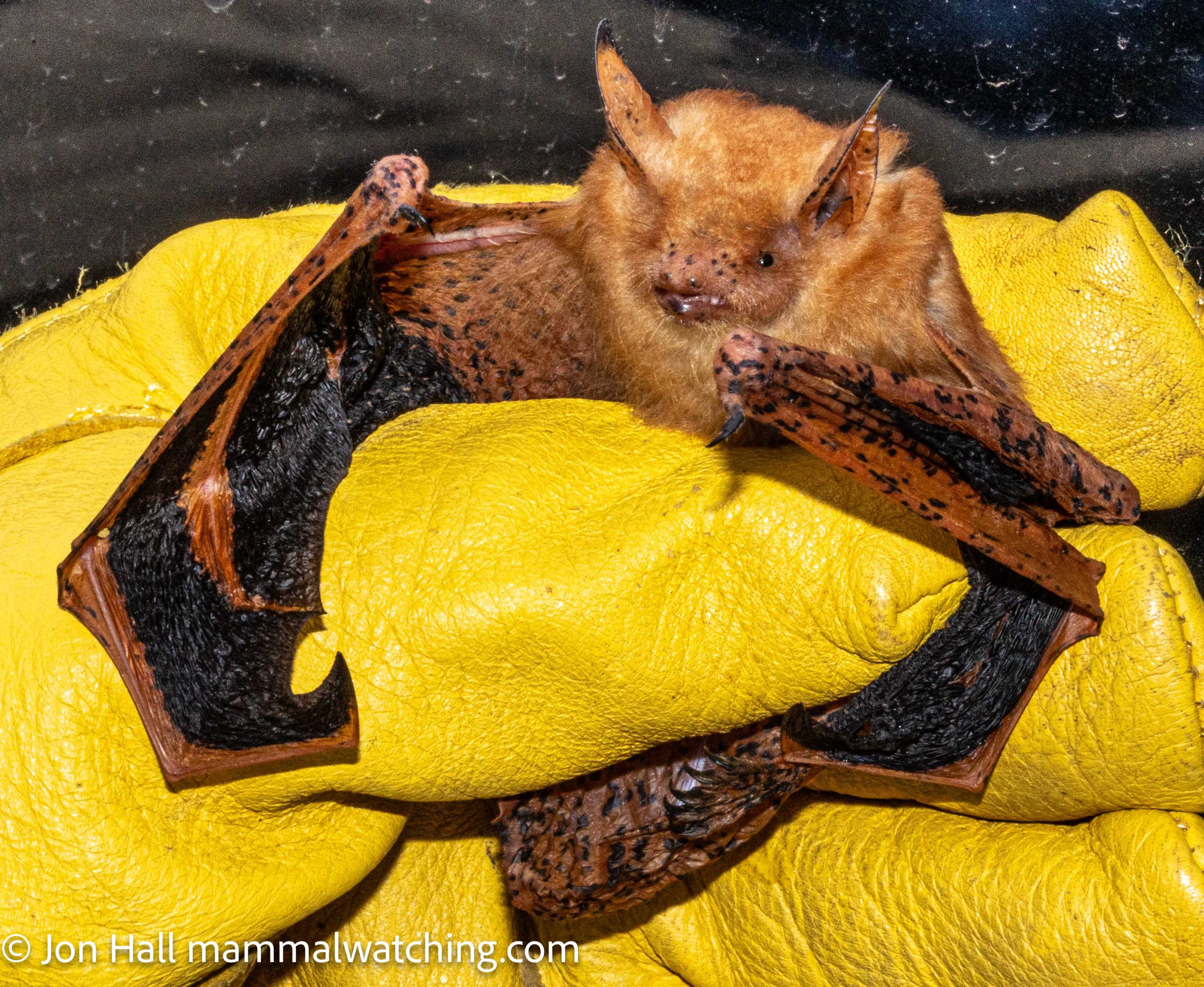
Bongos, Bats & Birders: Kenya, September 2026
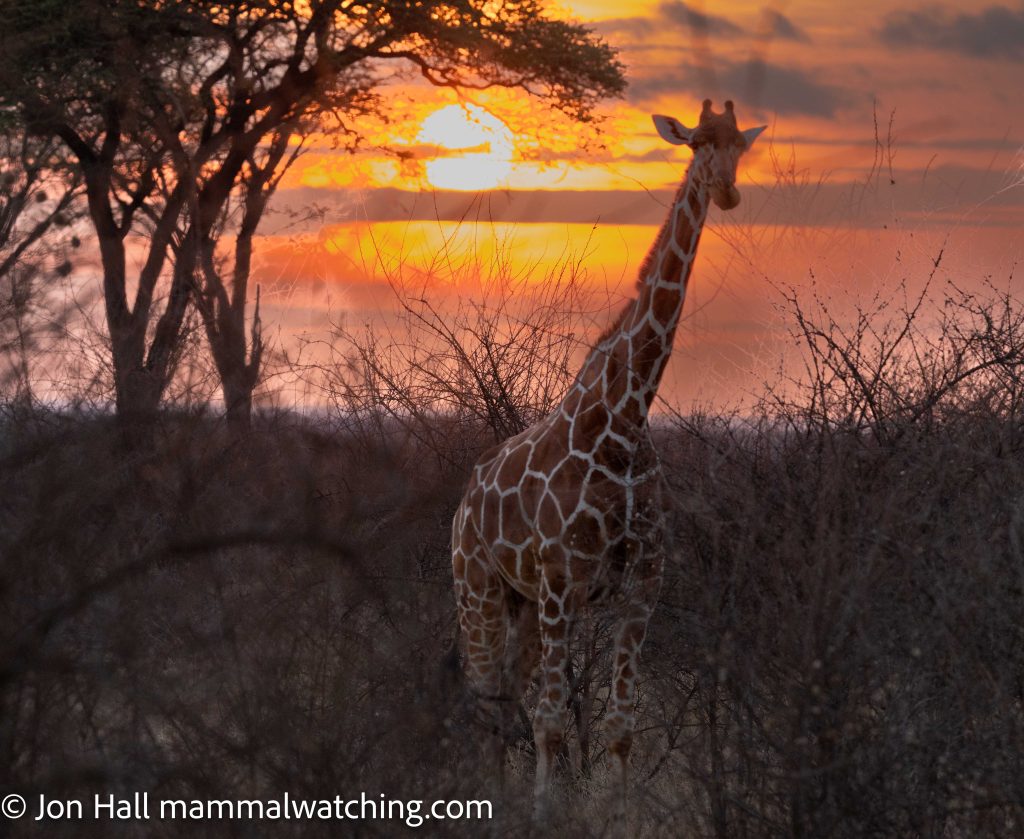
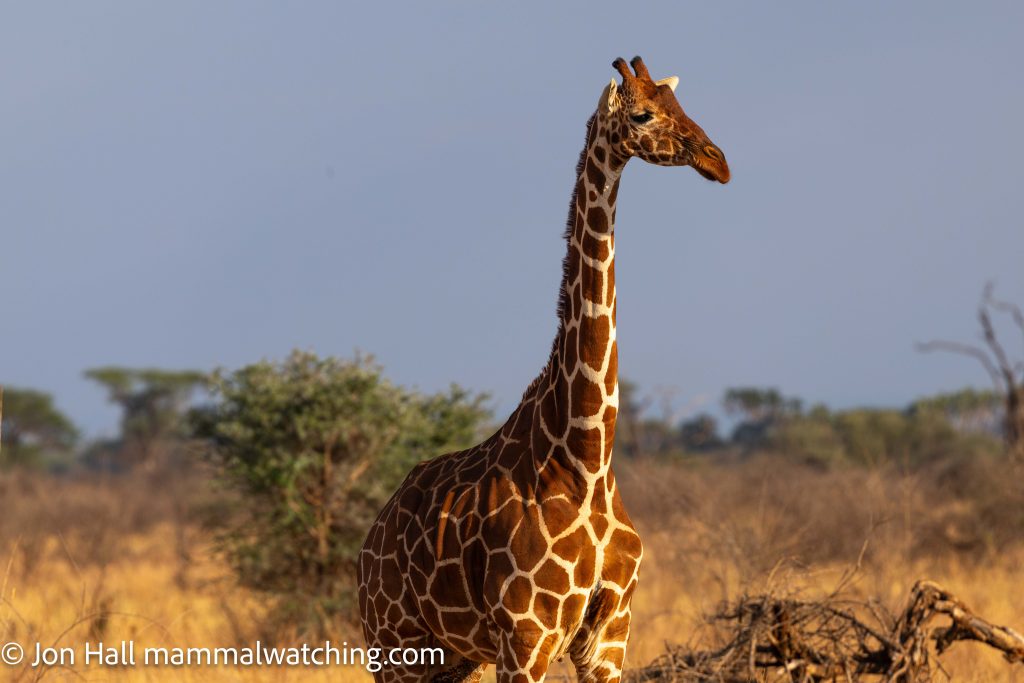
Reticulated Giraffe (Giraffa reticulata), Meru
The search for mammals has lured me into some threatening situations over the years. Looking for Markhor while avoiding the Taliban in northern Pakistan in 2011. Travelling through the Tien Shan mountains of Kyrgyztan in 2009 with a world champion kickboxer who was assassinated soon after. Lurking behind various public toilets at night on US Interstates with my camera and binoculars….
But these pail in comparison with Kenya in September 2026.
I’d arrived in the middle of the Bird Life International Conference. Kenya was full of birders. I had stumbled into the lion’s den, or- rather – the harpy’s Nest. I’m sure my travel insurance policy specifically excludes coverage for this very situation.
I thought of the payback I was due for all the birding jokes I have made … apparently there is at least one remark in every podcast episode, or so a birder told me with a smile on his face but betrayal in his voice. Had the Bird Life Revolutionary Council already put out a fatwa on me?
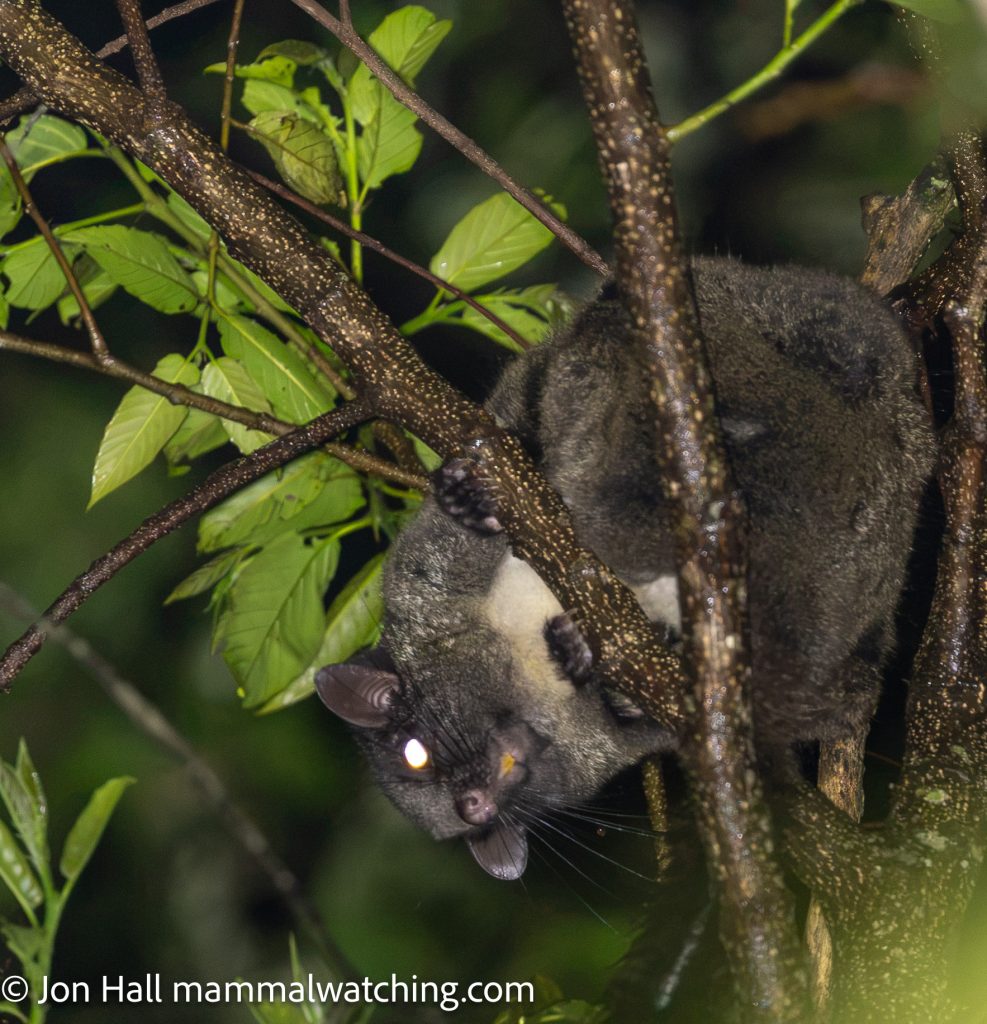
Lord Derby’s Anomalure (Anomalurus derbianus), Kakamega Forest
In fact the birders were far more subtle. They had sent their most dangerous agents to find me: Rockjumper, E-bird, Stratton Hatfield. These people were such good company I let down my guard. And while I picked up my bins to look at a Donaldson-Smith’s Nightjar someone must have slipped me an ornithological roofie. Next thing I know I was photographed wearing an E-bird cap. This is powerful kompromat.
I want to get ahead of the story here. Maybe I will even share the photos when I start a members only page on mammalwatching.
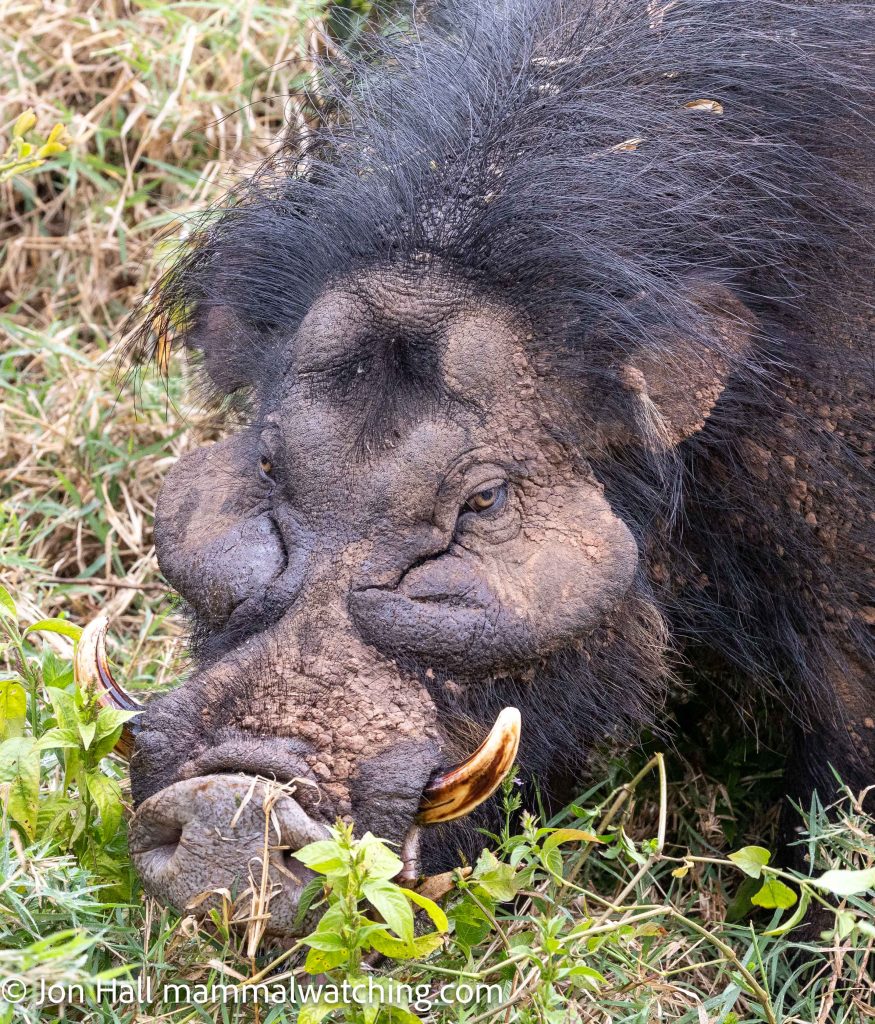
Giant Forest Hog (Hylochoerus meinertzhageni), Aberdares
OK, no more birding jokes I promise. I had a very fun 10 days in Kenya. And yes I spent several of them with world-class birders who are also world-class company, at least when they are talking about mammals.
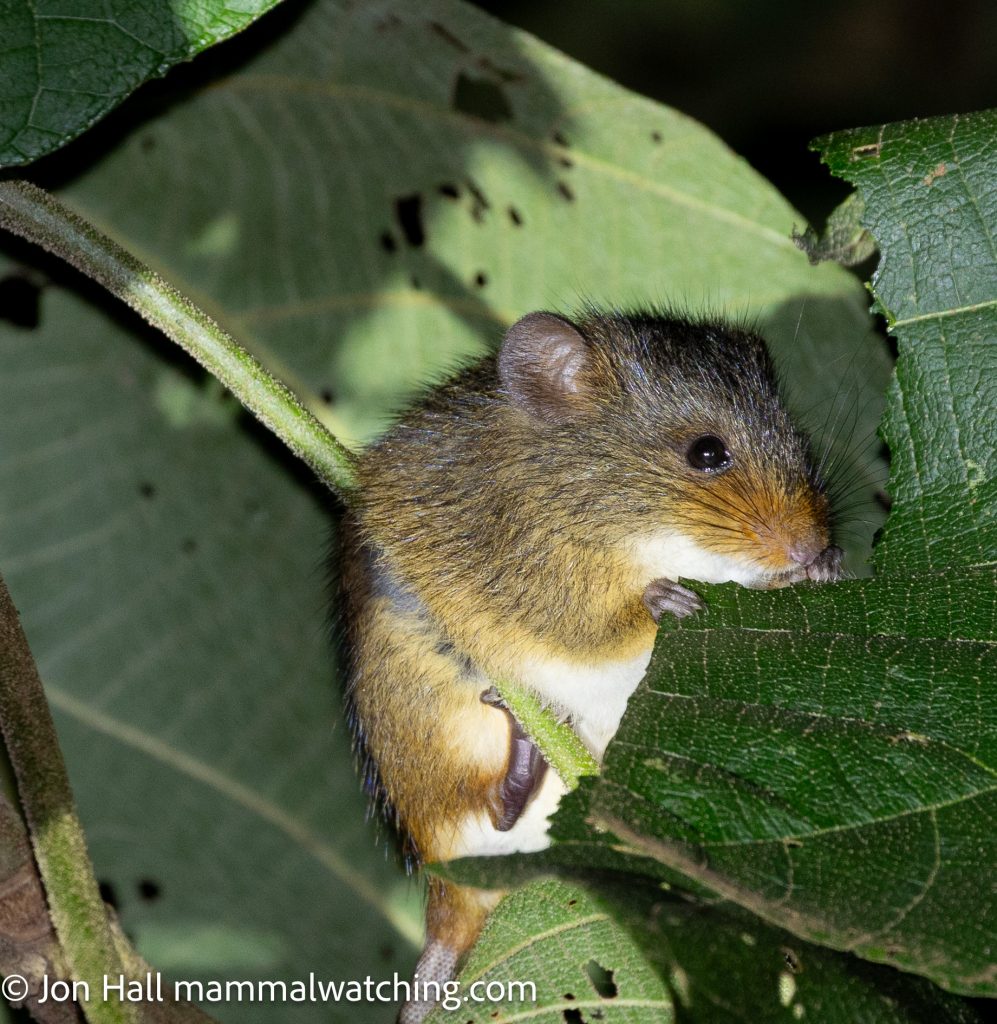
Common Rufous-nosed Rat (Oenomys hypoxanthus), Castle Forest Lodge
This trip was originally arranged to fill in the time between a trip to the DRC (which later morphed into a trip to South Africa) and the Madagascar tour I am guiding right now.
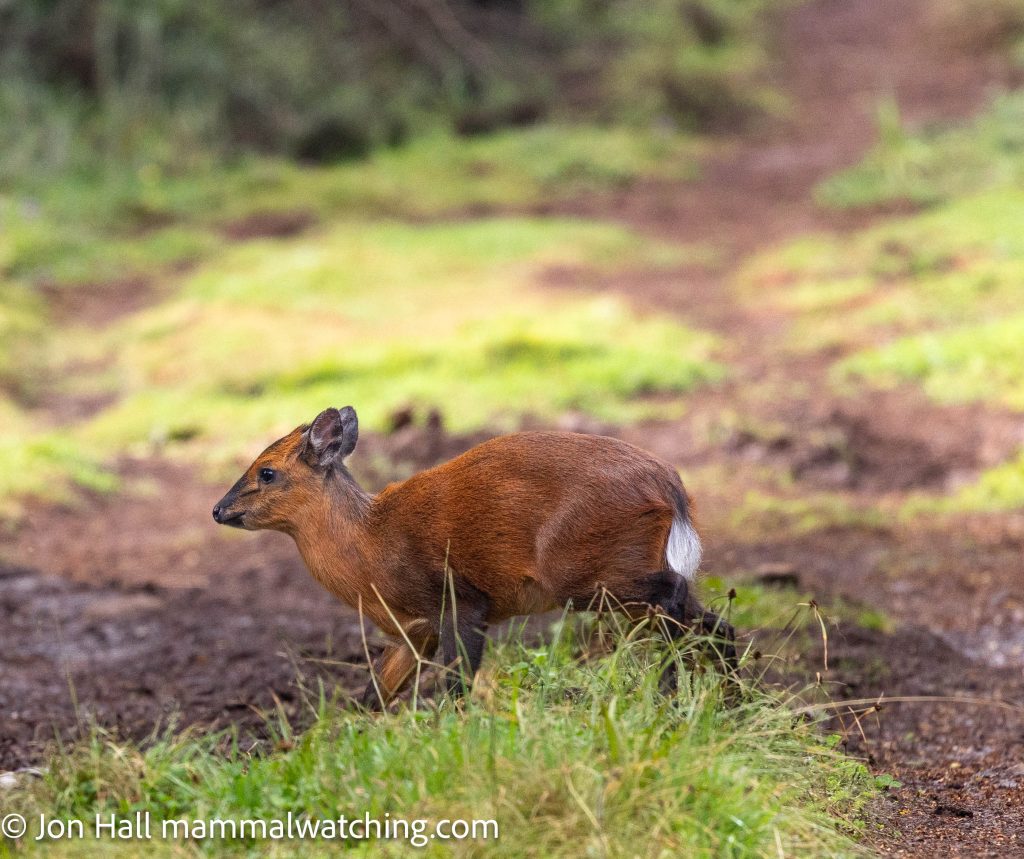
Kivu Duiker (Cephalophorus kivuensis), Aberdares
I had two big beautiful targets for the trip: Mountain Bongo and Welwitsch’s Myotis. Once again, I hired Shem Mwathi, a Nairobi-based driver, to take me around in his Toyota (he drove me and my kids around in 2021). And once again Shem was an excellent driver, guide and companion. He’s an extremely nice guy, who is also considerate, hardworking and genuinely interested in the smaller mammals.
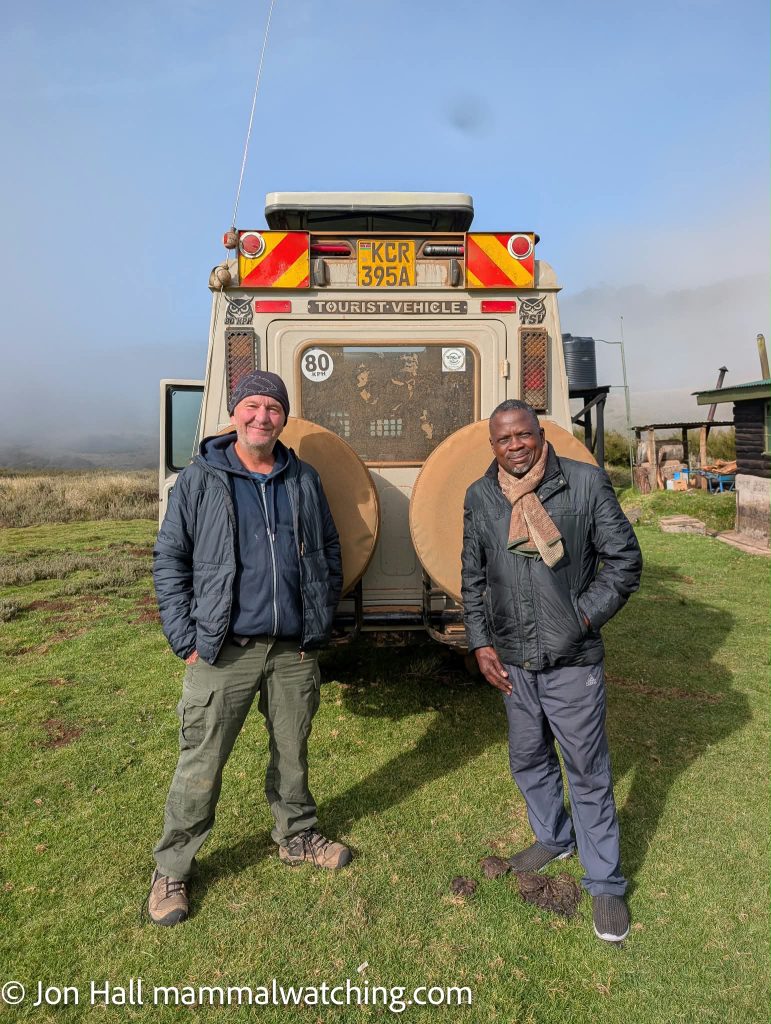
Shem and me in the Aberdares
Shem knows the sites, can help with the arrangements and has a great eye for spotting the animals. He’s also skilled at persuading park staff to allow a little flexibility to look for mammals at night.
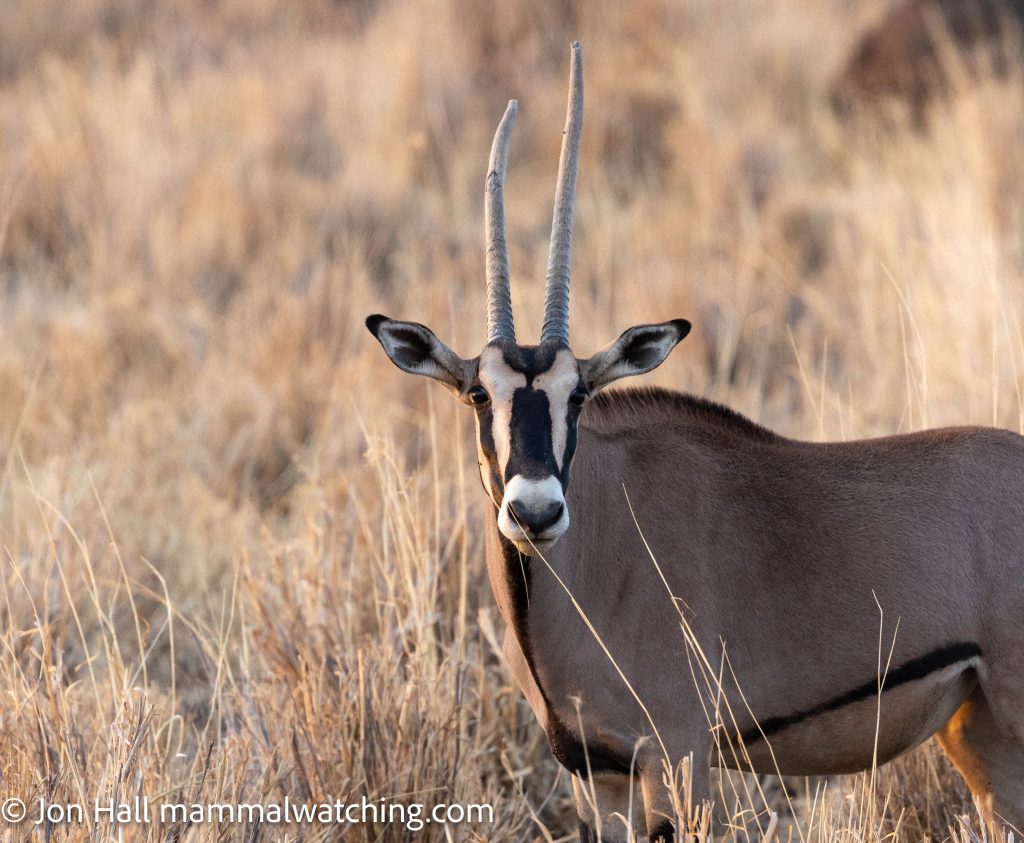
Beisa Oryx (Oryx beisa), Meru
I’d been planning the trip for a while with a friend who’d never been to Africa. She had to drop out a few weeks beforehand, so I quickly rearranged my plans to be more lifer (i.e rodent) – and less safari – focused. At this point the husband of another friend asked to come along for the first few days. I stressed this wouldn’t be a typical safari. Adam was not dissuaded. The last time we spoke he was working on a mammal life-list. One more conversion for the community!
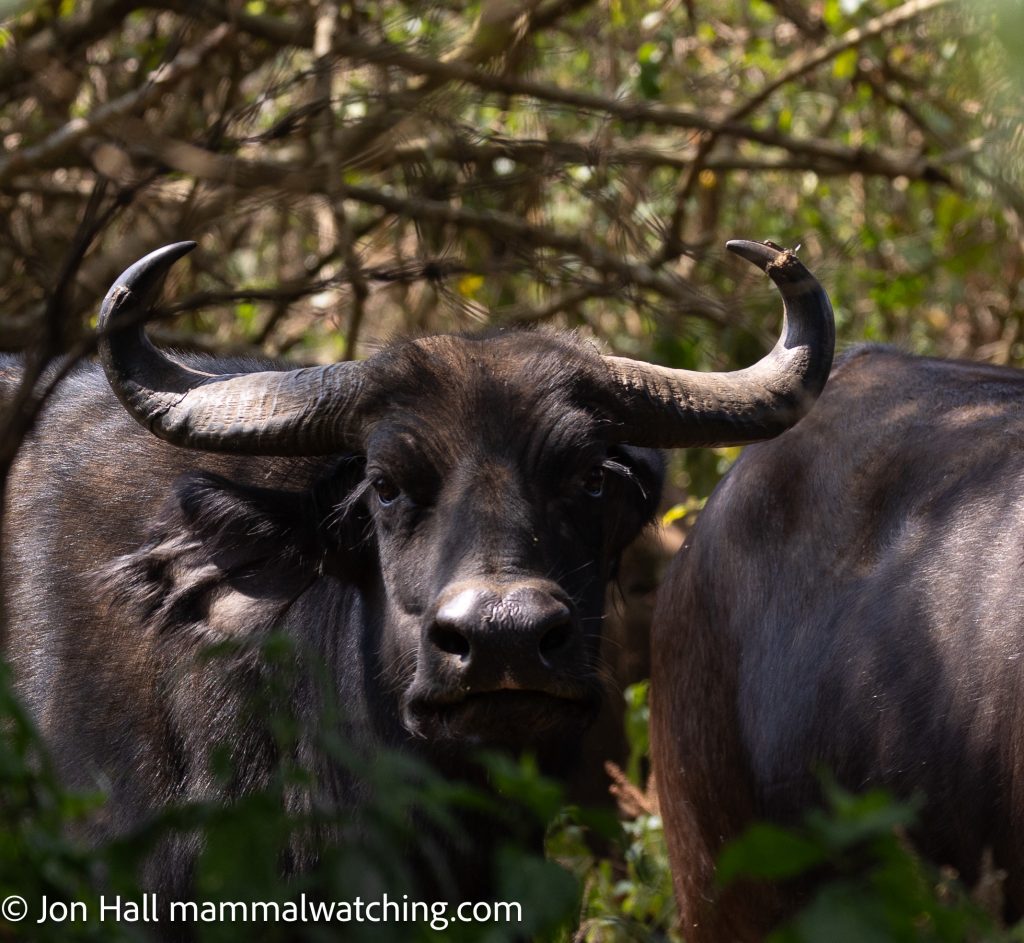
Cape Buffalo (Syncerus caffer), Aberdares
The trip ran as follows
Day 1: Nairobi to Rhino Retreat in the Aberdares NP for Mountain Bongo
Day 2: Rhino Retreat
Day 3: Fishing Camp in the Highlands of the Abderdares for Kivu Duiker and rodents
Day 4: Meru National Park for Somali Galago
Day 5: Castle Forest Lodge on the slopes of Mount Kenya for rodents and a soon to be split sun squirrel
Day 6: return to Nairobi
Day 7: to Kisumu to catch bats, especially Myotis welwitschii with Paul Webala
Day 8: Kakamega Forest for rodents and bats
Day 9: return to Nairobi and to the edge of the rift valley for ‘Smith’s’ Red Rock Rabbit (surely a candidate for a split) with Stratton Hatfield
Day 10: Depart
The Aberdares National Park: Rhino Retreat
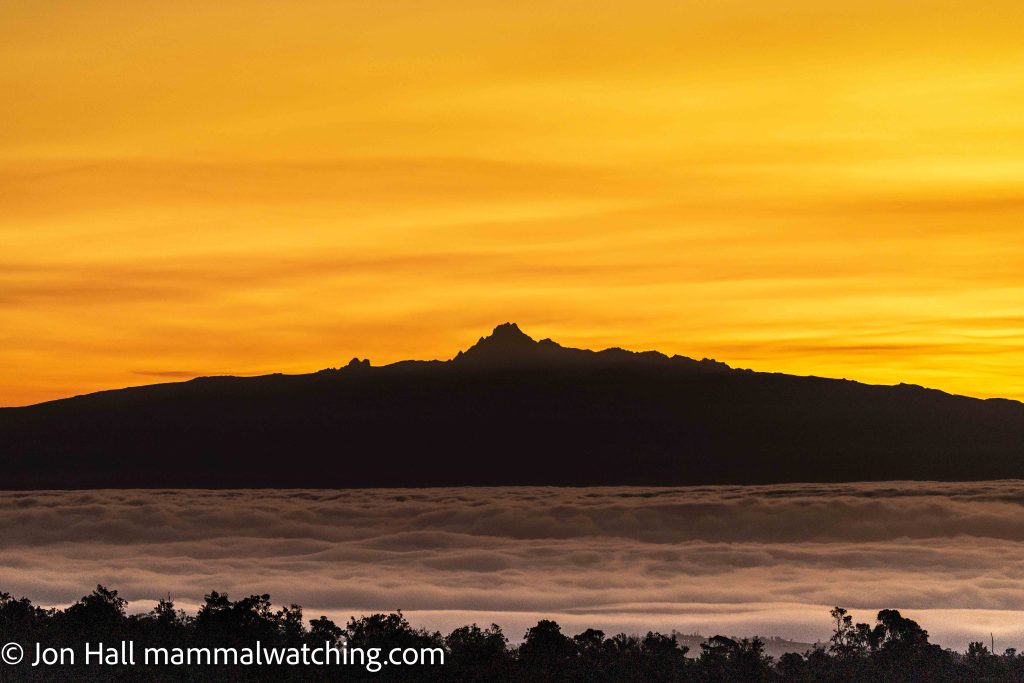
Sunrise over Mount Kenya. The view from Rhino Retreat.
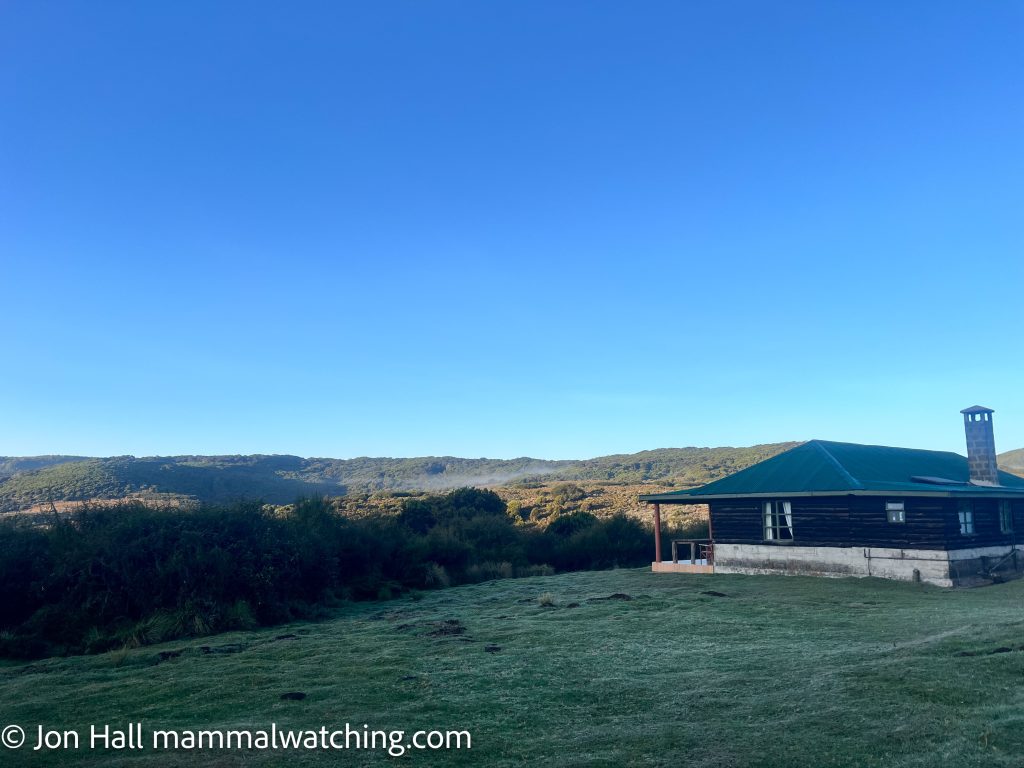
Rhino Retreat is a cottage, managed by the Rhino Ark charitable trust, about an hour’s drive into the Aberdares park from the Ark Gate.
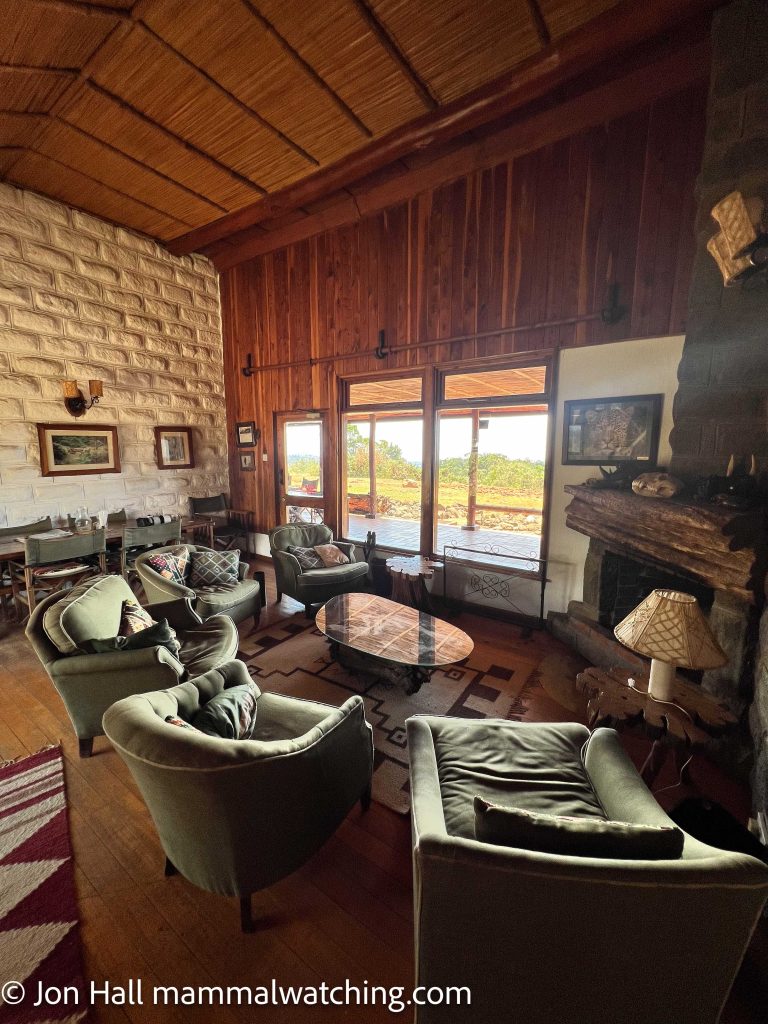
This place is fabulous. It’s a very comfortable three bedroom house, with a 4th bedroom attached, and a salt lick immediately in front of the living room window. Sammy, the resident caretaker, has been there over 20 years and was the perfect manager/butler for this house lifted from the pages of Out of Africa.
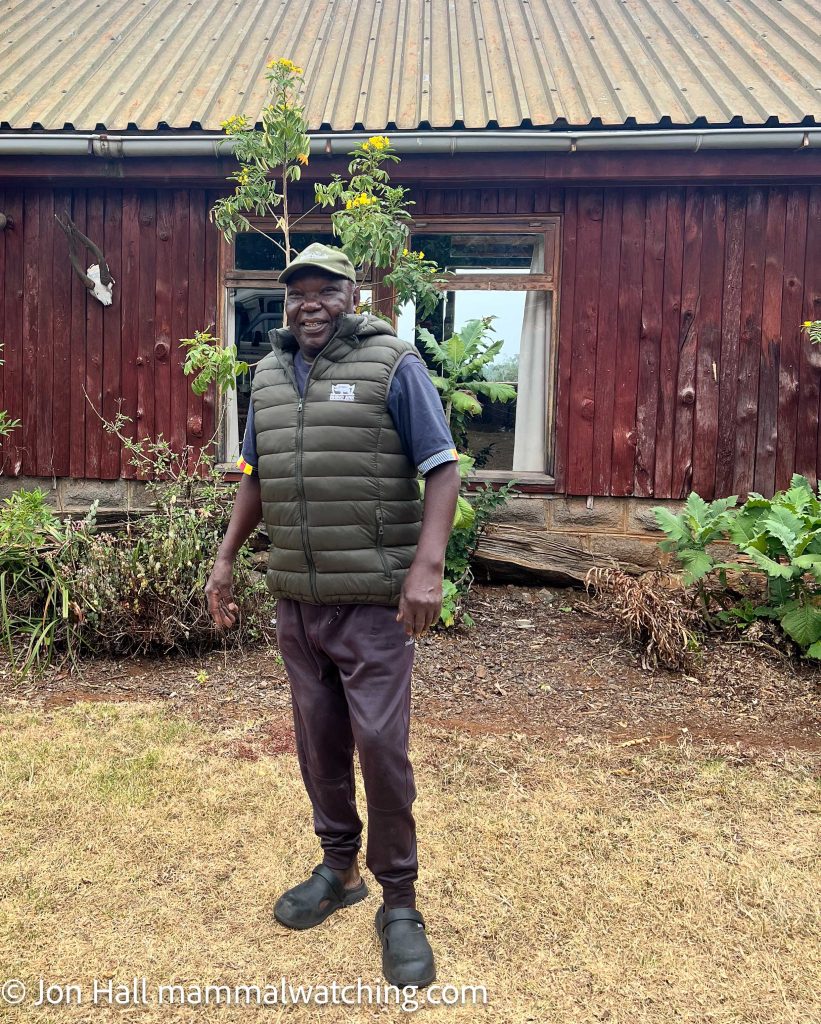
Sammy
Shem and I had booked the place in April. Or so I thought. Because when I was chatting with Stratton Hatfield at the UK bird fair in July I’d mentioned I was going. I told him the dates. He looked puzzled. A few minutes later, possibly after phoning Bird Life High Command to mobilise operation Mammal-sting, he told me that he’d already booked the cottage for the very same dates. Yikes!
But salvation. I was welcome to stay with his group. This is either a remarkably strange coincidence or proof that the Birding Deep State was seriously out to get me.
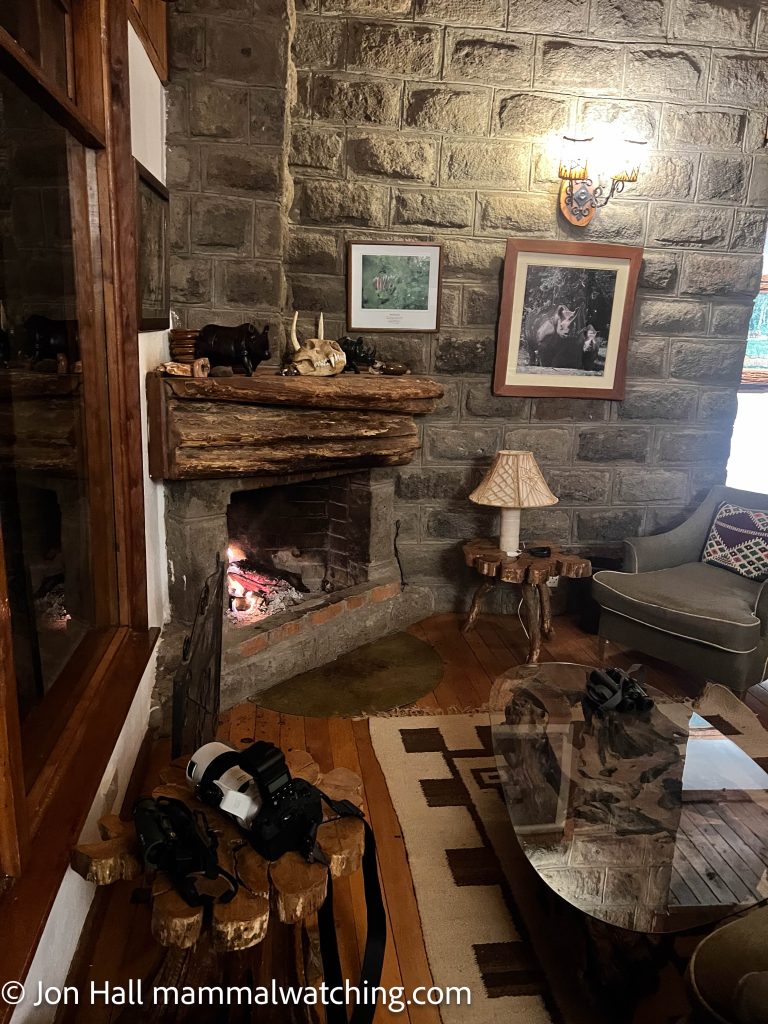
If anyone else had double booked the place my chances for Mountain Bongo would have gone up in flames, along with my chances for anything resembling future happiness. But Stratton, as well as Adam Riley and Keith Valentine from Rock Jumper, were generous enough to let me crash their Bongo party and induge me in some excellent food and wine. I knew all about South African wine, but this was the moment I discovered that biltong is not all vulcanized strips of tooth-cracking beef. The South Africans had brought the good stuff with them. And man was it good!
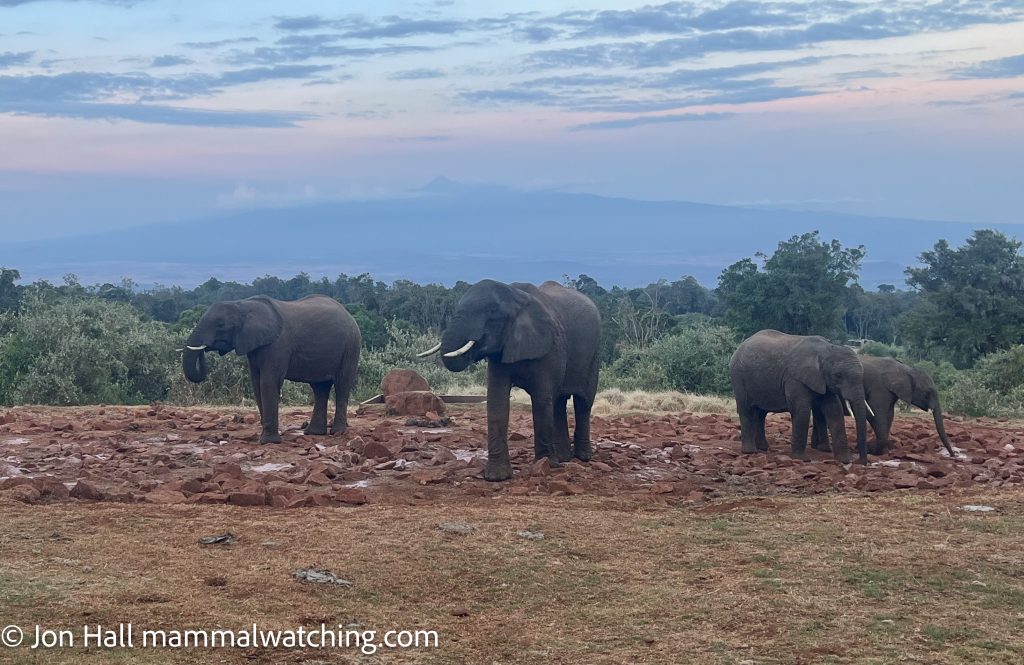
The view from Rhino Retreat
The story of the near extinction of the Mountain Bongo is a testament to what can go wrong when people meddle with nature. In the early 1980s the Kenya Wildlife Service (KWS) began translocating ‘problem’ Lions into the Aberdares. These animals were larger than the local forest Lions and began decimating both the Bongos and the Giant Forest Hogs. A decade or so later KWS attempted to undo the damage they’d caused and removed all the Lions from the Aberdares, which is now fenced to keep them out. At one stage there may have been as few as 15 Bongo left. The population has increased – albeit painfully slowly – and the Mountain Bongo Project estimates there might now be 40 animals in the park, which comprise the majority of the global population of this magnificent subspecies.
Animals have started visiting the salt lick in front of the Rhino Retreat. Sightings have increased in regularity and Stratton’s experience – based on 8 nights at the cottage over the past year or two – suggests that you have a 75% chance of seeing a Bongo on any given night, provided you stay awake through night. Bongos typically visit between 2 am and sunrise, and several different individuals have been seen, though never more than one at a time. At least one of these animals is quite relaxed. At least one is extremely skittish.
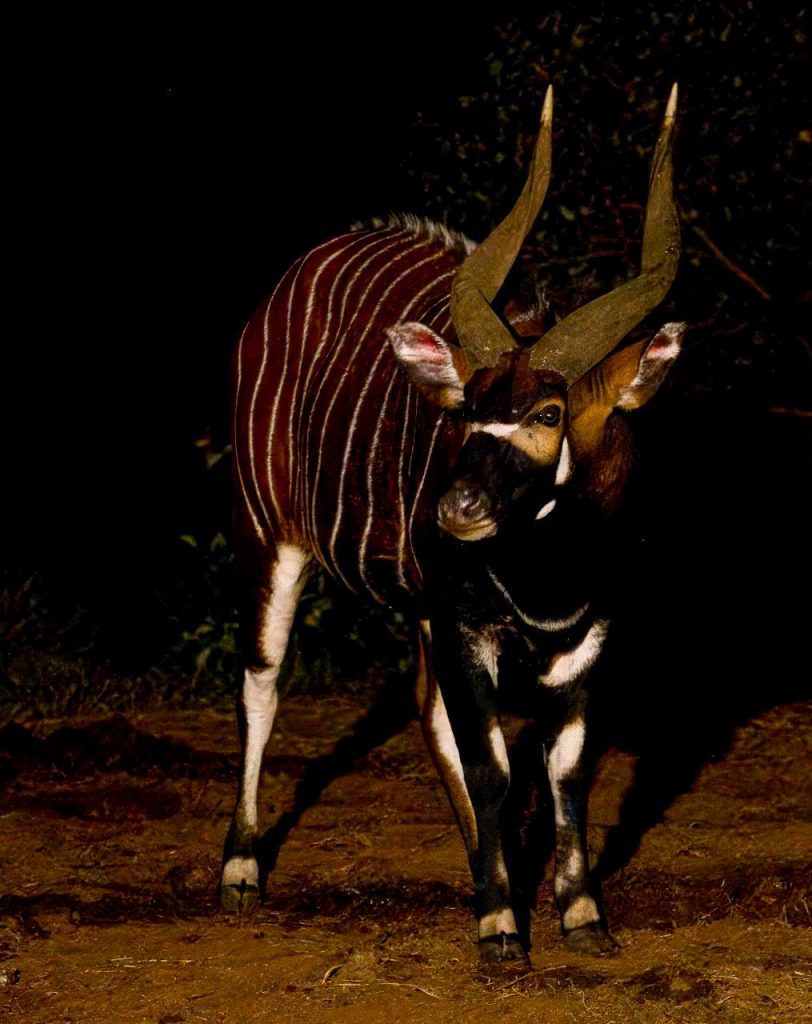
Mountain Bongo (Tragelaphus eurycerus isaaci). Photo Stratton Hatfield
Long story short we had one Bongo vist the cottage on our first night at 2am. It was super skittish. I had a 30 second gaze but didn’t attempt a photo so as not to disturb it. I went to wake up the others and a noise from inside the house was enough to send the Bongo scampering back into the forest.
No Bongo visited the following night.
What a spectacular species! I think this is my new favourite ungulate. Not only for the beautiful colouration, but also for their physique. The male I saw was all powerful neck and shoulders: he had the physique of something from Greek mythology. Imagine a Centaur that had been hitting the gym.
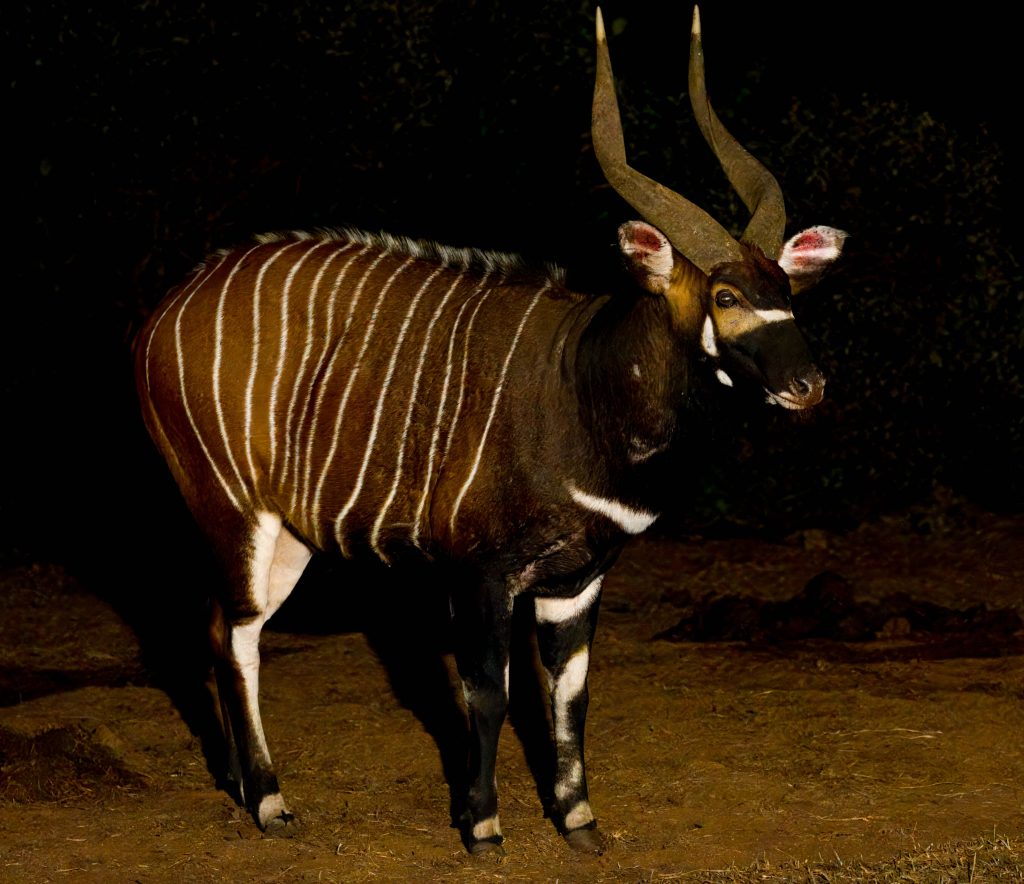
Mountain Bongo (Tragelaphus eurycerus isaaci). Photo Stratton Hatfield
There was a constant procession of Elephants coming into the retreat from late afternoon through midnight. Other visitors at night included Cape Buffalo, White-tailed Mongoose, Spotted Hyena, Savanna Hare and Giant Forest Hogs.
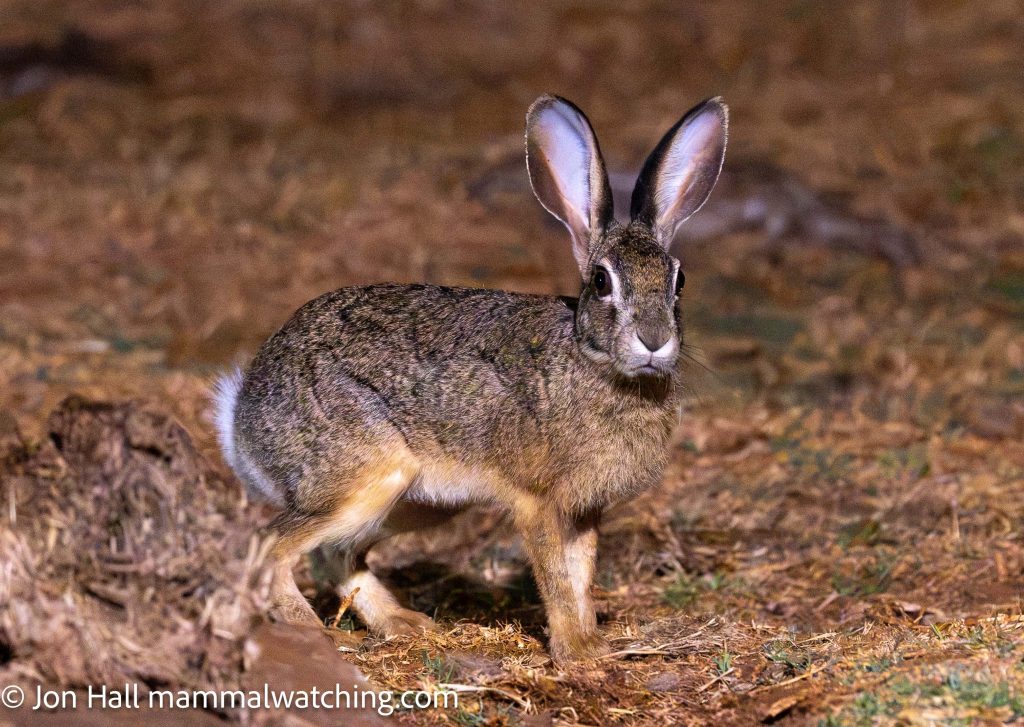
African Savanna Hare (Lepus microtis)
Driving around the lower parts of the park with Shem and Adam we also saw Guerza Colobus and Slender Mongoose.
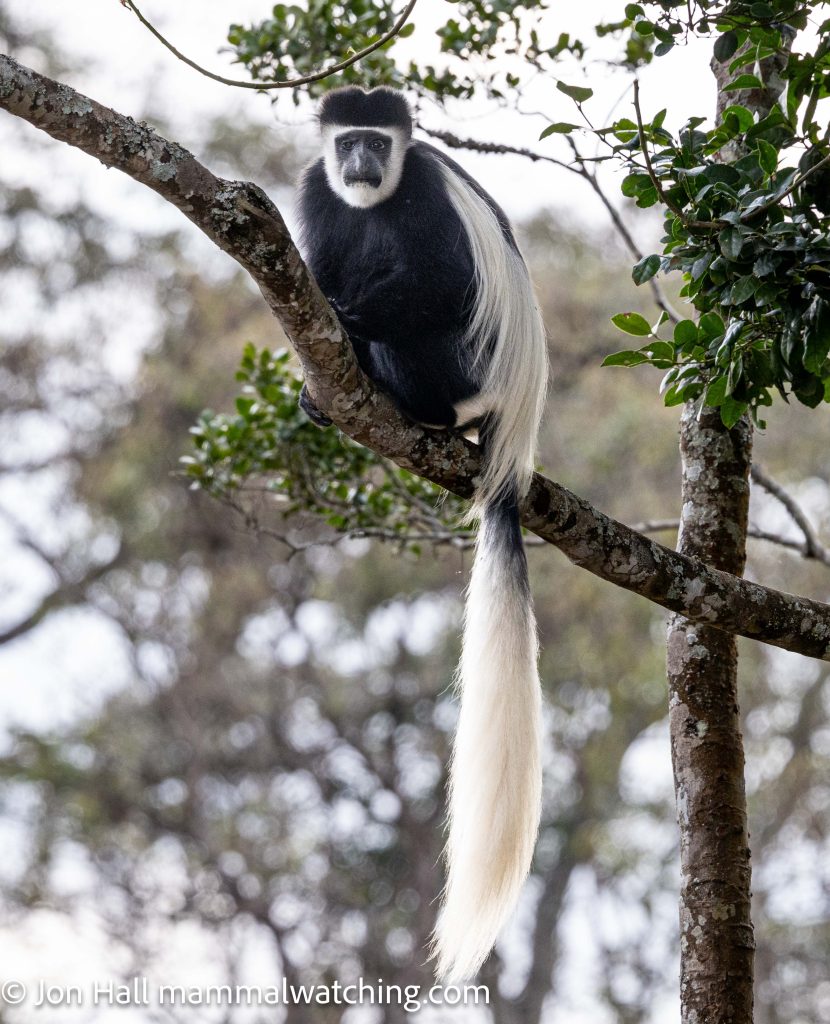
Guereza (Colobus guereza)
Along with Cape buffalo, Elephant, Giant Forest Hog, Impala, Waterbuck, Bushbuck, Warthog and Ochre Bush Squirrel.
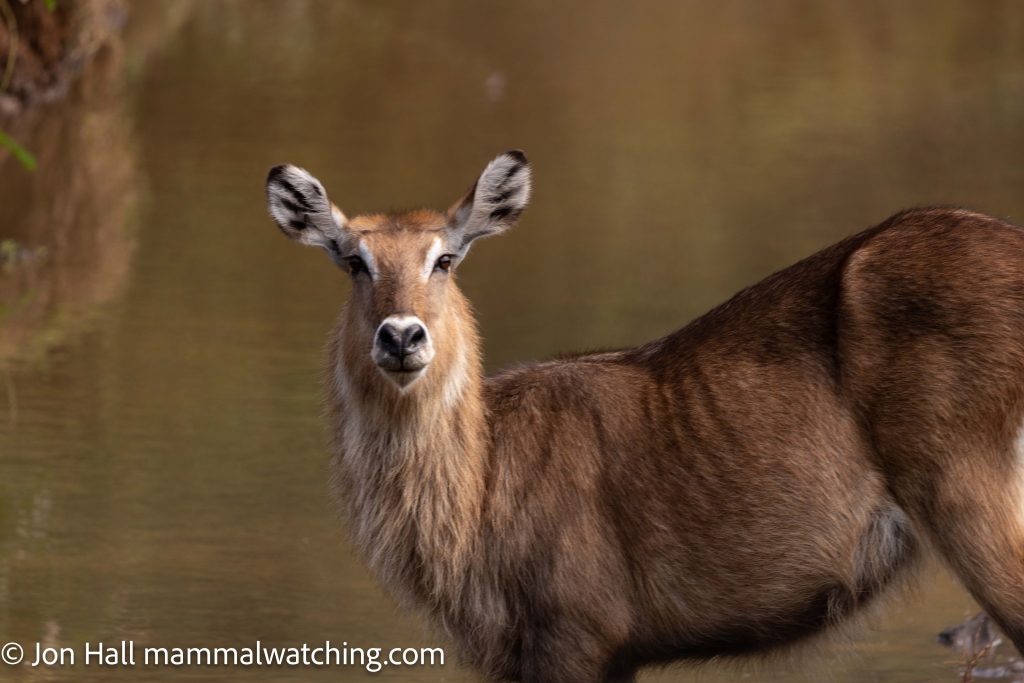
Waterbuck (Kobus ellipsiprymnus)
The biggest surprise was seeing a Southern Tree Hyrax run across the road in front of us in the late afternoon! Shem and Adam also saw a Leopard near the park gate.
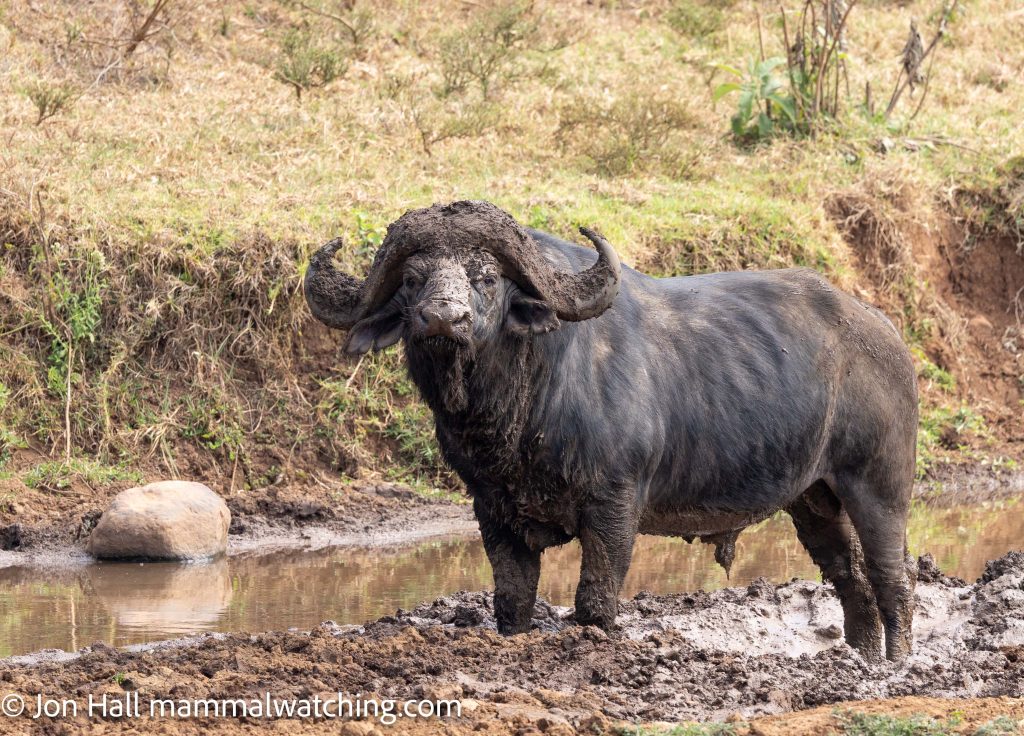
Cape Buffalo (Syncerus caffer)
Sammy at the retreat had a mouse living underneath his washing machine. We caught it and after some back and forth with Venkat we think it is most likely a Jackson’s Soft-furred Mouse.
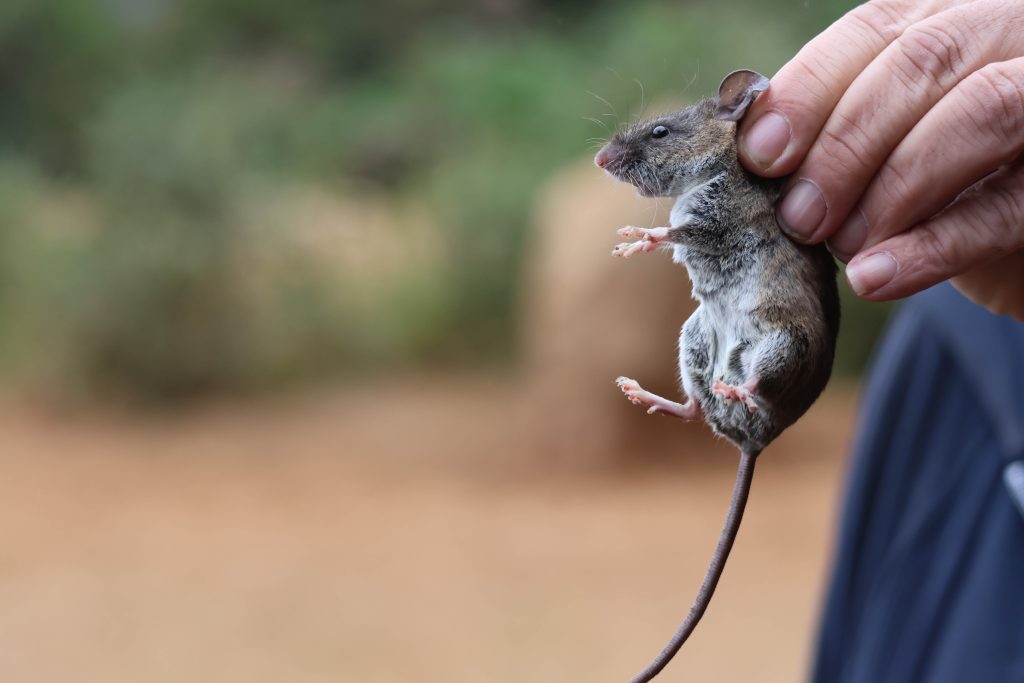
Jackson’s Soft-furred Mouse (Praomys jacksoni)
The only rodents up there of a similar size and similarly long tail seem to be this species and Mount Kenya Wood Mouse. But the latter has a tuft at the end of its tail which this mouse did not.
Fishing Camp, Aberdares
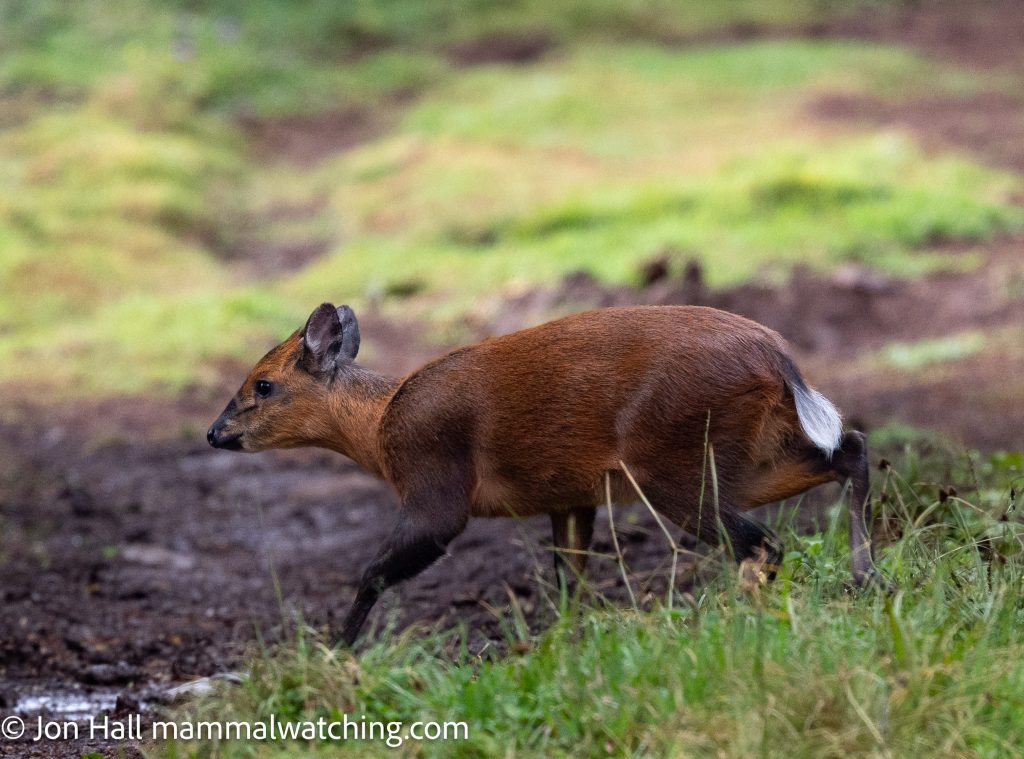
Kivu Duiker (Cephalophorus kivuensis)
I spent a third night up at the top of the Aberdares, staying in a self-catering house in the KWS Fishing Camp. I wanted to get a better look at a Kivu (formerly Black-fronted) Duiker up here and poke around for rodents.
The duiker was easy, I saw two on an afternoon drive close to the camp. We also saw several Bush Duiker in the same area, as well as several more around the cottages at night. Serval are quite common up here too but only Shem saw the cat that crossed in front of us.
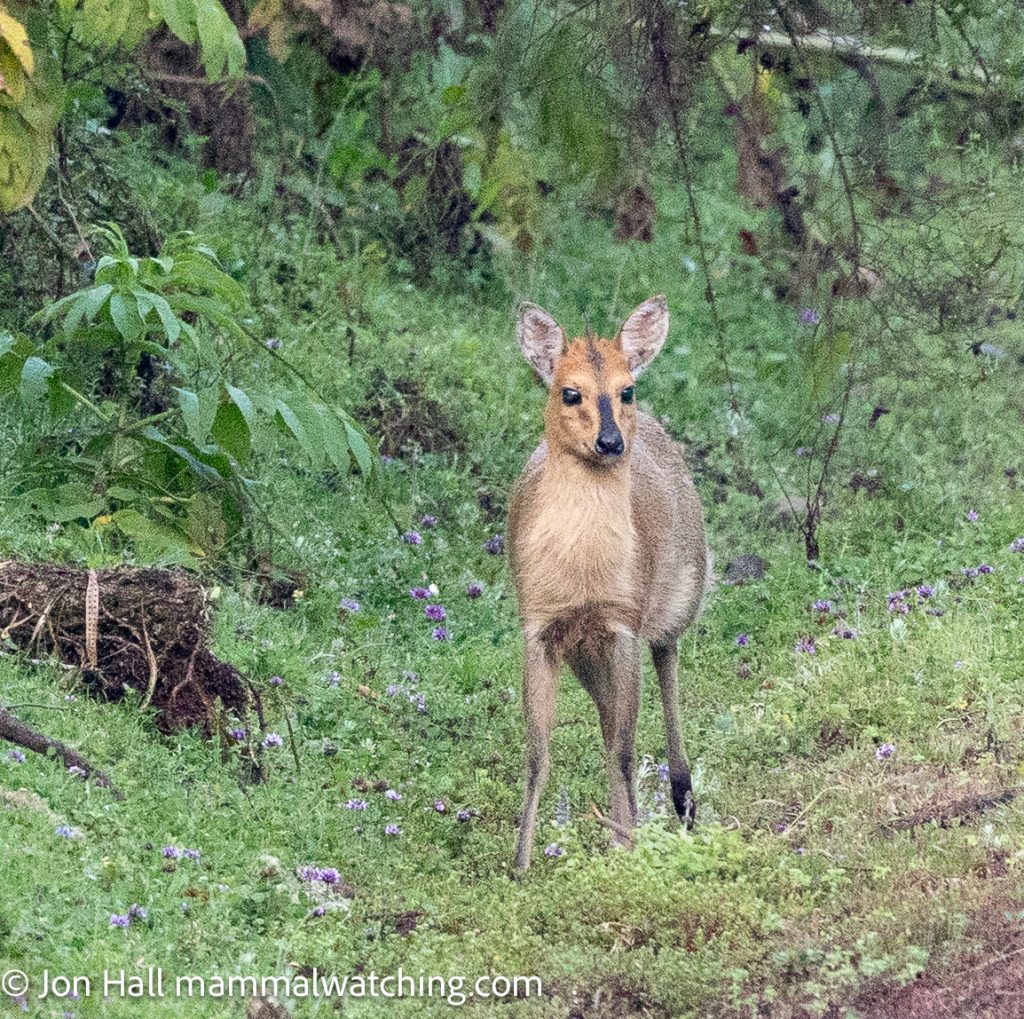
Bush Duiker (Sylvicapra grimmia)
Other mammals up here, which we hadn’t seen lower down, included Common Eland.
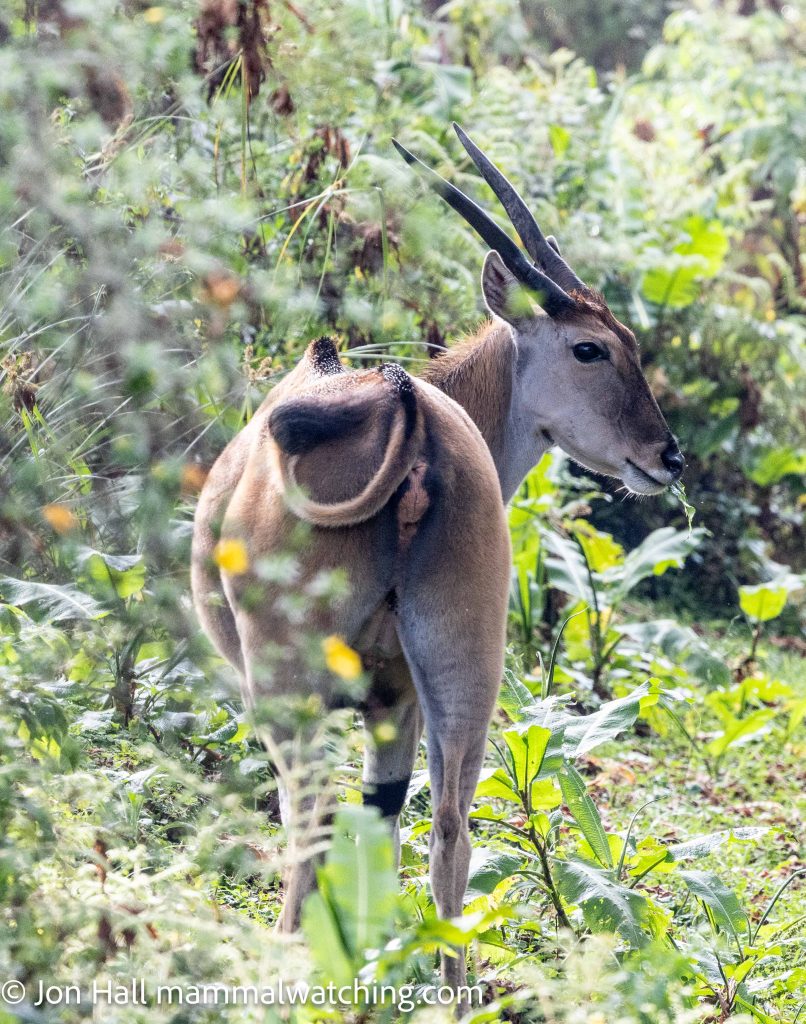
Common Eland (Tragelaphus oryx)
My plans to go searching from rodents at night with my thermal scope were postponed due to heavy mist and then completely cancelled after Buffalo wandered into camp.
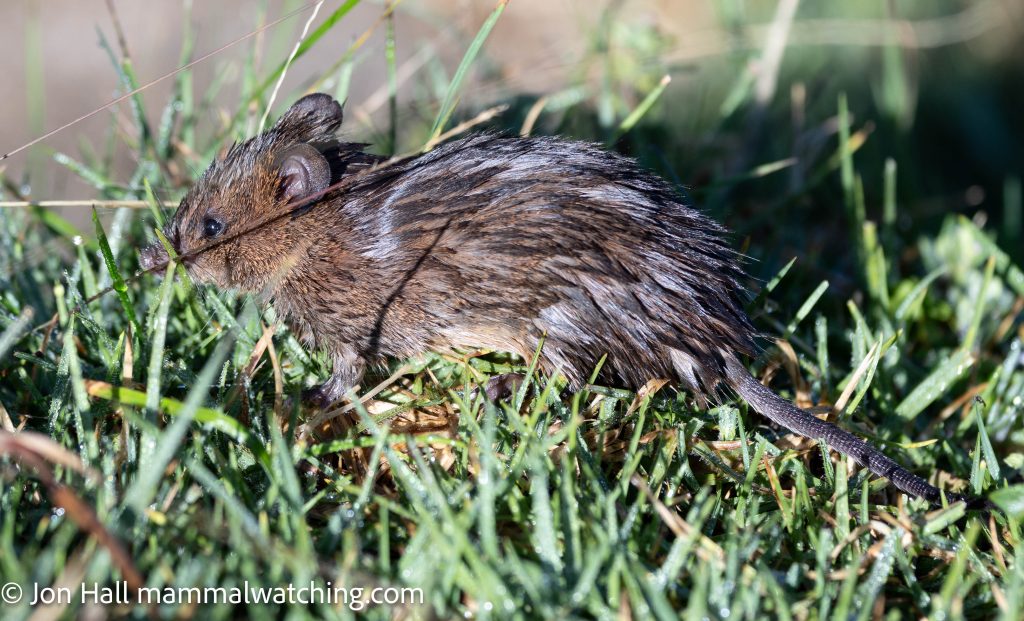
Zena Brush-furred Rat (Lophuromys zena)
I did however see a couple of these brush-furred rats in the day time and was able to catch (and release) one: these should be Zena’s Brush-furred Rats up here (according to Venkat Sankar, font of all African rodent wisdom).
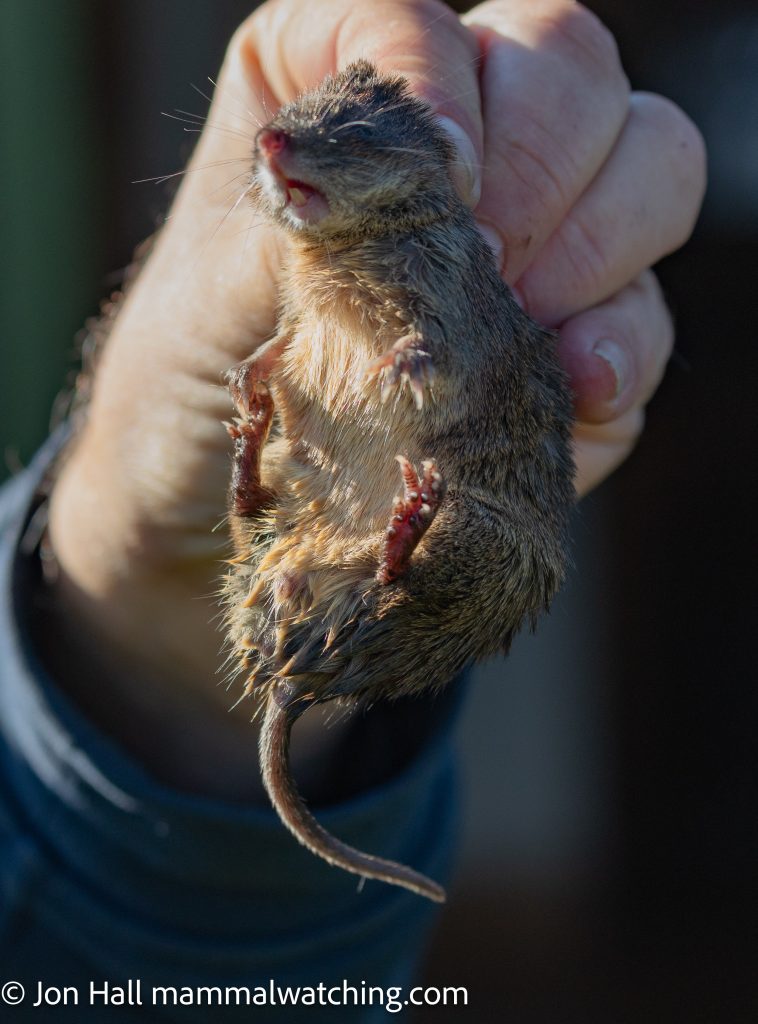
Zena Brush-furred Rat (Lophuromys zena)
Meru National Park
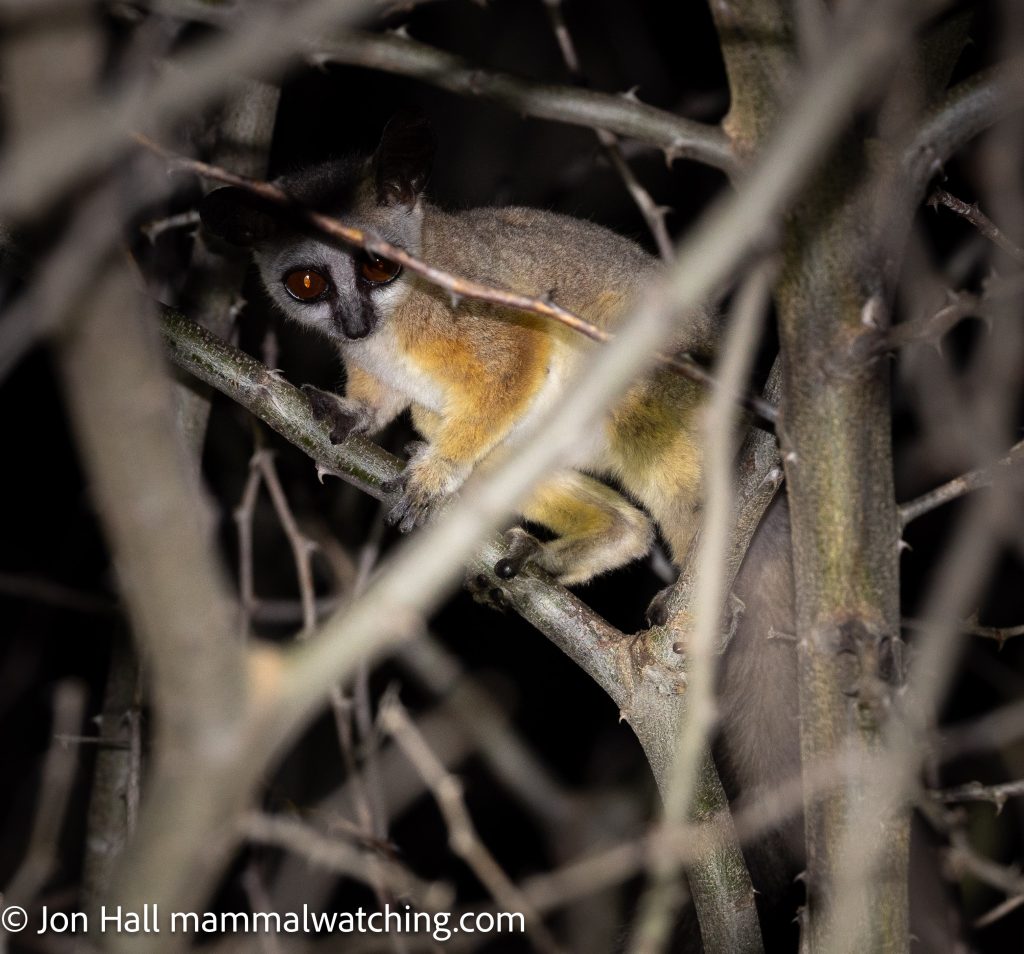
Somali Lesser Galago (Galago gallarum)
Our next stop was Meru. I had visited in 2021 but had not realized at the time I could see Somali Galago here. Zarek Cockar suggested I stay at the KWS Kinna Cottages in the park, where the galagos were common, but a last minutes change meant we ended up in the KWS Guest House close to the park gate.
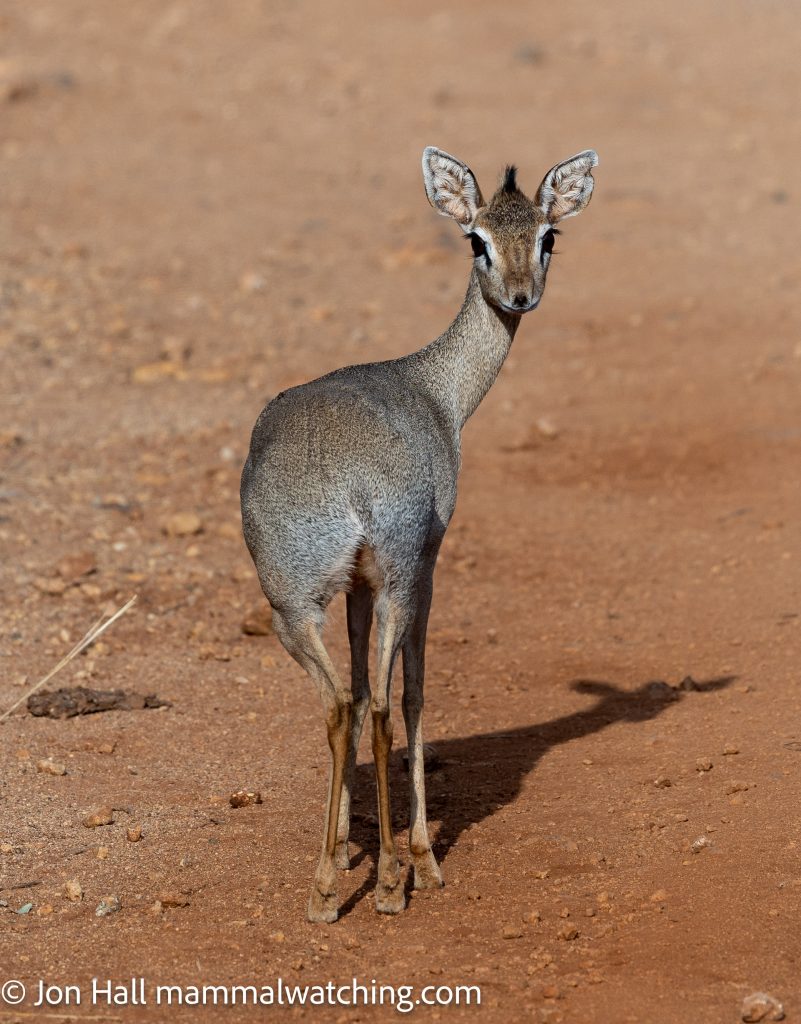
Kirk’s Dik-dik (Madoqua kirkii)
I couldn’t find any galagos around the guest house, even though the habitat was good, so Shem persuaded the guards to let take a short night drive to search for them. Night drives are not allowed in Meru, but seeing as we weren’t chasing Lions and Leopards they indulged our galago search.
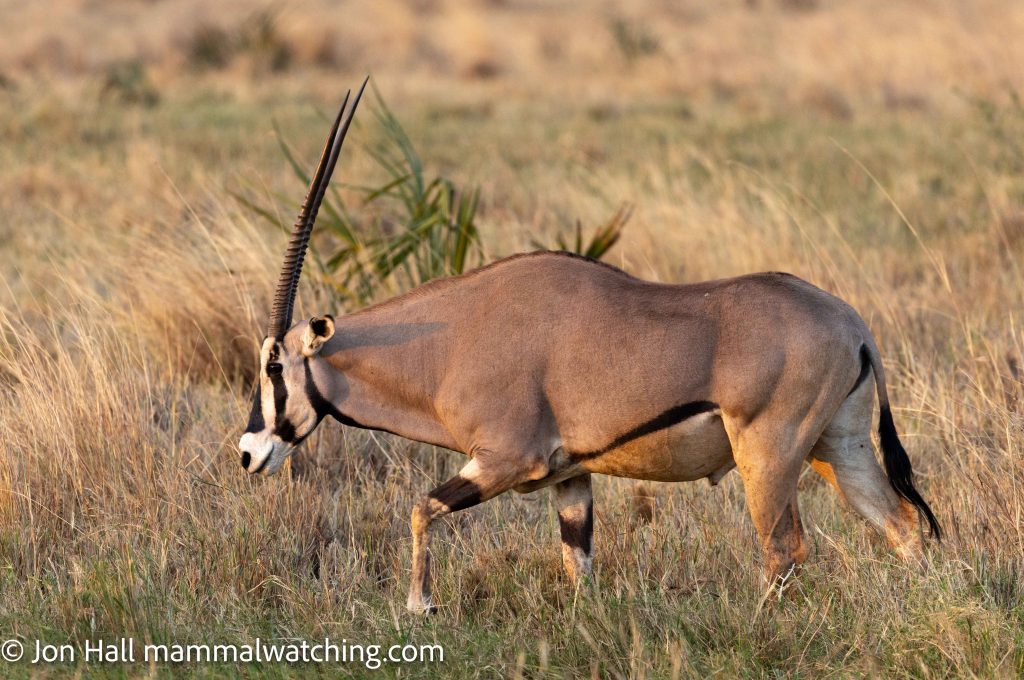
Beisa Oryx (Oryx beisa)
I picked up a galago in the thermal a couple of miles down the track and had good views.
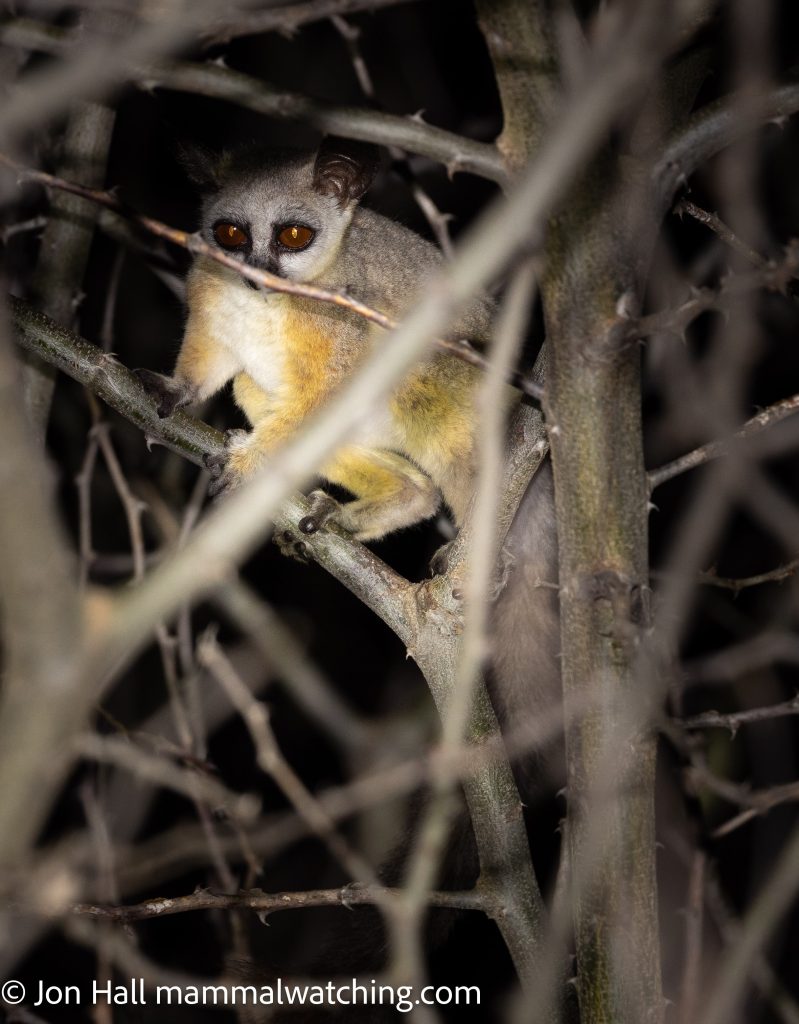
Somali Lesser Galago (Galago gallarum)
The caretaker at the cottage took us to a small camp – here – where he had seen galagos in some large trees. We found galagos but they were Garnett’s Greater Galagos. We also saw Common Duiker and Southern Bushbuck.
I suspect the area around the Kinna Cottages is better for the galagos based on how abundant they are there according to Zarek.
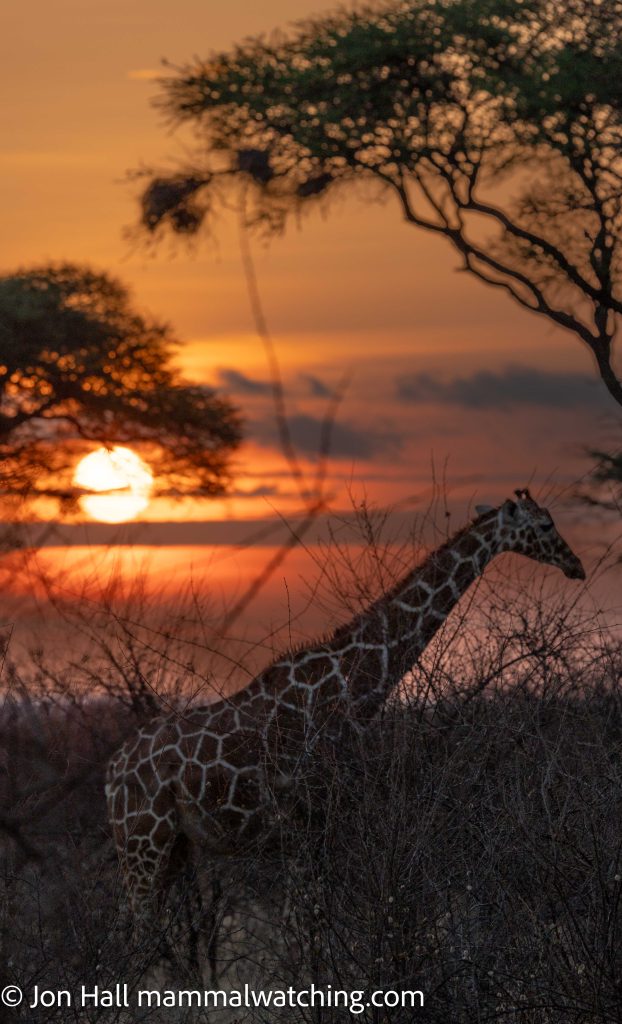
Reticulated Giraffe (Giraffa reticulata)
Driving around the park in the late afternoon and mornings we saw a lot of Reticulated Giraffe, Eland and Lesser Kudu.
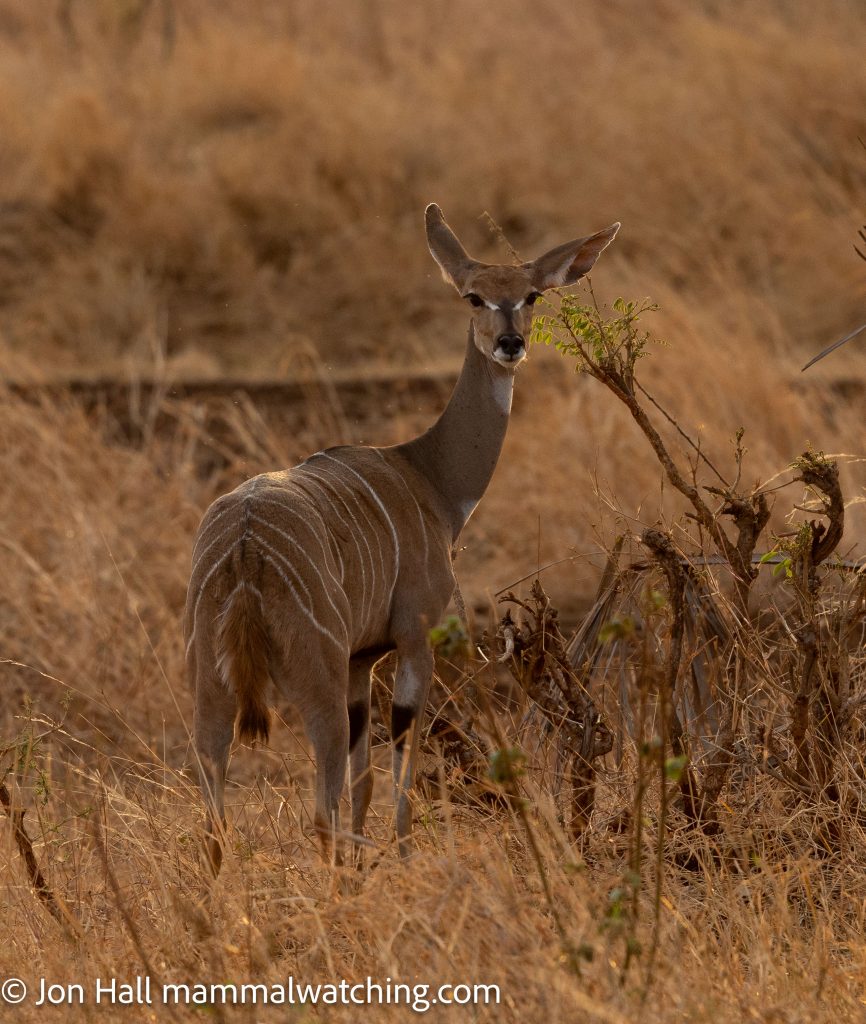
Lesser Kudu (Tragelaphus imberbis)
Along with Waterbuck, Buffalo, Beisa Oryx and Elephants.
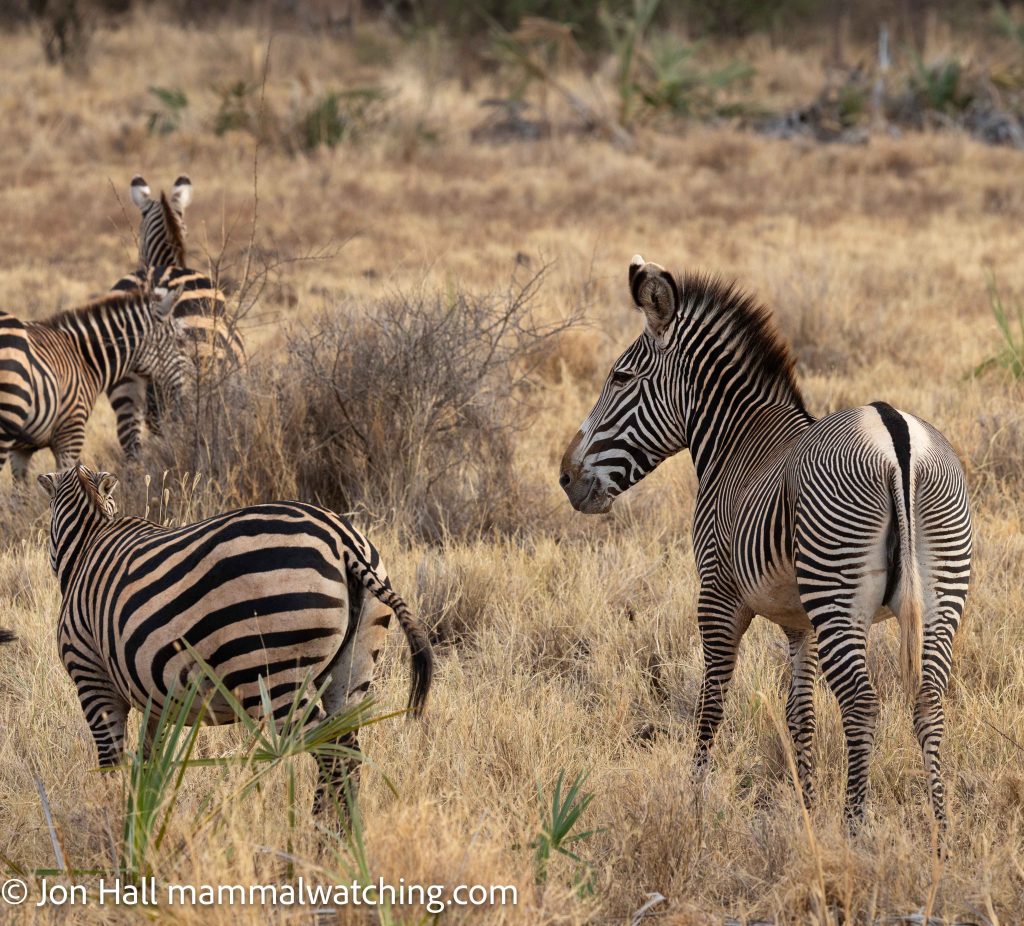
Grevy’s Zebra (Equus grevyi), right and Plains Zebra (E. quagga), left
It was nice to see this Grevy’s Zebra (right) in with a herd of Plains Zebra so we could compare how different they are.
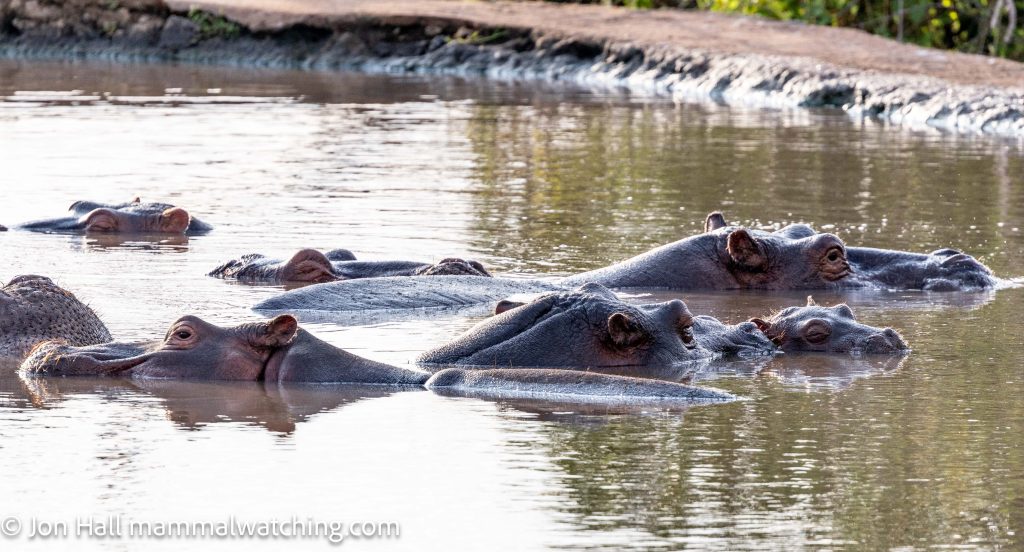
Common Hippopotamus (Hippopotamus amphibius)
We also saw Common Hippopotamus, Impala, Bright’s Gazelle, both Guenther’s and Kirk’s Dik-diks, Desert Warthog, Vervet Monkey and Olive Baboons.
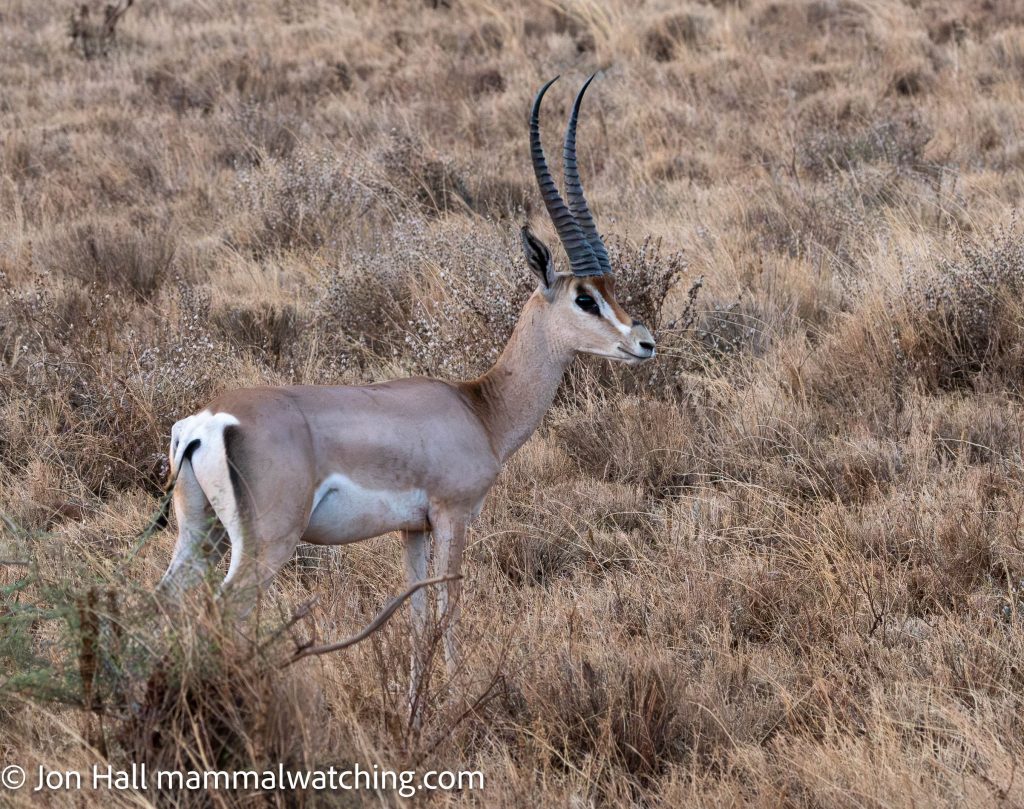
Bright’s Gazelle (Nanger notatus)
Castle Forest Lodge
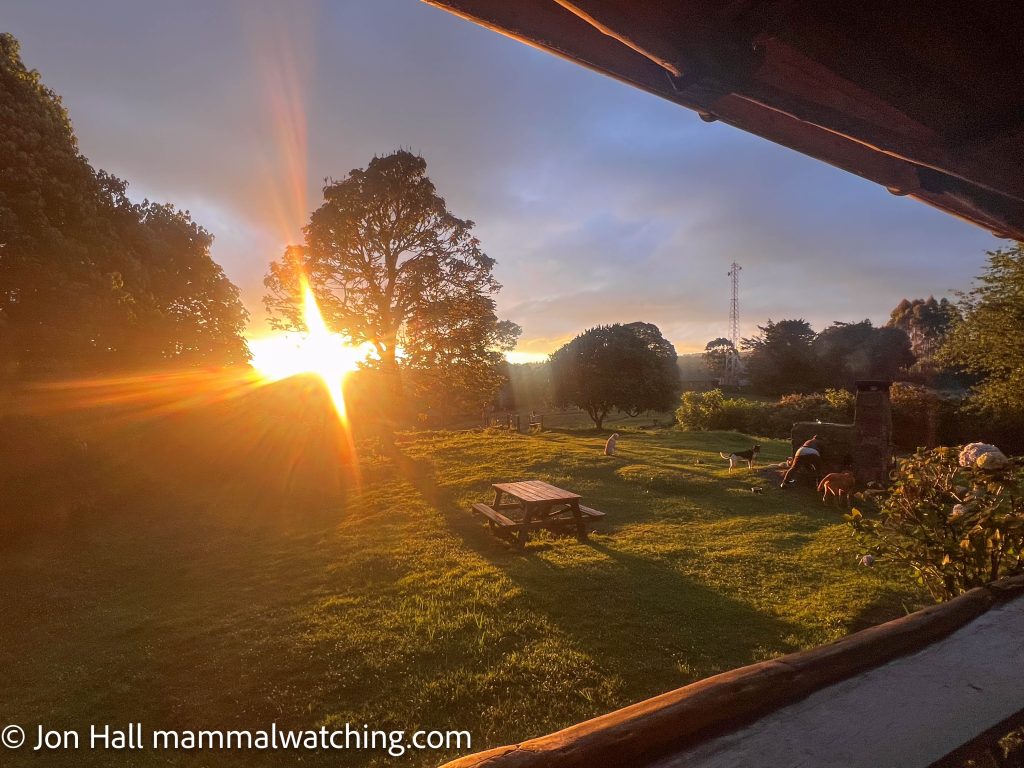
The last stop on my safari with Shem and Adam was Castle Forest Lodge on the slopes of Mount Kenya.
Stratton had suggested the lodge. It is in great forest that is popular with birders, where there would likely be some good rodents including the local Red-legged Sun Squirrel which both Stratton and Venkat feel sure will be split as soon as someone works on it.
It is indeed a lovely spot. Simple cabins with a larger restaurant building, and a place where Britain’s King George VI used to stay on hunting trips.
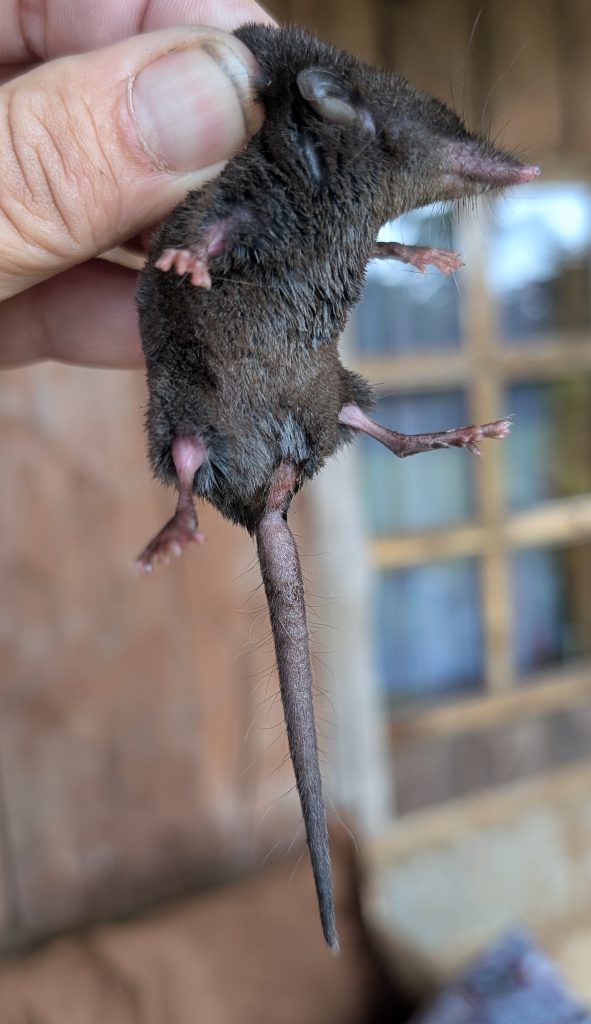
Turbo White-toothed Shrew (Crocidura turba)
I got permission to set some Sherman traps around the lodge, with Shem using the genius explanation that Sherman trapping is just like catch and release fly fishing. He’s not wrong. I wish other people could see it this way.
I took a stroll down the road we’d come in on in the late afternoon. A stroll that turned into a fast march back to the lodge when some elephants crossed in front of me.
Back at the lodge the staff were full of warnings that there were elephants in the area and I needed to be very careful.
Shem was happy – elephants or not – to take us for a very slow drive down towards the park gate after dark and we thermalled for rodents in particular.
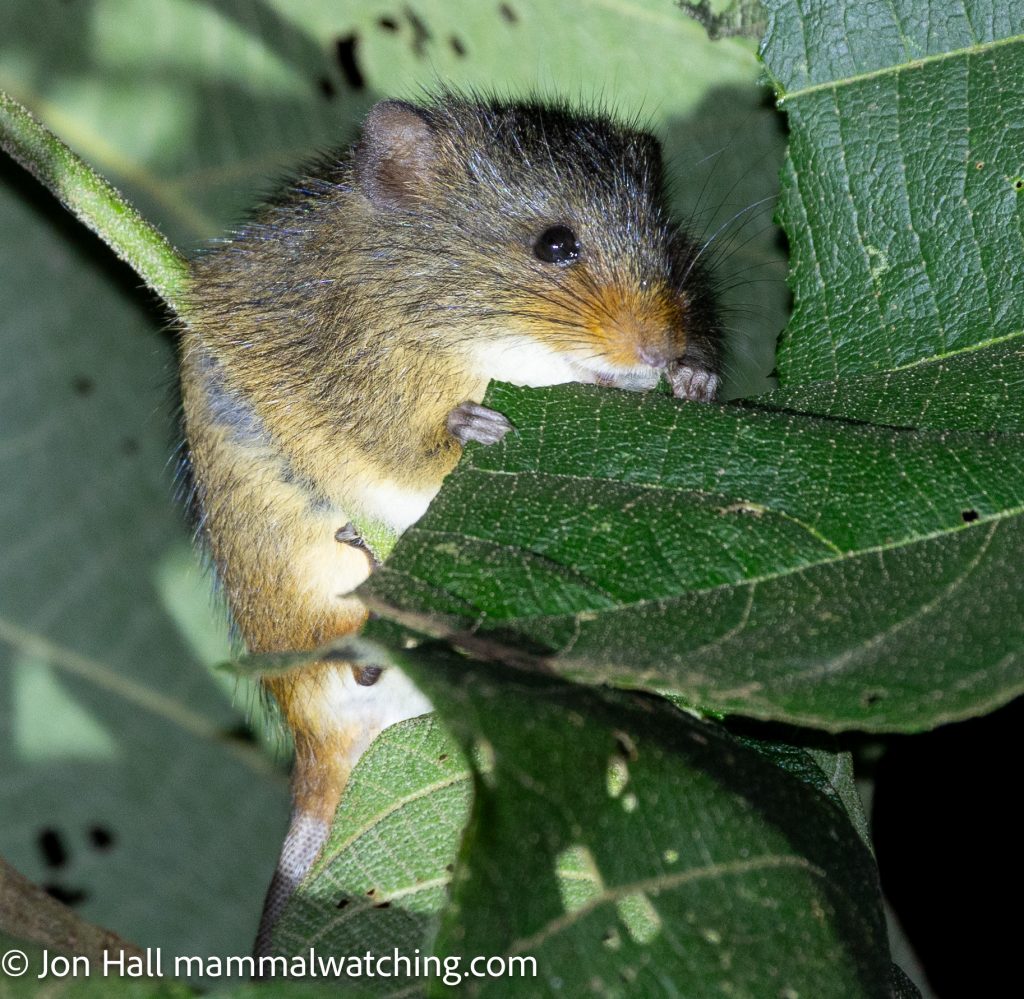
Common Rufous-nosed Rat (Oenomys hypoxanthus)
This lifer Common Rufous-nosed Rat was very obliging
We also saw an Angolan Soft-furred Fruit Bat, a Southern Tree Hyrax and some sleeping Blue Monkeys.
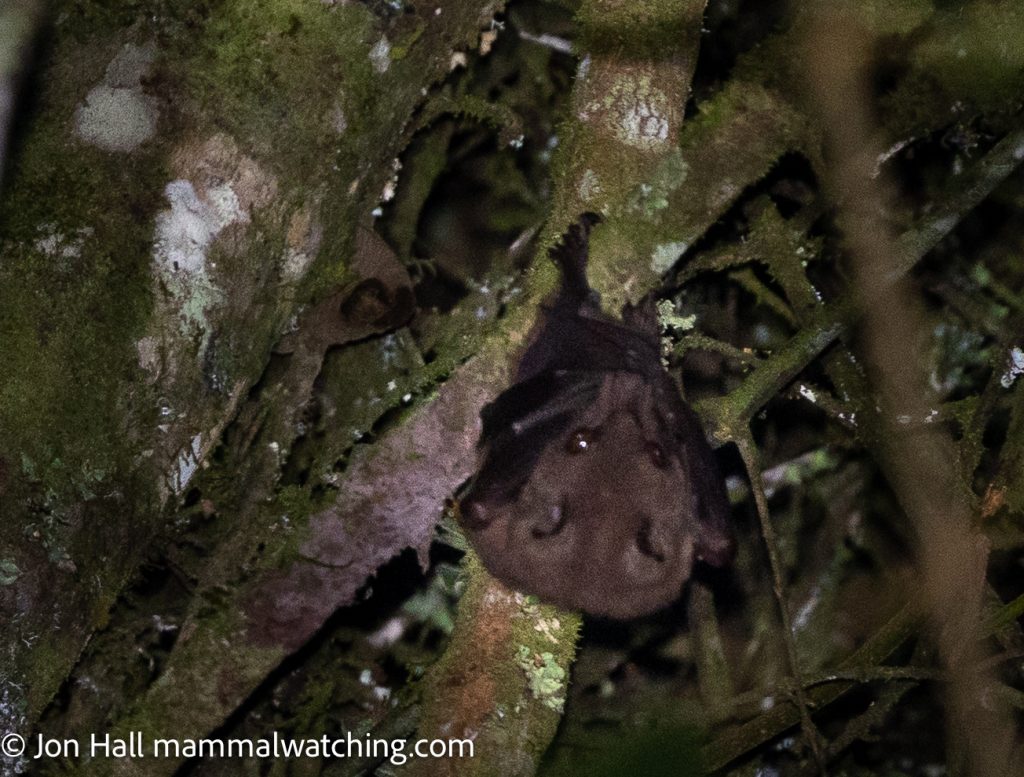
Angolan Soft-furred Fruit Bat (Myonycteris angolensis)
In the morning I had several captures in my traps.
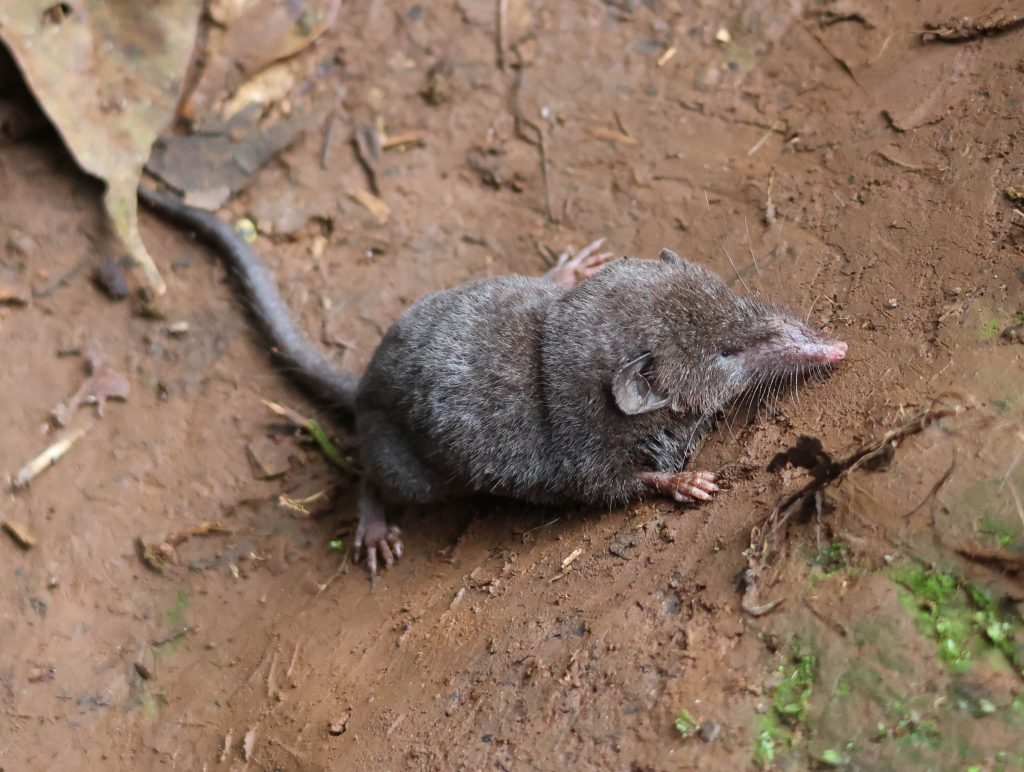
Turbo White-toothed Shrew (Crocidura turba)
This large shrew appears to be the Turbo White-toothed Shrew. There are few species as large as this in Africa, and the Turbo Shrew – according to Jonathan Kingdom – has “conspicuous blob on the end of its nose” which this one also seems to have.
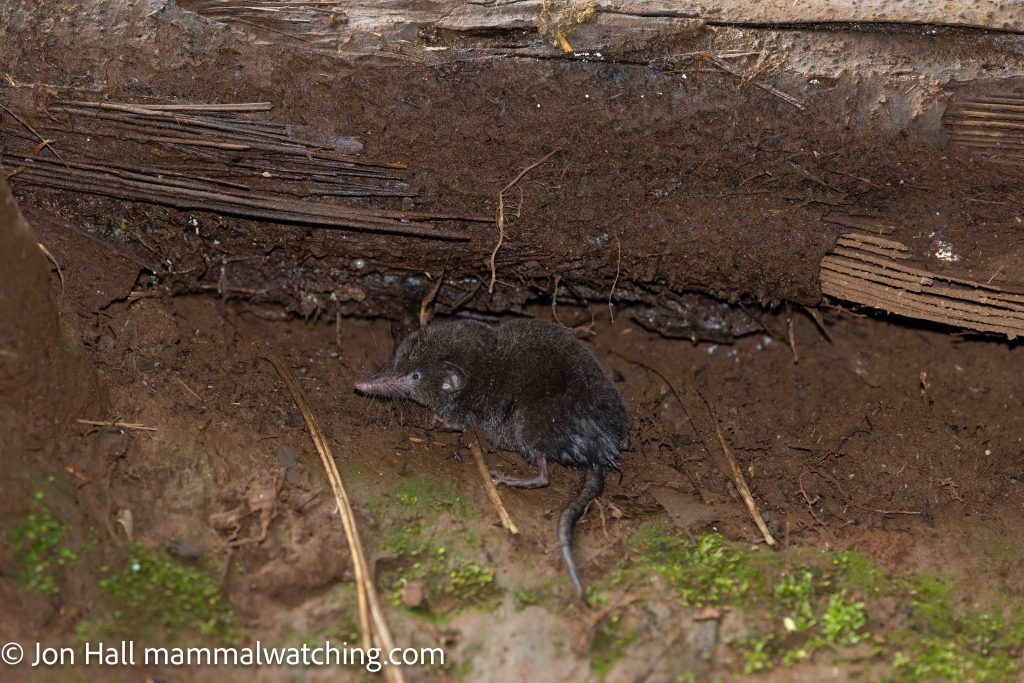
Turbo White-toothed Shrew (Crocidura turba)
I caught two mice which look like the one we had found under the washing machine at Rhino Retreat so I put these down too as Jackson’s Soft-furred Mouse.
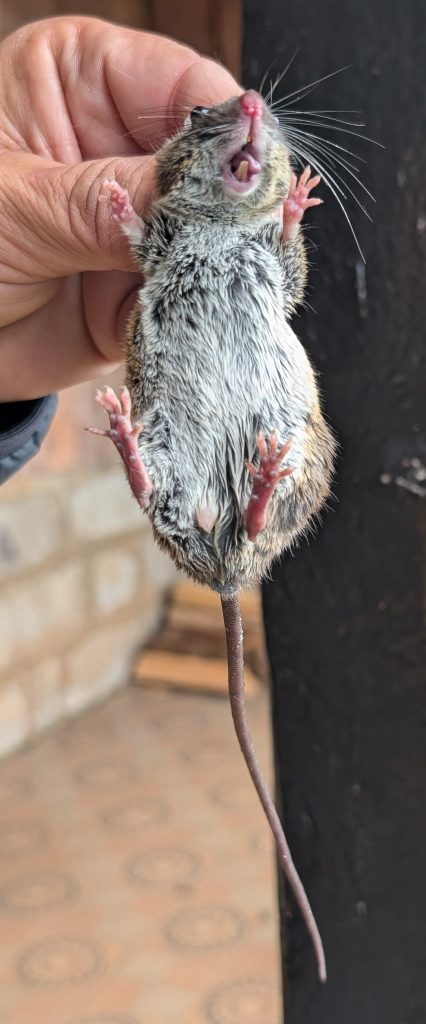
Jackson’s Soft-furred Mouse (Praomys jacksoni)
Along with two of these rich rufous brown lophuromys. My understanding (from Venkat of course!) is that all the lophuromys on mount kenya should be l.zena based on trapping data.
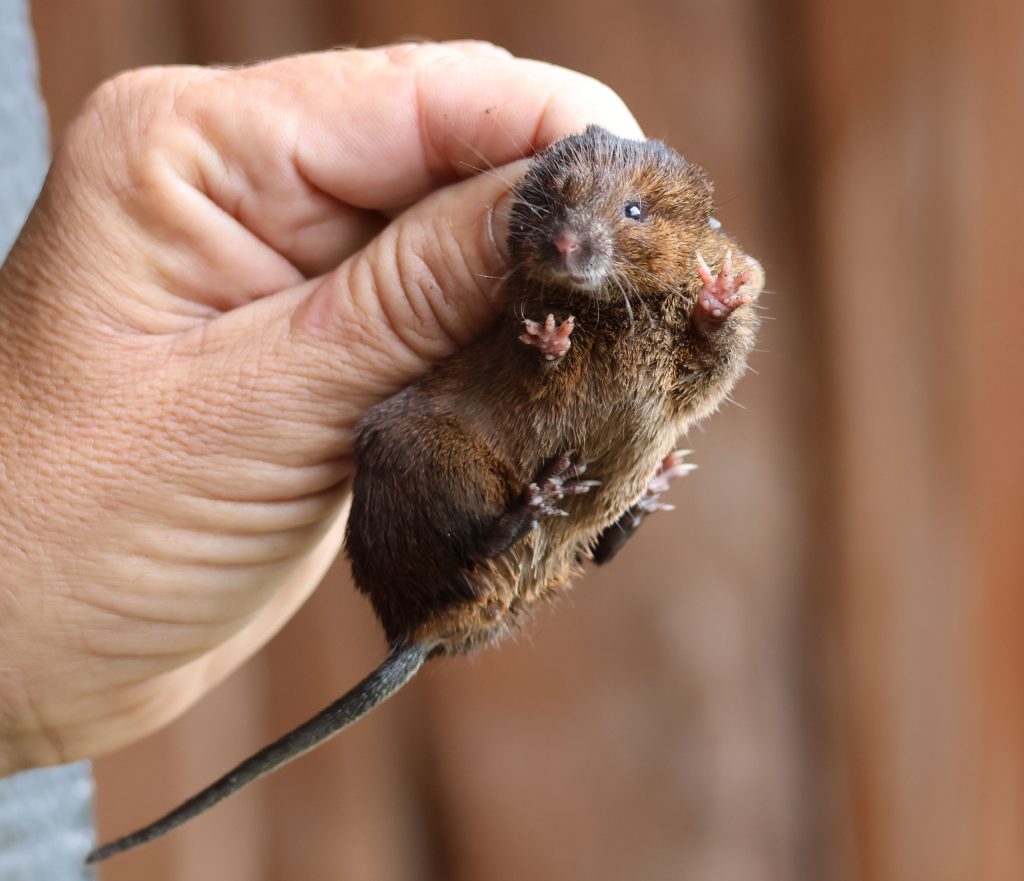
Ansorge’s Brush-furred Rat (Lophuromys cf. ansorgei)
But this species looks completely different to me to those we had seen high in the Aberdares. This one seems to be Lophuromys ansorgei, which is known from Kenya and has this rufous coloration. I will eat my lucky hat if this species is the same as the one we saw at the Fishing Camp.
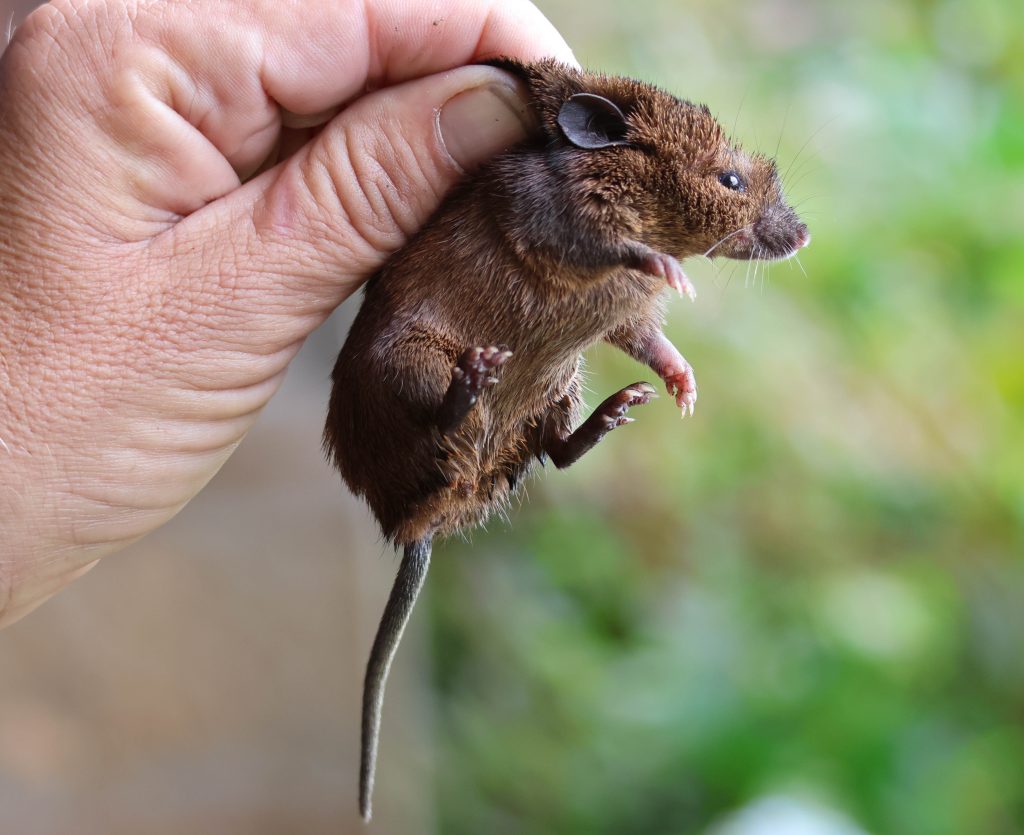
Ansorge’s Brush-furred Rat (Lophuromys ansorgei)
Kisumu
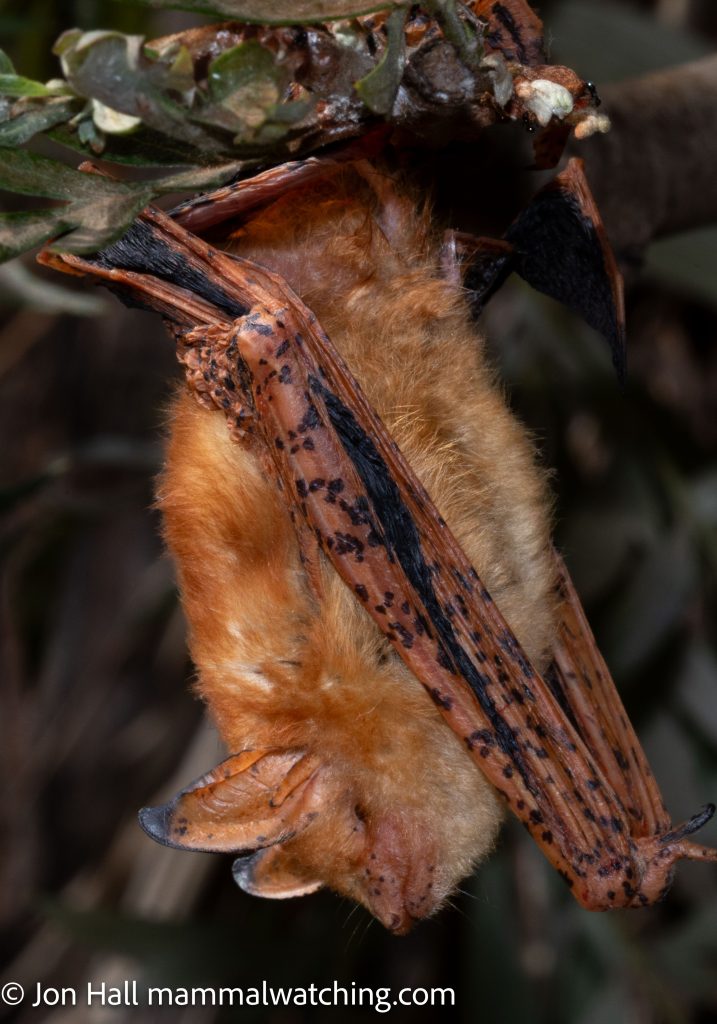
Welwitsch’s Myotis (Myotis welwitschii)
I visited Kisumu in 2021 with Kenyan bat legend Paul Webala to try to catch the stunning Welwitsch’s Myotis. Paul told me he “always got them here”. But we were skunked, perhaps because the temperature that night was a little cooler than usual.
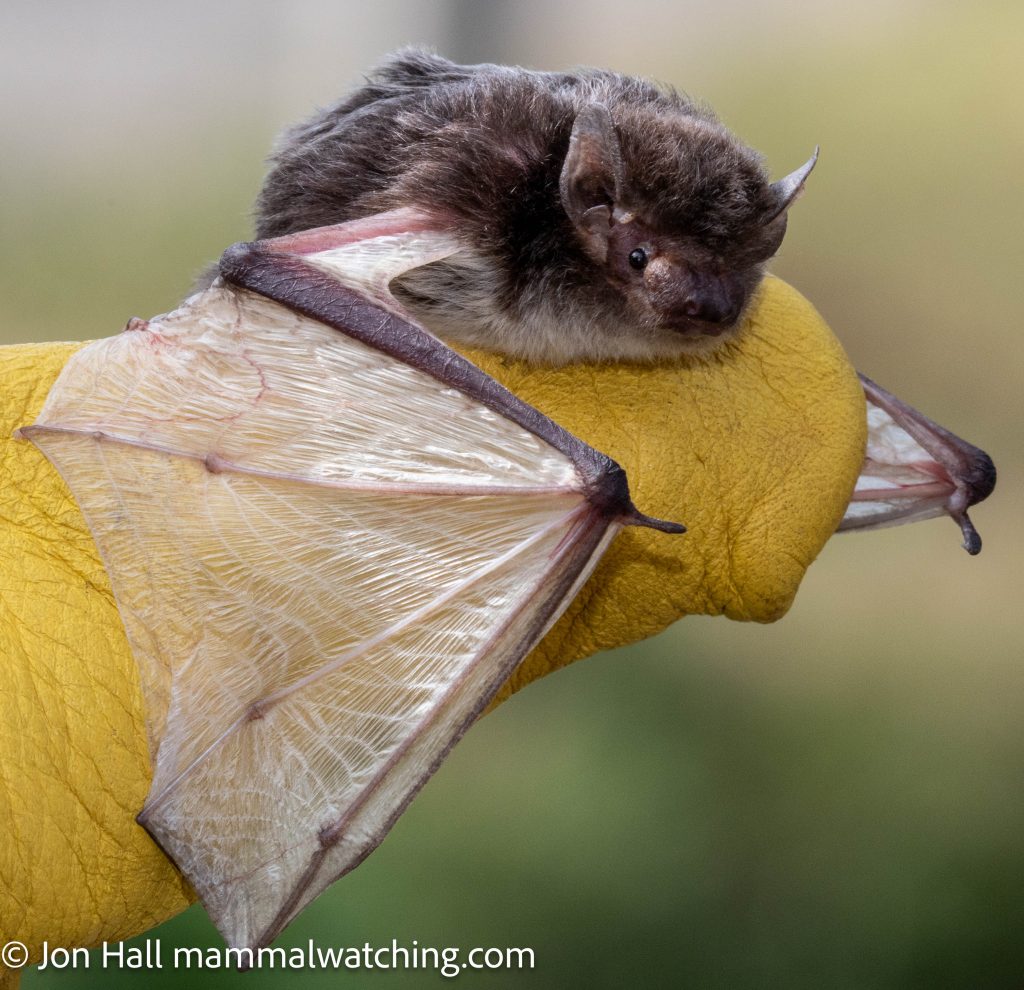
Nyanza Serotine (Pseudoromicia nyanza)
Of course I wanted to try again and Paul very kindly drove down to Kisumu with one of his MSc students, Eric Keter, so we could revisit his myotis spot, the small Impala Park near the Sovereign Hotel.
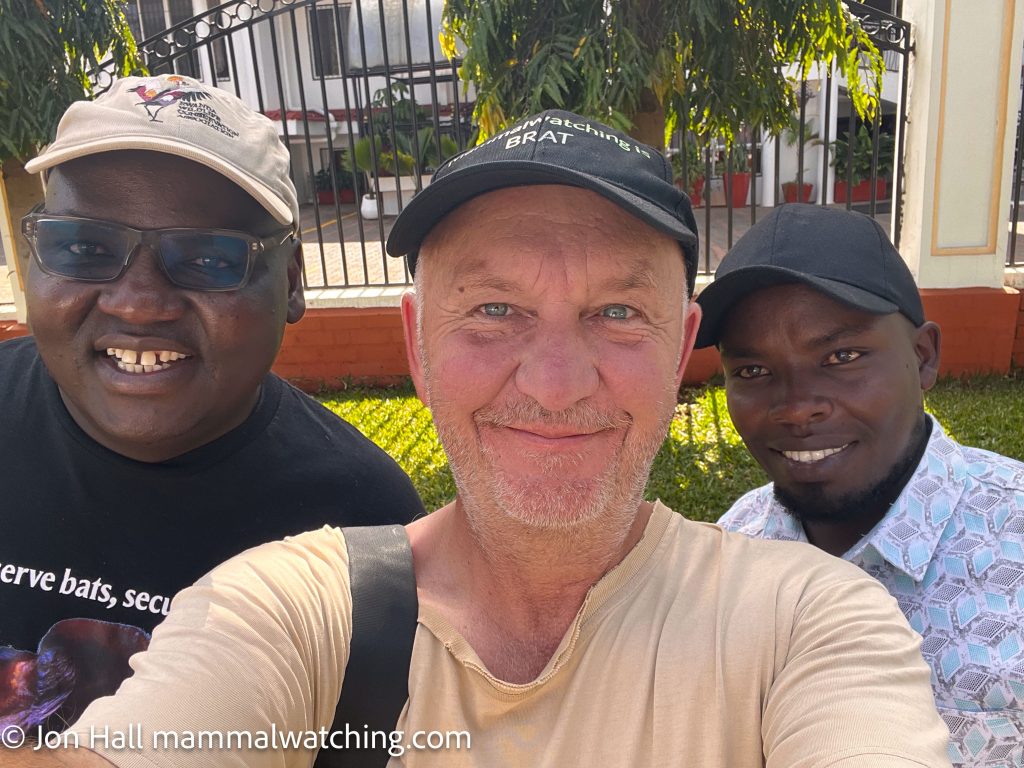
Paul, Eric and me.
I was immediately concerned when Paul told me he hadn’t been back to the park since we had visited. But my worries were short-lived. When we were putting up the nets we saw what was obviously a welwitschii flying over our heads. And a few minutes later we had the first of several of these bats in the nets. They are truly spectacular.
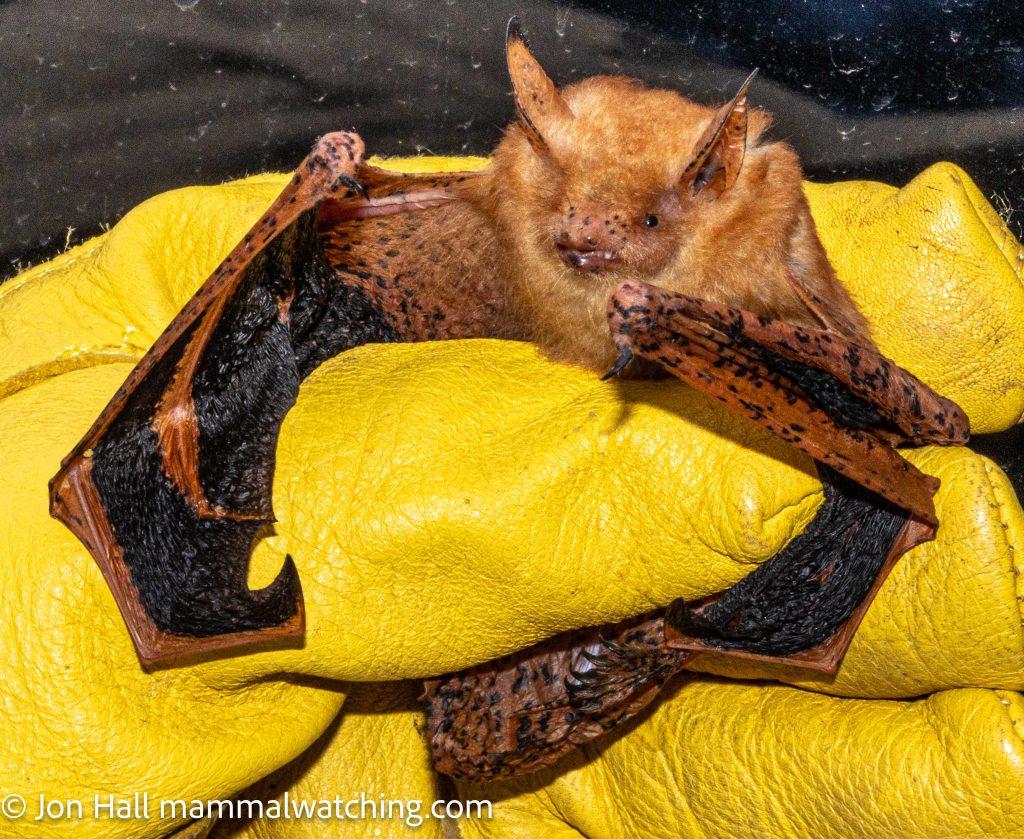
Welwitsch’s Myotis (Myotis welwitschii)
We also caught one of the rare – or at least rarely captured – Nyanza Seroines. These tiny bats have translucent wings that appear white in flight.
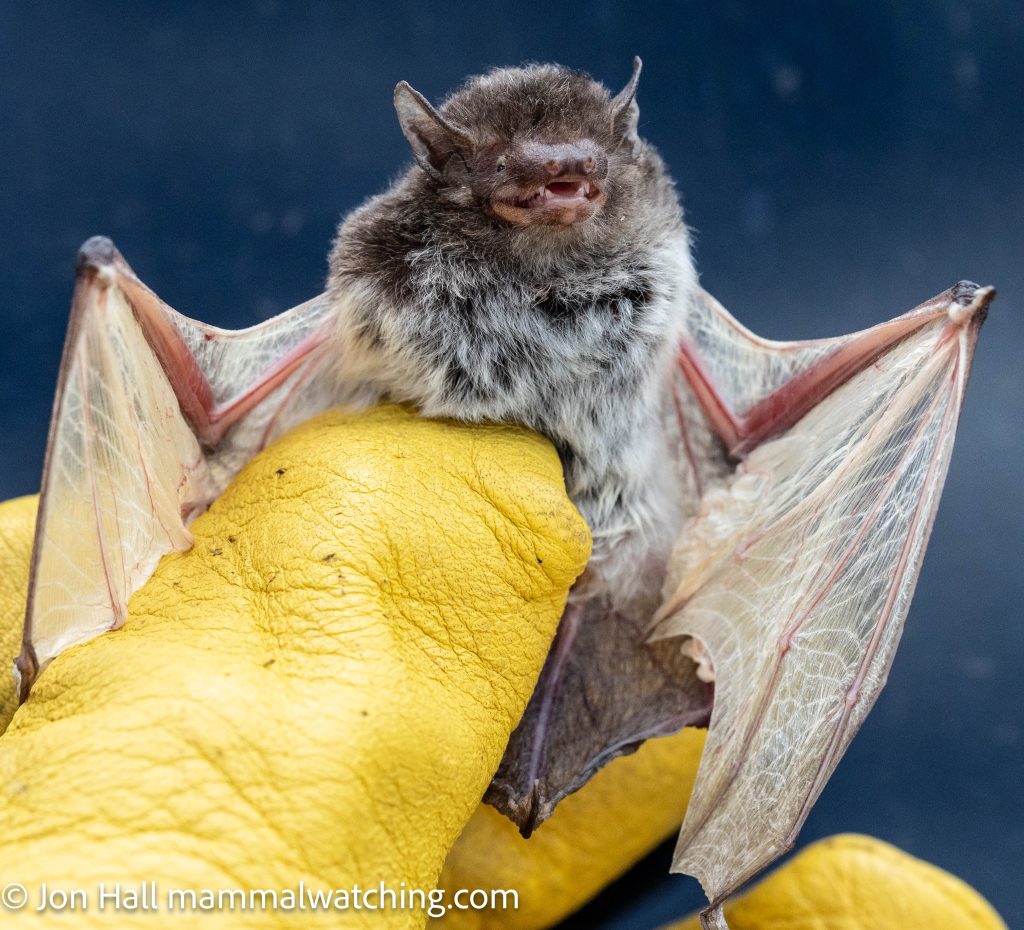
Nyanza Serotine (Pseudoromicia nyanza)
The only other bats that night were a few Little Epauletted Fruit Bats, which we photographed for a book on Kenyan bats that Paul is preparing.
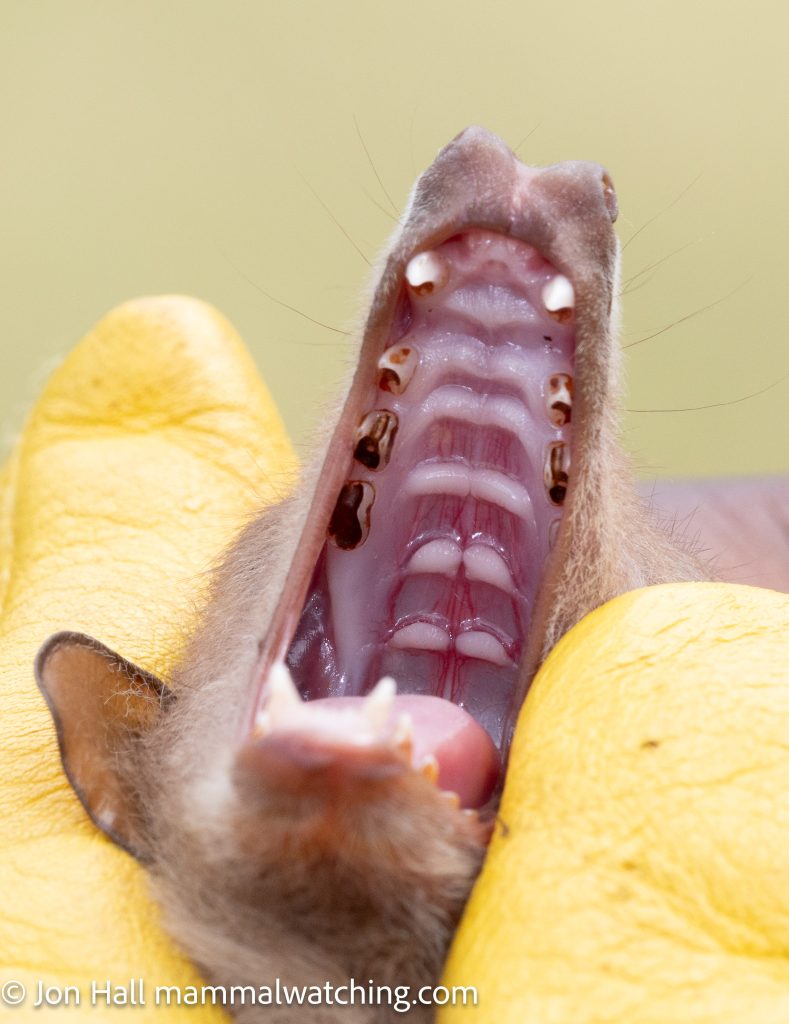
Little Epauletted Fruit Bat (Epomophorus labiatus) identification!
To identify this species correctly you need to count the number of palate ridges.
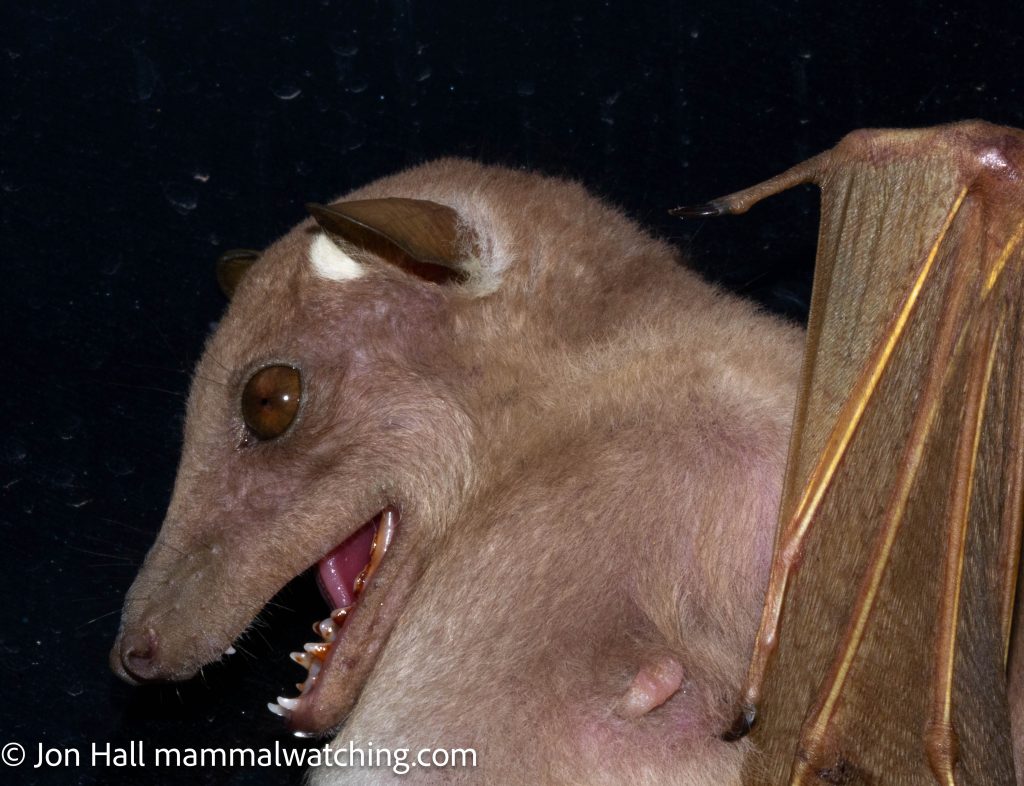
Little Epauletted Fruit Bat (Epomophorus labiatus)
Wandering around the park I saw an African Civet, a White-tailed Mongoose and a Common Rufous-nosed Rat that stayed obligingly motionless for half an hour, though, less obligingly, refused to show much of itself – including the all important red nose – until the last minute.
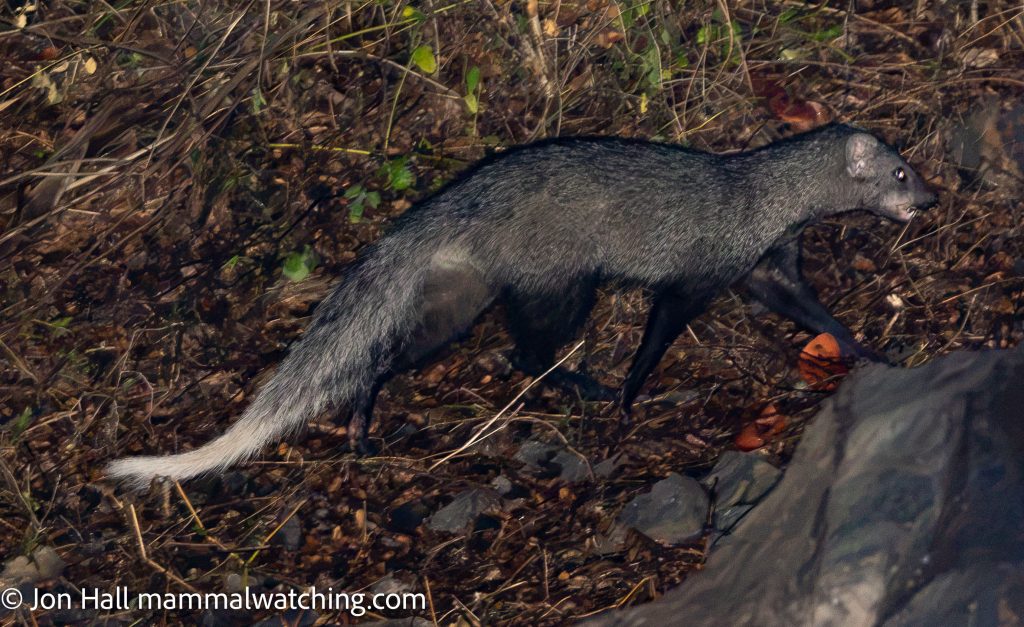
White-tailed Mongoose (Ichneumia albicauda)
We also saw Vervet Monkeys, Plains Zebra and Impala here.
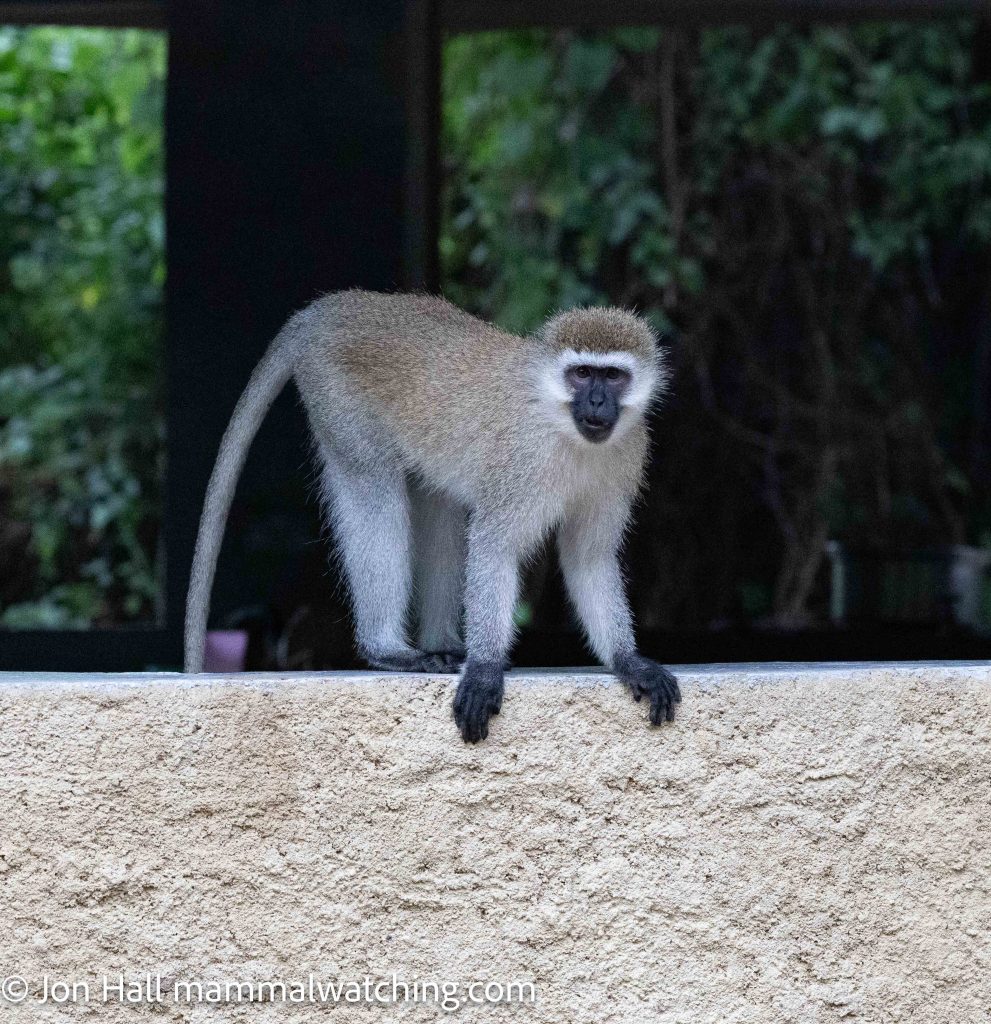
Vervet Monkey (Chlorocebus pygerythrus)
Rondo Retreat, Kakamega Forest
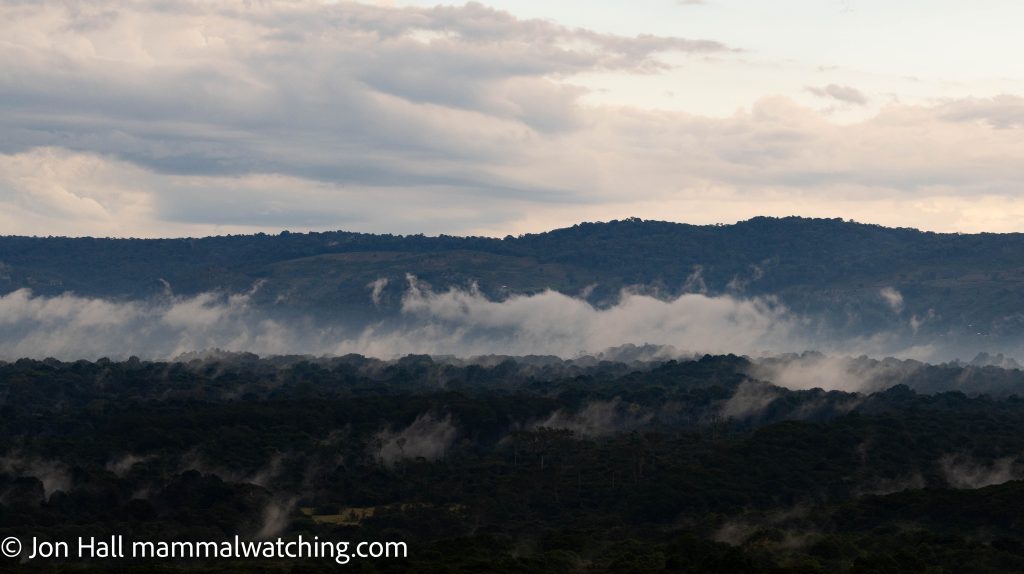
I had a spare 24 hours before I needed to return to Nairobi so – encouraged by both Stratton and Venkat – I took a taxi to Rondo Retreat, a lovely lodge in Kakamega Forest, to see what I could find.
A 45 minute afternoon walk with John, one of the lodge’s guides, to the ‘bat cave’ produced Red-tailed and Blue Monkeys along with Guerza Colobus, though the light was terrible for photography.
The bat cave – actually a mine (here) – contained the three species I had been told to expec.
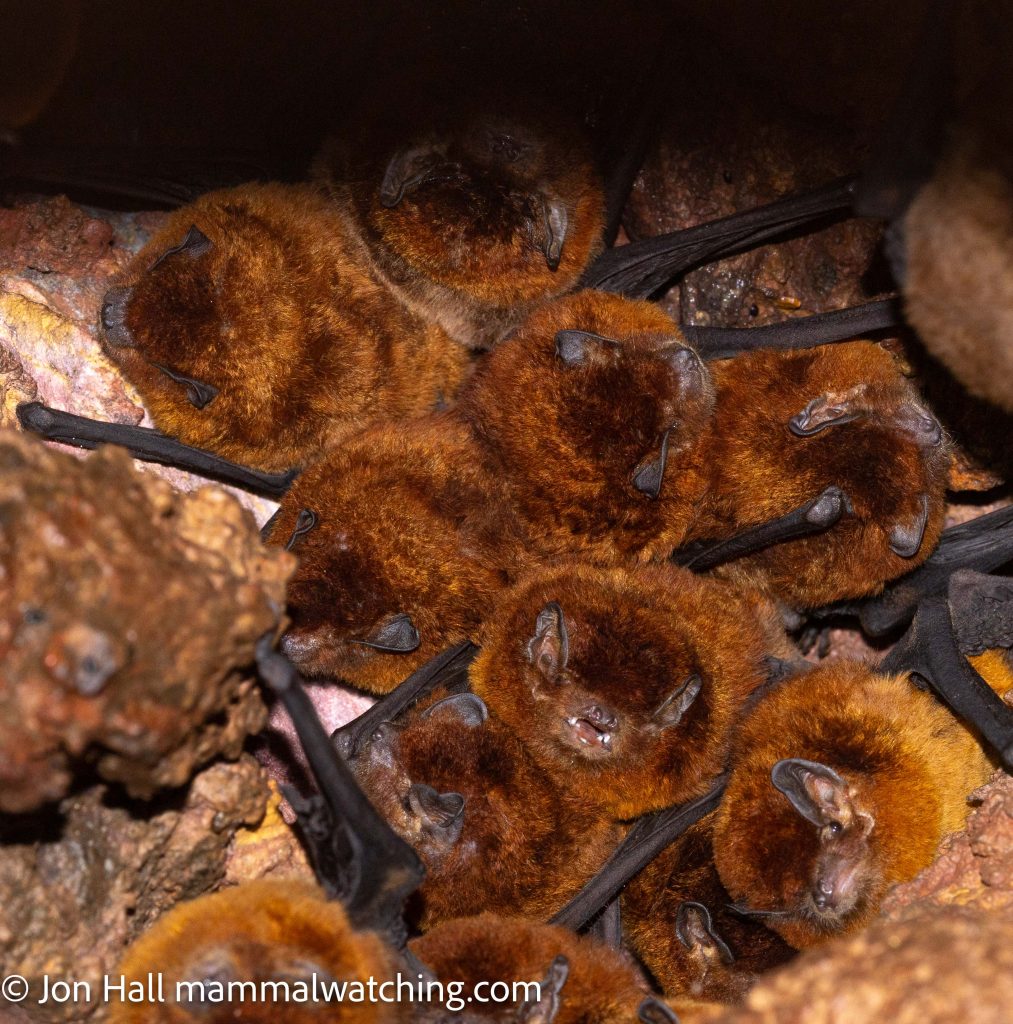
Greater Long-fingered Bat (Miniopterus inflatus)
These Greater Long-fingered Bats are not – yet – a lifer but will be one day. They are the original Miniopterus infulatus (Clade 1) rather than the bats from clade 5 that I saw in Watamu in 2021. Paul is working to describe these various clades. One of a great many projects he is working on!
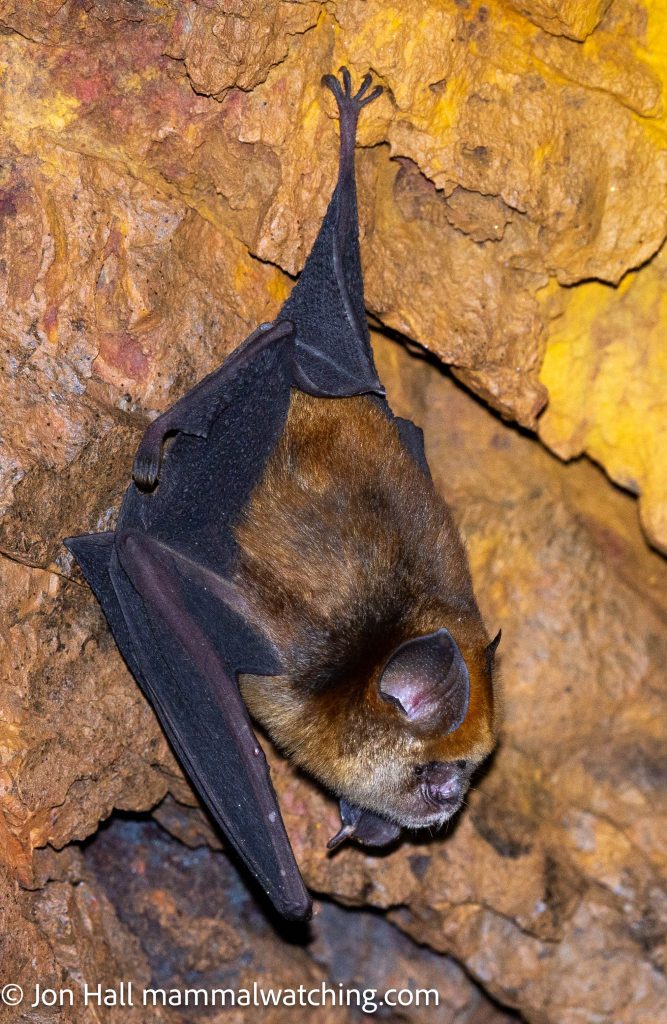
Noack’s Roundleaf Bat (Hipposideros ruber)
There were also Noack’s Roundleaf Bats.
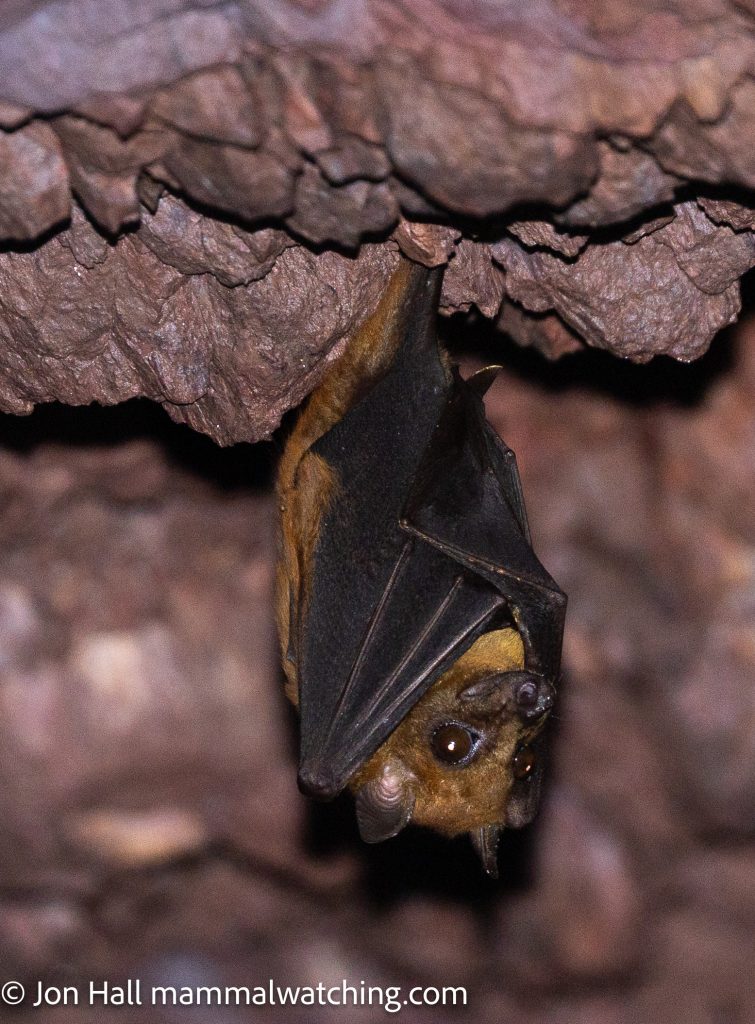
Angolan Soft-furred Fruit Bat (Myonycteris angolensis)
And a few Angolan Soft-furred Fruit Bats.
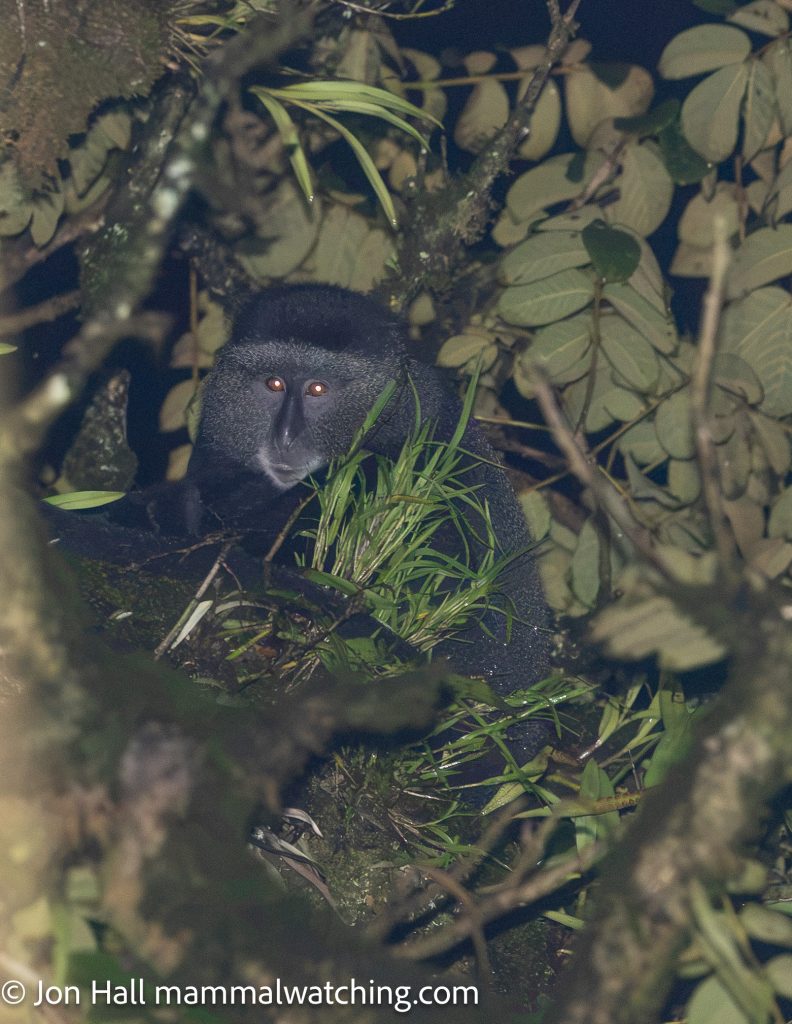
Blue Monkey (Cercopithecus mitis)
Thermalling around the lodge grounds at night produced sleeping Blue Monkeys, an East African Potto and a couple of Lord Derby’s Anomalures.
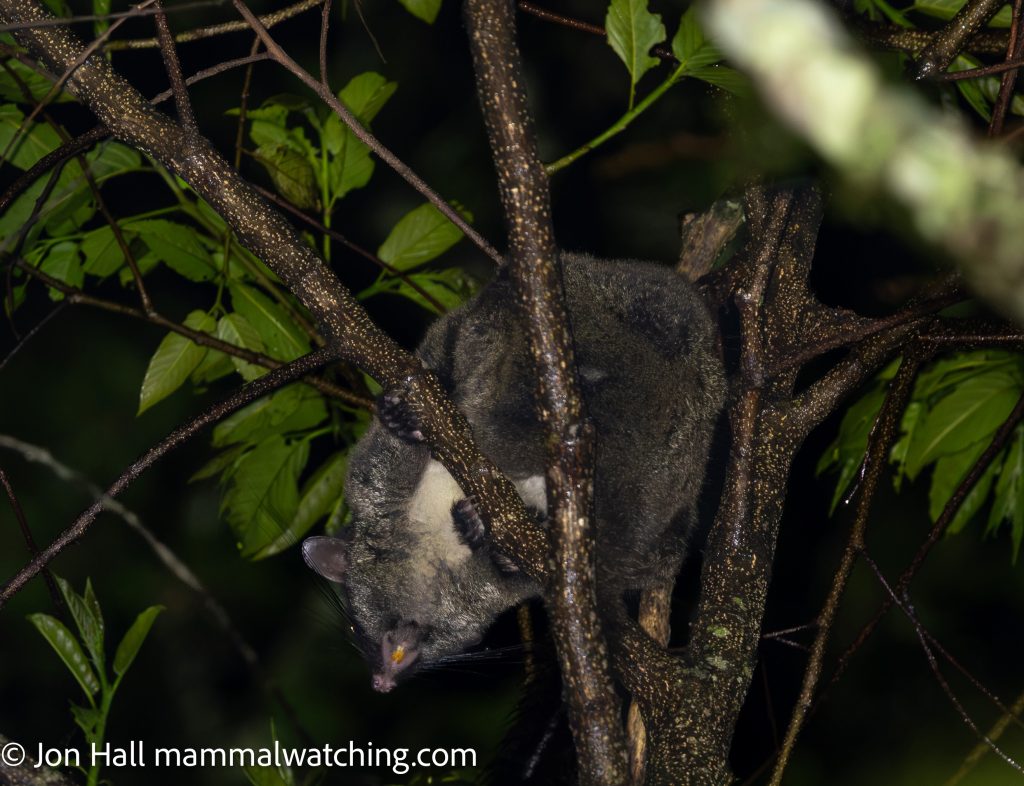
Lord Derby’s Anomalure (Anomalurus derbianus)
I also saw a medium-sized mammal that moved too quickly through the canopy to get onto, but which I suspect was an African Palm Civet.
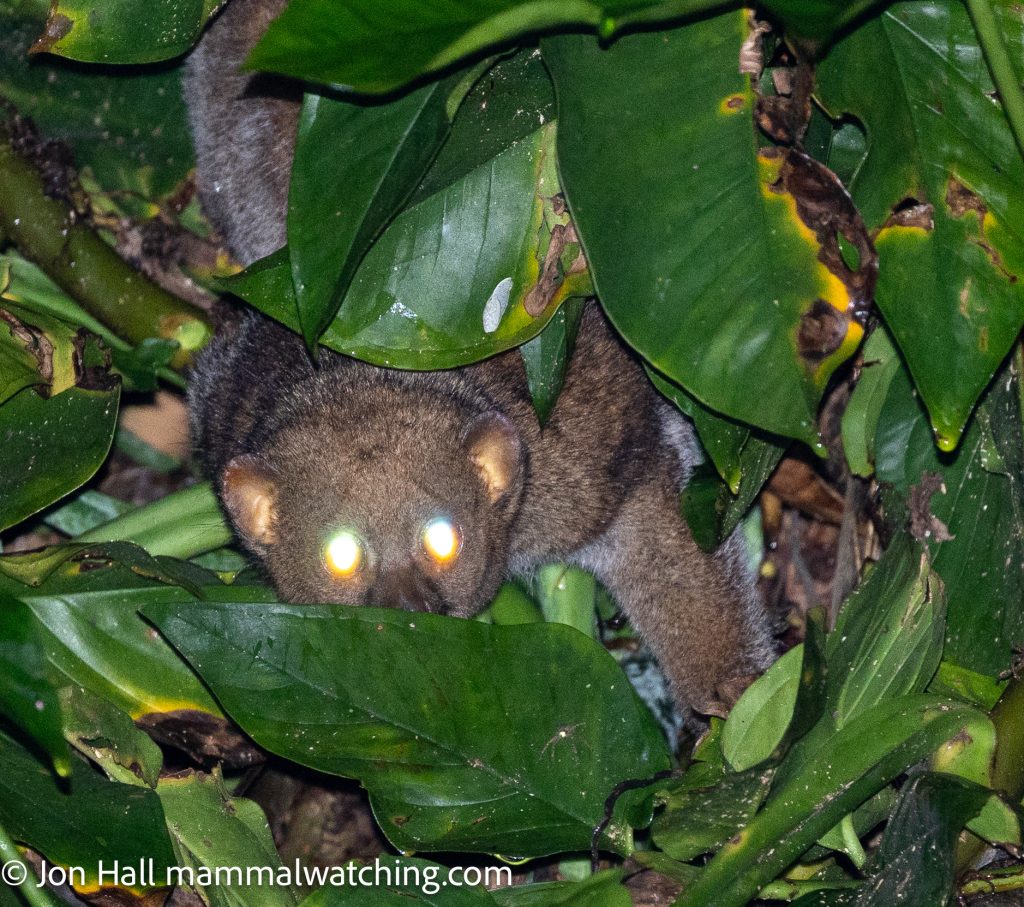
East African Potto (Perodicticus ibeanus)
I spotted several rodents that were too high to photograph other than this small mouse. If anyone recognizes the species – a long shot I know! – please let me know.
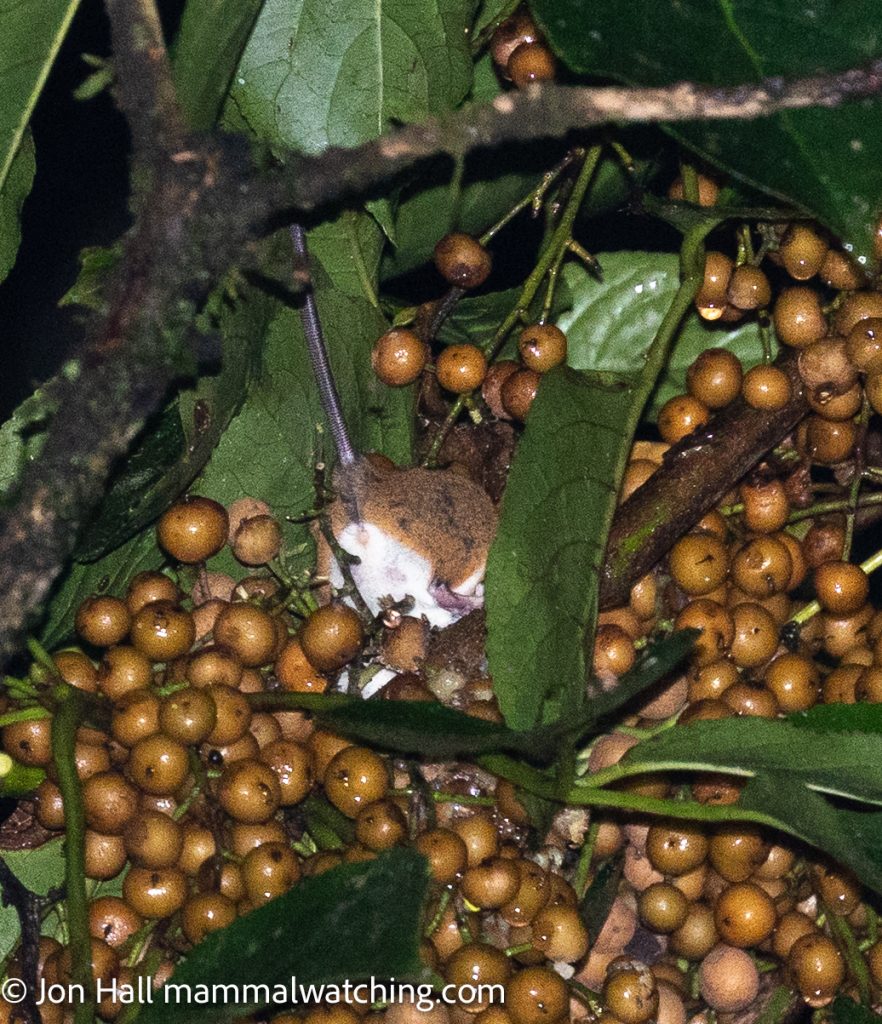
Mouse species. Possibly a dendromus climbing mouse.
Best of all I picked up a lump of heat in this curled up leaf.
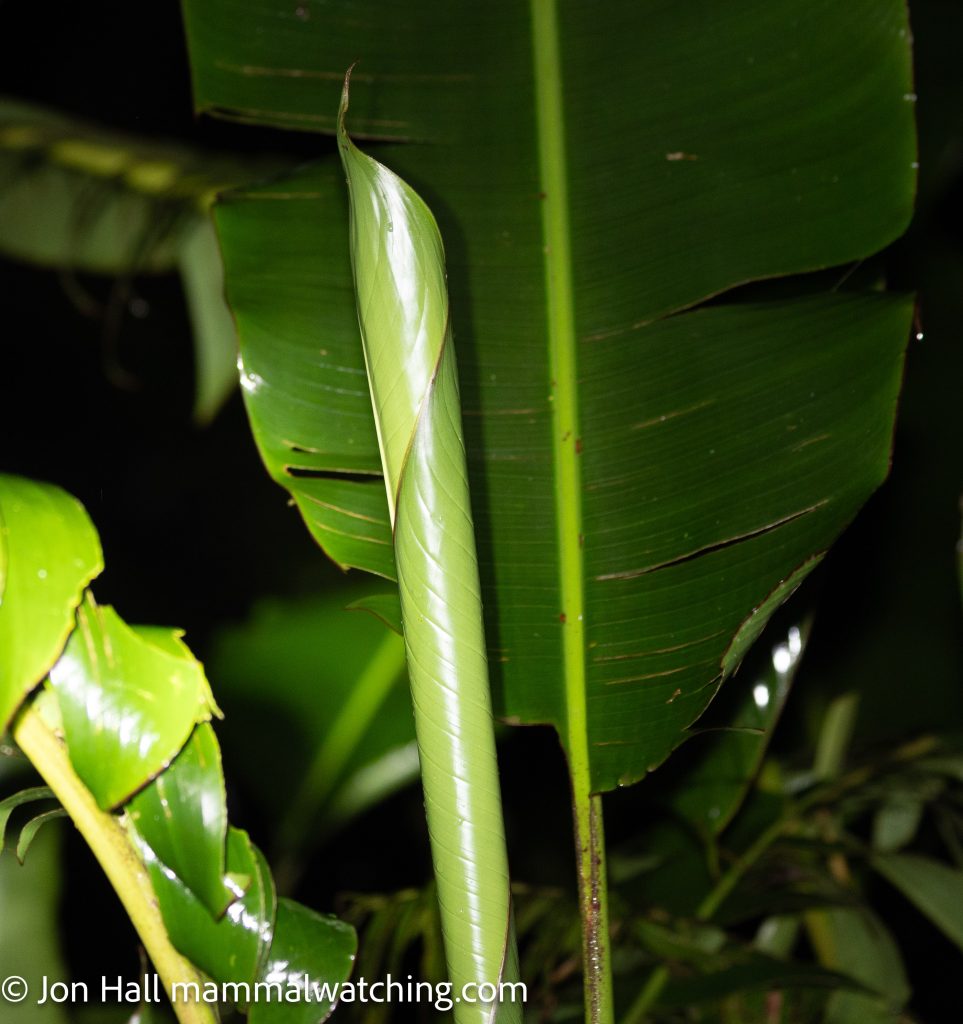
Banana serotine roosting spot
I wasn’t sure what I’d find inside so I cautiously peaked into the stem and a tiny bat escaped. I suspected it must have been a Banana Serotine, so I returned at dawn to see if the bat had returned to its home.
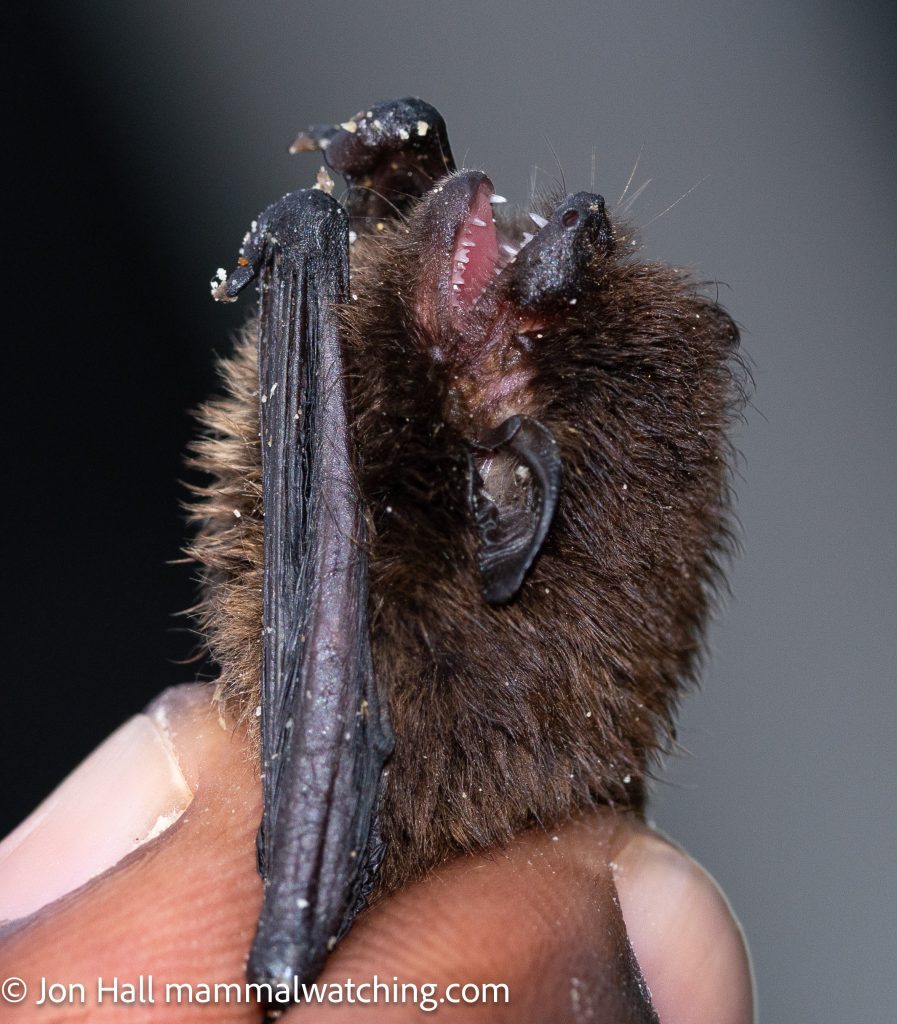
Banana Serotine (Afronycteris nanus)
It had. And so I was able to capture this miniscule Banana Serotine – one of Africa’s smallest bats – for a photo shoot, before I drove to Kisumu Airport and my flight to Nairobi.
Saikeri, Nairobi
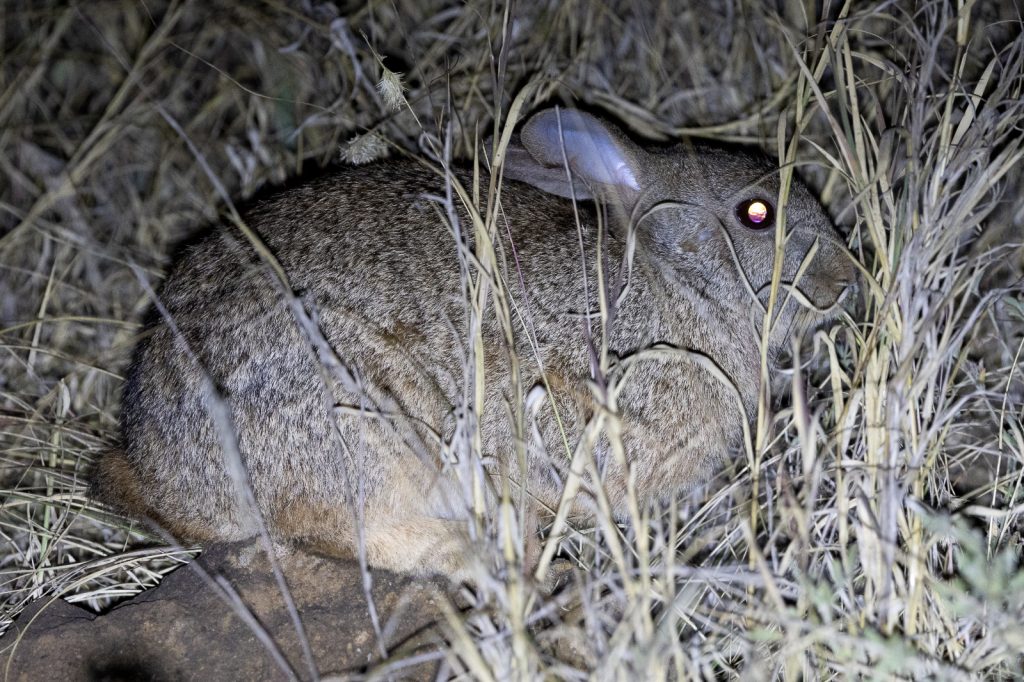
‘Smith’s’ Red Rock Hare (Pronolagus cf. rupestris). Photo Stratton Hatfield
The last stop of the trip was a night in a wonderful house in Saikeri, close to Nairobi that Stratton Hatfield arranged. We were searching for the apparently rare red rock hares that live in Kenya. A species currently thought to be Smith’s Red Rock Hare but which, given their disjunct range, is surely a good candidate for a split one day.
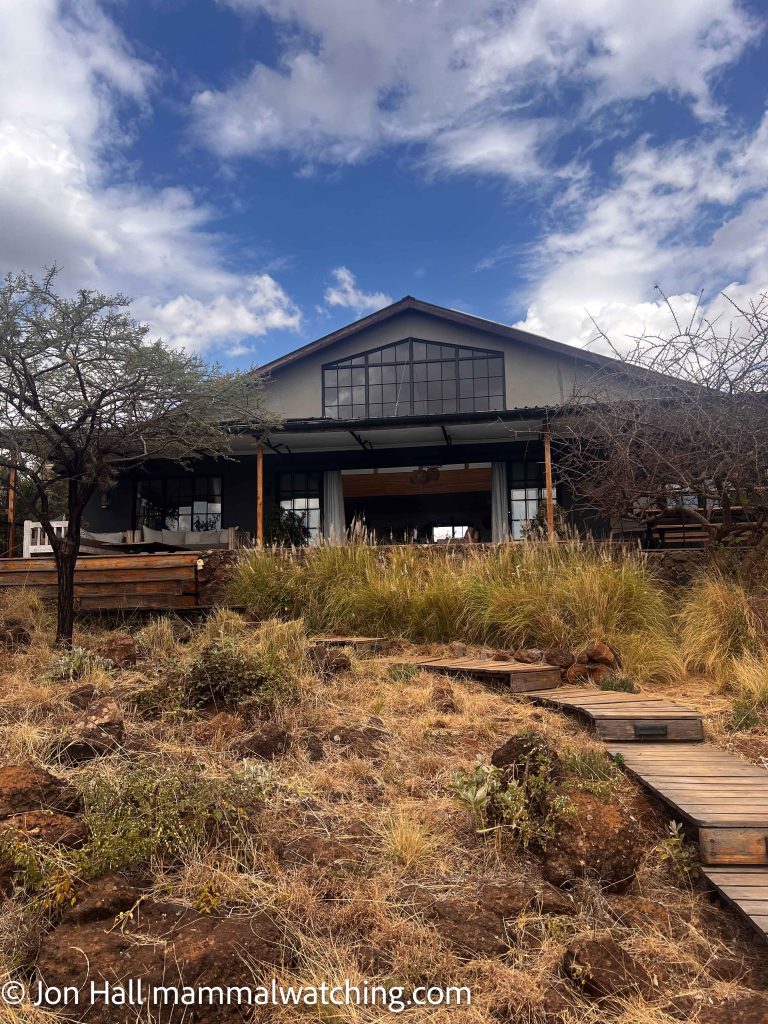
Stratton had gotten interested in the species after he couldn’t find any recent pictures of it from Kenya. He turned to the East African mammal group on Facebook and discovered that a camera trapper in Saikeri had recorded red rock hares in his garden. A garden next door to a house owned by Stratton’s friends Shaun and Amy, who very kindly let us stay for a night to search for them.
Stratton had not been able to resist the rabbit’s call and had visited two weeks earlier. He’d seen a rock rabbit very close to the house within five minutes of heading into the garden after dark and gotten photos.
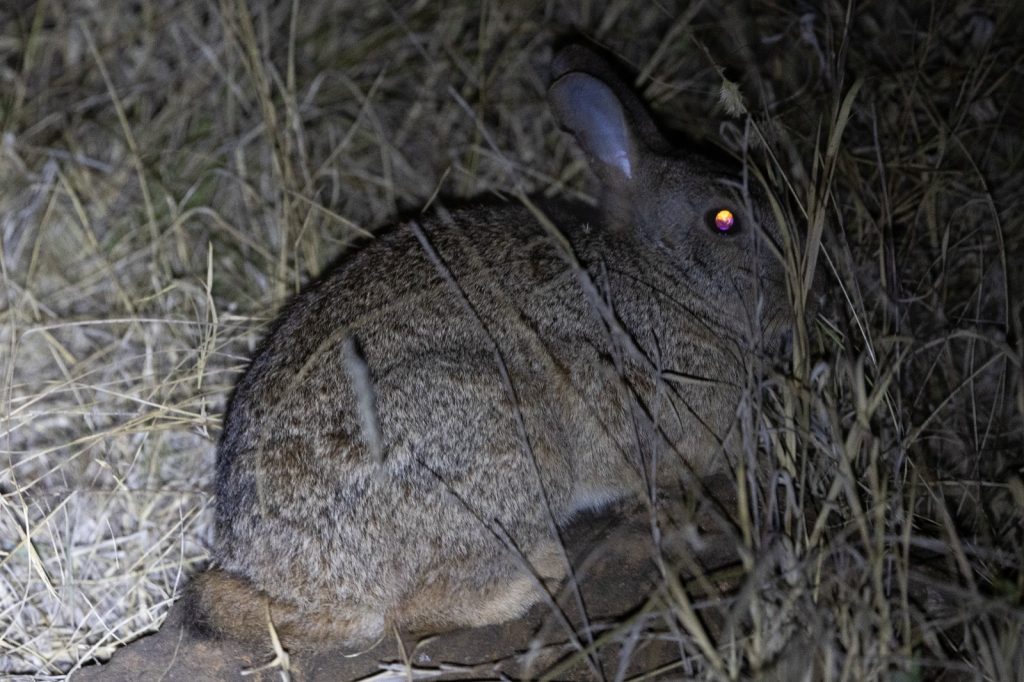
‘Smith’s’ Red Rock Hare (Pronolagus cf. rupestris). Photo Stratton Hatfield
We were joined by Cullen Hanks and Ian Davies from team E-bird for a fun evening of rabbit searching and bird song recording. You can guess who did what.
We were not as lucky as Stratton had been: presumably the heavy rain and cooler temperatures did not help our chances. Despite wandering along the ridge for a couple of hours we saw only a Savanna Hare.
Rock Hares or not, the house though alone is worth the visit, perched on the edge of the Rift Valley, and beautiful inside, its a wonderful spot to enjoy a night or two. You can book it on AirBnB.
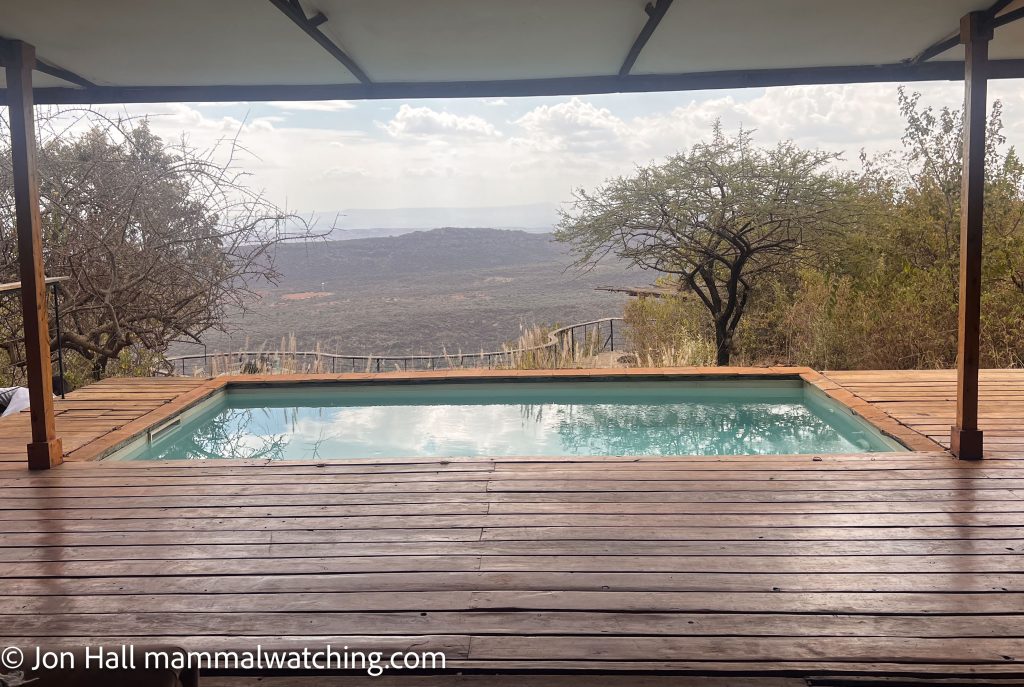
We set 20 Sherman traps among the rocks. My only capture was a mouse that Venkat confidently identified as a Snowy White-bellied Rocky Mouse.
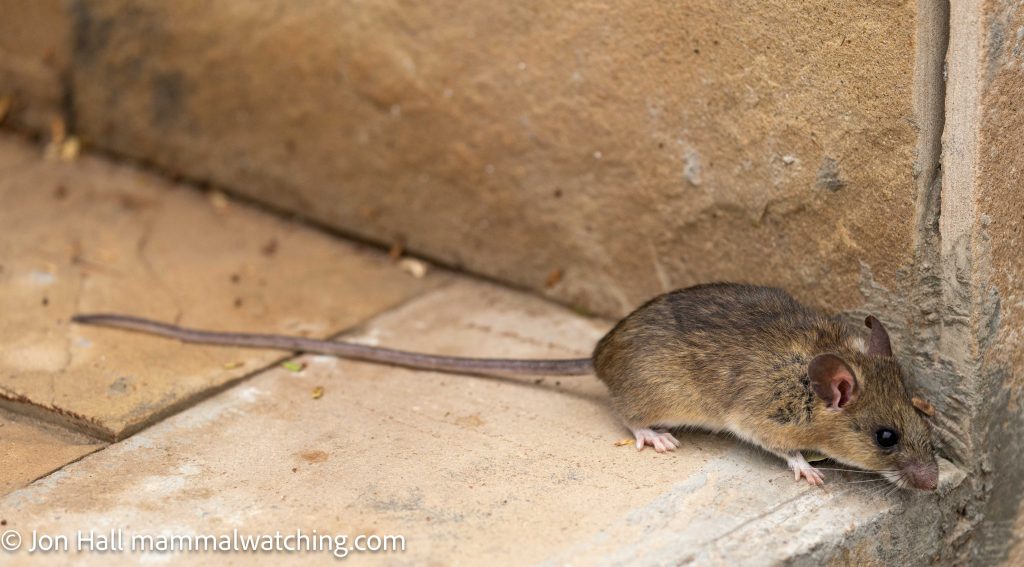
Snowy White-bellied Rocky Mouse (Ochromyscus niveiventris)
This was a species Venkat was delighted to learn I’d caught as he had predicted it ought to be here.
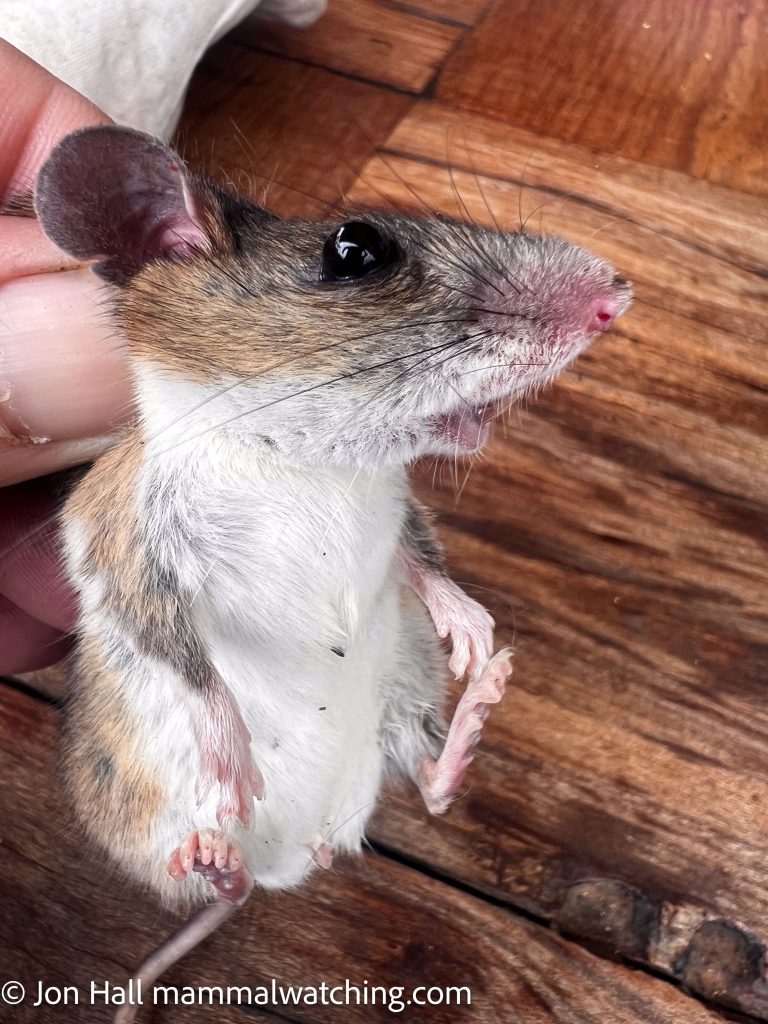
Snowy White-bellied Rocky Mouse (Ochromyscus niveiventris)
My 11th and last lifer of the trip.
Thanks
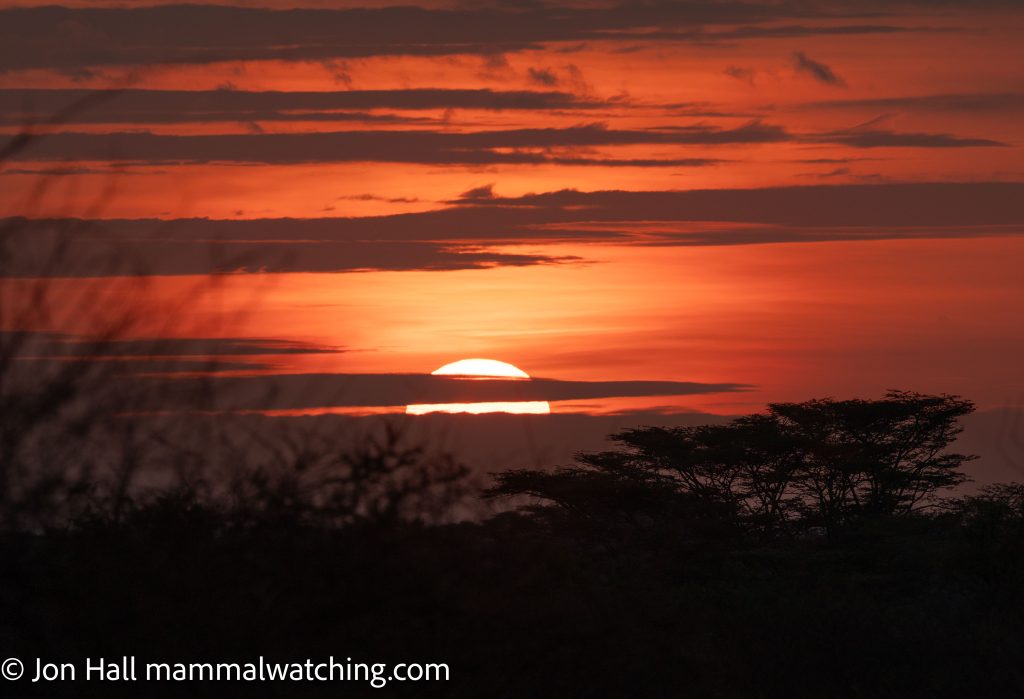
Meru dawn
As always a big thank you to the many people who made this trip what it was. Zarek Cockar for his advice beforehand, and Venkat Sankar for his real time rodent identification. Adam Riley and Keith Valentine for letting me crash their Bongo party. Adam de Graaf for joining the trip and converting to mammalwatching in the process. Paul Webala and Erik Keter for coming down to Kisumu to catch bats for me. Shem Mwathi for driving and guiding me so well. And Stratton Hatfield for all his help and company during the trip. I will never say a bad word about birders again…. well, I aim to cut down. You can listen to Stratton on the mammalwatching podcast here.
Trip List
African Savanna Elephant (Loxodonta africana)
Southern Tree Hyrax (Dendrohyrax arboreus)
Red-tailed Monkey (Cercopithecus ascanius)
Blue Monkey (C.mitis)
Vervet Monkey (Chlorocebus pygerythrus)
Olive Baboon (Papio anubis)
Guereza (Colobus guereza)
Somali Lesser Galago (Galago gallarum)
Garnett’s Greater Galago (Otolemur garnettii)
East African Potto (Perodicticus ibeanus)
African Savanna Hare (Lepus microtis)
Ochre Bush Squirrel (Paraxerus ochraceus)
Lord Derby’s Anomalure (Anomalurus derbianus)
Ansorge’s Brush-furred Rat (Lophuromys ansorgei)
Zena Brush-furred Rat (L.zena) – endemic
Common Rufous-nosed Rat (Oenomys hypoxanthus)
Snowy White-bellied Rocky Mouse (Ochromyscus niveiventris)
Jackson’s Soft-furred Mouse (Praomys jacksoni)
Southern Giant Pouched Rat (Cricetomys ansorgei)
Turbo White-toothed Shrew (Crocidura turba)
Greater Long-fingered Bat (Miniopterus inflatus) – a lifer in the making!
Welwitsch’s Myotis (Myotis welwitschii)
Banana Serotine (Afronycteris nanus)
Nyanza Serotine (Pseudoromicia nyanza)
Little Epauletted Fruit Bat (Epomophorus labiatus)
Angolan Soft-furred Fruit Bat (Myonycteris angolensis)
Noack’s Roundleaf Bat (Hipposideros ruber)
Serval (Leptailurus serval) (H)
Common Slender Mongoose (Herpestes sanguineus)
White-tailed Mongoose (Ichneumia albicauda)
Spotted Hyena (Crocuta crocuta)
African Civet (Civettictis civetta)
African Palm Civet (Nandinia binotata) (probably)
Grevy’s Zebra (Equus grevyi)
Plains Zebra (E.quagga)
Common Hippopotamus (Hippopotamus amphibius)
Impala (Aepyceros melampus)
Bright’s Gazelle (Nanger notatus)
Guenther’s Dik-dik (Madoqua guentheri)
Kirk’s Dik-dik (M.kirkii)
Kivu Duiker (Cephalophorus kivuensis)
Bush Duiker (Sylvicapra grimmia)
Beisa Oryx (Oryx beisa)
Waterbuck (Kobus ellipsiprymnus)
Cape Buffalo (Syncerus caffer)
Bongo (Tragelaphus eurycerus)
Lesser Kudu (T.imberbis)
Common Eland (T.oryx)
Southern Bushbuck (T.sylvaticus)
Reticulated Giraffe (Giraffa reticulata)
Desert Warthog (Phacochoerus aethiopicus)
Common Warthog (P.africanus)
Giant Forest Hog (Hylochoerus meinertzhageni)
51 species, 11 lifers

Post author
Leave a Reply
You must be logged in to post a comment.