

East Hokkaido, winter 2026
We visited Hokkaido during February and March 2026, with the purpose of bird/mammal photography as well as relaxation. Our top target for mammal was the cute Ezo flying squirrel (Ezo momonga in Japanese).
Abashiri
We spent two nights in Abashiri for the Ezo flying squirrel. The most reliable spot is the Komaba Kinohiroba Park (網走市こまば木のひろば森林公園).
We booked the only guesthouse nearby — Minpaku Abashiri Umi no Taiyou (民泊 網走 海の太陽, which means Guesthouse of Sea and Sun). It could only be reserved by telephone. Although the owner could not speak English, she was super warm and helpful! After knowing we were here for the Ezo Momonga, she insisted taking us to the park and showing us the spot for this “super cute animal”.
Some 20 photographers had gathered near the crack used by the flying squirrels before sunset. At 4:47 PM (2o minutes before sunset), the first Ezo momonga appeared from the nest. This nest housed 4 individuals. They spent 2-3 minutes chilling up near the crack, then they climbed higher up the tree and took off! It was truly amazing seeing them gliding over treetop in the fading twilight. For us it is a dream coming true.
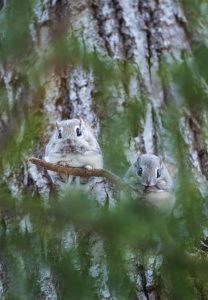
We left the forest 20 minutes after sunset. At that time the flying squirrels had scattered to different places in the forest, eating their favorite food.
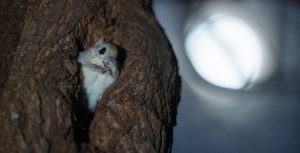
A red fox also appeared after dark. Hokkaido red squirrels were quite active in the morning.
Yoroushi Onsen
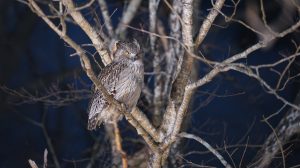
The famous hot spring hotel Yuyado Daiichi (湯宿だいいち) is famous for the Blakiston’s fish owl. It showed up twice at around 18:45PM and 22:00PM, making all guests very happy and entertained.
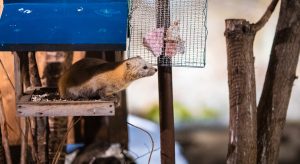
After most guests had left the lobby, a single Ezo Sable appeared at 11:45PM. It came across the stream using the water supply pipe as its bridge. For about 20 minutes it ran around the bird feeders outside the lobby trying to get food. The light was too dim for any good pictures of this fast creature, but seeing it had brought us great joy! The hotel’s calender suggested it appeared every 3-4 days during February.
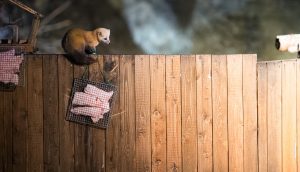
An American mink appeared very briefly at around 8PM, which we did not get any photos.
There is no public transportation to the hotel. No pick-up service was provided neither. We had to use a taxi.
Kiritappu Cape
A colony of 12 sea otters live in this area, but maybe due to very strong wind and wave, we did not see any of them.
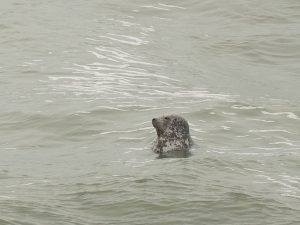
We did see 3 harbor seals ventilating in the roaring sea below the cape. Large flocks of black scoters were also seen.
Interesting sea birds during that day included Spectacled guillemot, ancient murre and red-throated diver.
We were helped by the photo guide Moriyama Masamoto (https://pp-smile.net/portfolio/297) who was based in Kushiro. Apart from guiding us in Kiritappu, he also took us around the Tsurui village, showing us the mating Red-crowned cranes and spotting a pair of crested kingfishers.
Other mammals
The Ezo sika deer could be seen literally everywhere in East Hokkaido! We encountered large groups in Rausu, Notsuke Peninsula and Kussharo lake.
The Hokkaido red squirrels were seen in Komaba Kinohiroba Park, the feeder of Yoroushi Onsen, and the feeder of Gastof Papilio Guesthouse at Kussharo lake.
The red foxes were seen in Komaba Kinohiroba Park and Tsurui Village.

Post author
Leave a Reply
You must be logged in to post a comment.