

Madeira, July 2026
I spent the last few days of July in Funchal, Madeira looking for cetaceans with mammalwatchers Charles Hood and Seva Rudyi plus my buddy Sion Hughes (not yet a mammalwatcher but he may be wavering).
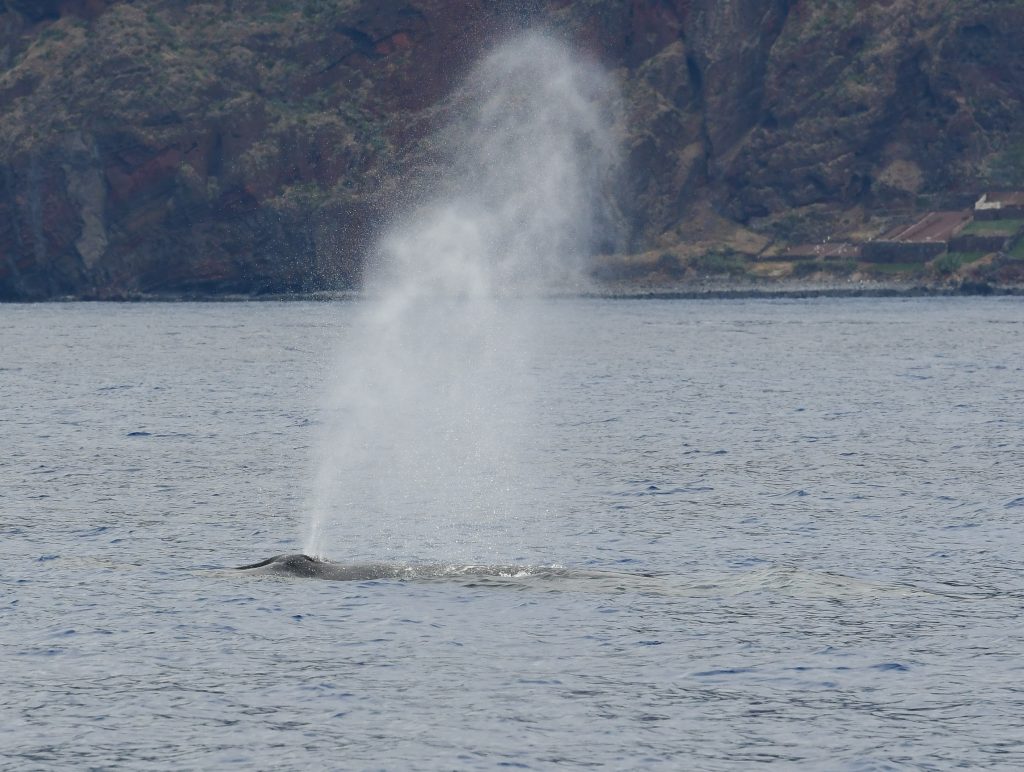
Bryde’s Whale (Balaenoptera brydei). Photo Cami Dávila /Blue Safari
Our main target here was Blainville’s Beaked Whale. Madeira seems to be one of the best places to see this species: the island has a resident population and they are seen quite often by the whale and dolphin watching boats that operate out of Funchal.
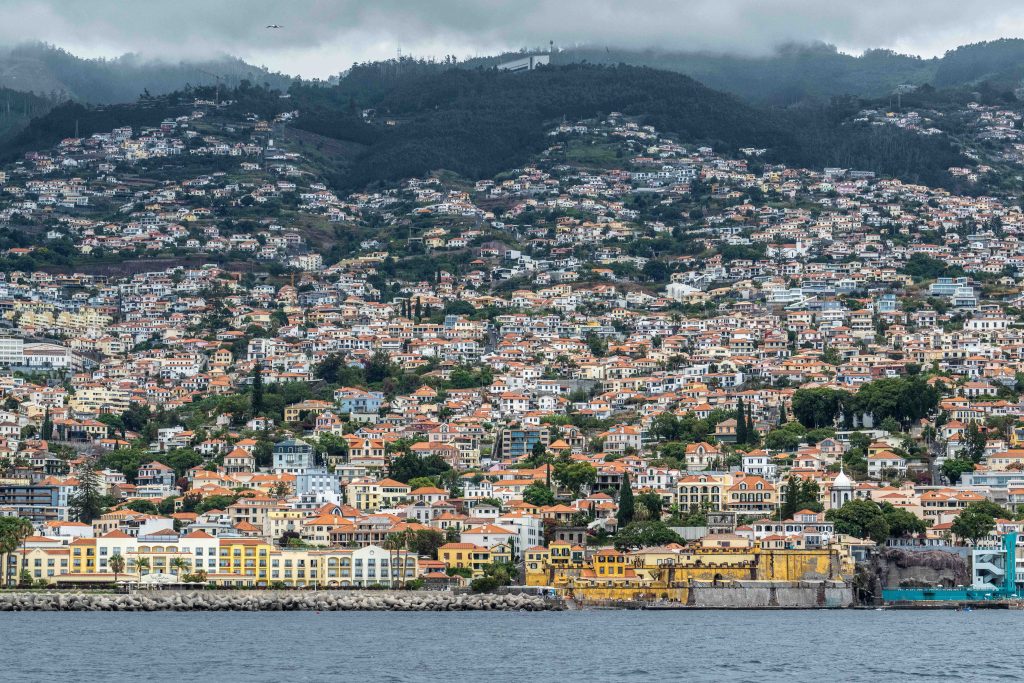
Funchal. Photo Charles Hood
We spent four nights on the island and arranged our whalewatching through Blue Safari the only World Cetaceans Alliance certified operator in Funchal). I’m not sure why I picked them: I think because one of the guides there, Camila (Cami) Dávila, has posted great footage of Blainville’s on Instagram.
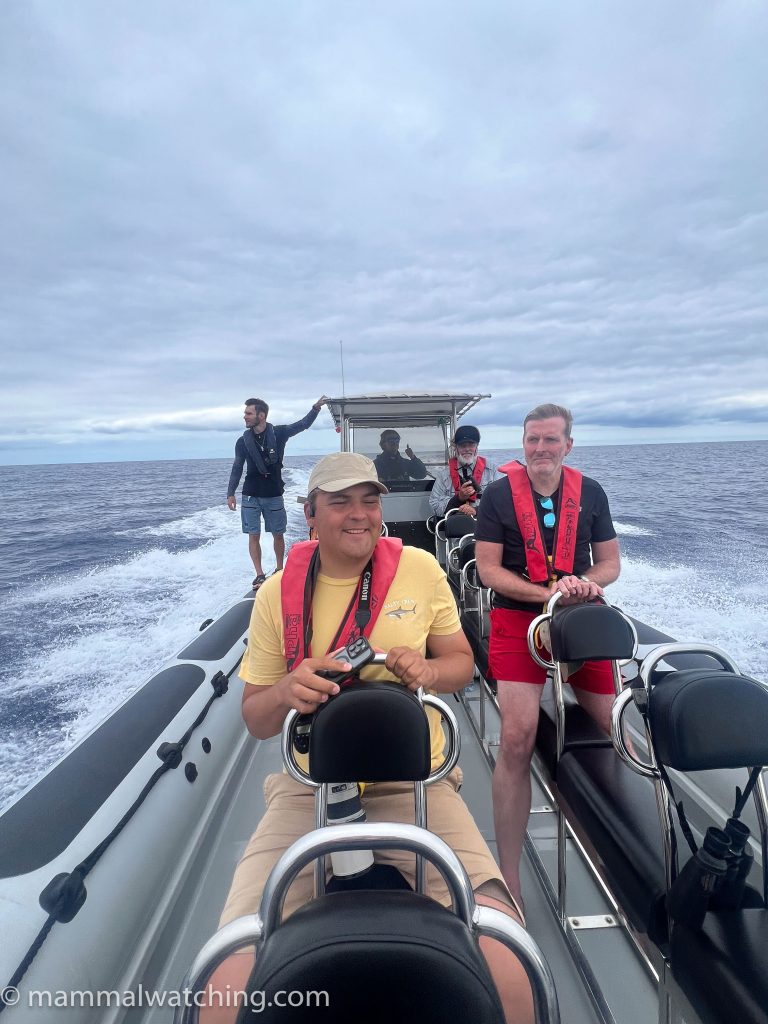
But whatever the reason, I am happy we booked with Blue Safari and had Cami as our contact there. Blue Safari was excellent and are very careful to ensure they don’t harass the animals. Plus Cami was perfect. Knowledgeable, helpful and with tons of advice and encouragement. She also speaks at least six languages. When the Olympics include whale watching as an event then Cami is going to win gold for Peru.
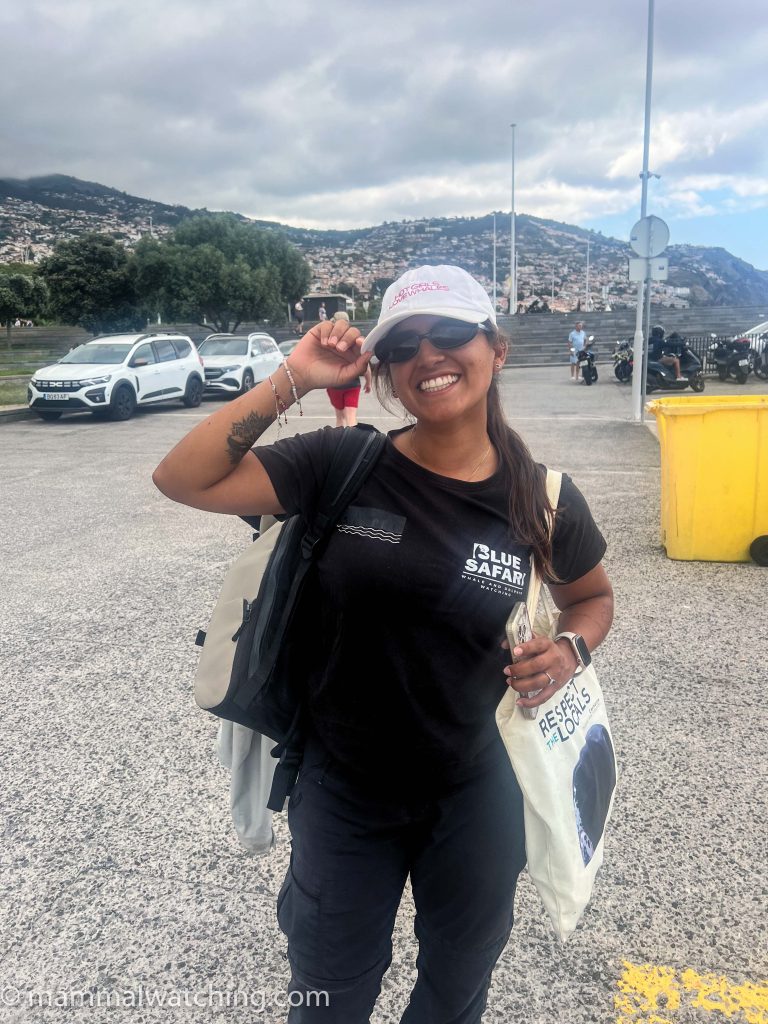
The wonderful Cami
We had perfect weather and though we were very close, twice, to seeing the beaked whales we were not successful.
Just as in the Azores, the boats out of Funchal rely on shore-based spotters – vigias – to direct the boats onto the whales. You can take a two hour scheduled tour with Blue Safari each morning and afternoon or arrange a private charter.
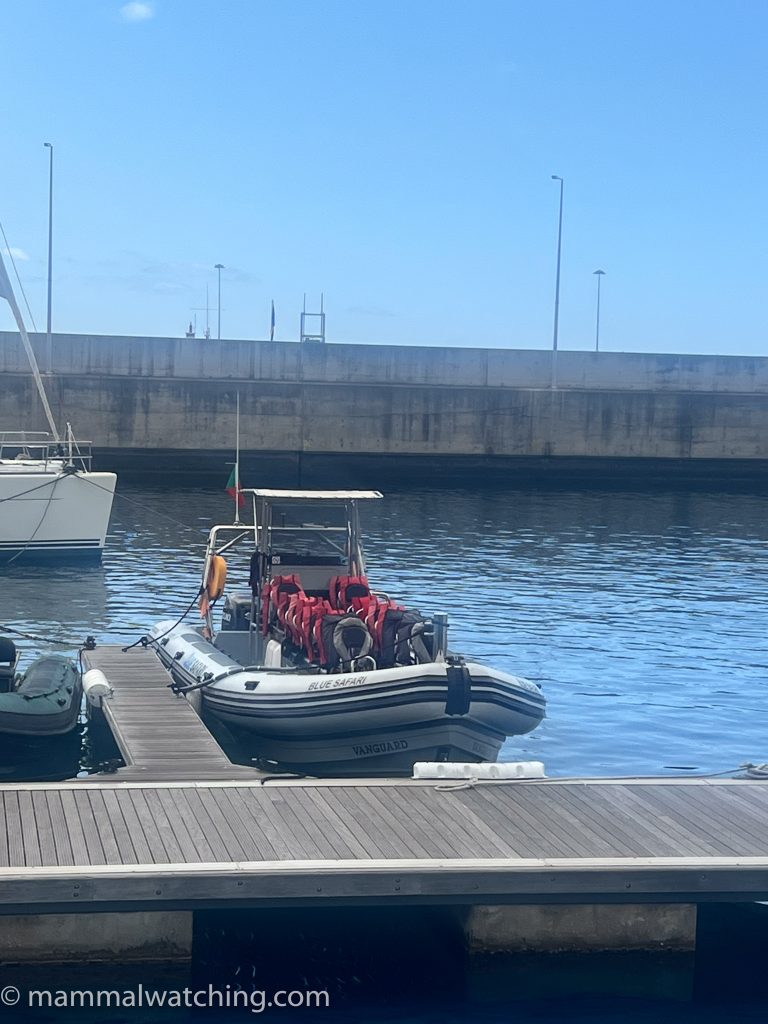
Cami said the data suggested that afternoons were generally better for the Blainville’s and so we booked four afternoon trips for a total of 9 hours at sea during our three full days on the island. We joined the scheduled 1pm departure on Tuesday, Wednesday and Thursday, and took a private charter on Thursday.
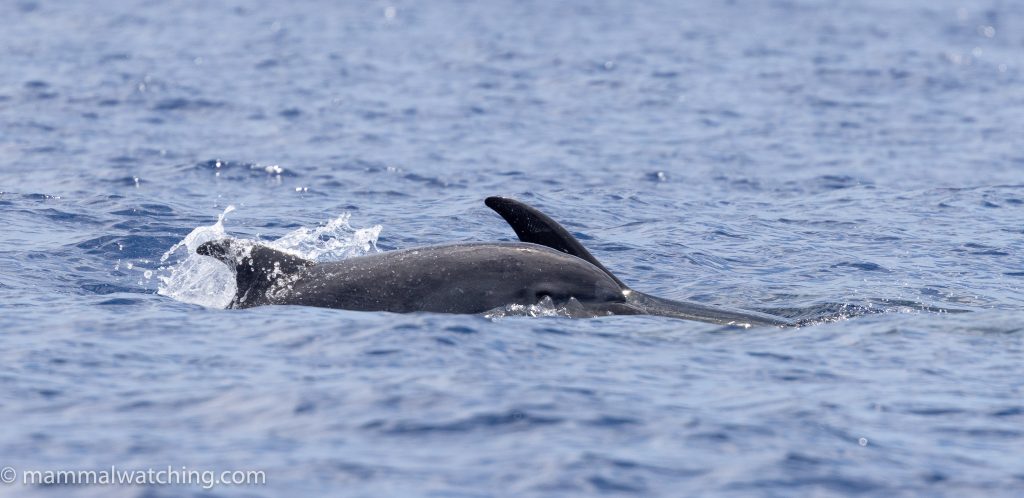
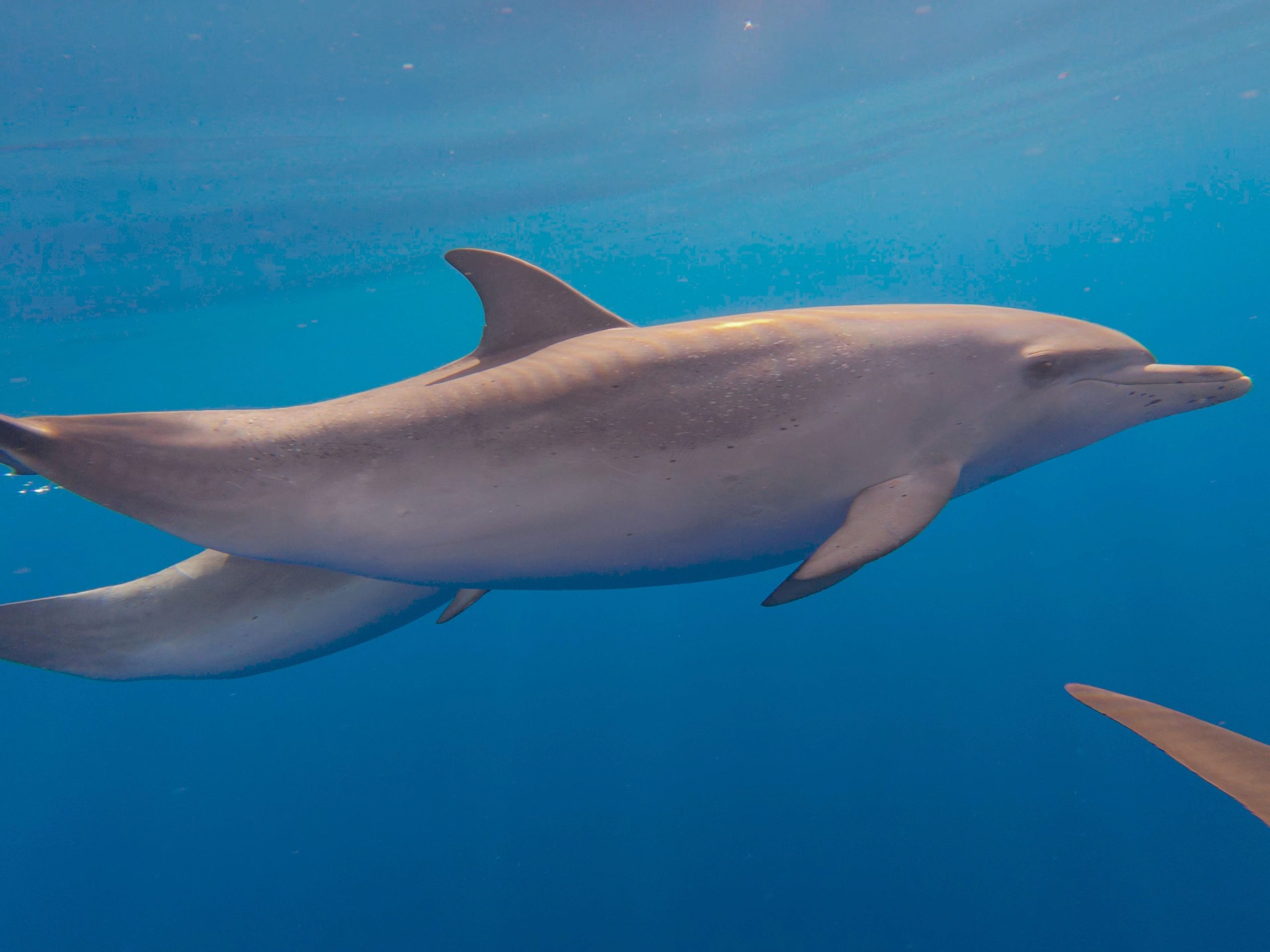
Common Bottlenose Dolphin (Tursiops truncatus)
It was frustrating to miss the whales but I think we were on the right boat with the right guide and with a day or two longer on the island we would have seen them.
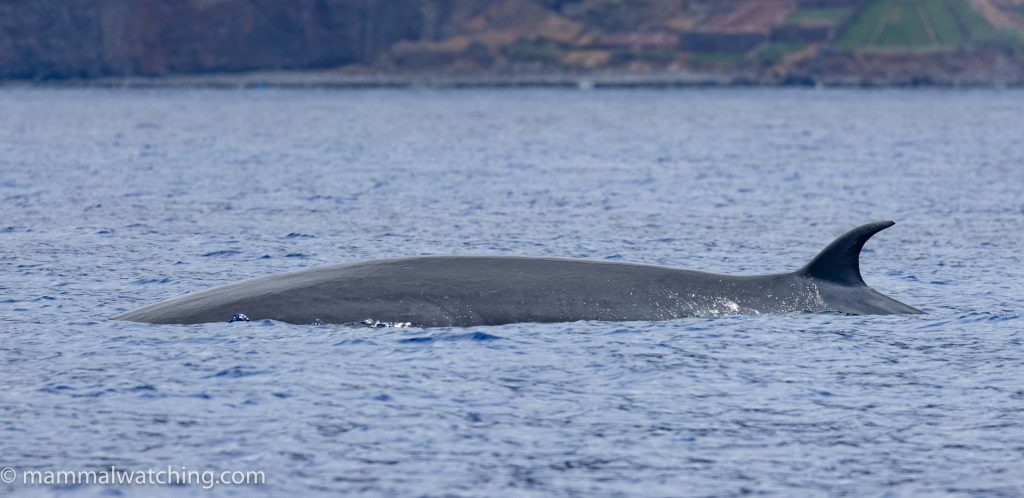
Bryde’s Whale (Balaenoptera brydei)
The vigias see the whales far more often than the boats do. Beaked whales are usually hard to observe and so the vigias often don’t bother reporting the sightings to the boats knowing that the tourist boats prefer to spend time with easier species to observe: larger whales (we saw Bryde’s) and dolphins (we saw Atlantic Spotted and Bottlenose).
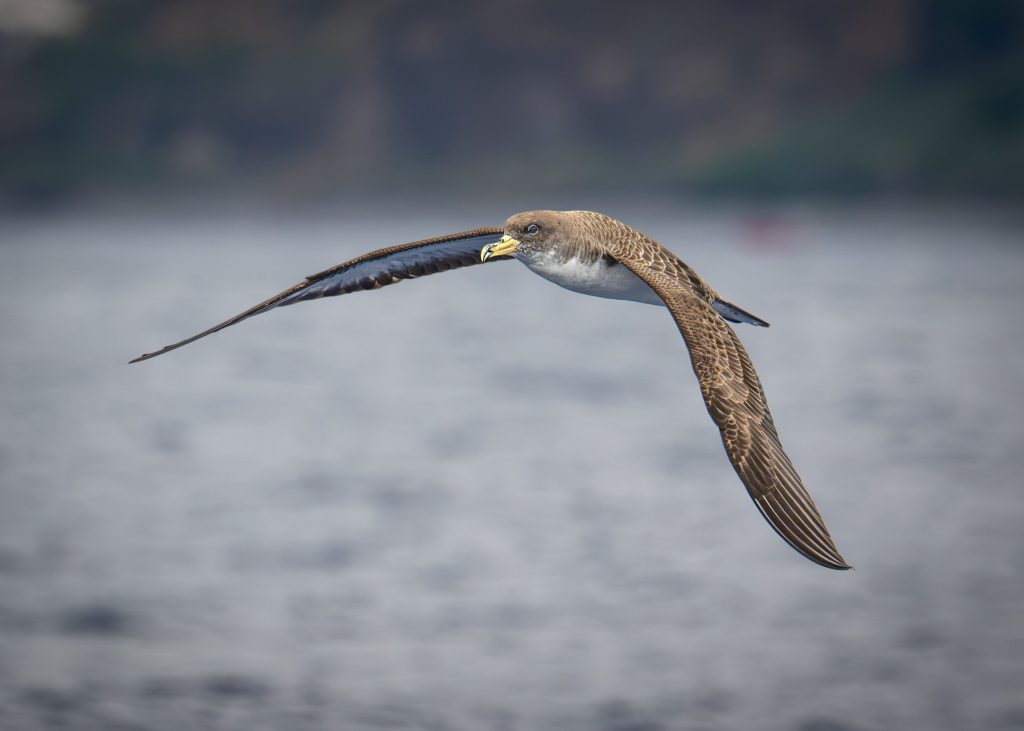
Cory’s Sherwater. Photo Charles Hood.
But with Cami guiding, knowing how much we wanted the Blainville’s, she made every effort to find them for us. On the first afternoon the vigias saw animals just before the tour ended and so we shot out to the area. They surfaced again a kilometer from us but by the time we reached that point we could only stay for a couple of minutes before having to return to shore (already half an hour later than scheduled). So frustrating!
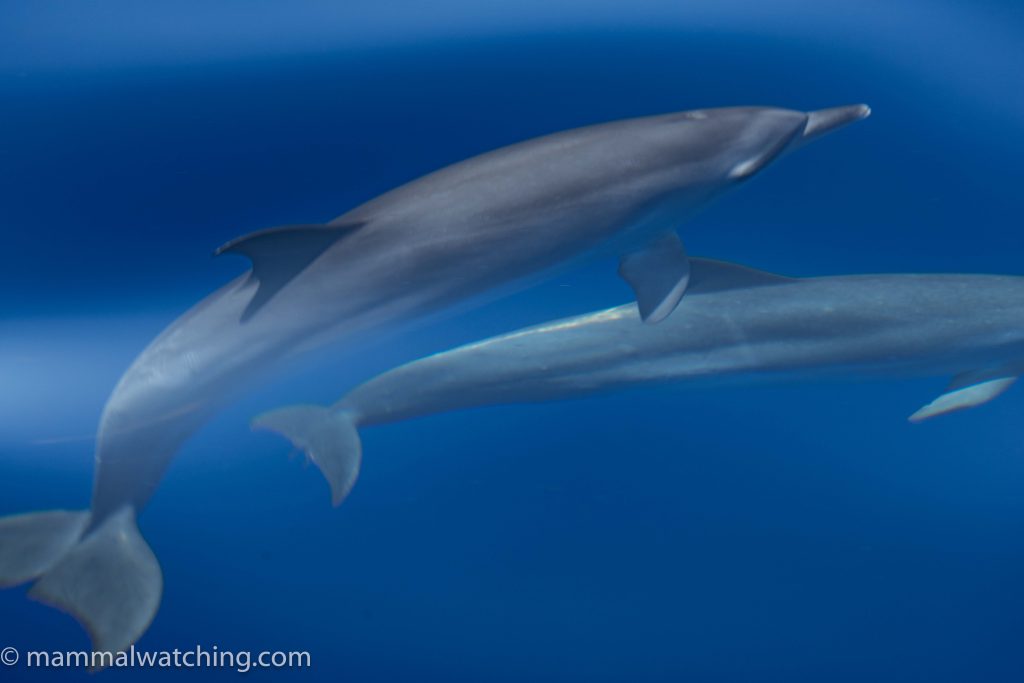
Atlantic Spotted Dolphin (Stenella frontalis)
On our final afternoon there were reports of both Blainville’s and Cuvier’s Beaked Whales but we could not locate them.
Of course as I was about the board my flight home the next afternoon Cami messaged to say they had just seen Blainville’s. This ruined me mood. Possibly my life.
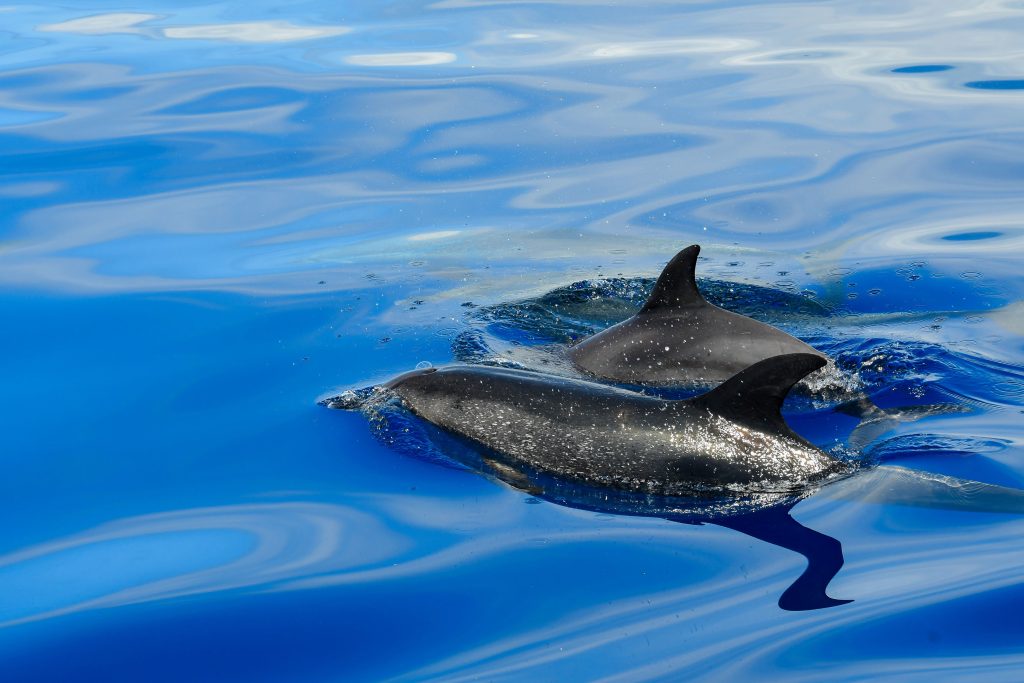
Atlantic Spotted Dolphin (Stenella frontalis). Photo Cami Dávila /Blue Safari
A regular two hour cruise costs 60 euros per person. A private charter – for the whole boat – is 500 euros for two hours. With the benefit of hindsight, I wish we had booked an extra private charter or two. But that would also have meant relying on good weather. If the weather had not been beaked-whale friendly those trips would likely have been unsuccessful. And a week or two before we arrived all the boats were sold out. So you need to book in advance and take your chances.
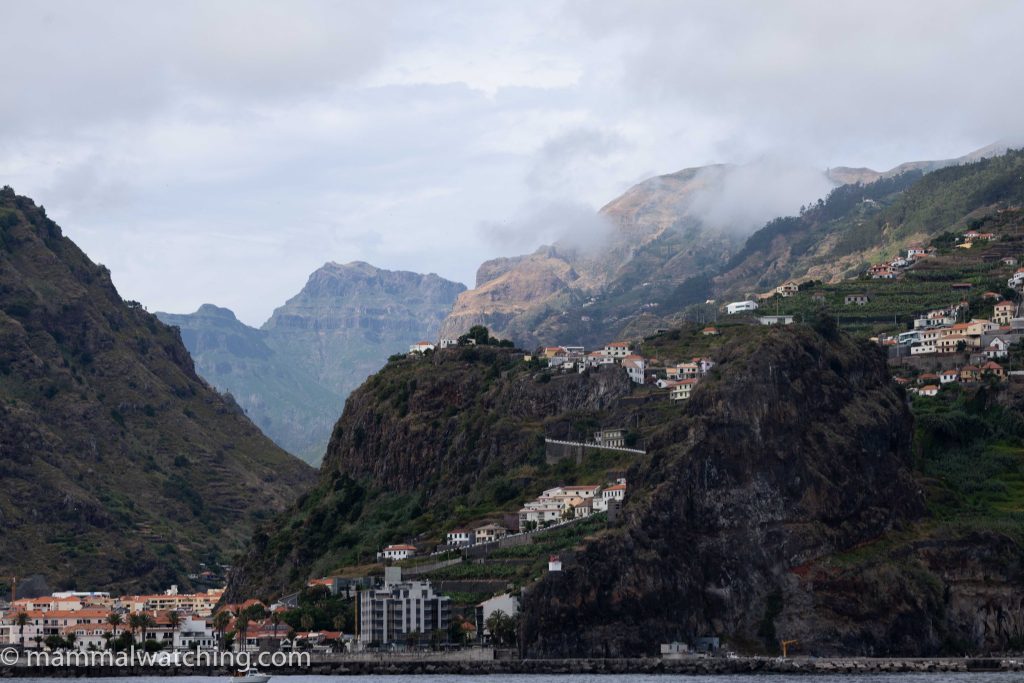
Another option, which we tried to pursue, is visiting a vigia just before or after their shift and having them look for beaked whales through their massive binoculars: they can spot animals 27km from shore. This is possible and I suspect might well be successful but we left it too late to arrange a visit.
The town of Funchal is a great place to stay with some excellent food and the ocean is crystal clear. But the diversity and quantity of cetacean sightings is not as good as around Pico Island in the Azores. However in Madiera you are more likely to encounter several species. Blainville’s Beaked Whales are much easier to see off of Funchal for sure, and while we were there boats saw a pod of Rough-toothed Dolphins twice. On our first day a Mediterranean Monk Seal was lounging in the Funchal Marina. Not an uncommon sight apparently.
We saw three cetacean species in total, two of which (Bryde’s Whale and Bottlenose Dolphins) we also saw from the balcony of our Airbnb.
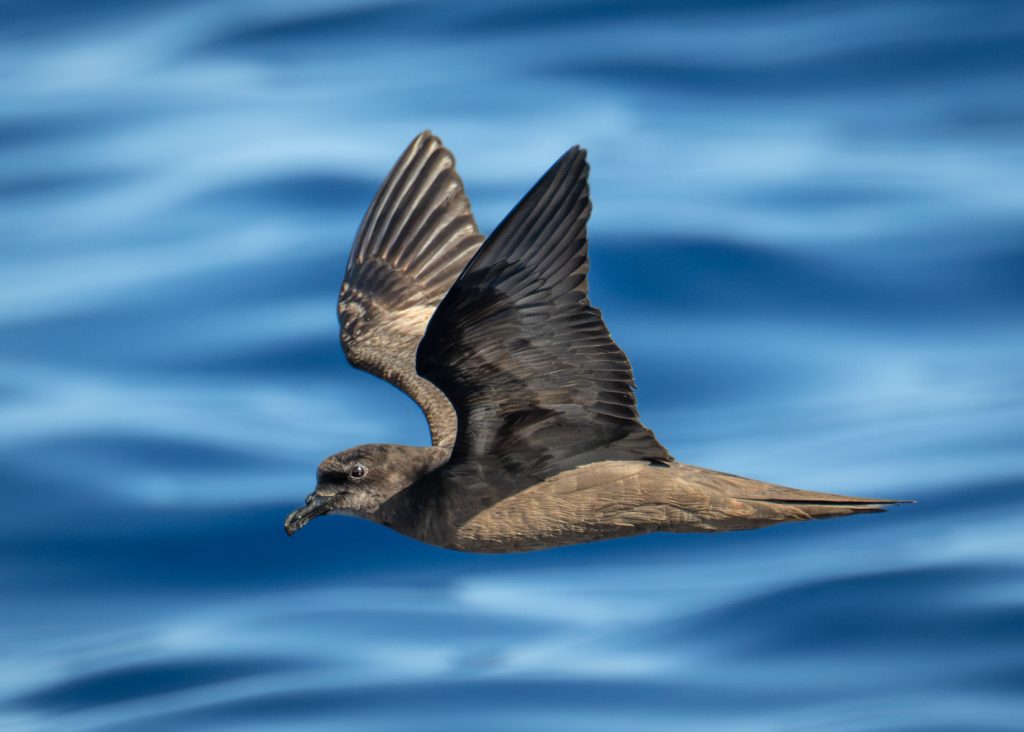
Bulwer’s Petrel. Photo Charles Hood.
We looked for the endemic Madeira Pipistrelle. Of course we did. Seva had a bat detector and recorded animals at the Jardim Muncipal park after dark. The next evening we returned and got a view of a bat flying among the tree tops. It seems that pretty much any bat you see in Funchal should be the pipistrelle, though larger Leisler’s Pipistrelles have been recorded elsewhere on the island.
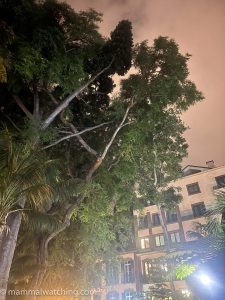
Madeira Pipistrelle habitat
A big thanks to my companions and to the wonderful Cami from Blue Safari. We need to return!
Trip List
Madeira Pipistrelle (Pipistrellus maderensis) – lifer
Mediterranean Monk Seal (Monachus monachus)
Bryde’s Whale (Balaenoptera brydei)
Atlantic Spotted Dolphin (Stenella frontalis)
Common Bottlenose Dolphin (Tursiops truncatus)
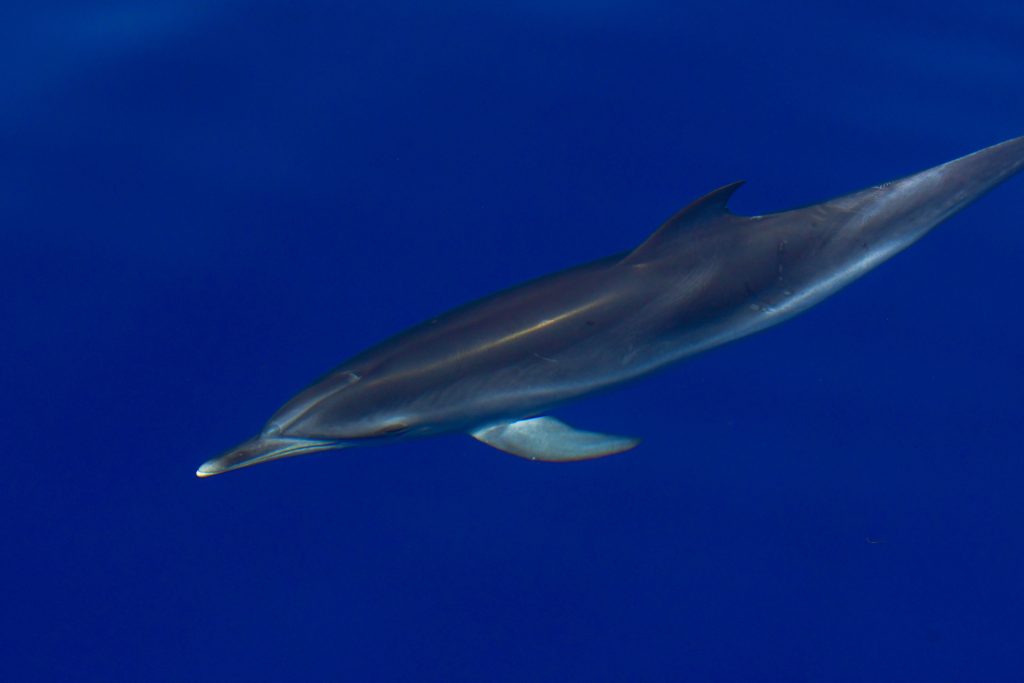
Atlantic Spotted Dolphin (Stenella frontalis). Photo Cami Dávila /Blue Safari

Post author
4 Comments


Leave a Reply
You must be logged in to post a comment.
Brett Hartl
Jon’s taking pictures of birds again…