

New Pygmy Triok discovered after 6000 years (by us!)
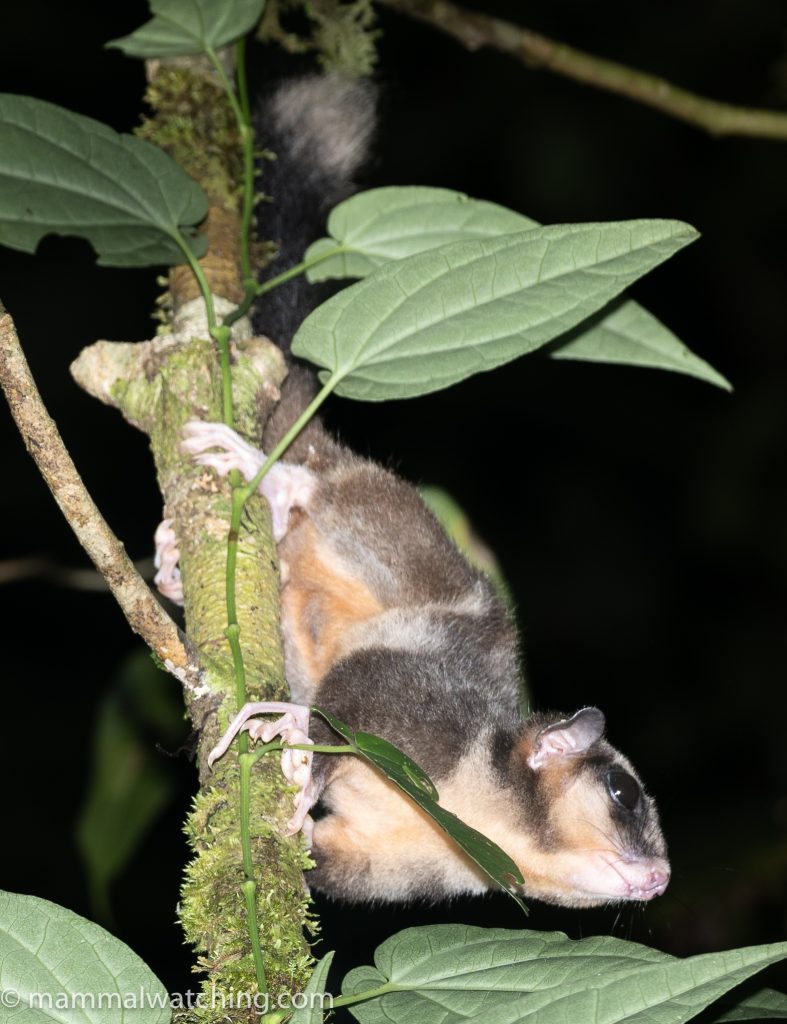
Some of you will have seen one or many stories yesterday about two marsupials rediscovered after millennia on New Guinea (for example https://www.theguardian.com/environment/2026/mar/05/marsupials-discovered-new-guinea )
The great news is that us mammalwatchers were instrumental in one of these rediscoveries: the pygmy long-tailed possum (triok) that we found on our 2023 trip to West Papua led by Carlos Bocos.
The less great news is that the Australian Museum’s press release didn’t say anything about mammalwatching. You win some you lose some.
As soon as the guys at Klalik grabbed that animal out of a tree we knew we’d seen something pretty special. A few weeks later scientists Kris Helgen and Tim Flannery let Carlos know it was the (very) long lost Dactylonax kambuayai.
A great win for the contributions mammalwatching can make to science.
I felt it was better not to share the news here immediately: I didn’t want to steal the thunder from the scientists before they published their research, particularly when one of them was Tim Flannery who I have had a mammalwatching man crush on since reading Throwim’ Way Leg. (If you haven’t read his book about his work on Papua then you really should). So it is a bit disappointing that the museum’s PR department didn’t give this community a shout out and a great pity Carlos Bocos in particular didn’t get a lot more media attention for his work in discovering these animals. But his time will come! Before Carlos is done he will have helped discover more new species than Charles Darwin.
All this to say I should have shared the news earlier and I’m sorry I didn’t. For those of you who have seen the triok at Klalik you can update your lists with this Lazarus species and flex to your friends that ‘yes you saw the news and yes you saw this mammal already’.
Here is the research paper that Carlos coauthored that does give due credit to his role and our trip.
https://journals.australian.museum/flannery-2026-rec-aust-mus-781-1734/
If any journalists are reading then there is – I believe – a pretty compelling backstory around how our single night at Klalik in 2023 transformed the village, the conservation of the forests surrounding it and led to this new discovery.
(This post was updated on March 11 after a request from the Australian Museum)

Post author
7 Comments
-
Catherine Grenfell
Here, here. Yesterday I read the Guardian article and I was like what????? There is a whole lot more to this story you guys are missing. I was really disappointed that they did not mention mammal-watchers or Carlos and gave only a tiny nod to the locals. Glad you have rectified ‘the record’.
-
-


Leave a Reply
You must be logged in to post a comment.
Evan
Incredible! Thanks for sharing!