

Qinghai’s Gouli Valley, Qilian Mountains and Xining (China), 2026
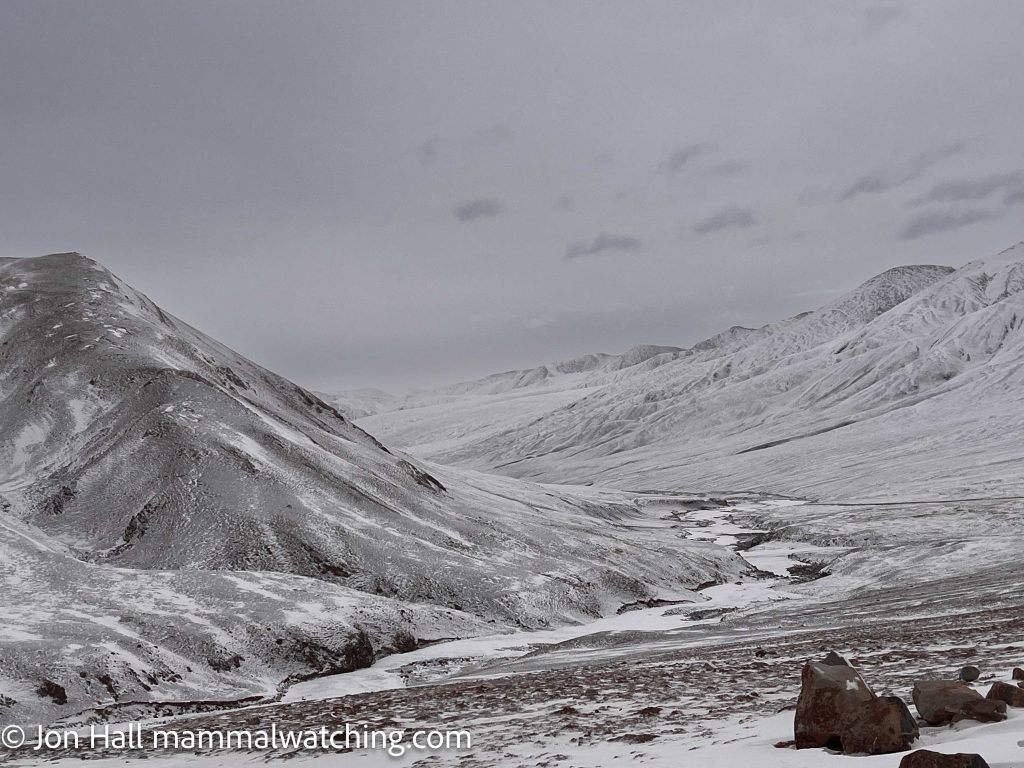
The Gouli Valley
For the third leg of my China month I returned to Qinghai and the Tibetan Plateau. I was here in 2015 for two weeks and saw for myself that this is one of the world’s great wildlife destinations. I was interested to return to see if it had changed as much as other parts of China in recent years.
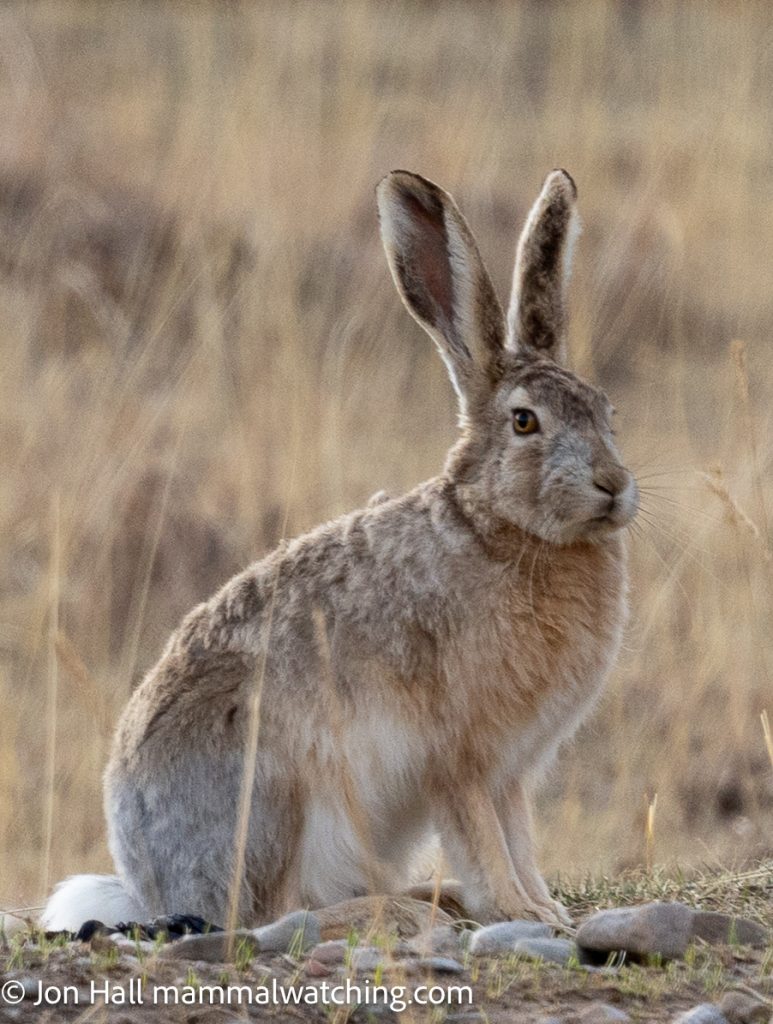
Woolly Hare (Lepus oiostolus)
Yiqian Wu, who showed me round Yunnan, came along too. He lives in northern China and has worked on research projects up here and knows the area well. He also loves Qinghai.
We visited three places.
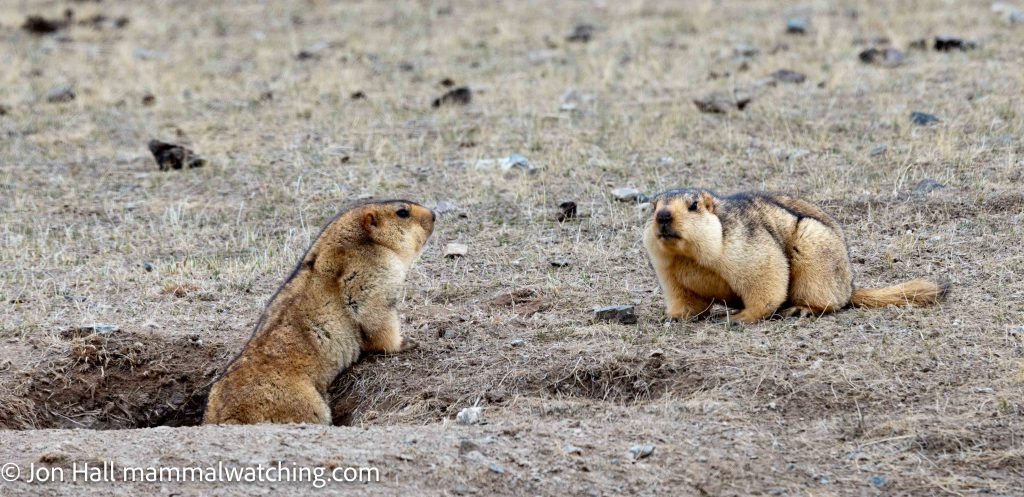
Himalayan Marmot (Marmota himalayana)
First, I checked out Gouli Valley, seven hours southwest of Xining. I wasn’t expecting to see any lifers there, but I wanted to see for myself how good the area was after reading some of the recent reports. I also hoped to get a better view of a Eurasian Lynx than I’d had in Romania.
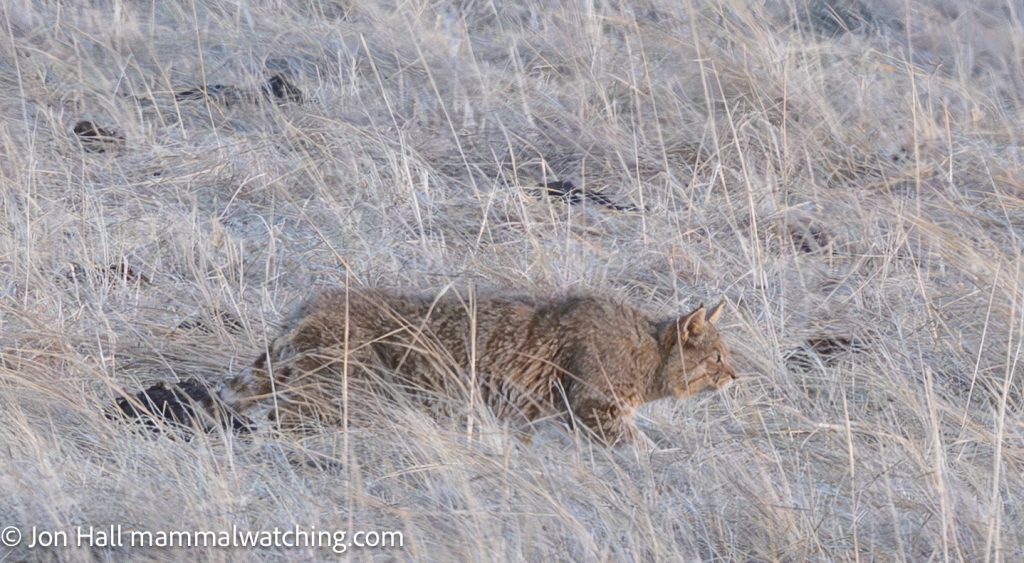
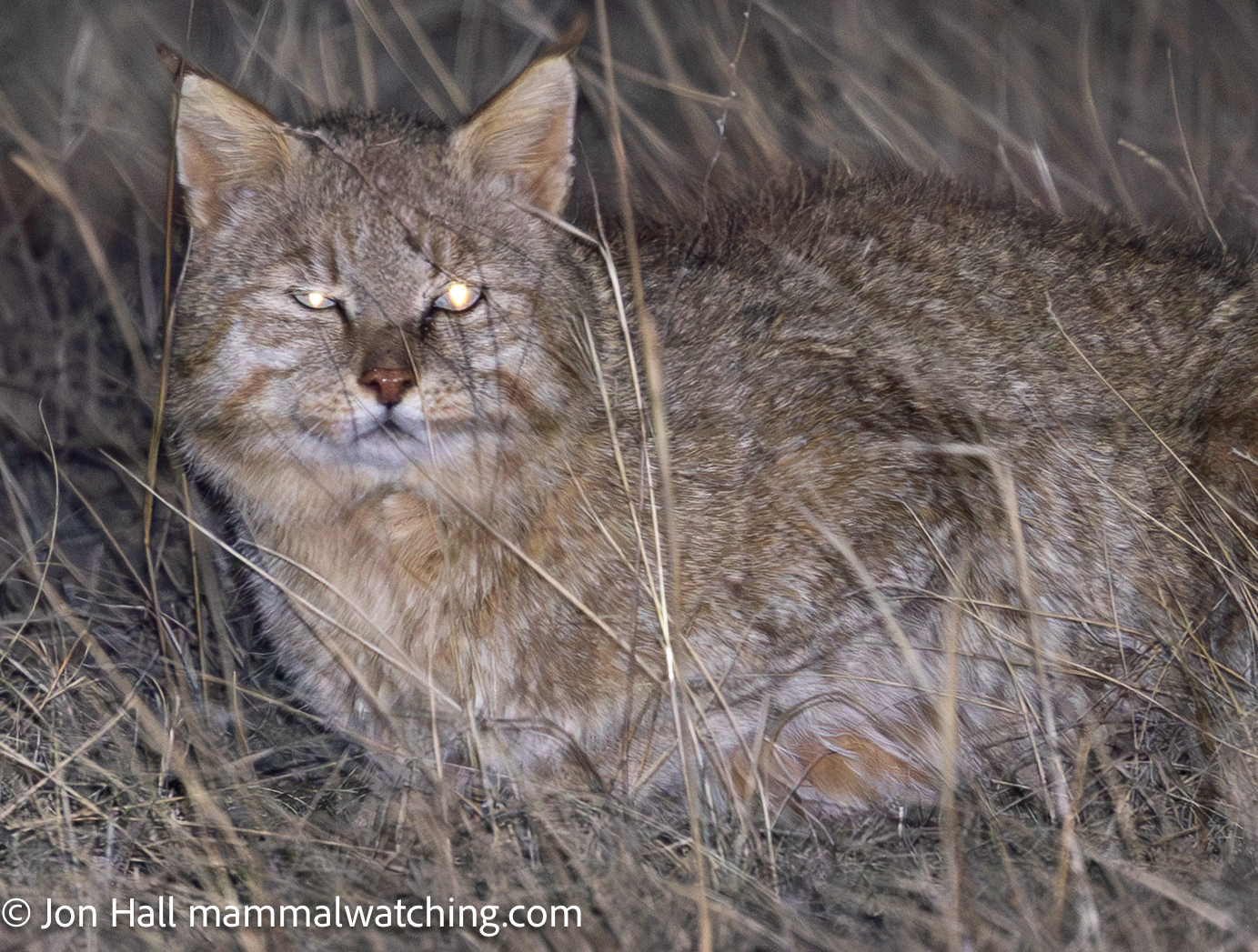
Chinese Mountain Cat (Felis bieti)
Second, we visited a site in the Qilian Mountains, four hours west of Xining, where Yiqian thought we could find a Chinese Mountain Cats.
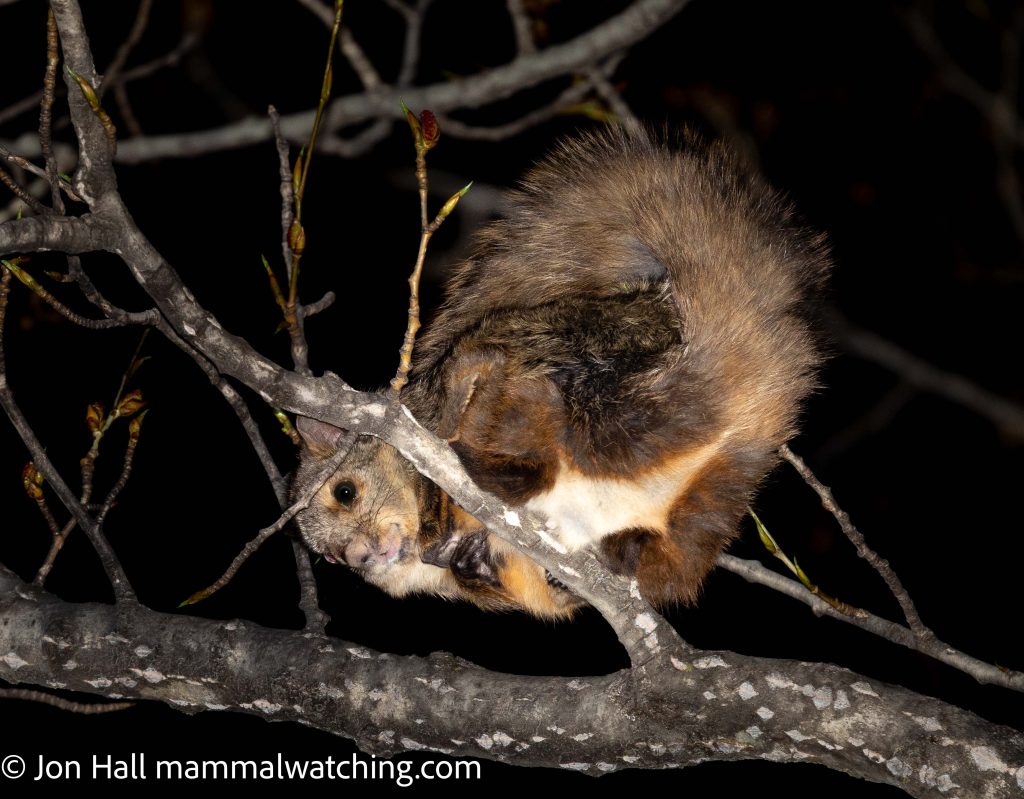
Chinese Giant Flying Squirrel (Petaurista xanthotis)
Third, we decided – at the last minute – to spend a night at Beishan (Huzhu County) just 90 minutes from Xining Airport to try for Chinese Giant Flying Squirrel.
The Gouli Valley
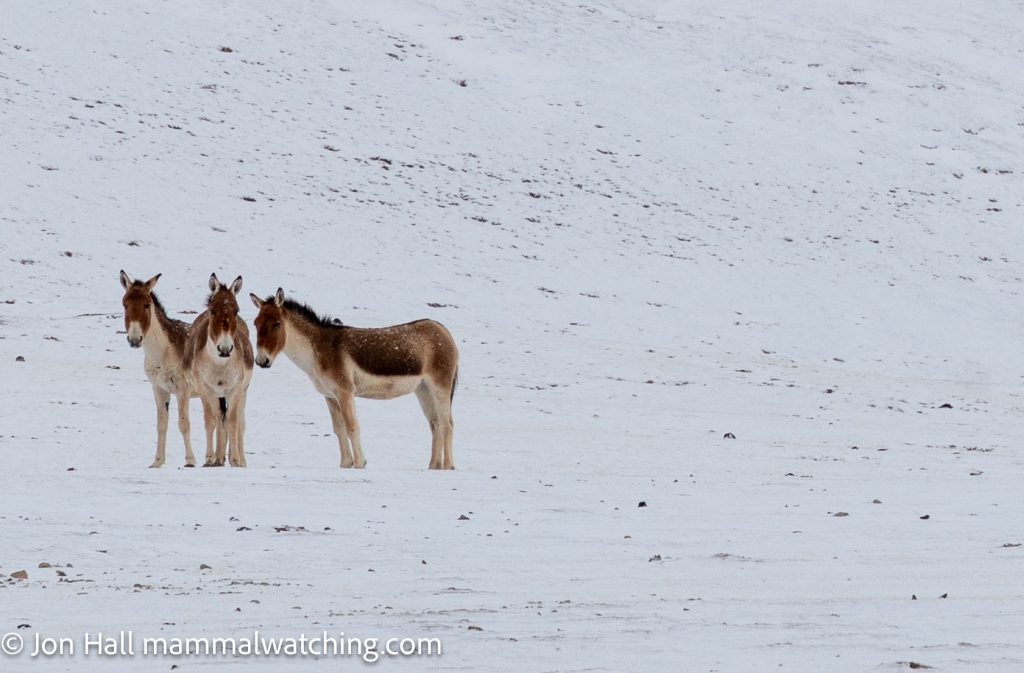
Kiang (Equus kiang)
The last few years have produced some mouthwatering reports from the Gouli Valley. People often see Snow Leopards, Pallas’s Cats and Lynx on the same day!
Some of the photos are exceptional too, such as these from my friend Man Fu, who you can follow on Instagram here or email here.
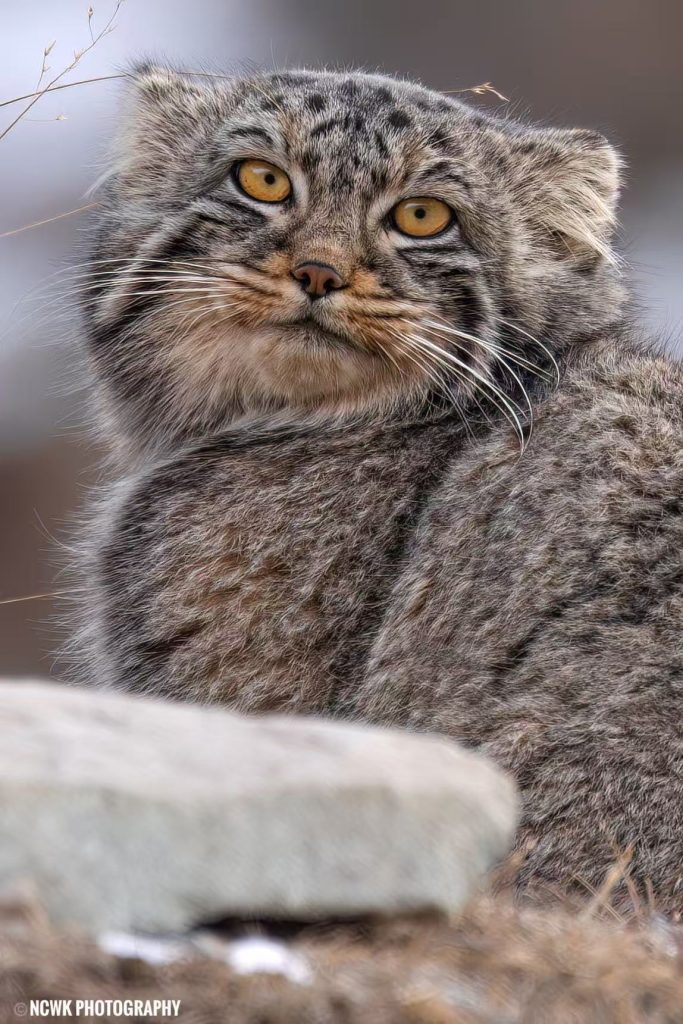
Pallas’s Cat in the Gouli Valley, February 2026. Photograph by Man Fu (email 1137661757@qq.com)
Man recommends winter as the best time for photographing Pallas’s Cats, while Lynx are year round.
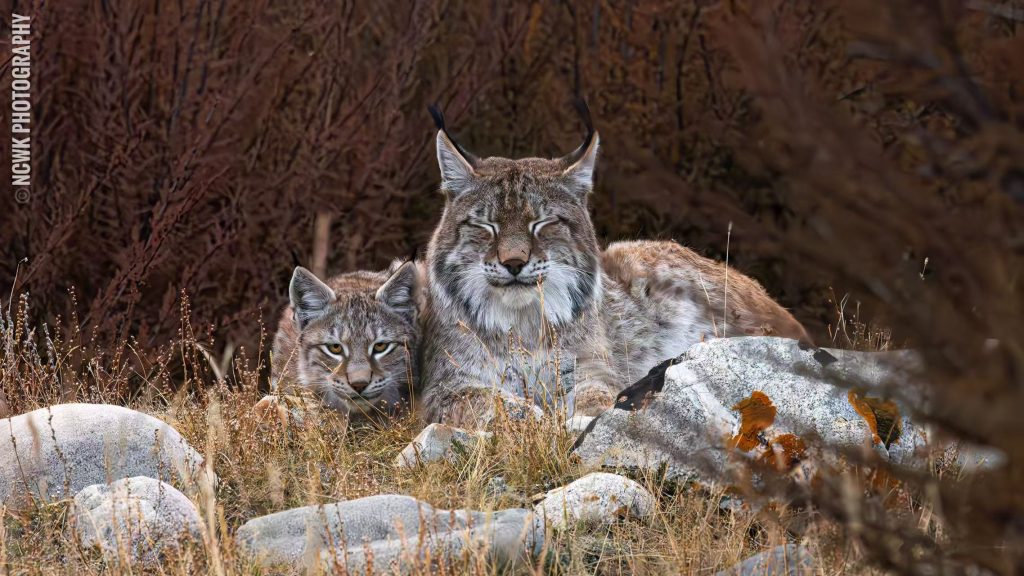
Lynx in the Gouli Valley, October 2025. Photograph by Man Fu (@velociraptor826 on Instagram)
The Gouli Valley is sometimes –confusingly – also called the Valley of the Cats. This should not be confused with the original Valley of the Cats in Yushu that is currently closed to tourists. (You can listen to Terry Townshend talk about that original valley on the mammalwatching podcast).
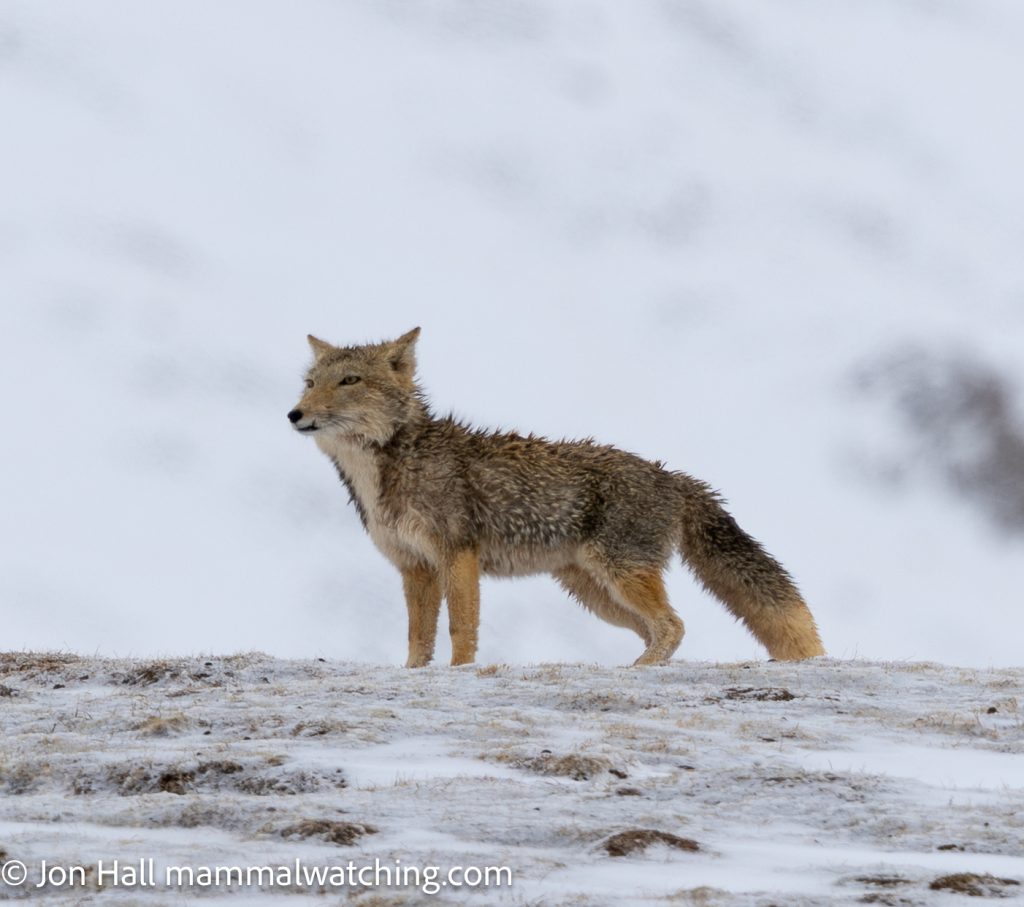
Tibetan Fox (Vulpes ferrilata)
The Set Up
Rou Bao, who grew up in the valley, runs the show there. To visit you have to go through him.
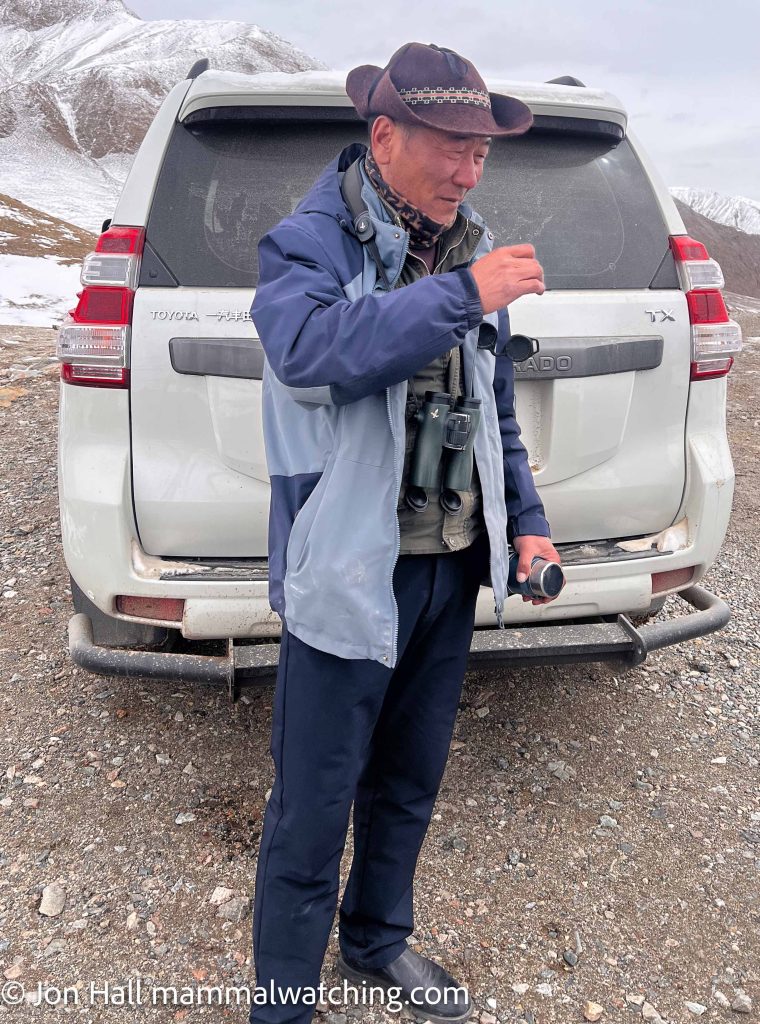
Rou Bao
He’s an interesting guy. I learned a little about his life story. Forty years ago it was very rare for Tibetans to attend school. The government decided that at least one child from every area had to go to school and Rou Bao was randomly selected. After two years at school he returned to the valley and wanted something more than life as a Yak herder. He taught himself to read and write Chinese and was even a local politician for a time.
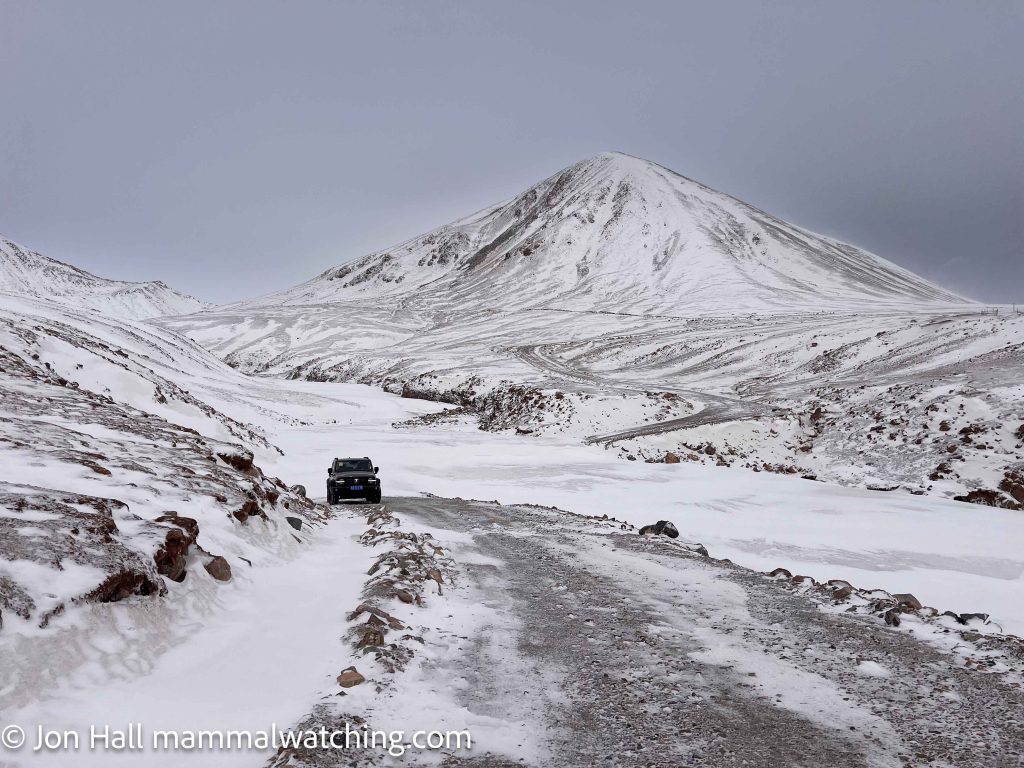
He now seems to love his life showing the valley to the many – and diverse – people who visit. He seems, with good reason, to be very proud his home. And he has the best wildlife spotting eyes I’ve ever encountered. And I have encountered some amazing spotters. I wonder how much of the valley’s success is due to exceptional wildlife or to this exceptional guide…
Although there is a basic guest house at the edge of the valley, it is no longer approved by the government for Western guests. It sounds like the guest house was never ‘approved’ and eventually the local authorities caught up with the grey economy in the valley and decided it would be more appropriate for foreign visitors in particular to stay at a bona fide hotel (rather like New York City’s policy towards AirBnBs).
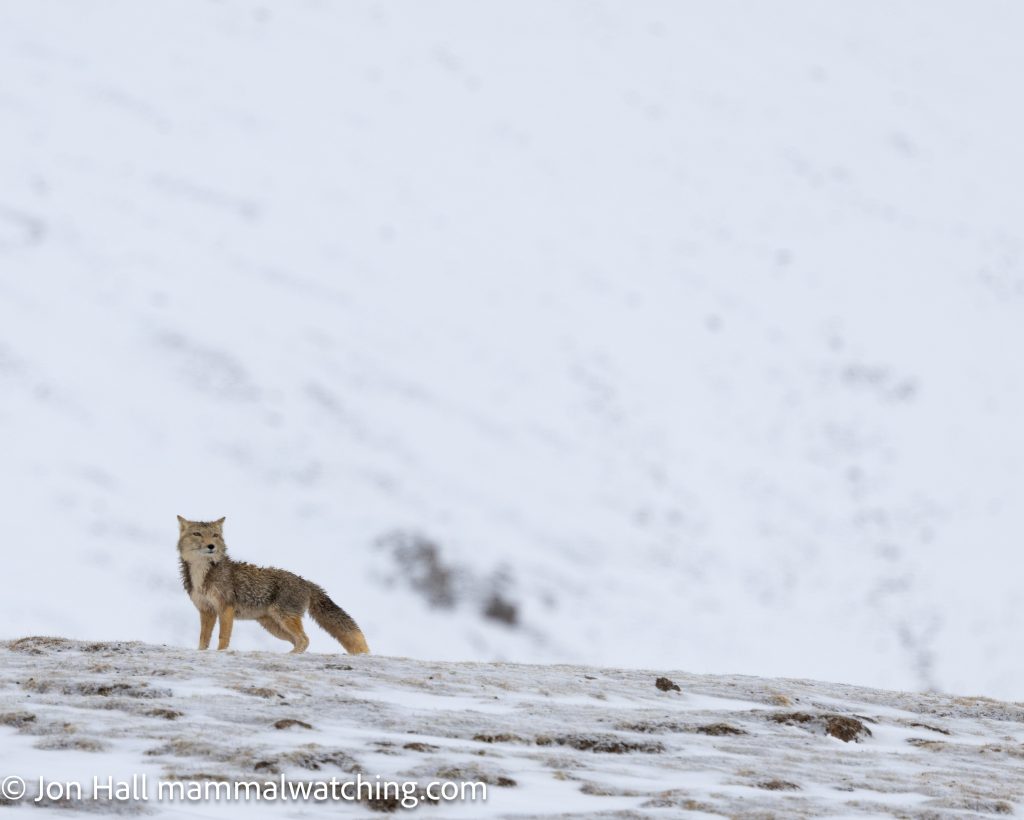
Tibetan Fox (Vulpes ferrilata)
All foreign tourists now stay in the nearest town, Xiangride: a six-hour drive from Xining.
The upside is that at 3,000m above sea level, it is a better place to acclimatize to the altitude, than the valley which is above 4,000m asl. The downside is that Xinagride is an hour and half drive from the valley. But another upside is you can stay in a comfortable hotel with hot water. I’m not sure the guest house has much in the way of comfort or hot water.
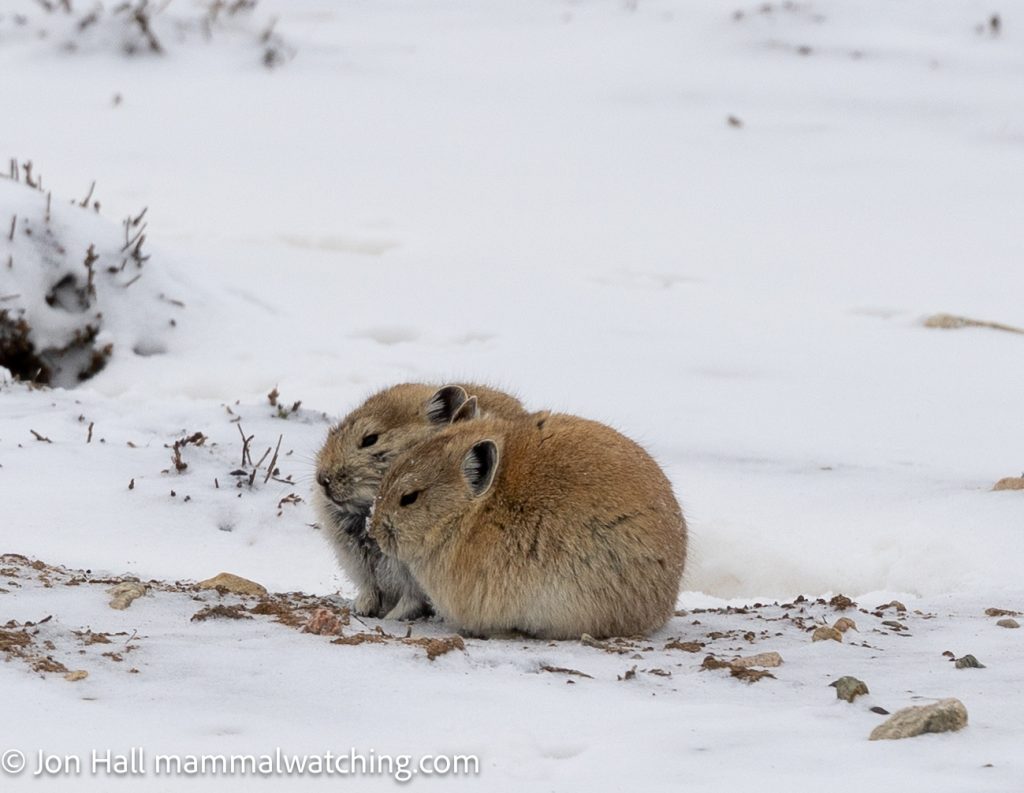
Plateau Pika (Ochotona curzoniae)
We visited over the Labour Day Holiday – one of China’s biggest – and the valley was relatively busy. We were one of 8 cars. Hardly crowded, but six cars busier than usual.
Rou Bao leads the vehicles in convoy through the valley each day. We met him at the valley entrance just before sunrise. He shared walkie-talkies with the convoy and led the way, stopping to scan for wildlife.
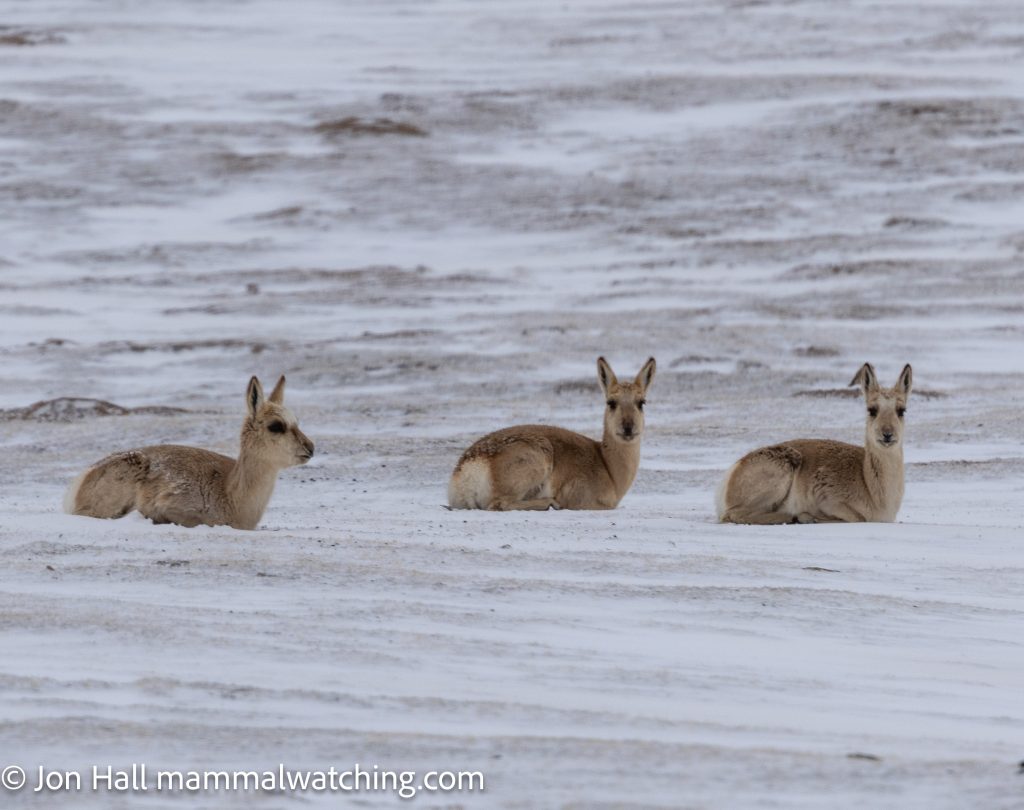
Tibetan Gazelle (Procapra picticaudata)
The daily routine continues with lunch at Rou Bao’s house, a rest, and a return to the valley for an afternoon drive that ends around sunset.
In May this means long days in the field: from 6.30 to 20.00 plus a three hour drive on top. The days are much shorter in winter.
The Mammalwatching
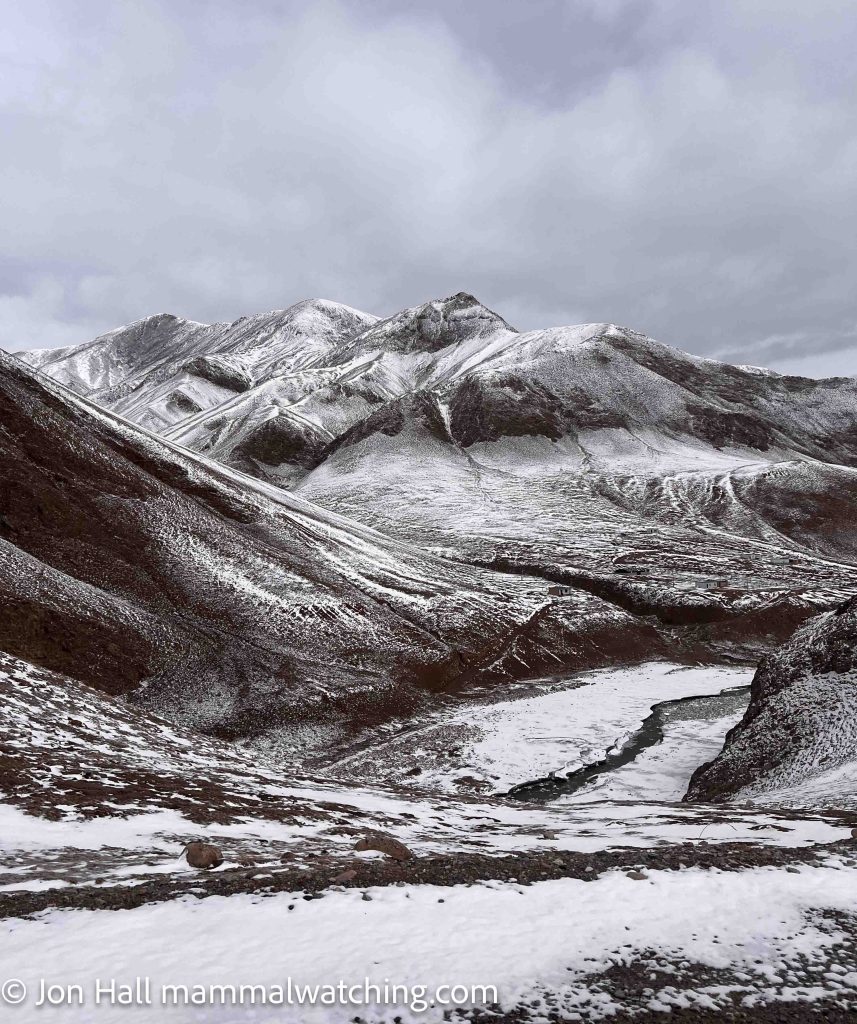
Gouli is over 4,000 metres asl and I felt the altitude the first day. And the cold. It had snowed overnight and the mountains were dusted in snow. This was a good sign for the day’s mammalwatching as it should have pushed the ungulates – which should in turn have pulled the carnivores – down to the valley floor.
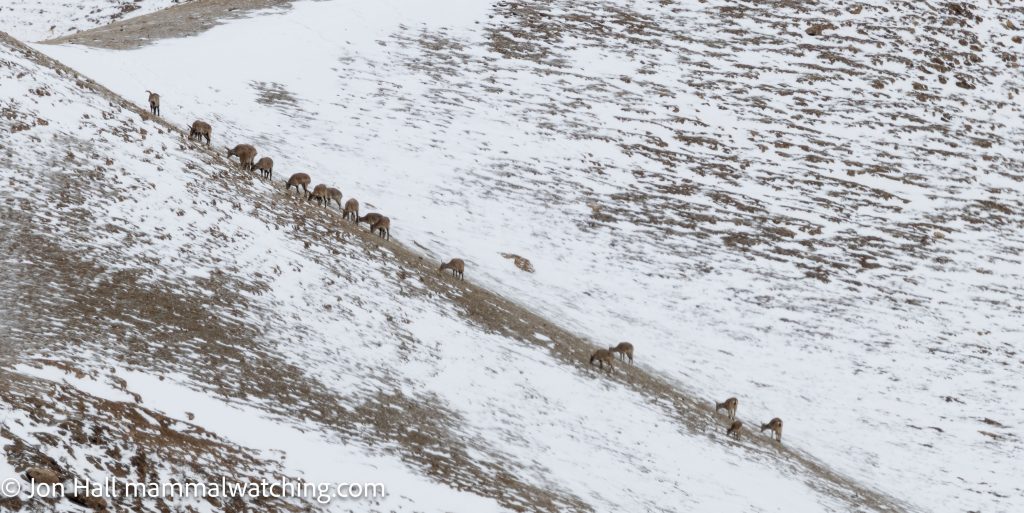
Blue Sheep (Pseudois nayaur). A Snow Leopard’s favorite prey.
That first morning was stunning. In the first three hours we saw at least ten Tibetan Foxes, a pack of Wolves, a Pallas’s Cat, and two Snow Leopards! Yes, in just three hours!
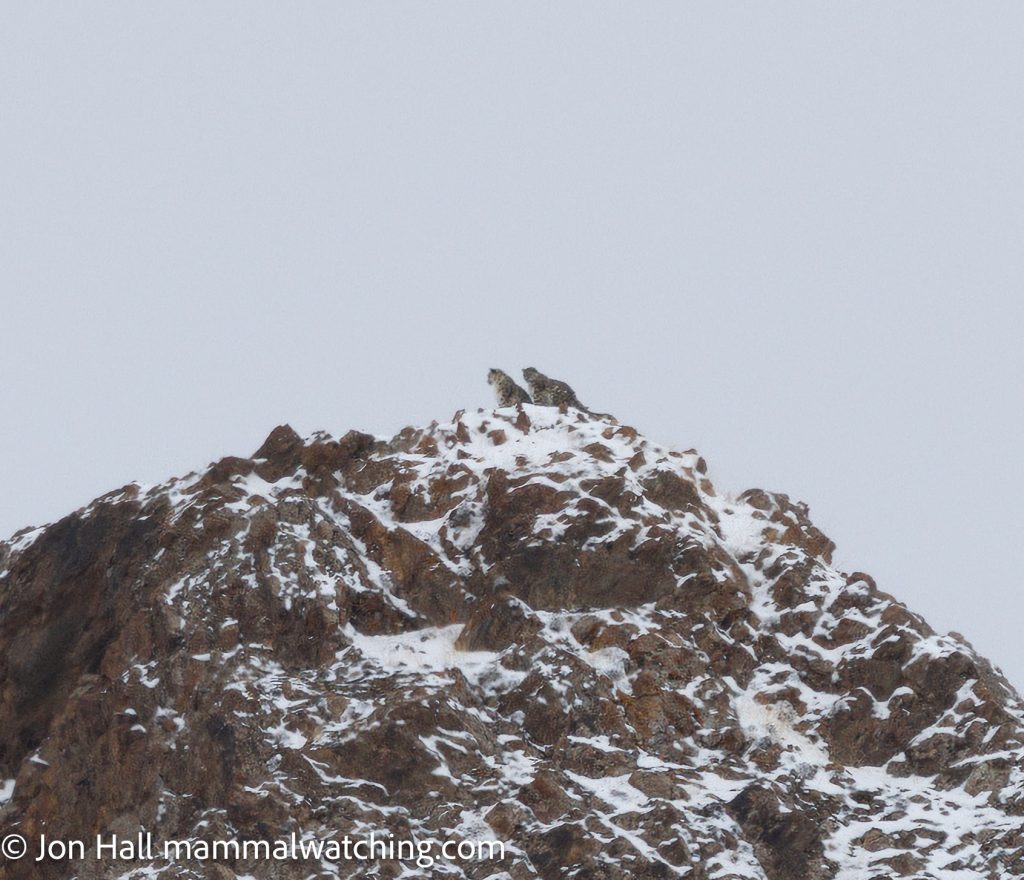
Snow Leopards (Panthera uncia)
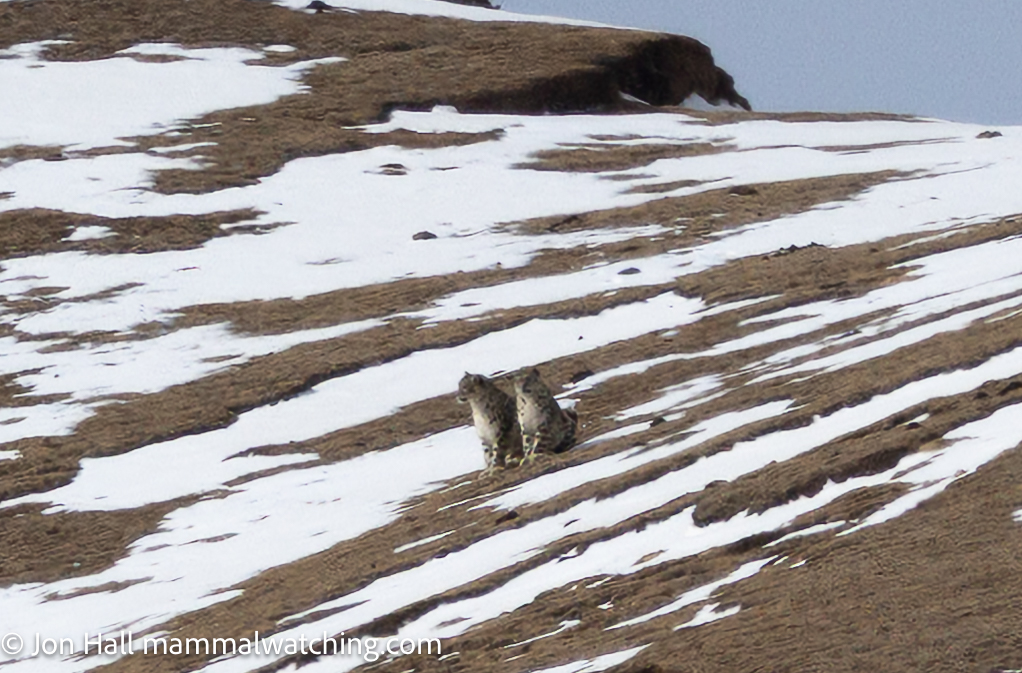
They sightings were all distant and the Snow Leopards were specks on a ridgeline that Rou Bao miraculously picked up from over 2km away through his binoculars.
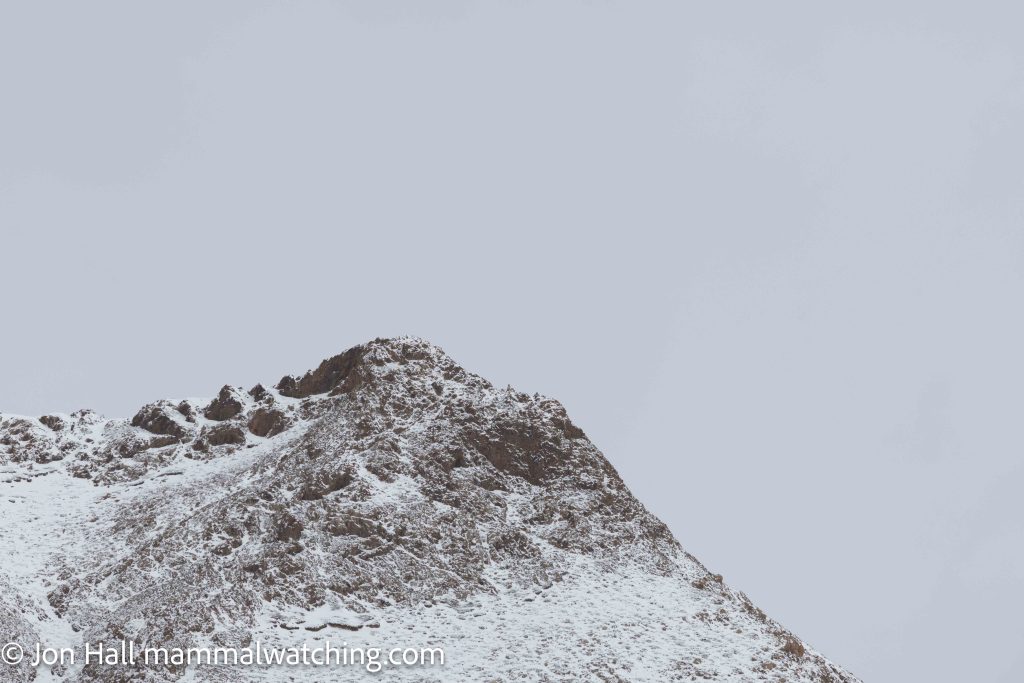
This is an uncropped 500mm zoom shot of the Snow Leopards from our vantage point. Rou Bao spotted them from about 1km further back up the road! The leopards are just right of centre on the ridge at the point where it starts declining more steeply.
Other mammals that morning included Himalayan Marmots, hundreds of Plateau Pika, a few Kiang and Tibetan Gazelles plus a herd of Blue Sheep.
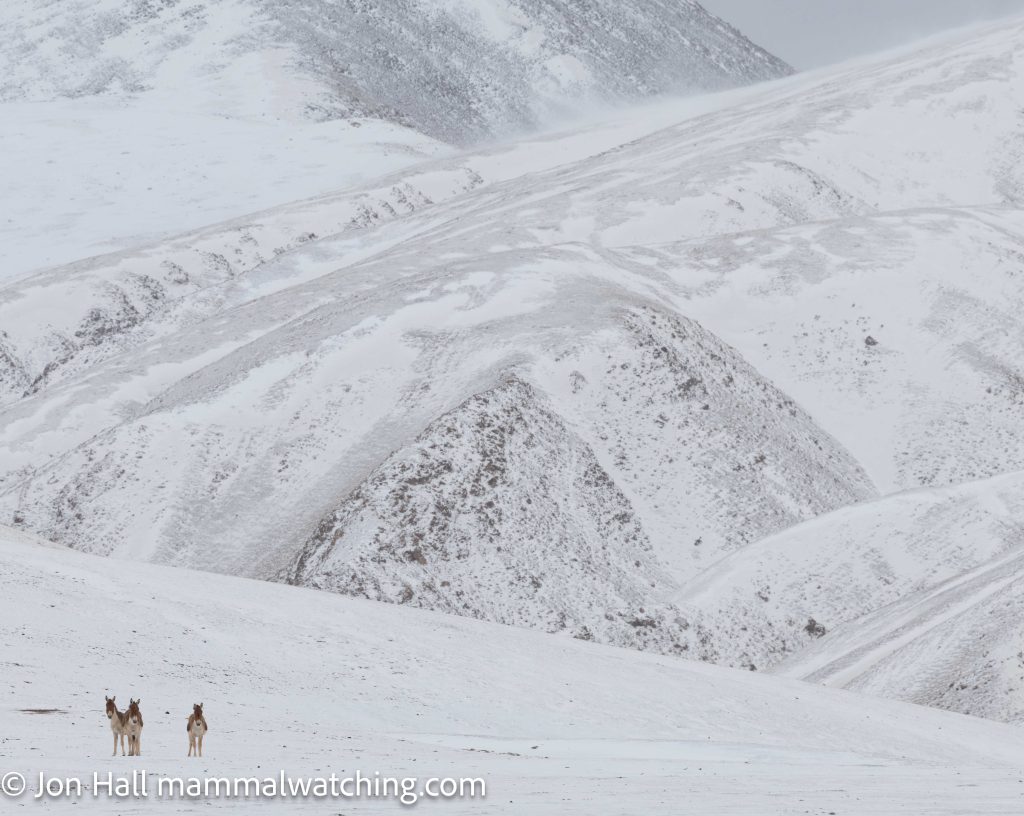
Kiang (Equus kiang)
After lunch, Rou Bar spotted a pair of Asian Badgers. They are rare in the valley.
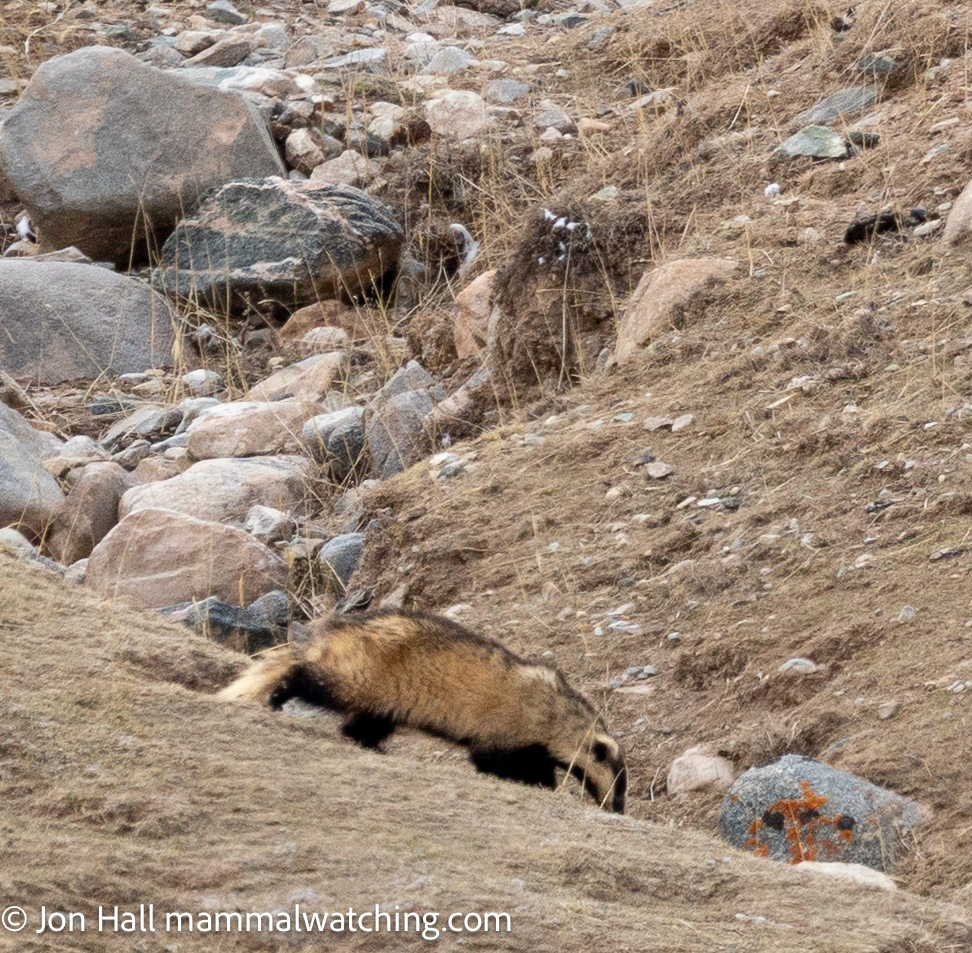
Asian Badger (Meles leucurus)
We spent most of our first afternoon with the Snow Leopards hoping they would descend in search of Blue Sheep on the valley floor. They started heading down the hill in the sheep’s direction until they caught a marmot and settled down for a meal.
At the top of the valley, a family of Tibetan Foxes had set up residence on the other side of the river that runs parallel to the road. We saw them every day. I defy anyone not to grin as they watched the cubs running around playing.
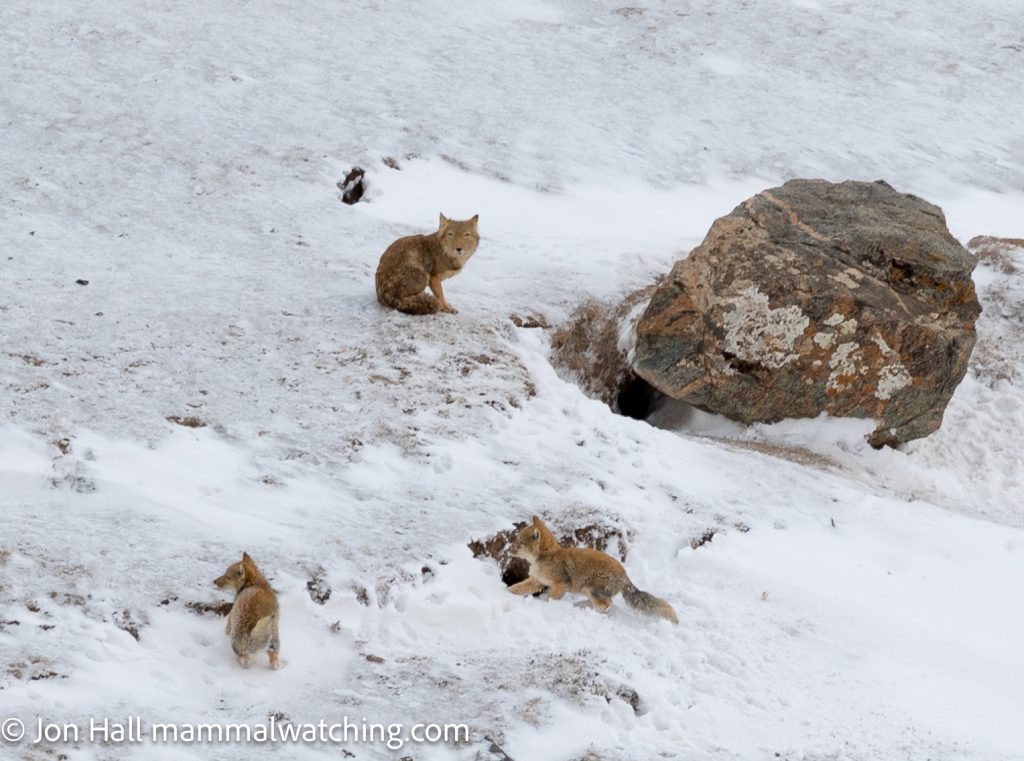
Tibetan Foxes (Vulpes ferrilata)
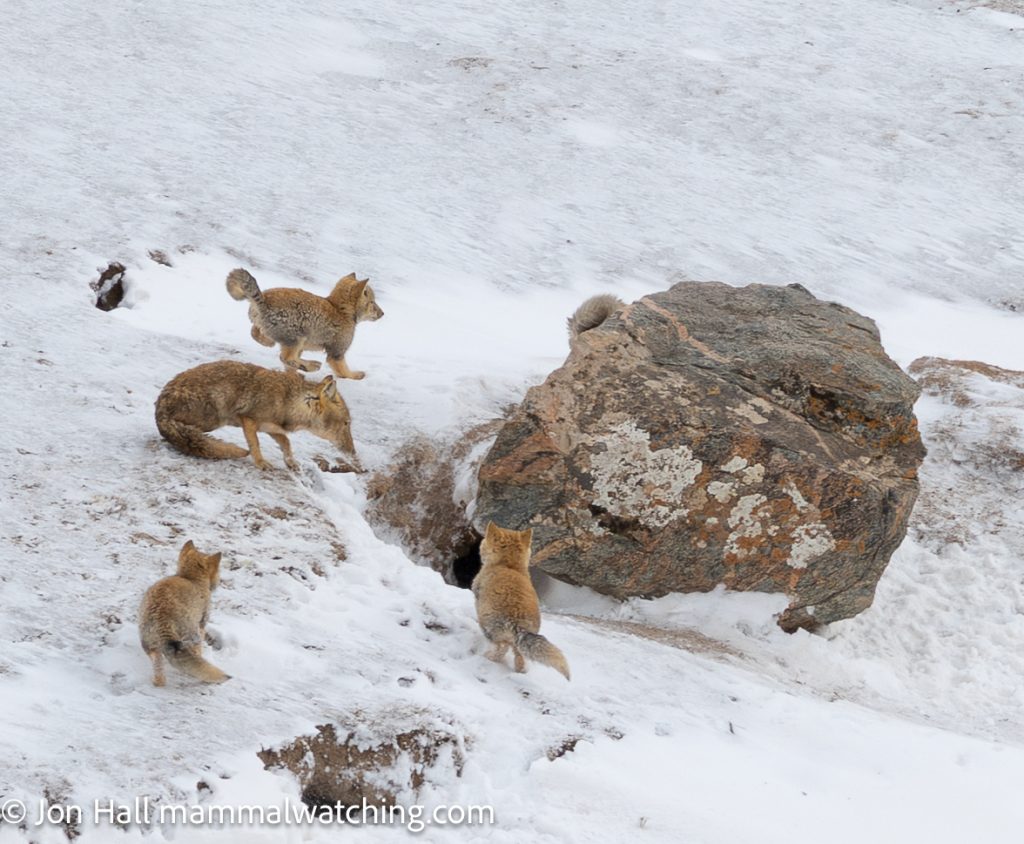
Tibetan Foxes (Vulpes ferrilata)
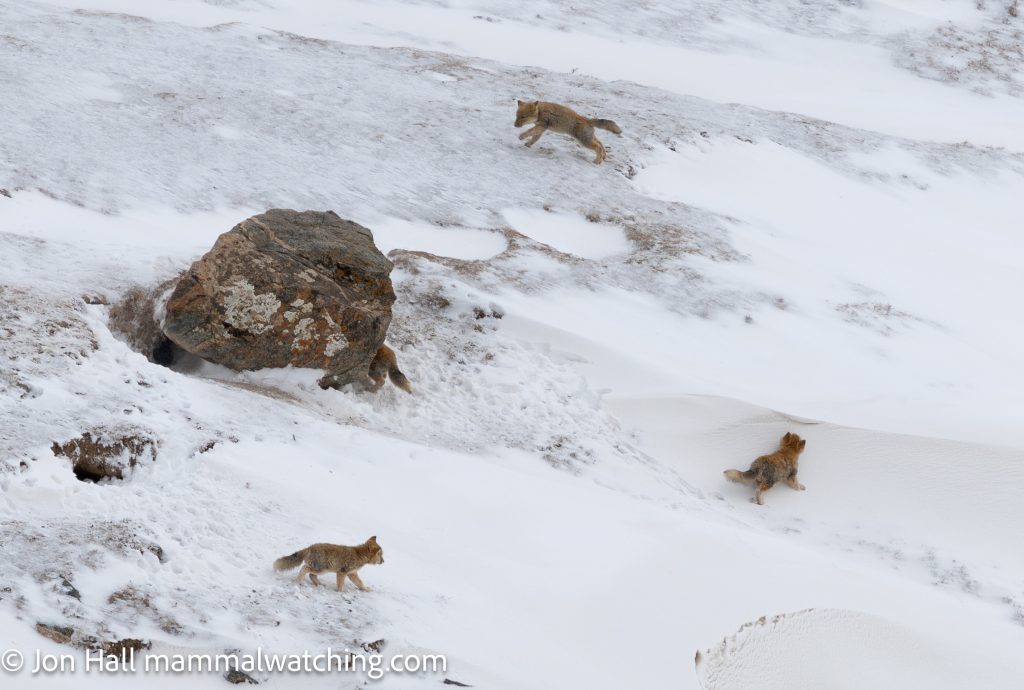
Tibetan Foxes (Vulpes ferrilata)
The next day wasn’t as productive for carnivores. We saw more Wolves and Tibetan Foxes and added Altai Mountain Weasel to our list for the park but no cats, though we missed a Lynx by seconds.
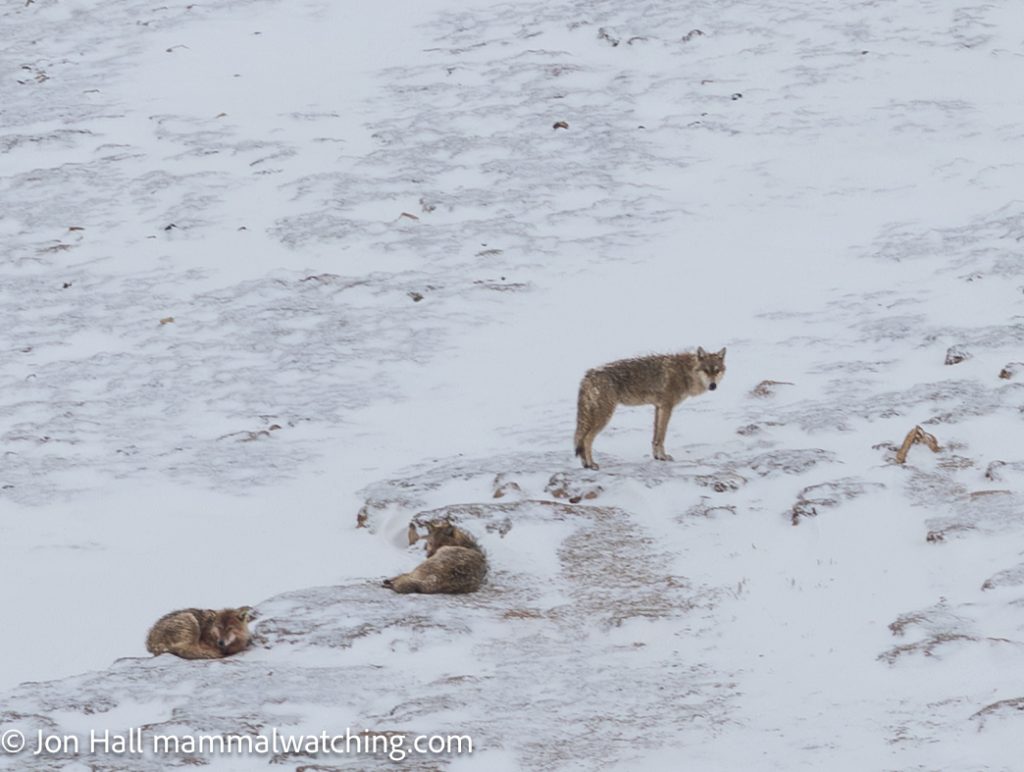
Wolf (Canis lupus)
A short stretch of road along the river, just before you enter the valley, had been very reliable for Lynx in March and April. A mother and her two cubs – all habituated – had been seen daily in the early mornings and evenings. They were a photographer’s dream.
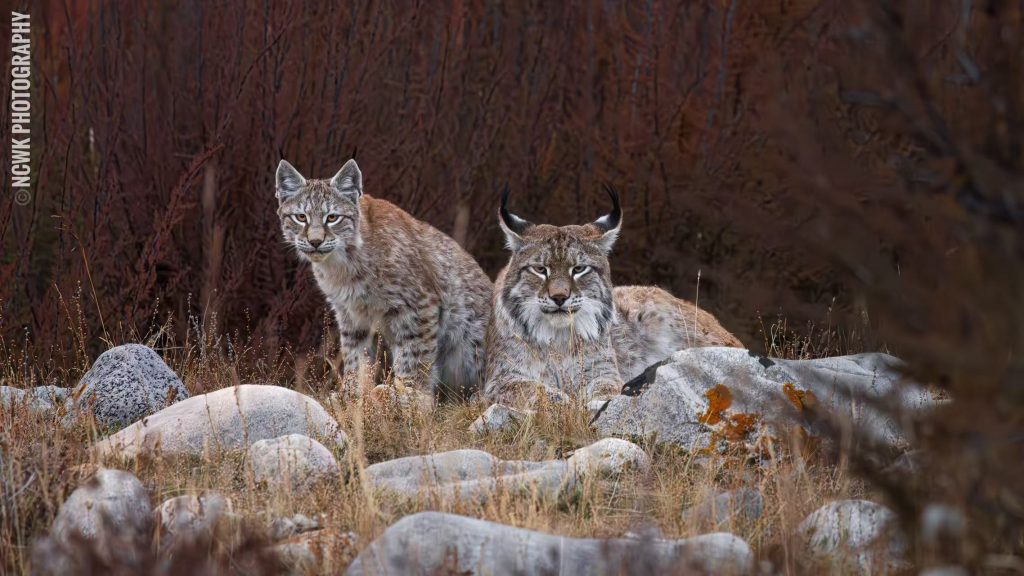
Lynx in the Gouli Valley, October 2025. Photograph by Man Fu (@velociraptor826 on Instagram)
Rather than follow Rou Bao directly into the valley, we decided to patrol the riverbank to look for the cats and catch up with the convoy later.
The area is perfect for Lynxes. Woolly Hares are abundant and there are lots of bushes, which provide cover for the ambush hunting Lynx.
We searched the area for half an hour. No lynxes, and the arrival of some herders with large dogs didn’t bode well. Then we got a text to say Rou Bao – and the rest of the convoy – were looking at a Lynx up the valley.
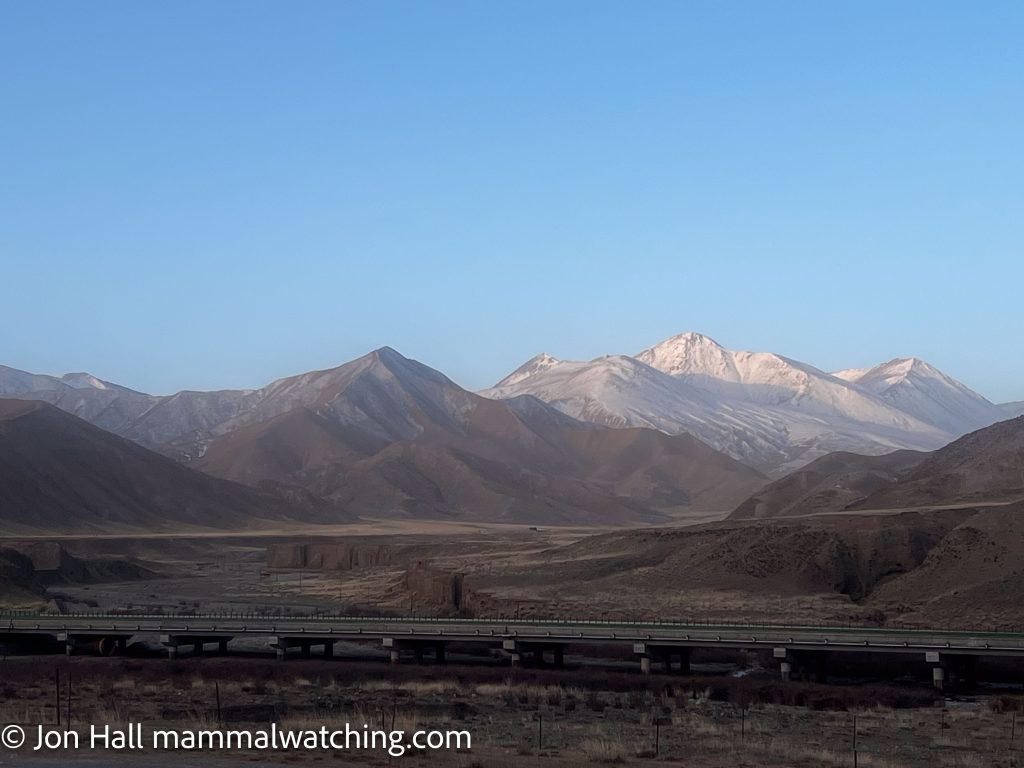
Lynx habitat
We sped down the valley. After 20 minutes spotted the cars parked ahead of us. Rou Bao’s voice crackled over the radio instructing us to hurry up. The Lynx disappeared over the ridge 15 seconds before I got out of the car. That still hurts!
We returned to the park for a third morning – no cats again – and left for Xining at lunchtime.
Rou Bao found another Snow Leopard that afternoon.
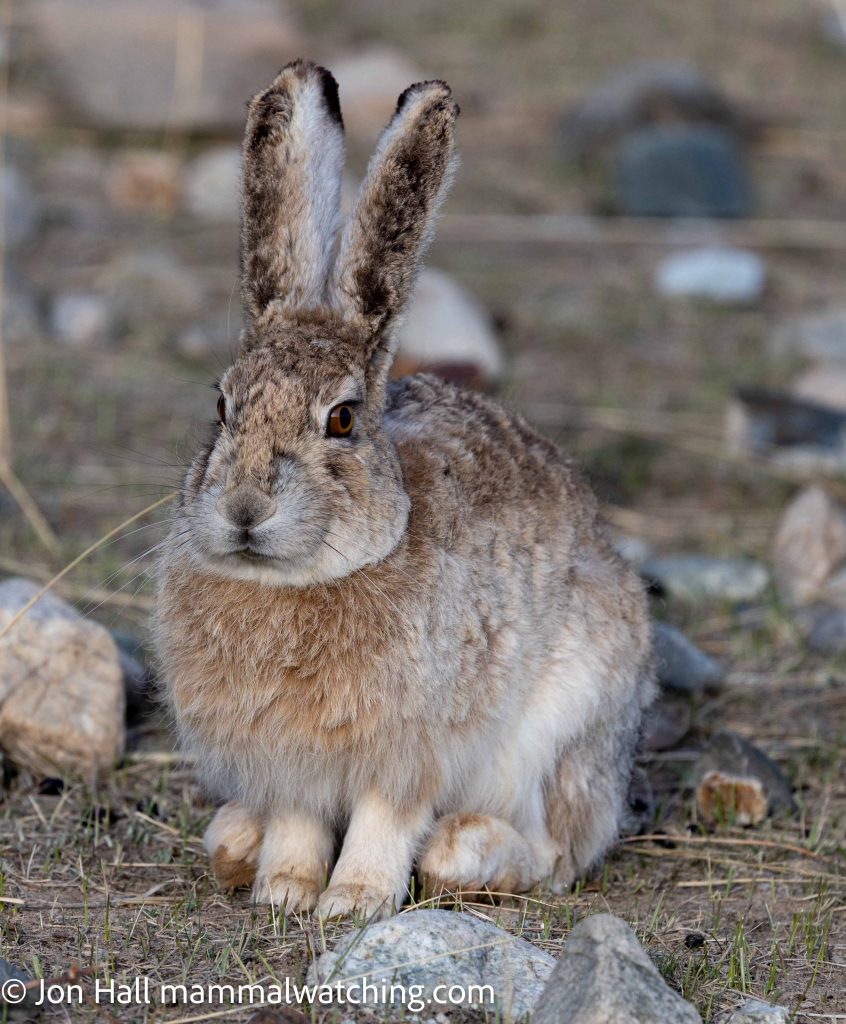
Woolly Hare (Lepus oiostolus)
What a place! If you want to see a Snow Leopard then Gouli is possibly the most reliable place on the planet to see one that I know of, and also one of the most comfortable. The 90-minute drive each way to the valley is a bit of pain, but then so is camping at 4,000 metres in the Ladakh winter.
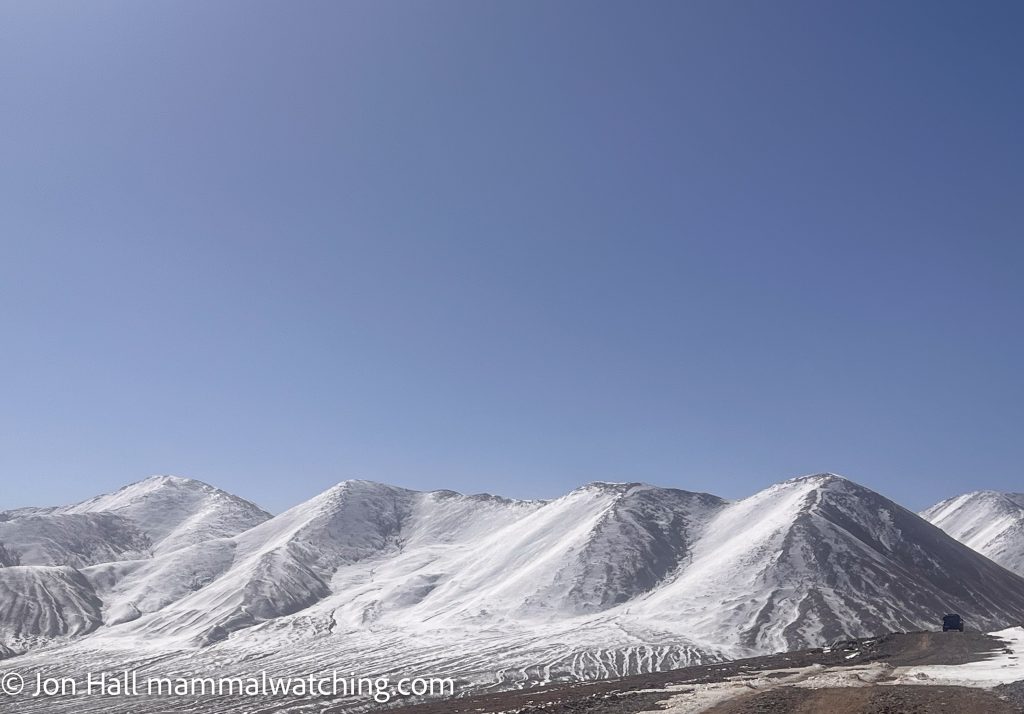
For photographers – particularly those wanting Lynx and Pallas’s cat – then March this year was excellent. People were seeing five or more Pallas’s Cat each day, and the Lynx and her cubs were daily too. I’m tempted to go back next March now I know how easy it is to visit (with a Chinese speaker of course).
I got one lifer out of the trip. Each morning at 5.30 we passed through a small village here on the way to the valley. And each morning Yiqian spotted one or two rodents on the road next to cropland in the village. He’d seen many more of them in March and had photographed one well enough to confirm they are Ladakh Tibetan Hamsters (Urocricetus lama).
I briefly saw one on our last morning drive to the park that we picked up in the thermal. With just a little more time it would have been quite easy to photograph one of them. But it’s hard to find even a little more time when you are leaving your hotel at 5:15am every day and returning at 11pm.
White-lipped Deer are often seen a bit further along this road but, again, there was not really any time to search for them. Other than the Lynx the only carnivores we missed were Red Fox, seen occasionally, and Northern Dholes, seen once or twice a month.
The Qilian Mountains
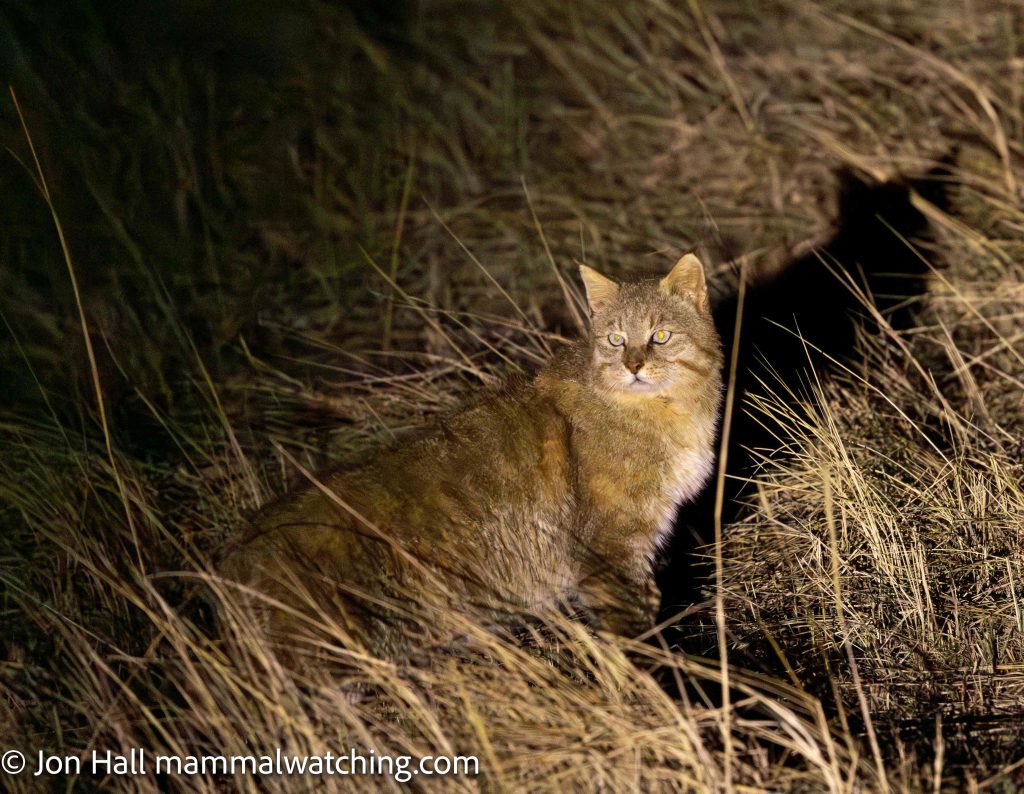
Chinese Mountain Cat (Felis bieti)
After a night luxuriating in the bright lights of Xining – complete with beer, french fries and hotpot – we drove north to the Qilian Mountains in search of Chinese Mountain Cats.
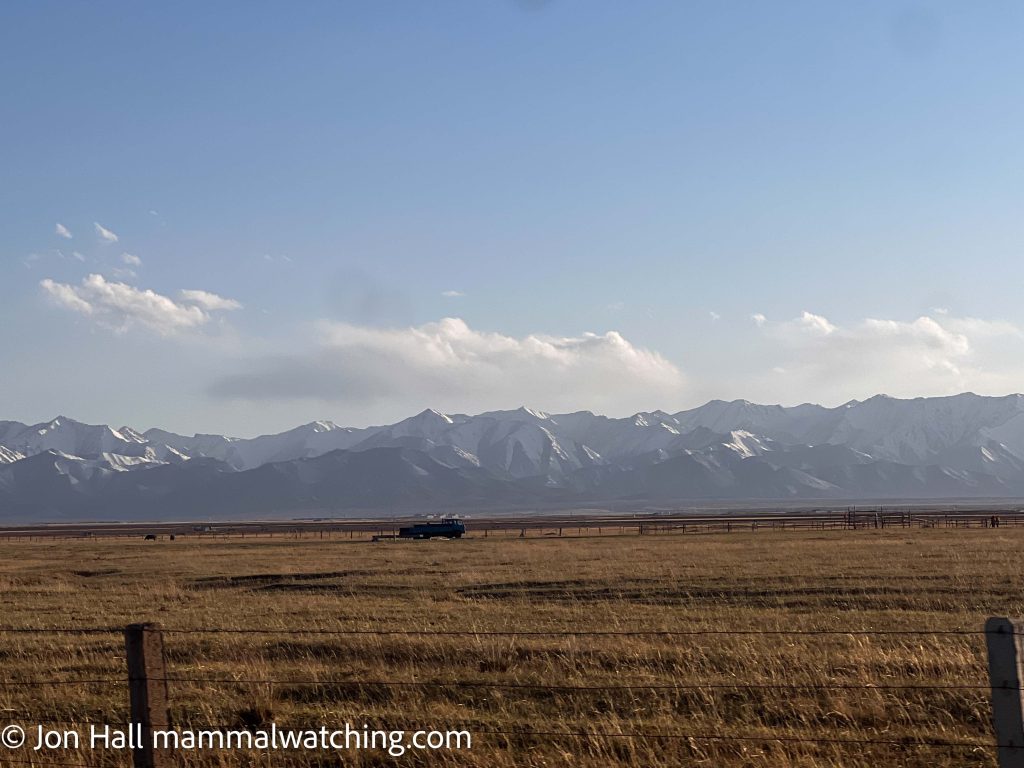
We drove north through breathtaking scenery for four hours. This entire area of montane grassland is great for the cats, according to Yiqian.
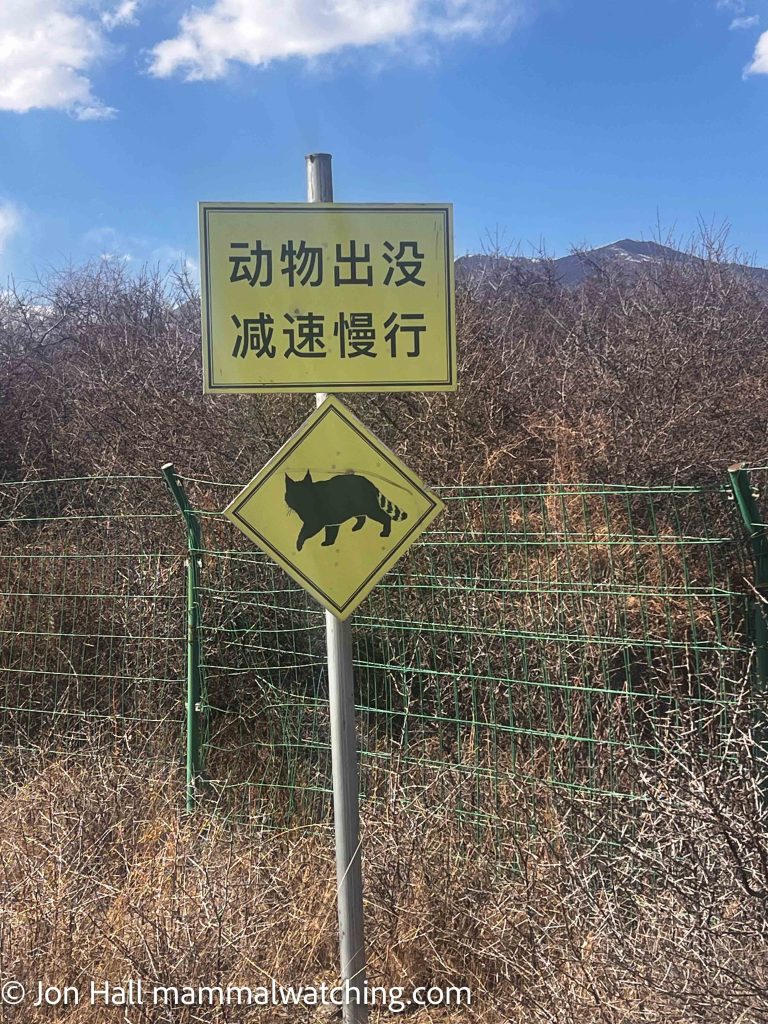
In particular this area is excellent and there is even a Mountain Cat crossing sign on the highway.
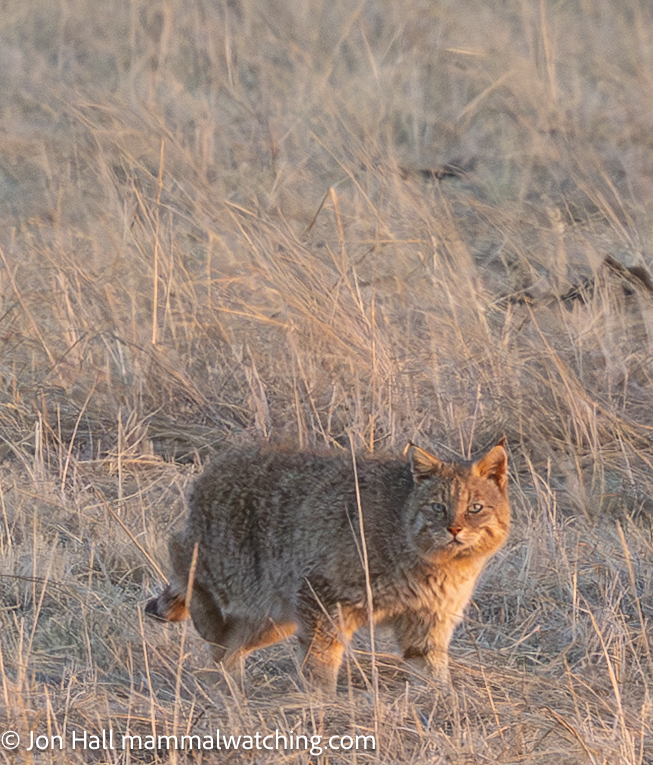
Chinese Mountain Cat (Felis bieti)
We spent the night searching around here (I think – once again I am guessing) and saw a Chinese Mountain Cat before sunset and another while we were spotlighting. But all of this long stretch of road through the grassland near the mountains is good I think.
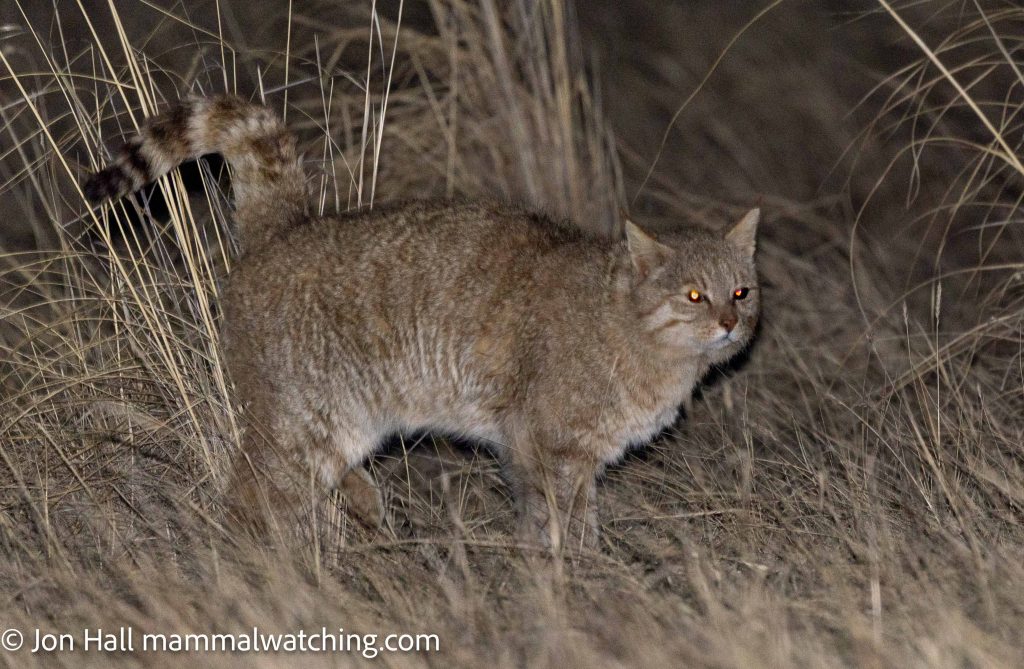
Chinese Mountain Cat (Felis bieti)
The cat seemed unconcerned by our car and didn’t seem bothered when I got out of the vehicle to take more photos.
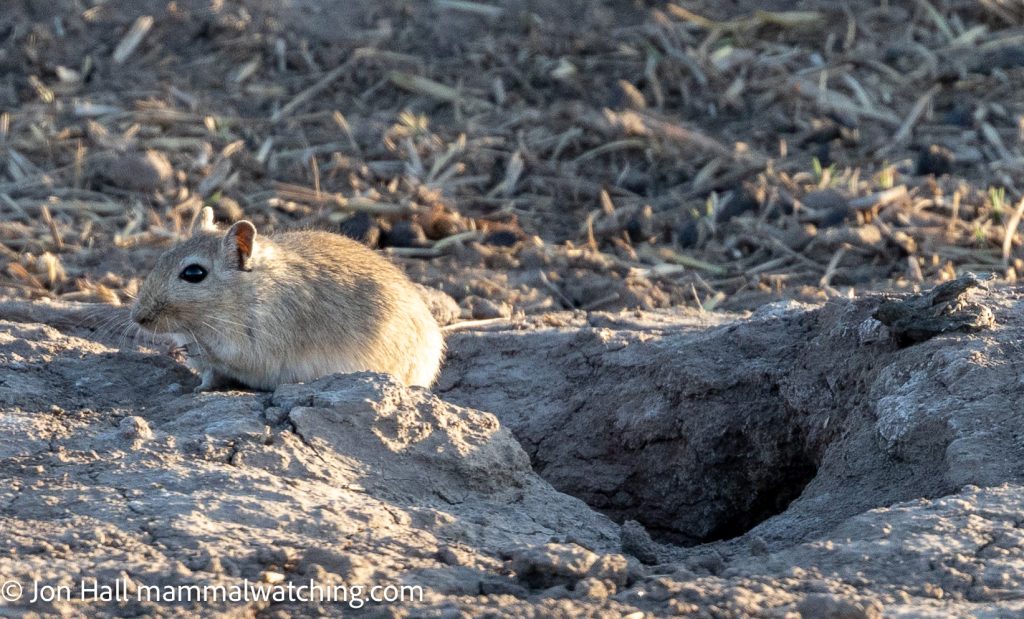
Great Gerbil (Rhombomys opimus)
Great Gerbils were also common along the road in the late afternoon. Other mammals included a herd of distant gazelle, a herd of Blue Sheep and a few Himalayan Marmots. And, dead on the road, two Steppe Polecats and an Asian Badger.
We had planned to visit a nearby area that might have been good for Lynx, but the road was surprisingly rough, and we doubted whether the tyres on our little SUV would have survived.
We’d planned for two nights here, but happy with the Mountain Cat, and dubious about the chances for a Lynx, we opted to return towards Xining for our last night to search for Chinese Giant Flying Squirrels.
Beishan, Huzhu County
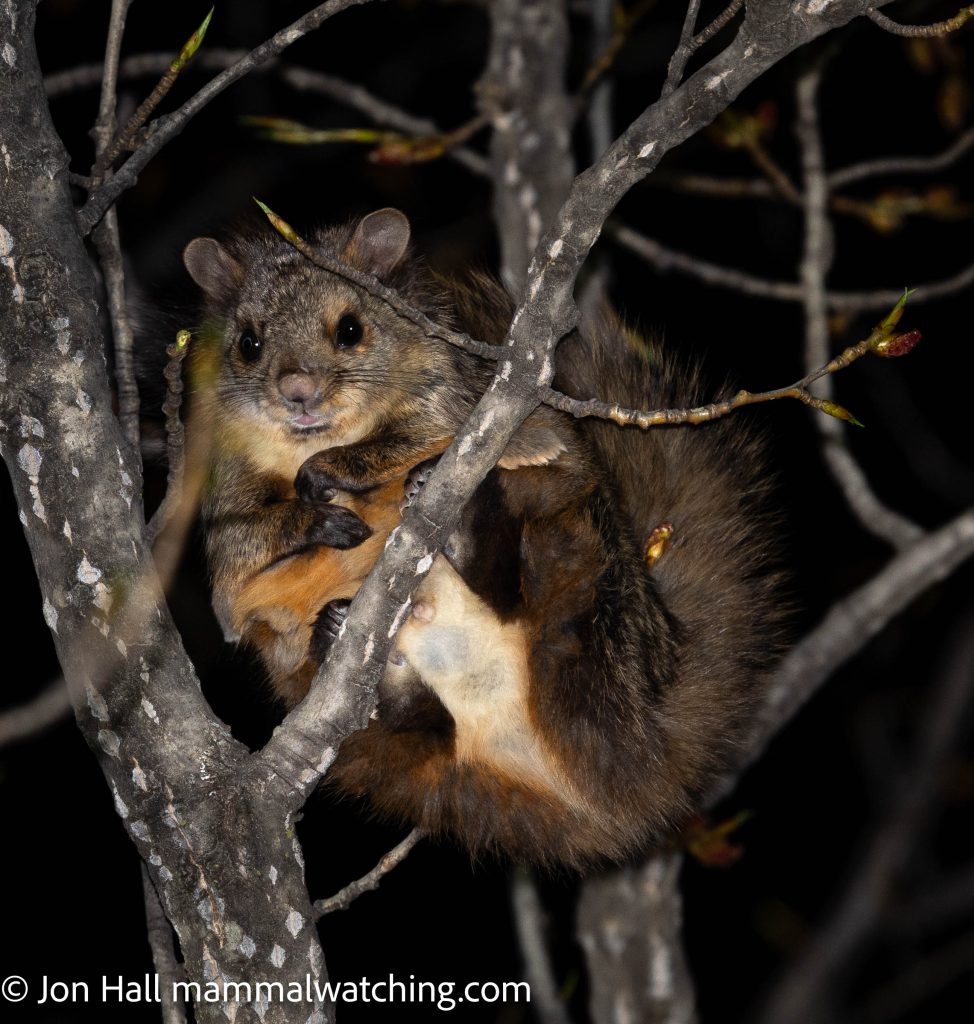
Chinese Giant Flying Squirrel (Petaurista xanthotis)
We arrived at Beishan, which Yiqian described as a ‘touristic area’, just after 7pm. It’s only 90 minutes from Xining airport. The place was deserted: just one hotel and restaurant open. Apparently summer is a busier time. I didn’t understand exactly why it is popular with tourists: but presumably they are drawn to the scenery rather than the mammals.
The valley is a mix of broadleaf and conifer forest, interspersed with smallholdings raising sheep and cows.
Yiqian’s friends had told him that Chinese Giant Flying Squirrels are ‘sometimes easy’ to see here. But – here’s the catch – ‘sometimes not’!
They gave him precise instructions to search a stretch of road (here) and during an hour’s night drive we saw two Chinese Giant Flying Squirrels. The second gave stellar views.
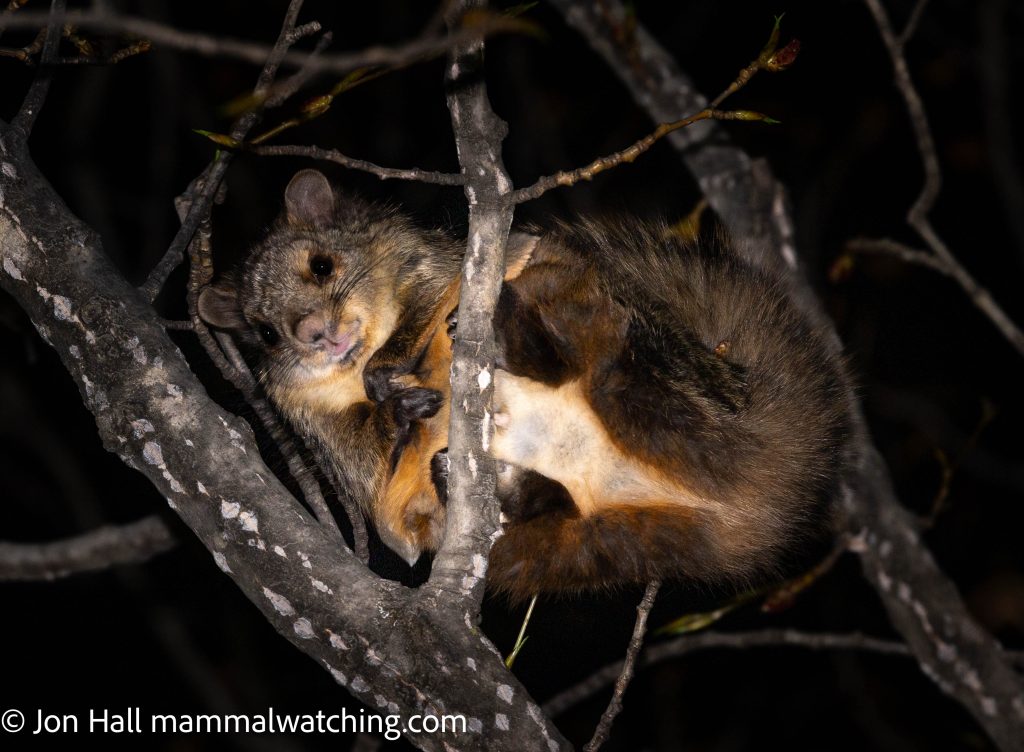
Chinese Giant Flying Squirrel (Petaurista xanthotis)
This was a lifer for both of us and a species for which there are few pictures I’m told.
Siberian Flying Squirrels are also reported here. Yiqian may have picked one up in his thermal but couldn’t get onto it.
The next morning, we squeezed in an hour searching unsuccessfully for Moupin Pika before I left for the airport. Another of Yiqian’s network had seen two of them next to the river.
Yiqian dropped me at the airport to take my flight south to Nanning for the next stage of my China trip, and then he drove to the station to catch a train home to Shanxi province.
Thank You
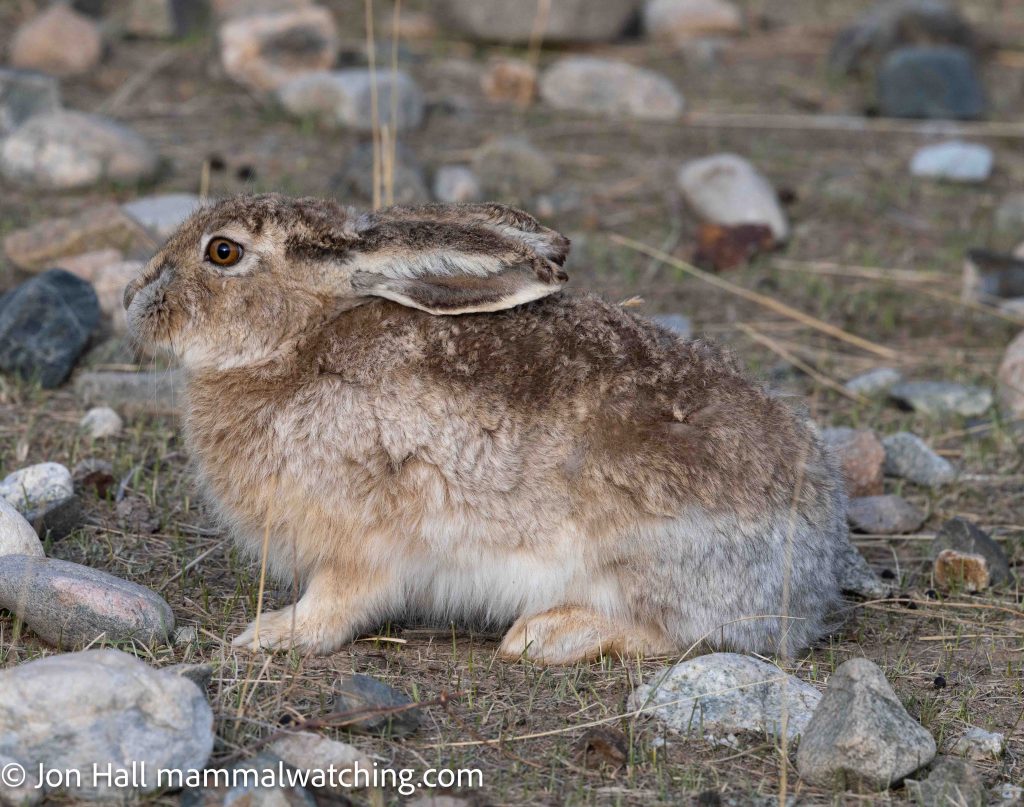
Woolly Hare (Lepus oiostolus)
Another enormous thanks to Yiqian. He may love this part of China, but by the end of this trip and our Yunnan one he’d spent 16 days with me! That is about 14 days more than most people can stand. Not only that but he extended his time with me – despite needing to get work done – to make sure I saw the mammals I was chasing. He truly is a mammal lord. Thank you too to Rou Bao in Gouli for finding a Lynx for me, even if we missed it. I hope to return next year in March for a few more days.
You can read more about Yiqian – mammal lord – at the end of my report of our trip through Yunnan that preceded this trip.
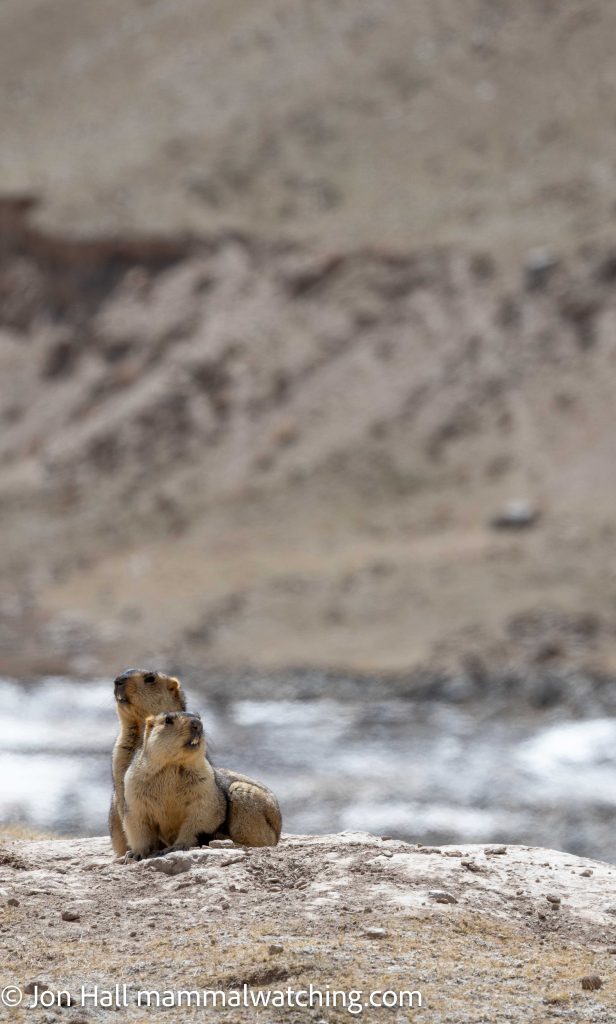
Himalayan Marmot (Marmota himalayana)
Trip List
Woolly Hare (Lepus oiostolus)
Plateau Pika (Ochotona curzoniae)
Chinese Giant Flying Squirrel (Petaurista xanthotis)
Himalayan Marmot (Marmota himalayana)
Ladakh Tibetan Hamster (Urocricetus lama)
Great Gerbil (Rhombomys opimus)
Asian Badger (Meles leucurus)
Altai Mountain Weasel (Mustela altaica)
Gray Wolf (Canis lupus)
Tibetan Fox (Vulpes ferrilata)
Chinese Mountain Cat (Felis bieti) – lifer
Pallas’s Cat (Otocolobus manul)
Snow Leopard (Panthera uncia)
Kiang (Equus kiang)
Mongolian Gazelle (Procapra gutturosa) (?)
Tibetan Gazelle (P.picticaudata)
Blue Sheep (Pseudois nayaur)
17 species and 3 lifers (in bold)
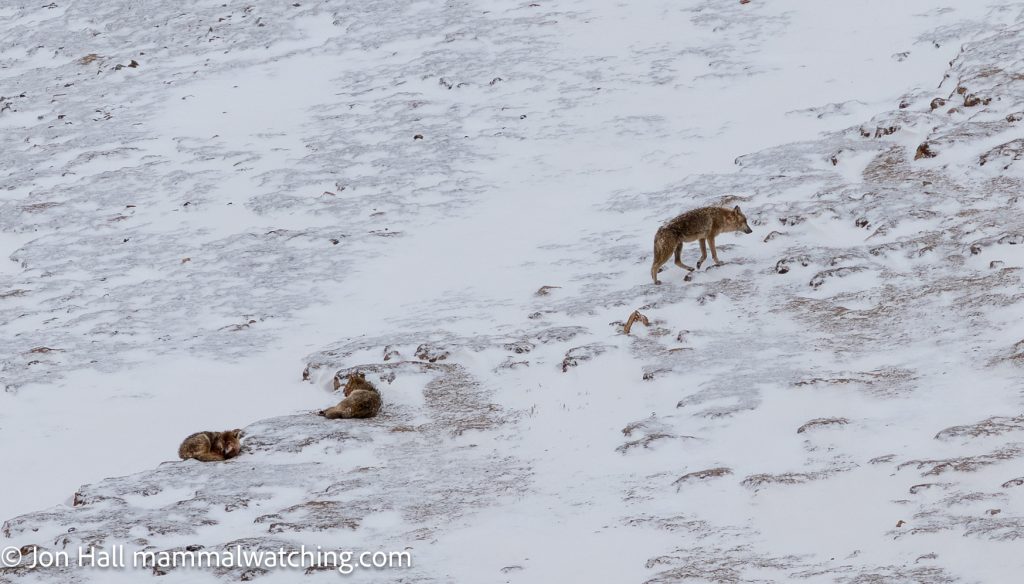
Wolf (Canis lupus)

Post author
19 Comments
-
-
-
charleswhood
Just to link my brief notes to this report, I was here in October 2025 and now have more information. (Short version, we had similar species to Jon, including badger and weasel.) The completed Ornis Company trip report is now available at https://www.ornis-birding.com/trip-reports and then scroll down to find the downloadable pdf, “China: Mammal Highlights 16 Oct – 01 Nov 2025 Joachim Bertrands”. Good pictures and reliable bird notes. / Charles Hood
-
-
-
Pieter de Groot Boersma
Hi Jon,
How do I contact this Gouli guide Rou Bao? Or how do I arrange a visit? I have 11 days at the end of February 2027, and I was thinking Ladakh for Snow Leopard. But Gouli seems a better option with Lynx year round and Pallas’s Cat better in winter. Is February also a good time to visit Gouli for the Snow Leopard? I reckon I need a 4wd myself, or is a normal SUV sufficient? Dates are Thursday 18th of February (leaving Amsterdam in the evening) until Monday 1st of March.
Anyone interested to join? Maybe also Chinese Mountain Cat, Yak etc. if time allows.
-
Jon Hall
Hi Pieter. Rou Bao is not a guide per se. He runs the Goulli Valley “tour” but doesn’t drive people around or organise your stay. So you are gong to need a reasonable 4wd with serious tyres. You can’t drive in China either so you will need a driver who speaks English and/or a guide to get you the valley each day and communicate with Rou Bao. I suggest contacting the company Great Wild Asia who can set that up for you and you will get a mammalwatching discount too with them. Email me and I can give you their contact. Feb should be very good for the cats.
-
-
-
-
Pieter de Groot Boersma
Hello AntenneZoo! Not too late, we are with two now (another person has joined in via mammalwatching.com). Other persons still haven’t committed yet. I would just love to have enough people, meet via Zoom and if all is well go for it!
But as a Biology teacher I have only these fixed dates: 18th of Februari untill the 1st of March, possibly I’m able to add another day before or after.
Does it possibly fit your itinerary?
-
-
robdelaney
Hi Pieter, I may also be interested in the trip. Was keen for May but if one is already set up, it makes sense. Please email me details: robdelaney84@gmail.com
-
-
-
-
Chow YiYang
Hi Jon, thanks for the wonderful report, it really helps me decide where to go for snow leopard.
Currently I’m planning to go to Gouli Valley in December for a week, maybe longer. As of now, I’m still trying to find a partner or two. I’m very flexible for the dates I’m planning to go, as long as it’s December. Feel free to contact me, yiyangchow@gmail.com if you are interested and available during December. We can work out the details from there. 🙂


Leave a Reply
You must be logged in to post a comment.
Sebastian Kennerknecht
Wow, those are amazing sightings Jon, well done!