

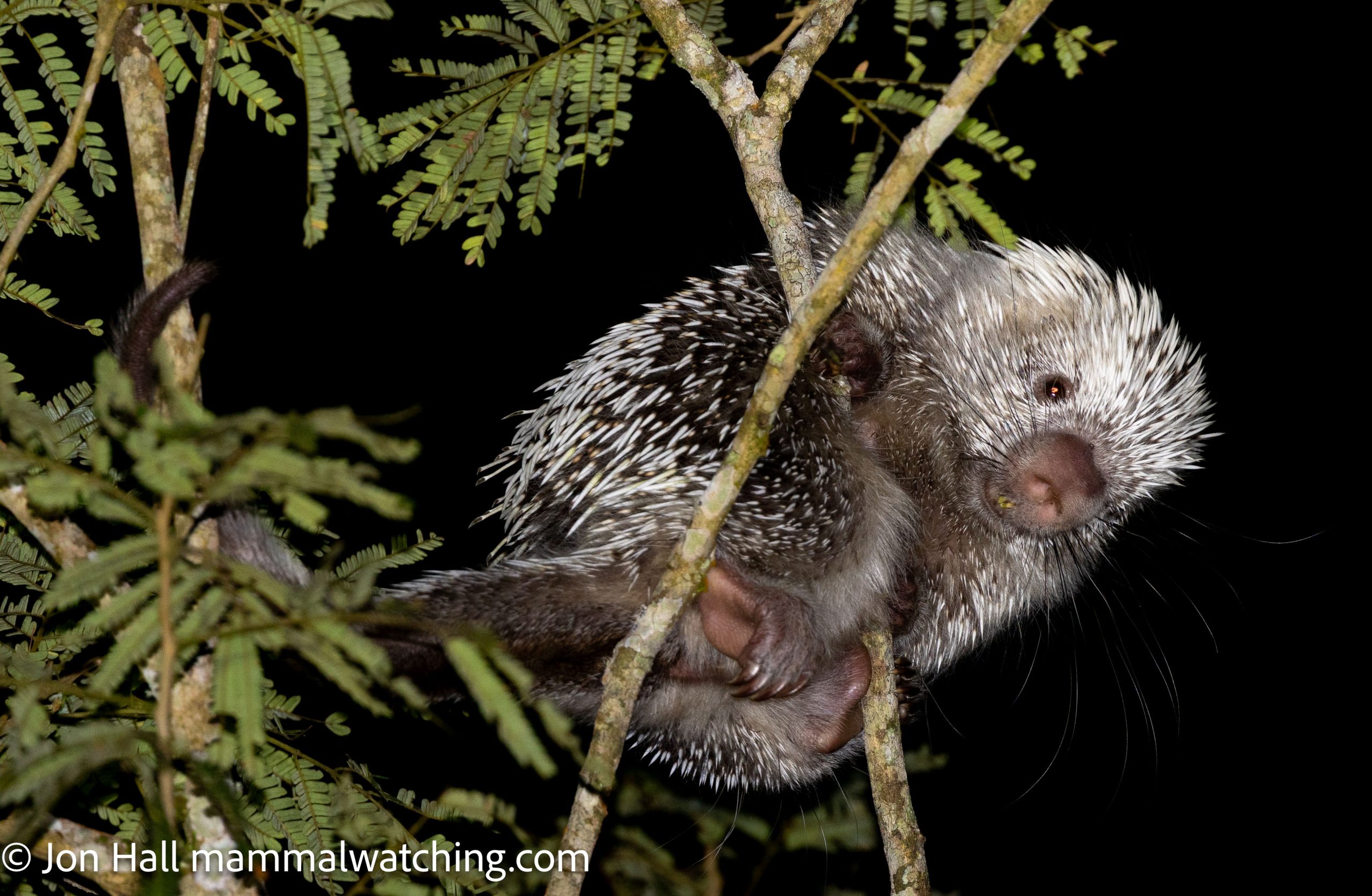
Primates and Porcupines Tour – North East Brazil, 2026
With Kevin Bryan, Daniel Dahan, Wiliam Henri Lewis and Ellen Linton. Guides: Regina Ribeiro and Jon Hall
I have just returned from 3 weeks in northeast Brazil, leading a Primates & Porcupines trip with Regina Ribeiro for Miru Adventures. This was my first gig as an official, paid, tour leader. I wasn’t sure how much I – or the clients – would enjoy a trip if I was leading it. But I had a great time. I think we all did.
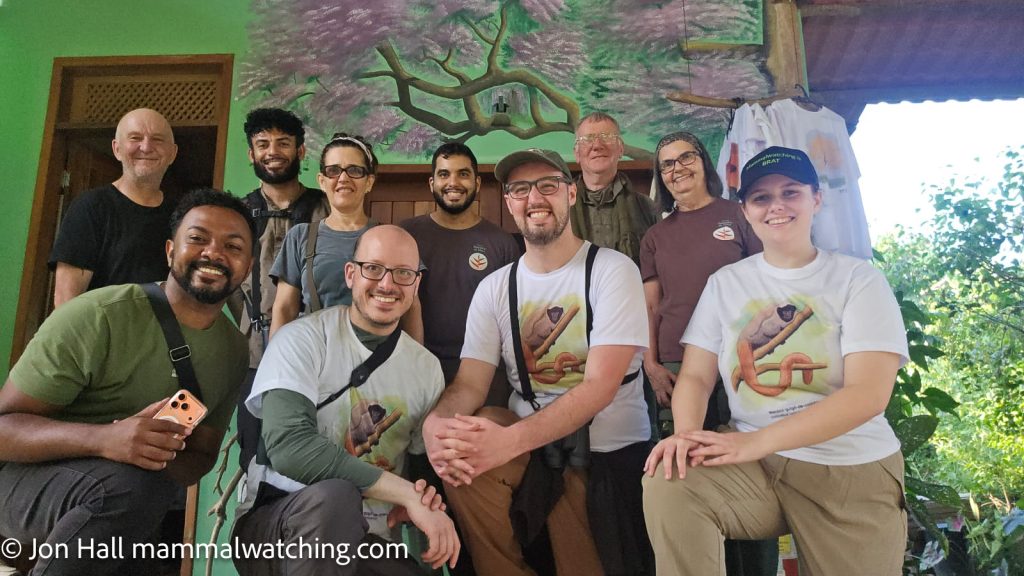
I believe I have discovered an immensely simple three-step winning formula for a great trip.
- Find a superb local tour leader. Regina ✔
- Only allow top quality and very fun mammalwatchers to join the group. William, Ellen, Kevin and Dan ✔✔✔✔
- Pack lucky hat ✔
The rest of the trip took care of itself.
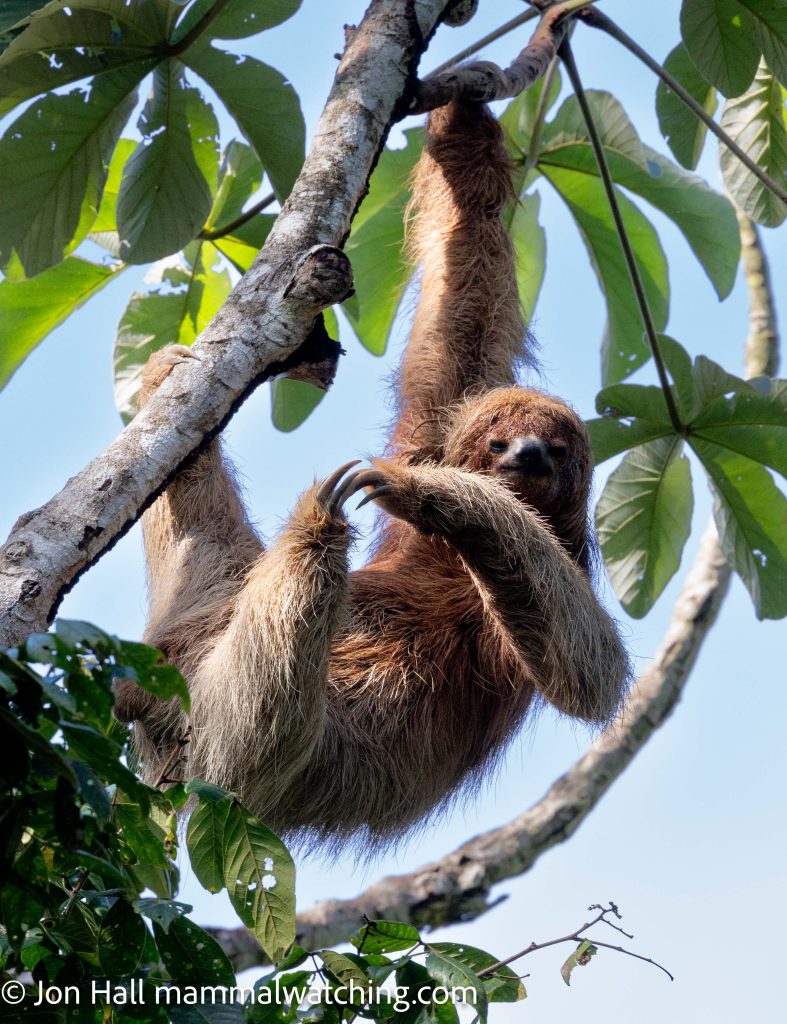
Northern Maned Three-toed Sloth (Bradypus torquatus), Praia do Forte
It is fair to say that the trip was a spectacular success from a mammalwatching perspective. We nailed every single target species, and we all had great views of just about all of them.
It was also a lot of fun: I don’t think I have ever laughed so much on a trip. The group – and our fabulous driver Reginaldo – made sure of that. Obviously mammalwatching is generally far too serious and important to be a cause for any emotions other than long periods of anxiety followed by momentary joy. But when you are seeing all of your target species I believe it’s acceptable to smile, maybe even laugh, from time to time.
The Itinerary
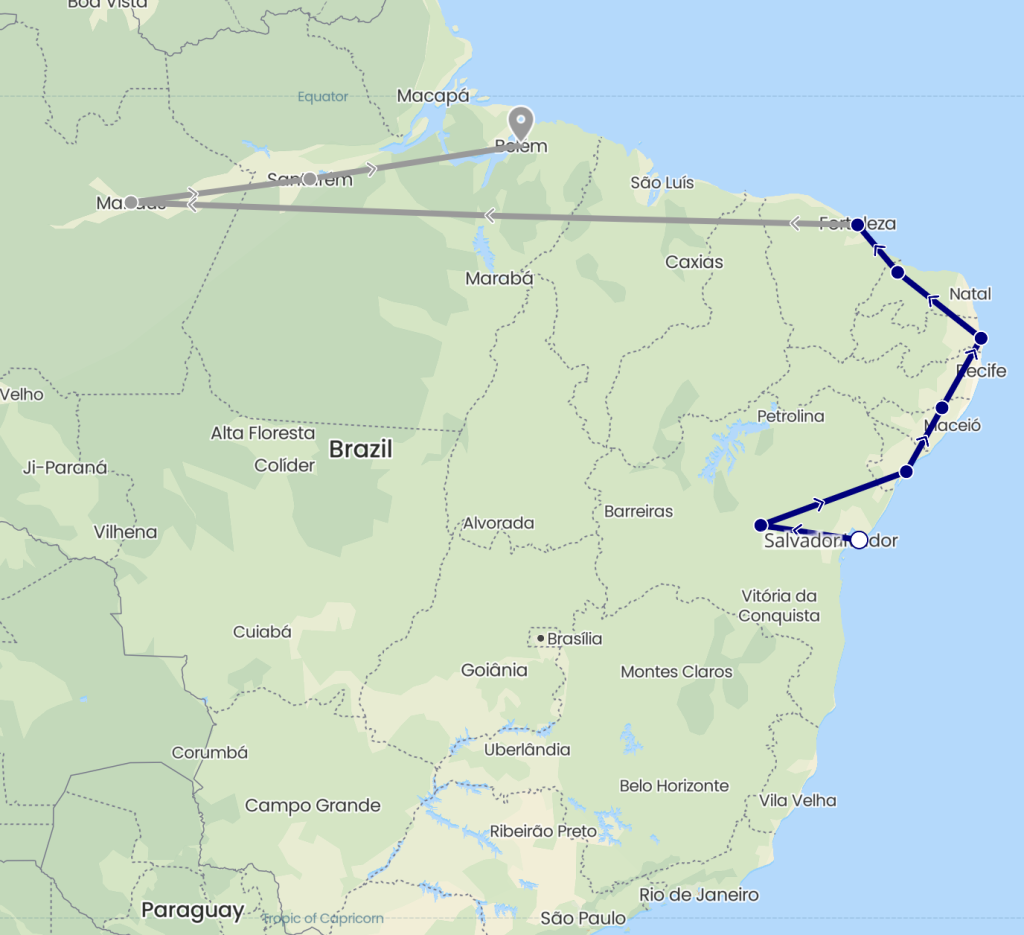
Regina and I sketched out an initial route that was partly inspired by Cheryl Antonucci’s envy-inducing report from 2023 as well as Michael Kessler’s 2018 report. It was built around a set of Atlantic Rainforest endemics, including four endemic porcupines, Northern Maned Sloth and some rare titi monkeys and capuchins. Regina and Marluce Boute from Boute Expeditions, then turned the route into a detailed itinerary, helped by Sam Riley and the team at Miru Adventures.
In hindsight there is very little we would change. The combination of great local guides – and they were all great – plus a solid mammalwatching team on the trip meant we had exactly the right time in each spot to find what we were searching for.
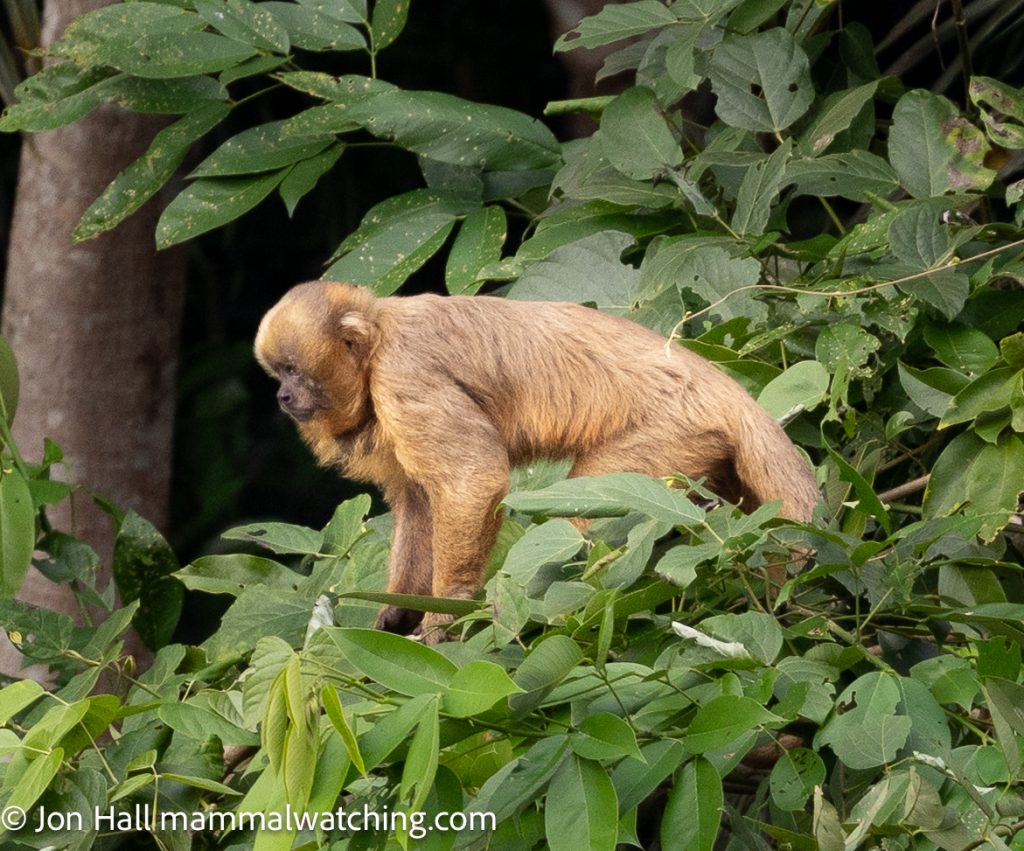
Blond Capuchin (Sapajus flavius), João Pessoa
We met in Salvador in the state of Bahia and from there zigzagged up through northeast Brazil to finish in Fortaleza. Most of the group continued for an Amazon extension to Santarem and Belem.
Day 0 – Meet Salvador
Day 1 & 2 – Praia do Forte
Day 3 & 4 – Lençóis
Day 5 & 6 – Aracaju
Day 7 – União dos Palmares
Day 8 & 9 – João Pessoa
Day 10 – Mossoro (overnight travel stop)
Day 11 & 12 – Baturite
Day 13 – to Fortaleza (main tour ends)
Amazon Extension
Day 13 – fly to Manaus
Day 14 & 15- fly to Santarem and stay Alter do Chão
Day 16 & 17 – fly to Belem
Day 18 – Tour ends
For the main tour we travelled in a comfortable 15 seater minibus driven by the wonderful – and fearless – Reginaldo. Reggie has driven 60+ bird tours in the region. He knows the sites and is great at spotting mammals. He found several species for us while he was waiting at the bus and we were failing to see them along the trails.
In late May/early June the weather was comfortably cool. The rains were just beginning but the weather didn’t interfere with our plans.
We drove about 3000km for the main tour, although we explored only a small corner of northeast Brazil. Brazil is big! The drives between sites were typically 6 – 8 hours long. But the bus was comfortable and the journeys gave us the opportunity to catch up on sleep and emails in between long days in the field. We were entertained by Daniel ‘communicating’ (I use the term loosely) with Reginaldo in the front of the bus. It turns out that when one person speaks broken Spanish and the other only Portuguese there is plenty of room for misunderstanding.
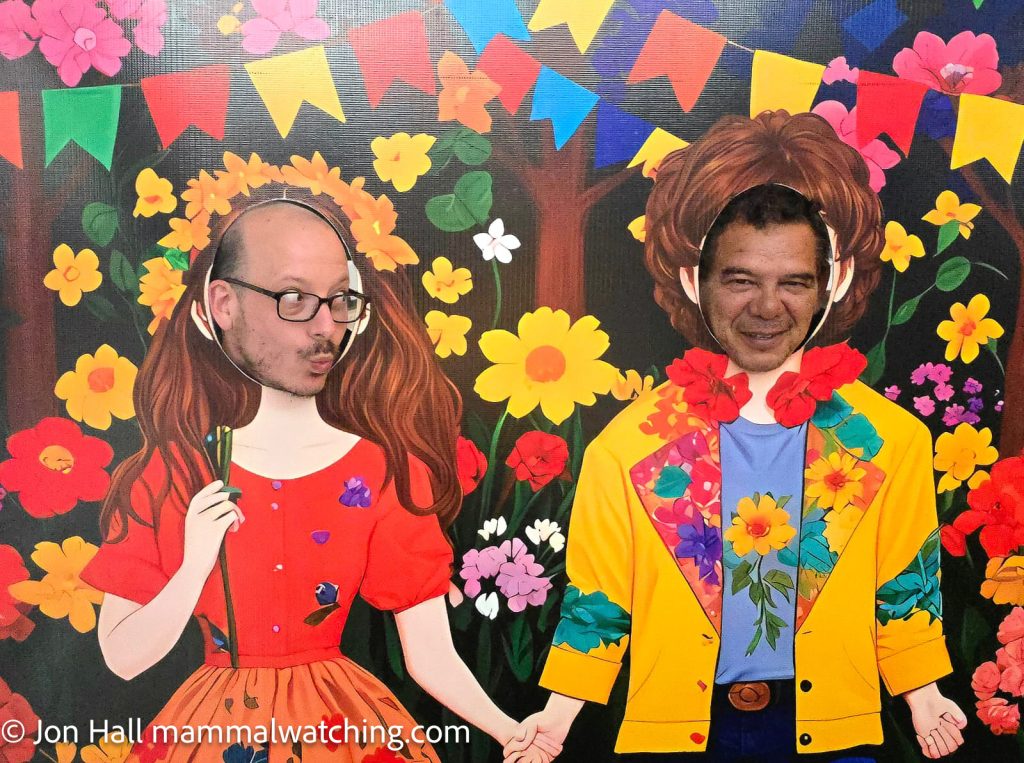
Daniel and Reggie. BFFs
Hotels and food were largely excellent. There was far too much freshly baked cake served for breakfast, which is impossible to refuse, and if there wasn’t cake there was pao de queijo, also impossible to refuse. I’m struggling to think of anything to complain about really other than the 2kg I gained.
Day by Day
Salvador and Praia do Forte, May 27 & 28
Aruá Wildlife Observation and Lodge
Most of us arrived in Salvador the night before the trip. We stayed at a small hotel close to the airport where they only thing slower than the elevator was the time it took to make Kevin’s salad. William arrived the following morning.
Ellen should have arrived too, but her flight from the USA the night before had been delayed. Her trip, the first on her own, was destined to become one of the greatest travel sagas since the Lewis and Clark Expedition. Let’s hear from Ellen
My first time flying by myself was going very well. I had handled checking my bag, security, and finding the most comfortable spot in the lounge like a pro. It was with smug satisfaction that I thought, “I am nailing it.” Looking back, I was filled with a naivety that would promptly be squashed. When the email came in that my flight to Sao Paulo was delayed by three hours, I was irritated but ultimately it wasn’t that big a deal. I didn’t realize it at the time but that would be the last time I felt any sense of peace for two days.
It was still worth my while to go check on the delay and find out more information, so I exited my cozy lounge corner and reentered what would soon become hell on earth to me: Dallas Airport. I watched as the departure time on my gate went from three hours delayed to 10 the next morning. Panic flooded my veins and I started
a frantic trek from desk to desk, begging for help from American Airlines while cursing my terrible luck. Hours later, after receiving advice from two agents somehow more dead inside than me, I entered my hotel room in Dallas, the city that answers the question: what if we turned a parking lot into a city?
So, Ellen-less, we le ft for Praia do Forte at noon and were checking into the lovely Casa De Praia Pousada on the beach an hour later.
Our focus for the next day and a half would be fragments of Atlantic Rainforest around the Aruá forest. Coe and Luciana run the tiny eco-friendly Aruá Wildlife Observation Lodge and the Instituto preguica de coleira (The Northern Maned Sloth Institute) which is working to protect the Northern Maned Sloth, its habitat and other wildlife from the Atlantic Rainforest here, which is one of the most threatened ecosystems on the planet: some 90% the whole biome has been lost. And it is still being hammered in the name of progresso. A stadium-sized slice of forest next to the sloth sanctuary had been cleared just 15 days earlier. The team had rescued 20 maned sloths and showed us heartbreaking pictures like this.
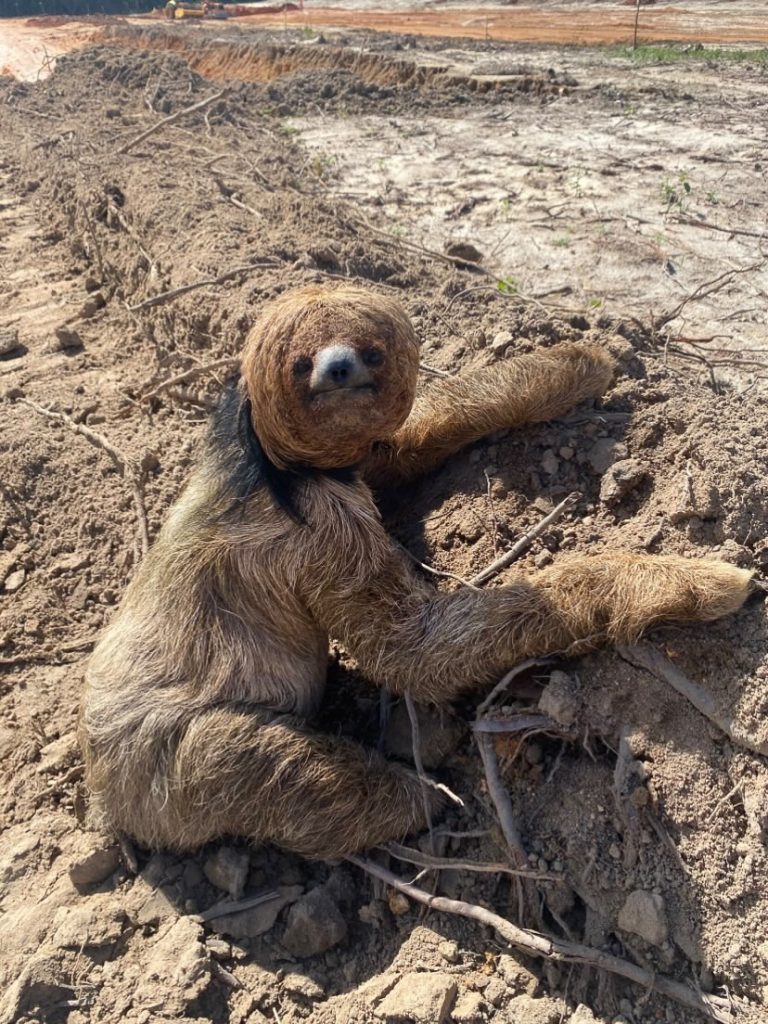
Northern Maned Sloth. Photo Instituto preguica de collier
Coe, from the project, was our guide and we went in search of our first mammals. We didn’t have to wait long: a few Common (White-tufted-eared) Marmosets put in an appearance before we’d finished our welcome coffee.
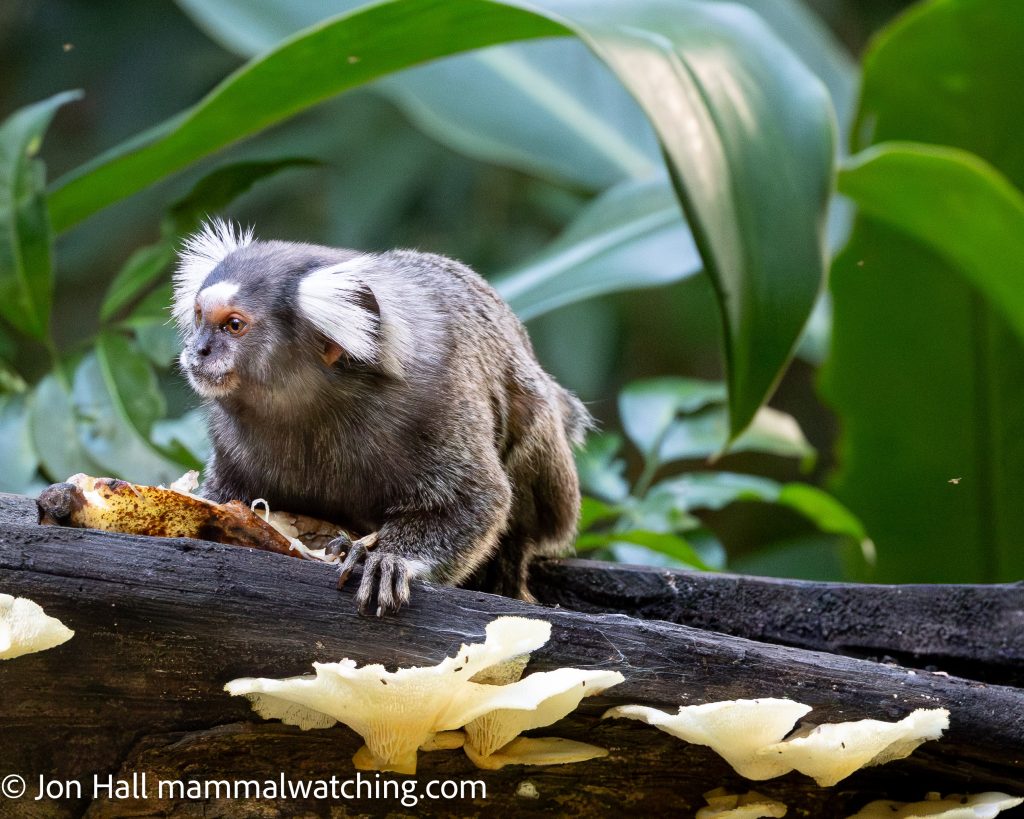
Common Marmoset (Callithrix jacchus)
We took a walk and Coe displayed a sixth sense for spotting sloths. We saw several and I completed my set of all seven sloths.
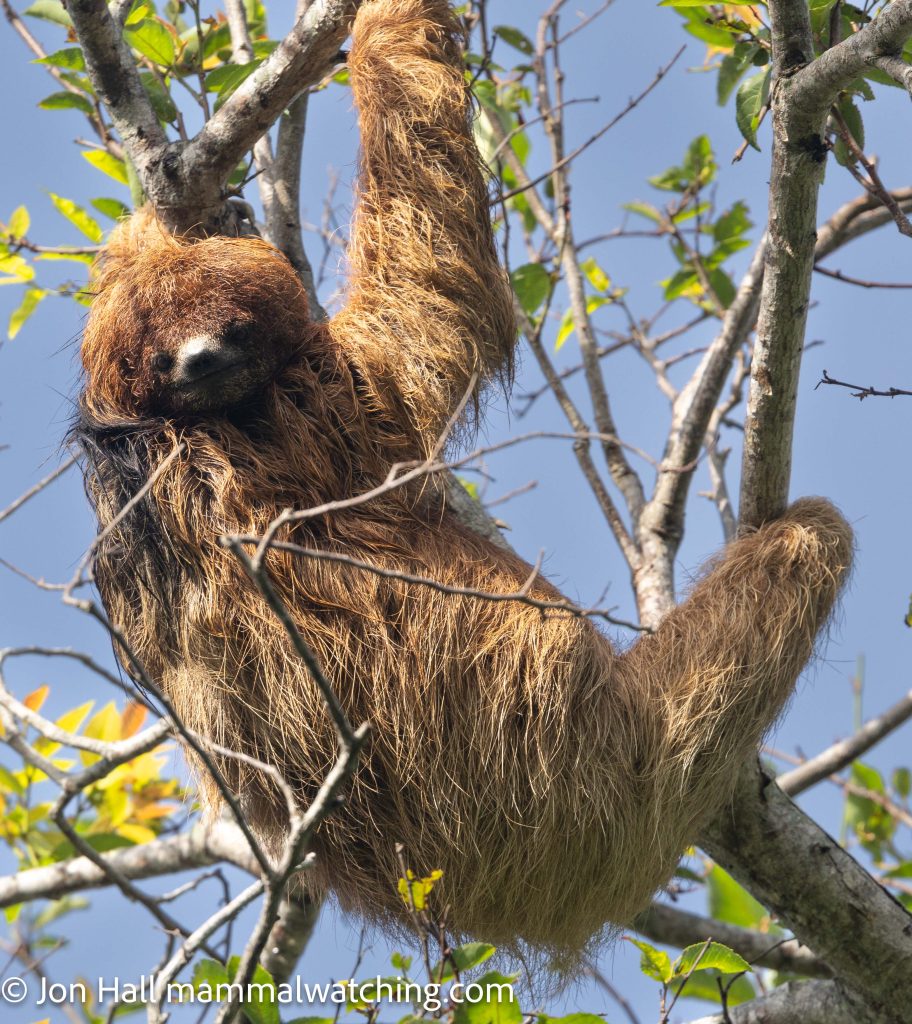
Northern Maned Three-toed Sloth (Bradypus torquatus)
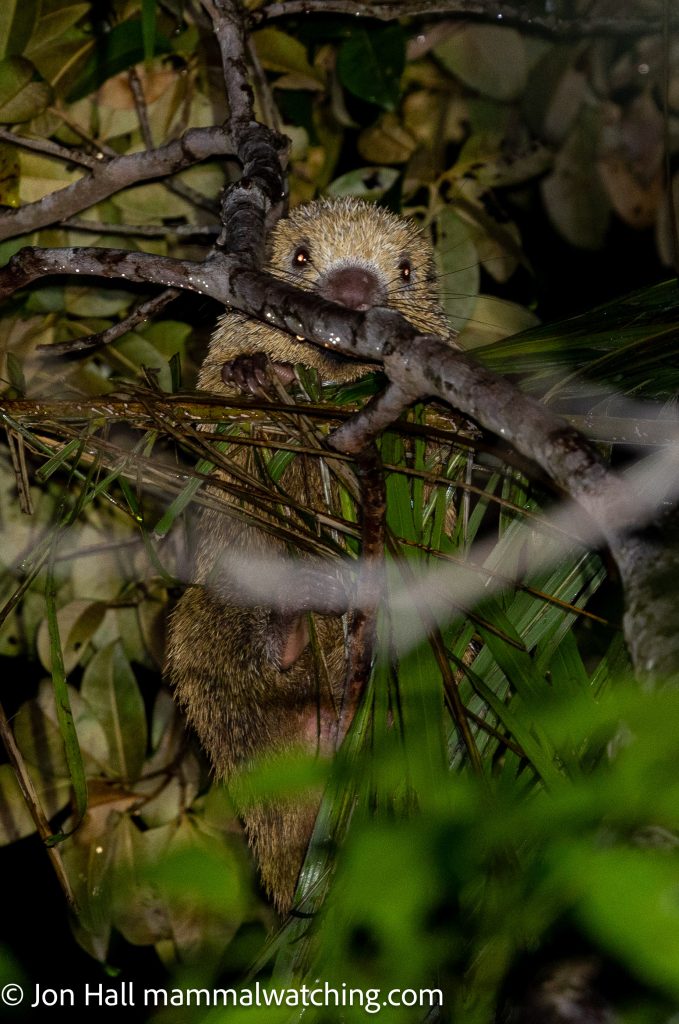
The other key species here are two porcupines: Bristle-spined (Broom-strawed) and Bahia Dwarf Hairy, both Atlantic Forest endemics.
The porcupines were no match for our thermal scopes, which are vital equipment in the world of competitive porcupine-spotting.
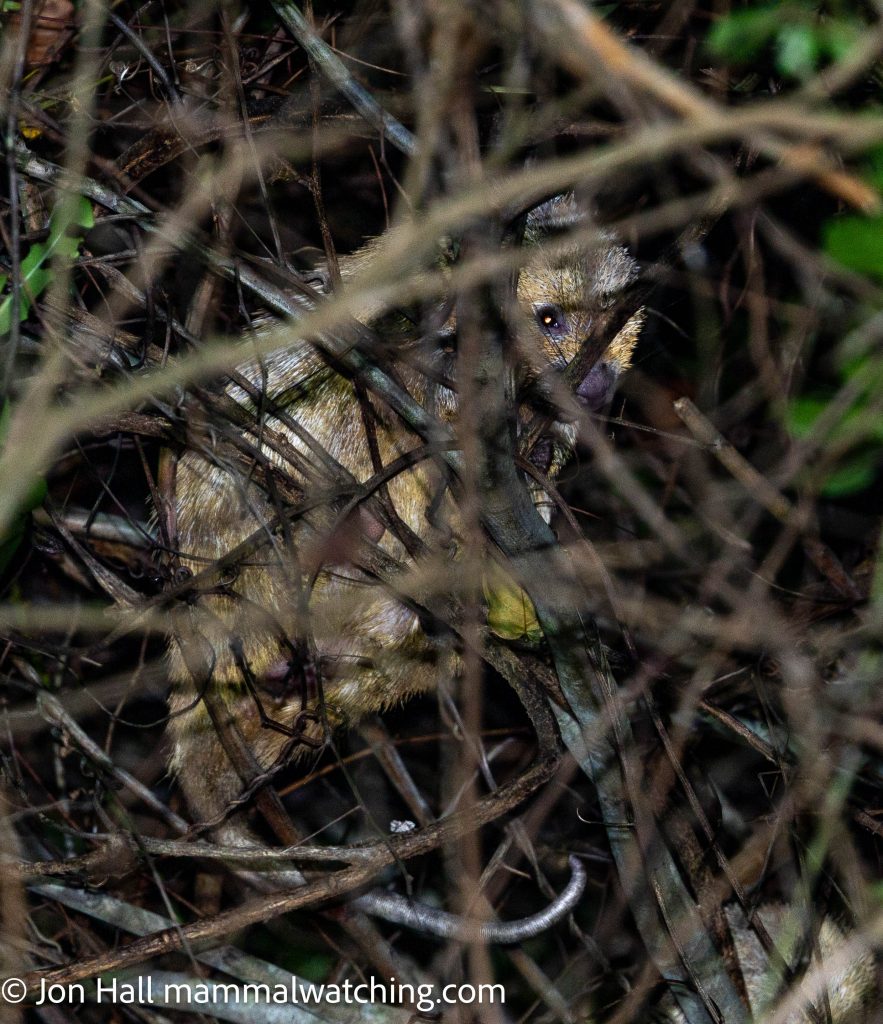
Broomstraw-spined Porcupine (Chaetomys subspinosus)
We saw both species within 30 minutes around the lodge grounds.
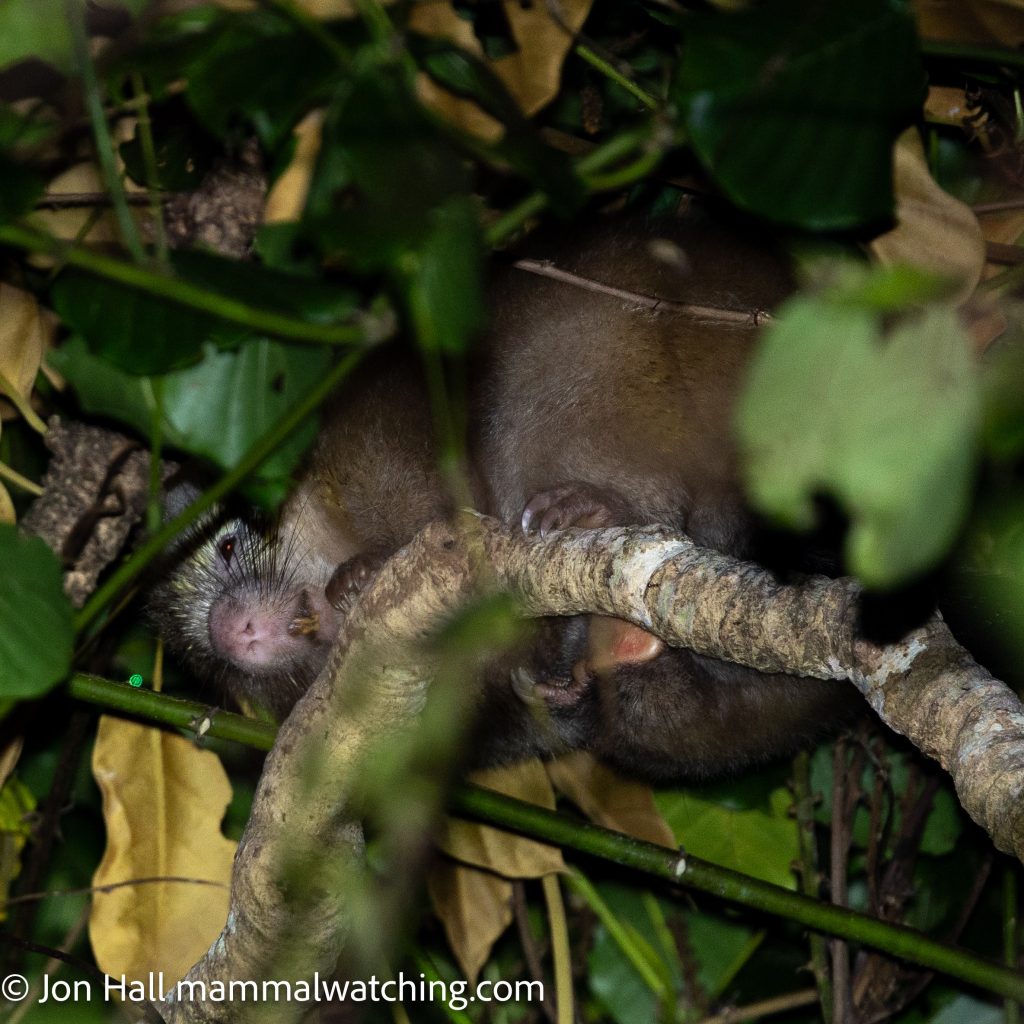
Bahian Hairy Dwarf Porcupine (Coendo insidiosus)
We also saw three mouse opposums that night, which is nearly as many as I had seen during the previous 20 years. I suspect we would have missed all of them were in not for our thermals. All of them appeared to be Linnaeus’s Mouse Opossum and the first posed wonderfully, frozen in the flashlight beam.
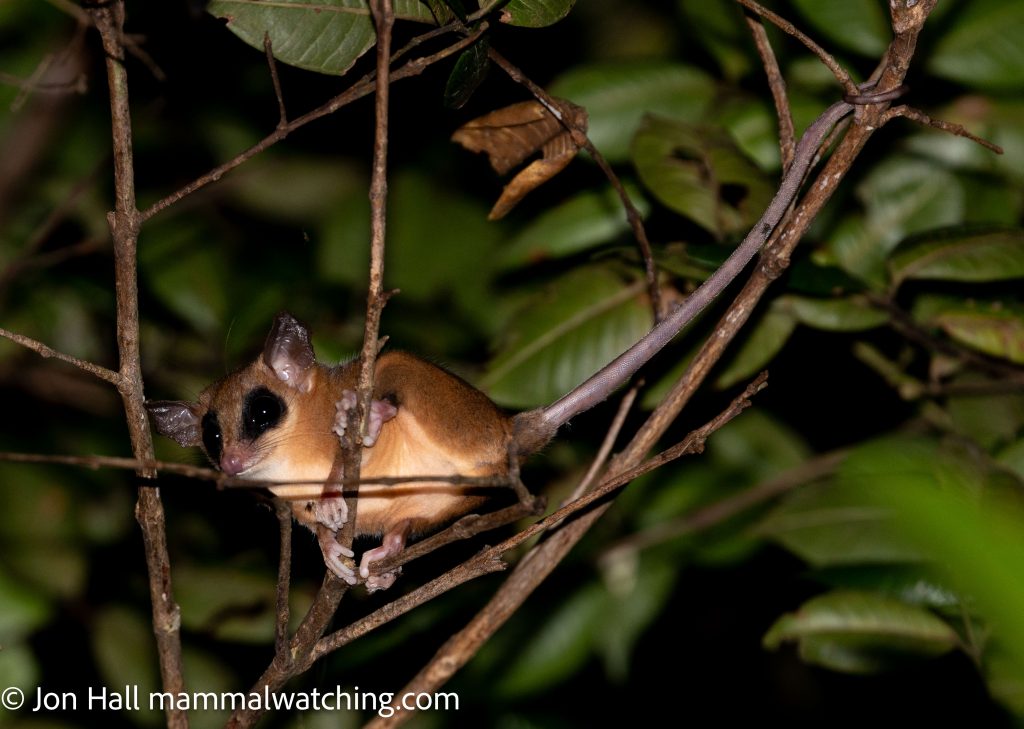
Linnaeus’s Mouse Opossum (Marmosa murina)
Meanwhile, Ellen’s journey had gone from bad to worse.
I awoke in Dallas after a fitful night’s sleep and after taking a deep breath thought, “At least I’ll be on my way today.” That comfort was quickly ripped away from me when I checked my email and discovered the flight had been delayed again, TO THE NEXT DAY! I accepted this new information with a shocking amount of calm, or perhaps I had just lost my will to live. With that knowledge, I rebooked onto a United Airlines flight leaving that night out of Houston.
With my flight from Dallas to Houston only taking place in the early afternoon, I spent the day running around Dallas Airport trying to convince American Airlines to send my checked luggage to United. (Spoiler alert: they did not send it to United and instead put it on a different plane to Sao Paulo leading to my bag arriving the day before me.)
Finally, the time approached for my flight to Houston… only for it to be delayed. With a sinking heart and a feeling of extreme dread, I realized that this delay would cause me to miss the Sao Paulo flight. In fact, when my flight touched down in Houston, the flight to Sao Paulo took off. And there I was again, in a hotel
room in another soulless Texas city, staring with dead eyes at photos of the sloths and porcupines I was missing out on. It was with a crushing depression that I went to sleep that night.
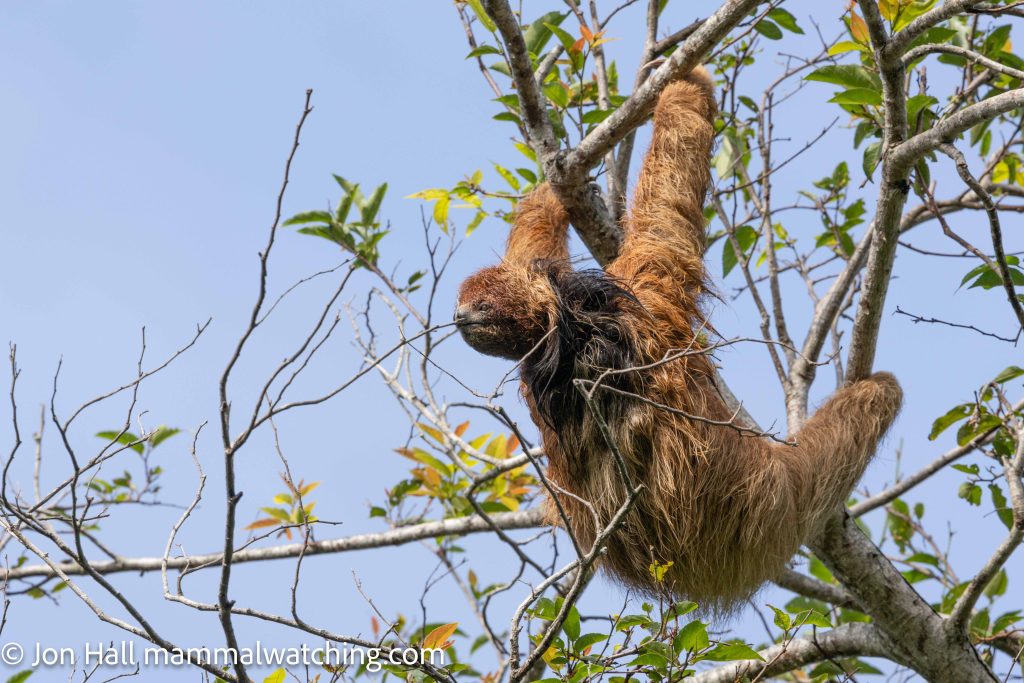
Northern Maned Three-toed Sloth (Bradypus torquatus)
We spent the whole of the next day with Coe and found multiple sloths. 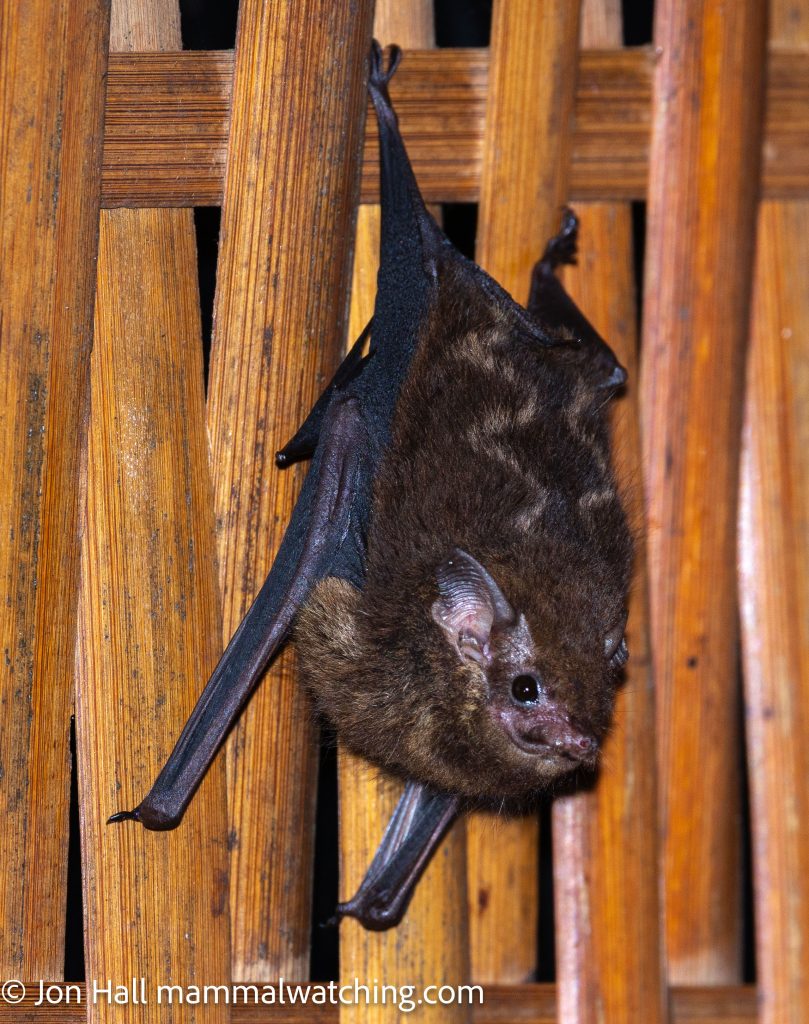
Greater Sac-winged Bat (Saccopteryx bilineata)
The other mammals comprised a few Greater White-lined Bats on a neighbour’s porch and a large group of South American Coatis, including these two youngsters who seemed to be enjoying some new found freedom.
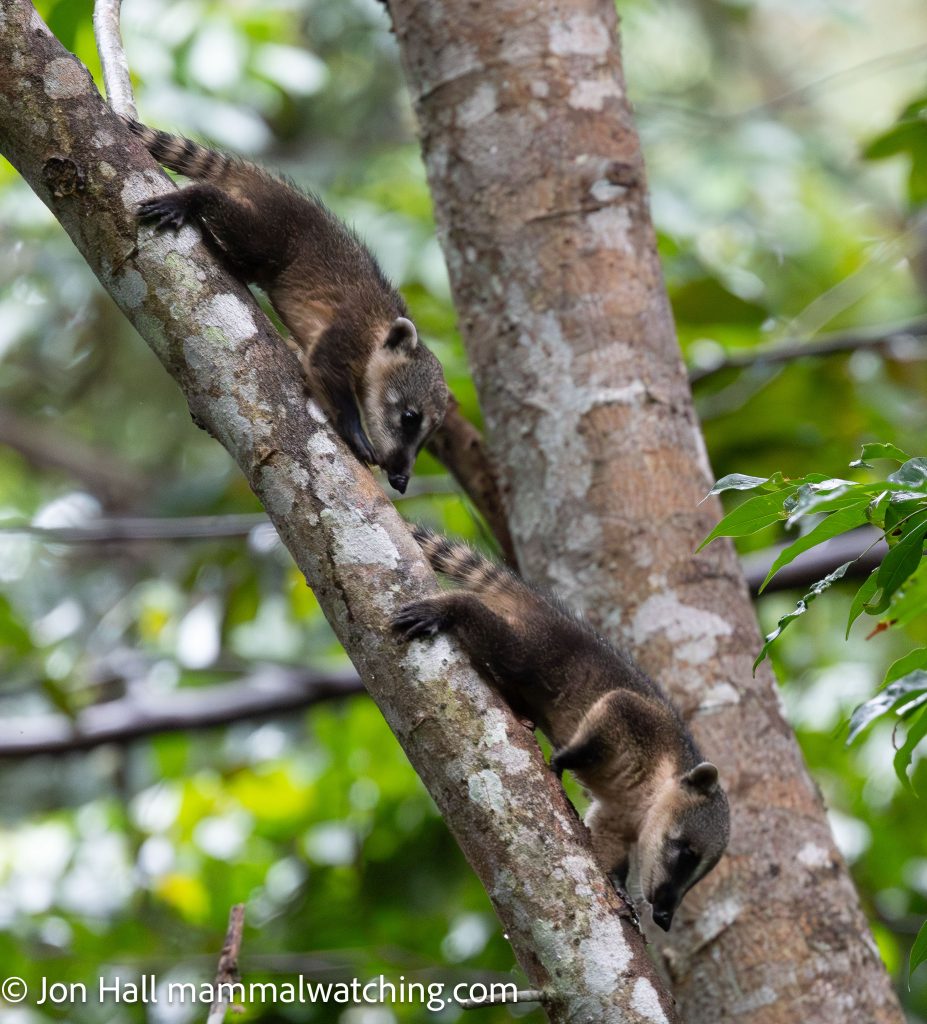
South American Coati (Nasua nasua)
We took a break back at the hotel in the afternoon for a rest and an ice cream and spotted marmosets in town looking for handouts from the many ice cream stores in town. And who can blame them. The ice cream was truly excellent.
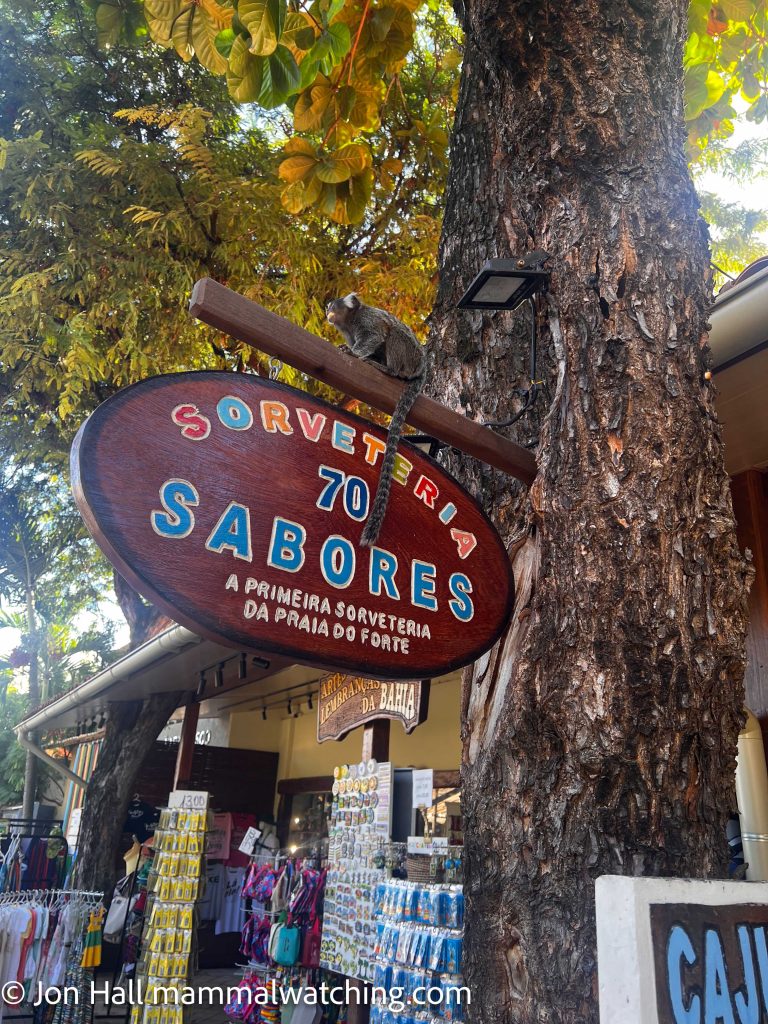
Common Marmoset (Callithrix jacchus)
Meanhile Ellen had left Texas.
The day had come. Today, I would be flying to Sao Paulo. No delay could stop me now and so I spent a leisurely morning in my hotel before heading to the airport. After experiencing some unpleasant male creepiness, I successfully made it to the airport and was given a kindness from the universe with an open middle seat on my flight. And then we set off, and I finally felt my heart singing for I was about to see some of the rarest mammals in Brazil!
I had lost the chance to see the Northern Maned Sloth, the Bristle-spined Porcupine, and the Bahian Hairy Dwarf Porcupine but I would not miss the whole trip. And as you’re about to read, missing the rest of this trip would’ve been a mistake on the level of the 2024 election.
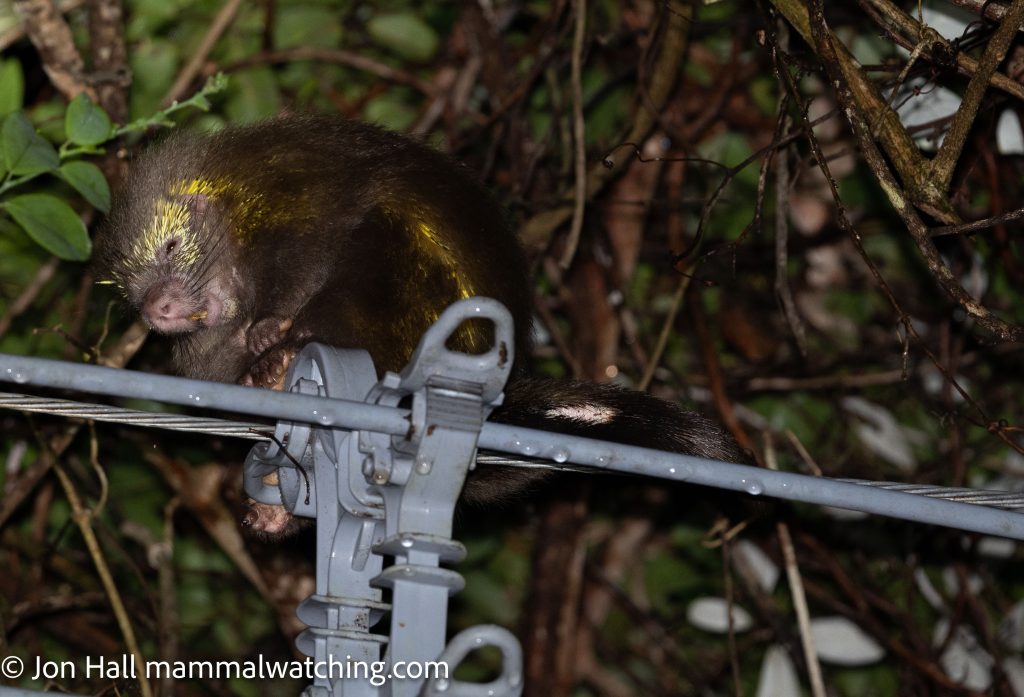
Bahian Hairy Dwarf Porcupine (Coendo insidiosus)
A short night walk with Coe produced better views of both porcupine species and a distant bat that was probably Flat-faced Fruit-eating Bat.
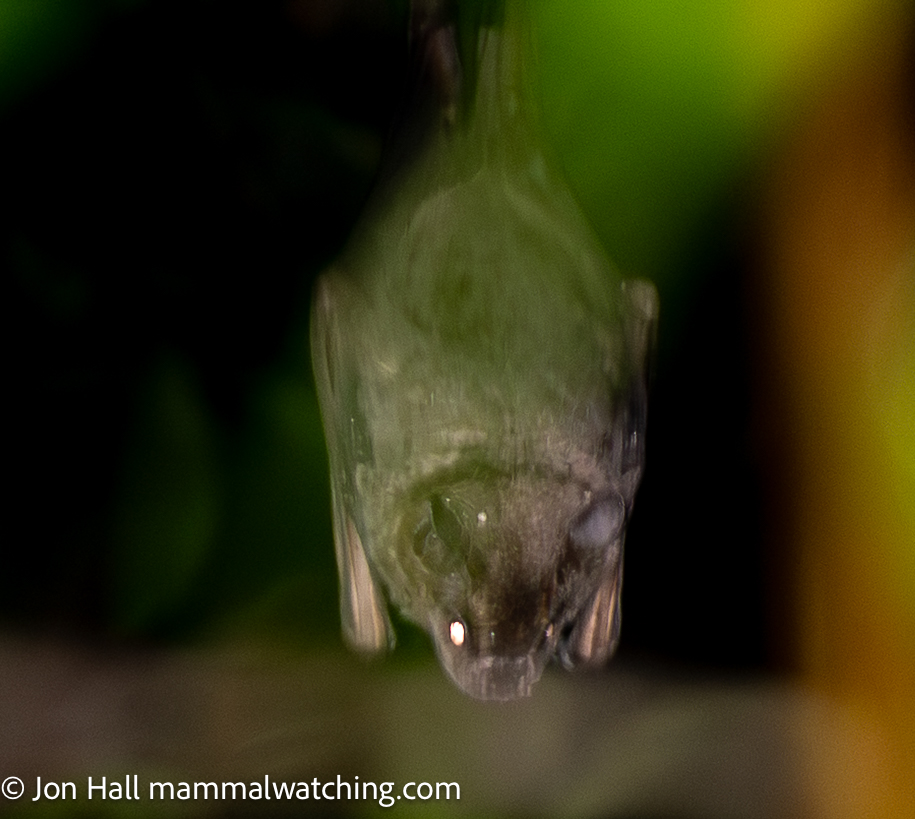
Flat-faced Fruit-eating Bat (Artibeus planirostris) probably
Back at the hotel a Brazilian White-eared Opossum was running around the lobby until the night manager grabbed it and placed it in a tree outside. They are such attractive opossums: regular super models compared to the mangy looking Virginia Oppssums of the USA.
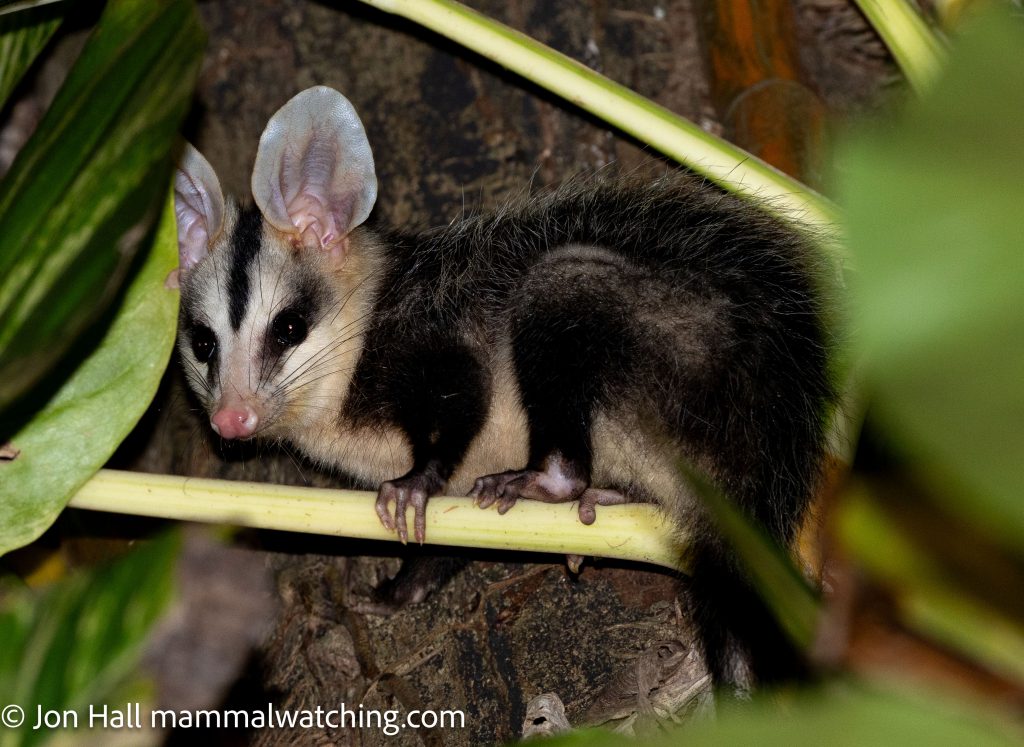
Brazilian White-eared Opossum (Didelphis albiventris)
Lençóis, May 29 & 30
It took most of the day to reach the fancy Hotel de Lençóis on the edge of the forest. A group of Black-tufted-ear Marmosets crossing the road were the only mammals of the drive. Meanwhile Ellen had finally made it to Brazil and was on her way to Lençóis too.
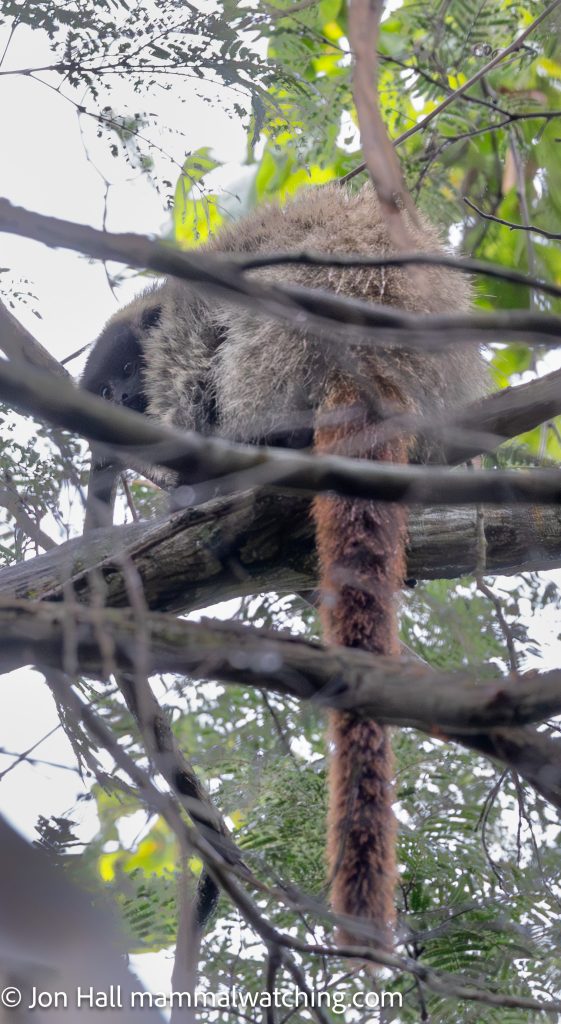
Blond Titi (Callicebus barbarabrownae)
We stopped in forest just outside town to meet up with our local guide, Cristine Prates, to search for our first target primate: Blond Titi. And we found some just before dusk. Good views but awful light, a recurring theme for the many of the primates on the trip.
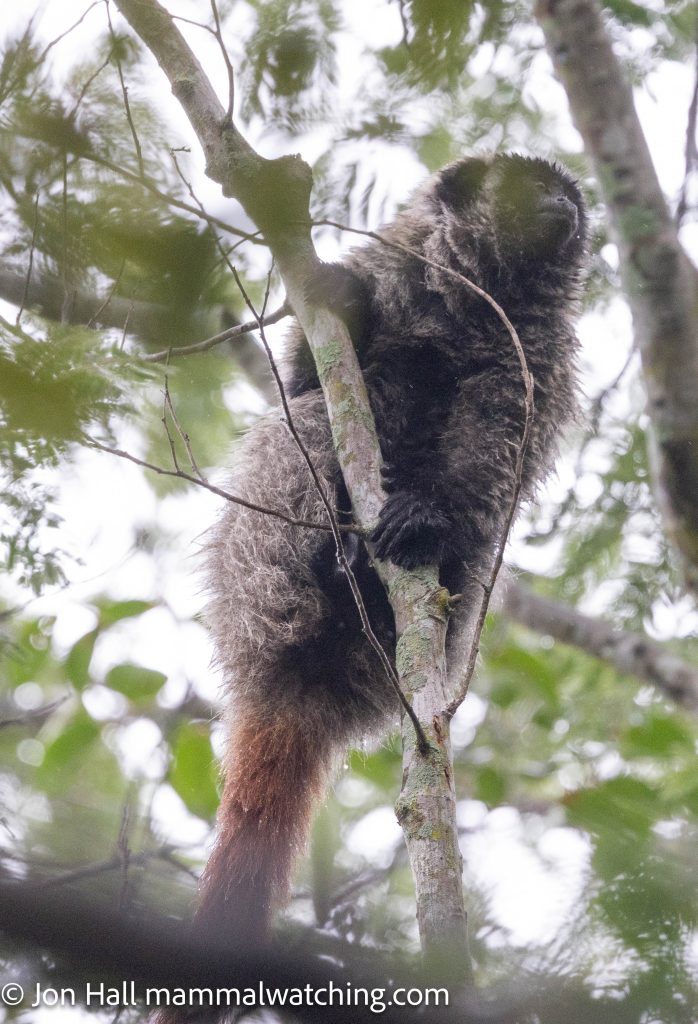
Blond Titi (Callicebus barbarabrownae)
Ellen arrived in time for dinner. Yay!
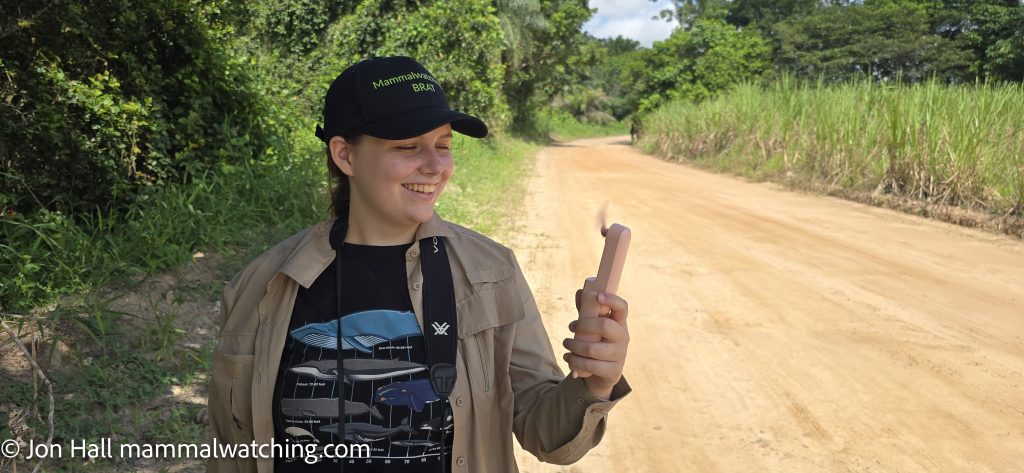
Ellen equipped with a lucky hat and a lucky fan
Some of the group went into the hotel grounds after dinner and found a White-lined Broad-nosed Bat. This would have been a lifer for me. A part of me died inside.
The next day was a mammalian treasure hunt as we went with Cristine in search of five species across four sites.
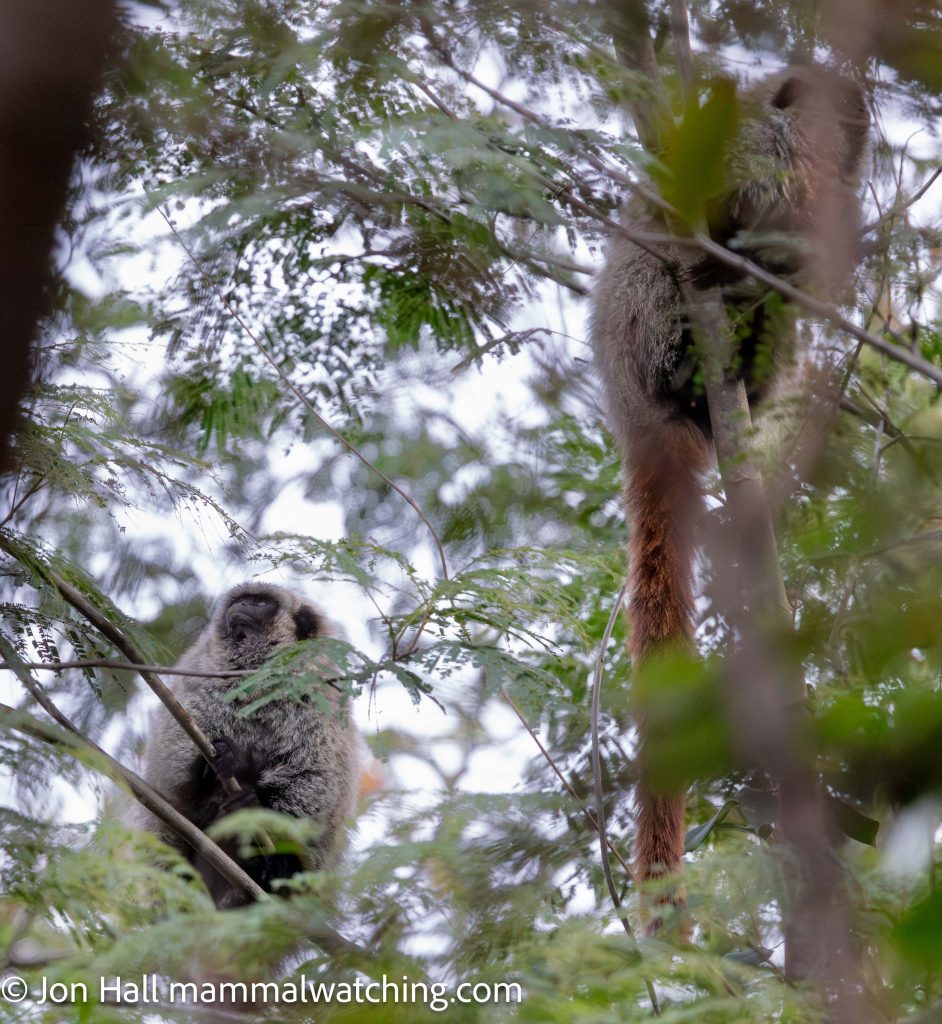
Blond Titi (Callicebus barbarabrownae)
Ellen had missed the Blond Titis so we returned to where we had seen them the night before and got them within a hour. The locals here call them geegaws : the name is a perfect description of their calls .. think psychopathic donkey in attack mode.
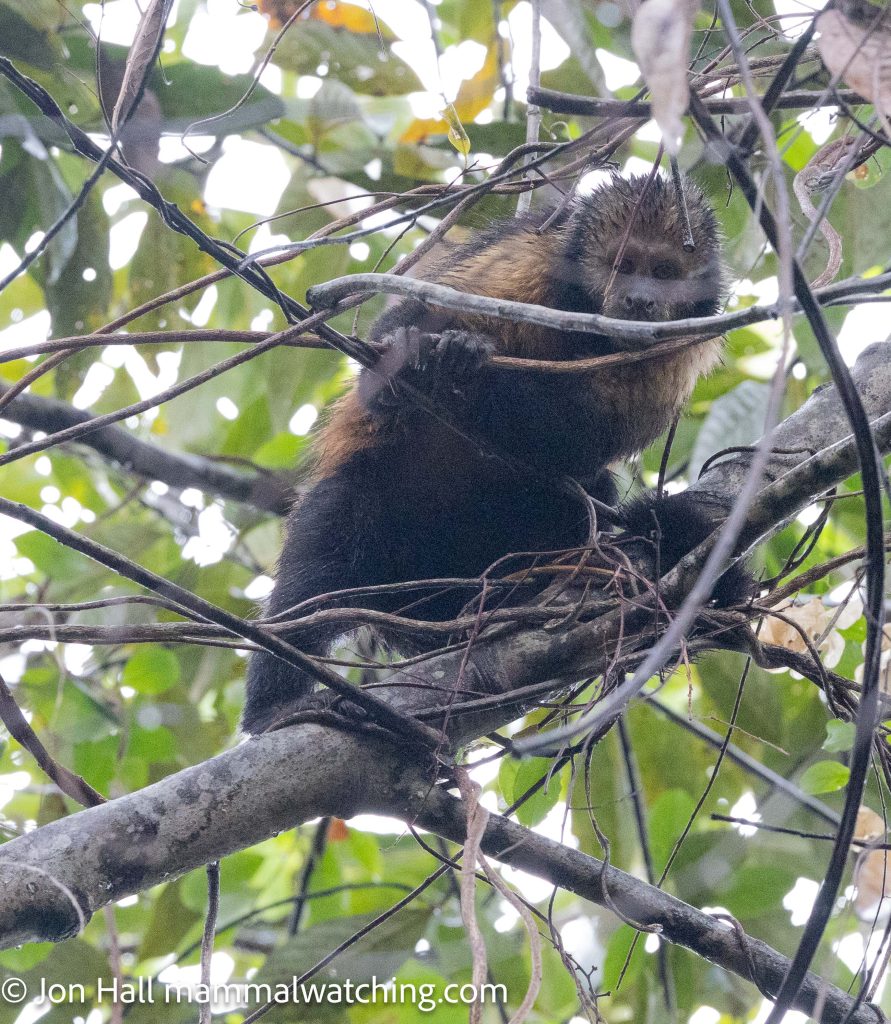
Yellow-breasted Capuchin (Sapajus xanthosternos)
After watching the titis we moved to a different area to try to see more and instead found a troop of Yellow-breasted Capuchins, another very endangered primate and a species we had not been expecting to see until later in the trip.
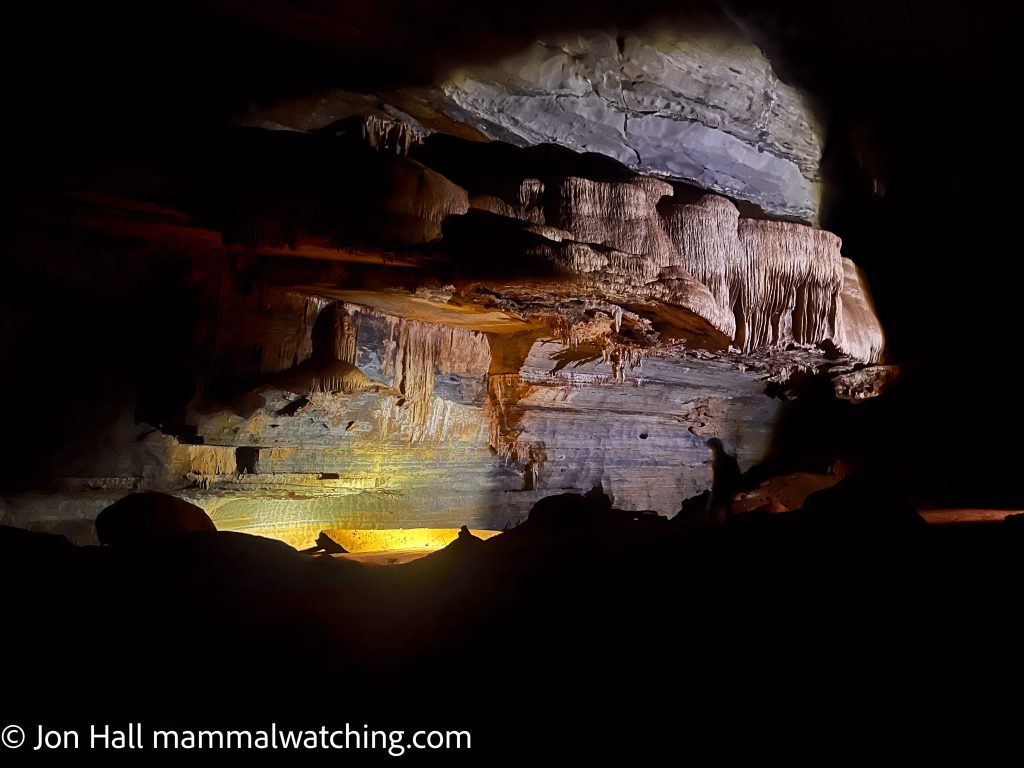
Our next stop were the caves at Iraquara, two hours away.
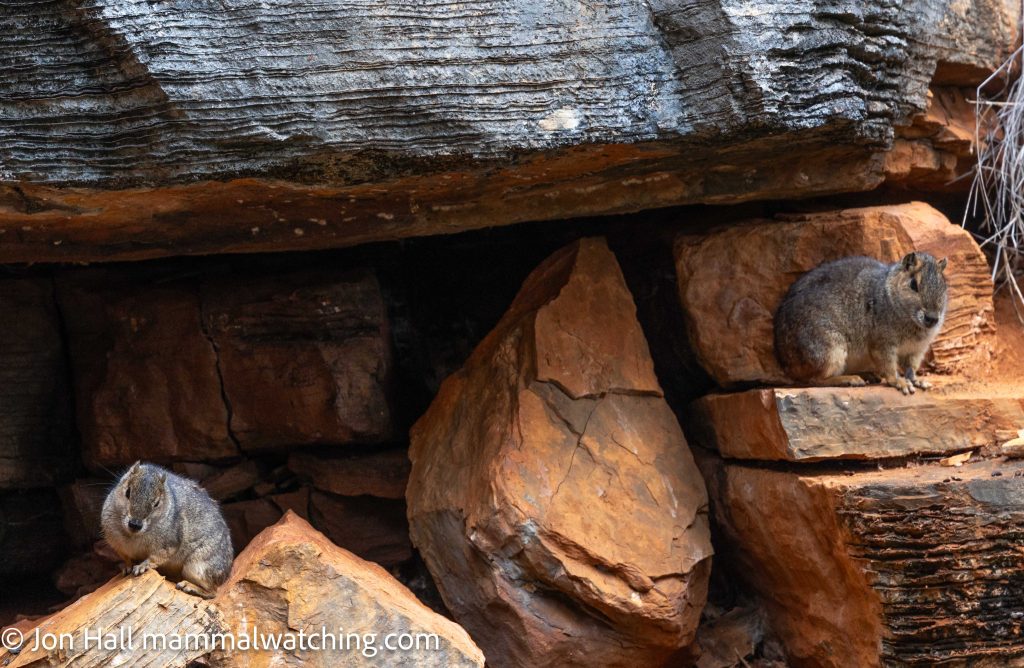
Rock Cavy (Kerodon rupestris)
Our target here was the Rock Cavy. Rather than walk through the caves – that were already full of visitors – we went into the site through the exit and saw plenty of the cavies lounging on the rocks.
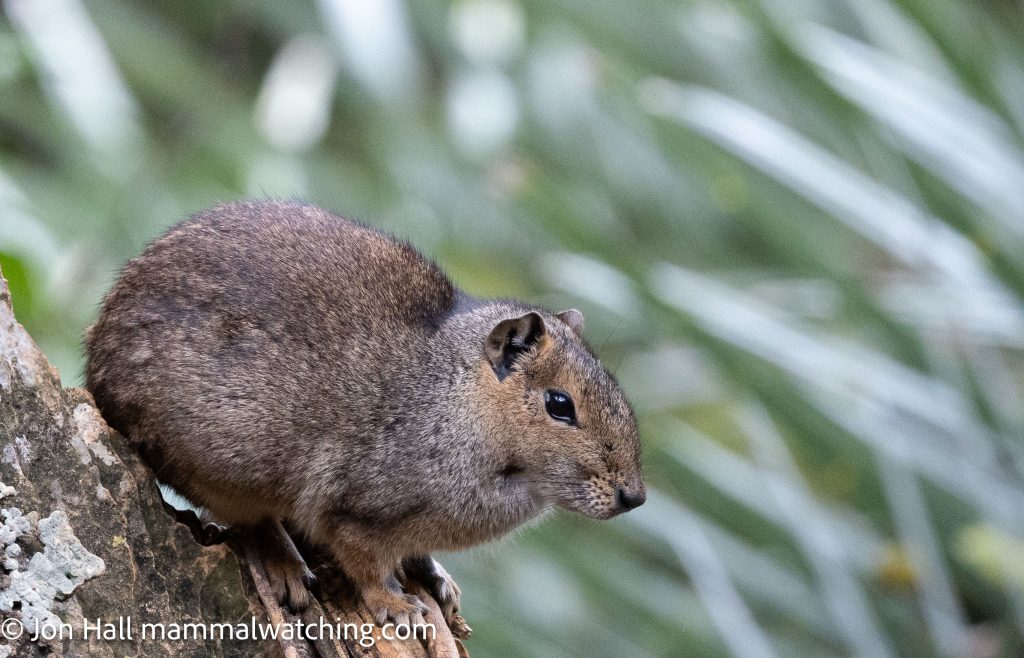
Rock Cavy (Kerodon rupestris)
They looked very much like Rock Hyraxes.
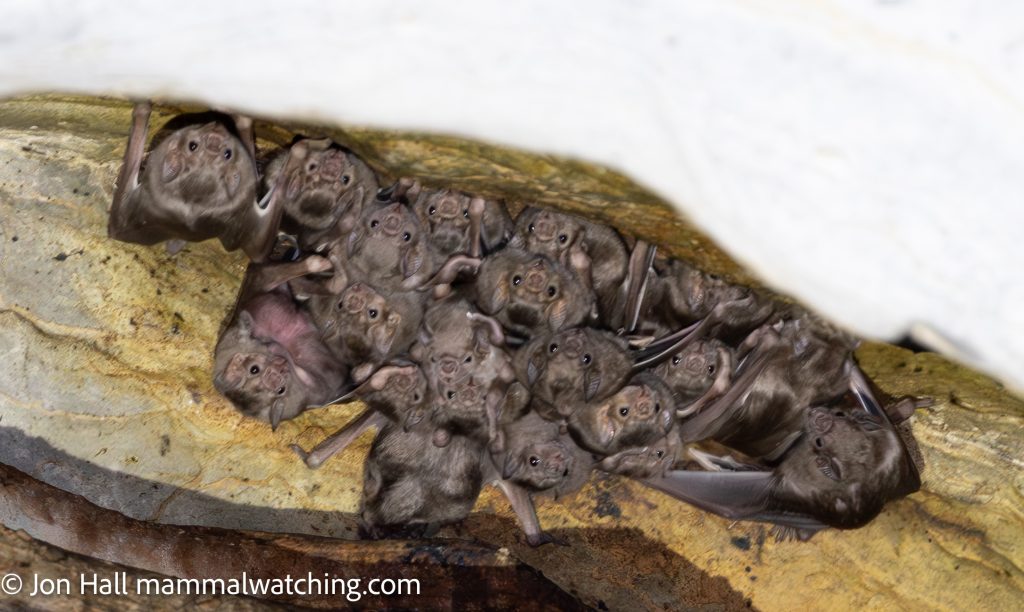
White-winged Vampire Bat (Diaemus youngii)
After admiring the cavies we continued into the caves for a few minutes and found a group of White-winged Vampire Bats hanging from the roof. I assumed these were Common Vampires though I did wonder about all that white on the wings. I was corrected after I published the report. This is a rare species and a great find to see so many in a cave. We also saw a few Flat-faced Fruit Eating Bats.
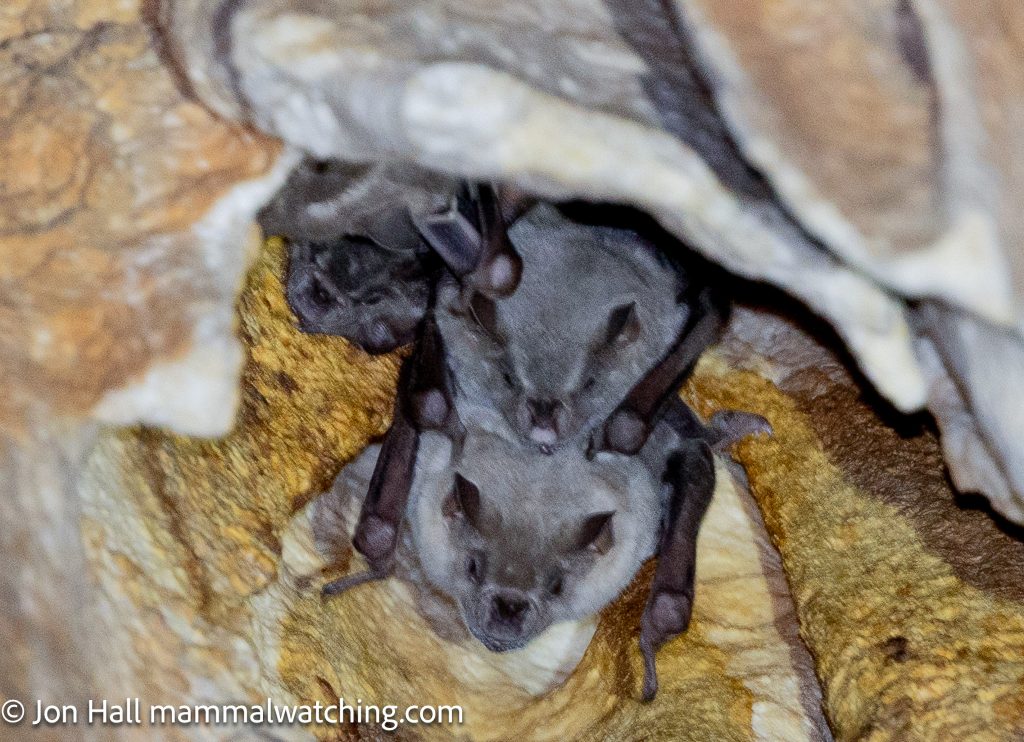
Flat-faced Fruit-eating Bat (Artibeus planirostris)
We had lunch at the caves and continued for another two hours into the dry forest of the Caatinga. ending up bat the project base.
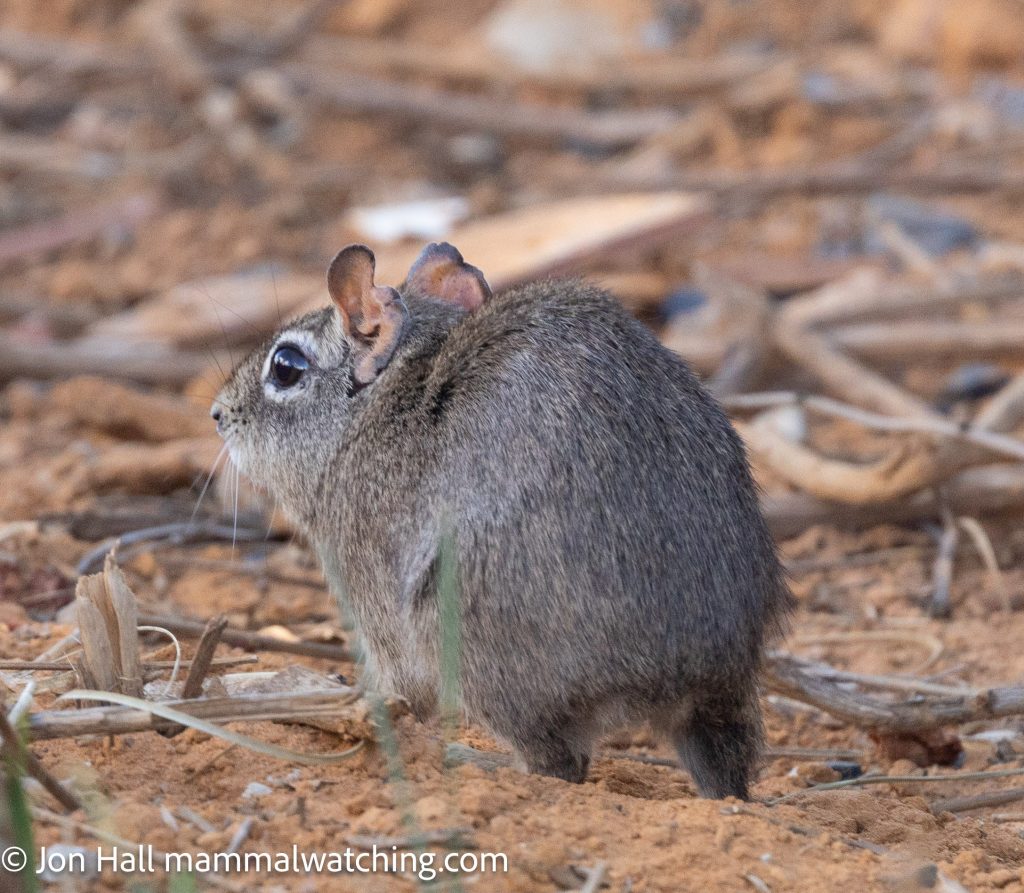
Spix’s Yellow-toothed Cavy (Galea spixii)
We stopped at the entrance to a wind farm (here) which Cristine knew as a reliable spot to see Spix’s Yellow-toothed Cavy. We saw several over the course of twenty minutes. Stage 3 of our Treasure Hunt was complete.
But our main prize out here was the locally endemic Brazilian Three-banded Armadillo. Cristine has a partnership with the Brazilian Three-banded Armadillo Project and she booked a visit for us to meet up with two local armadillo trackers and take part in field work. As the project brochure notes “This is not just wildlife observation; it is scientific tourism. You will actively participate in data collection and learn all about the research and ecology of our this little armadillo.” The guys know exactly how to track down the armadillos that shelter in the bushes of the Coating here. Something they have been doing since childhood. They quickly found and caught – by hand – two animals by hand and brought them over to weigh and measure them and check to see if they had microchips (they didn’t) before releasing them.
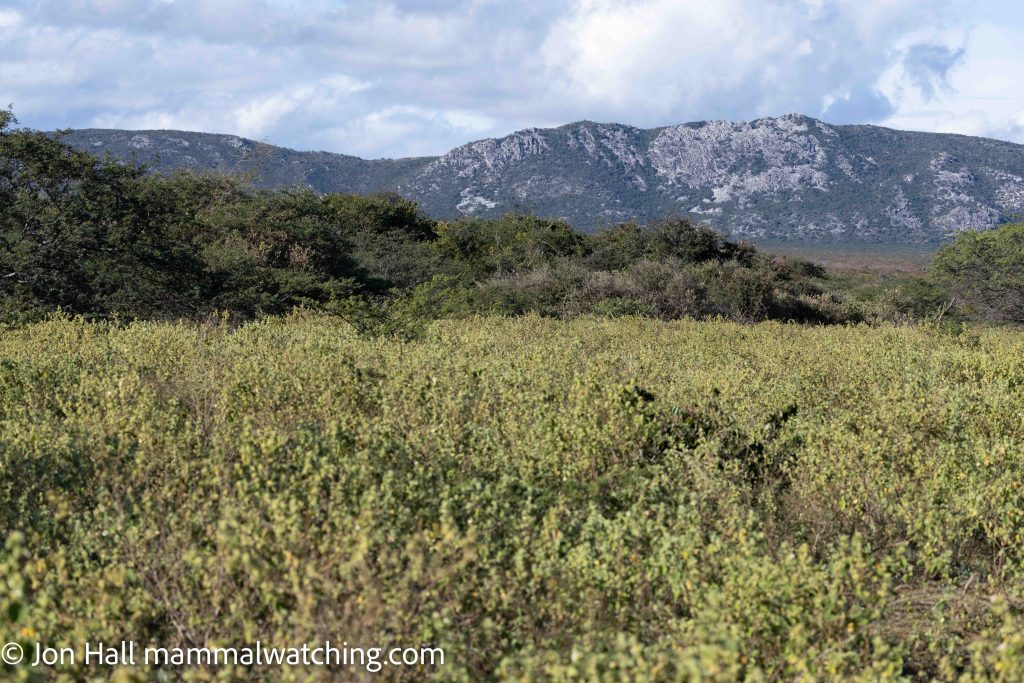
Three-banded Armadillo habitat
Watching the little armadillos slowly unfurl and then rock from side to get back onto their feet was a lot of fun.
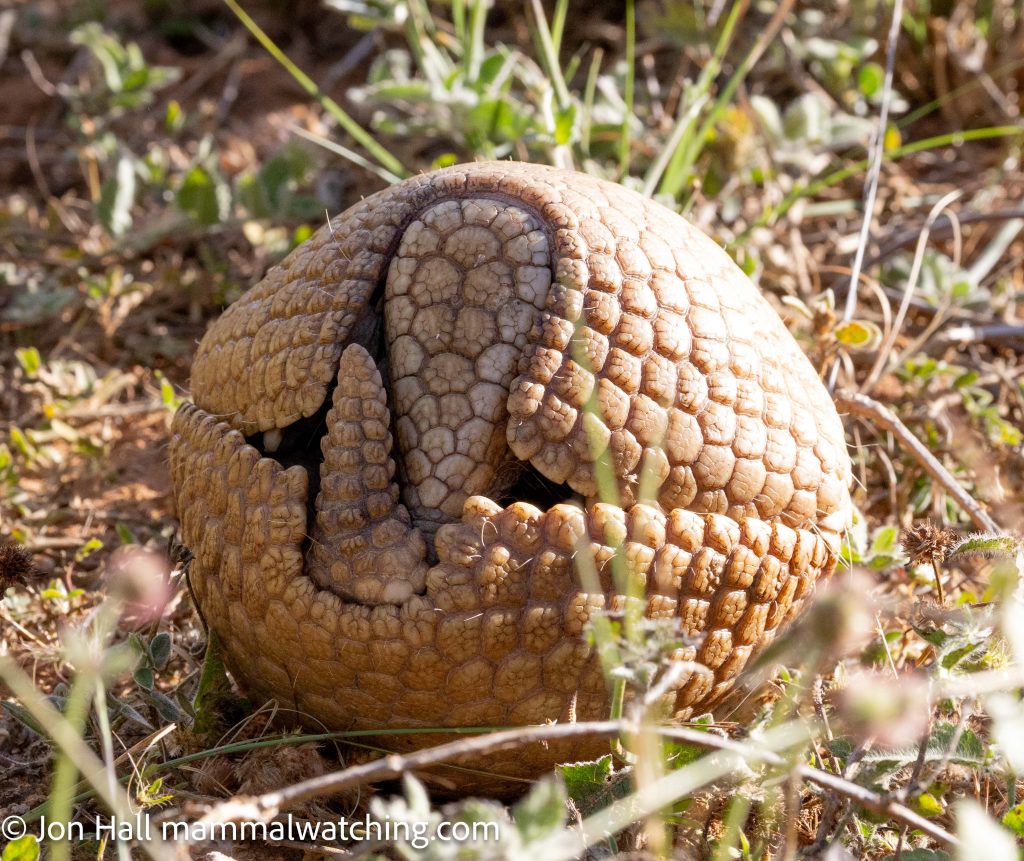
Brazilian Three-banded Armadillo (Tolypeutes tricinctus)
They are lovely little things.
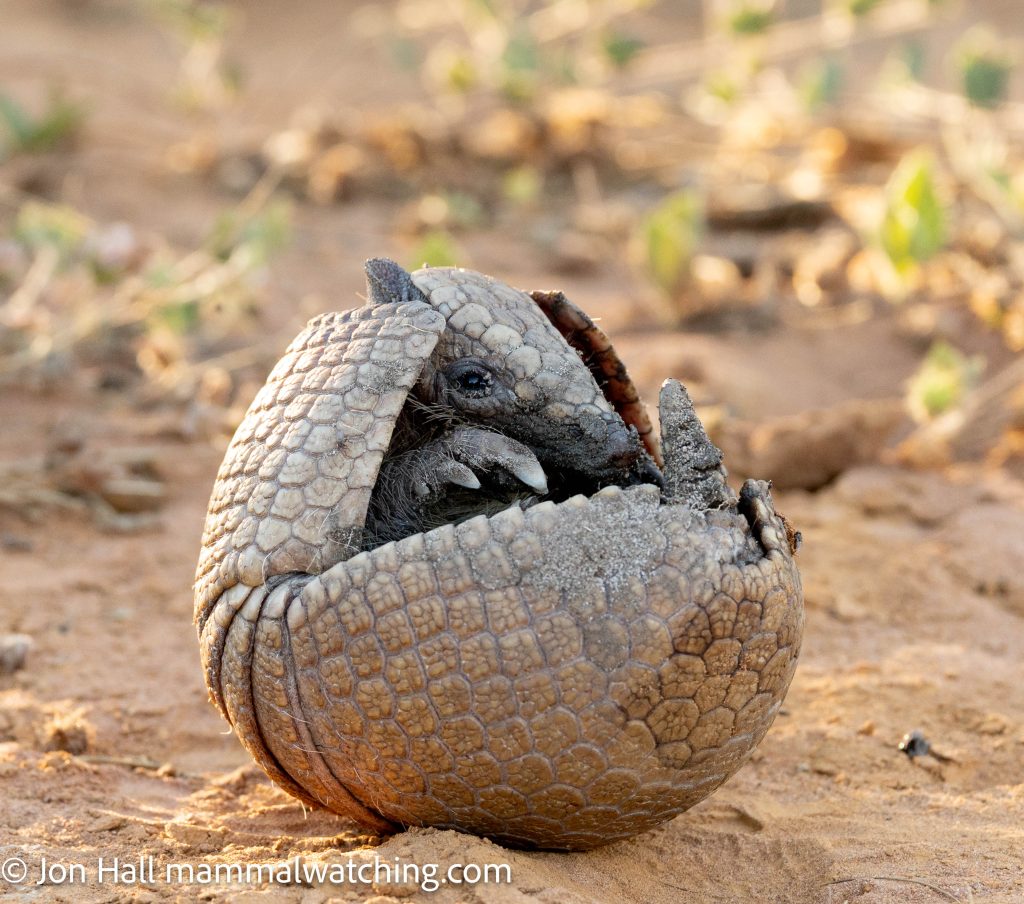
Brazilian Three-banded Armadillo (Tolypeutes tricinctus)
Like their Southern Three-banded relatives, they have a distinctive gait, trotting off jauntily on their tip toes.
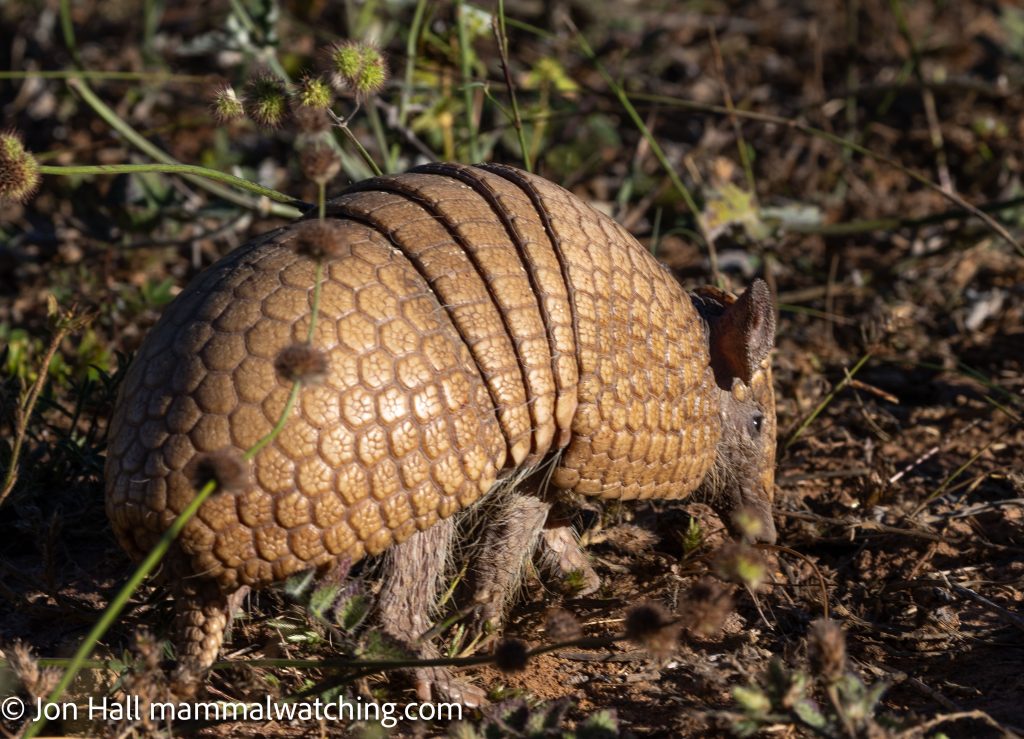
Brazilian Three-banded Armadillo (Tolypeutes tricinctus)
Mission accomplished! We had seen all five of our target species for the day and returned to our hotel in Lençóis.
After dinner we took a night walk around the hotel and I tried to find the White-lined Broad-nosed Bat I had missed the night before. My thermal picked it up feeding in the same tree the others had seen it in. I got my lifer.
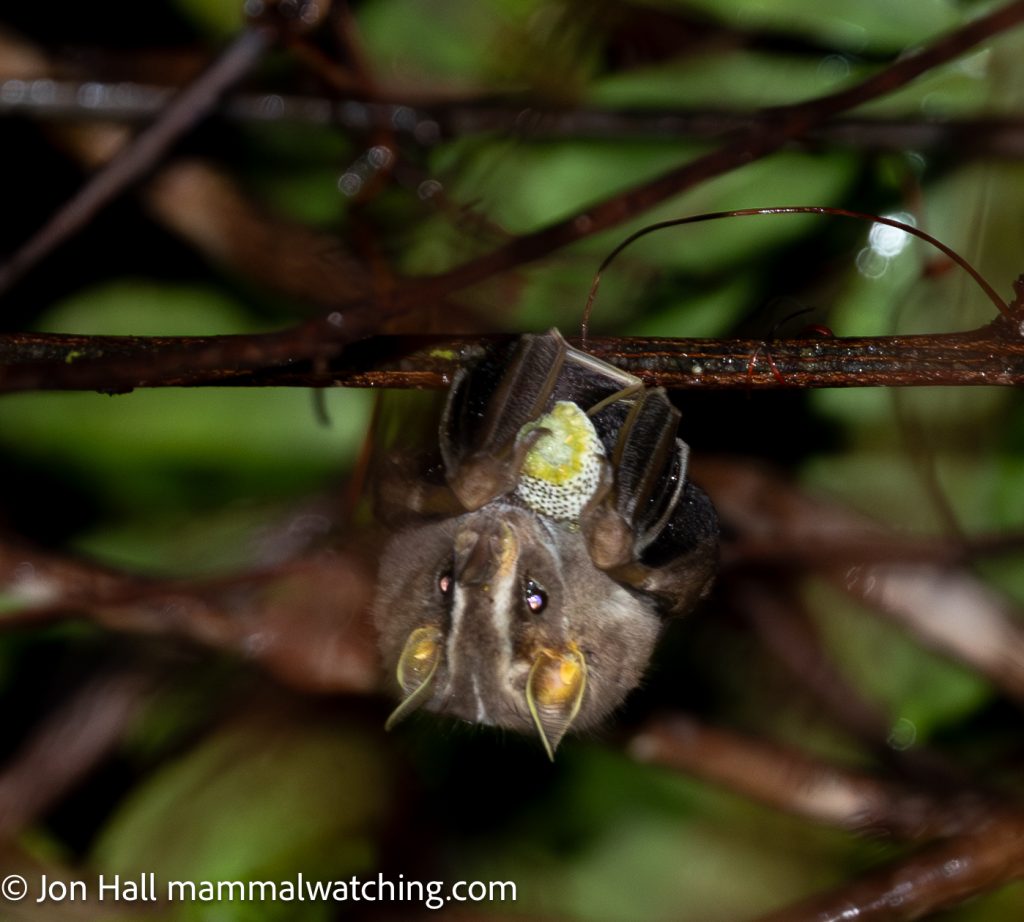
White-lined Broad-nosed Bat (Platyrrhinus lineatus)
Inside the hotel Kevin found us a Brazilian White-eared Opossum running around the railings near the restaurant.
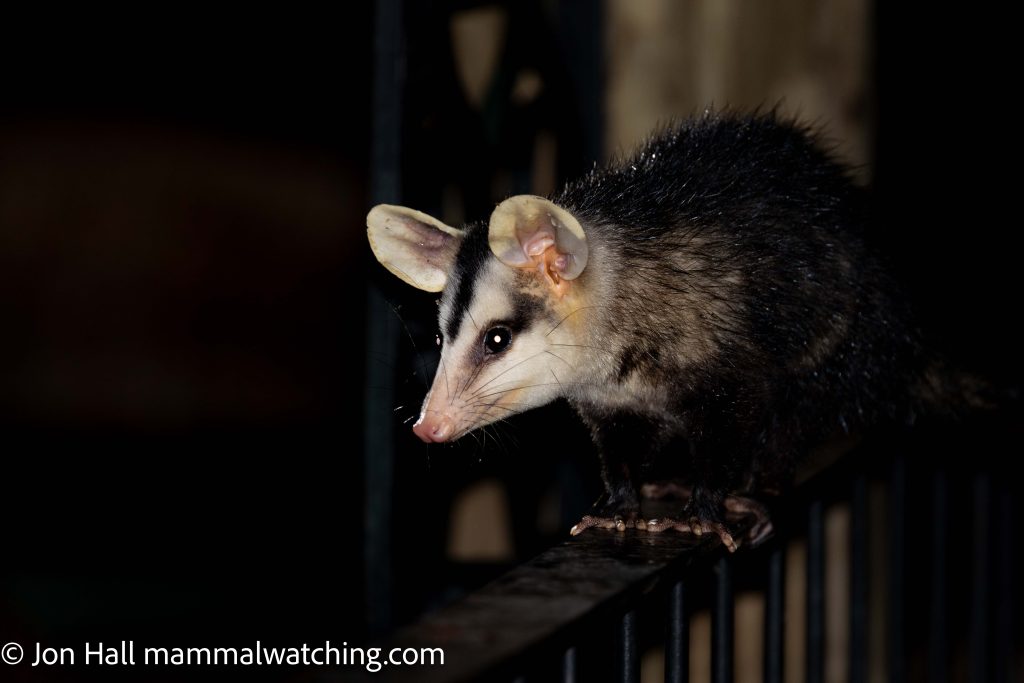
Brazilian White-eared Opossum (Didelphis albiventris)
A troop of Black-tufted-ear Marmosets put in appearance during the hotel breakfast on our last morning.
Aracaju, May 31 & June 1
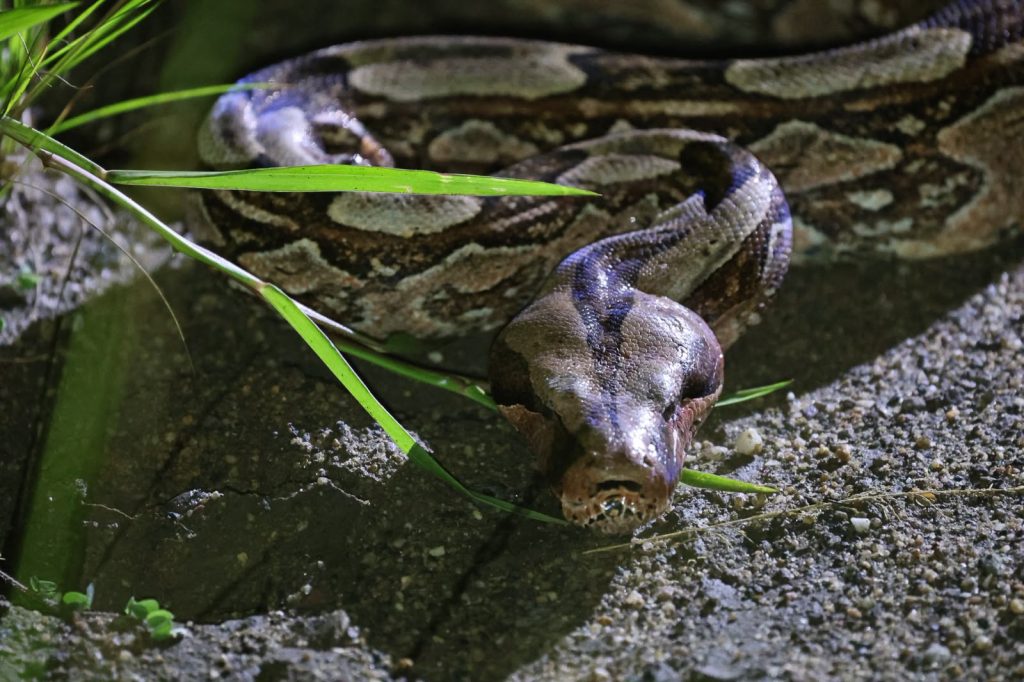
It took most of the day to reach the large coastal city of Aracaju. A seredndipitous wrong turn close to town meant we crossed paths with a large Atlantic Boa on the road. Reginaldo dragged it off the road with a hook and it slithered to safety.
After the previous two hotels, the Celi Connect Hotel here was a bit of a come down. I suspect it was once a low security mental hospital. Or perhaps it still is. In any case it would have been better to have stayed outside of town. The hotel restaurant didn’t have a single vegetarian option. The restaurant next door did: spaghetti in tomato sauce which surely came out of a can. Otherwise it was mainly notable only for the volume of the football game they were showing on the TV.
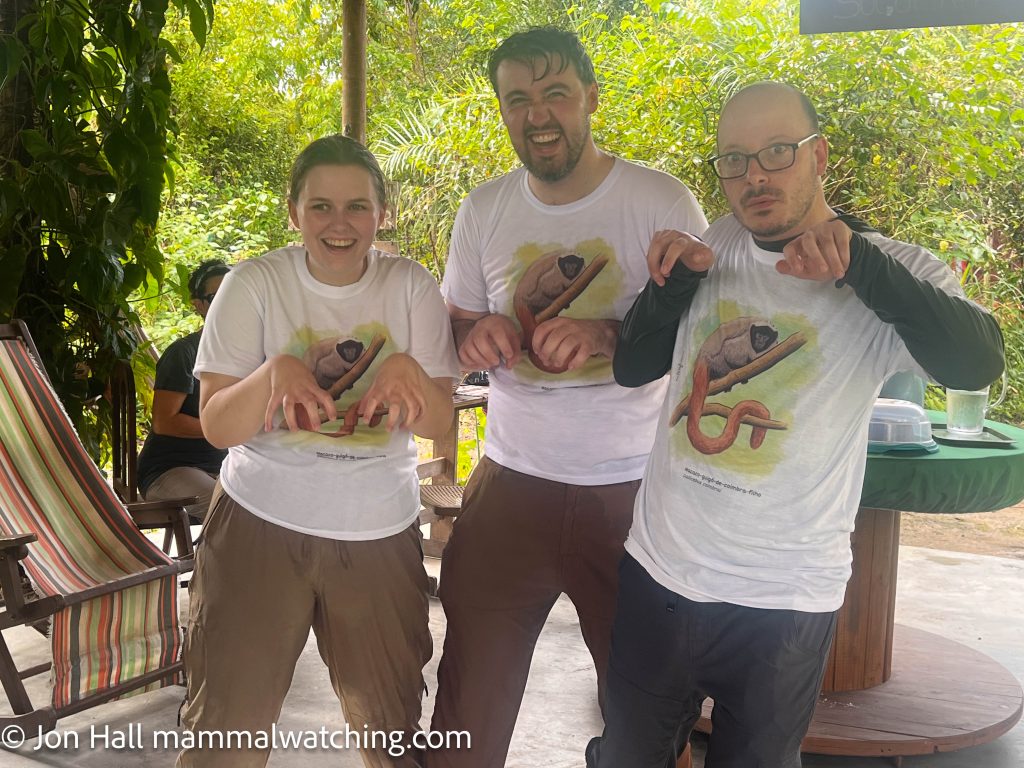
Ellen, William, Daniel: Team Titi
We spent the June 1 with our guides Tito and Ramon at Santuário do Mata Institute close to Aracaju, a small reserve that is working to protect two very endangered primates: Coimbra-filhos Titis and Yellow-breasted Capuchins as well as other species from Sergipe State.
Ellen, still crestfallen after missing the Northern Maned Sloth at Praia do Forte, was delighted on arrival to hear that Tito had found a sloth for her. Not an easy species to see up here.
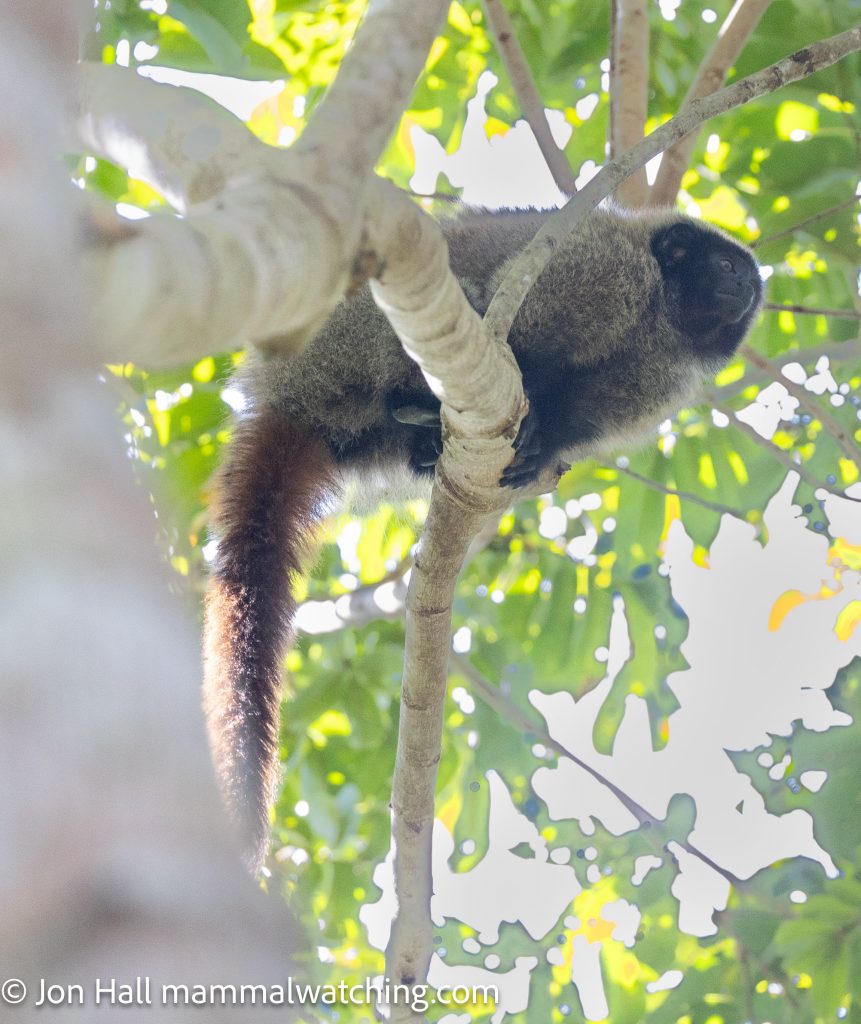
Coimbra-Filho’s Titi (Callicebus coimbrai)
We heard several families of Coimbra-filhos Titis in the morning but it took a while before we saw them. Yet again the monkeys were determined not to show themselves well enough for decent photos. I am no convinced their preferred habitat type is ‘crap light’.
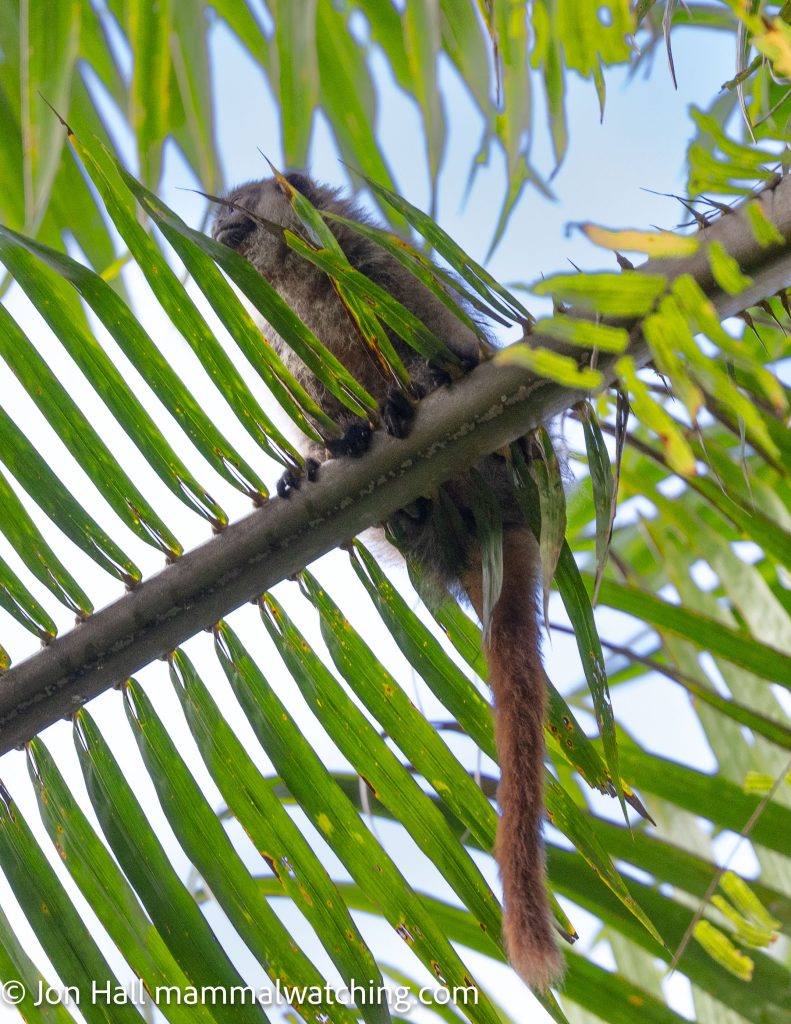
Coimbra-Filho’s Titi (Callicebus coimbrai)
After lunch we took a drive around the edge of the highly fragmented forest and found a troop of Yellow-breasted Capuchins right where Tito and Ramon predicted they would be. They gave good views, demonstrating the capuchin trademark defensive technique of “I’m going to sit on small branch. look cute and bounce menacingly so you can see I am not afraid of heights”.
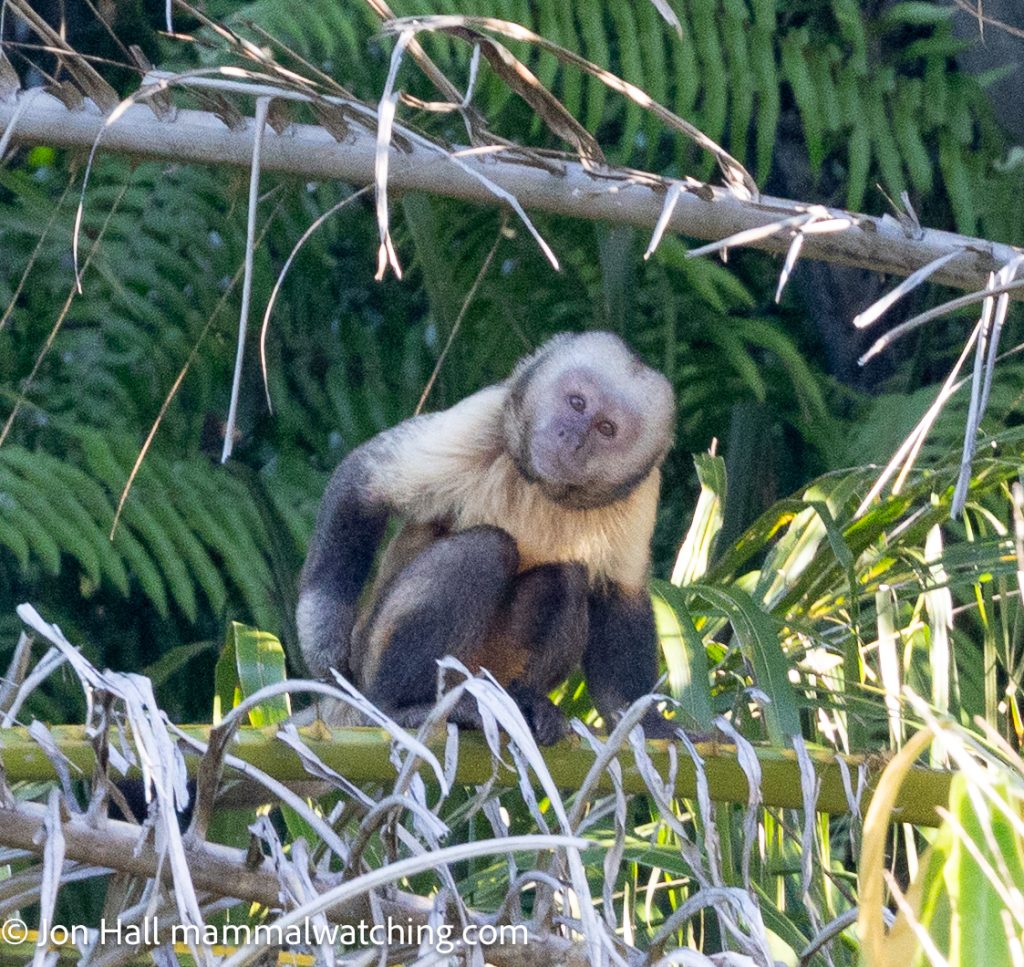
Yellow-breasted Capuchin (Sapajus xanthosternos)
The following morning, as we were loading up the bus for the drive to the Quilombo Park Hotel, a troop of Common Marmosets ran along the cables outside of our hotel in downtown Aracaju: pretty much the only good thing to come out of Aracaju town
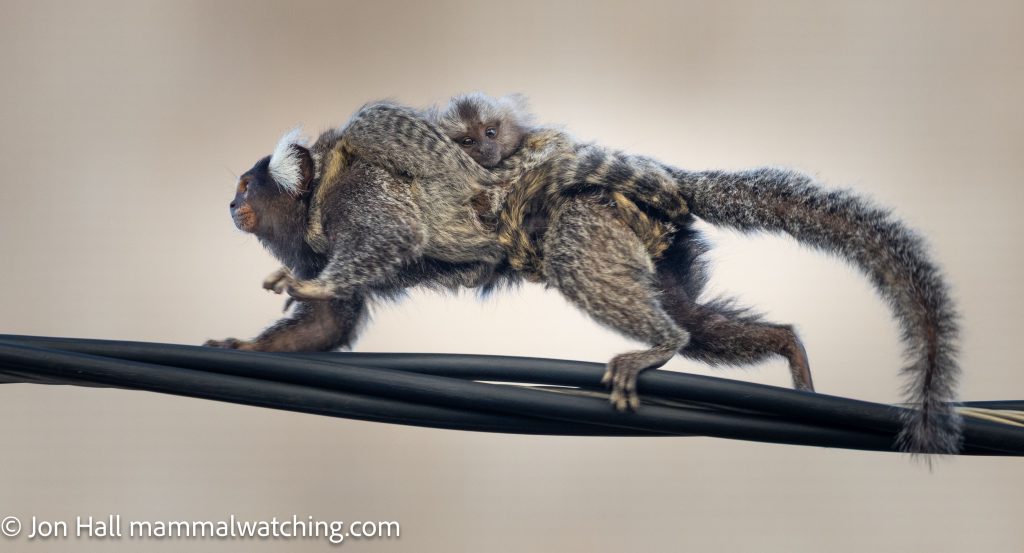
Common Marmoset (Callithrix jacchus)
Quilombo Park Hotel, União dos Palmares, June 2
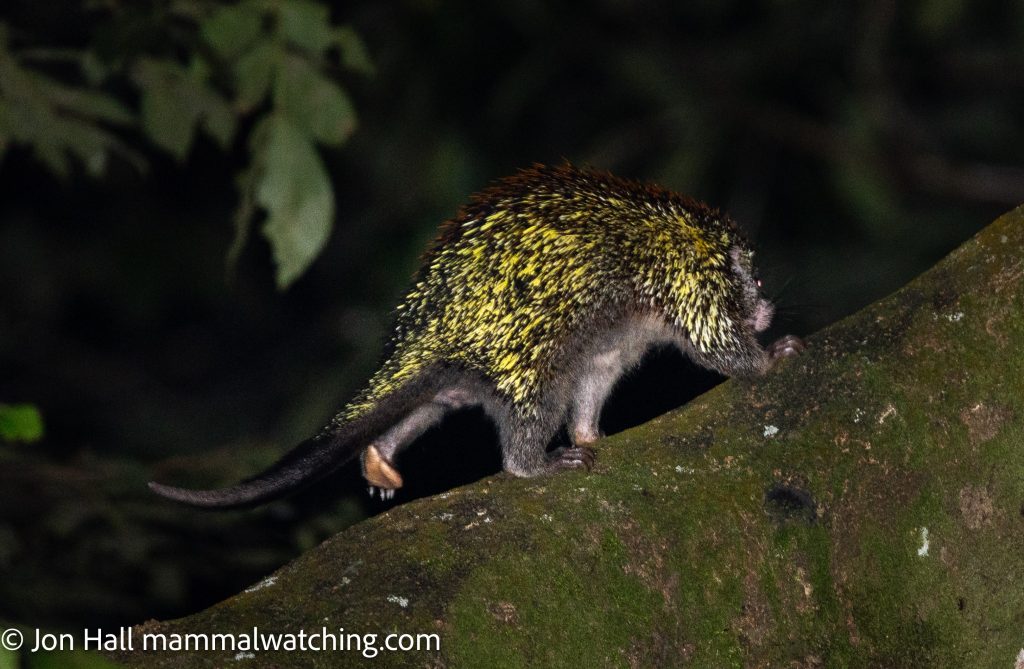
Pernambuco Dwarf Porcupine (Coendou speratus)
A five hour drive got us to the Quilombo Park Hotel in time for lunch. Regina had not been here before, but in 2018 Michael Kessler had seen Pernambuco Dwarf Porcupine here and that was the best lead we had for what was obviously going to be a target for a primate and porcupine trip.
Regina and I discussed whether we needed to spend two nights here for the species. But we figured with the added benefit of thermal scopes we ought to have a decent chance in just a night.
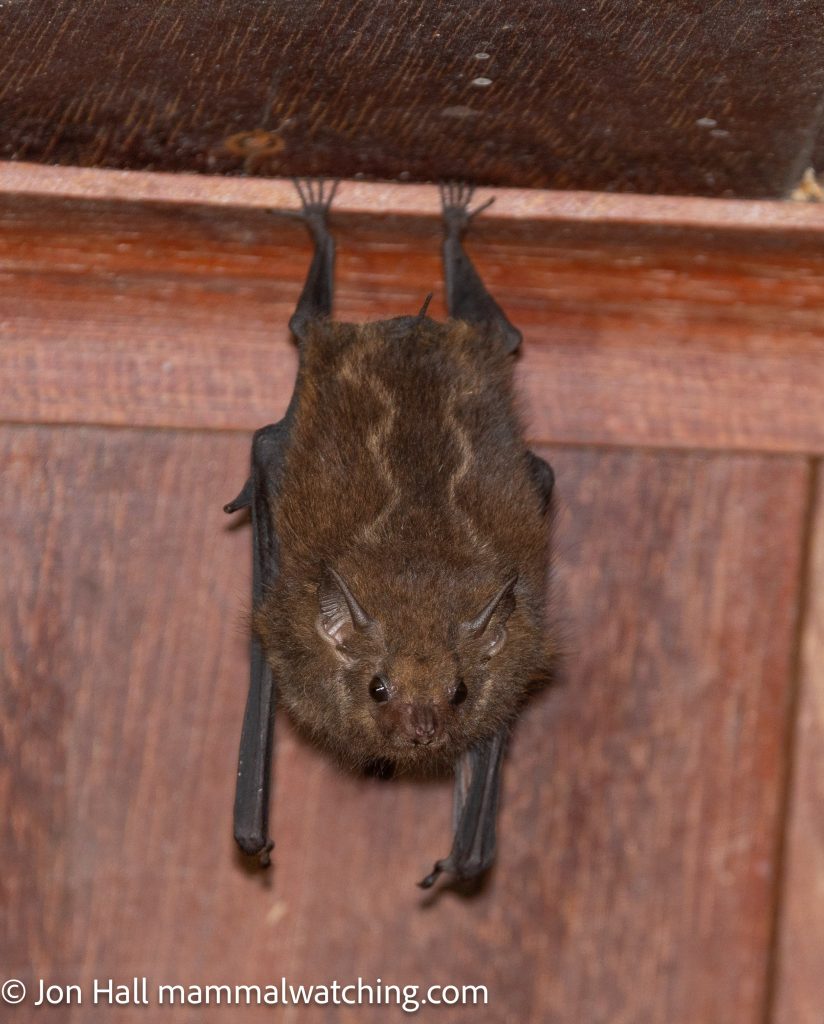
Lesser Sac-winged Bat (Saccopteryx leptura)
Michael Kessler reported a bunch of bats from around the hotel. We didn’t do so well, finding a few Lesser Sac-wingedBats and a couple of Proboscis Bats. A large colony of molossids were emerging from the the eaves of the roof above some of the rooms at dusk but we were unable to photograph them. They may have been Molossus rufus, which Michael reported from here, or Molossus molossus.
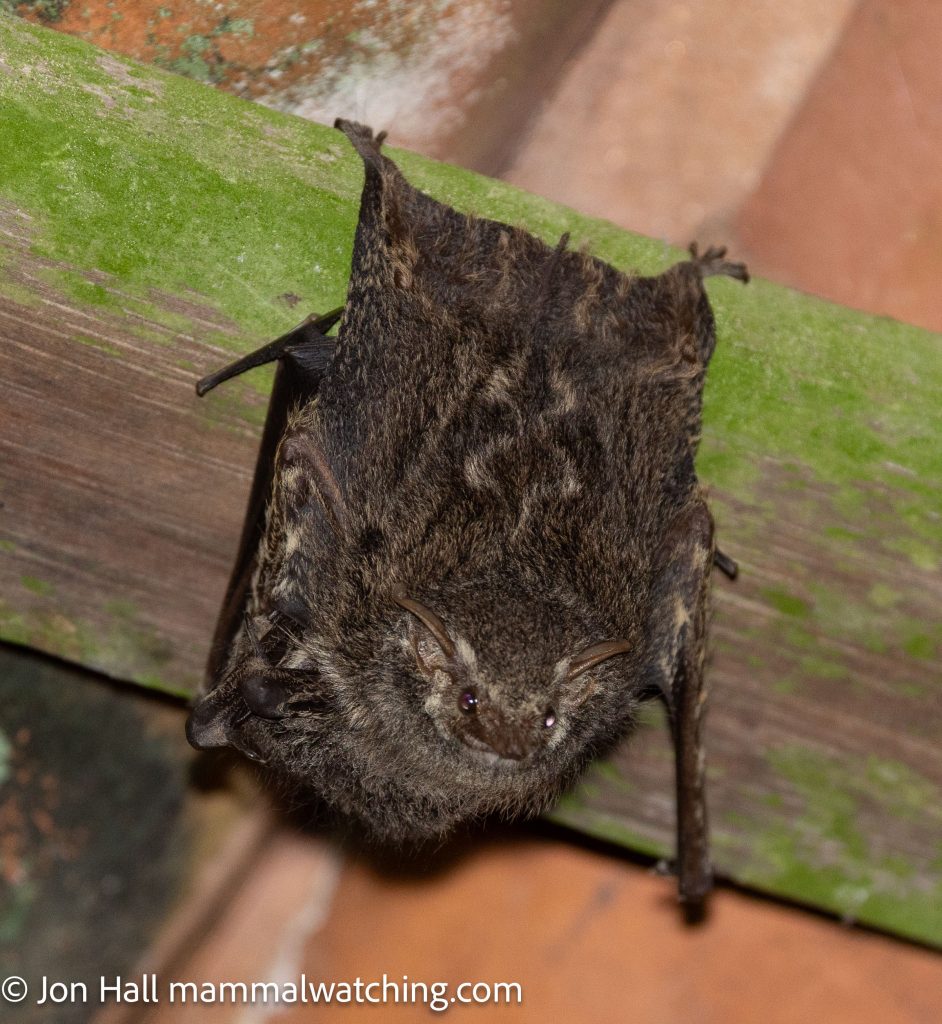
Proboscis Bat (Rhynchonycteris naso)
The hotel is on the edge of a biological research station but there were no trails leading into the forest itself. We explored the hill behind the hotel but the trails run through a mosaic of orchards and small forest patches and were not particularly inspiring for a night’s spotlighting. So we hoped we would find the porcupine on the hotel grounds just as Michael Kessler had in 2018.
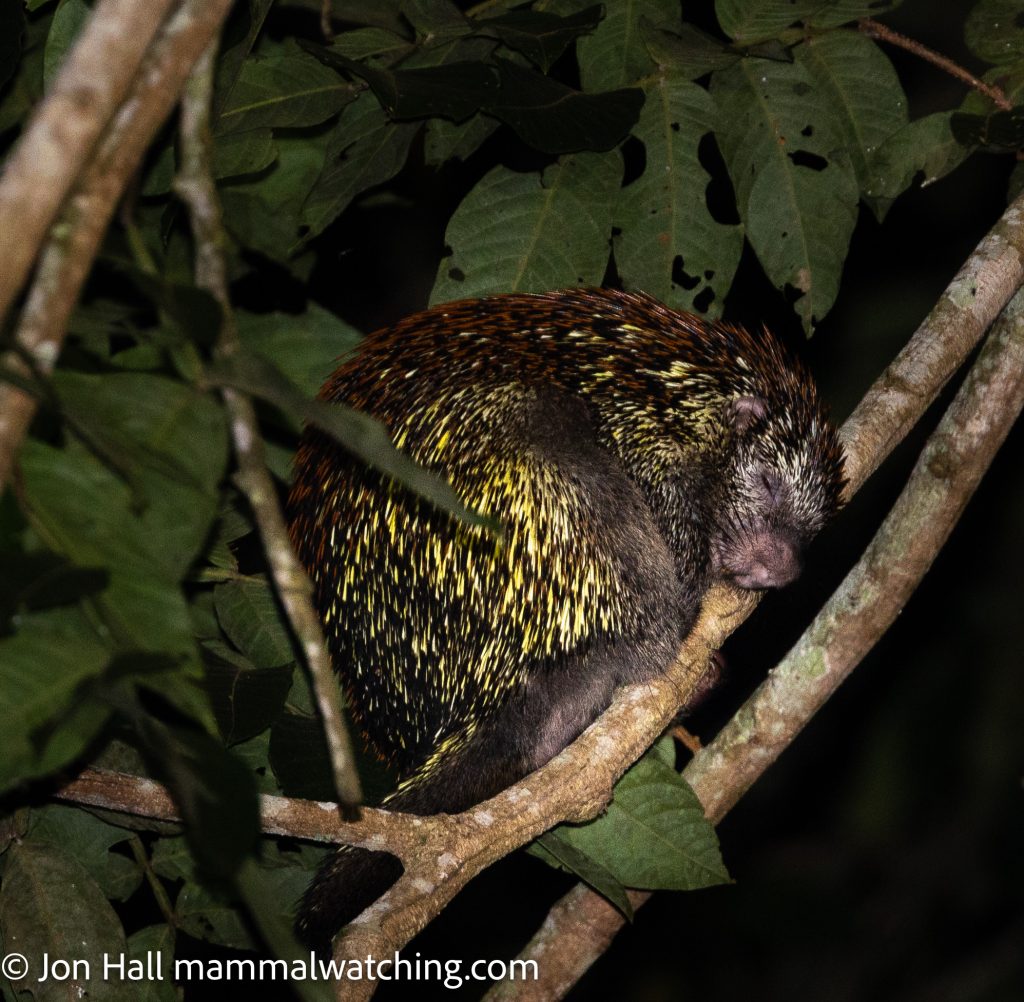
Pernambuco Dwarf Porcupine (Coendou speratus)
Just after sunset Ellen picked one up in her thermal right above our cabins. A fabulous porcupine, with the dark tipped yellow quills and red on the back distinguishing it – along with its smaller size – from the Brazilian Porcupines that are also in the area.
We saw another three animals that night along with a few small cayman that were likely Broad-snouted Cayman.
João Pessoa, June 3 & 4
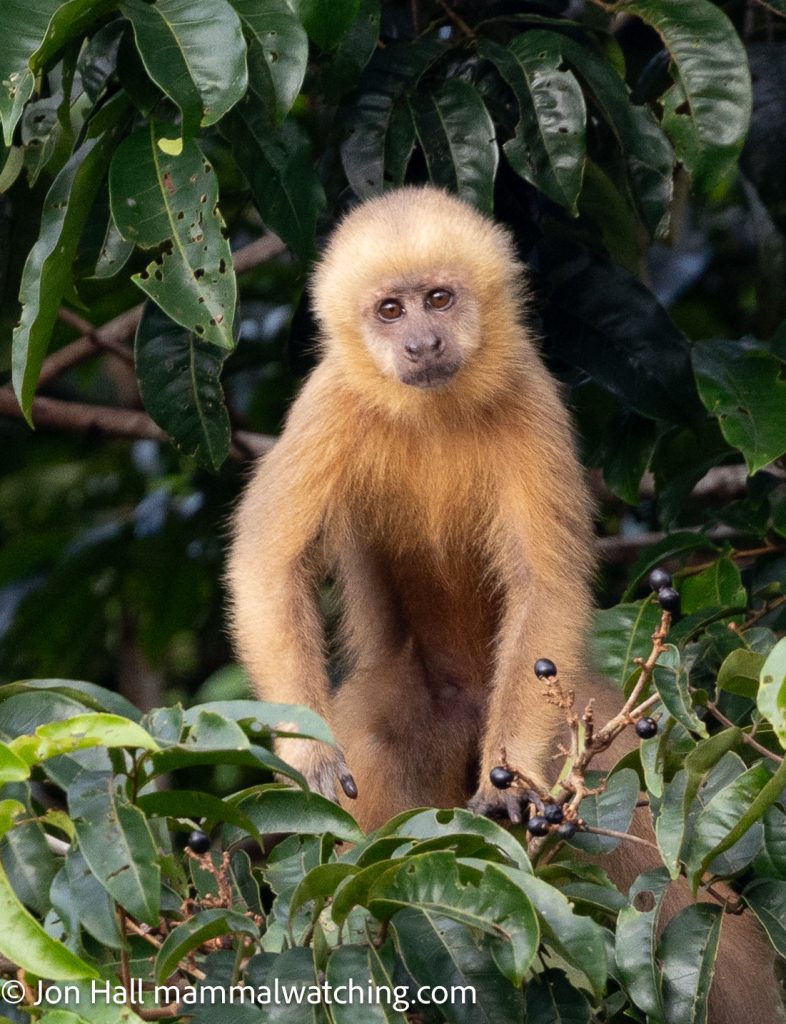
Blond Capuchin (Sapajus flavius)
We left before dawn the next morning for the long drive to João Pessoa. Regina wanted to arrive by lunchtime so we could get into the forest in the early afternoon to search for our next two target primates: Eastern Red-handed Howler and Blond Capuchin.
There is very little forest left here. The vast majority is now sugar cane with tiny fragements of forest sprinkled across it. Our local guide – the appropriately named Wylde – took us to a fragment which both the capuchins and howlers frequented.
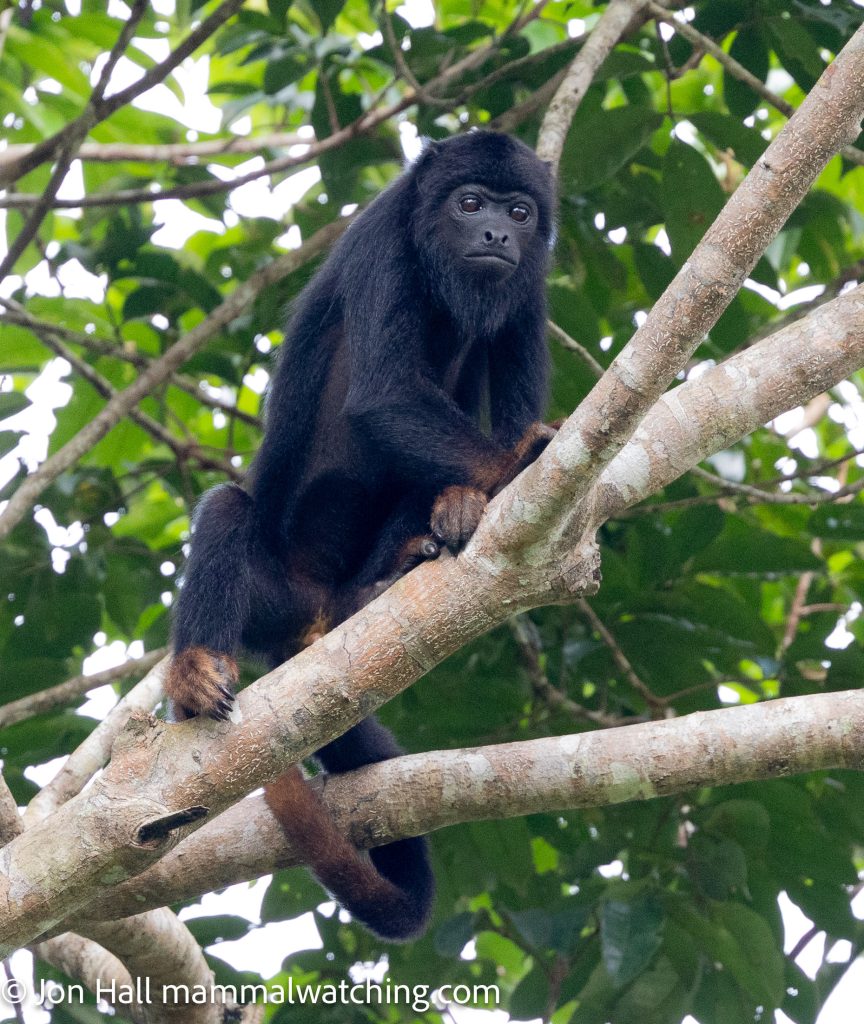
Eastern Red-handed Howler (Alouatta belzebul)
We found the Eastern Red-handed Howlers easily but didn’t get a hint of any capuchins, despite the very many local people who stopped to tell us they had seen them here recently/we should have been here this morning/they always raid my crops.
But we did find our first Brown-throated Three-toed Sloth of the trip.
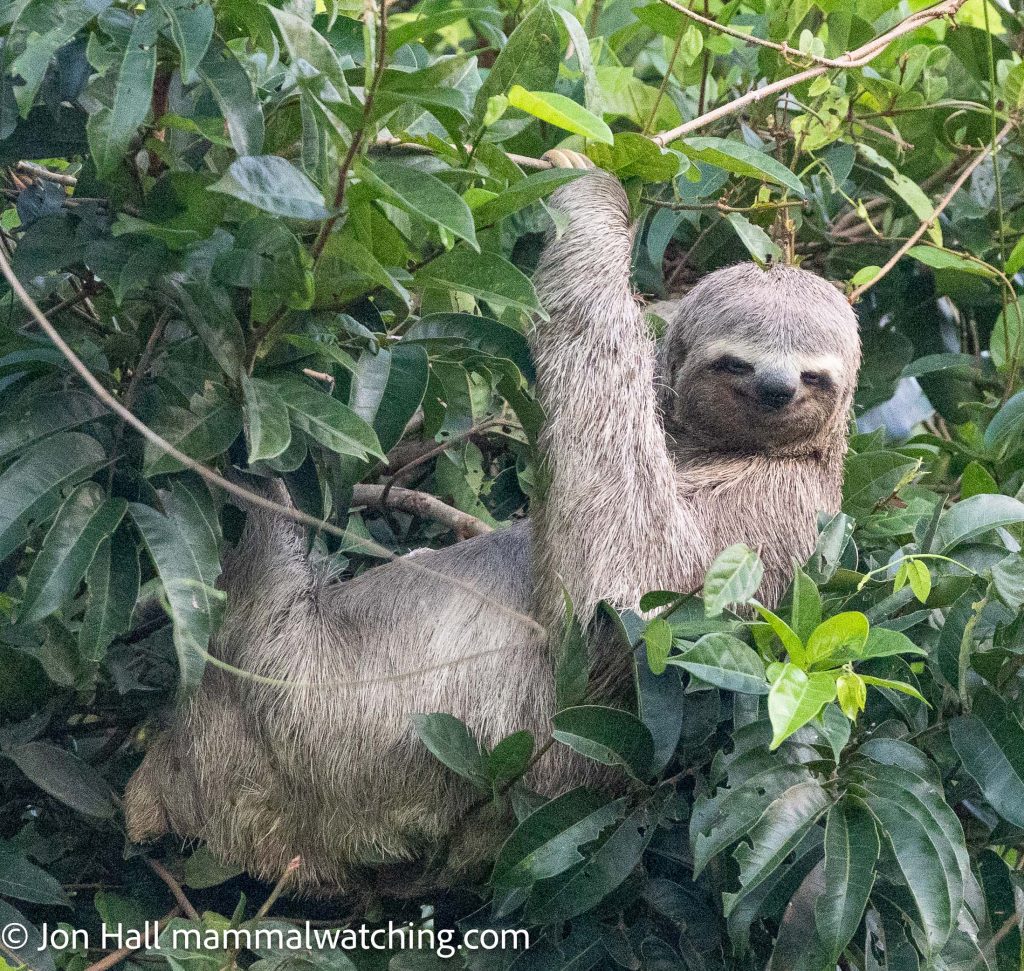
Brown-throated Three-toed Sloth (Bradypus variegatus)
At dusk Ellen spotted two Iack’s Agoutis dashing across the road, which the rest of us missed. Lesser people might have held this against her. We were made of better things … though it may be accurate to say the sighting used up the remaining sympathy points she had earned after her all the flight problems she had suffered to join us.
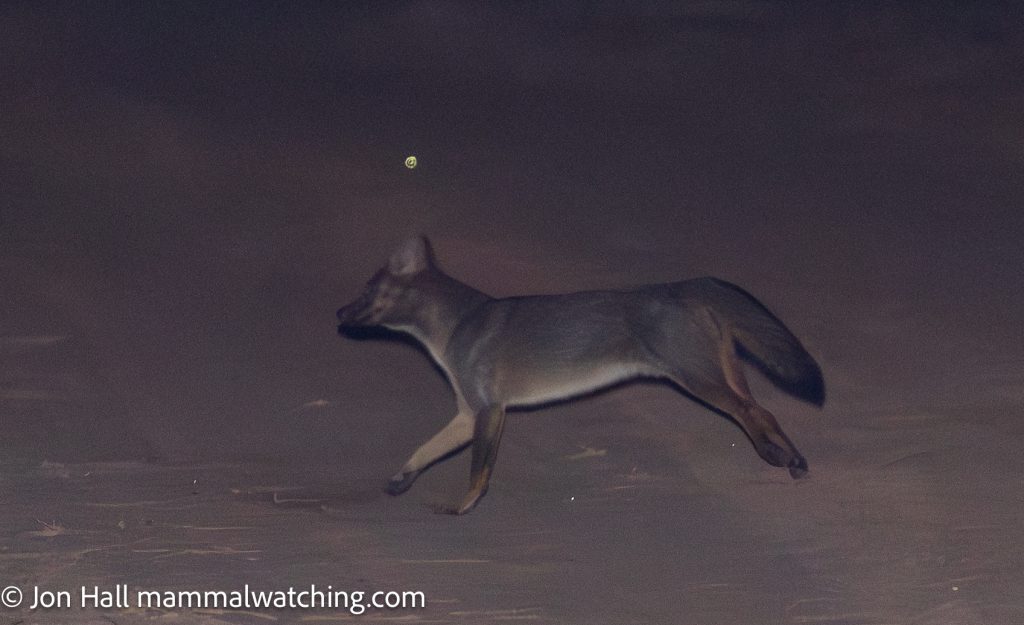
Crab-eating Fox (Cerdocyon thous)
A spotlight that night was productive. While driving the road through the sugar cane we saw a pair of Crab-eating Foxes and distant Capybaras. An hour’s walk through a patch of forest produced a wonderful look at a Linnaeus’s Mouse Opoosum along with another Brazilian White-eared Opossum.
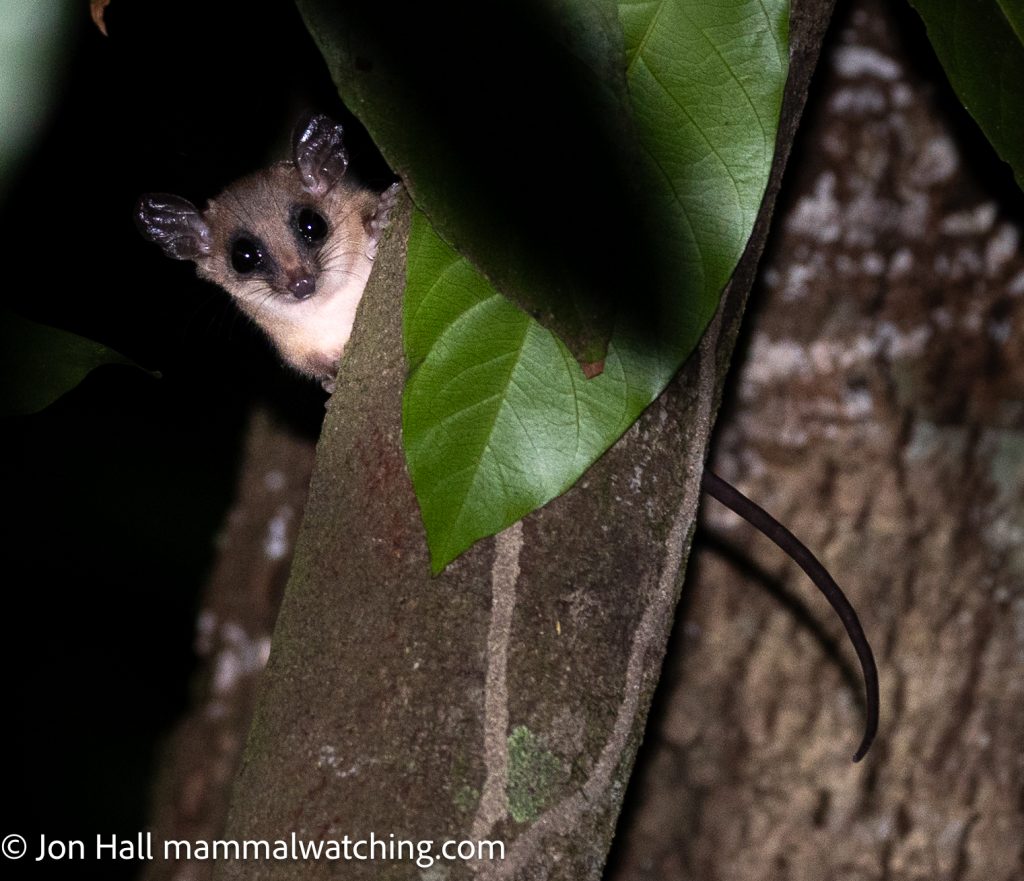
Linnaeus’s Mouse Opossum (Marmosa murina)
We returned at 5am the next morning to try again for the capuchins. We found a flighty Seba’s Short-tailed Bat in abandoned house but by lunchtime we were monkeyless. The mood turned sombre for the first and only time of the trip: we only had three hours before sunset to find the Blond Capuchins.
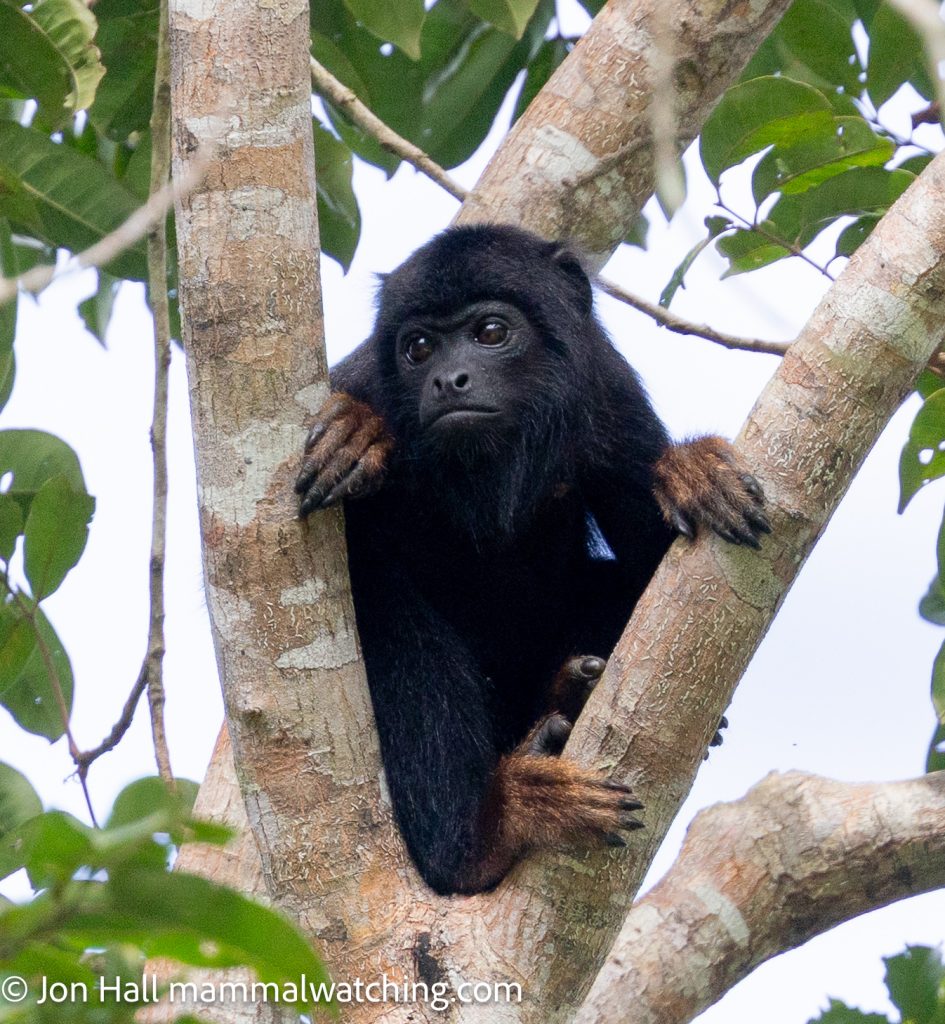
Eastern Red-handed Howler (Alouatta belzebul)
But the formidable Wylde refused to give up hope. “We will see the monkeys” he announced defiantly. And at 2pm, after heavy rain, we were back in the same forest fragment.
After getting excited by more Eastern Red-handed Howlers we continued along the road and then Wylde spotted a Blond Capuchin on the other side of the road, feeding in trees on the edge of a wetland. He was as excited as the rest of us.
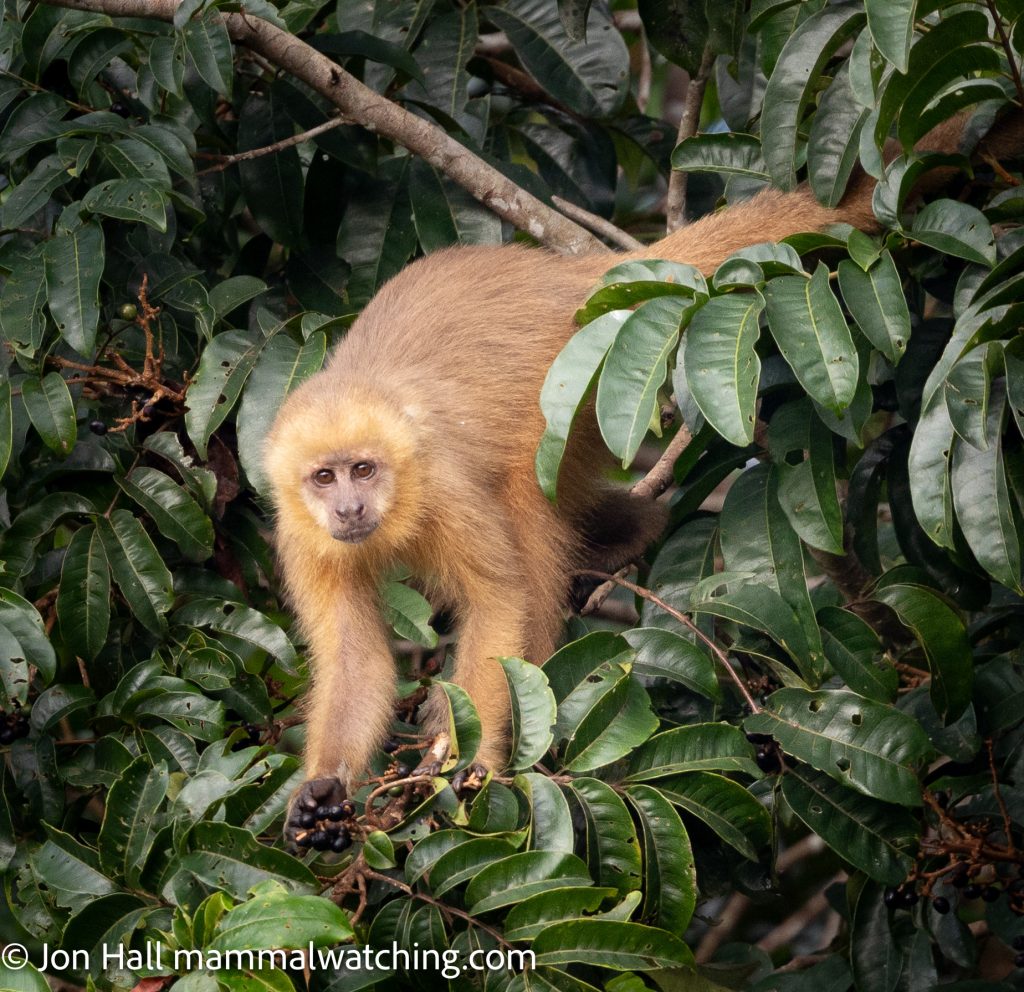
Blond Capuchin (Sapajus flavius)
We watched several animals for half an hour. They were torn between avoiding us and eating some tasty fruit. The fruit won out. Beautiful animals that were also – for once – in decent light. We took a lot of photos and swapped many high fives.
But the day was not over!
Our Porcupines and Primates trip had advertised four porcupine species on the menu. But we were now in range of a 5th species – the Brazilian (or Yellow-quill Tipped) Porcupine. Until very recently the Brazilian Porcupine had a wide range across Brazil and beyond. But the species has been split off, and most of the range now belongs to the newly described Long-tailed Porcupine. Regina started digging into where we could find this bonus porcupine and learned that a small park – the Floresta Nacional da Restinga Cabedelo , in downtown João Pessoa, was a place to try.
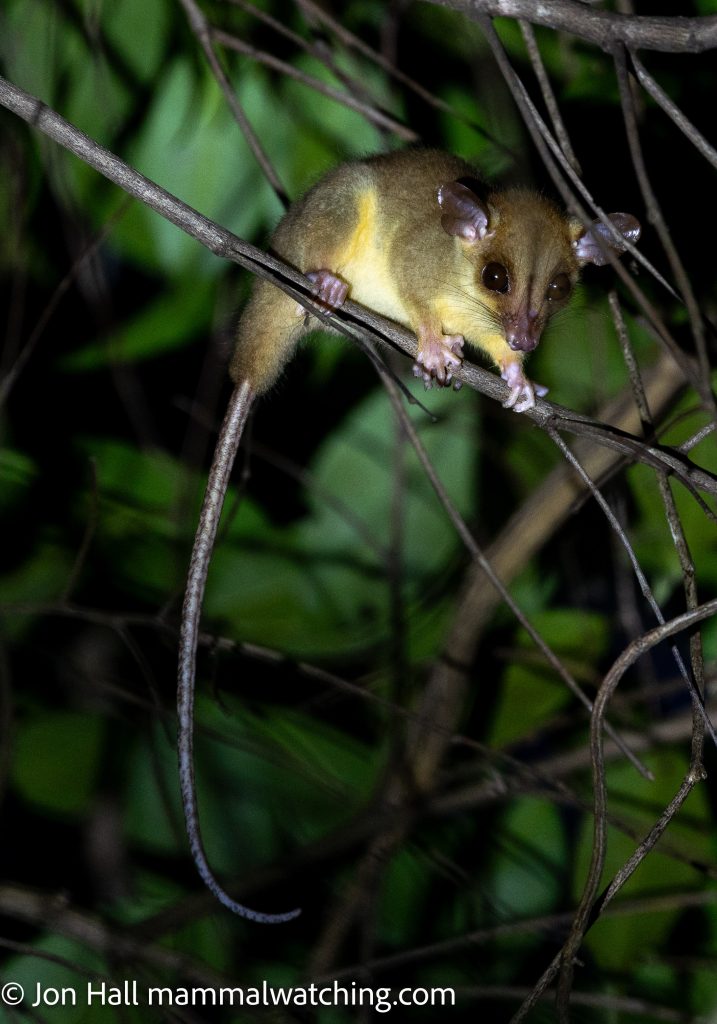
Bare-tailed Woolly Opossum (Caluromys philander)
This was a well-fenced – and well-guarded – national forest that closed at 5pm. But Regina – being Regina – had arranged for us to get special permission to visit after dark for couple of hours.
Two of the staff joined us in the car park and we took a walk at sunset. A very productive walk!
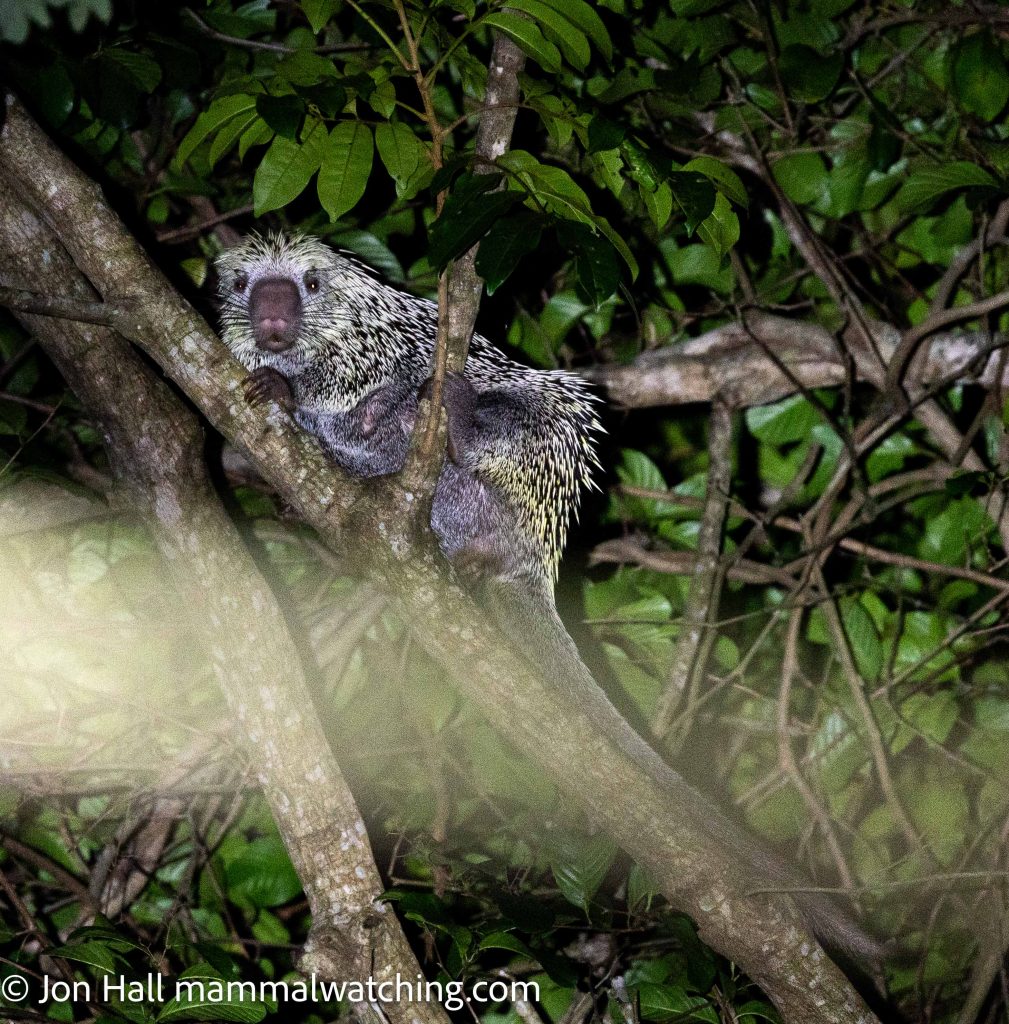
Yellow Quill-tipped Porcupine (Coendou prehensilis)
After great views of three mouse opposums ,which I think were all Bare-tailed Woolly Opossums, my thermal found the first of two Brazilian Porcupines. Boom! There are so few photos of this species that the Field Guide to the Larger Mammals of South America has a picture only of a dead one on a railway line (potentially the same railway line we were walking along in the forest).
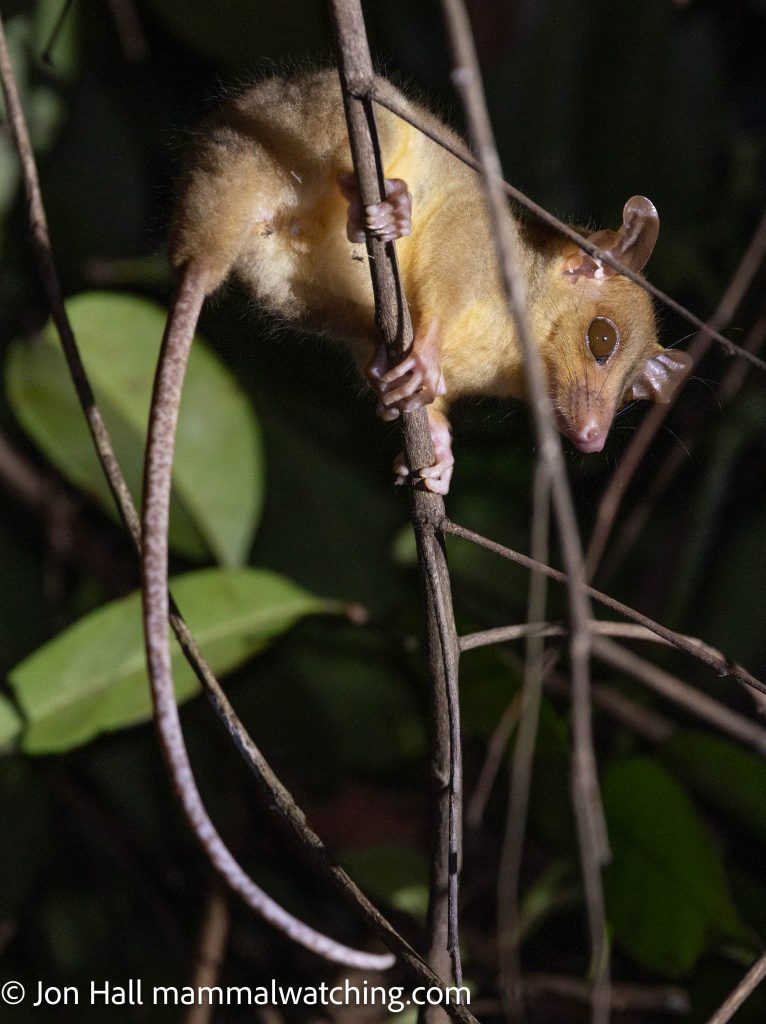
Bare-tailed Woolly Opossum (Caluromys philander)
We also saw three Brown-throated Three-toed Sloths and a Great Fruit Eating Bat feeding on a fruit that looked heavier than the bat itself.
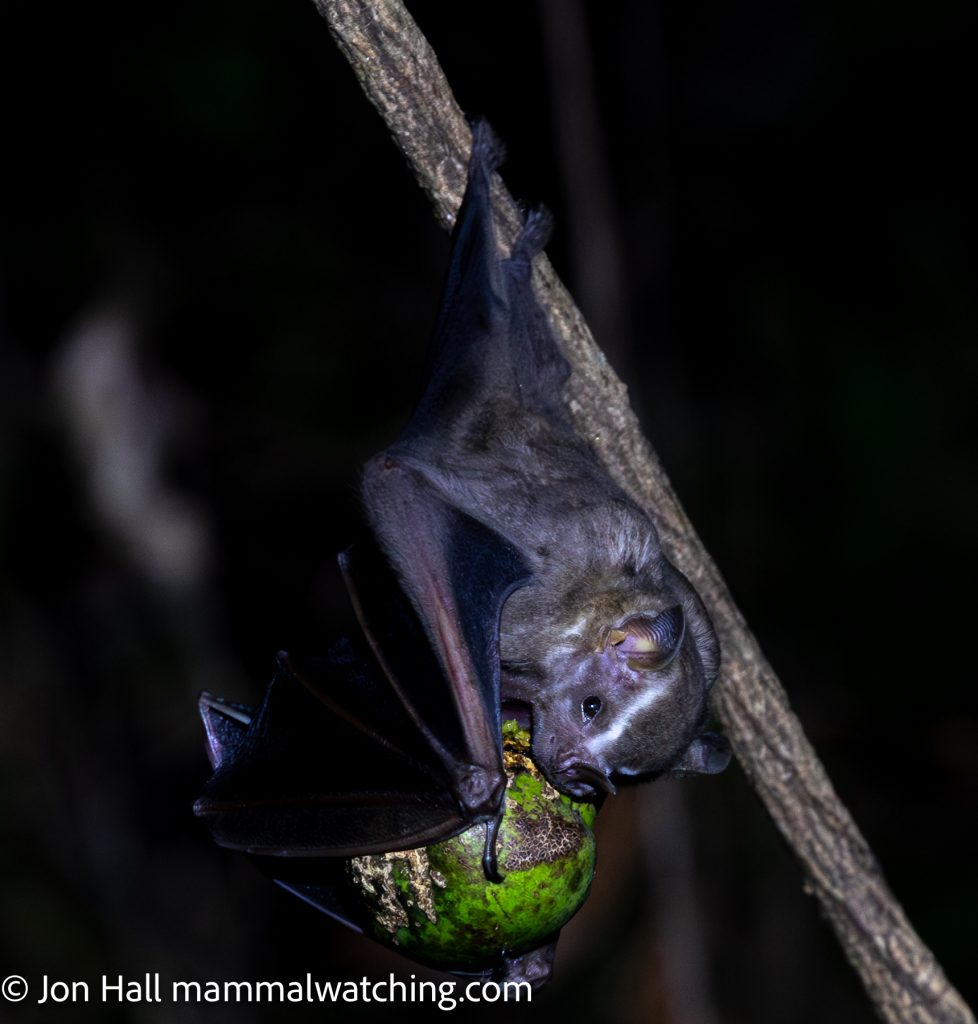
Great Fruit-eating Bat (Artibeus lituratus)
Not bad in an hour and a half! A reminder of what mammalwatching is like when people are kept out of an area.
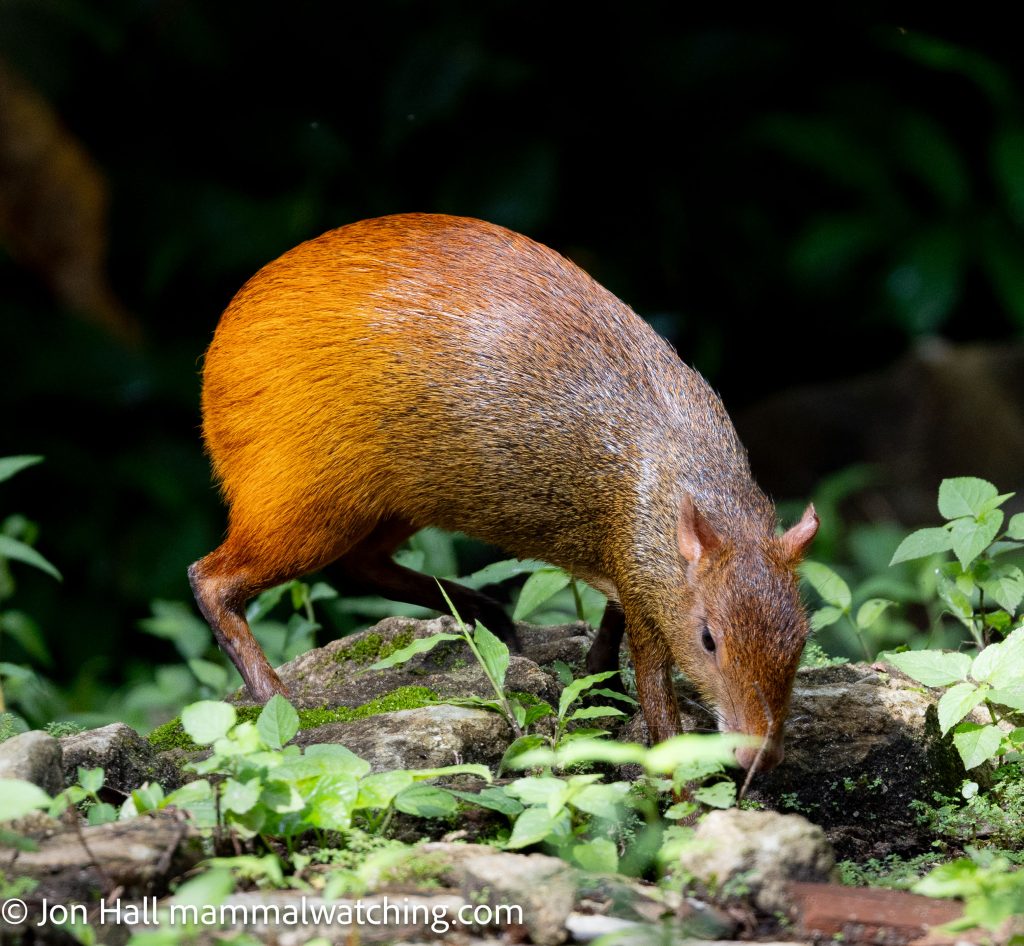
Iack’s Red-rumped Agouti (Dasyprocta iacki)
The next morning we visited the local zoo to see the Iack’s Agoutis that live wild in the Arruda Câmara Zoo and around the car park. Reginaldo spotted one from the car park before the zoo had even opened. It took about two minutes to find some more once we were inside.
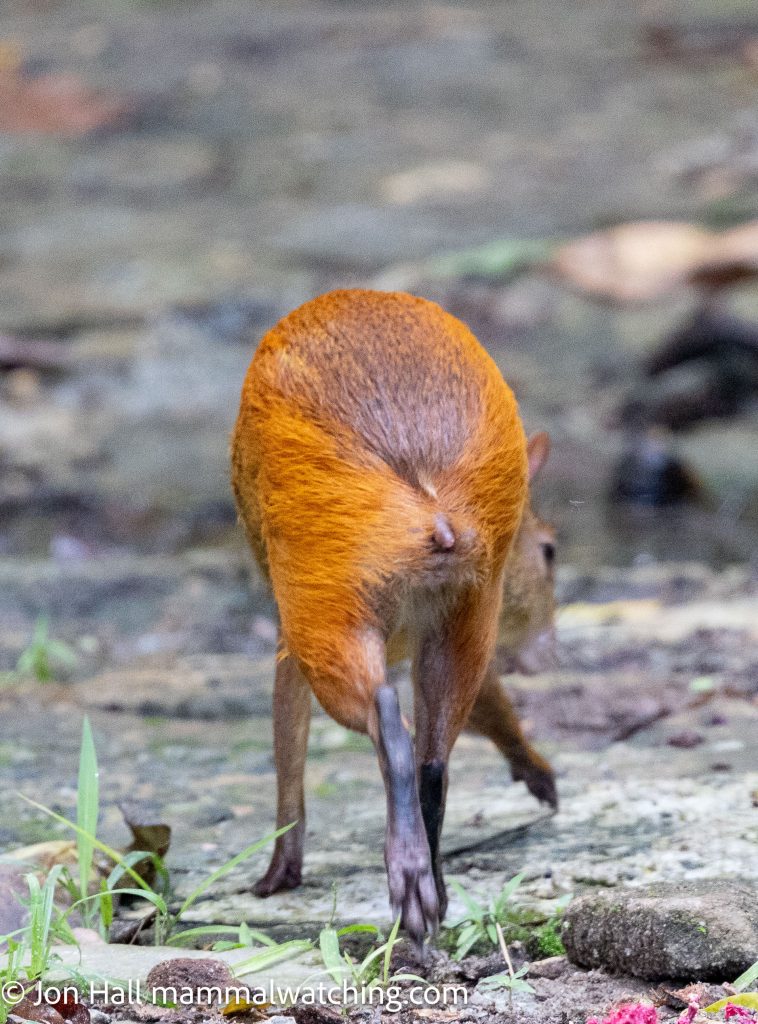
Iack’s Red-rumped Agouti (Dasyprocta iacki)
There were Common Marmosets here too.
And then it was a seven hour – that turned into nine hour – drive to the small town of Mossoro in Rio Grande del Norte where we spent the night to break the long drive north to Guaramaringa.
Guaramaringa, June 6 & 7
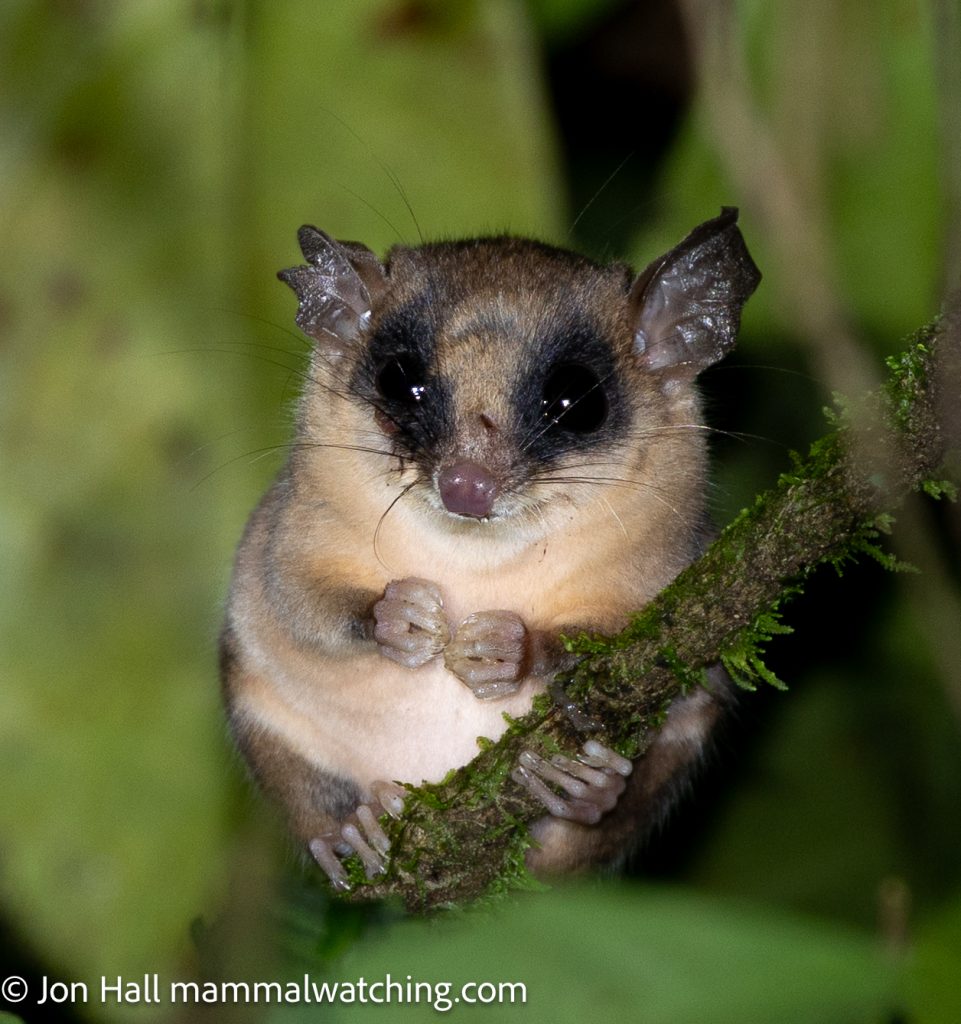
The main tour ended with two nights in the small town of Guaramaringa, 2 hours’ drive inland from Fortaleza. We were up at about 800 metres on the Baturité Massif, in search of our last target: the Baturité Porcupine.
We stayed at a simple hotel on the edge of the forest. It had been raining for the past two days and the only dry things in my room were the ants. For the first time on the trip I set a few Sherman traps around the hotel. I didn’t catch anything but while we were setting them we disturbed a noisy roost of Common Vampire Bats in a hollow stump close to the hotel.
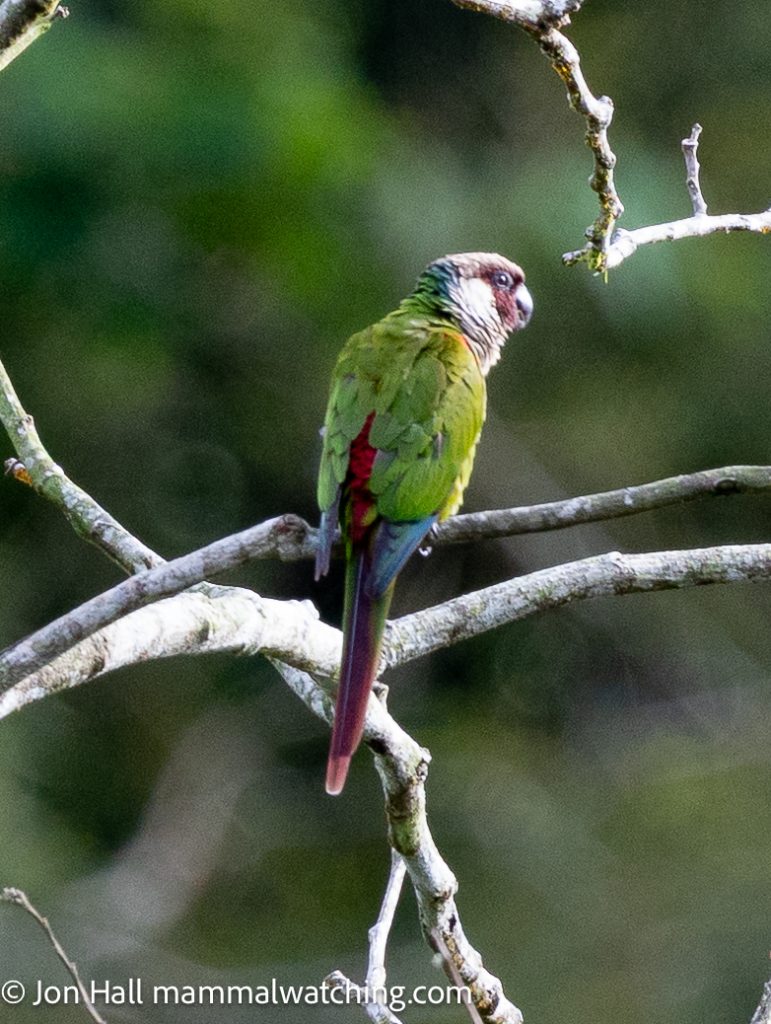
Our local guide here, Jonas Cruz, works for the Gray-breasted Parakeets Project, led by the Aquasis Organization that has successfully protected the species and brought them back from the edge of extinction.. Jonas took us on a walk around Parque das Trilhas in search of the parakeets.
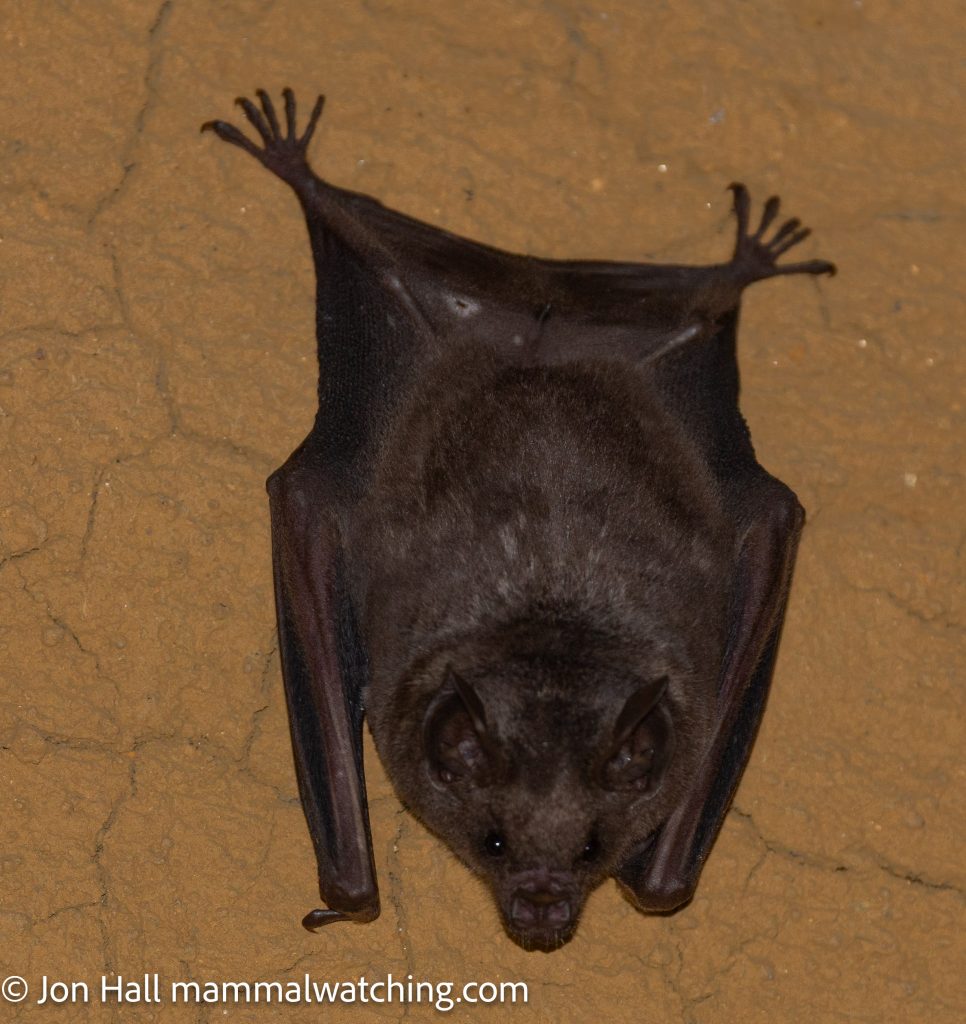
Seba’s Short-tailed Bat (Carollia perspicillata)
After a slice of one of the greatest cakes I have ever tasted at the house of the park owner, we walked into the forest and found a couple of bats inside an abandoned building: Pallas’s Long-tongued Bat was new for the trip as was Seba’s Short-tailed Bat.
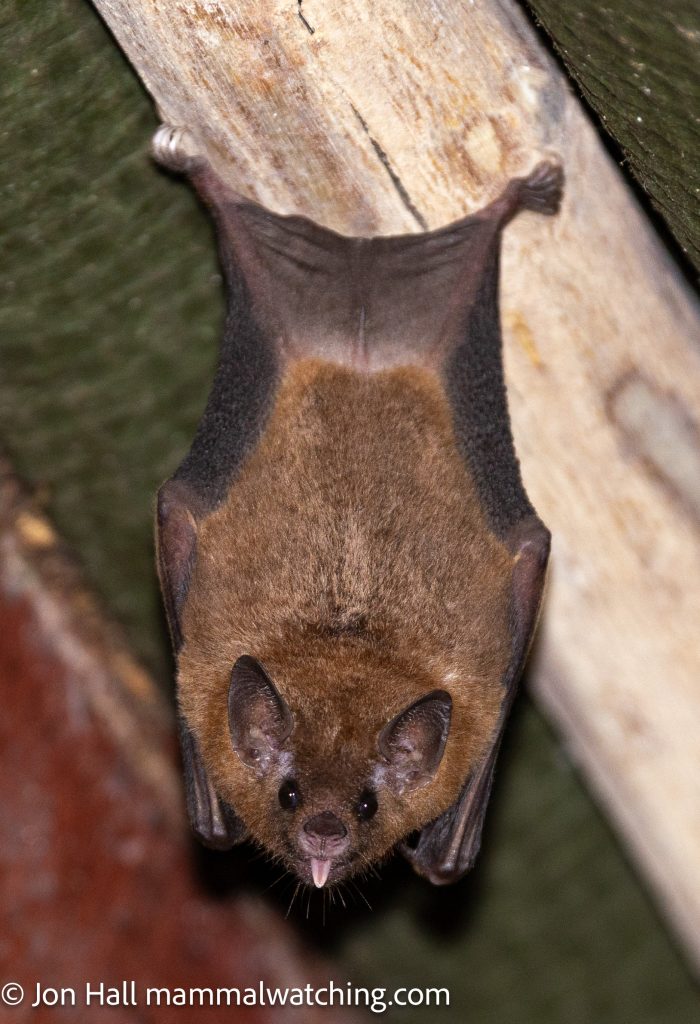
Pallas’s Long-tongued Bat (Glossophaga soricina)
At dusk a small lake was alive with fishing bats and Daniel managed to get some pics of them in flight. Most appeared to be strangely pale Lesser Bulldog (Fishing) Bats though there was a least one much larger Greater Bulldog (Fishing) Bat among them.
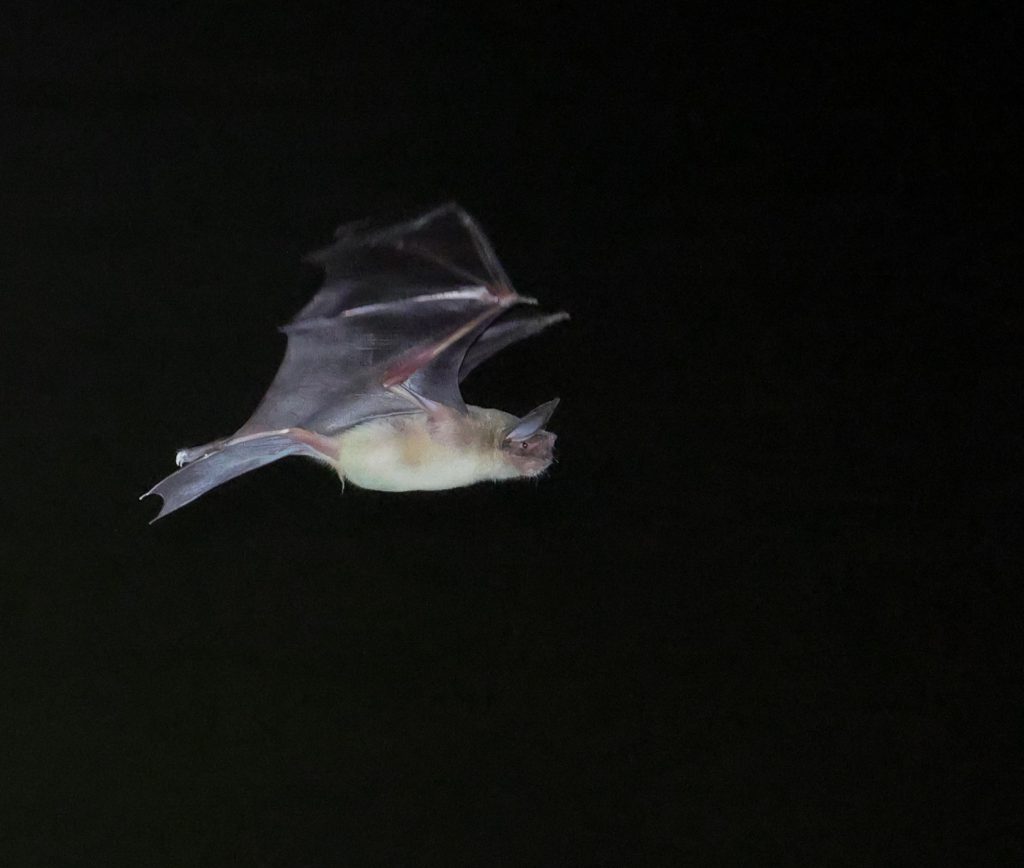
Lesser Bulldog Bat (Noctilio albiventris). Photo Daniel Dahan
We went in search of the porcupines. The first mammal we saw was a Cariri Climbing Rat, which seems destined to be split to Baturite Climbing Mouse soon.
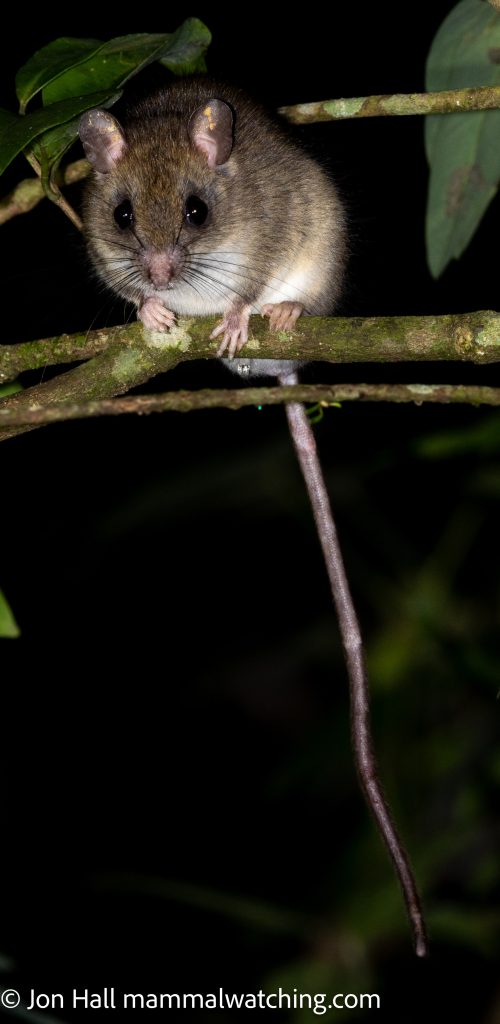
Cariri Climbing Rat (Rhipidomys cariri)
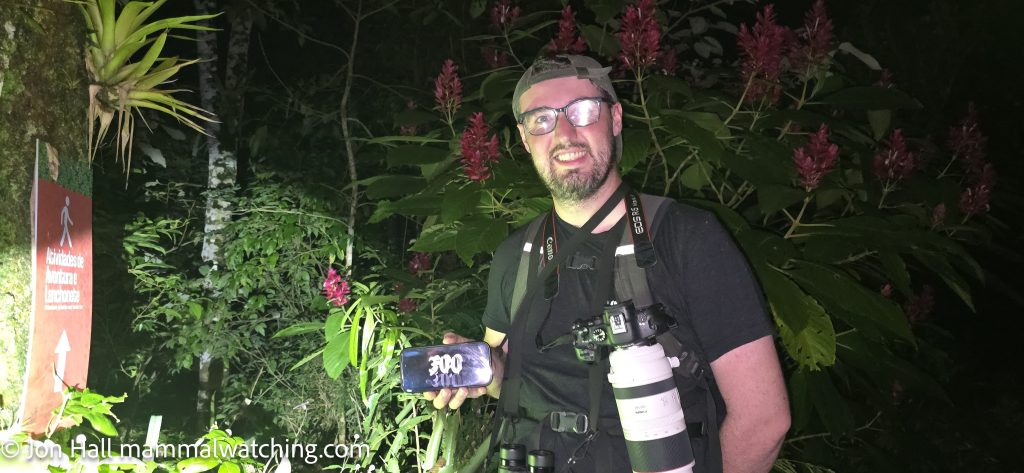
Either way, it was a lifer for us all and William’s 300th species. This animal – and many other sightings over the next two nights – cooperated perfectly to give wonderful views.
After more climbing mice, Linnaeus’s Mouse Opoosums and a Northern Black-eared Opossum we found our first Baturité Porcupine.
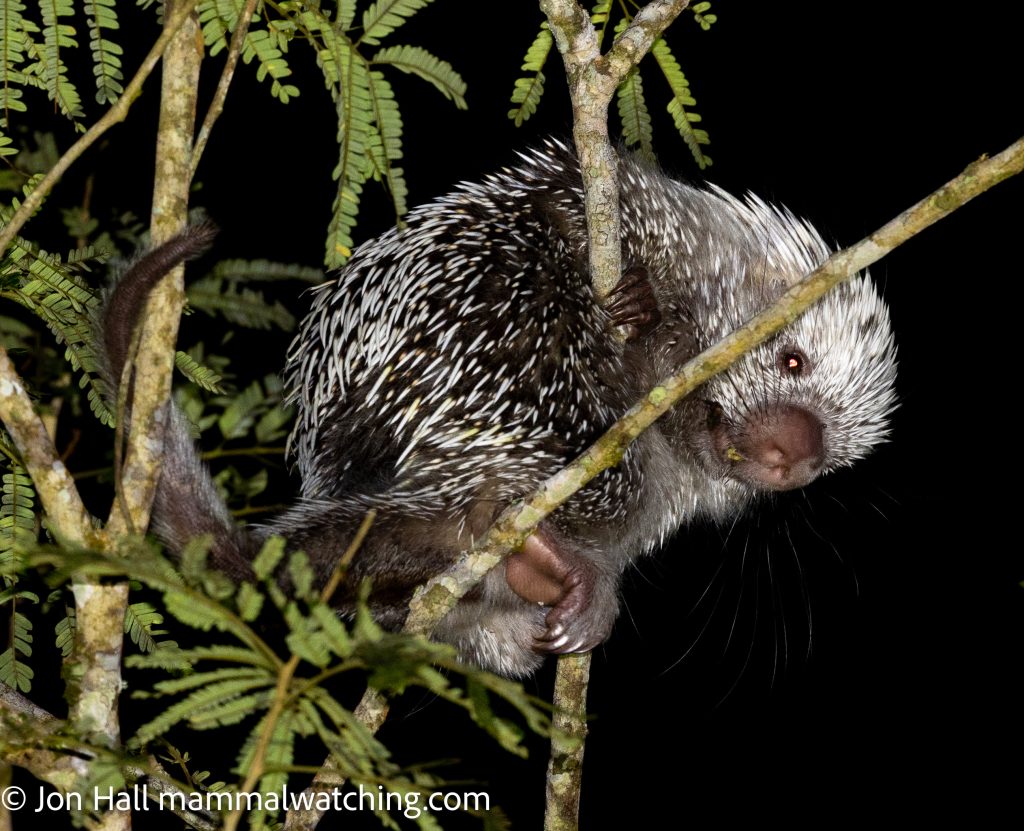
Baturité Porcupine (Coendou baturitensis)
Mission accomplished. We had seen all of our targets for the trip! Which was extraordinary given how many targets we had and how rare many of them are.
There was nothing in the traps the next morning and it was raining heavily so we took the morning off and went for lunch at 1pm. Lunch was excellent. And slow. We passed our time looking at a distant porcupine from the restaurant patio: it looked much paler than the animal we had seen the night before.
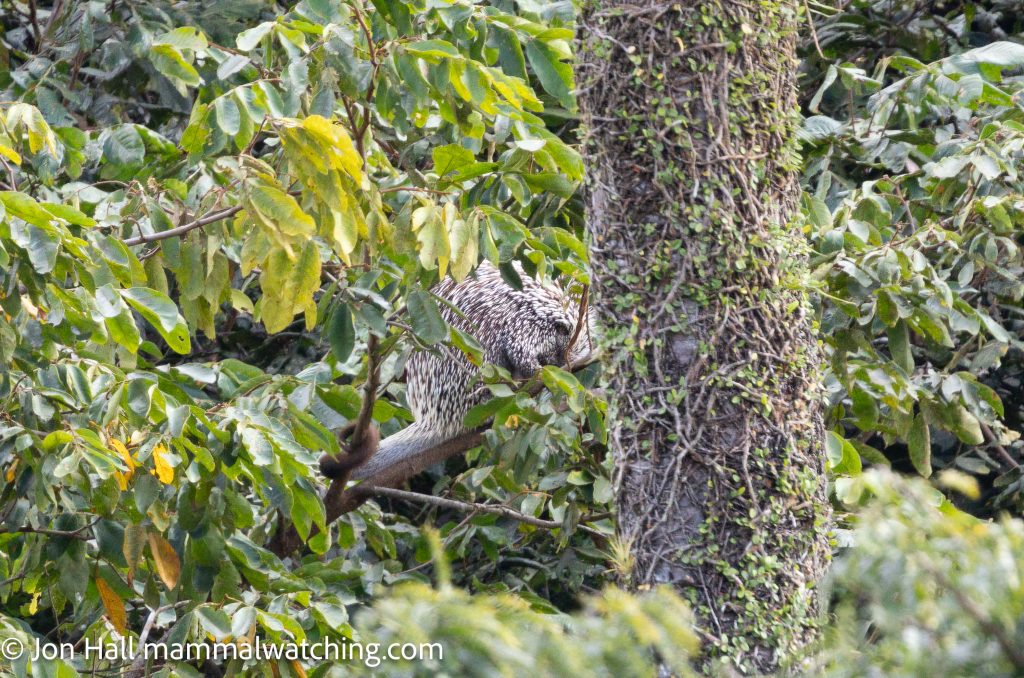
Baturité Porcupine (Coendou baturitensis)
In the late afternoon Jonas took us to Sitio São Luis, an historic coffee plantation and museum, of the endemic Sao Lourenço Punare rat.
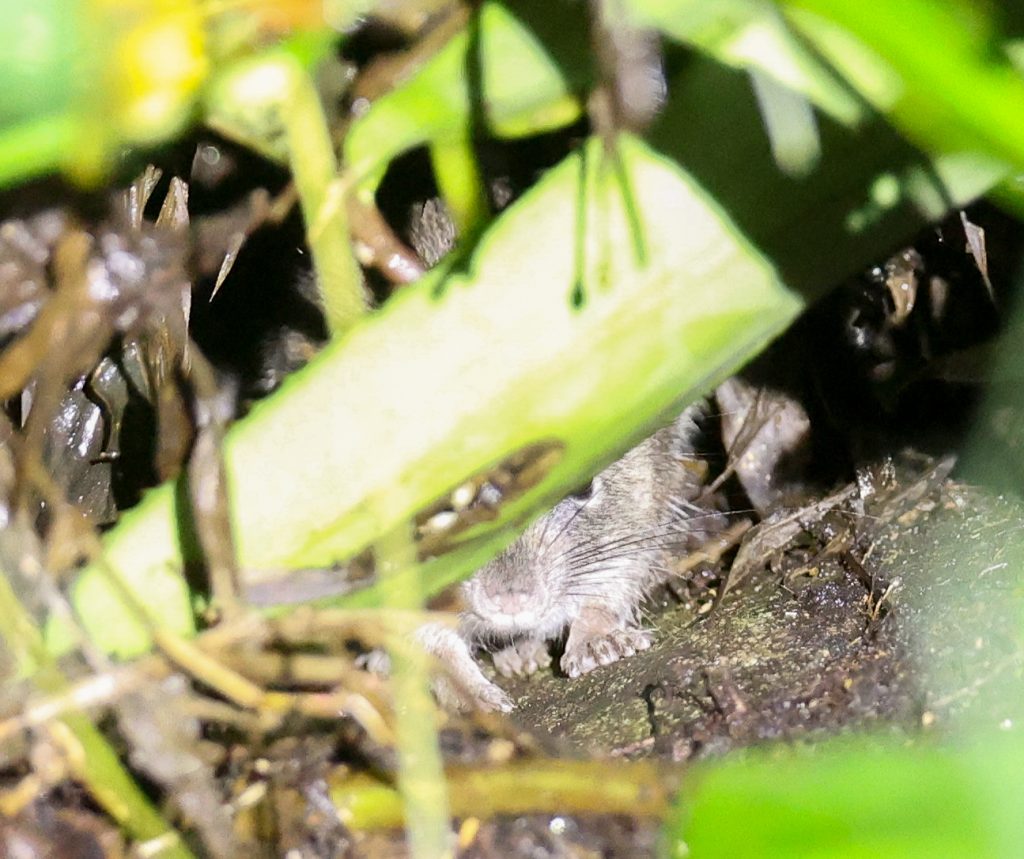
Sao Lourenço Punare (Thrichomys laurentius). Photo Daniel Dahan
Thanks to my thermal we found one peeping out from underneath a bank of earth at the edge of the forest near some rocks (Jonas said they liked rocky habitat). Although it didn’t emerge fully, Daniel managed the impossible and got photos.
We wanted better views of the rat so Jonas took us to the parakeet project HQ, where the forest was – he said – excellent for the punares: he often saw them around the abandoned buildings along the trail there.
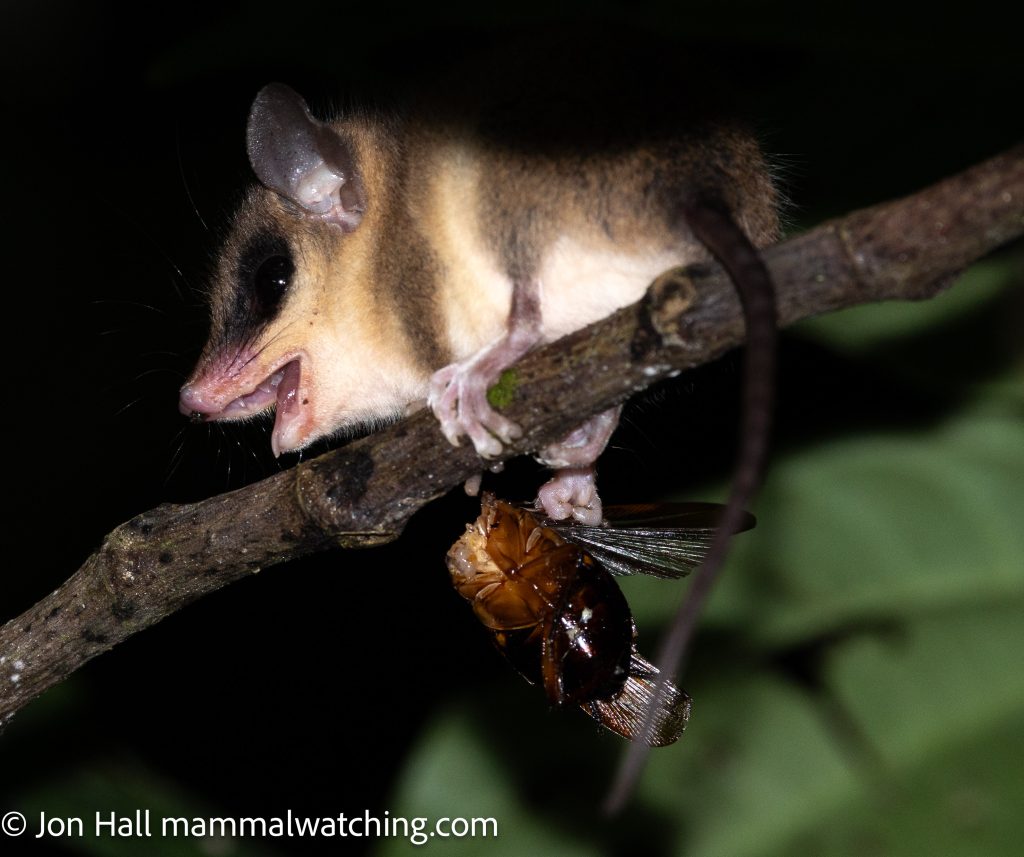
Linnaeus’s Mouse Opossum (Marmosa murina)
The next four hours turned into one of the best night walks of my life. It was spectacularly productive. I don’t remember ever having seen so many individual animals on a forest walk before.
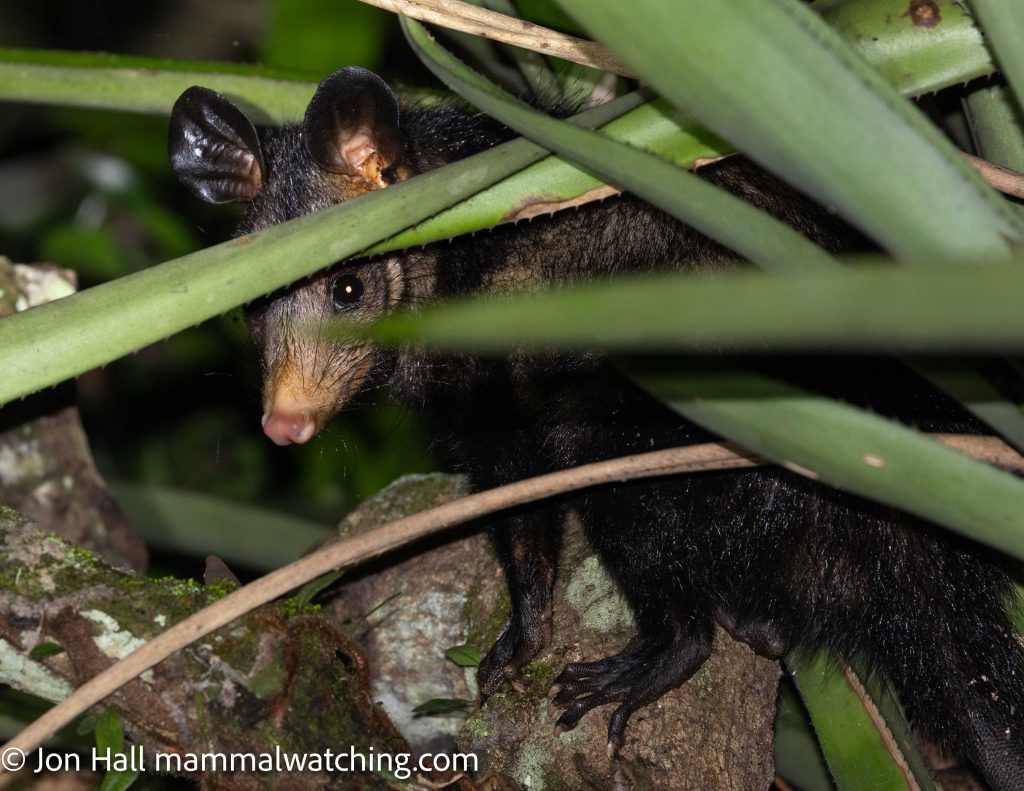
Northern Black-eared Opossum (Didelphis marsupialis)
We saw dozens of Cariri Climbing Mice and Linnaeus’s Mouse Opossums, one of which was munching on a roach. At one stage, every time I lifted my thermal scope I saw an animal and gave up trying to identify most of them as there was always something else ahead.
We also saw four Northern Black-eared Opossums and the trips’s first Southern Nine-banded Armadillo, followed by another four, though none stayed still long enough for photos, along with our first Southern Tamadua of the trip.
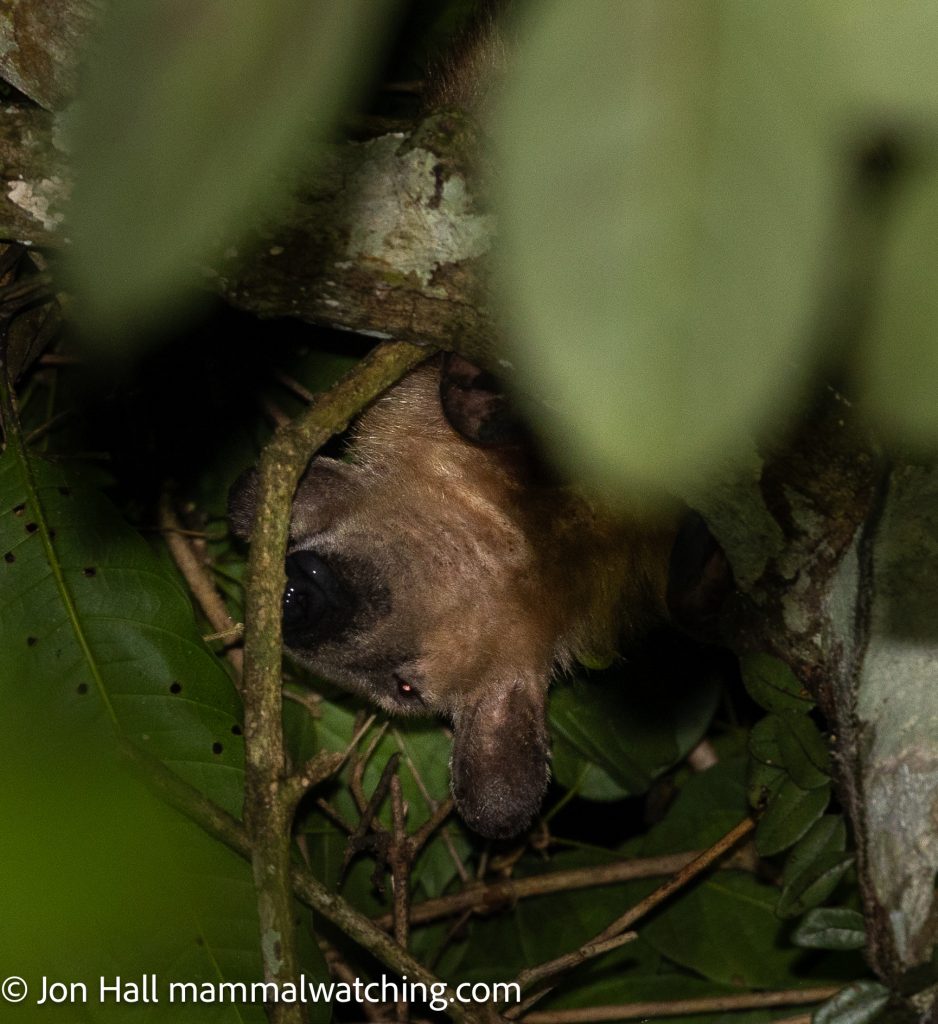
Southern Tamandua (Tamandua tetradactyla)
And we saw at least another five Baturité Porcupines.
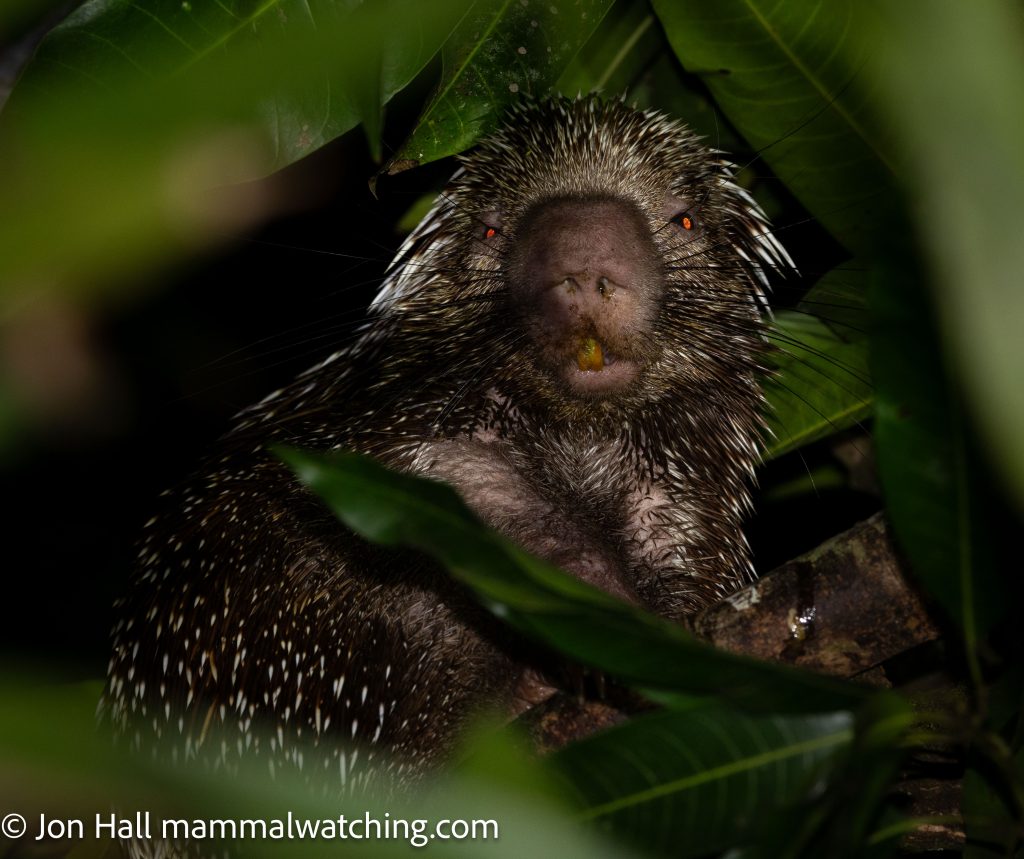
Baturité Porcupine (Coendou baturitensis)
Surprisingly, given the quantity of mammals, we couldn’t find the punares we had come to see, but we did photograph this small rat that appears to be a pygmy rice rat (thank you Fiona Reid and Venkat Sankar for helping). Based on photos on naturalist it looks like it should be Straw-colored Pygmy Rice Rat, my 19th lifer of the trip..
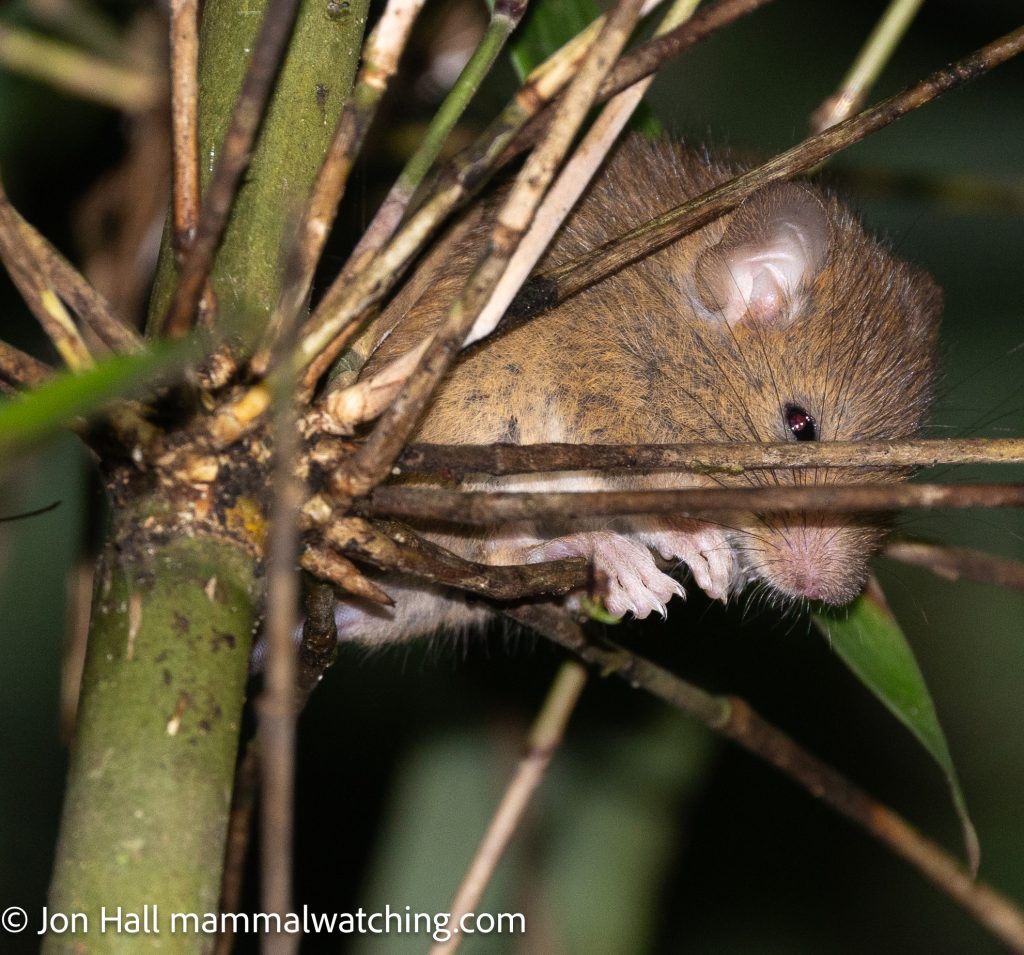
Straw-colored Pygmy Rice Rat (Oligoryzomys stramineus)
I estimate we saw well over a hundred animals from seven species over the course of 4 hours. Astounding!
And on this high note the main trip was complete. Kevin would return to the UK the next day while the rest of us – minus Reginaldo – continued on for the extension to Santarem – via Manaus – and Belem.
Amazon Extension
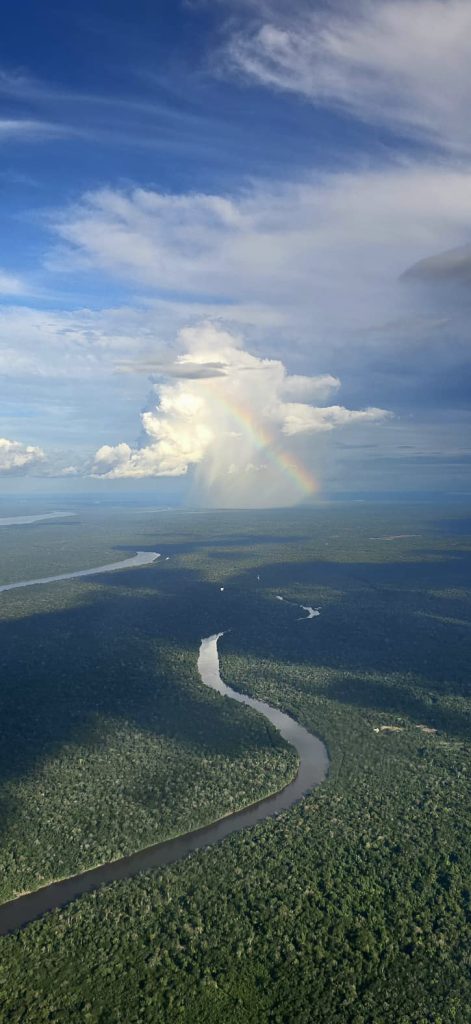
Rainbow over Belem. Photo Daniel Dahan
Manaus, June 9
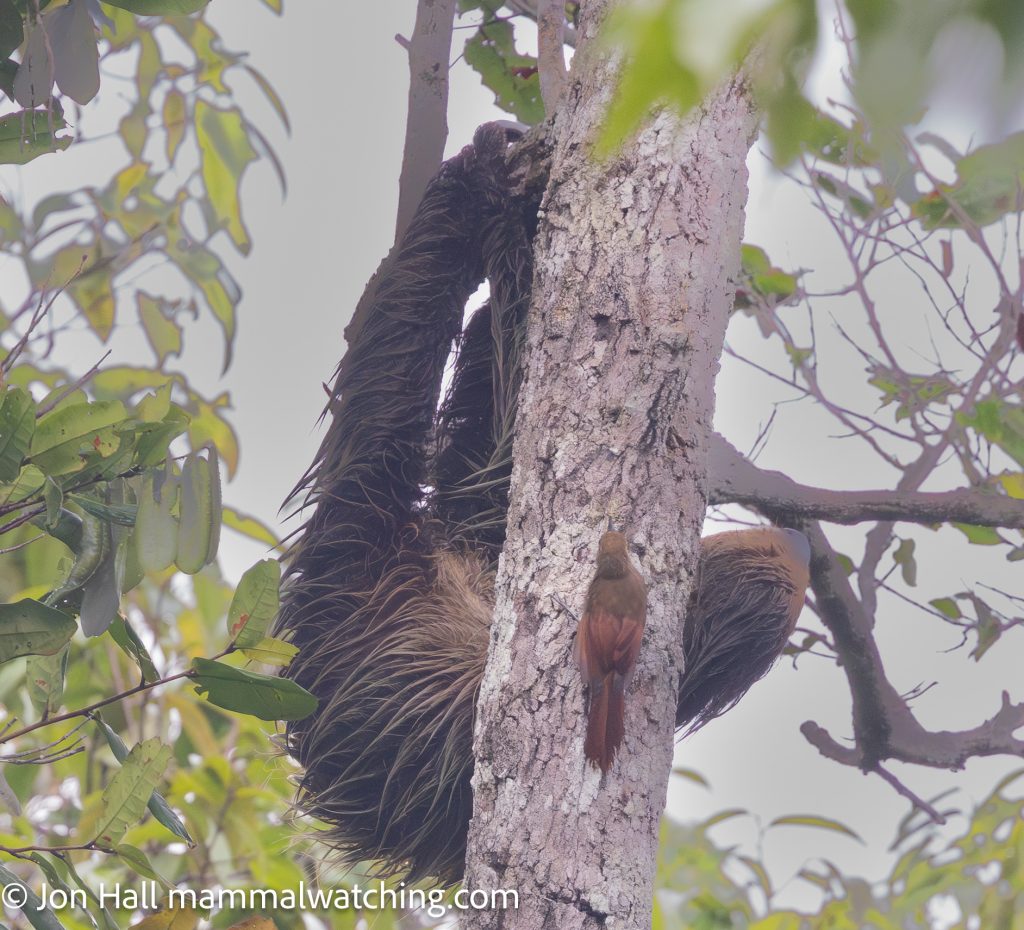
Linnaeus’s Two-toed Sloth (Choloepus didactylus), Manaus
The post tour extension took us to Santarem and Belem in the Amazon. We were originally scheduled to fly direct from Fortaleza to Santarem but a change of flights meant we had an overnight stop over in Manaus. This turned into a great detour as we were able to meet up with the famous Moacir Fortes – aka Junior – who runs mammalwatching river cruises through the Amazon, including a superb trip I took with Fiona Reid back in 2017.
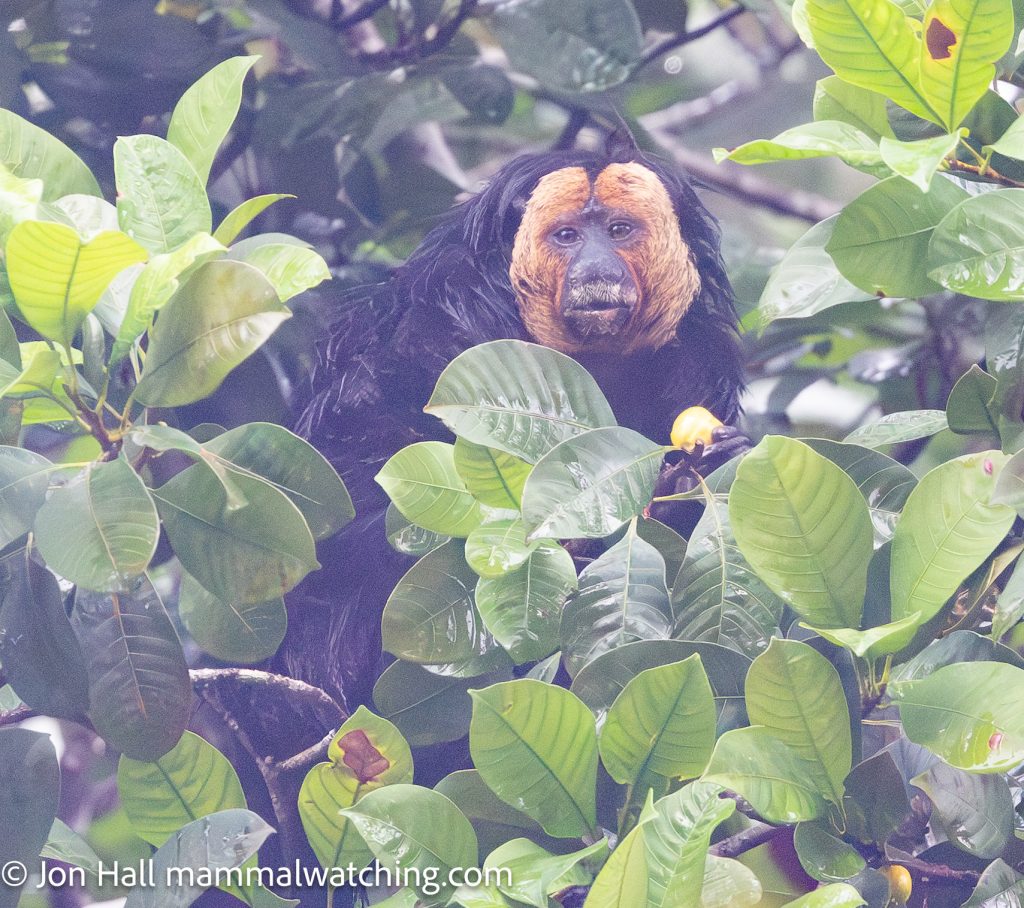
Golden-faced Saki (Pithecia chrysocephala)
Junior has discovered a patch of forest around a condominium near Manaus airport which is great for several species. We met at dawn and within half an hour we had seen two very rare and very local primates: Golden-faced Saki and Pied Bare-faced Tamarin. If my camera hadn’t fogged up I might have gotten some decent pictures.
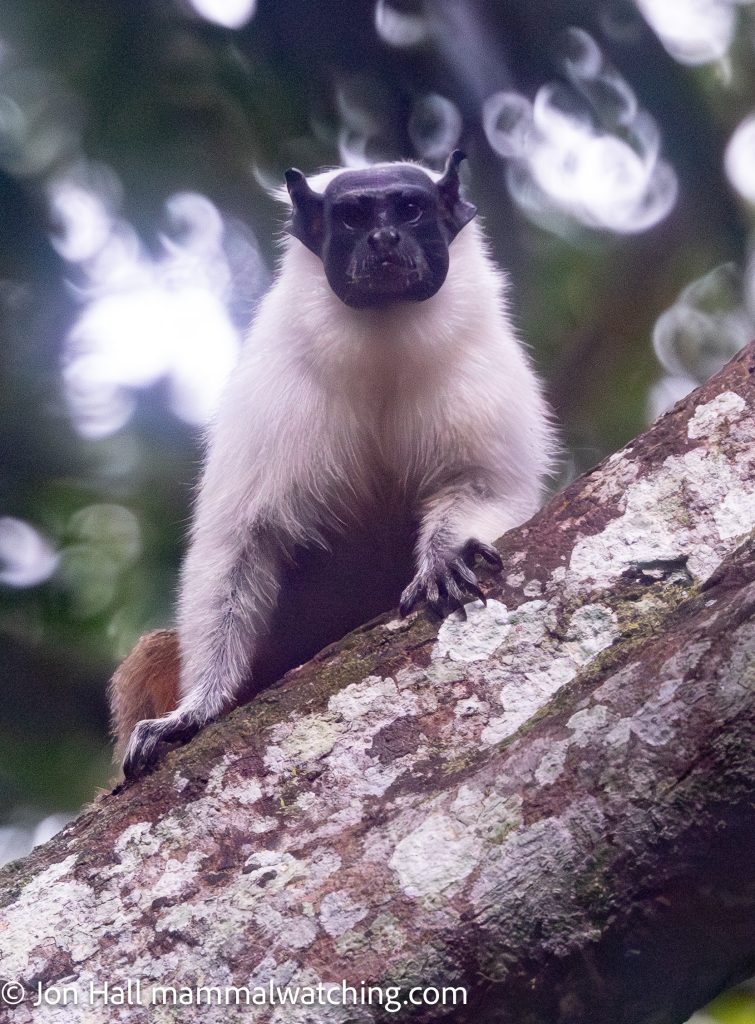
Pied Bare-faced Tamarin (Saguinus bicolor)
We still had an hour before we needed to be at the airport so Junior took us in search for two sloth species: Linnaeus’s Two-toed and Pale-throated Three-toed Sloths. We found both without too much trouble.
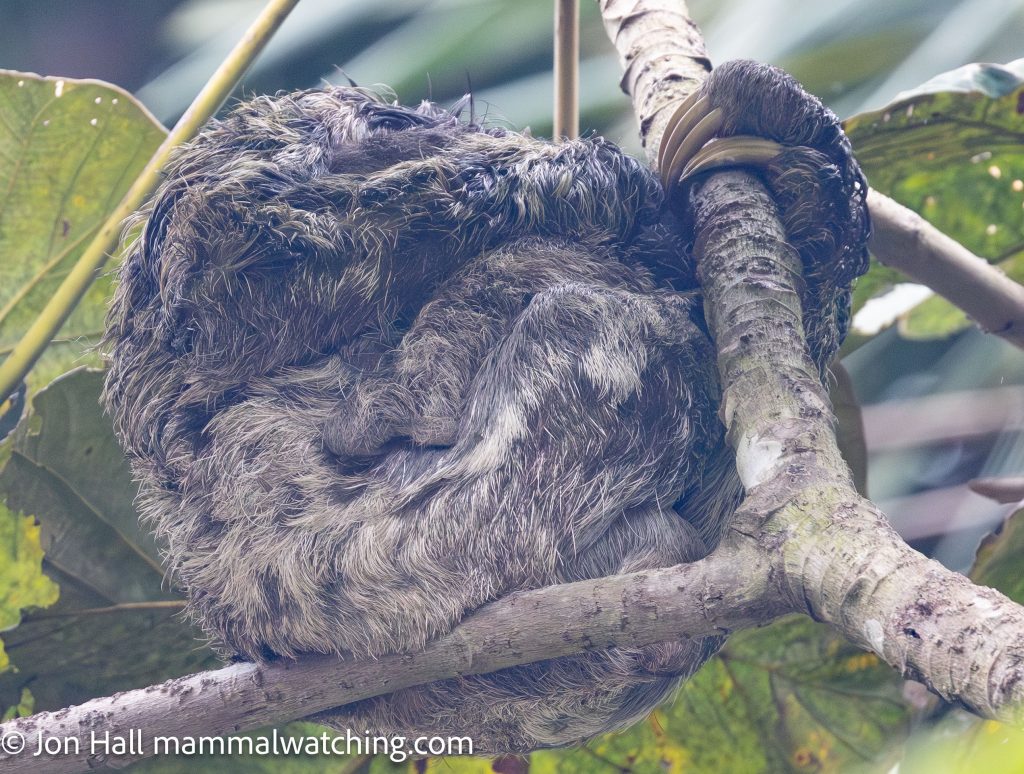
Pale-throated Three-toed Sloth (Bradypus tridactylus)
Alter Do Chão, June 9 & 10
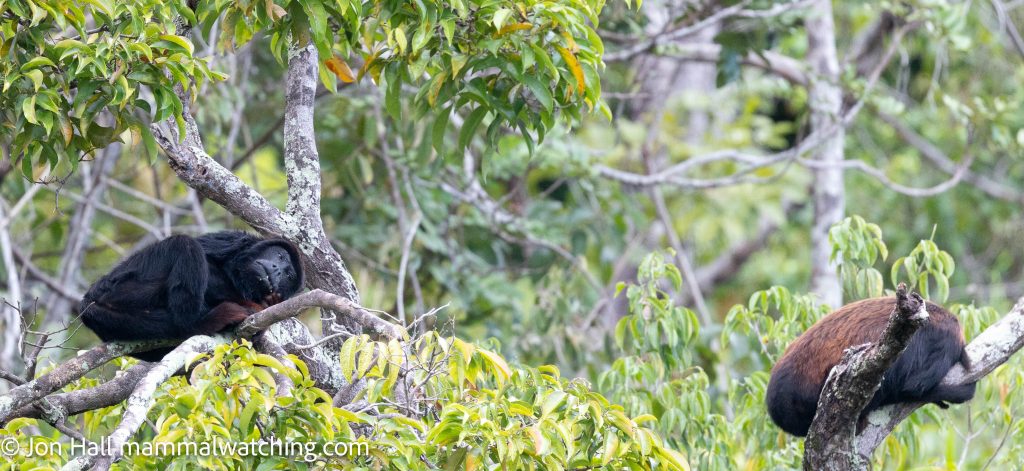
Spix’s Red-handed Howler (Alouatta (discolor) tapajozensis)
We flew to Santarem in the late morning and met our guide Pierre who took us immediately to the Santarem fish market on the banks of the Amazon. Clearly the only good reason to visit a fish market is to look for dolphins and we were there to see the Botos which visit every day in search of free food and – I suspect – some intellectual stimulation.
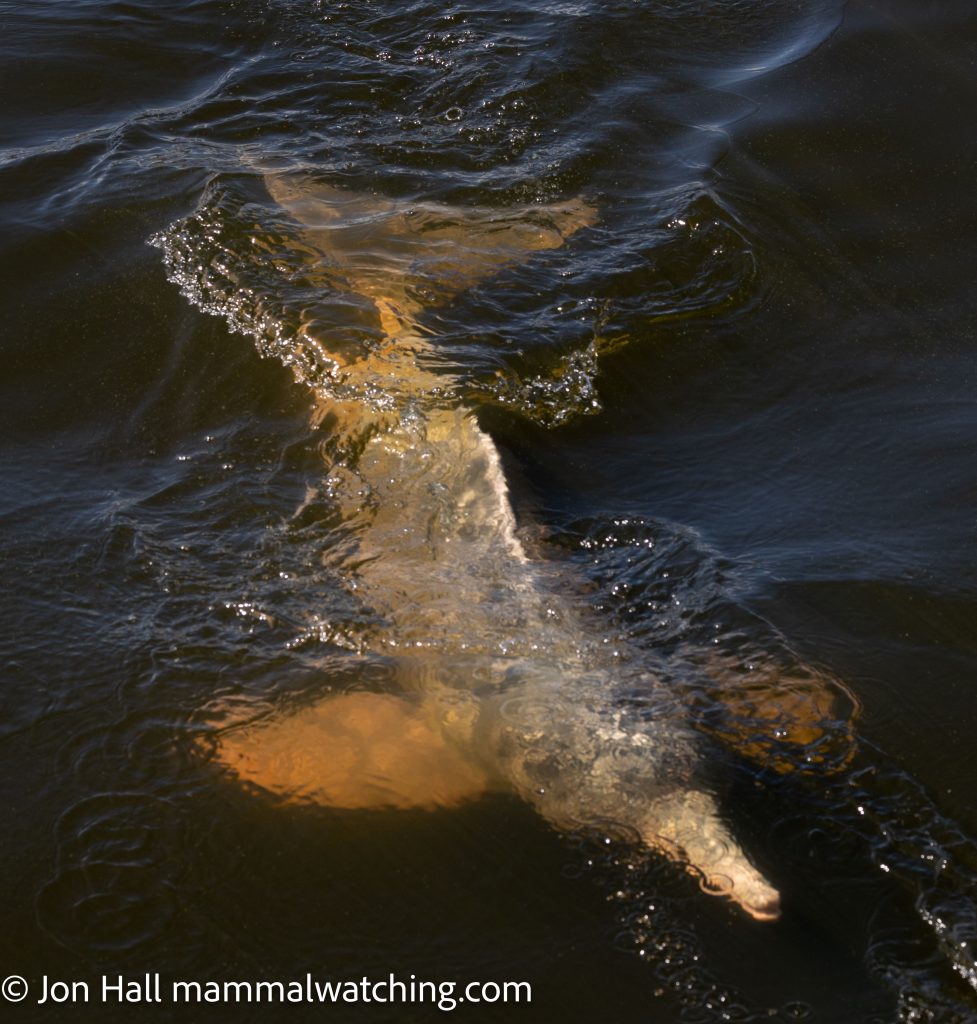
Amazon River Dolphin or Boto (Inia geoffrensis)
It took an hour to drive to our base in Alter Do Chão where we spent the next two nights in the very nice Pousada Recanto do Alter on the edge of the forest.
Our targets here were Silvery Marmosets and Spix’s Red-handed Howlers, along with Red-bellied Titis, Azara’s Night Monkeys and Golden-backed Squirrel Monkeys.
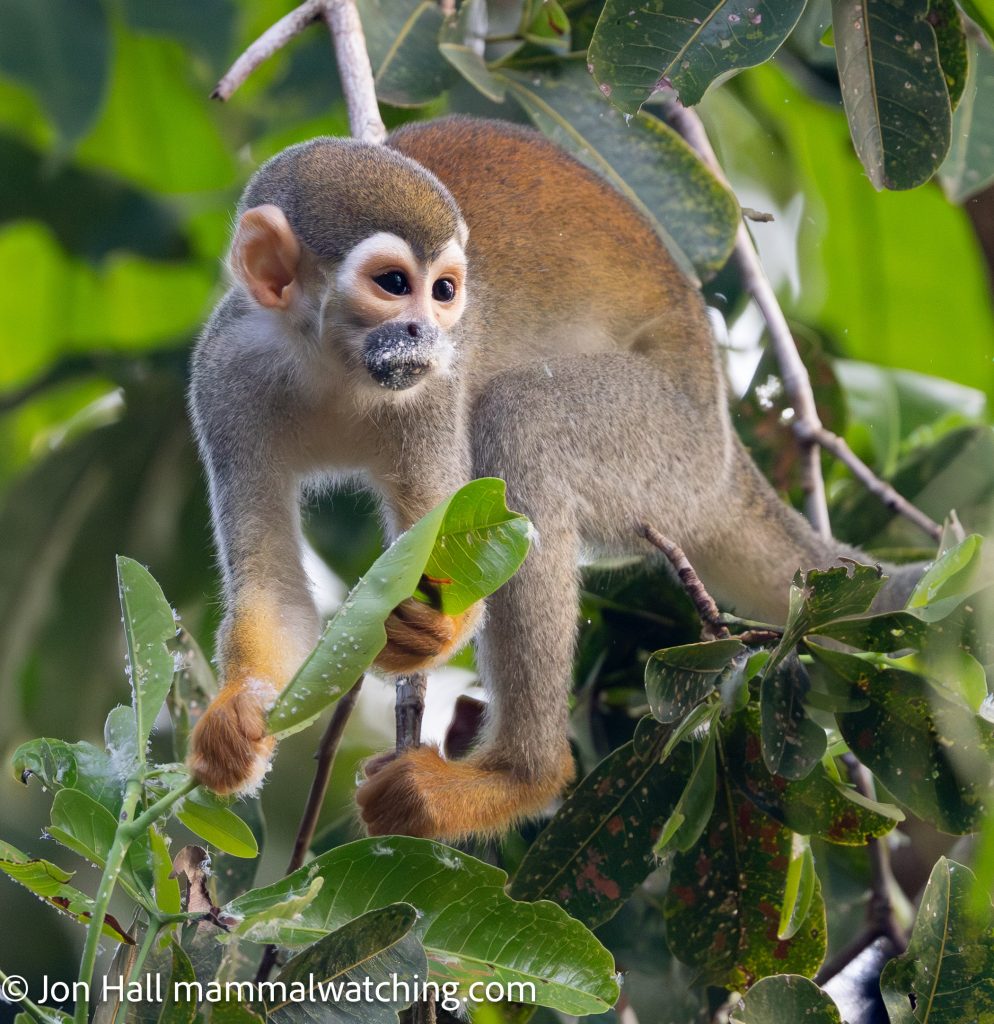
Golden-backed Squirrel Monkey (Saimiri ustus)
In the afternoon we heard the howlers and saw a large troop of Golden-backed Squirrel Monkeys near the hotel. It seems Collins’s Squirrel Moneys are in the area too so you need to check the ears: the Golden-backed have naked ears.
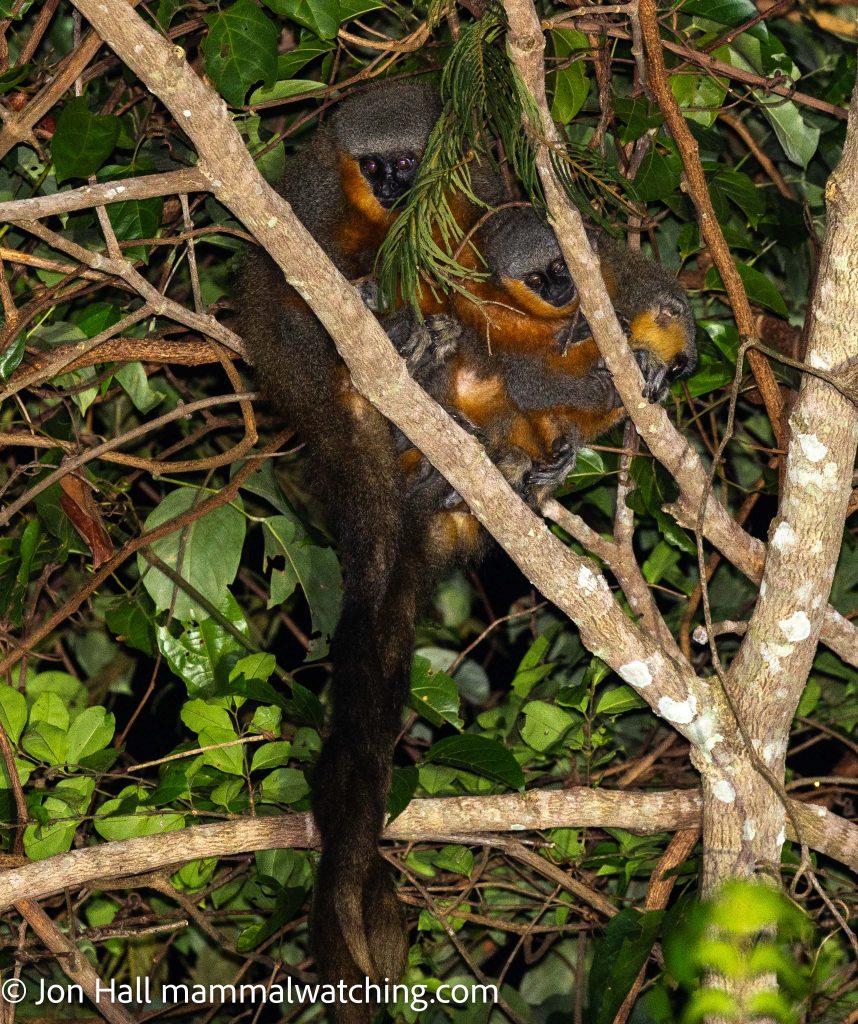
Red-bellied Titi (Plecturocebus moloch)
An Orange Agouti (Dasyprocta croconota) dashed across the road at dusk and Daniel grabbed a couple of photos with lightning reflexes!
During a night walk we found several new species, starting with these sleeping Red-bellied Titis, their tails intertwined,
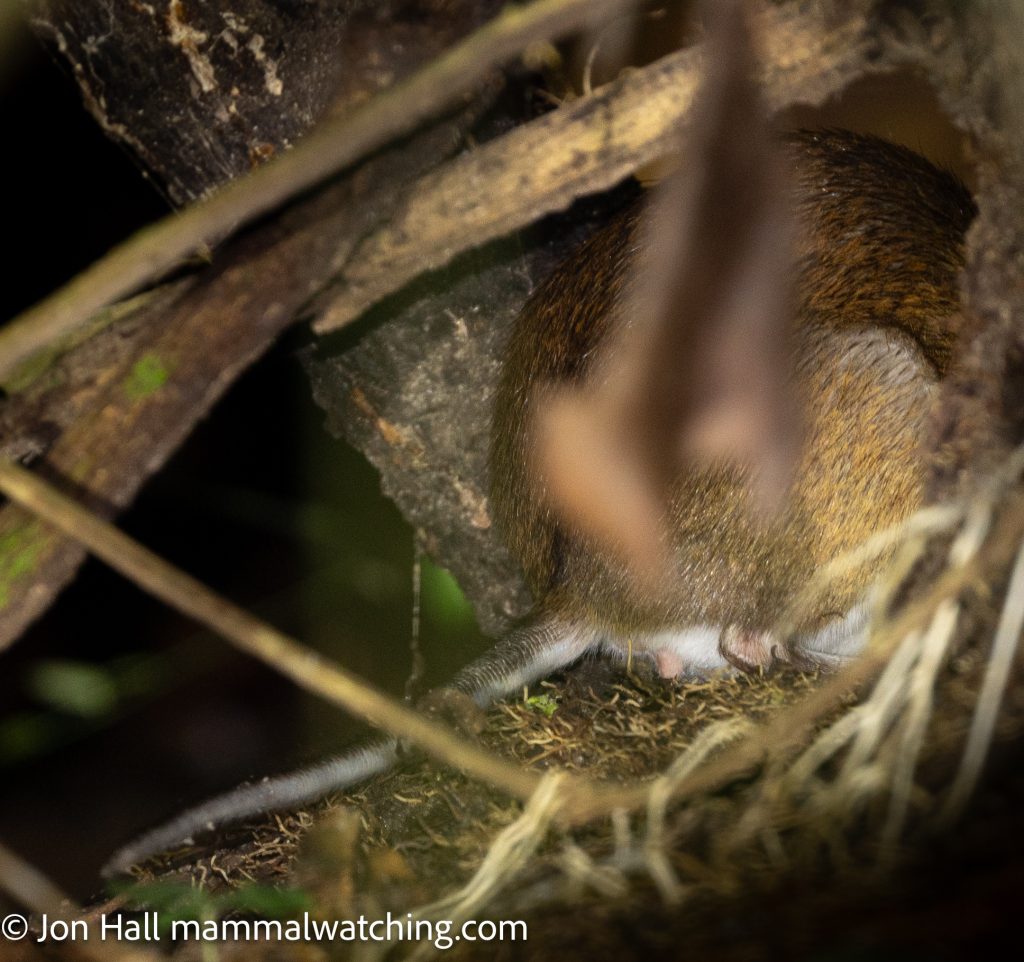
Goeld’s Spiny-rat (Proechimys goeldii)
A large proechimys rat wouldn’t cooperate for pictures but appears to be Robert’s Spiny Rat (see information in the species list at the end of the report on how we got to this ID). There are only three species in range: P. cuvieri, goeldii and roberti and the tail of this animal rules out cuvieri, while the colour and spinyness seems to be a better match for Proechimys goeldii rather than roberti according to an expert.
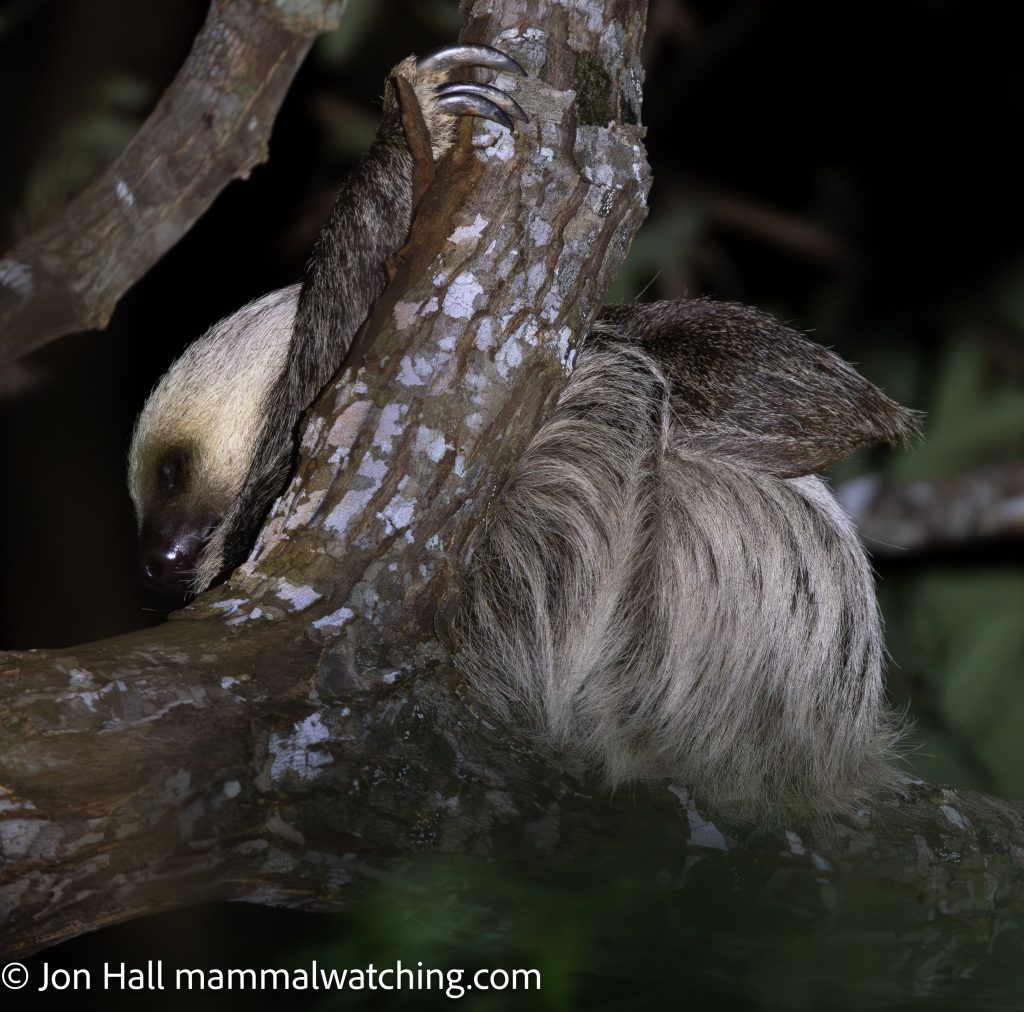
Linnaeus’s Two-toed Sloth (Choloepus didactylus)
We also saw Linnaeus’s two-toed Sloth above our rooms and our Bare-tailed Woolly Opposum.
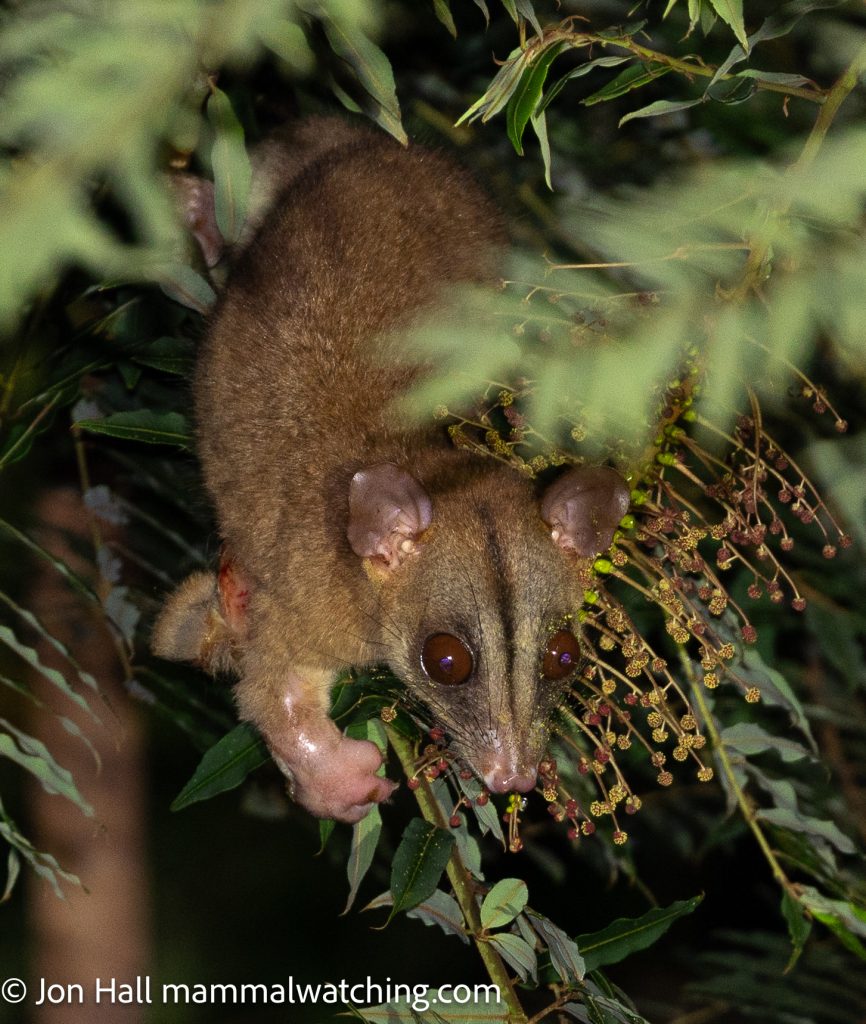
Bare-tailed Woolly Opossum (Caluromys philander)
That night and early the following morning we found two bats in the thermals that Fiona Reid thought were one of the Saccopteryx species, most likely Frosted Sac-winged Bat or possibly Amazonian Sac-winged Bat.
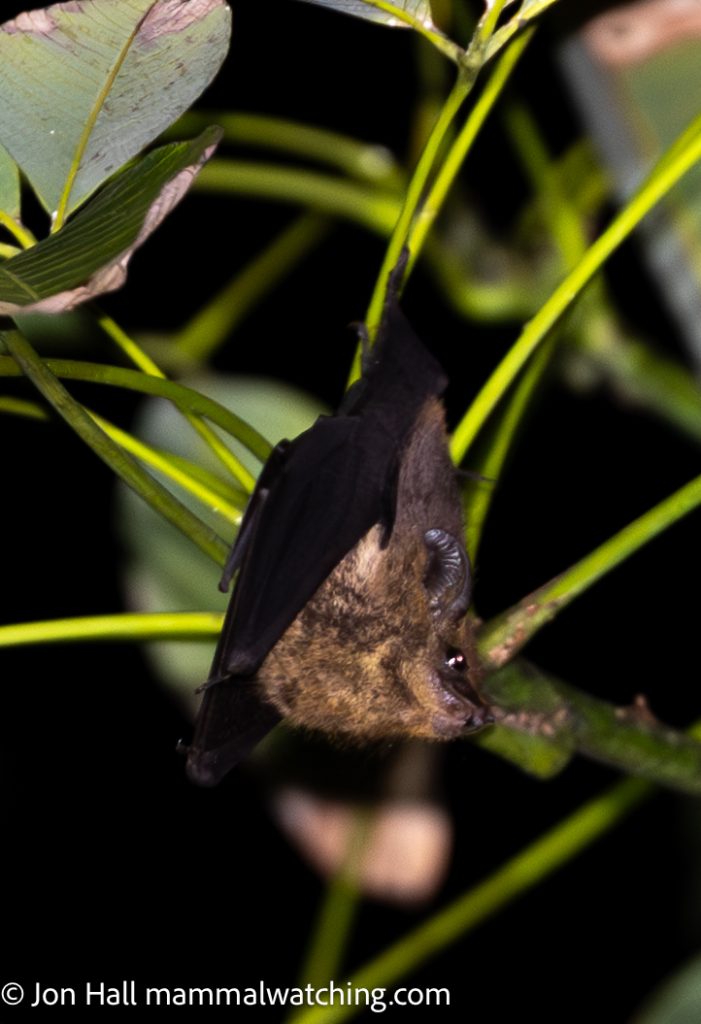
Sac-winged Bat species (Saccopteryx cf. canescens)
Later in the morning we saw Spix’s Red-handed Howlers in the distance and a roosting Greater White-lined Bat.
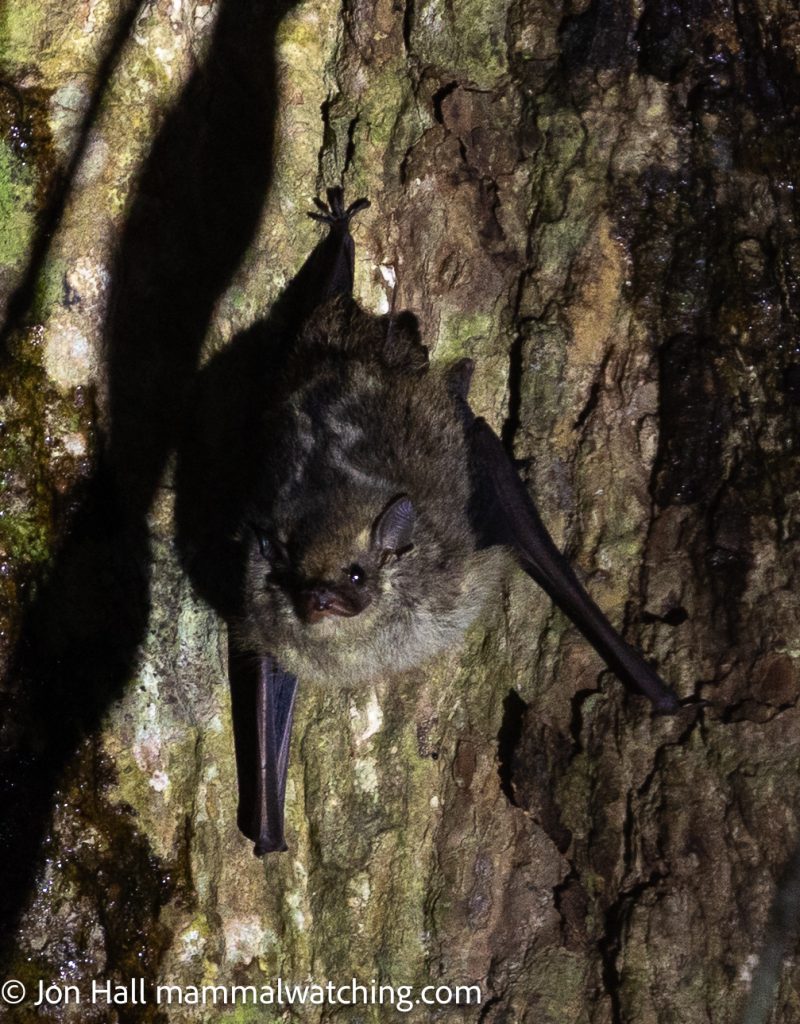
Greater Sac-winged Bat (Saccopteryx bilineata)
After breakfast we went in search of Silvery Marmosets around town. Before we found them we got better views of the howler monkeys.
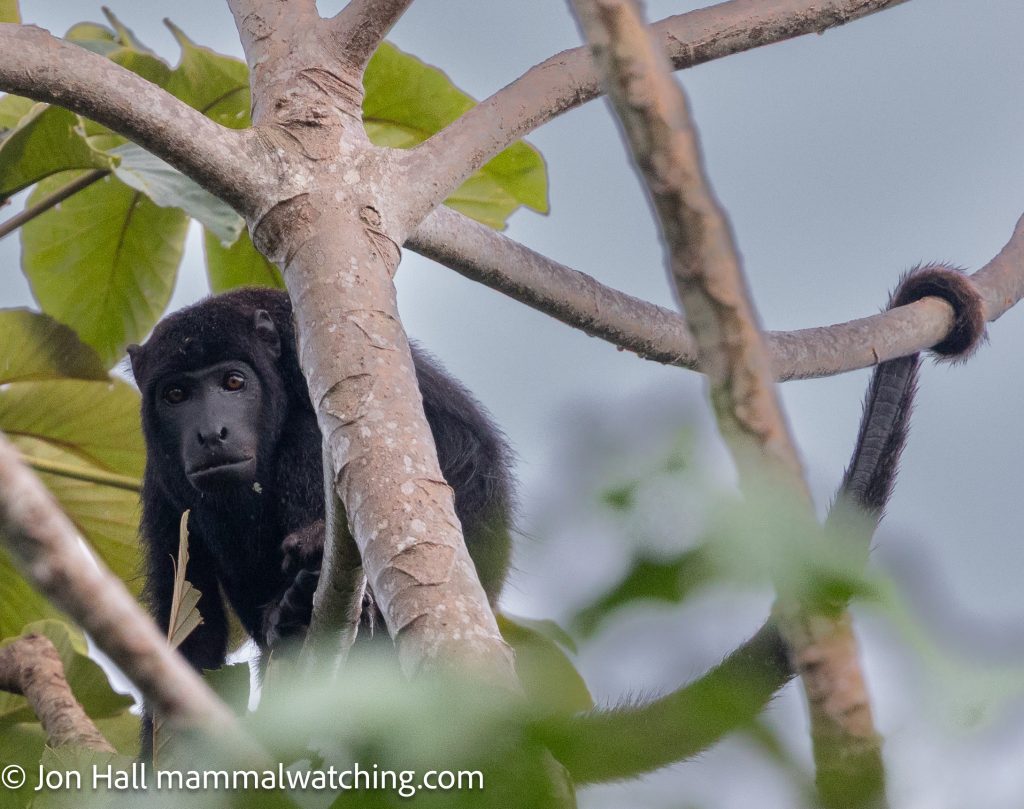
Spix’s Red-handed Howler (Alouatta (discolor) tapajozensis)
And then better views of the titi monkeys.
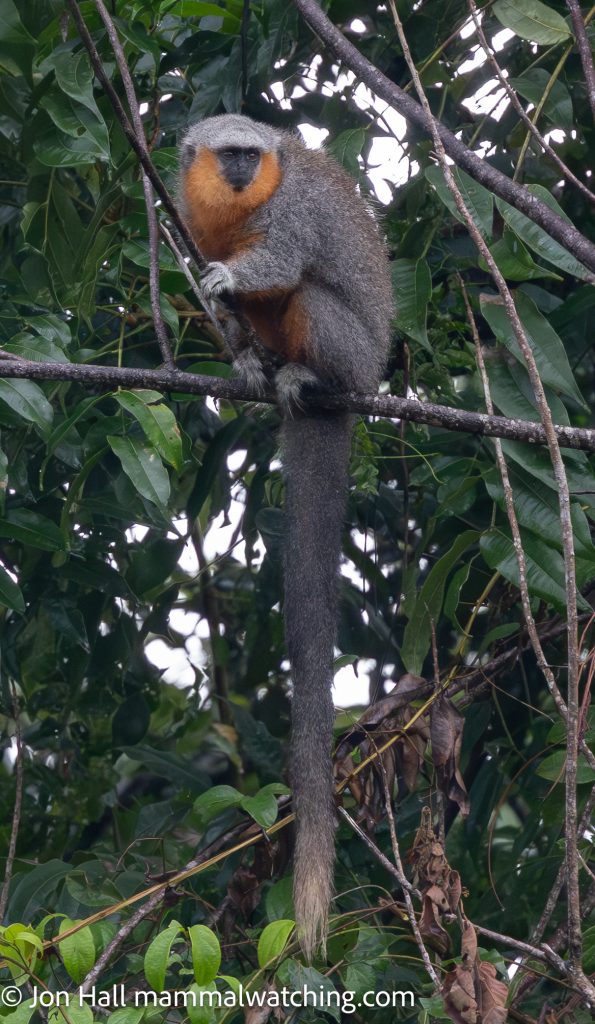
Red-bellied Titi (Plecturocebus moloch)
And in the late morning – in between rain showers – we finally caught up with a troop of the very attractive Silvery Marmosets.
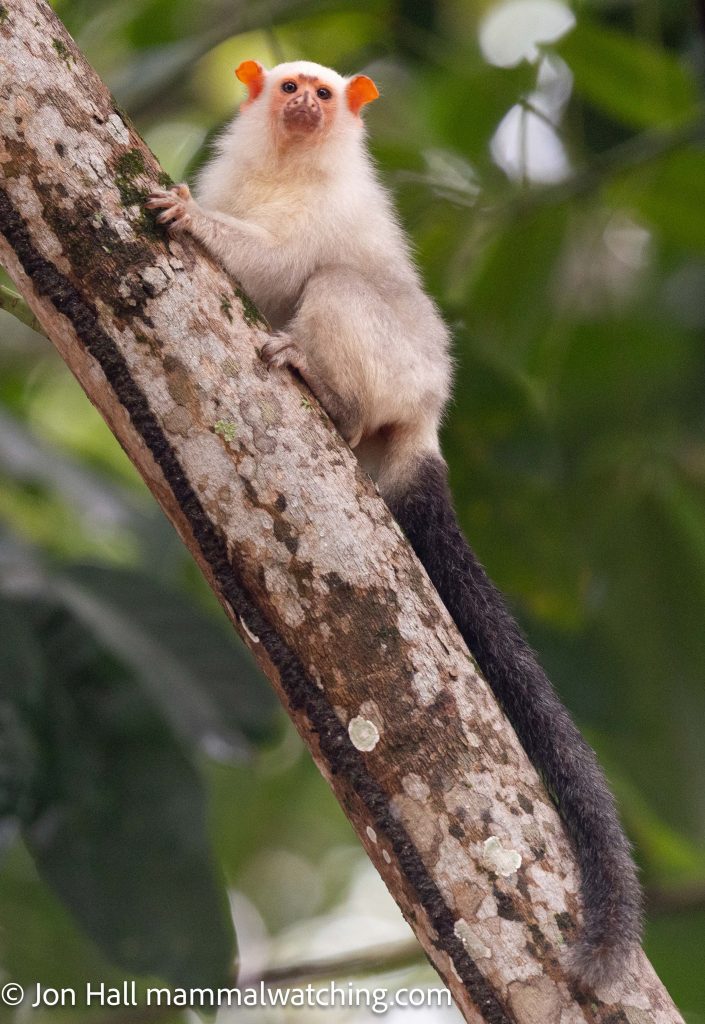
Silvery Marmoset (Mico argentatus)
The most effective way to find the marmosets appears to be driving slowly around town and listening for their high pitched whistles. We saw more the following morning by our hotel at dawn.
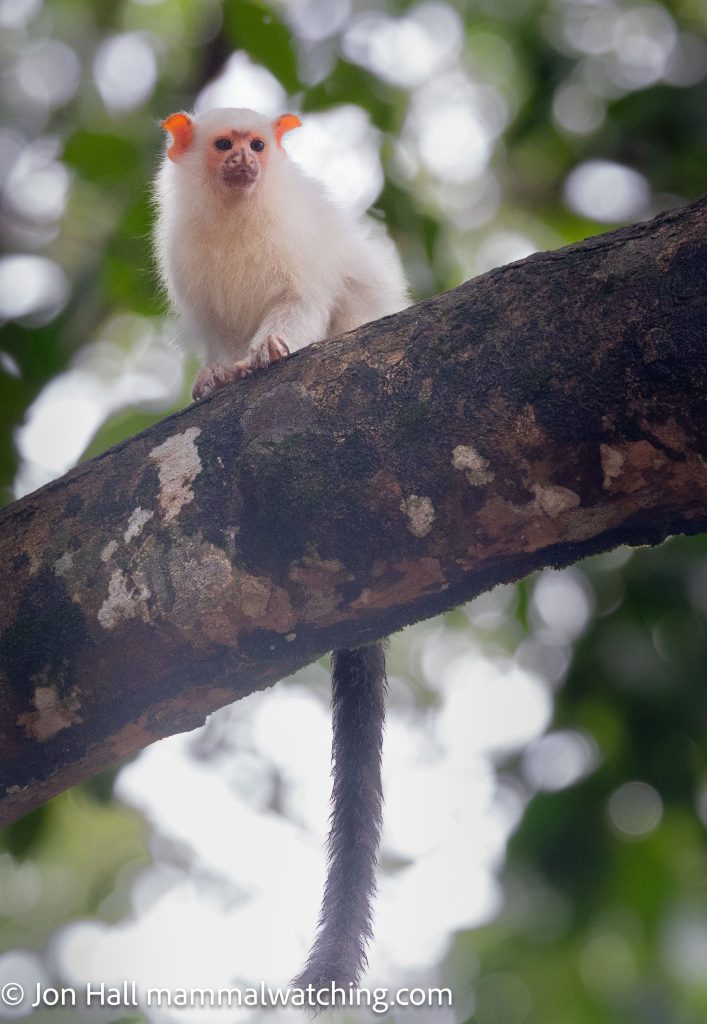
Silvery Marmoset (Mico argentatus)
It was raining in the afternoon so we postponed our boat ride to the following morning and caught up on much needed sleep.
The rain stopped at dusk and we visited a property that belong to friends of Pierre where we easily found the Azara’s (Feline) Night Monkeys we’d been promised. We also saw another Bare-tailed Woolly Opossum and some sleeping howler monkeys.
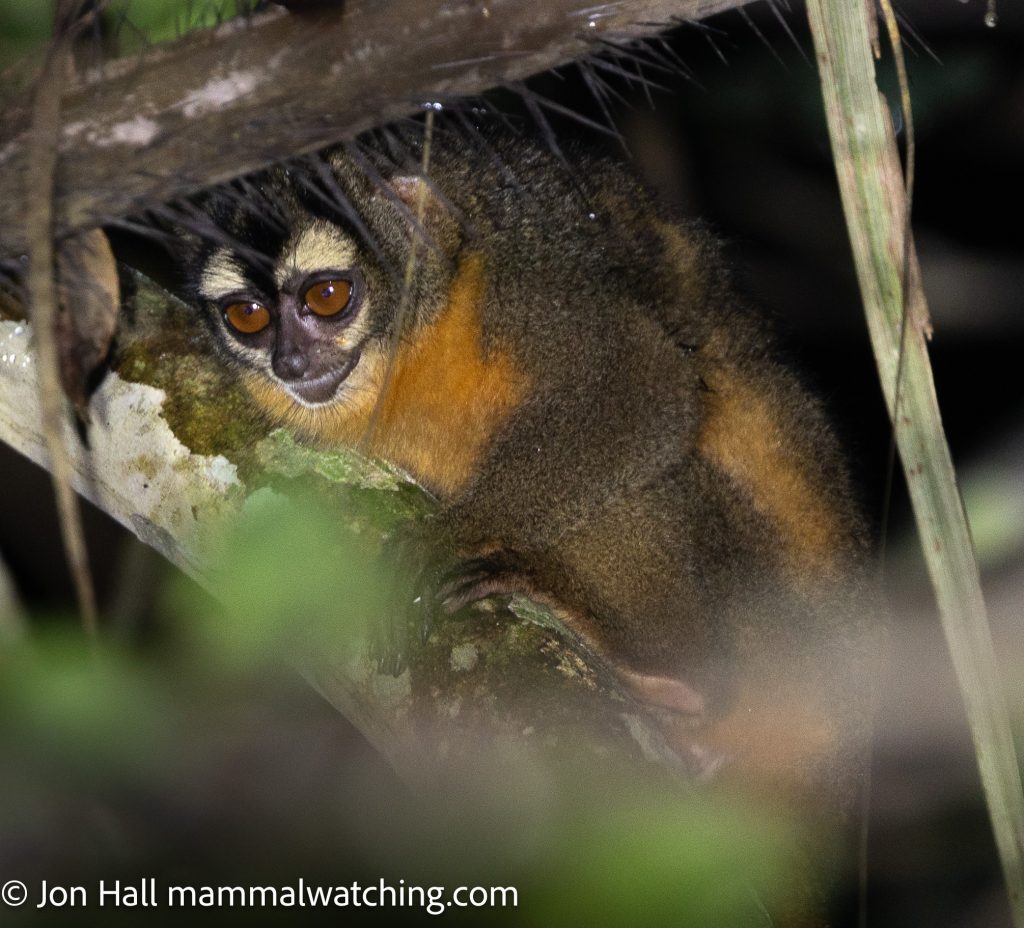
Azara’s Night Monkey (Aotus azarae)
On our last morning we found a pair of Guianan Squirrels (the first squirrels of the trip!) next to the lodge as well as more Silvery Marmosets. The squirrels were the yellow-throated subspecies (gilvigularis) formerly a full species in their own right.
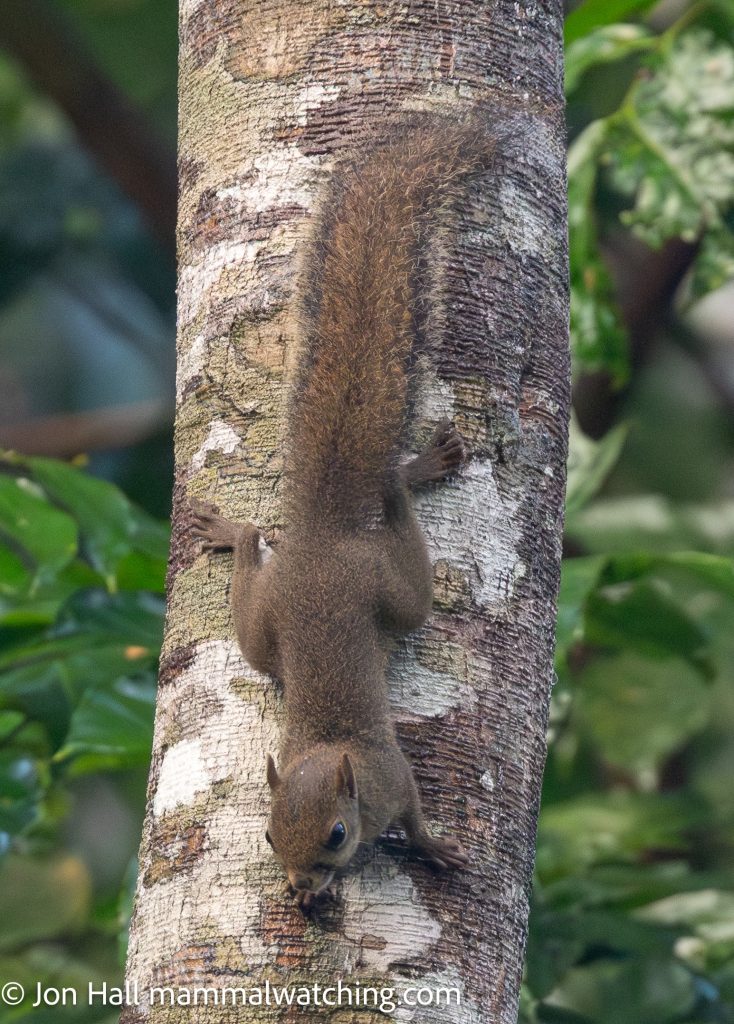
Guianan Squirrel (Sciurus aestuans gilvigularis)
Before we left for the airport, and our flight for Belem, we took a short boat trip around a sort of riverine lagoon in front of town, It produced brief views of both dolphins species – Tucuxi and Botos – along with more howlers.
Belem, June 11 & 12
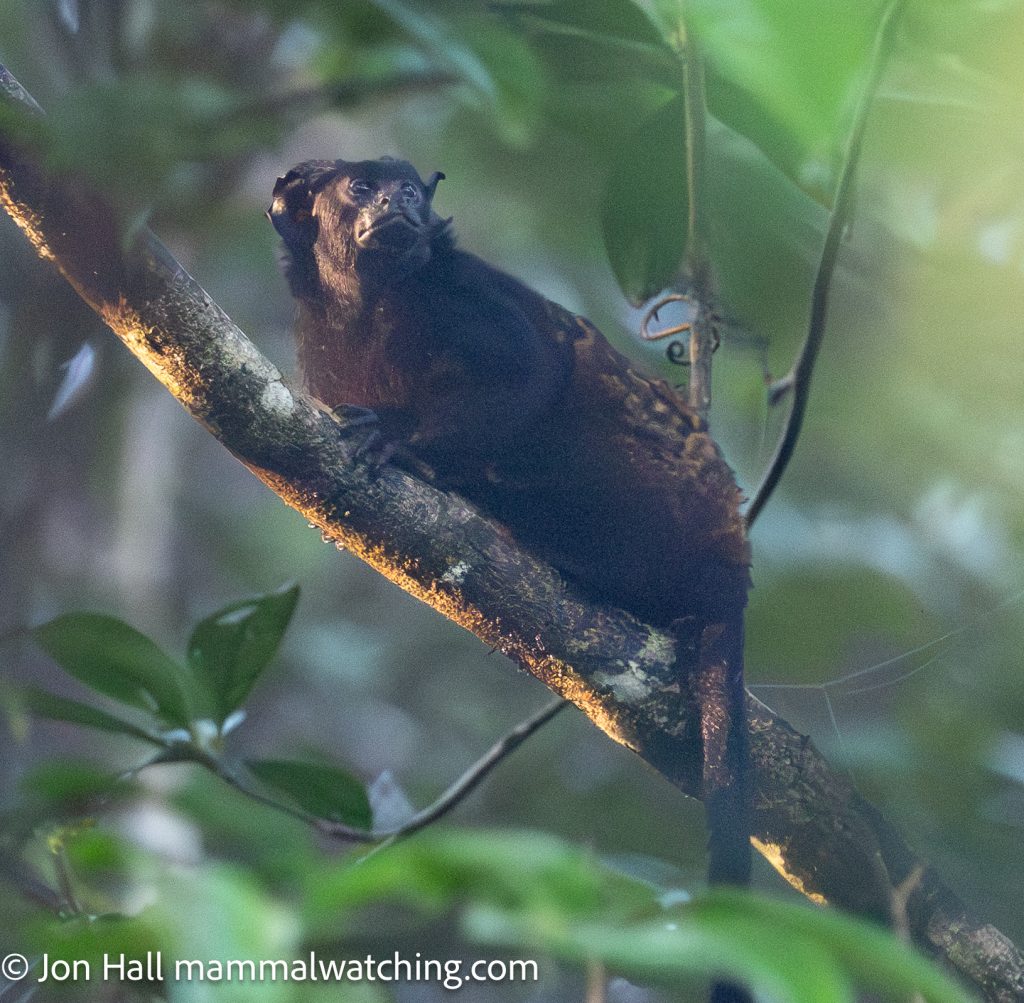
Eastern Black-handed Tamarin (Saguinus ursula)
The expedition ended in Belem.
After a night in a hotel next to the airport we drove for an hour to meet Fernanda, from Pará Birding Tours, at her base in forest near Belem (close to here).
Our main target was Eastern Black-handed Tamarin. Fernanda found them immediately: we drove – literally 1 minute – down the road from her house to an area where she sometimes saw them. Regina had heard them before we even got out of the car.
We had good views but the light – and their constant movement – made photography a challenge. We lost them after ten minutes and couldn’t relocate them all morning, nor could we find any Collins’s Squirrel Monkeys.
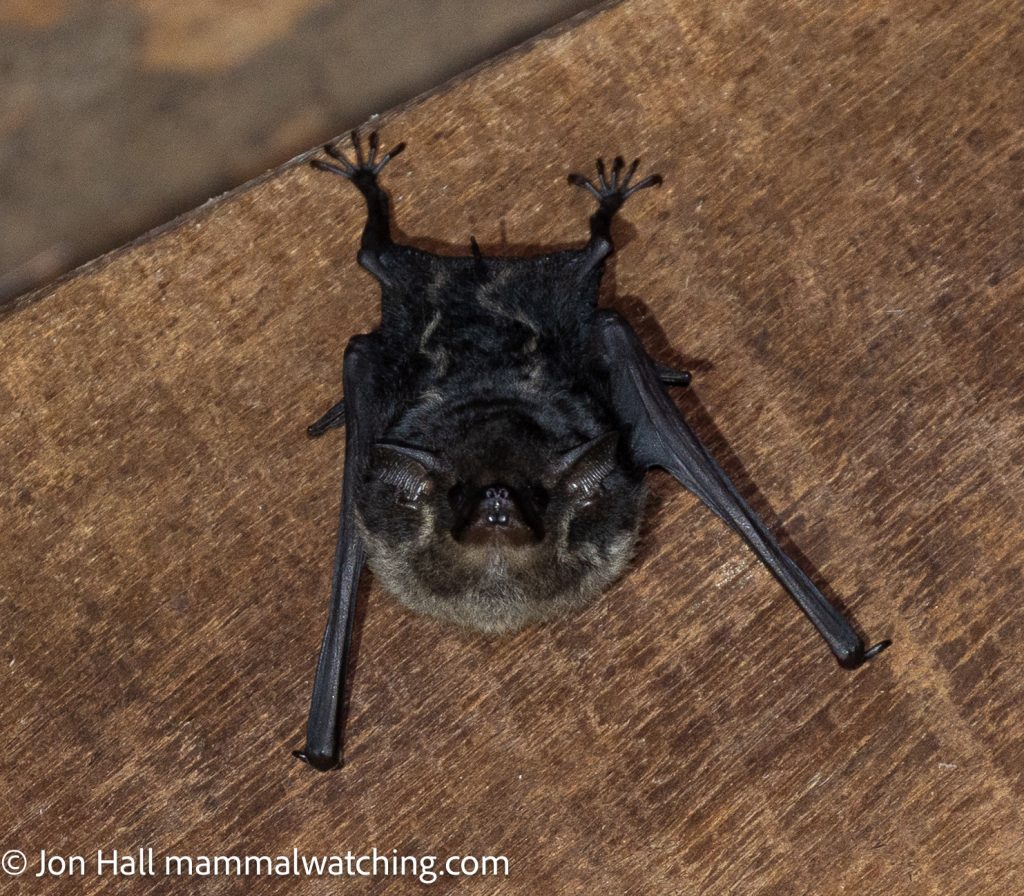
We did find Greater Sac-winged Bats in an old church.
After much with Fernanda we returned to Belem in the search of four last lifers, all of which Regina thought would be easy in the city.
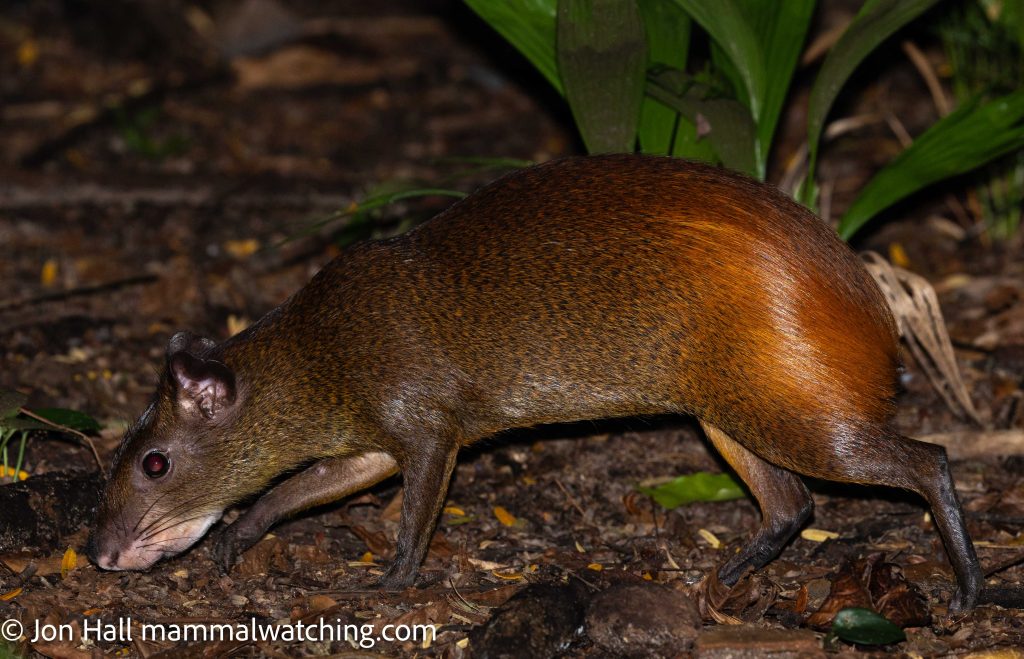
Common Red-rumped Agouti (Dasyprocta leporina)
We start at the Emilio Goeldi Museum zoo and saw many Common Red-rumped Agoutis. What is it about wild agoutis in zoos?
From there we headed straight to the Parque Estadual do Utinga before it shut and just in time to find a troop of very relaxed Collins’s Squirrel Monkeys along the edge of the main road and bike path through the forest. The monkeys did indeed have much furrier ears than their golden-backed cousins near Santarem.
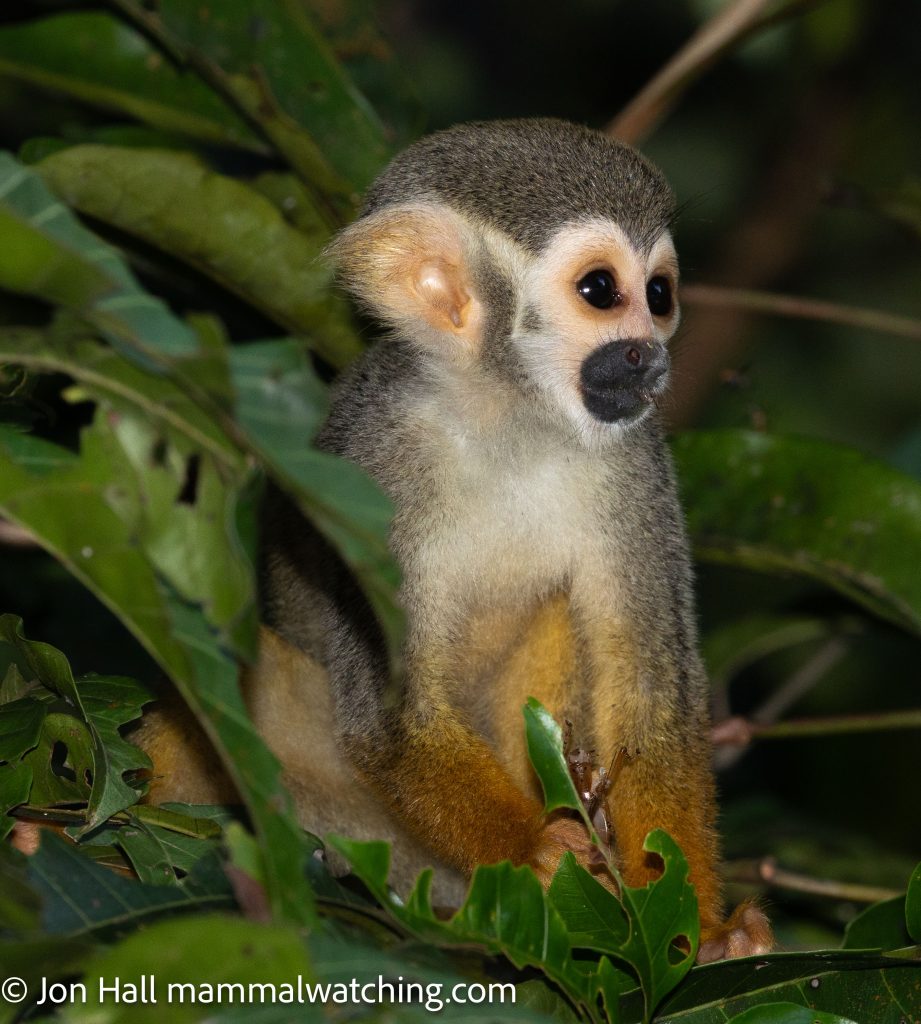
Collins’s Squirrel Monkey (Saimiri collinsi)
Regina spotted a Brown-throated Three-toed Sloth.
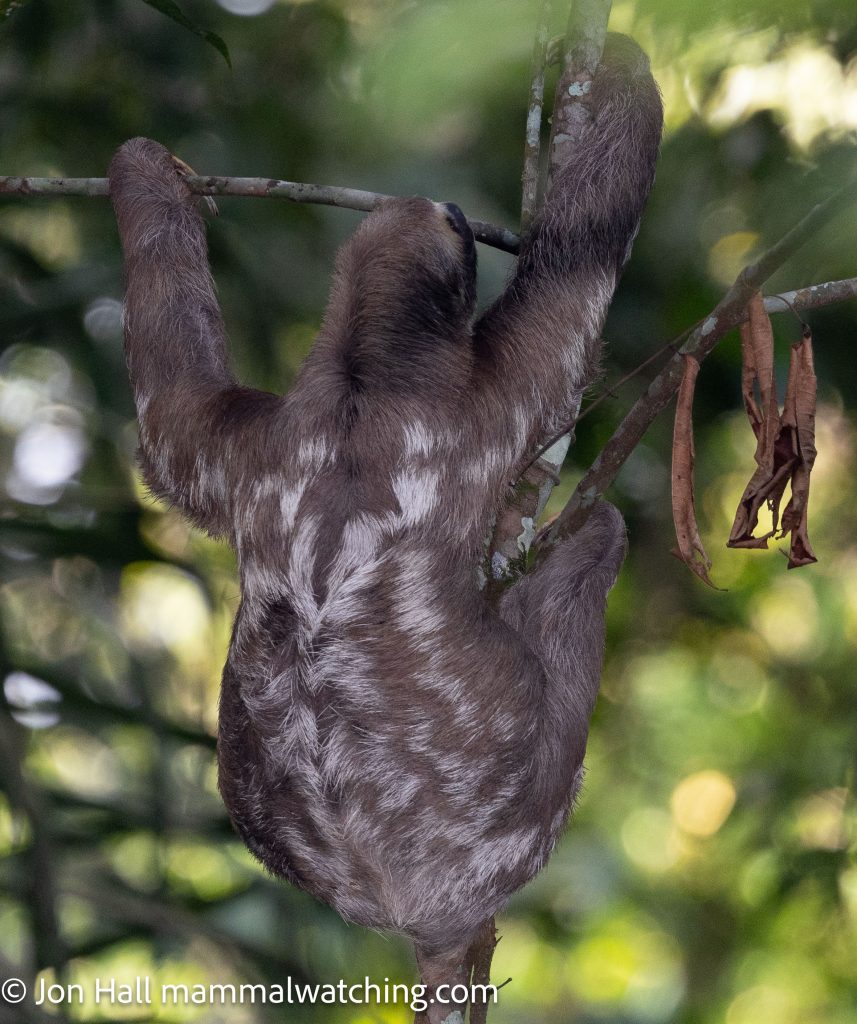
Brown-throated Three-toed Sloth (Bradypus variegatus)
As we retuned to the car we saw a family of Greater Capybara grazing near the cafe.
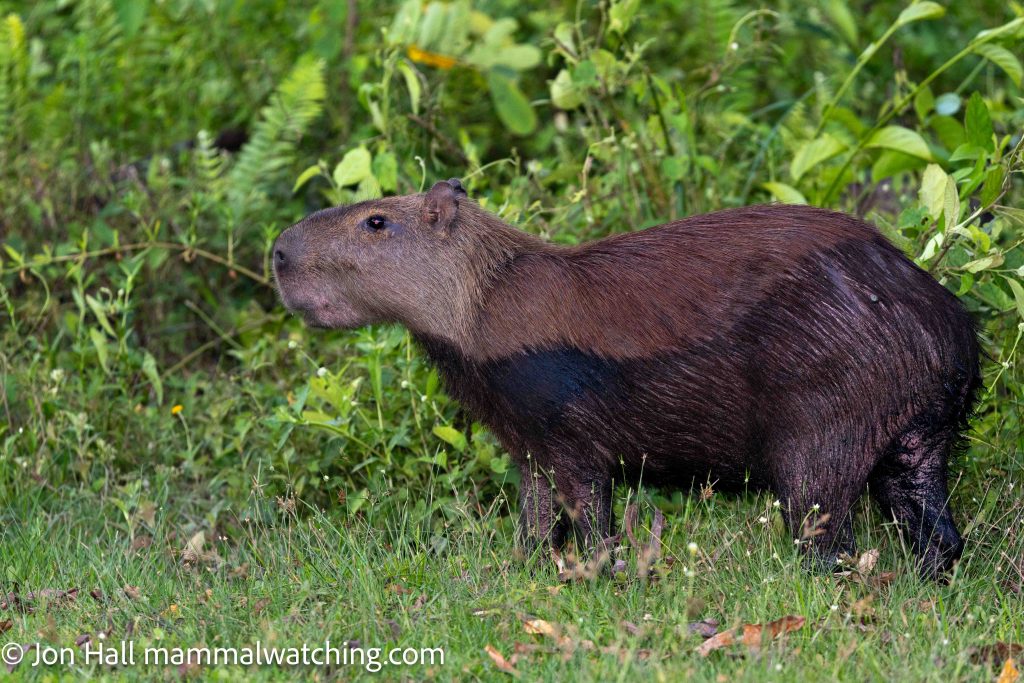
Greater Capybara (Hydrochoerus hydrochaeris)
Everyone was leaving the following afternoon but we still had one species left to see. And so on June 13 we were at the tiny Bosque Rodrigues Amazon Botanical Gardens when they opened at 9am. We quickly found our last target, the 62nd species – and my last lifer – of the trip: the Black-rumped Agoutis which were abundant.
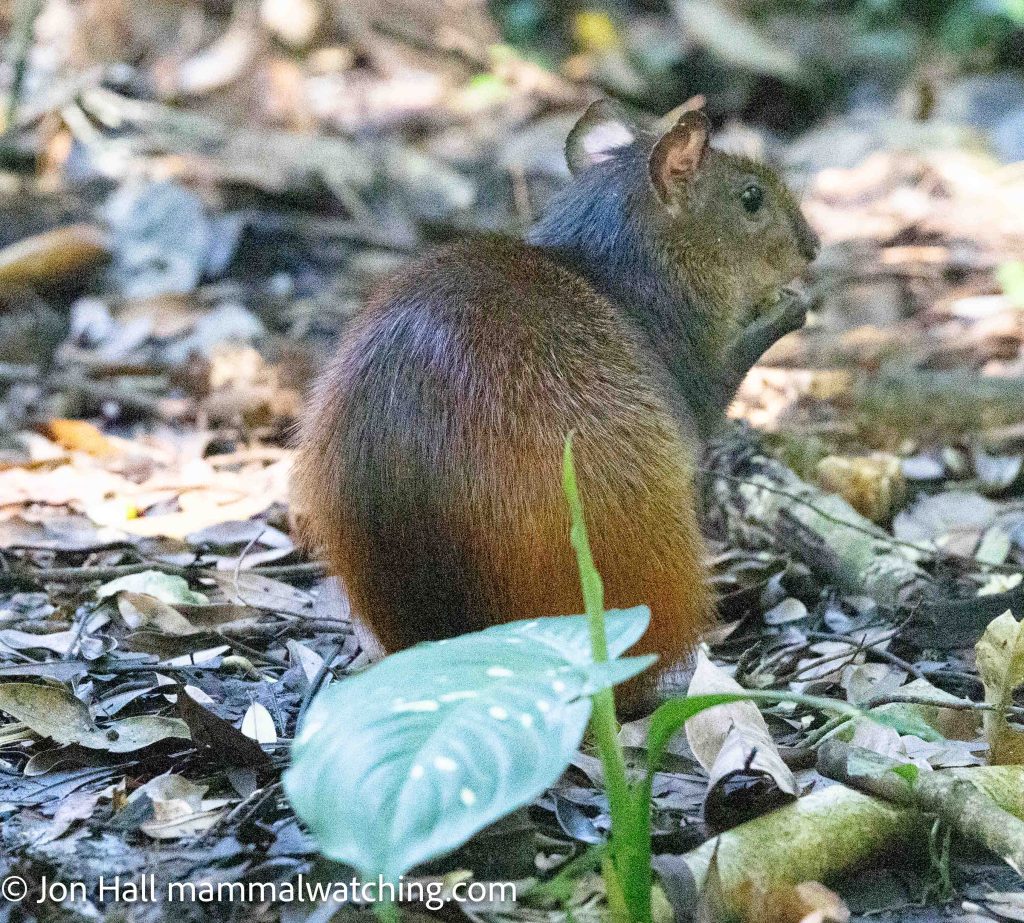
Black-rumped Agouti (Dasyprocta prymnolopha)
There were more Common Red-rumped Agoutis too here so you need to check their butts carefully. The black patch – in the photo below – is diagnostic.
We also saw more Collins’s Squirrel Monkeys. So if you just have time for one stop in Belem it should be this place.
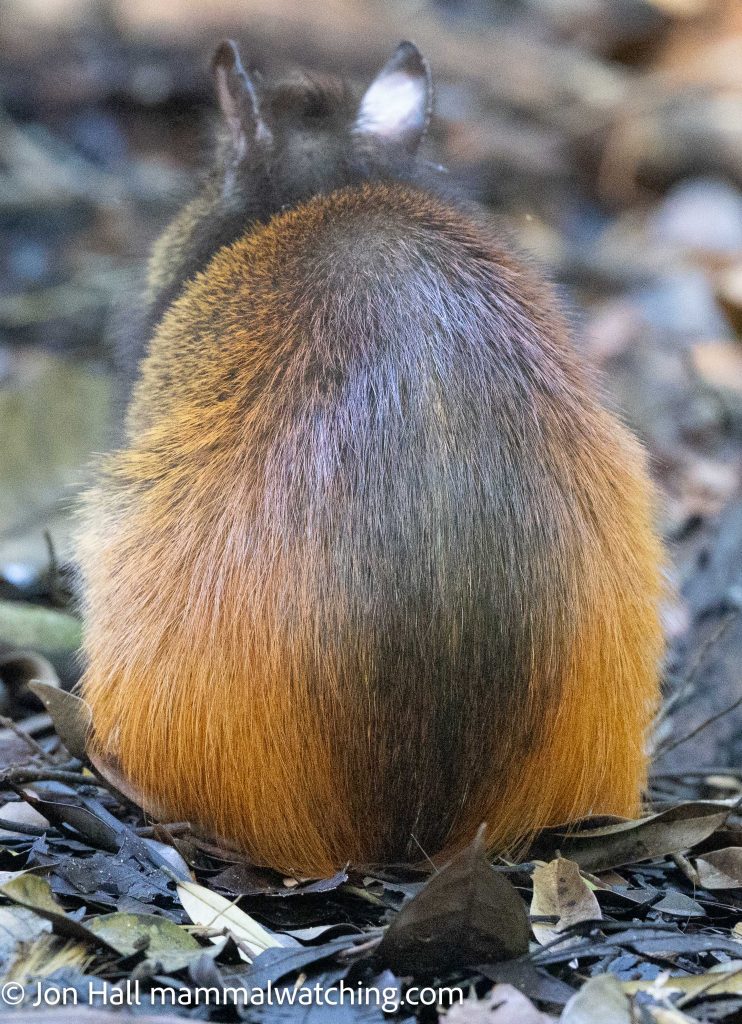
Black-rumped Agouti (Dasyprocta prymnolopha)
And with that, the trip was over.
We immediately began making plans to return to Brazil with Regina for a trip in 2028, which I took as a sign that the group was as happy as I was.
Regina departed to Manaus for another tour; Daniel continued his Brazil mega trip and flew to Sao Paulo; William left for Florida with plans to be the only person in history to have seen a Black-rumped Agouti and Florda Bonneted Bat the same day (spoiler – he did it!); and Ellen and I flew to Brasilia in search of Hoary Foxes.
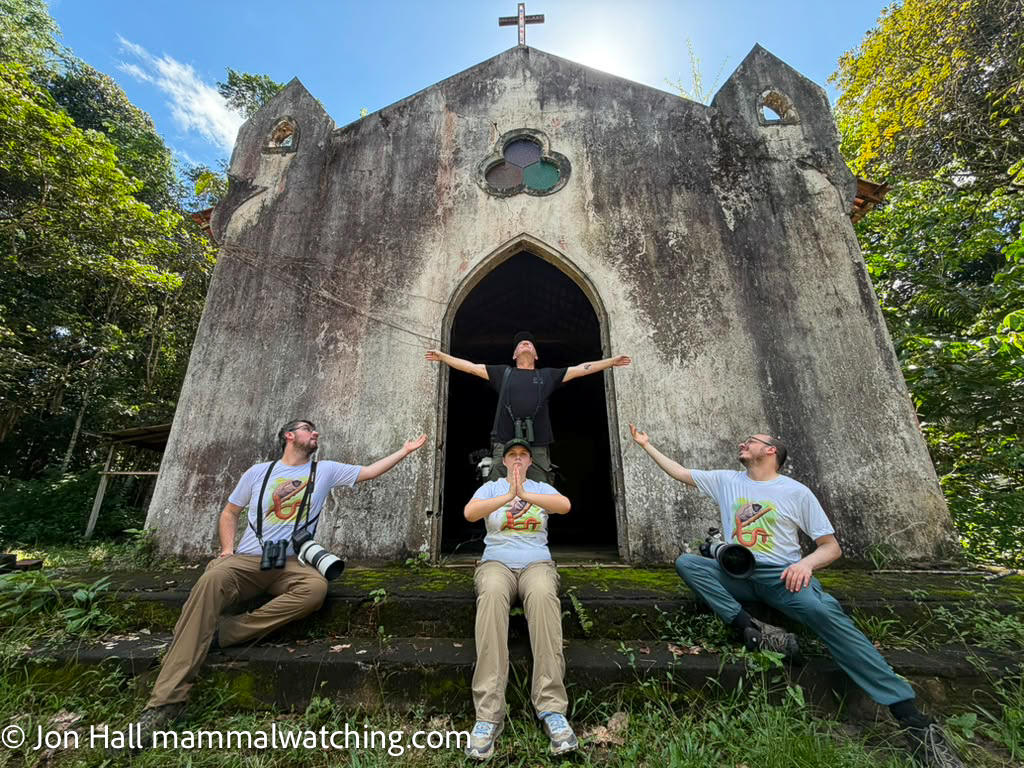
All hail to the mammal gods
Trip List
Bare-tailed Woolly Opossum (Caluromys philander)
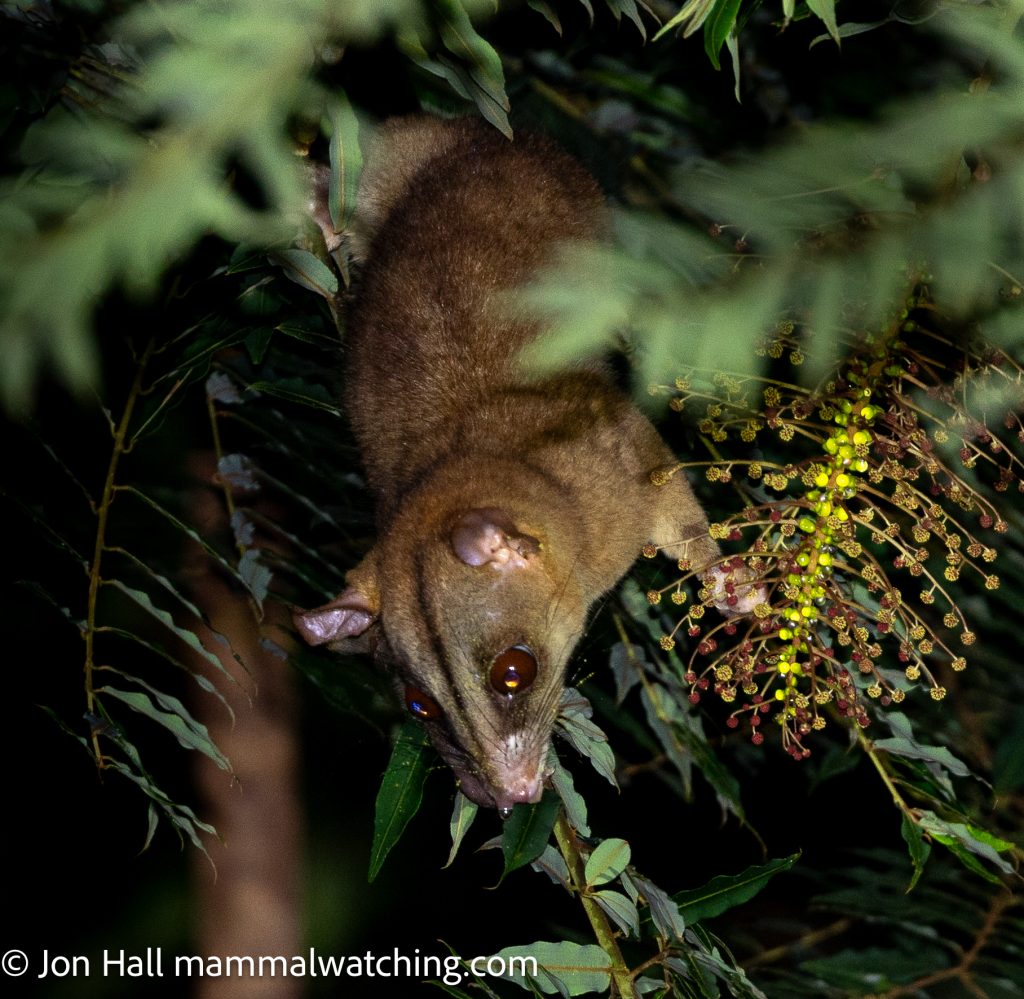
Two at Alter do Chão and three in the Floresta Nacional da Restinga Cabedelo in downtown João Pessoa.
Brazilian White-eared Opossum (Didelphis albiventris) – endemic
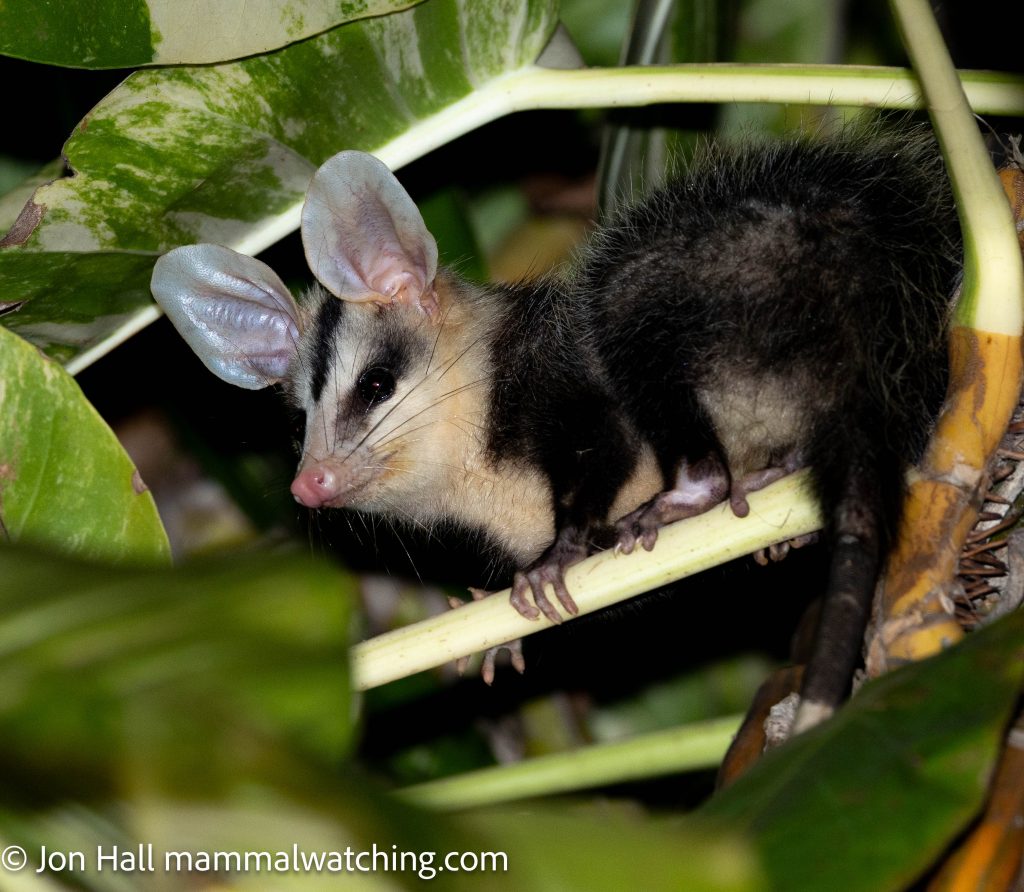
At Praia do Forte, Lençóis and João Pessoa.
Northern Black-eared Opossum (D.marsupialis)
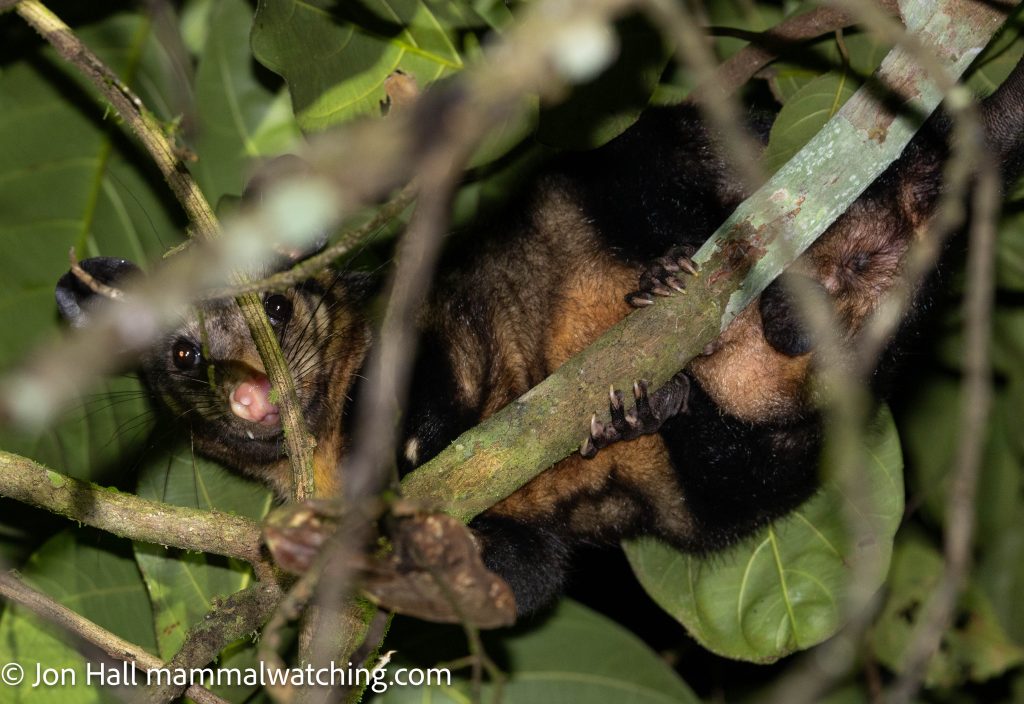
In Alter do Chão and Guaramaringa.
Linnaeus’s Mouse Opossum (M.murina) – Lifer
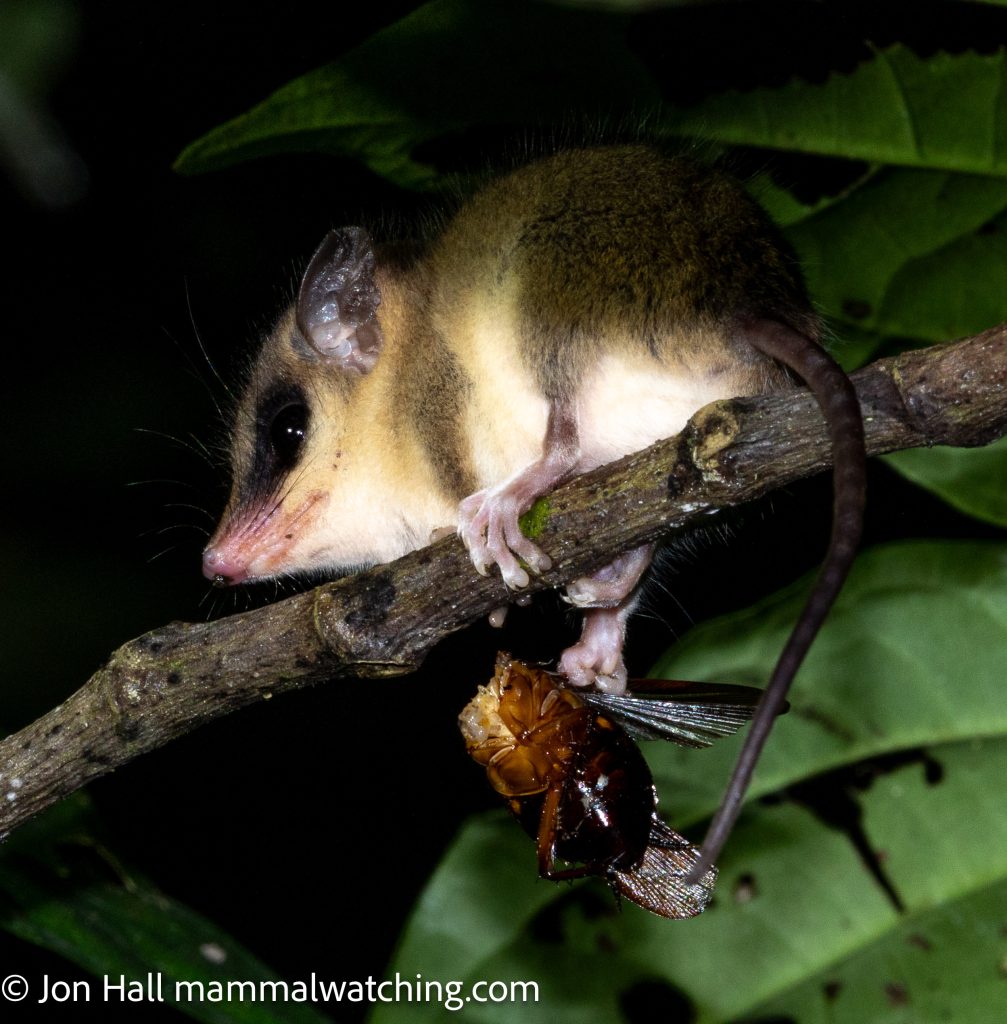
Remarkably common at several sites. We saw animals at Praia do Forte, João Pessoa and dozens of them at Guaramaringa.
Brazilian Three-banded Armadillo (Tolypeutes tricinctus) – endemic – Lifer
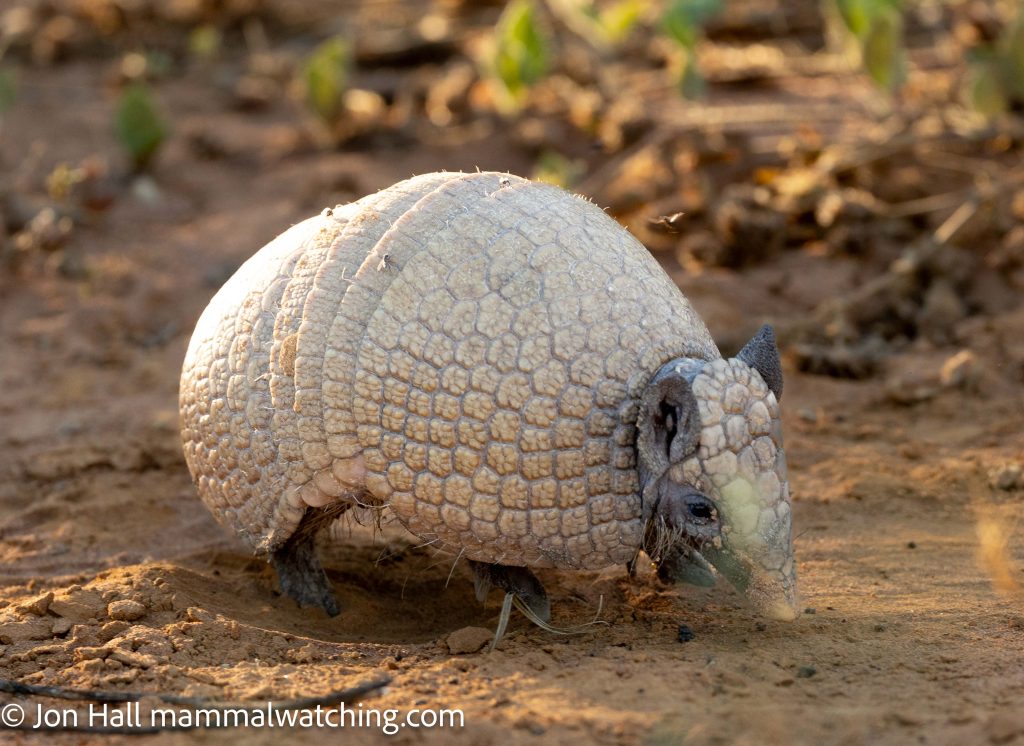
The research crew in the Caatinga caught two of the delightful animals for us near Lençóis.
Southern Long-nosed Armadillo (Dasypus novemcinctus)
We saw five in one evening at Guaramaringa but couldn’t photograph any of them!
Northern Maned Three-toed Sloth (Bradypus torquatus) – endemic – Lifer
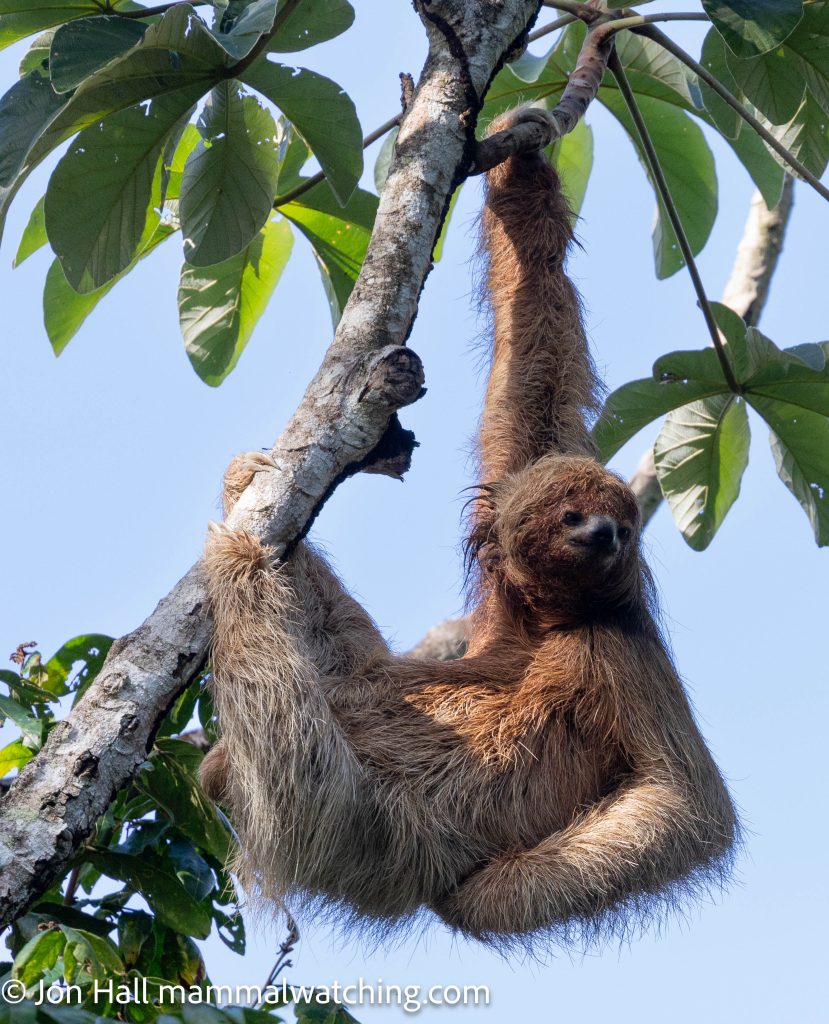
Very common at Praia do Forte. We also saw one at Santuario do Mata on 1 June.
Pale-throated Three-toed Sloth (B.tridactylus)
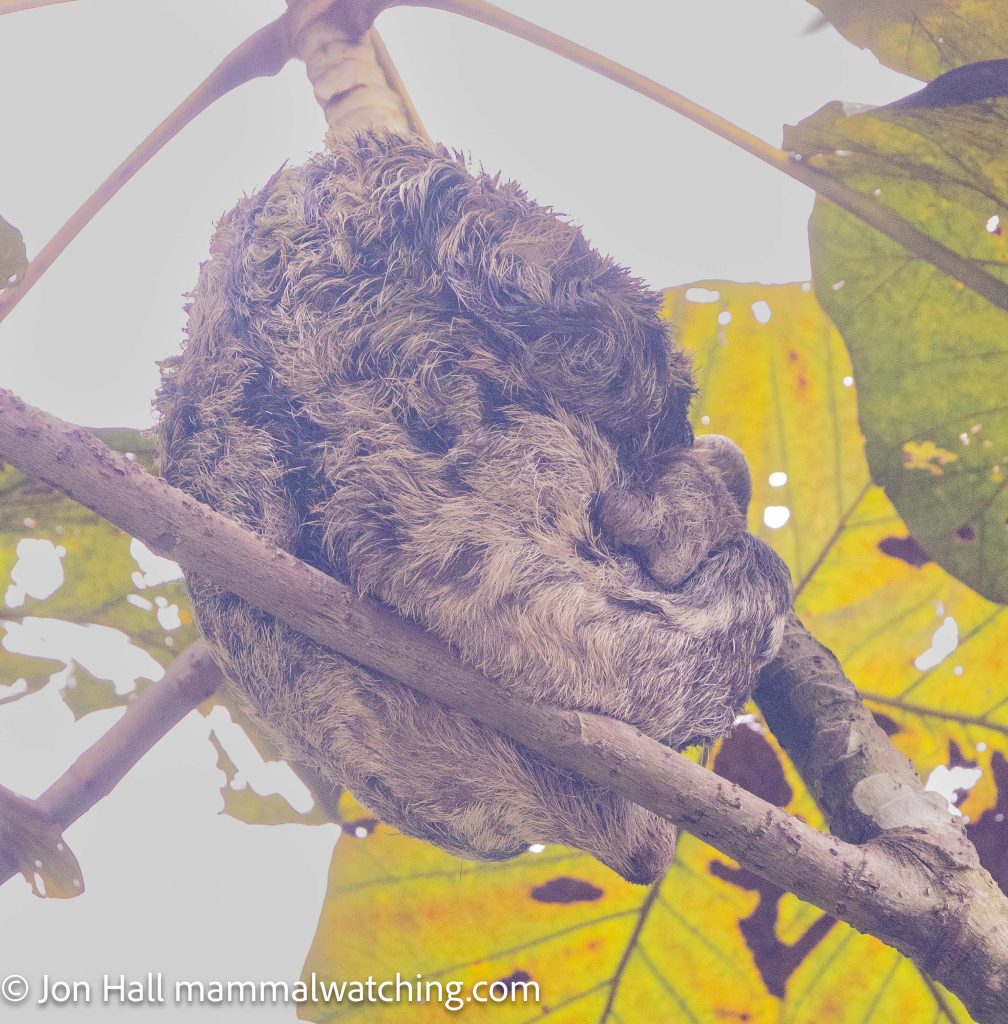
A couple in Manaus.
Brown-throated Three-toed Sloth (B.variegatus)
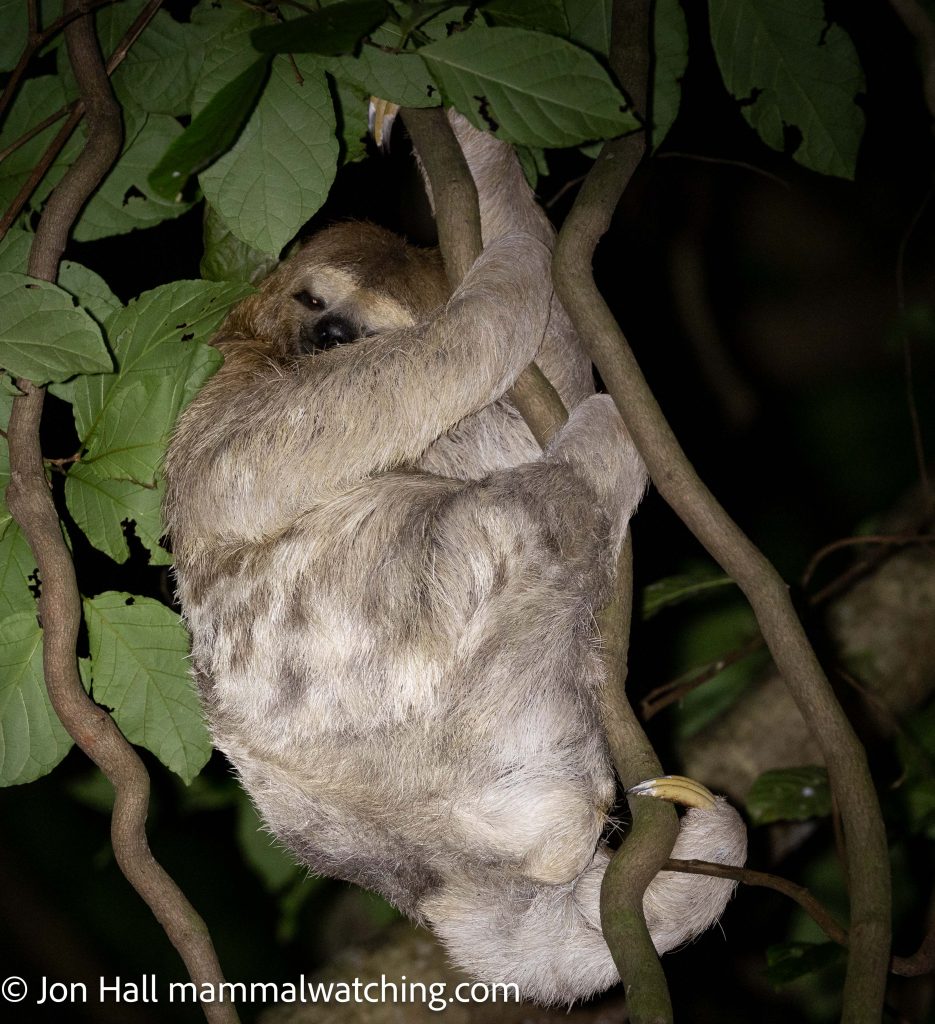
In João Pessoa and Belem.
Linnaeus’s Two-toed Sloth (Choloepus didactylus)
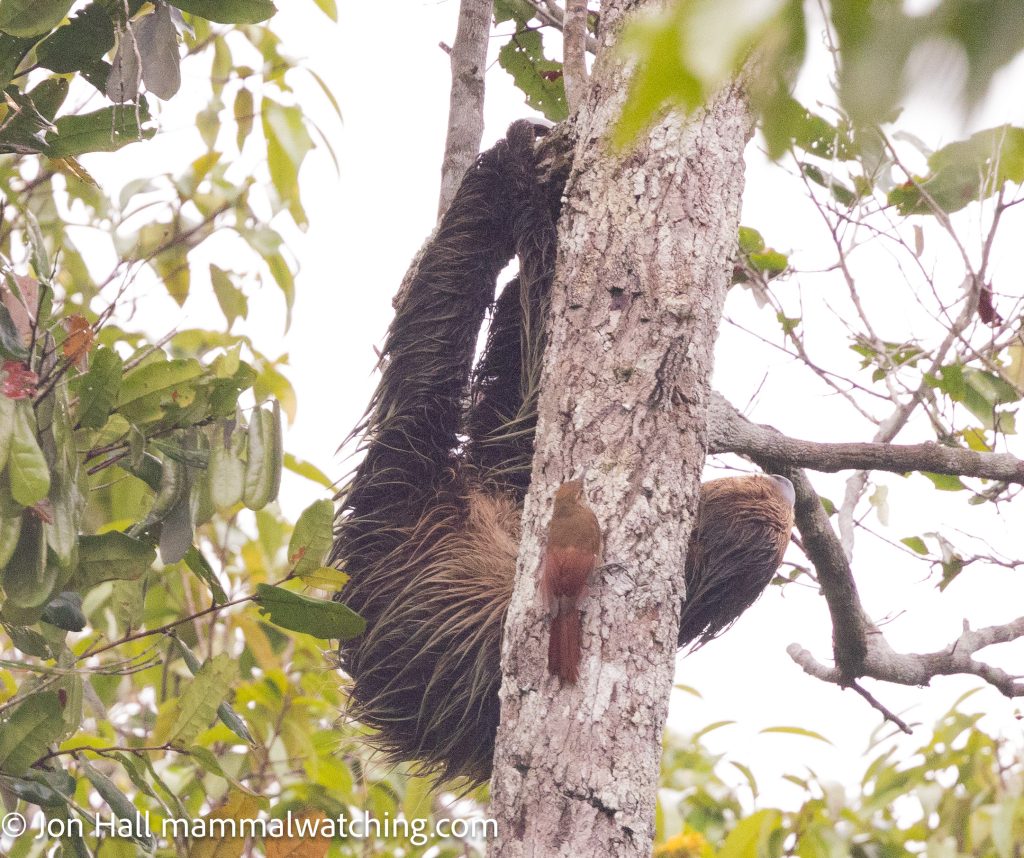
In Manaus and Alter do Chão.
Southern Tamandua (Tamandua tetradactyla)
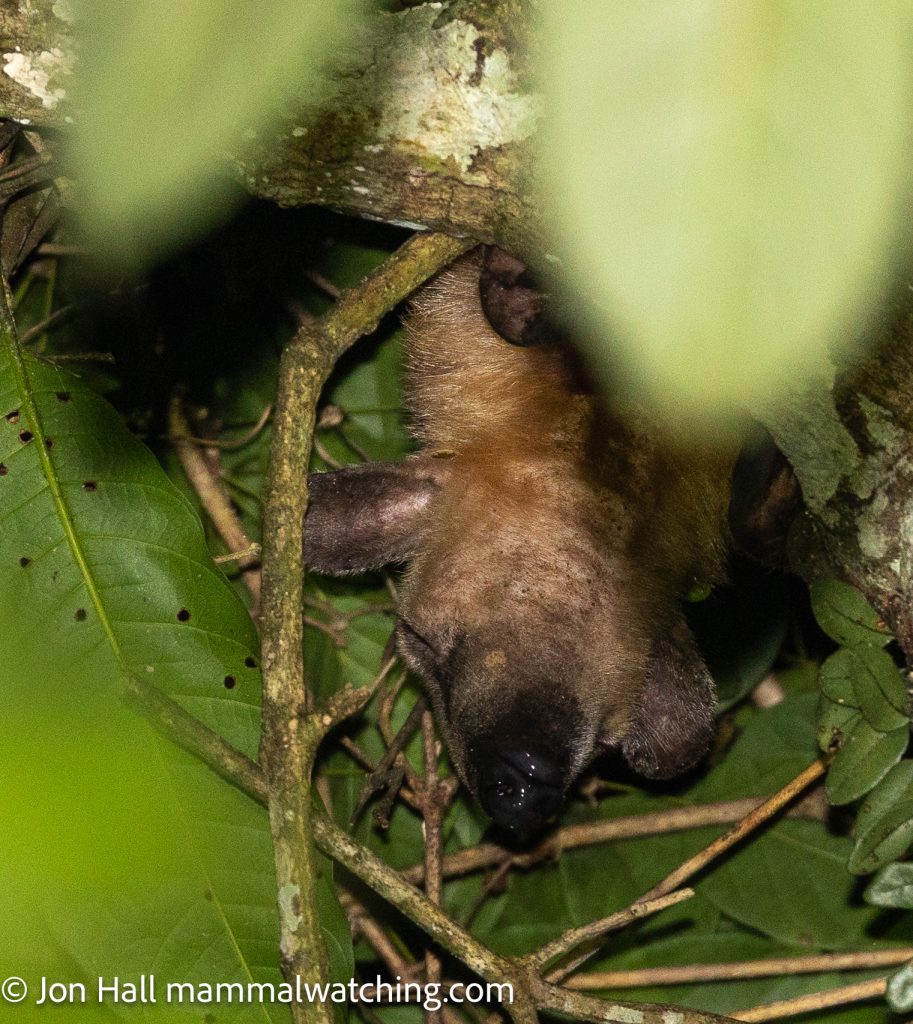
One at Guaramaringa.
Azara’s Night Monkey (Aotus azarae)
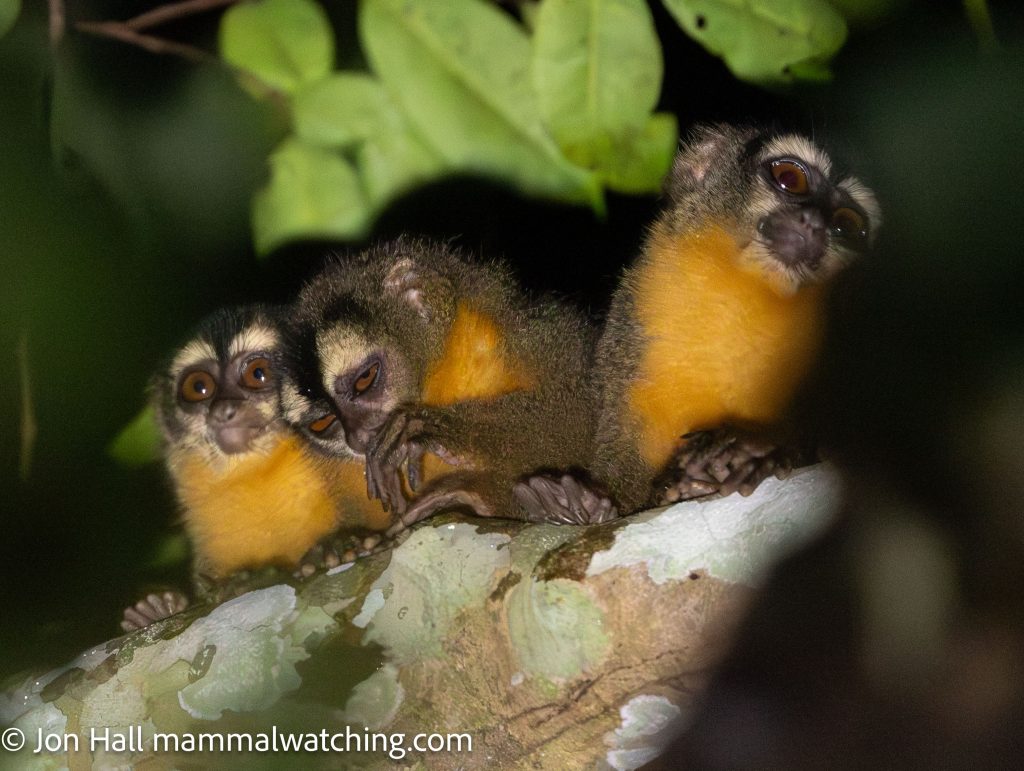
A family at Alter do Chao.
Eastern Red-handed Howler (Alouatta belzebul) – endemic – Lifer
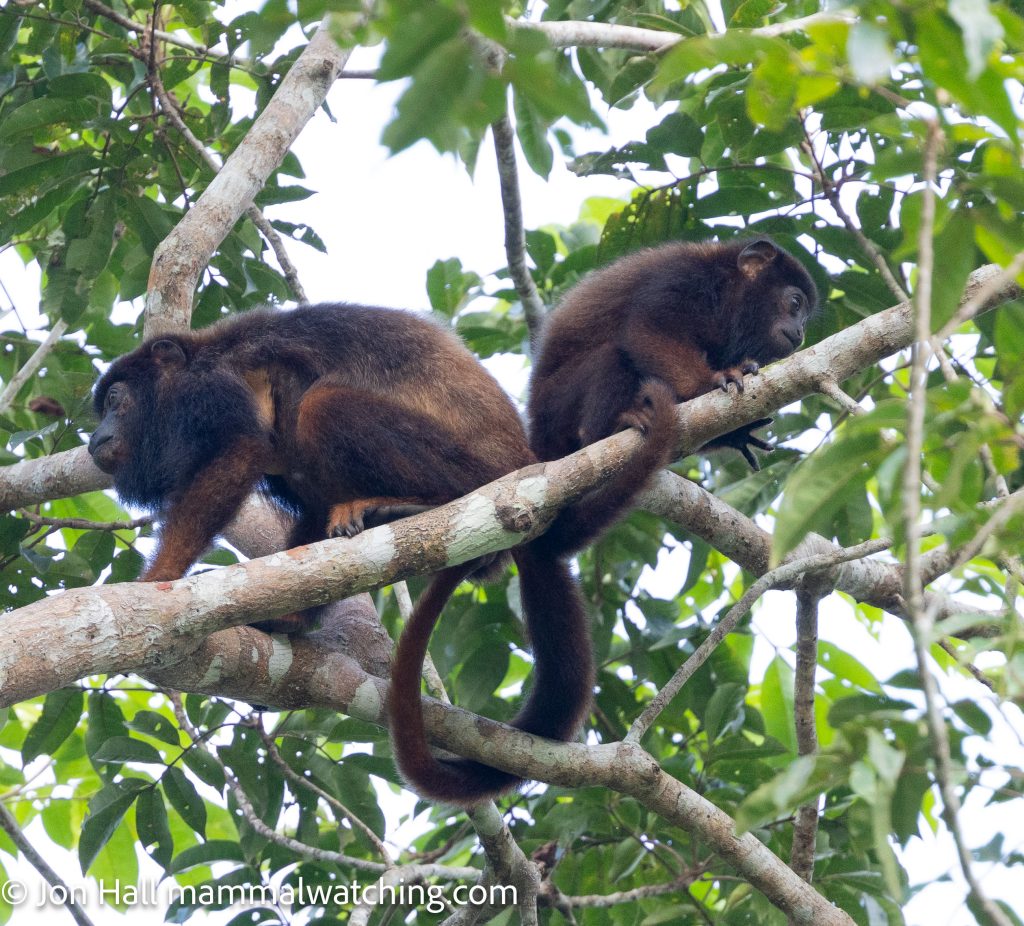
At João Pessoa.
Spix’s Red-handed Howler (Alouatta (discolor) tapajozensis)) -endemic
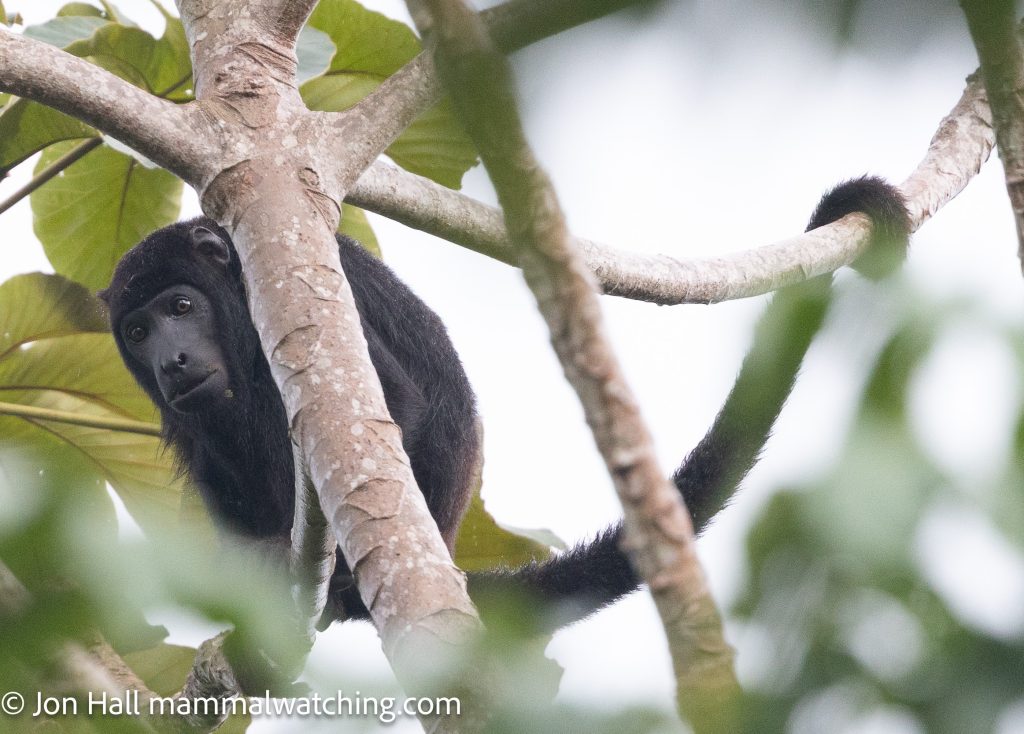
Several troops at Alter do Chão.
Common Marmoset (Callithrix jacchus) – endemic
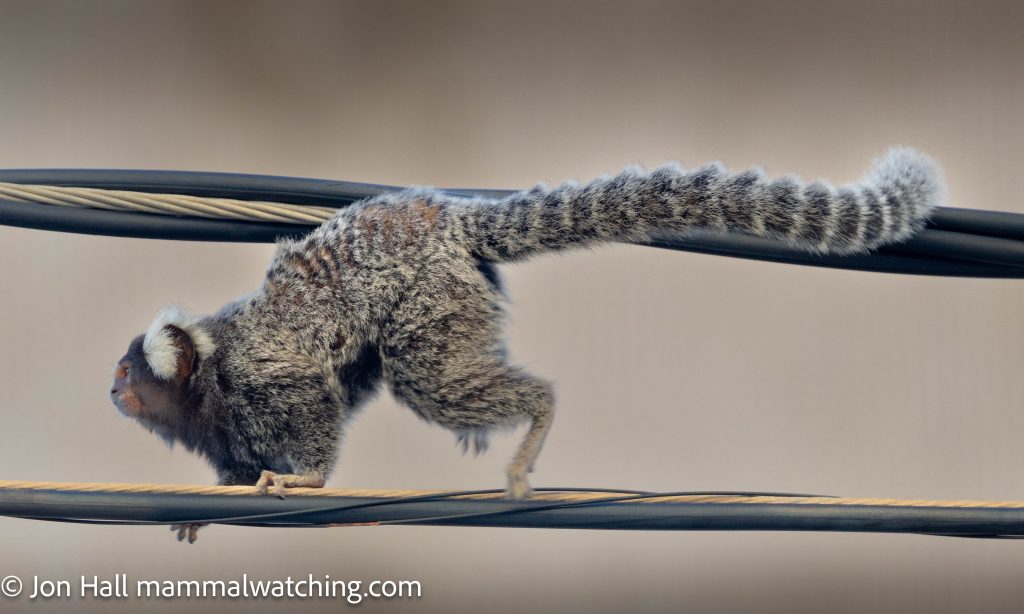
Although this species is common in parts of Brazil where it has been introduced, it was good to see them in their native range. We saw animals at Alter do Chão, Santuario do Mata, Aracaju, João Pessoa and Guaramaringa.
Black-tufted-ear Marmoset (C.penicillata) – endemic
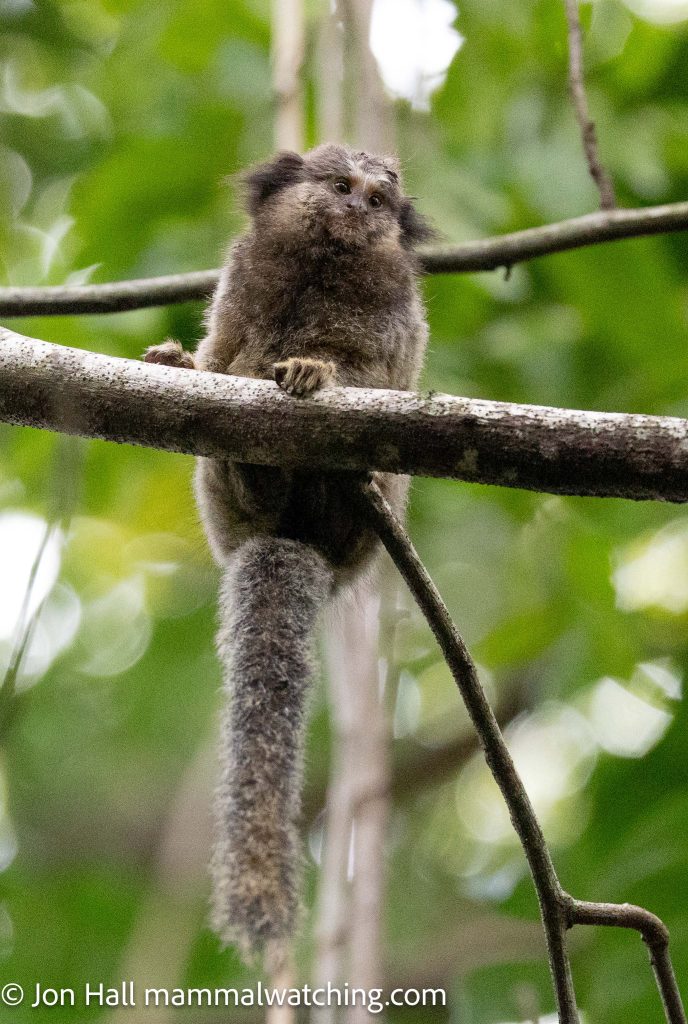
We saw a few cross the road half way between Salvador and Lençóis and more in our hotel at Lençóis.
Silvery Marmoset (Mico argentatus) – endemic – Lifer
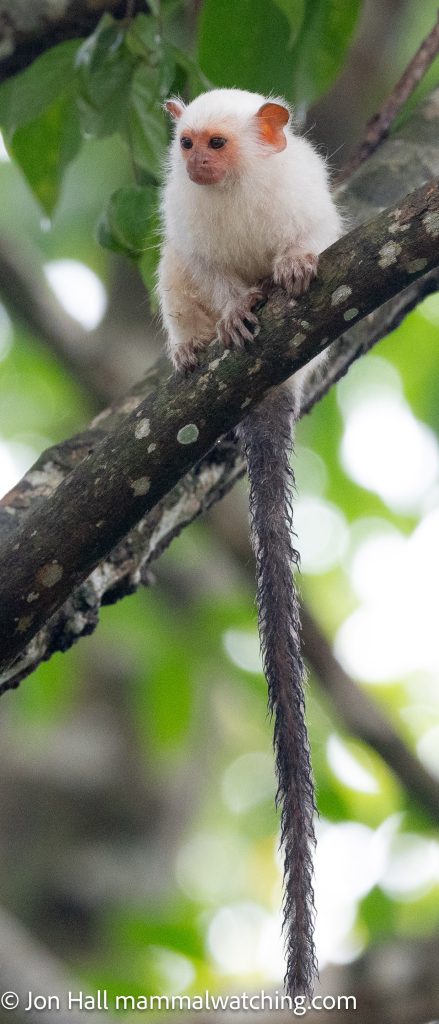
Two large groups at Alter do Chão.
Pied Bare-faced Tamarin (Saguinus bicolor) – endemic
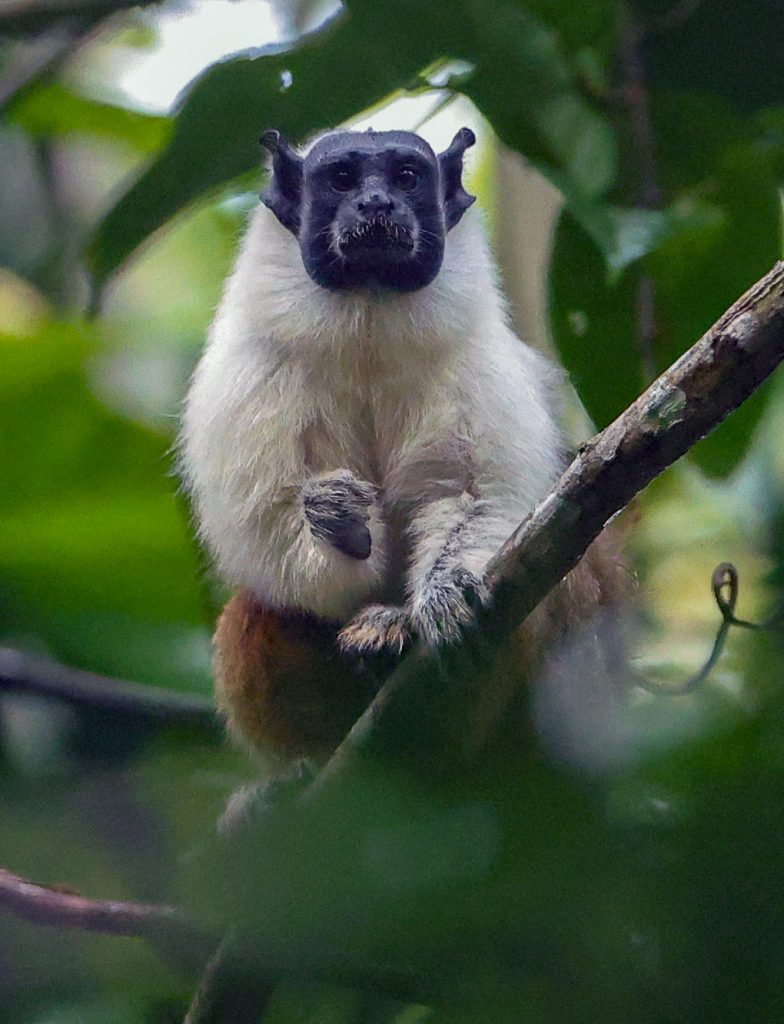
Photo Daniel Dahan
In Manaus.
Eastern Black-handed Tamarin (S.ursula) – endemic – Lifer
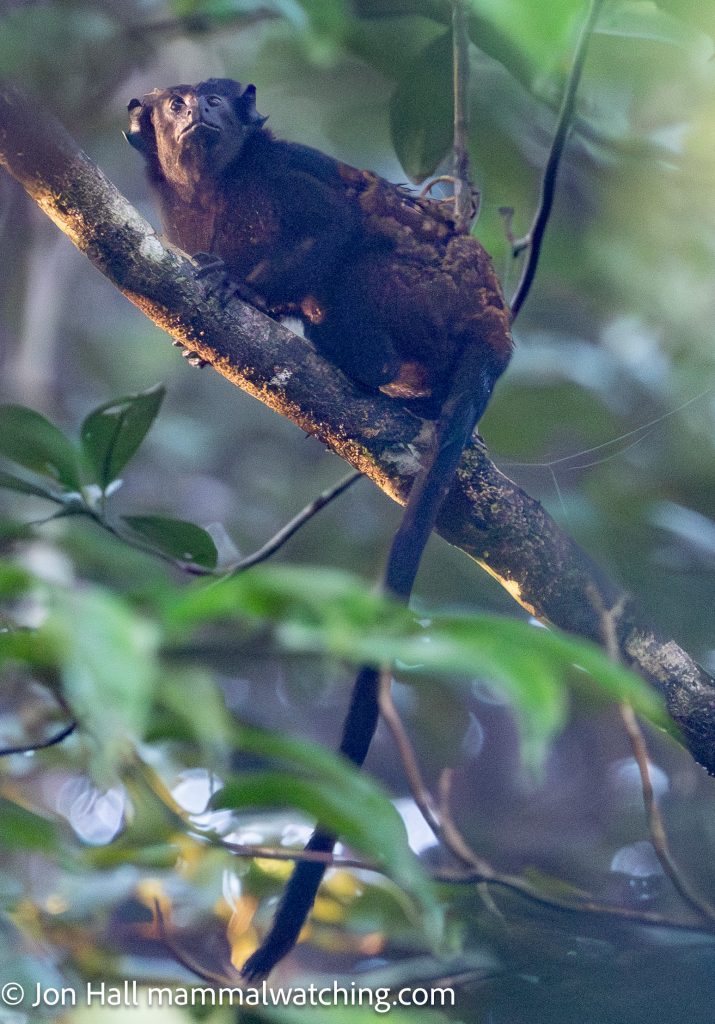
Near Belem.
Blond Capuchin (Sapajus flavius) – endemic – Lifer
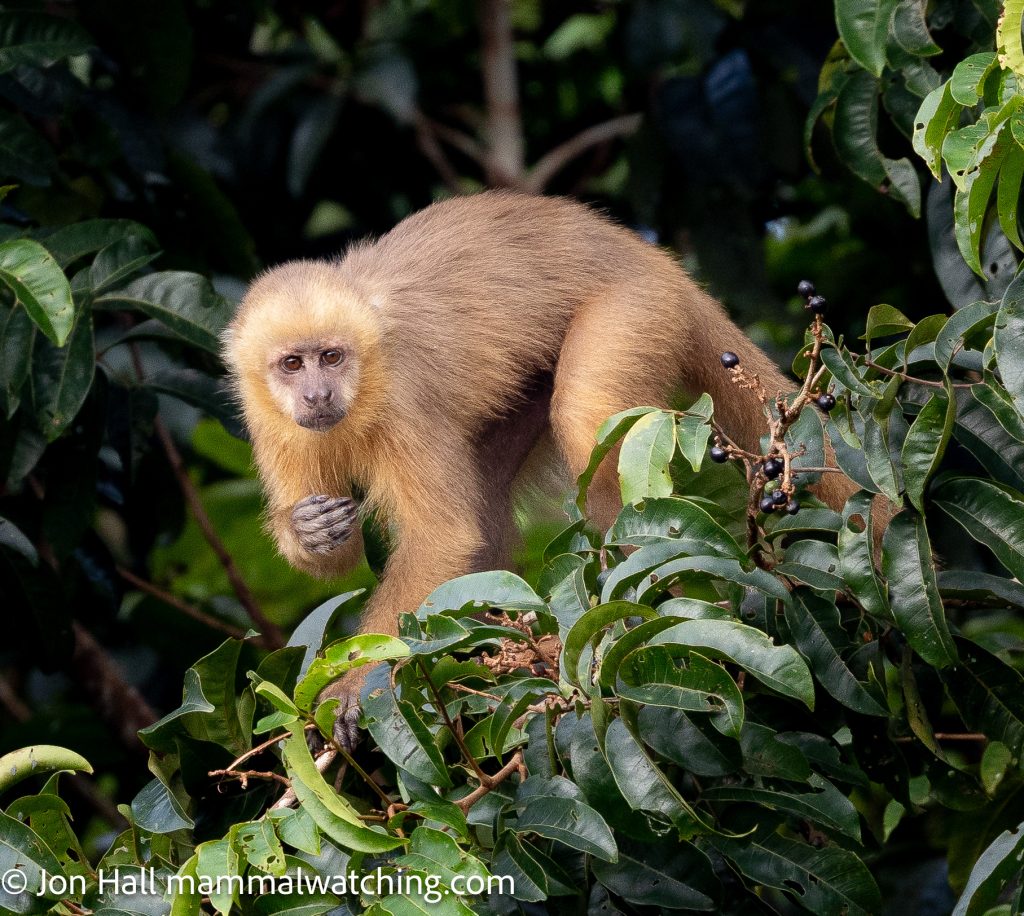
A small troop at the eleventh hour in João Pessoa.
Yellow-breasted Capuchin (S.xanthosternos) – endemic
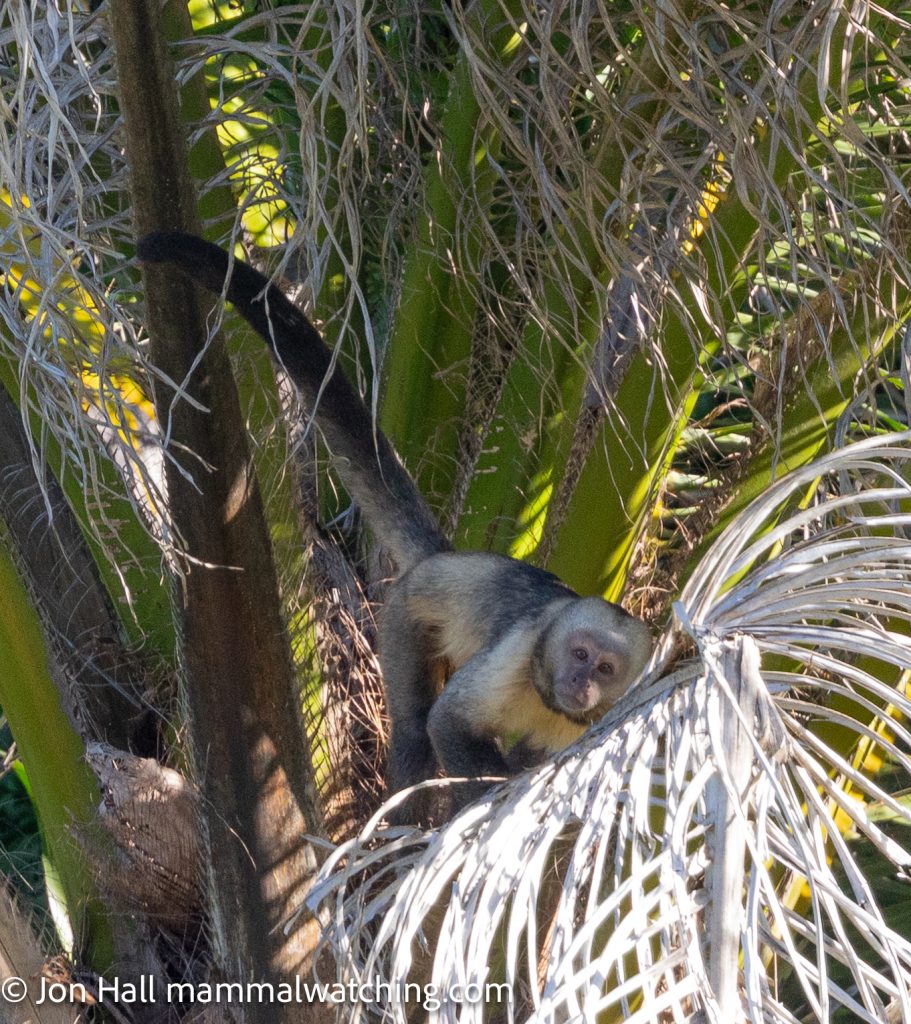
At Lençóis as expected plus a bonus sighting at Santuario do Mata.
Collins’s Squirrel Monkey (Saimiri collinsi) – endemic – Lifer
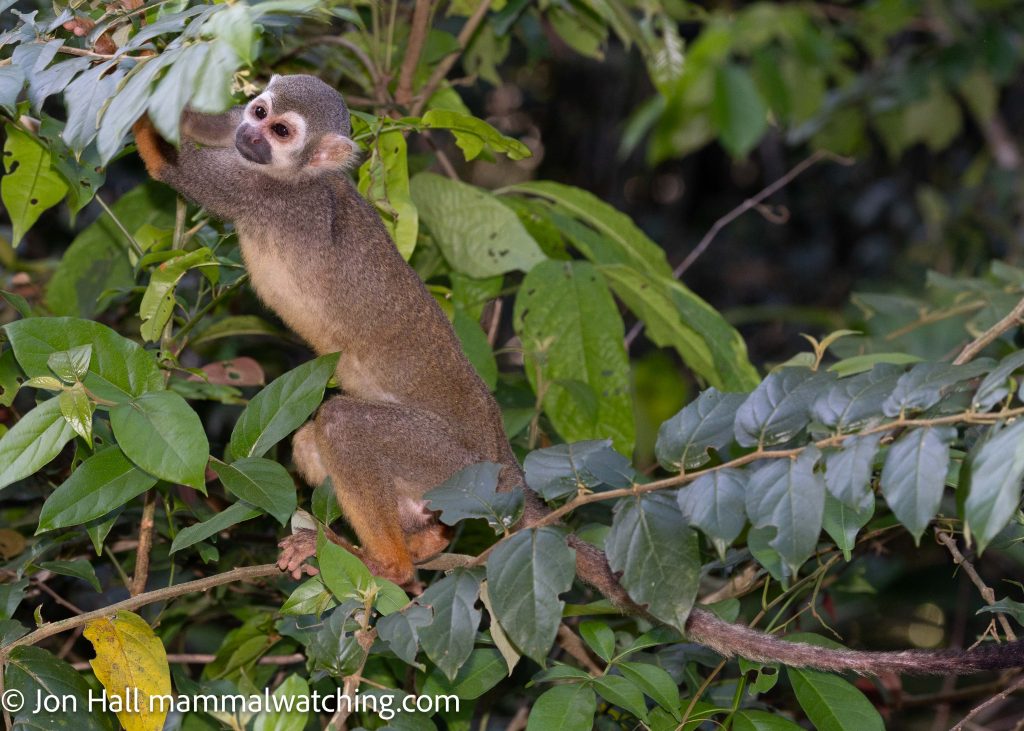
In downtown Belem in two parks.
Golden-backed Squirrel Monkey (S.ustus) – endemic
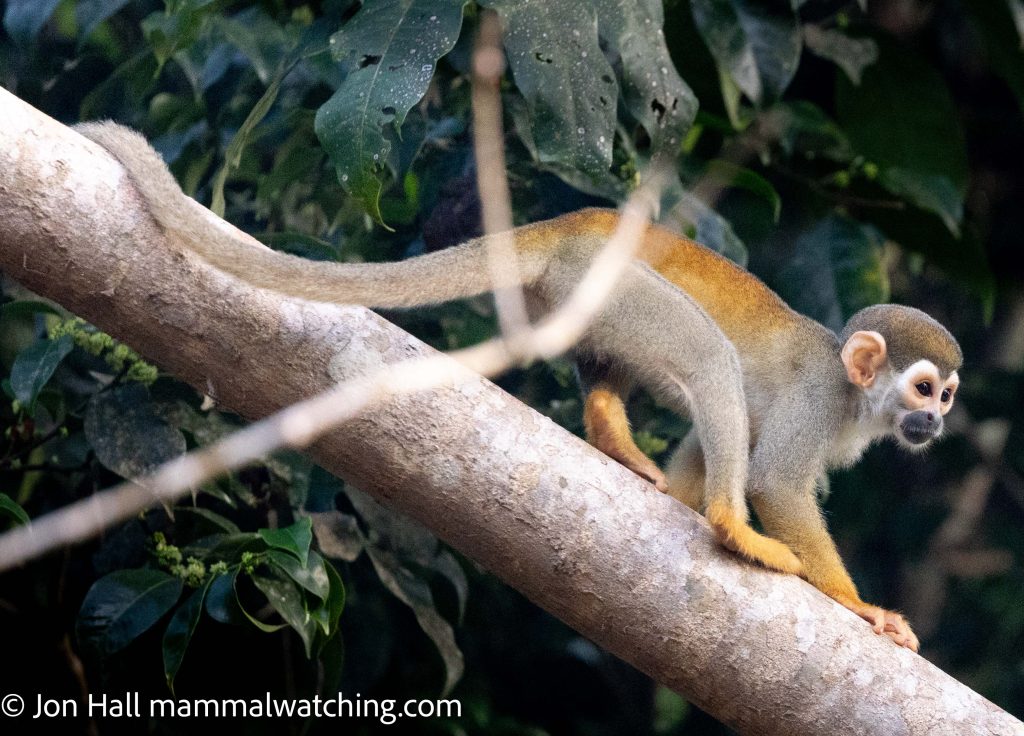
Common around Alter do Chão but check the ears carefully to be sure they are naked. If they are furry you are looking at Collins’s Squirrel Monkeys.
Blond Titi (Callicebus barbarabrownae) – endemic – Lifer
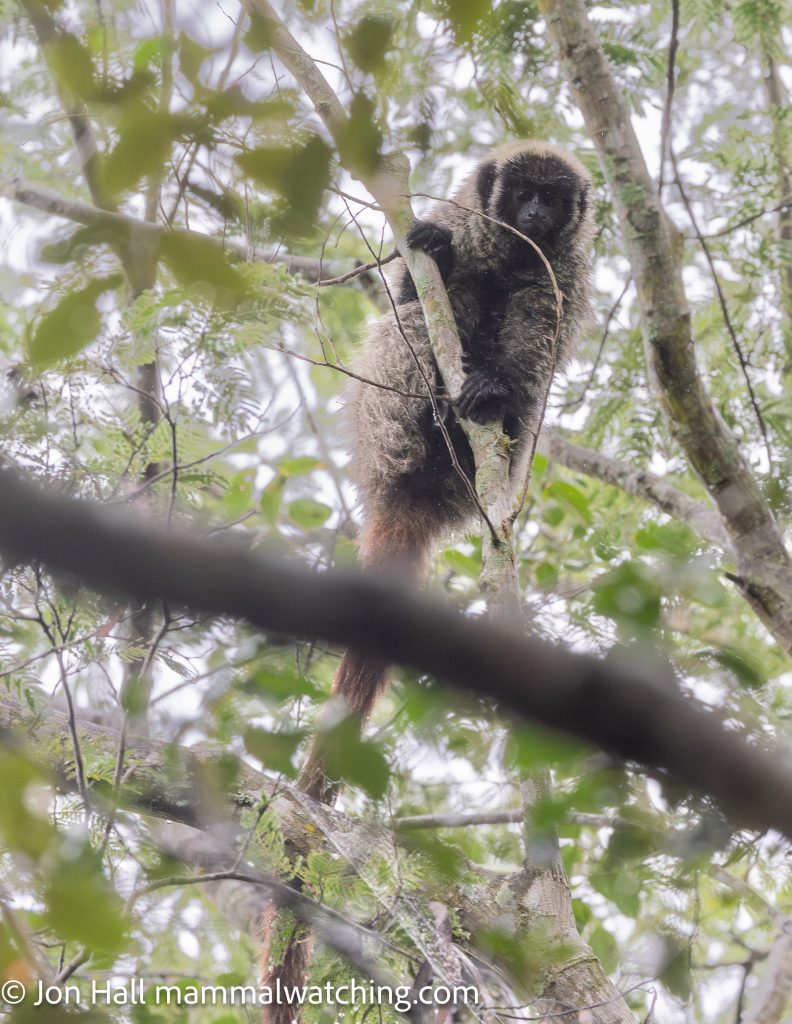
At Lençóis.
Coimbra-Filho’s Titi (C.coimbrai) – endemic – Lifer
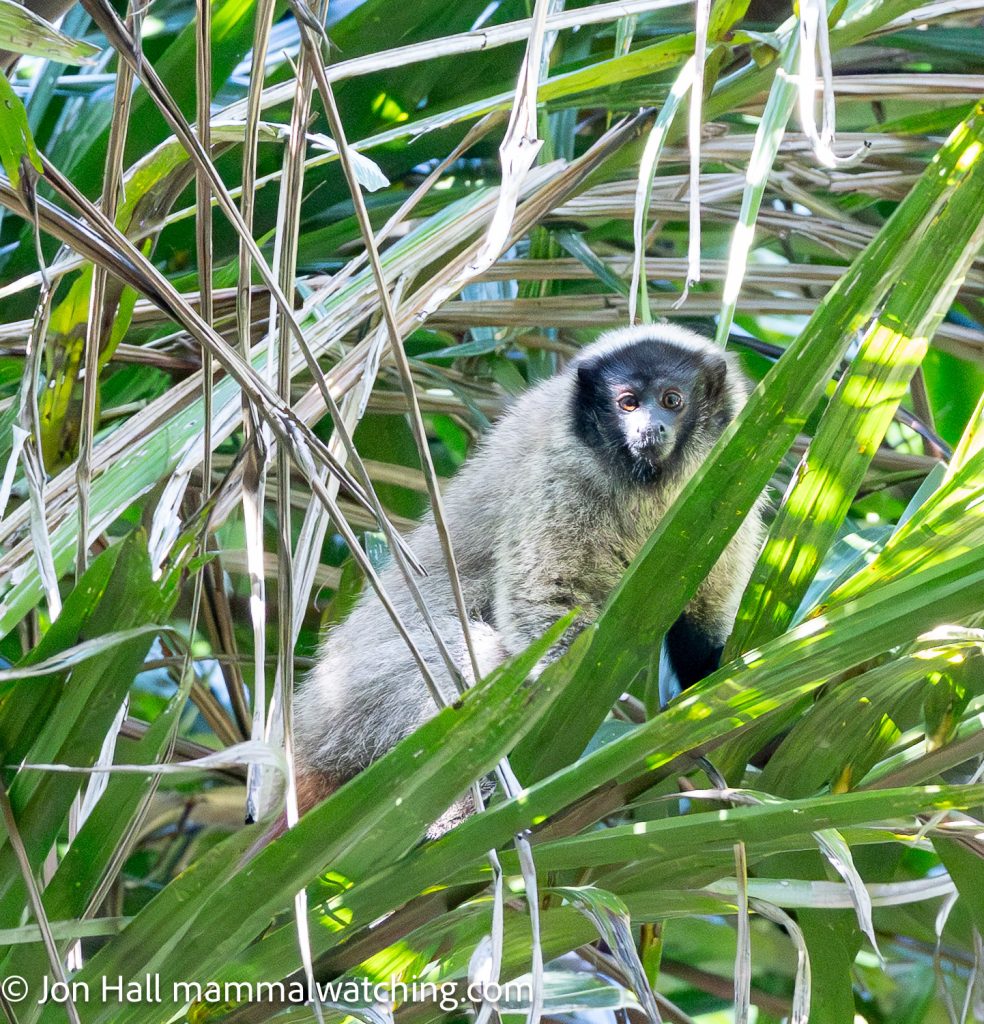
At Santuario do Mata.
Red-bellied Titi (Plecturocebus moloch) – endemic
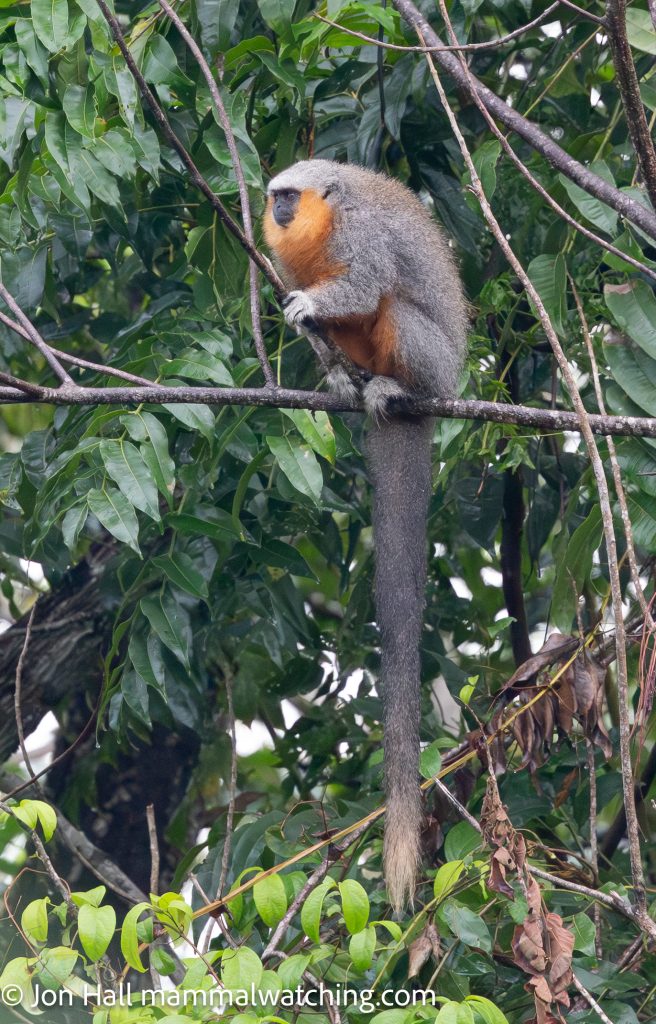
At Alter do Chão.
Golden-faced Saki (Pithecia chrysocephala) – endemic
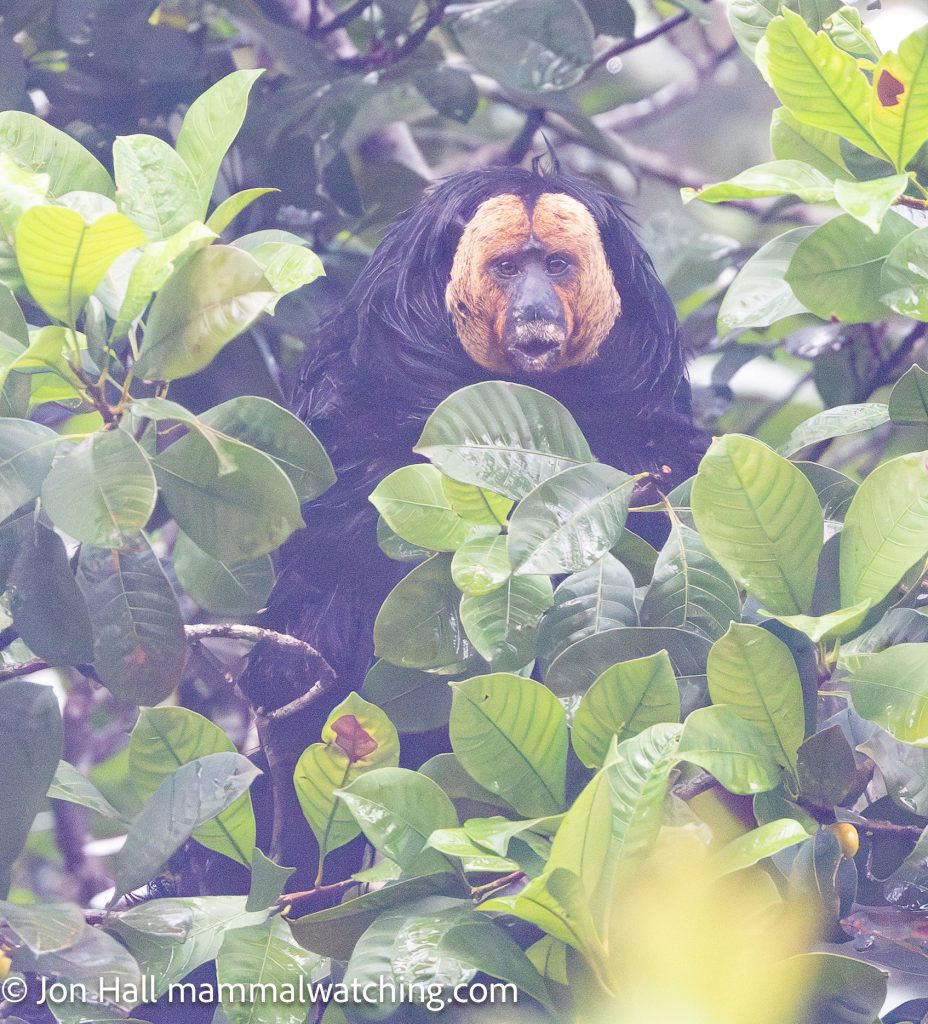
Spix’s Yellow-toothed Cavy (Galea spixii) – endemic – Lifer
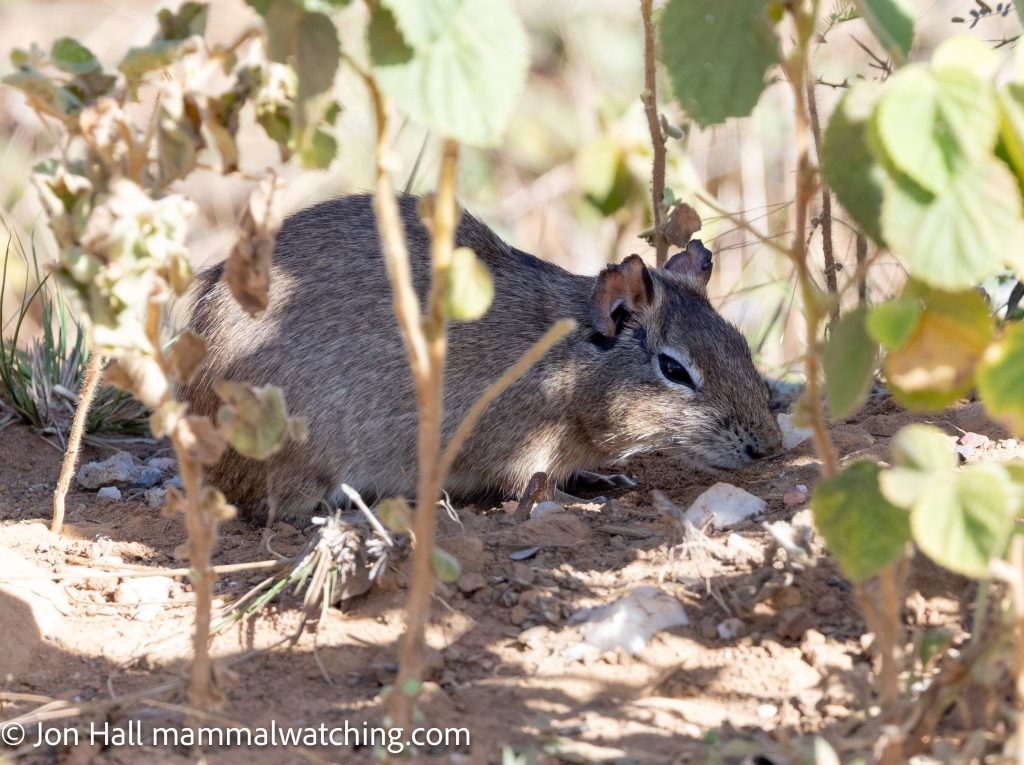
In the Caatinga on May 30.
Greater Capybara (Hydrochoerus hydrochaeris)
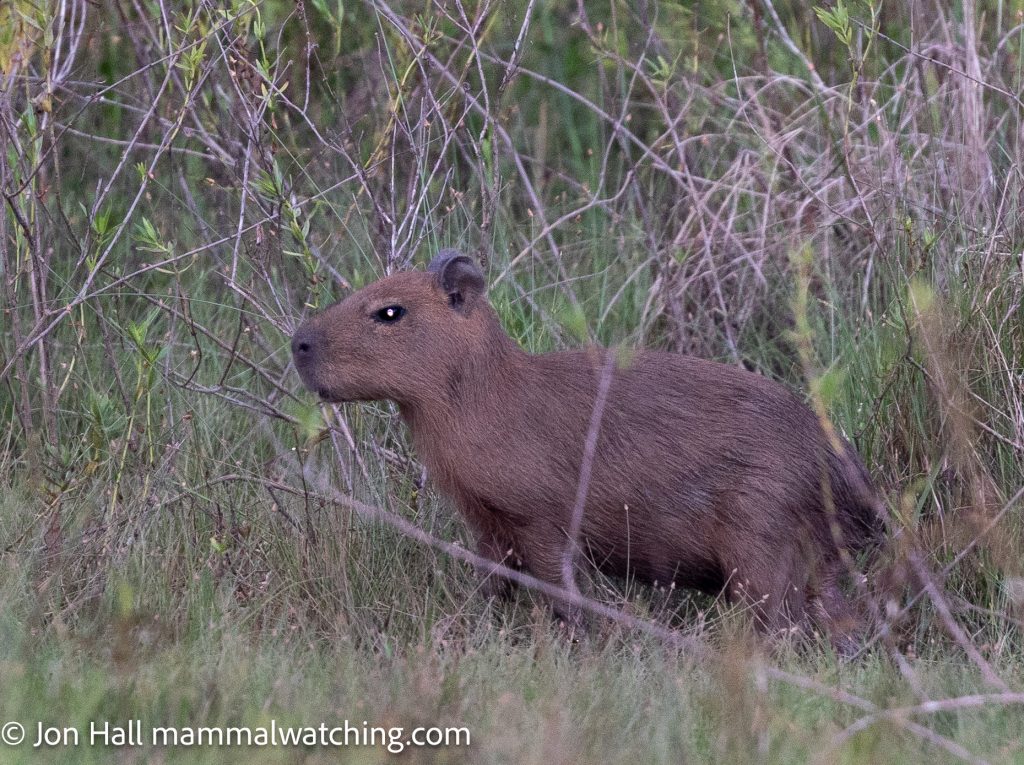
In Belem and João Pessoa.
Rock Cavy (Kerodon rupestris) – endemic – Lifer
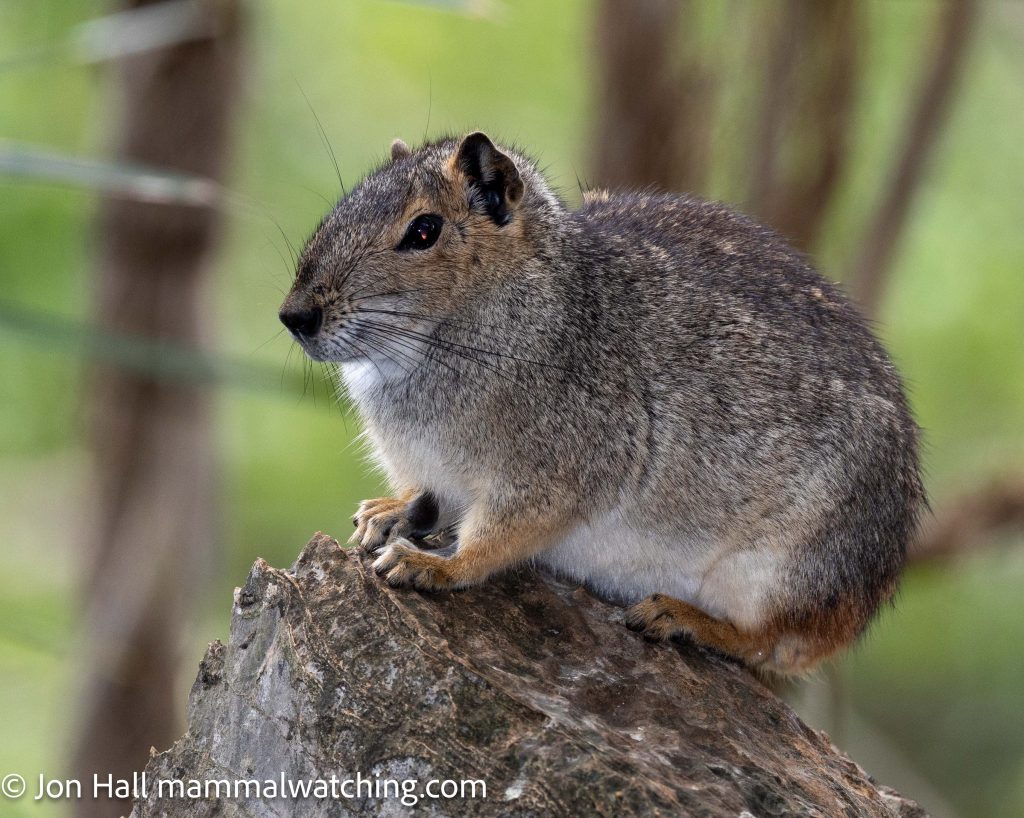
In the Caatinga on May 30.
Orange Agouti (Dasyprocta croconota) – endemic – Lifer
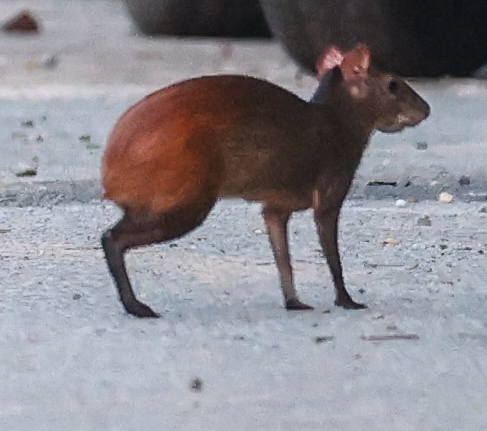
Photo Daniel Dahan
Just one running across the road at Alter do Chão.
Iack’s Red-rumped Agouti (Dasyprocta iacki) – endemic – Lifer
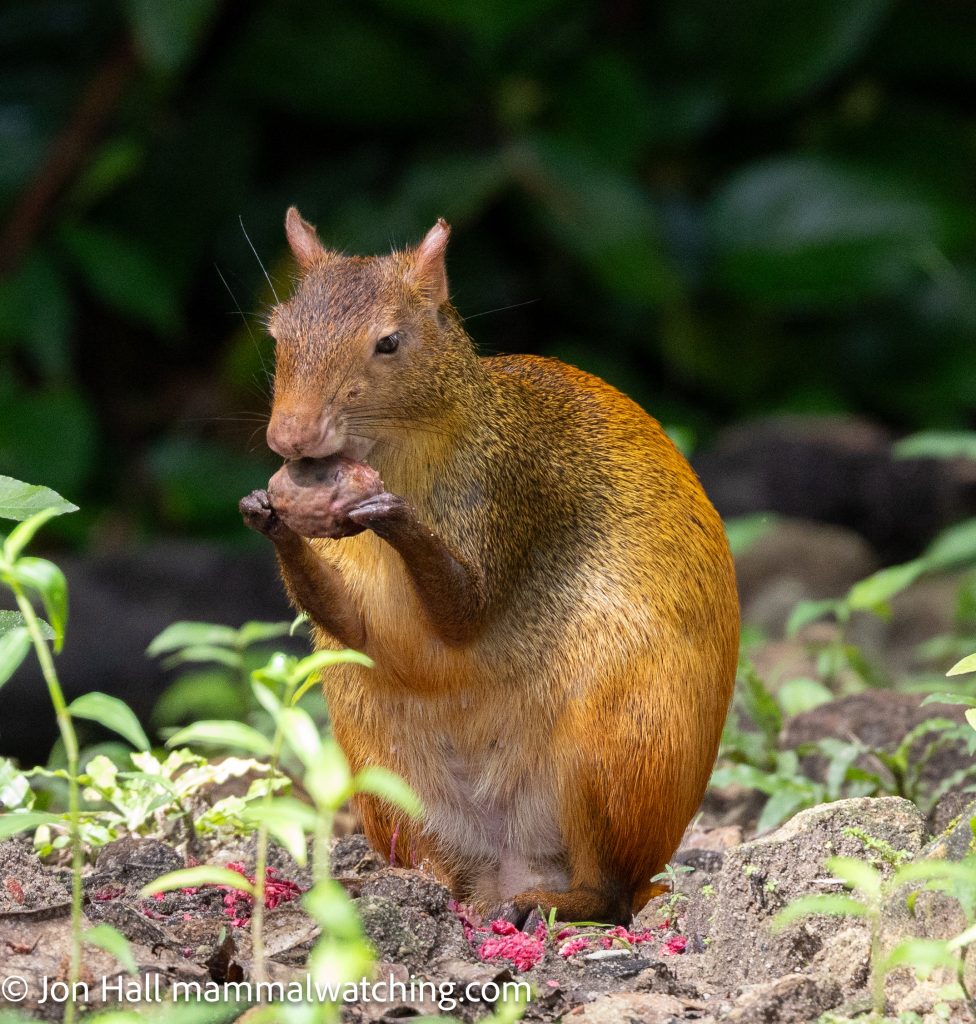
Common at the João Pessoa where they live wild. Ellen saw a couple in wilder habitat here too.
Common Red-rumped Agouti (D.leporina)
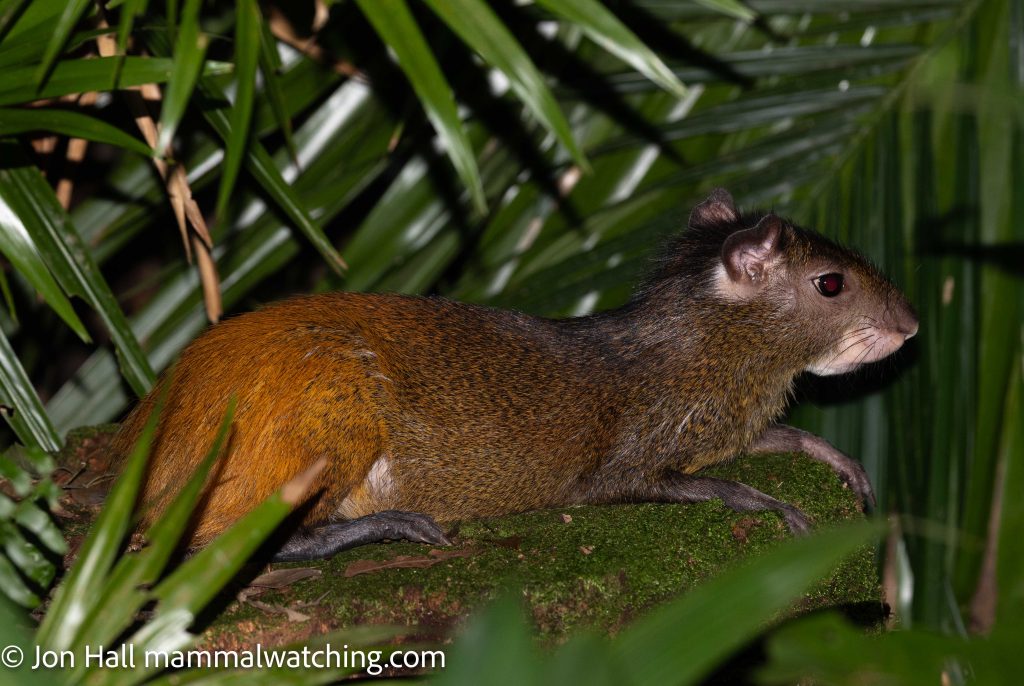
Easy to see at two botanical gardens in Belem.
Black-rumped Agouti (D.prymnolopha) – endemic – Lifer
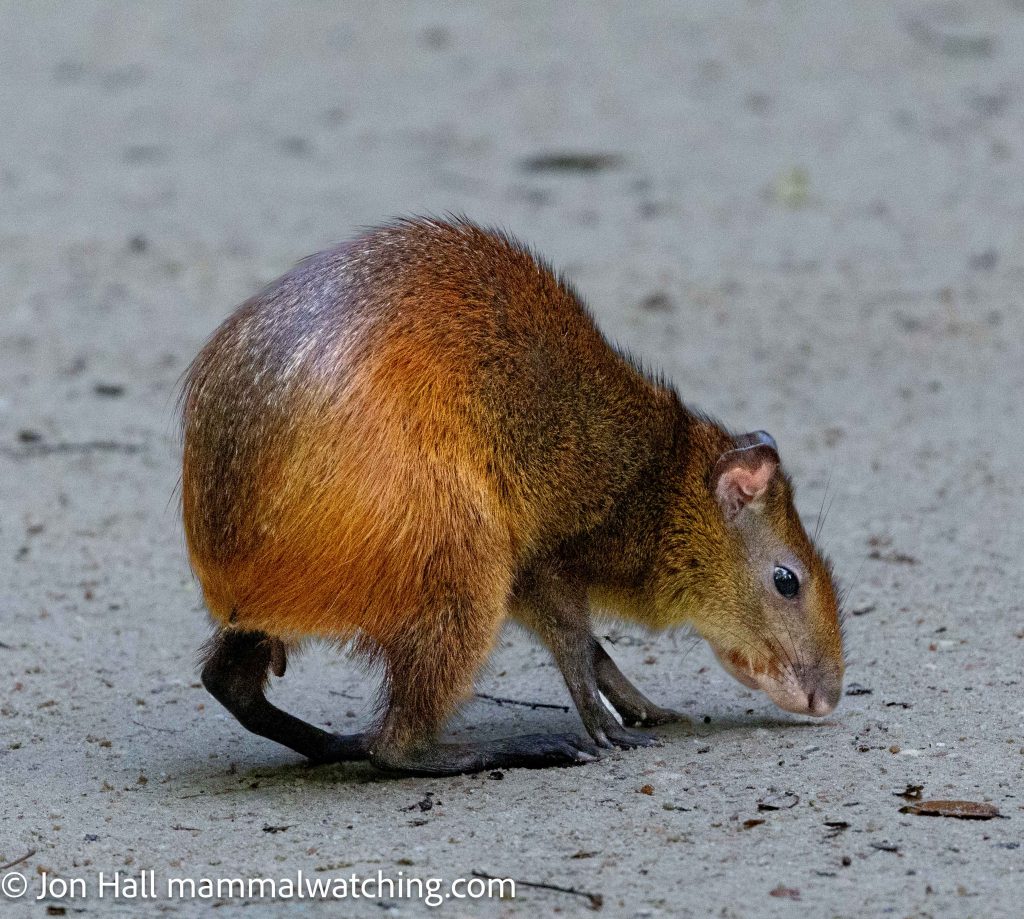
One in Belem in the botanical gardens we visited on our last morning.
Broomstraw-spined Porcupine (Chaetomys subspinosus) – endemic – Lifer
Baturité Porcupine (Coendou baturitensis) – endemic – Lifer
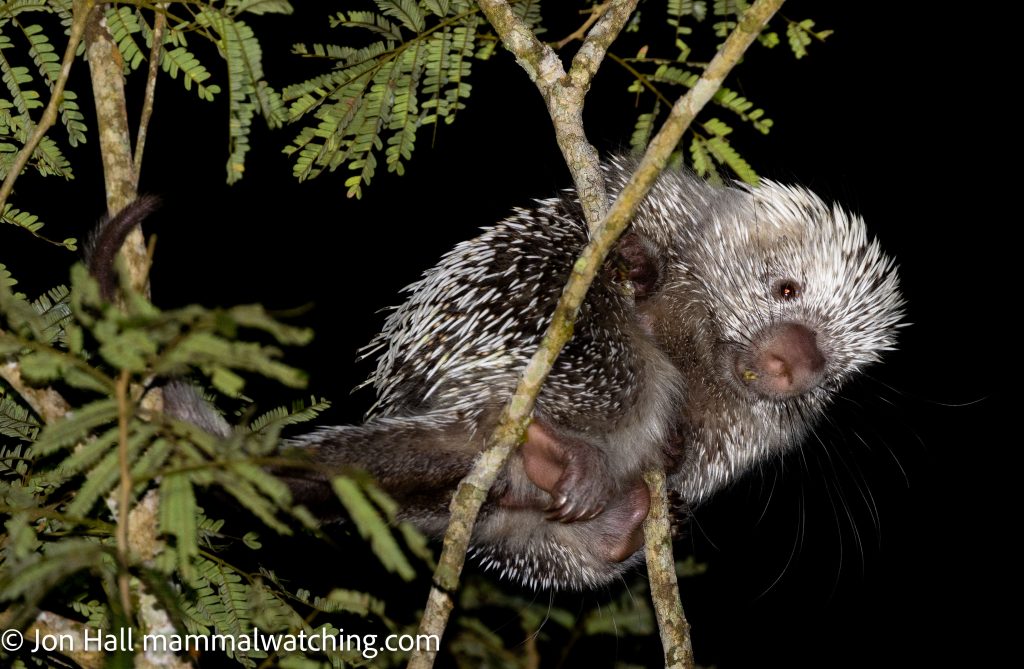
Several at Guaramaringa.
Bahian Hairy Dwarf Porcupine (C.insidiosus) – endemic – Lifer
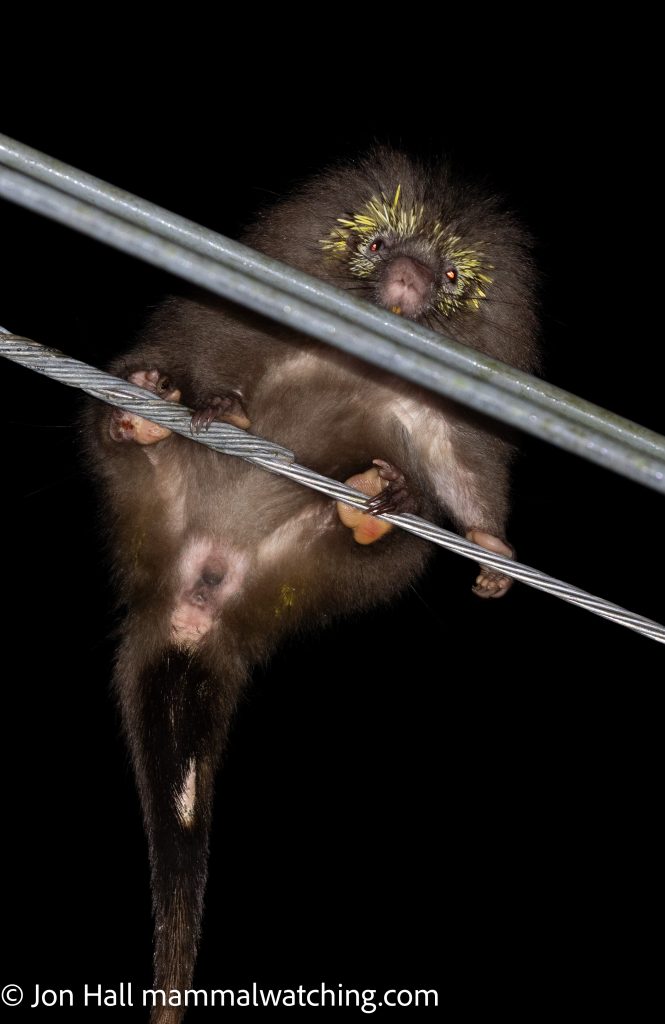
Several at Praia do Forte.
Yellow Quill-tipped Porcupine (C.prehensilis) – endemic – Lifer
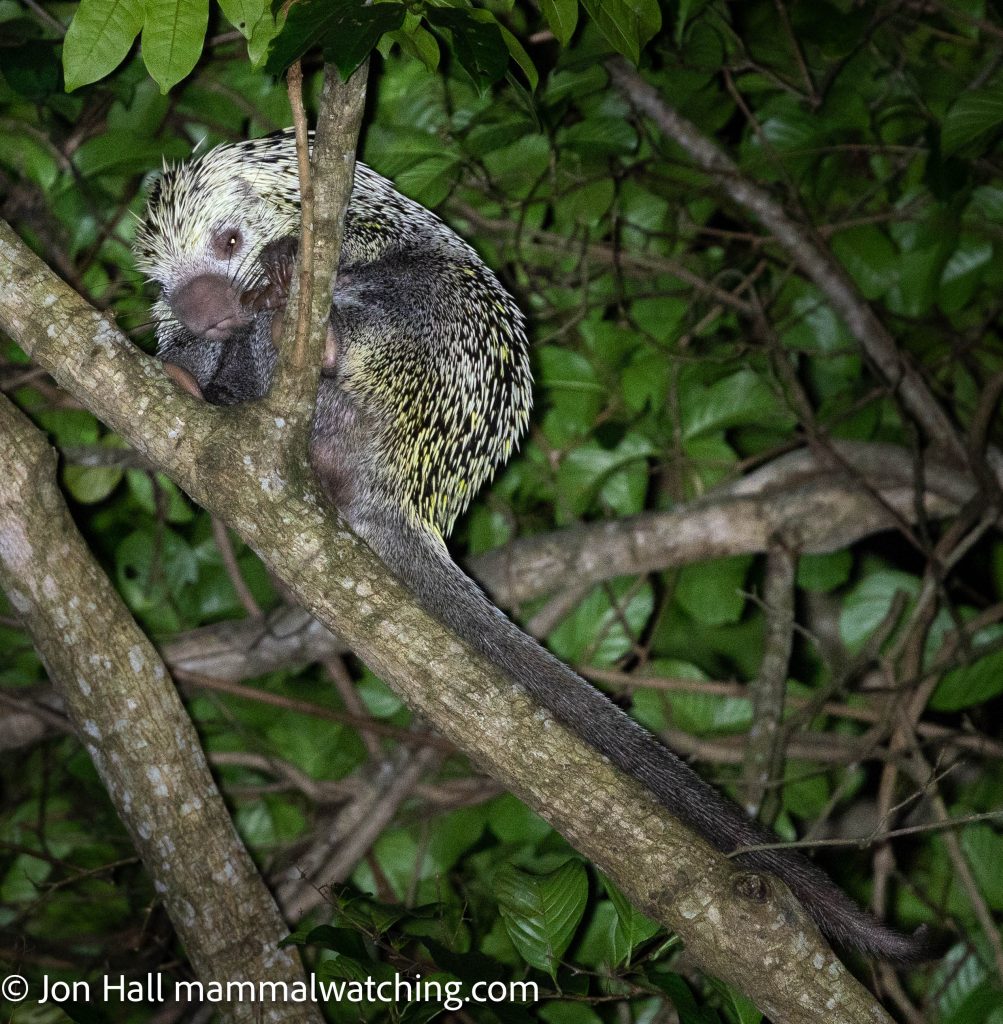
Two in the national forest park in João Pessoa.
Pernambuco Dwarf Porcupine (C.speratus) – endemic – Lifer
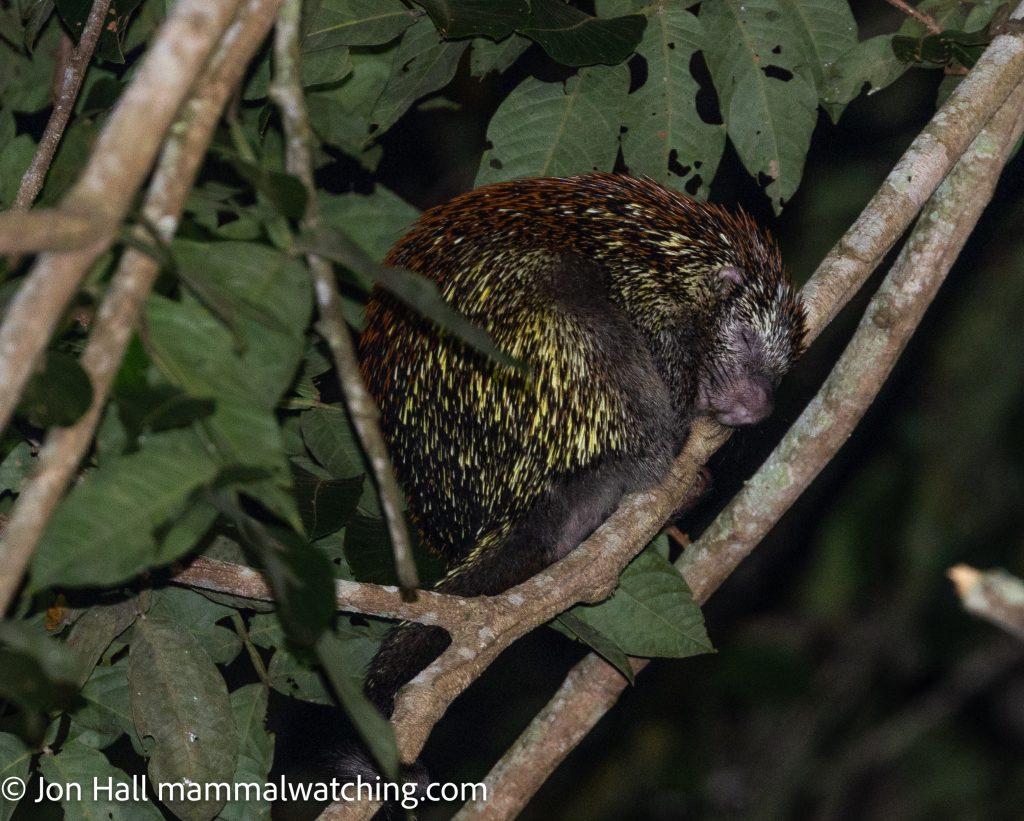
Two or three at the Quilombo Hotel.
Goeld’s Spiny Rat (Proechimys goeldii)
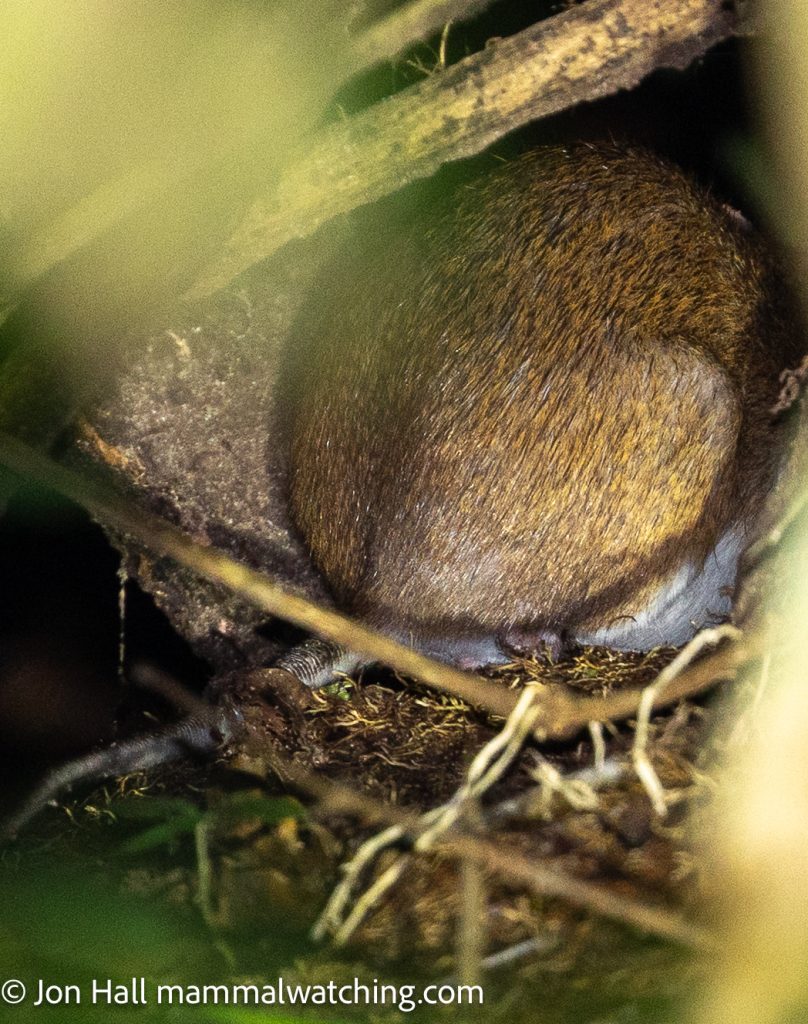
One of these large spiny rat an Alter do Chão would not cooperate for pictures but appears to be Robert’s Spiny Rat. There are only three species in range: P. cuvieri, goeldii and roberti. The tail of this animal rules out cuvier, which has a ‘shaggy’ looking tail unusual for a proechimys. The overall colour and spinyness of this species seems to be a better match for Proechimys goeldii rather than roberti according to an expert, so we are running with that.
Sao Lourenço Punare (Thrichomys laurentius) – endemic – Lifer
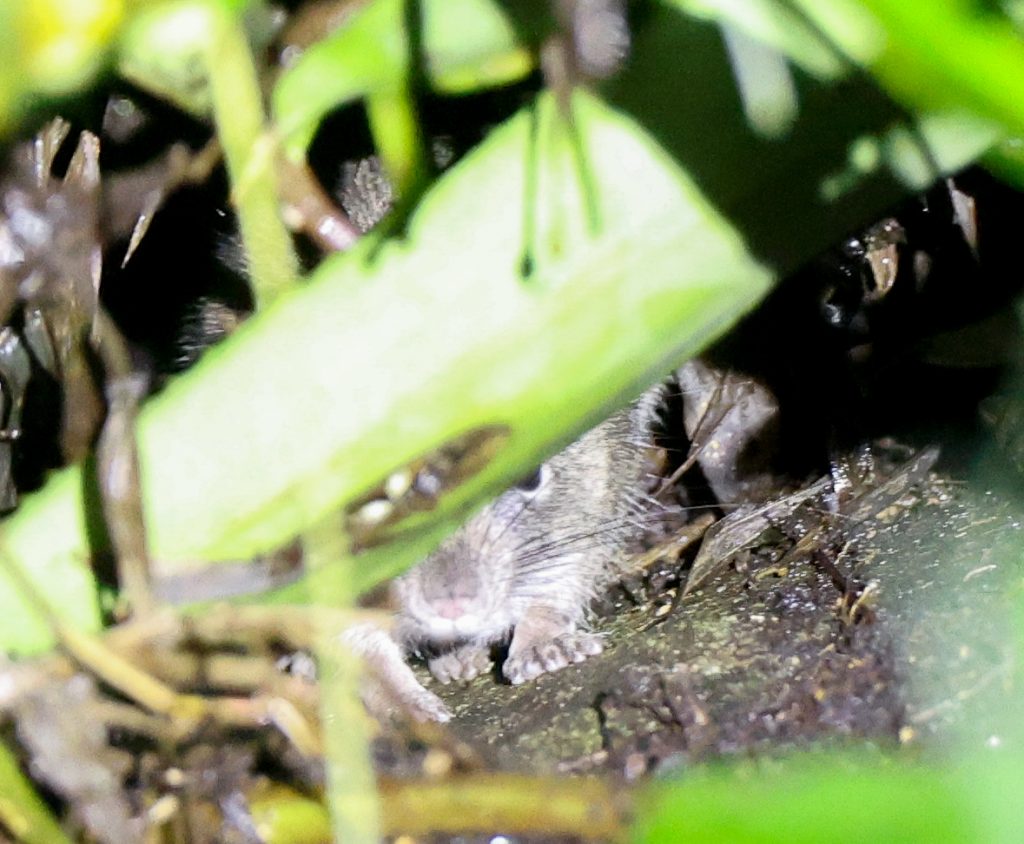
One at Guaramaringa.
Guianan Squirrel (Sciurus aestuans gilvigularis)
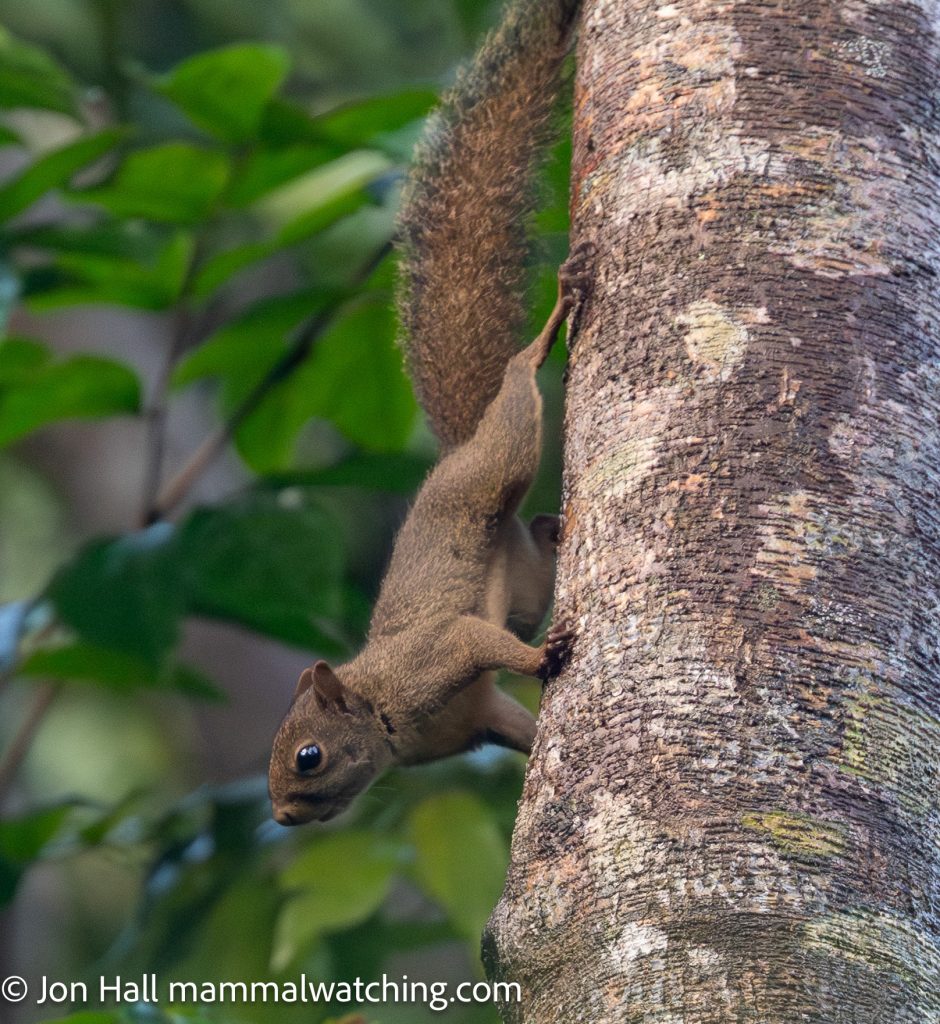
Two at Alter do Chão.
Straw-colored Pygmy Rice Rat (Oligoryzomys stramineus) – endemic – Lifer
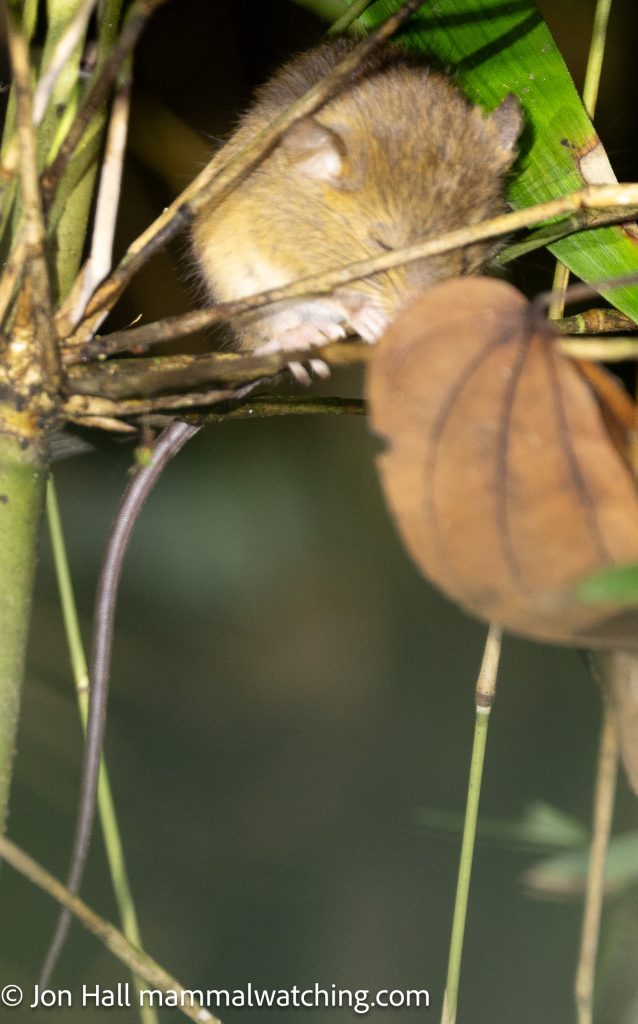
One at Guaramaringa seems to be this species.
Cariri Climbing Rat (Rhipidomys (batureensis) cariri) – endemic – Lifer
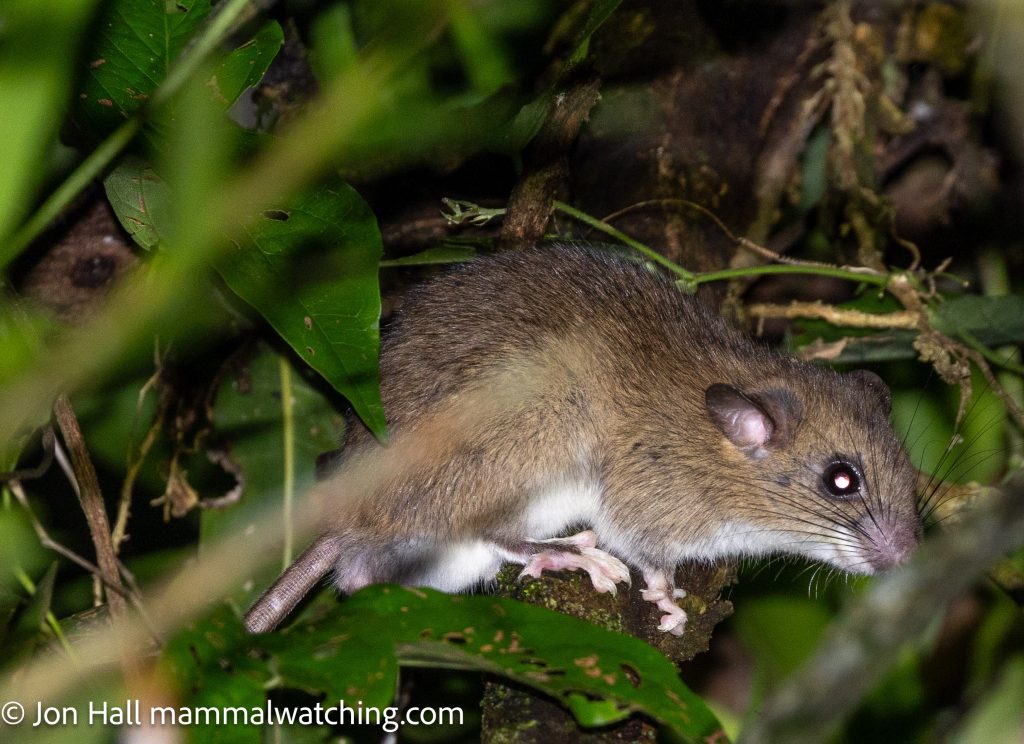
Many at Guaramaringa.
Proboscis Bat (Rhynchonycteris naso)
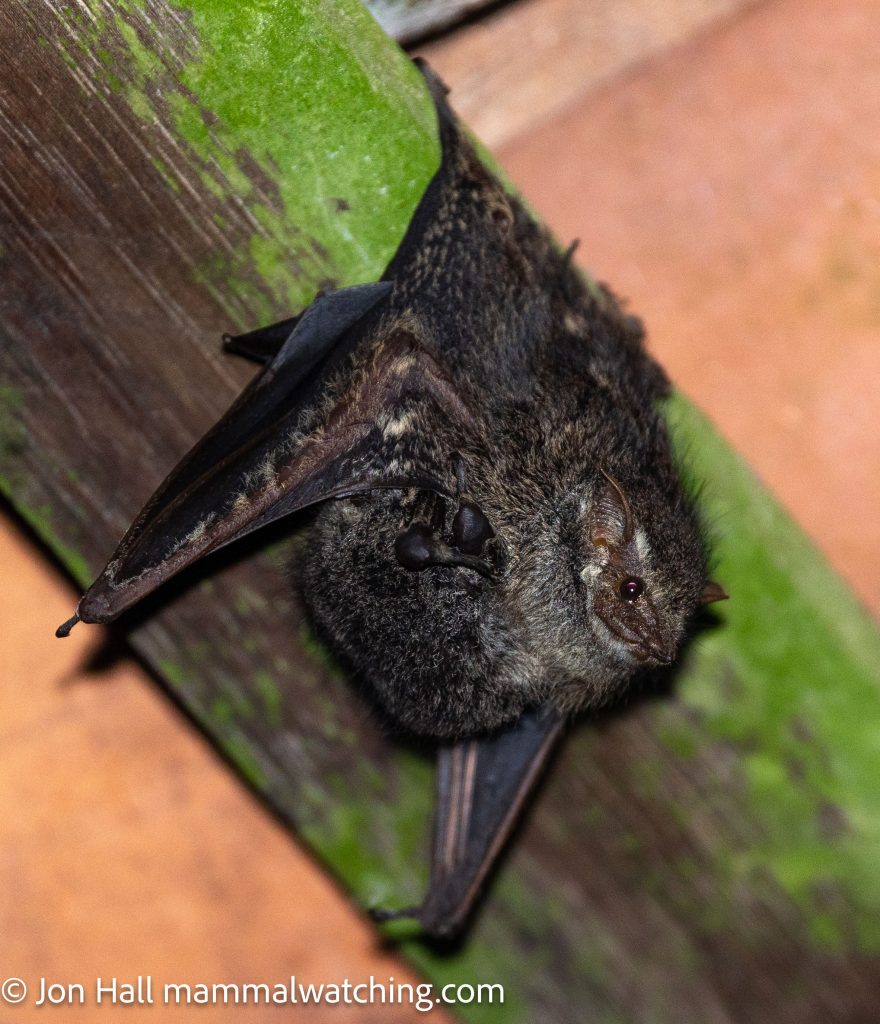
A few at the Quilombo Hotel.
Greater Sac-winged Bat (Saccopteryx bilineata)
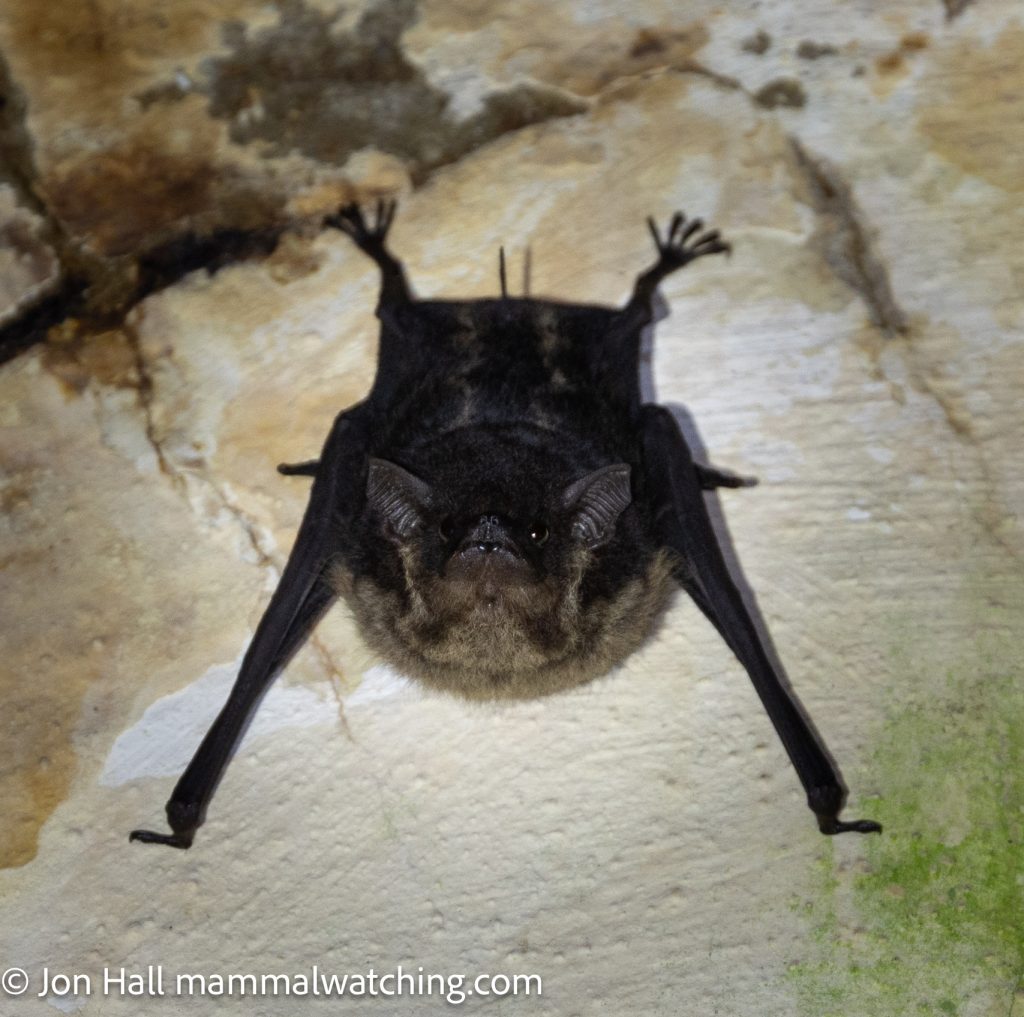
At Praia do Forte, Alter do Chão and Belem.
Frosted Sac-winged Bat (S.canescens) (?)
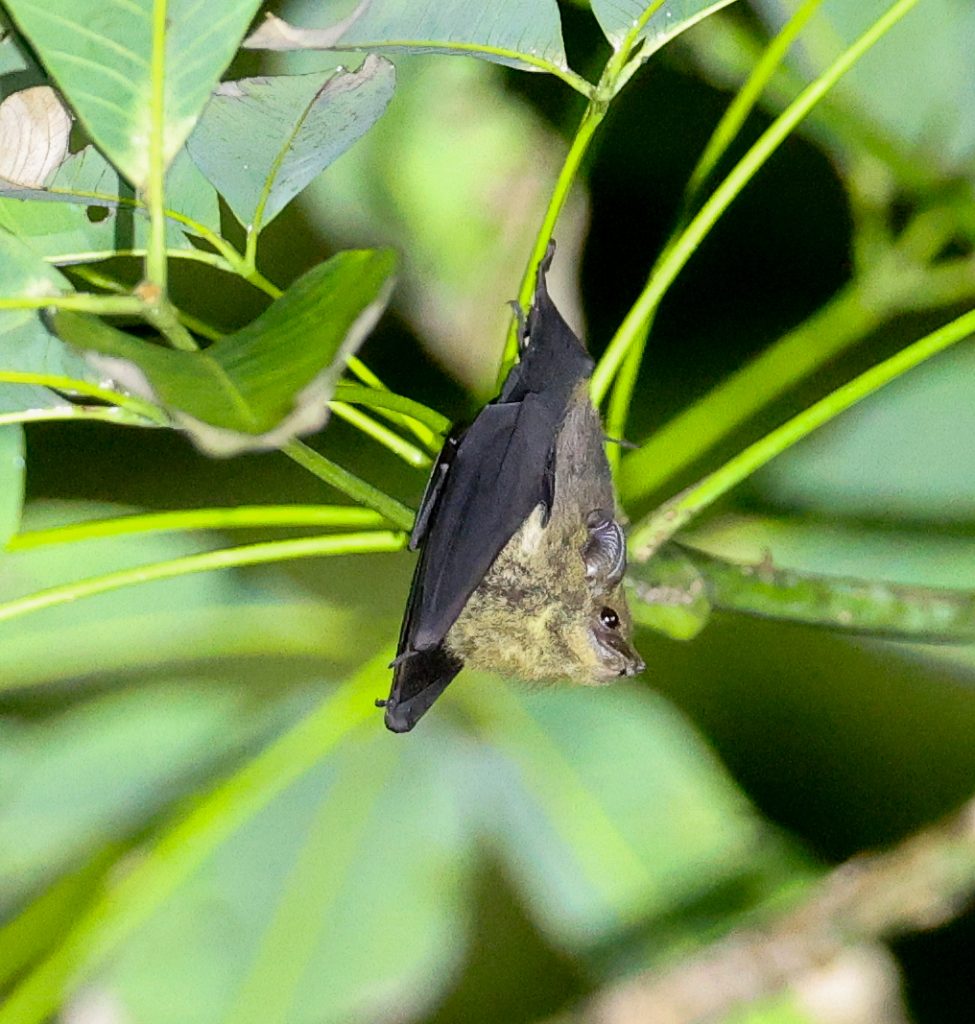
Photo Daniel Dahan
Two Sacopteryx bats roosting at night in Alter do Chão appeared to be either S. canescens or possibly S. gymnura.
Lesser Sac-winged Bat (Saccopteryx leptura)
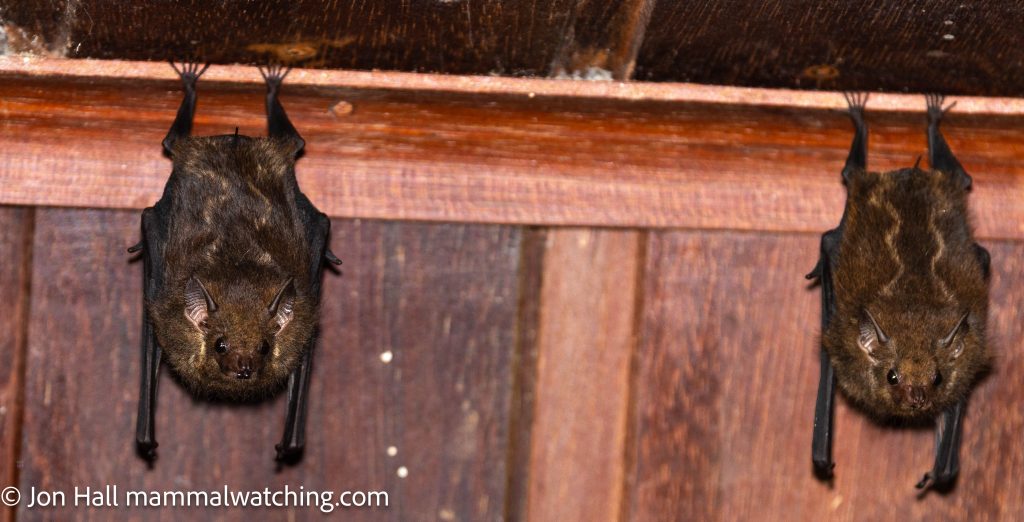
A few at the Quilombo Hotel.
Lesser Bulldog Bat (Noctilio albiventris)
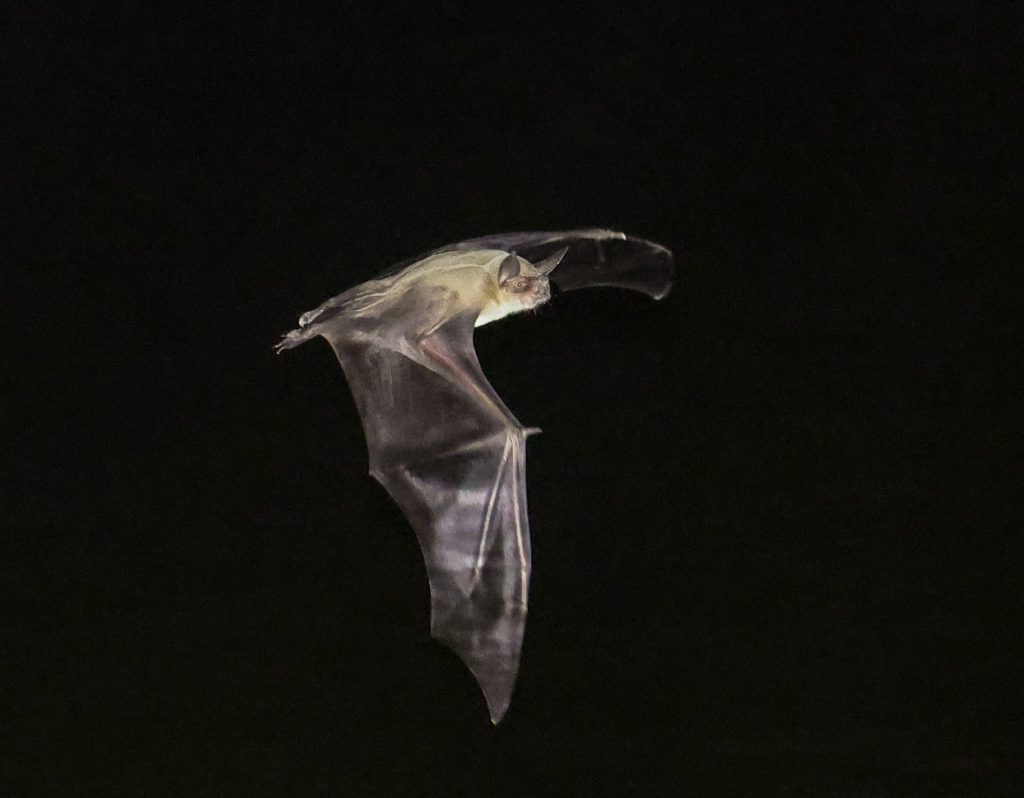
Photo Daniel Dahan
There were many fishing bats at Guaramaringa and Daniel managed to photograph some of the smaller bats which must be Lesser Bulldog Bats.
Greater Bulldog Bat (N.leporinus)
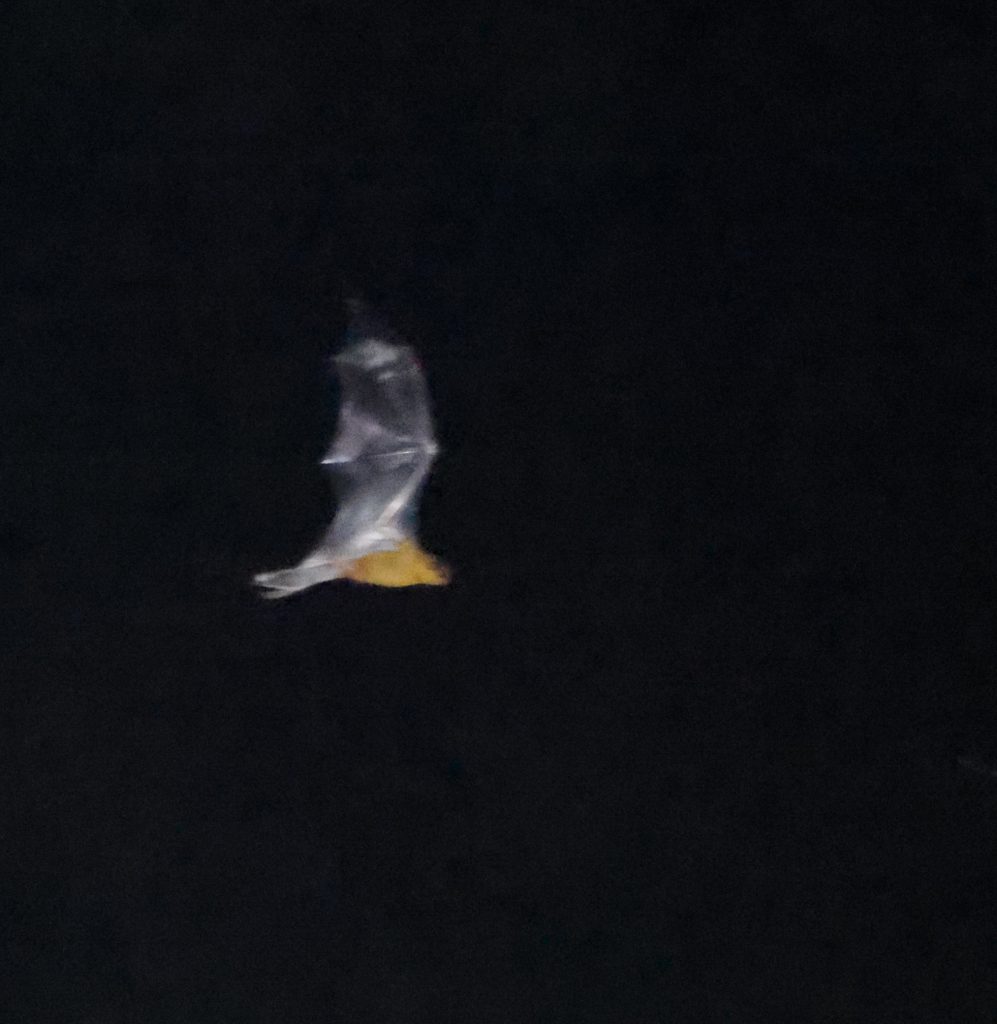
Photo Daniel Dahan
We saw larger, orange, fishing bats at Guaramaringa which must have been this species.
Seba’s Short-tailed Bat (Carollia perspicillata)
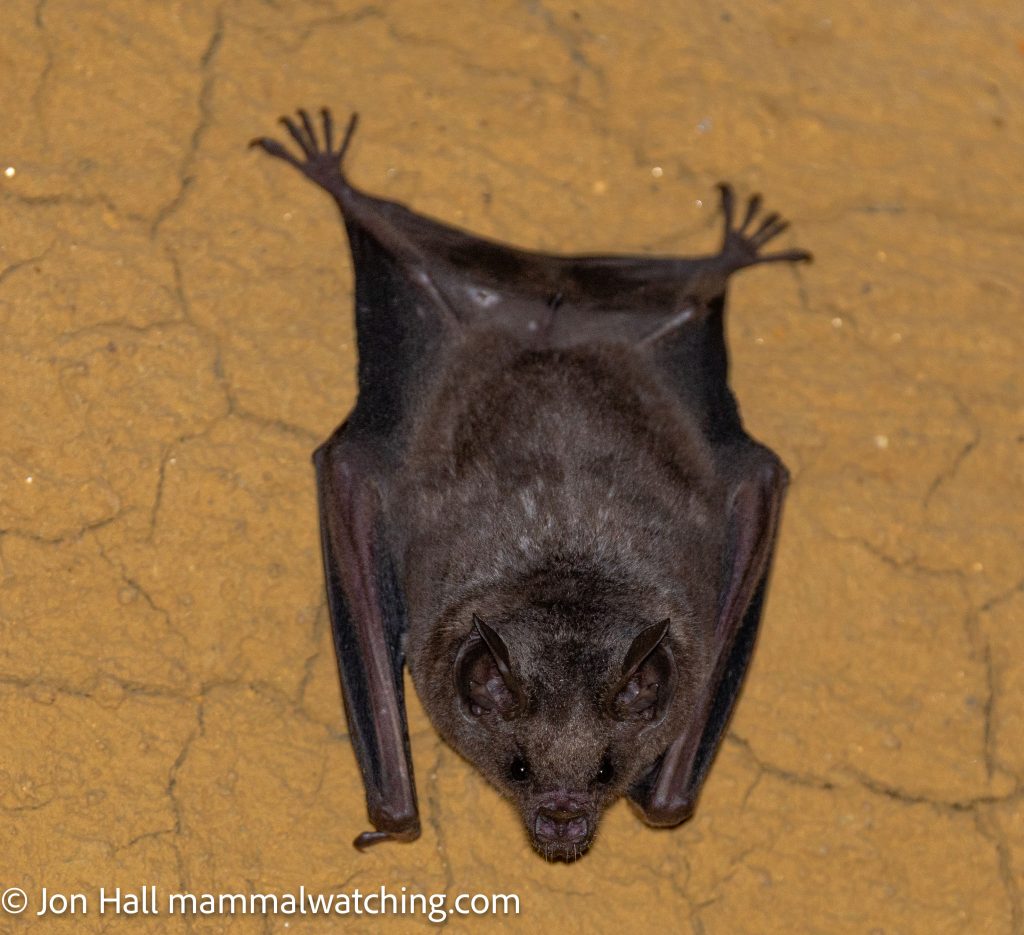
One at Guaramaringa and one at João Pessoa.
Common Vampire Bat (Desmodus rotundus)
We disturbed a large, noisy colony in a hollow stump at the hotel in Guaramaringa.
White-winged Vampire Bat (Diaemus youngii)
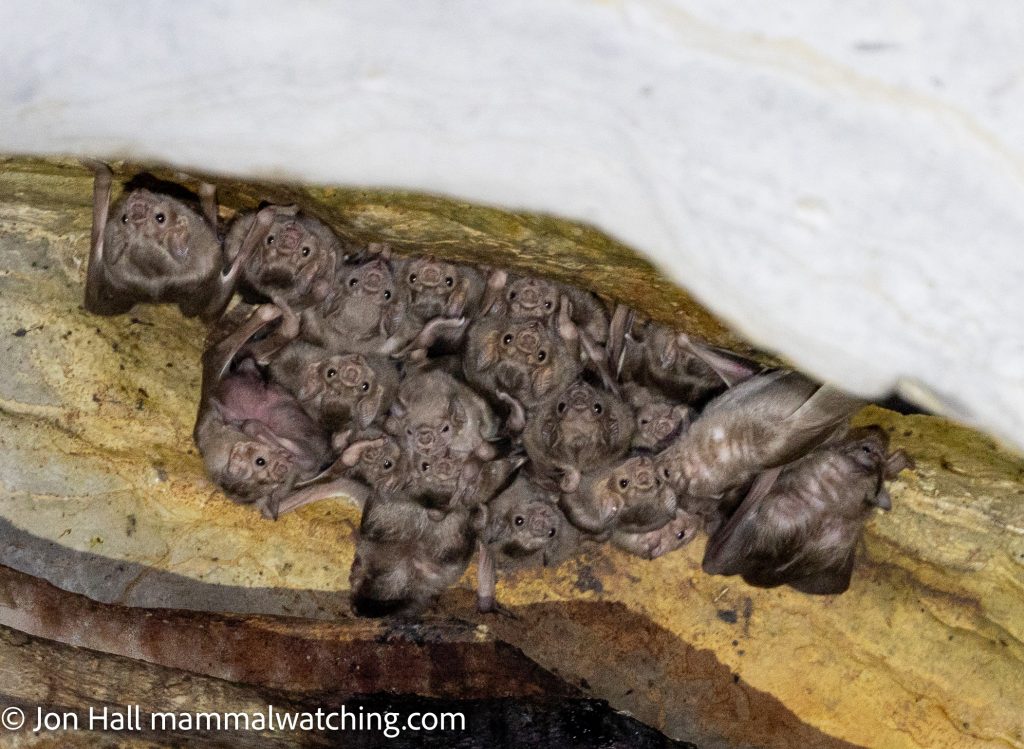
A colony of this rare bat in the caves on May 30 was an exciting find.
Pallas’s Long-tongued Bat (Glossophaga soricina)
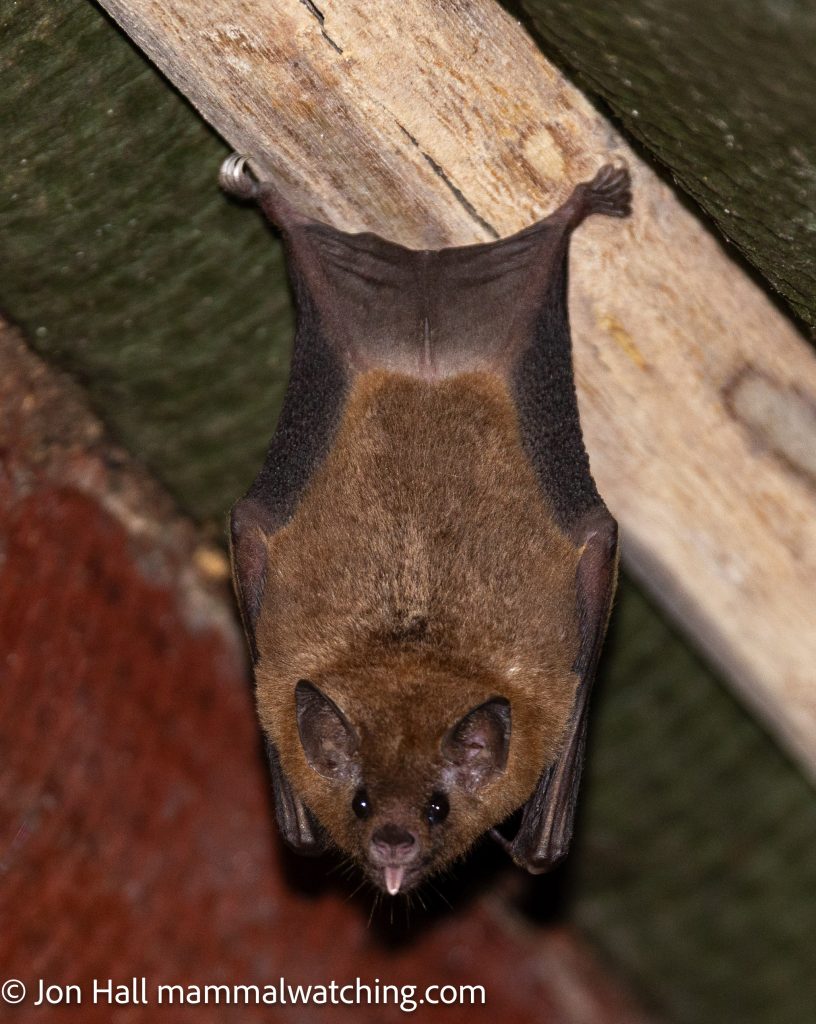
Just one confirmed ID at Guaramaringa.
Great Fruit-eating Bat (Artibeus lituratus)
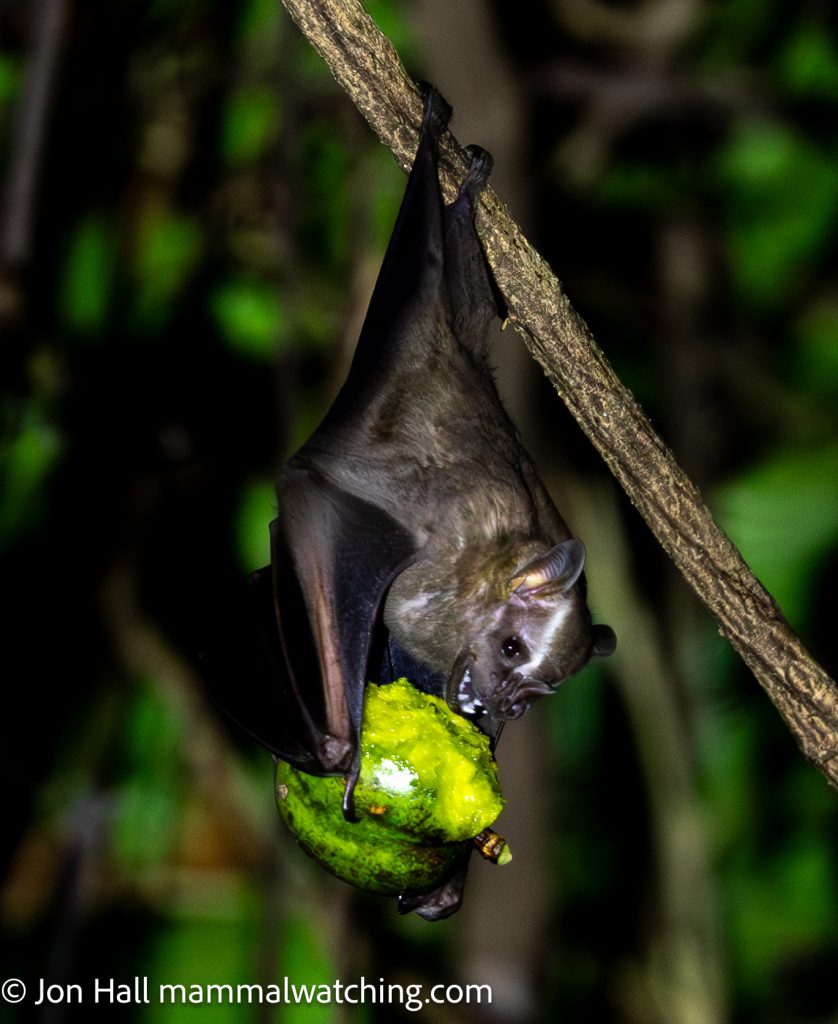
One in the national forest park in João Pessoa.
Flat-faced Fruit-eating Bat (A.planirostris)
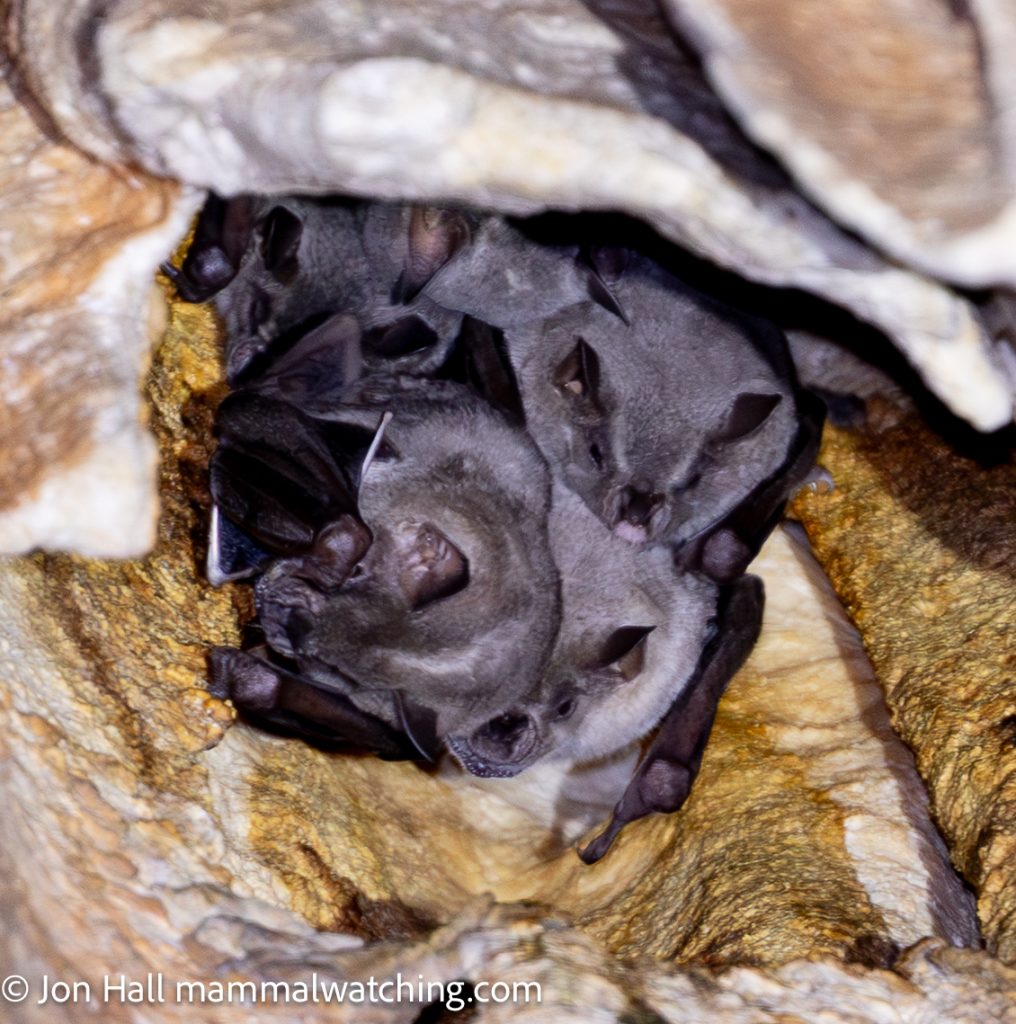
A small colony in the Rock Cavy caves on 30 May. Possibly one roosting at night in Praia do Forte.
White-lined Broad-nosed Bat (Platyrrhinus lineatus) – Lifer
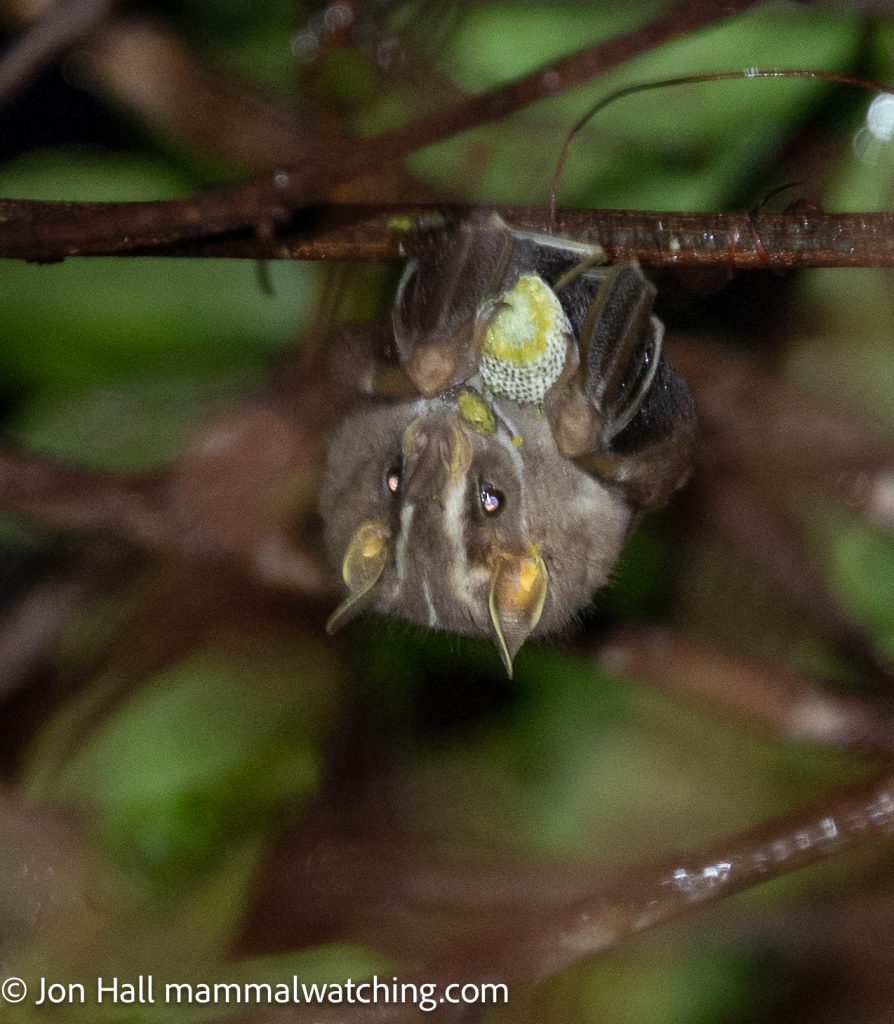
Seen both nights in the garden of our hotel in Lençóis
Pallas’s Mastiff Bat (Molossus molossus) (?)
We watched a large colony of mastiff bats emerge from the roof of the Quilombo hotel. We couldn’t photograph them but they seemed most likely to be this species, or potentially Molossus rufus.
South American Coati (Nasua nasua)
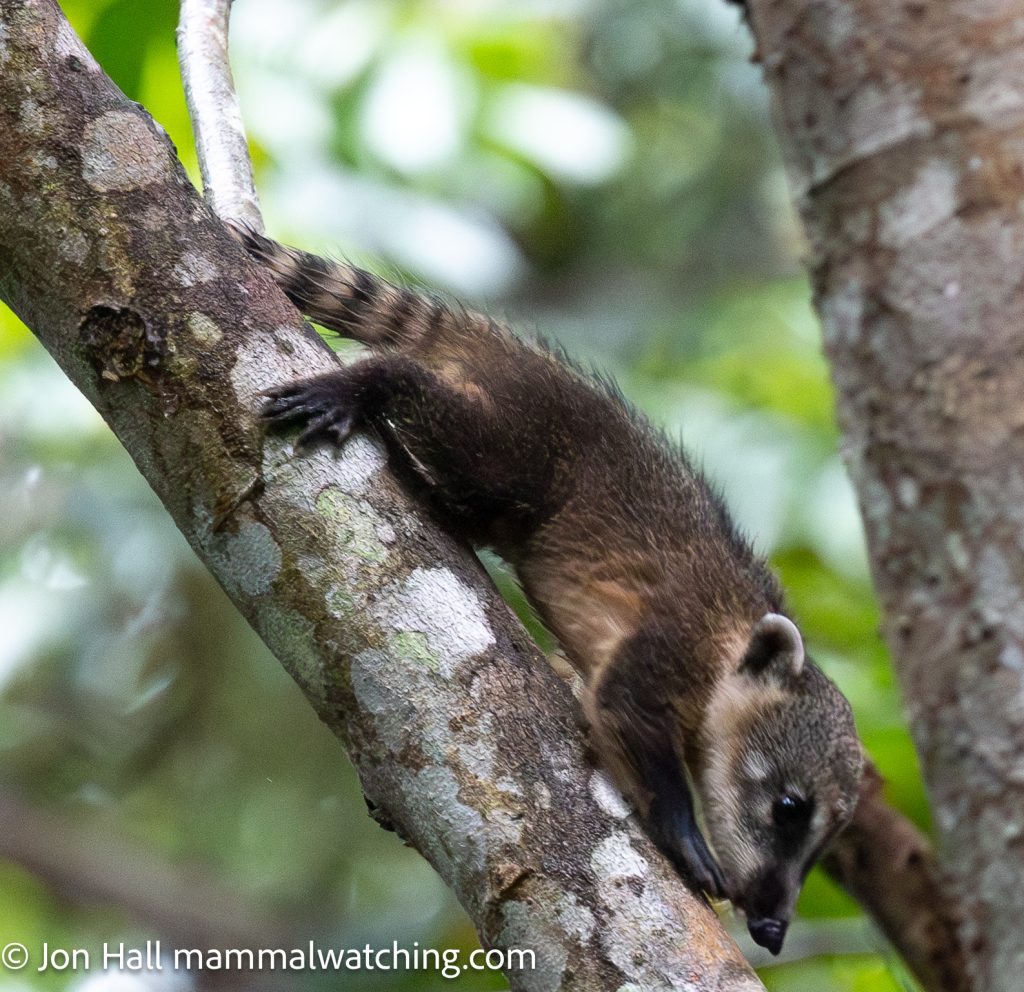
A large group in the forest at Praia do Forte.
Crab-eating Fox (Cerdocyon thous)
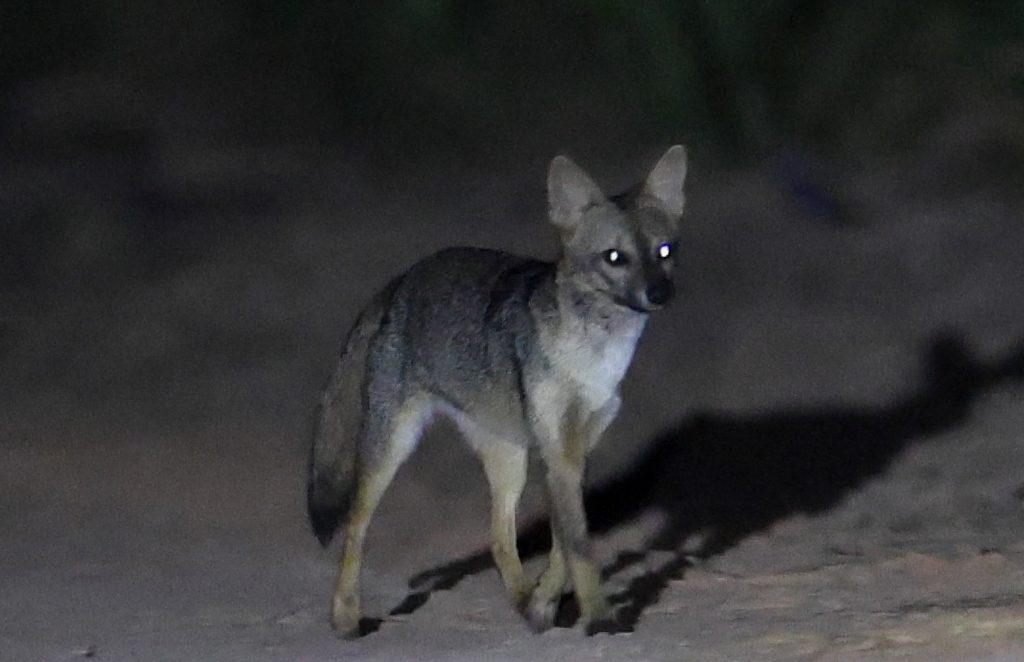
Photo Daniel Dahan
Two on the road in João Pessoa.
Tucuxi (Sotalia fluviatilis)
One or two seen briefly during the boat ride at Alter do Chão.
Amazon River Dolphin (Inia geoffrensis)
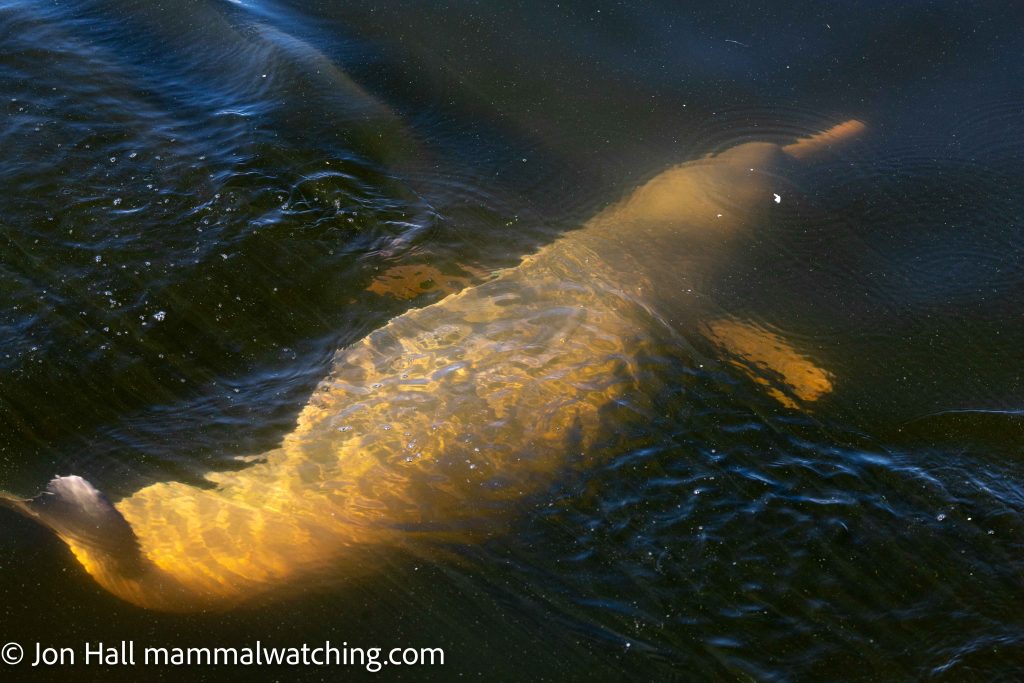
Seen very well at the Santarem fish market and one seen on the boat ride at Alter do Chão.
62 species overall, with 41 species on the main trip and 24 on the extension. 23 lifers for me.
Stuff We Missed
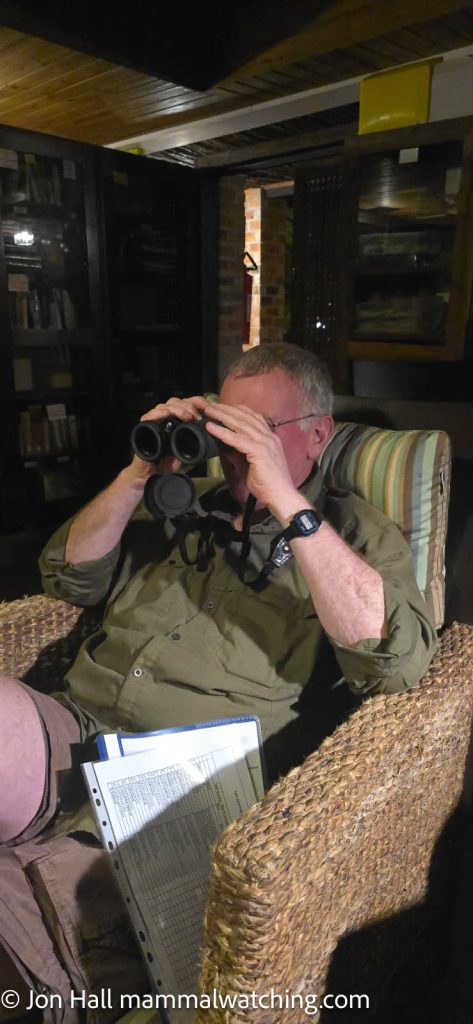
Kevin asks Regina to move to a larger font during one of her presentations!
We saw pretty much everything. At least everything we were targetting. We saw every single species mentioned on the trip brochure. And that is extraordinary on a mammal trip! I tried explaining to those in the group who were still young in their mammalwatching careers that this is not the norm. But I worry that their expectations may now be unreasonably high for the next trip. Unless of course it is with Regina Ribeiro, where this sort of success is par for the course.
Thank you
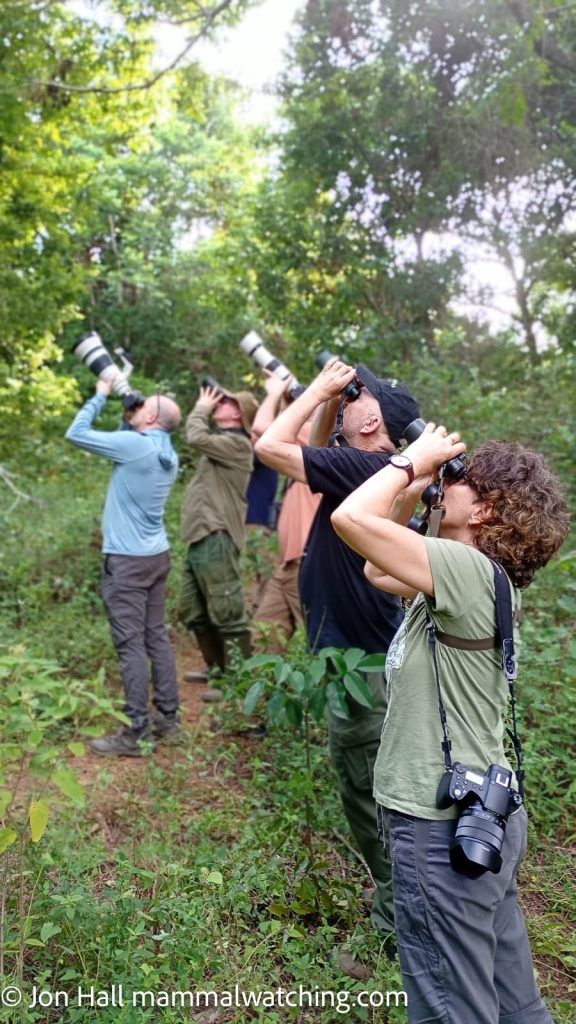
What a great trip!
Thank you to all our local guides: all of them found by Regina and all of them excellent.
A big thanks to Boute Expeditions and Miru Adventures for being so easy and professional to work with and making sure everything went flawlessly. Thank you also to our various drivers, especially to the great Reginaldo: not only is he a tireless driver, but a great mammal spotter and a lot of fun (especially when overheard in conversation with Daniel). It isn’t often the driver leads a singalong on the bus. I think Reggie enjoyed the trip as much as we did.
Regina Ribeiro deserves most of the credit for the success of the trip. She put together the perfect itinerary, with the perfect people. She is also a great spotter, a lot of fun and always patient: even when William locked himself out of his hotel room at midnight. The perfect guide.
And last a huge thank you from me to the group: Daniel, Ellen, Kevin and William. No one complained. No one got tired (or at least admitted to it). Everyone was finding the mammals. Everyone was considerate and helping everyone else to get onto all we saw. It was truly a pro-team effort.
And – as I said at the start – I don’t remember ever laughing so much on a trip. If only – and I can hear my daughter’s voice as I write this – if only I had discovered sooner that it is OK to have so much fun on a mammal trip. Heresy!
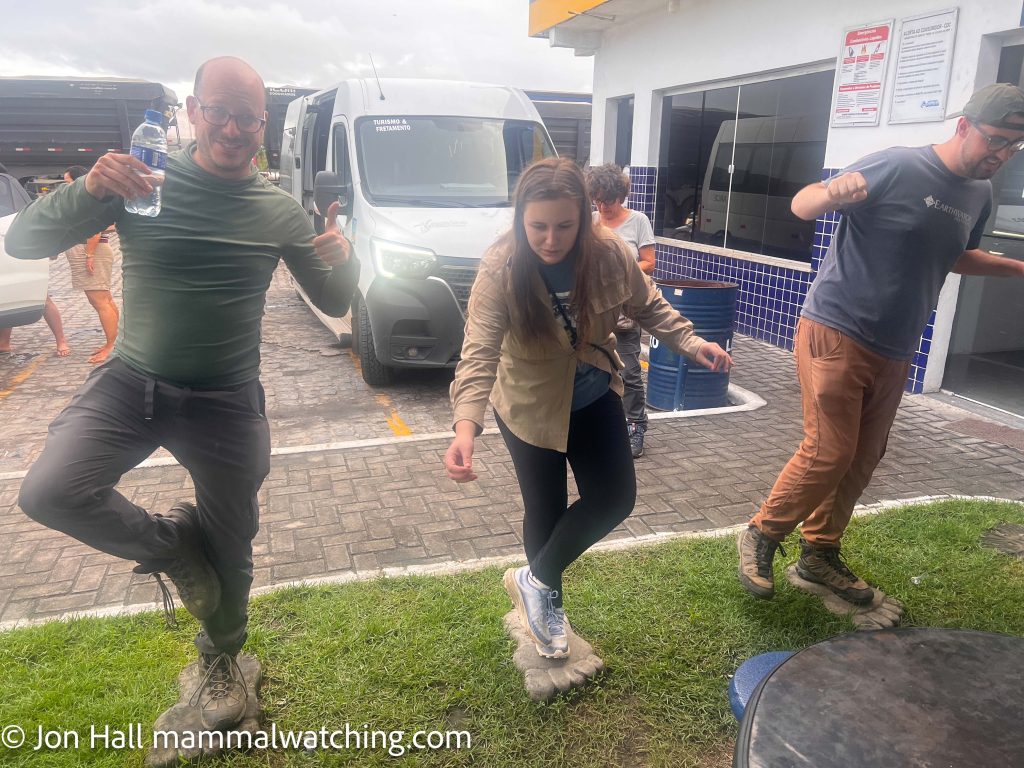
A traditional Brazilian ‘who can stand on one leg the longest’ competition.

Post author
3 Comments


Leave a Reply
You must be logged in to post a comment.
Antoine Rabussier
Great trip and report! Looking forward to visit some of those places