

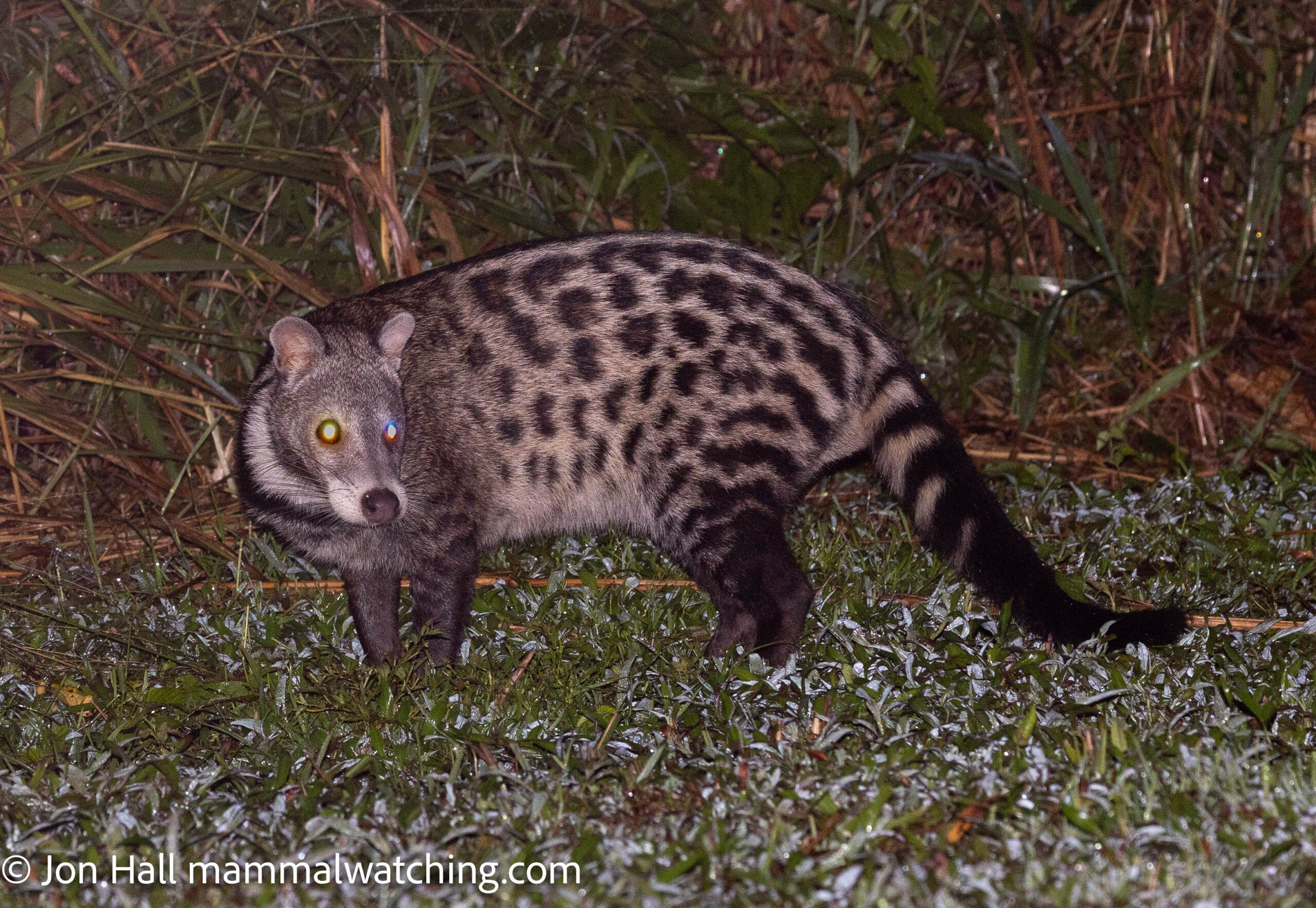
Huai Khayeng Nature Park and Sai Yok & Kaeng Krachan National Parks (Thailand), September 2026
Hello from Vietnam where my next trip has just begun and so I am stressing about finishing off my report from last’s week’s trip to Thailand. I was on quick a pre-Vietnam warm up organized by my friend, and Thailand’s pre-eminent mammal tour operator, Jirayu ‘Tour’ Ekkul from Wild Encounter Thailand. We were mainly chasing bats.
Our group comprised Nicaraguan legend José Gabriel Martínez-Fonseca and Oregonian legend-in-the-making Emma Busk, along with Bangkok-based Coke Smith, one of the mammalwatching OGs, as well as Malaysian bat expert Amira ‘Mimi’ Rahman. We were joined by Jirayu’s excellent driver Lip and the very attentive Sky from Wild Encounter Thailand.
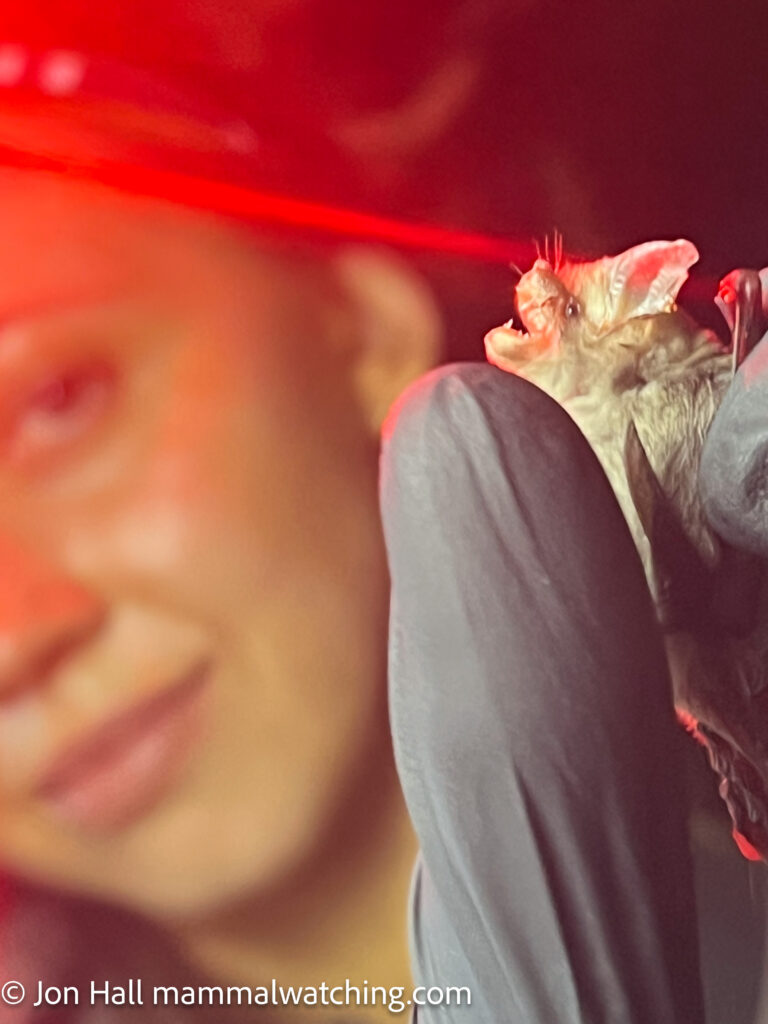
Kitti’s Hog-nosed Bat (Craseonycteris thonglongyai), Sai Yok National Park
We had just four nights in the field. Photographing a Kitti’s Hog-nosd (Bumble Bee) Bat was the main target for José and Emma, so we decided to spend two nights around Sai Yak National Park in central Western Thailand, and then two nights around Kaeng Krachan National Park on the way back to Bangkok.
I arrived in Thailand with my mammal list sitting at 2498 species. I suspected I would reach 2500 here but also suspected that the milestone species was going to be a bat, and probably not a particularly interesting one. An uptown problem I guess.
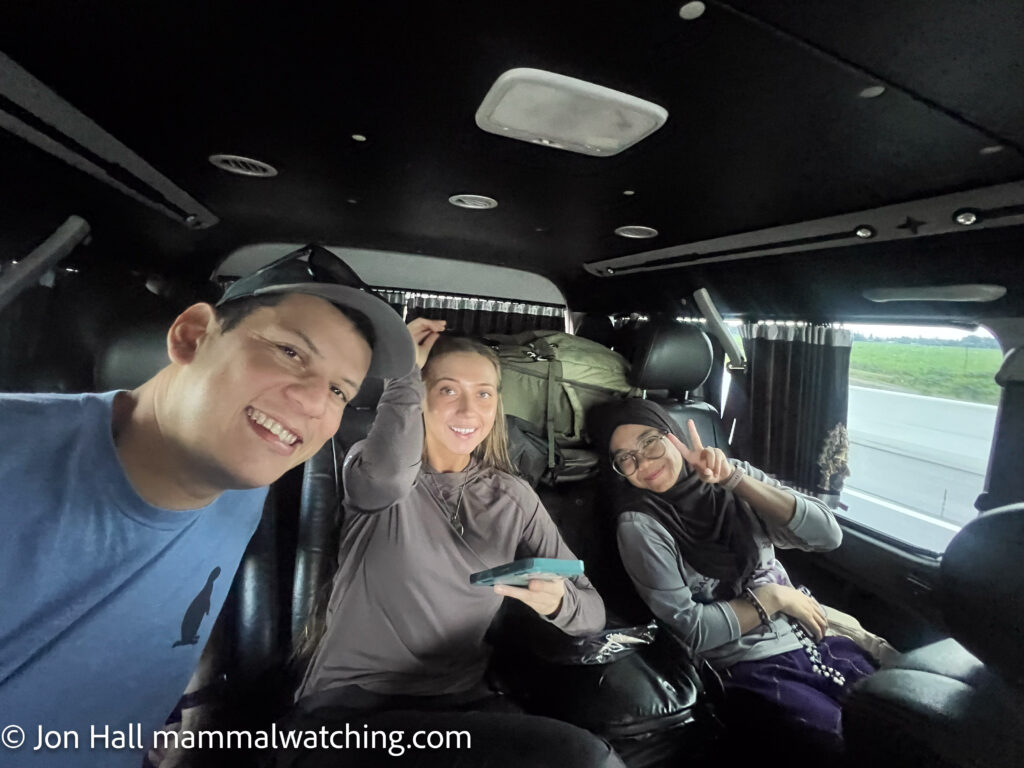
José, Emma and Mimi
Thailand was hit by significant flooding two weeks ago which complicated some of the planning, but as usual Jirayu did a fabulous job in finding alternative accommodation and making sure we saw plenty of mammals.
Soi Yok National Park and Huai Khayeng Nature Park
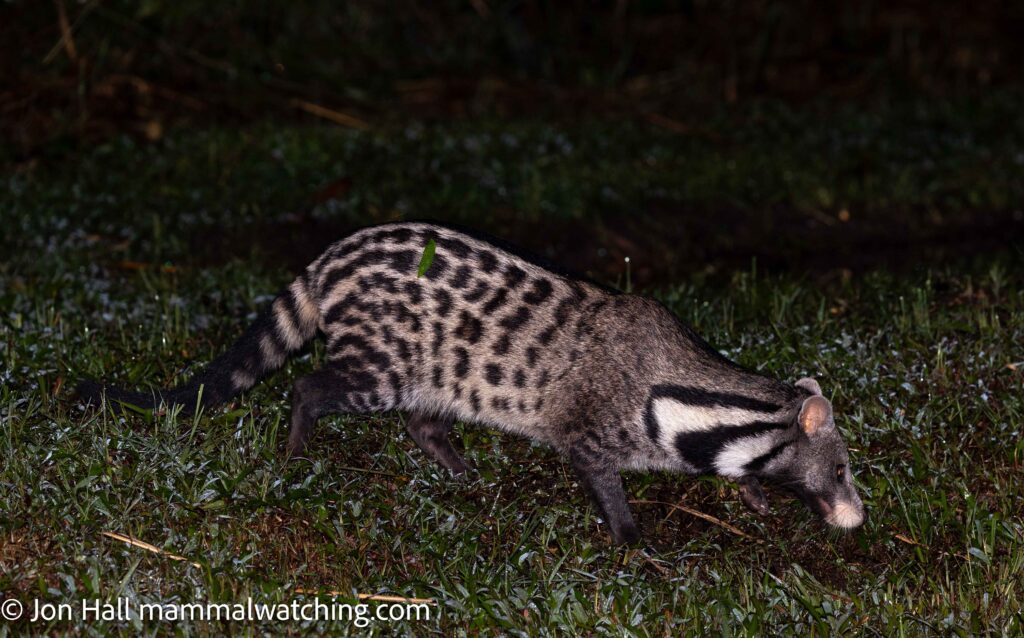
Large-spotted Civet (Viverra megaspila), Huai Khayeng Nature Park
We spent two nights here close to Huai Khayeng Nature Park, a small private reserve that is now becoming a key mammalwatching site in Thailand because of the resident Large-spotted Civets that frequent the hide. So far as I know this is the only place in the world you can reliably see this species.
Darryl Sweetland, who set up the park also hosted us, and explained that the Huai Khayeng Nature Park consists of 35 hectares of abandoned agricultural land on the edge of Thong Pha Phum National Park. He bought the land in 2008 and although he has planted about 5,000 trees, the majority of the land has reforested itself naturally. He started camera trapping In 2023 and was astonished to find three different species of civet on the land, including the rarely seen Large-spotted Civet, as well as Leopard Cats and Sunda Pangolin!
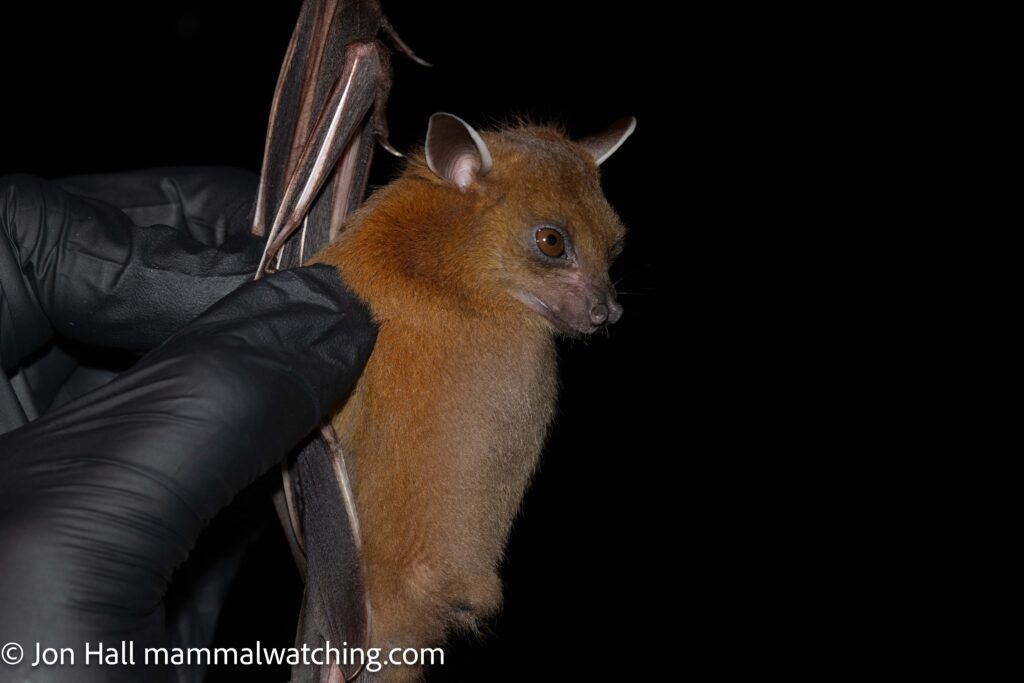
Greater Short-nosed Fruit Bat (Cynopterus sphinx)
We arrived on dusk and spent the first night batting in the reserve and caught only three species. Two similar looking short-nosed fruit bats which are best separated on forearm measurements: Greater and Lesser Short-nosed Fruit Bats.
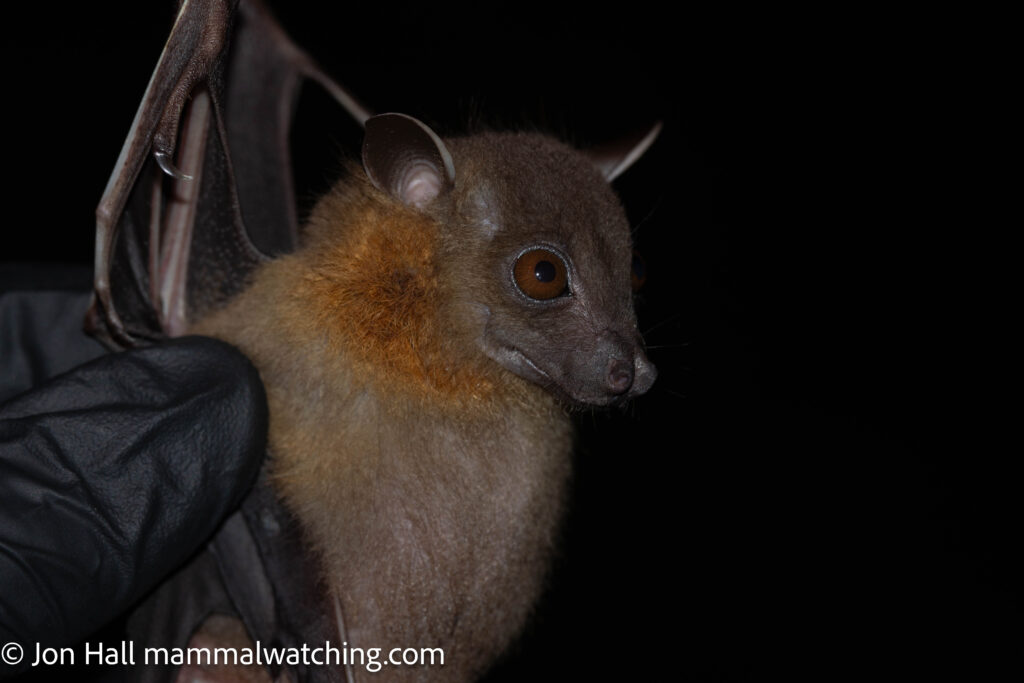
Lesser Short-nosed Fruit Bat (Cynopterus brachyotis)
Along with a single Lesser Dawn Bat.
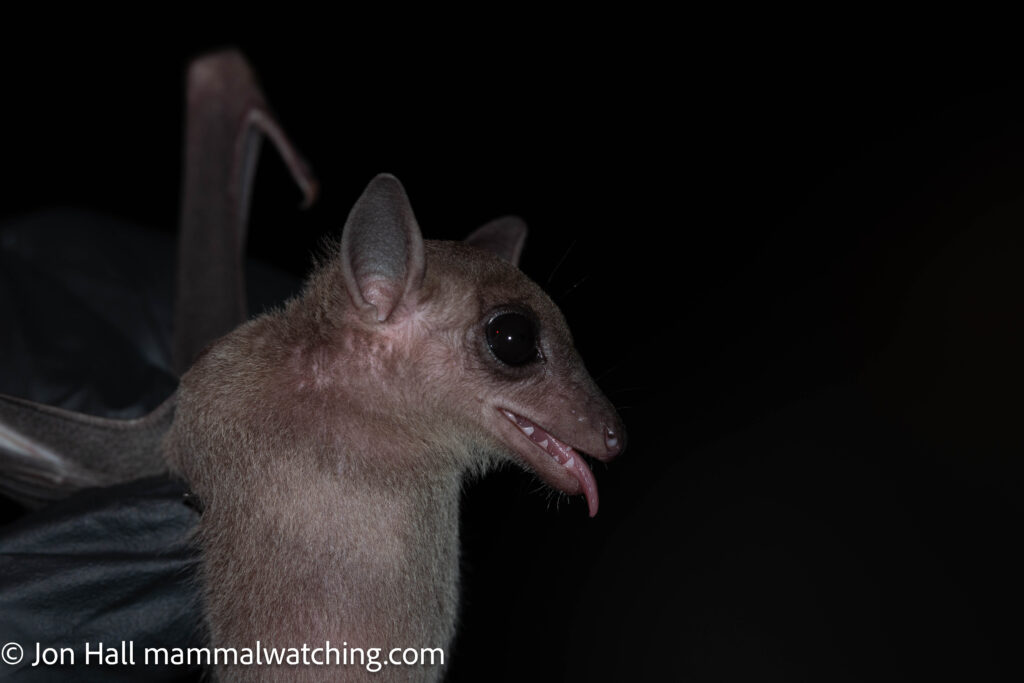
Lesser Dawn Bat (Eonycteris spelaea)
We visited Sai Yok National Park early the next morning. A well sign-posted bat cave – 15 minutes from the car park here – is a great place to see the famous Kitti’s Hog-nosed (or Bumblebee) Bats. In a family of their own, this species has the claim to fame as the world’s smallest mammal, at least if you use skull size and body length as your metric of smallness. (If you prefer to use weight then Etruscan Shrew is the winner).
Elephants were active in the park and so we had to be escorted to the cave by four rangers. They were fascinated to see José’s and Emma’s photography gear and gave them permission to catch a bat. They shared the story on the park’s Facebook page.
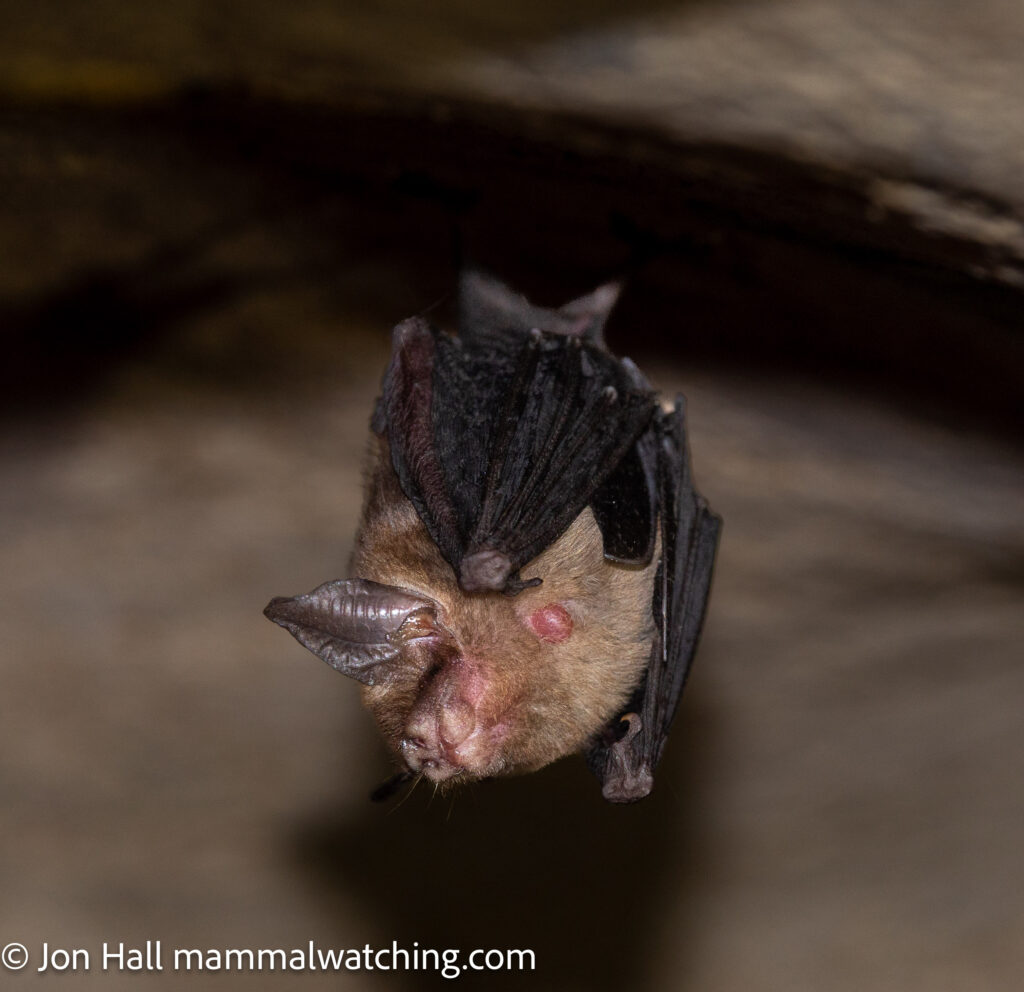
Kitti’s Hog-nosed Bat (Craseonycteris thonglongyai)
I’d seen Kitti’s Hog-nosed Bats over 20 years ago but didn’t have a real camera back then. The views in this cave were much better than I had had last time too.
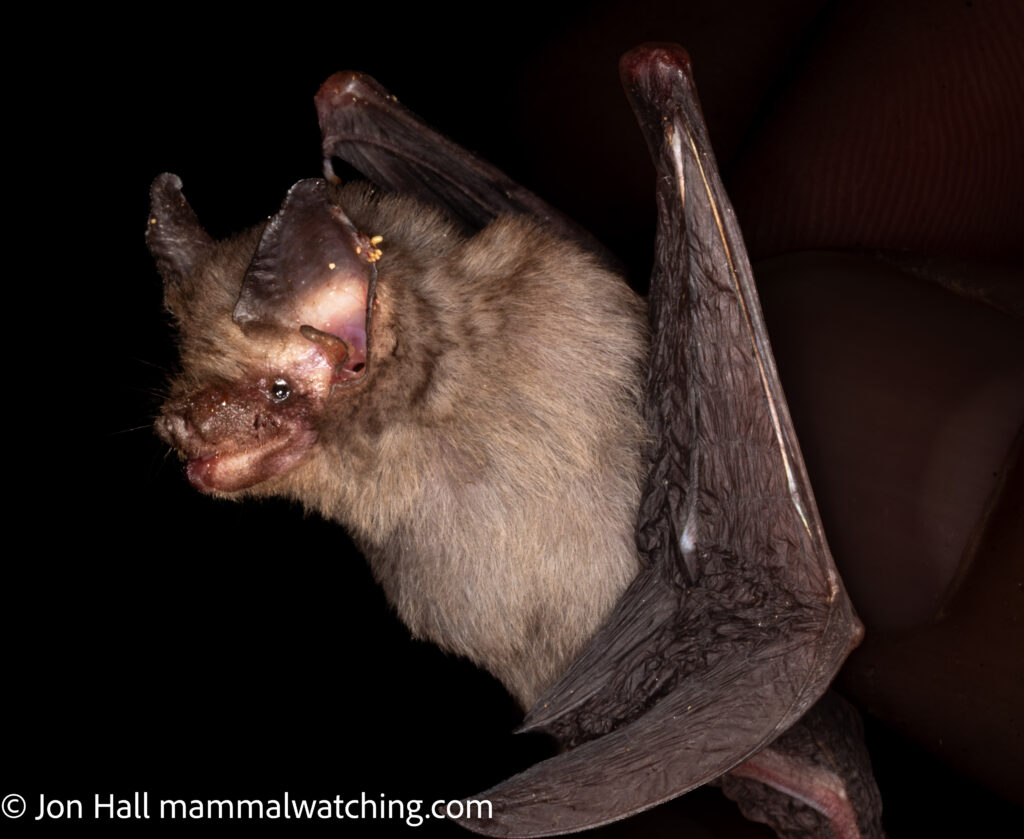
Kitti’s Hog-nosed Bat (Craseonycteris thonglongyai)
There were two other species in the cave.
A small colony of Greater Roundleaf Bats were roosting near the entrance.
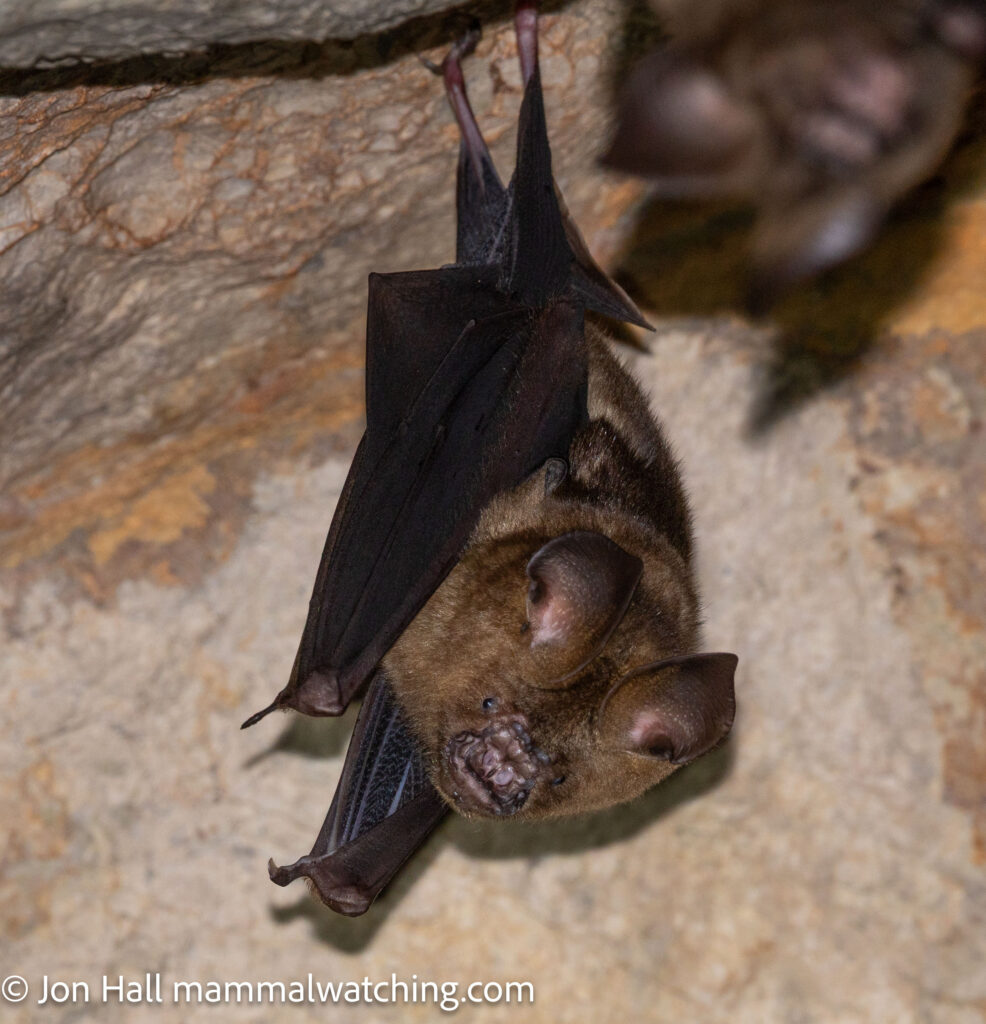
Great Himalayan Roundleaf Bat (Hipposideros armiger)
And we got glimpses of a smaller bat at the back of the cave that refused to perch for more than a couple of seconds. Coke managed to grab a couple of pictures and the bat looked good for Stoliczka’s Trident Bat, a species known from this cave.
Back near the Hui Khayeng Nature Park. Darryl took us to a tunnel cut into the earth close to his place. We saw and captured two species inside.
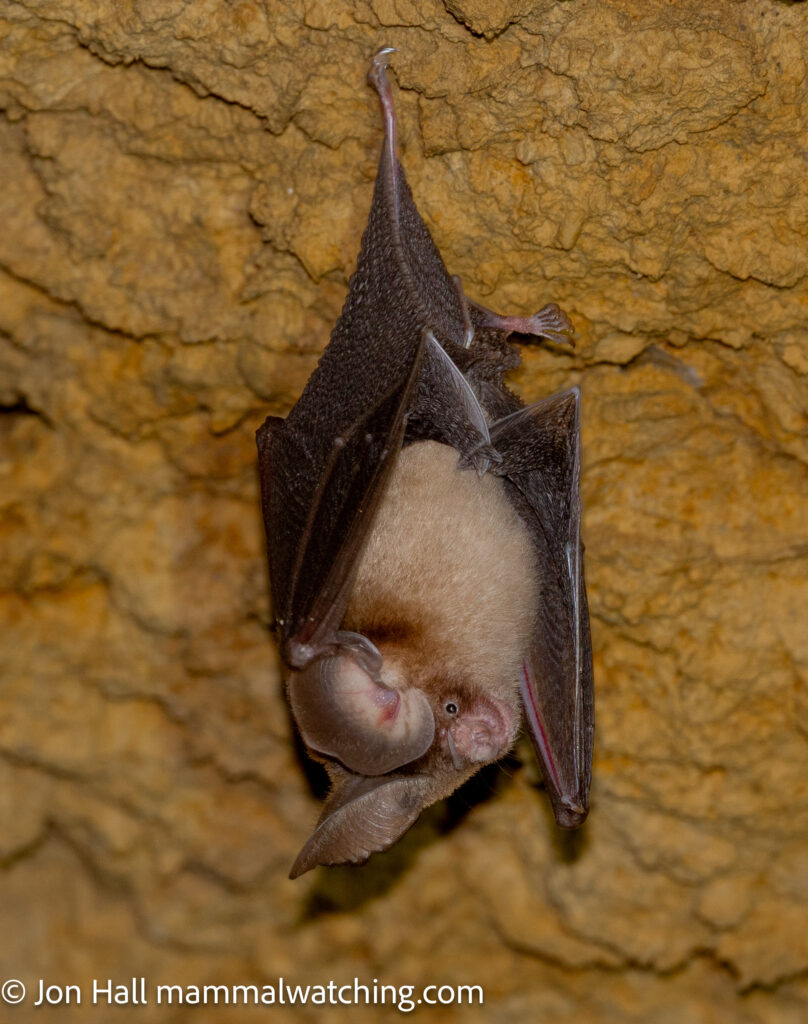
Andersen’s Roundleaf Bat (Hipposideros gentilis)
Andersen’s Roundleaf Bat, that I had seen in Khao Yai, and Croslet Horseshoe Bat which was a lifer and species 2499 for me.
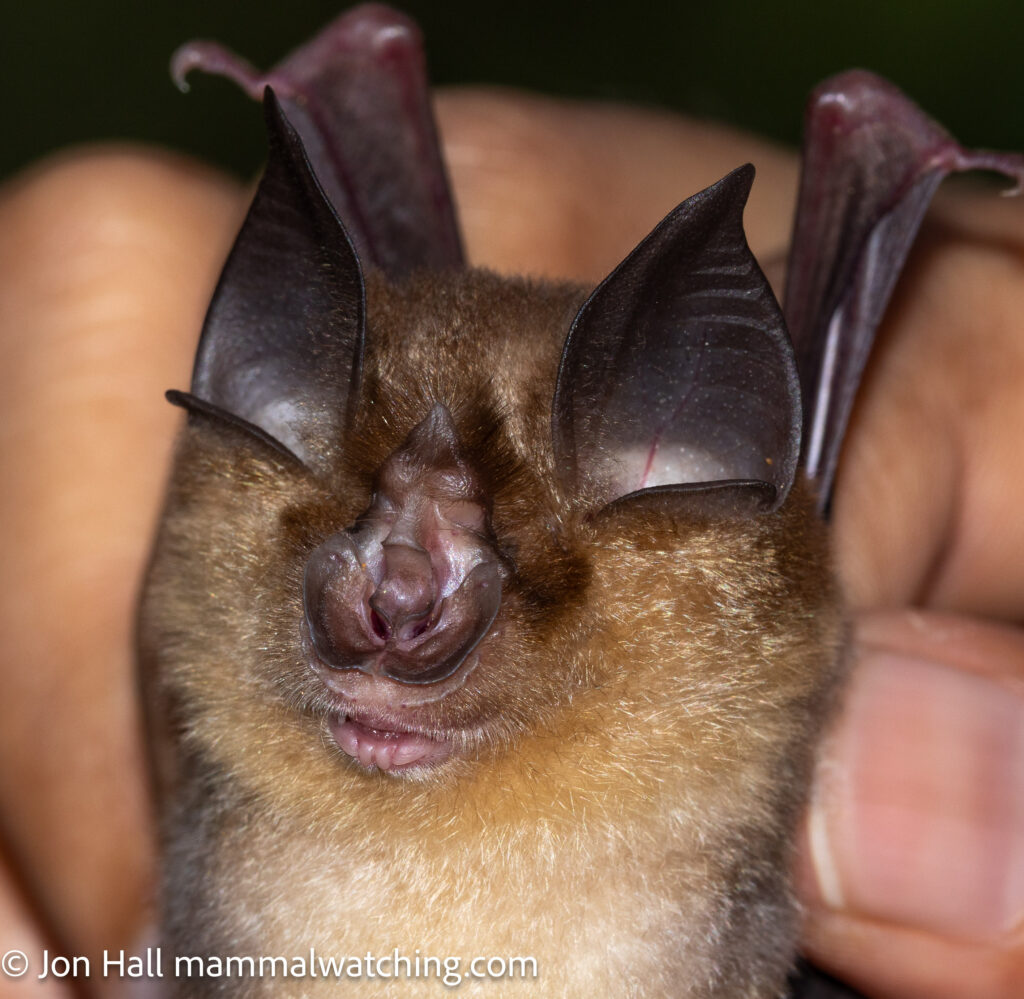
Croslet Horseshoe Bat (Rhinolophus coelophyllus) and its hairy noseleaf
This rhinolophus can be identified by the hairs growing from the noseleaf, and then by range to separate it from Shamel’s Horseshoe Bat.
A culvert nearby was home to a Lesser False Vampire Bat, one of Emma’s most wanted species for the trip.
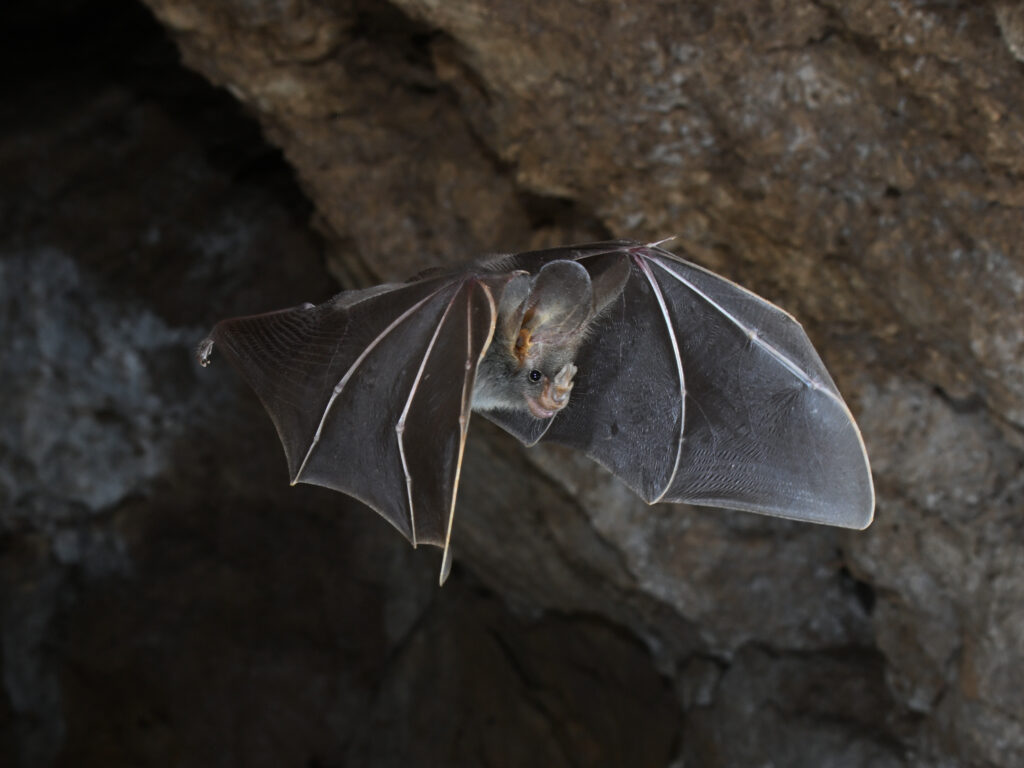
Lesser Asian False-vampire (Megaderma spasma), photo José Gabriel Martínez-Fonseca
Coke and I left the bat team to capture in flights shots of the bats leaving their roost and headed to Darryl’s hide to try for the civet. Coke had spent a few hours there the night before but not seen the animal, though the camera traps showed one had visited in the early hours of the morning and again at dawn.
Large-spotted Civet (Viverra megaspila)
We reached the hide just after sunset, and I was still unpacking my camera gear when Coke whispered “It’s here”. We had been there five minutes.
A beautiful animal and a very worthy 2500th species.
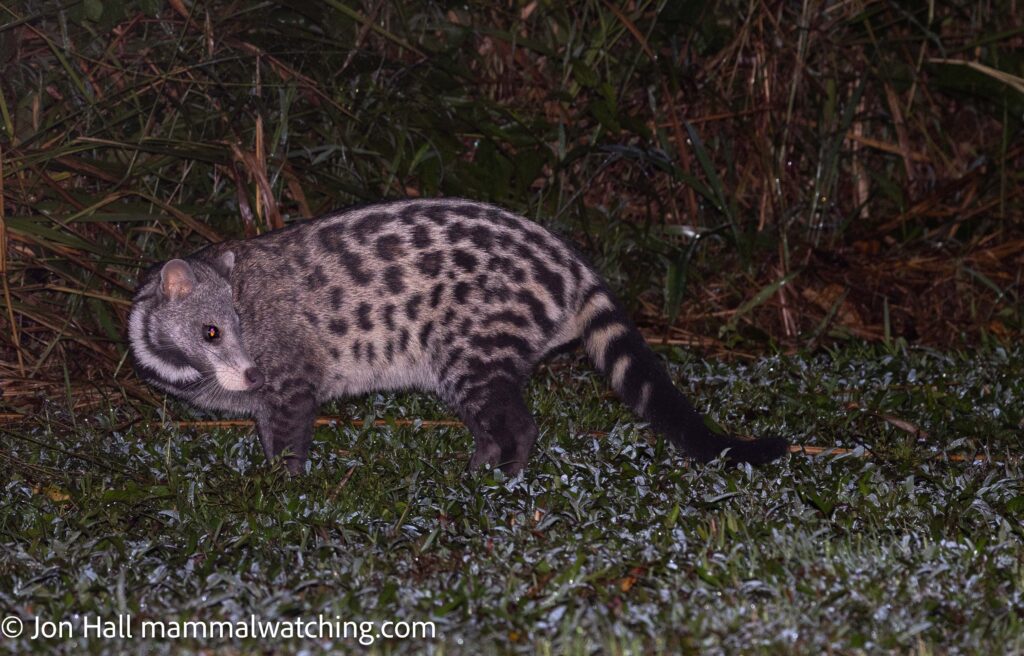
Large-spotted Civet (Viverra megaspila)
It had been a bit of a chaotic evening juggling the bat catching, organizing dinner and getting to the hide and we hadn’t been fully briefed on how to optimize our civet watching. As a result we didn’t have the hide floodlights bright enough so photography without a flash was difficult. And the civet didn’t like the flash and hated the flashlight.
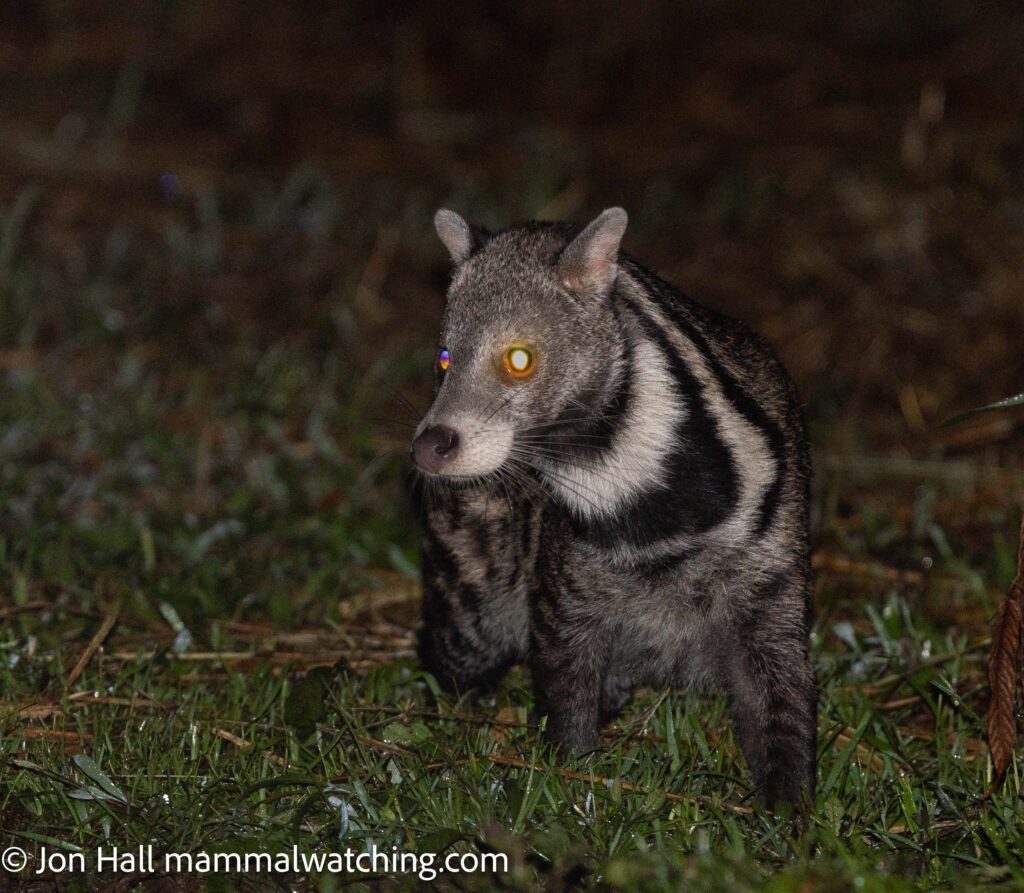
Large-spotted Civet (Viverra megaspila)
The civet was skittish and after returning three times it disappeared back into the forest. Darryl let me know later that this animal – a young male – can be very relaxed once it settles down. And if we had been more patient with our photography we would likely have been able to spend longer with it.
I’m returning with a group next month and will try to perfect our viewing strategy.
To find out more about the nature park and arrange a visit to the hide you can email Darryl, or check out the park’s Facebook page or their YouTube channel.
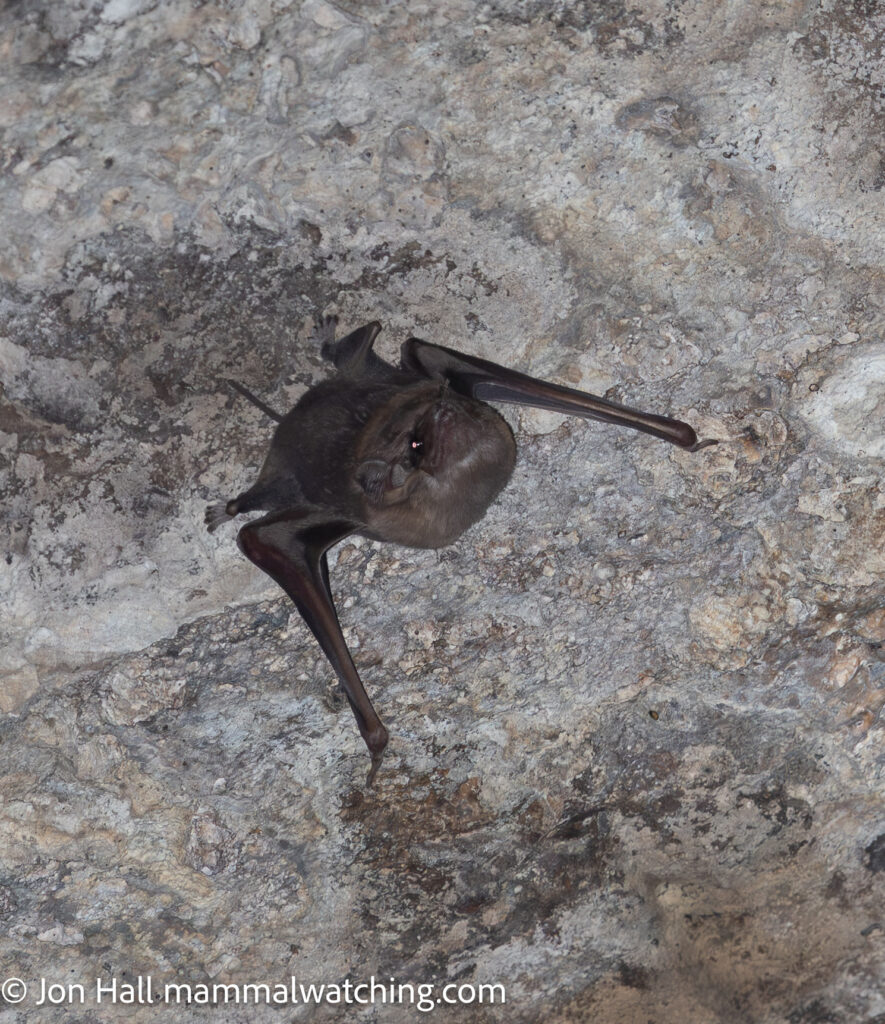
We left the next morning for Kaeng Krachan stopping en route at a temple cave here to see a few Black-bearded Tom Bats and Great Roundleaf Bats.
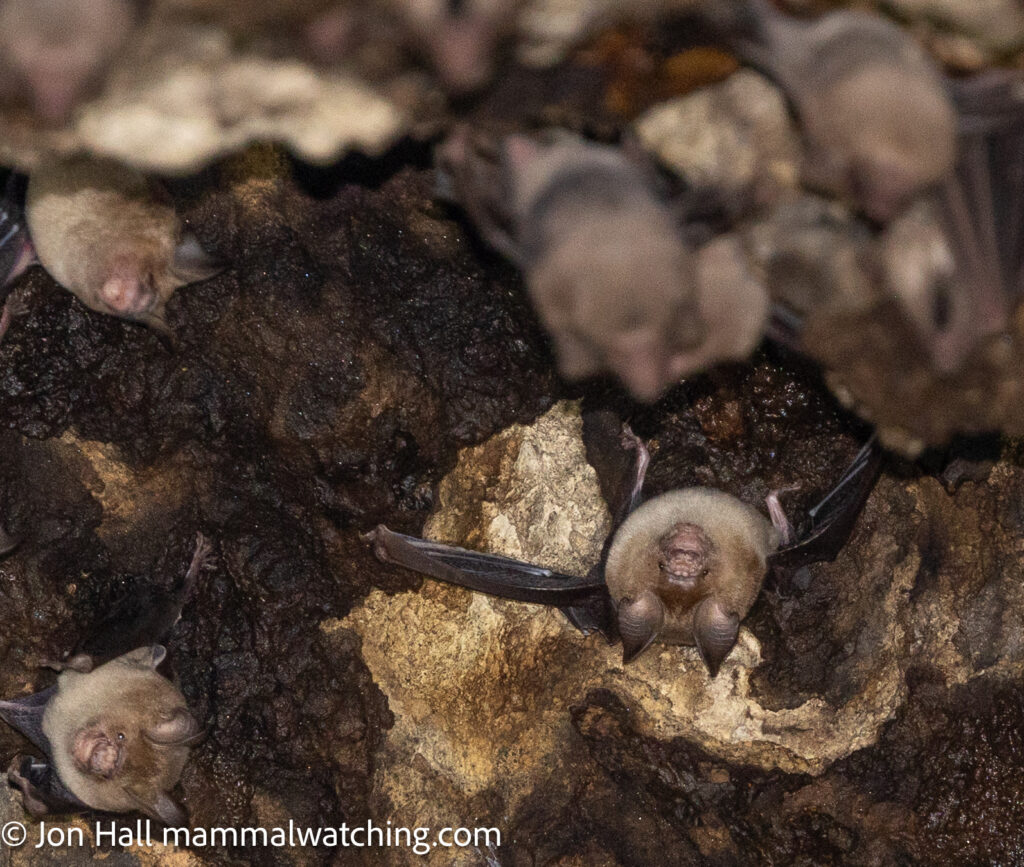
There was a colony of Lyle’s Flying Foxes down the road here.
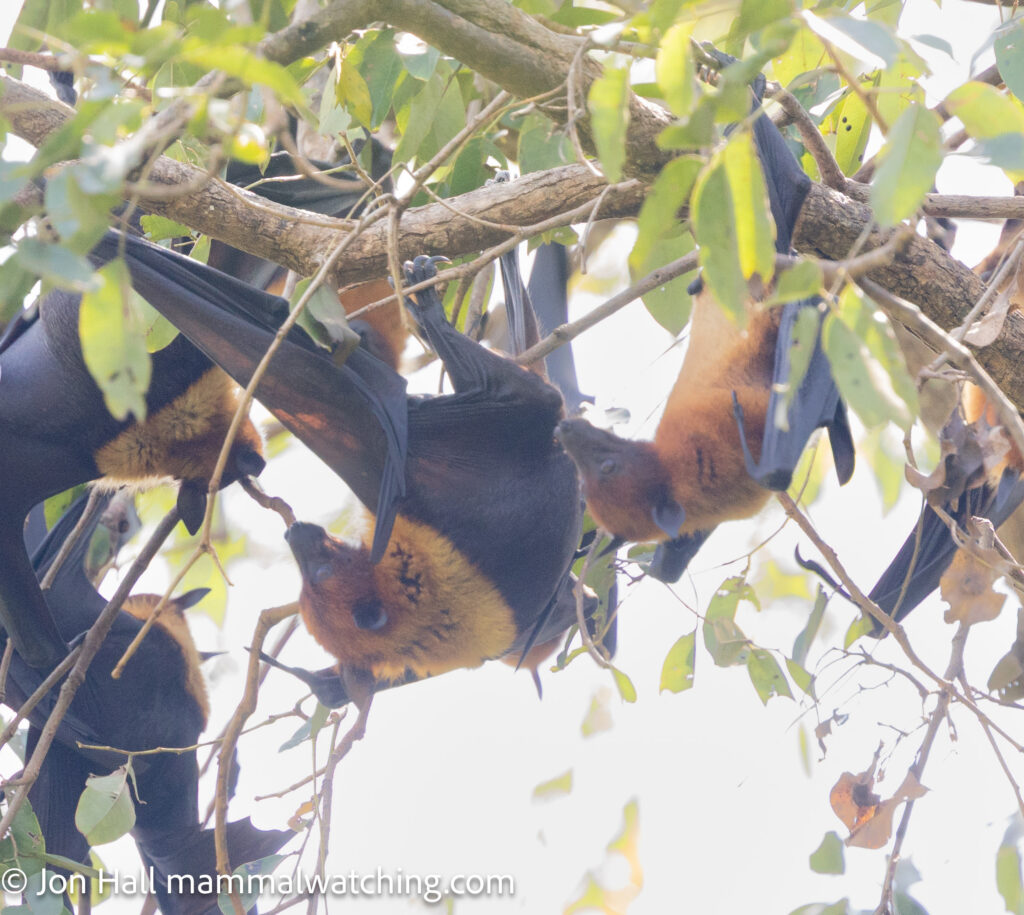
Lyle’s Flying Fox (Pteropus lylei)
Kaeng Krachan National Park
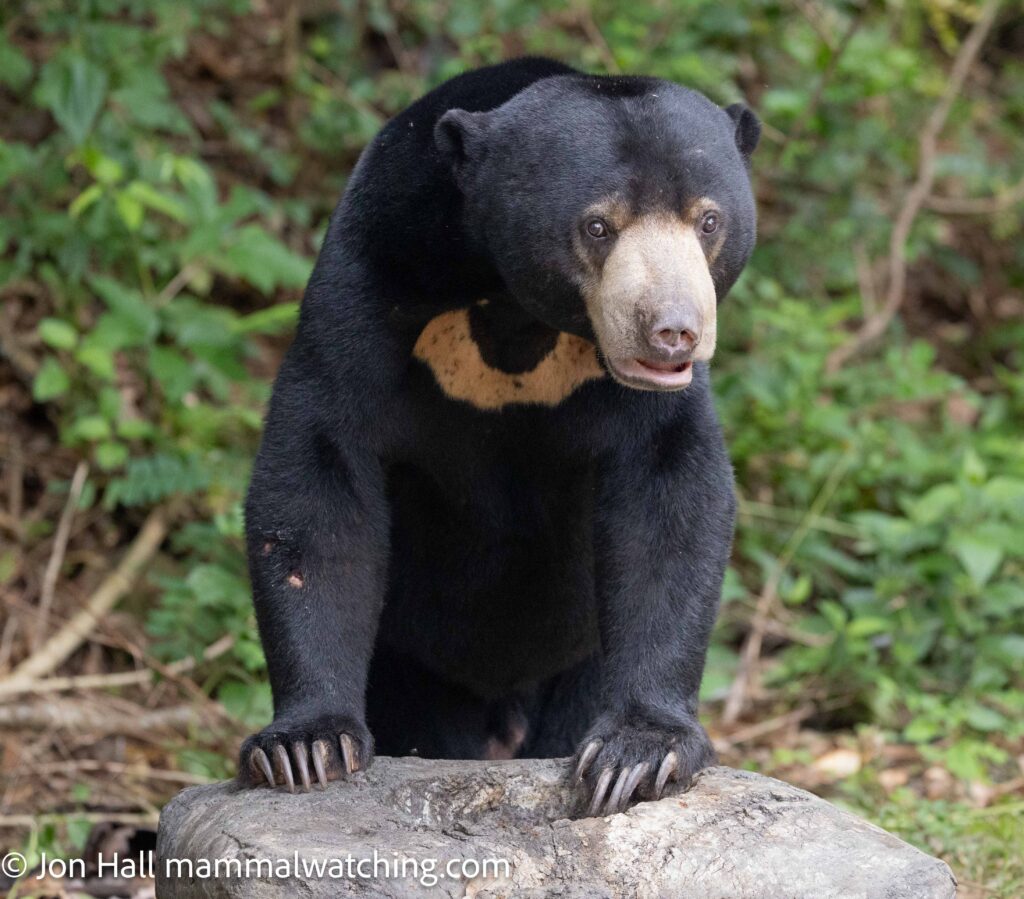
Sun Bear (Helarctos malayanus)
We spent the second half of the trip – two nights – near Kaeng Krachan National Park. We spent both nights batting at the Baan Maka Lodge plus a productive half day in the park itself.
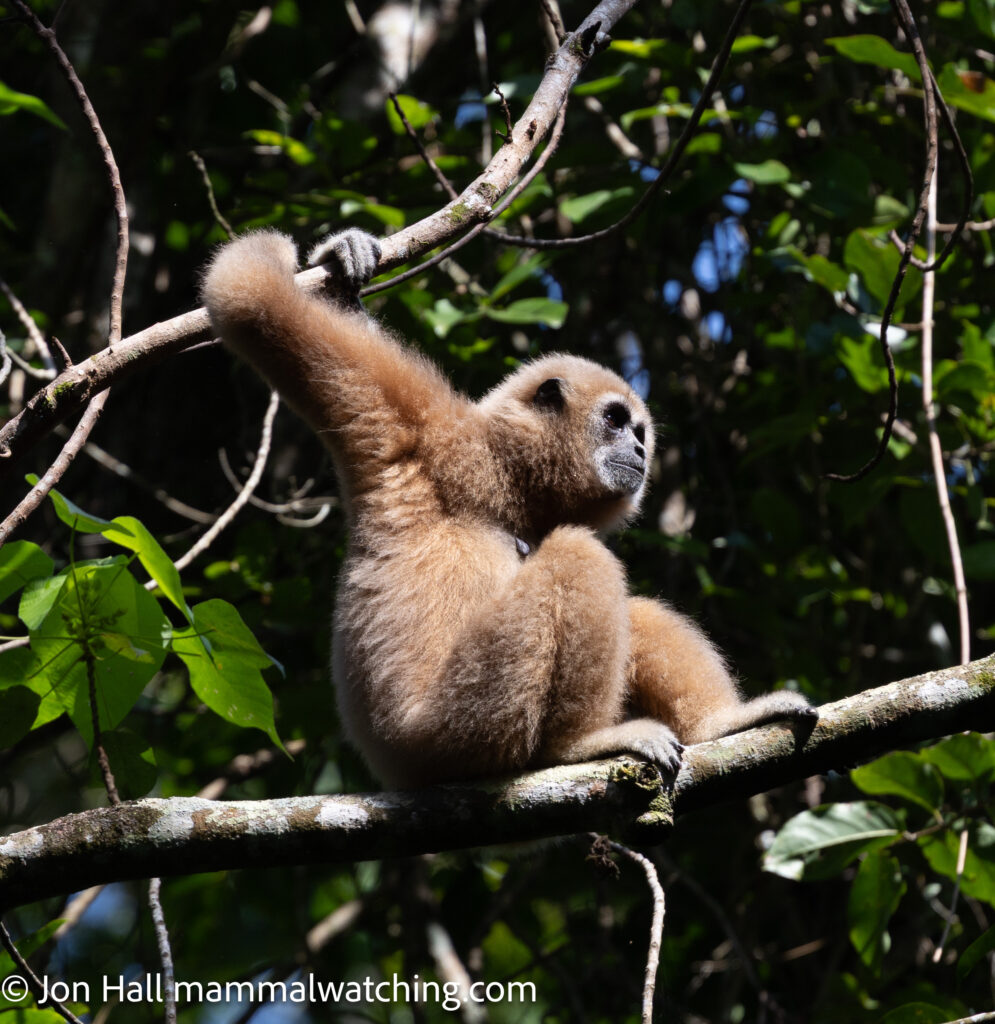
Lar Gibbon (Hylobates lar)
We were the first car into the park and went in search of the famous leopards: the day before we arrived a melanistic leopard and been photographed mating with a regular morph next to the road. At one point five leopards were seen together! Jirayu was excited but no leopards were reported all that day. Travelling here with Jirayu a great way to visit: he knows all the rangers and gets updates in real time about the mammalian action!
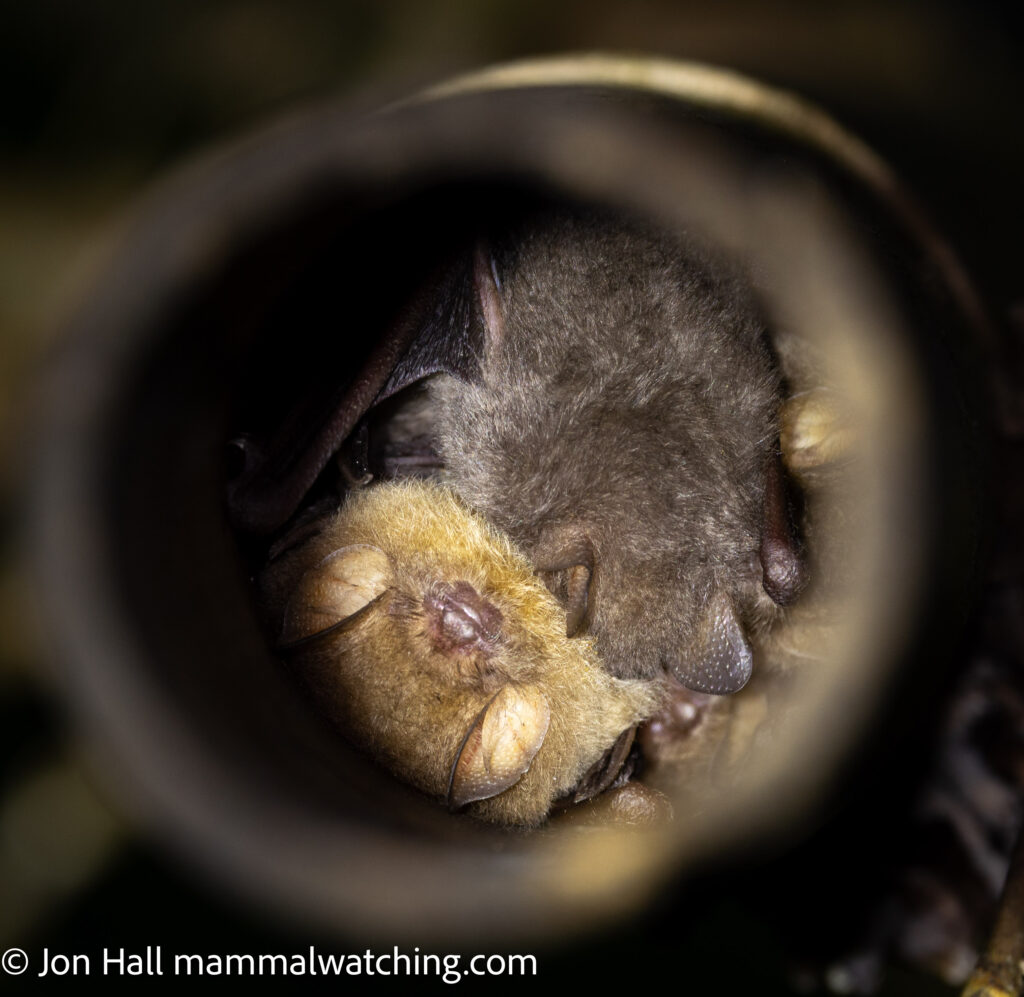
Hardwicke’s Woolly Bat (Kerivoula hardwickii)
During seven hours in the park we saw nearly all the species I had expected, including a group of Hardwicke’s Woolly Bats roosting in a broken bamboo stem. Funny to think that this species was not known – or at least barely known – in the park until Carlos Bocos found some three or four years ago. I saw some more (directed by Carlos) and mentioned them in my 2023 trip report. Now, it seems that every guide in the park nows how to find them for visitors.
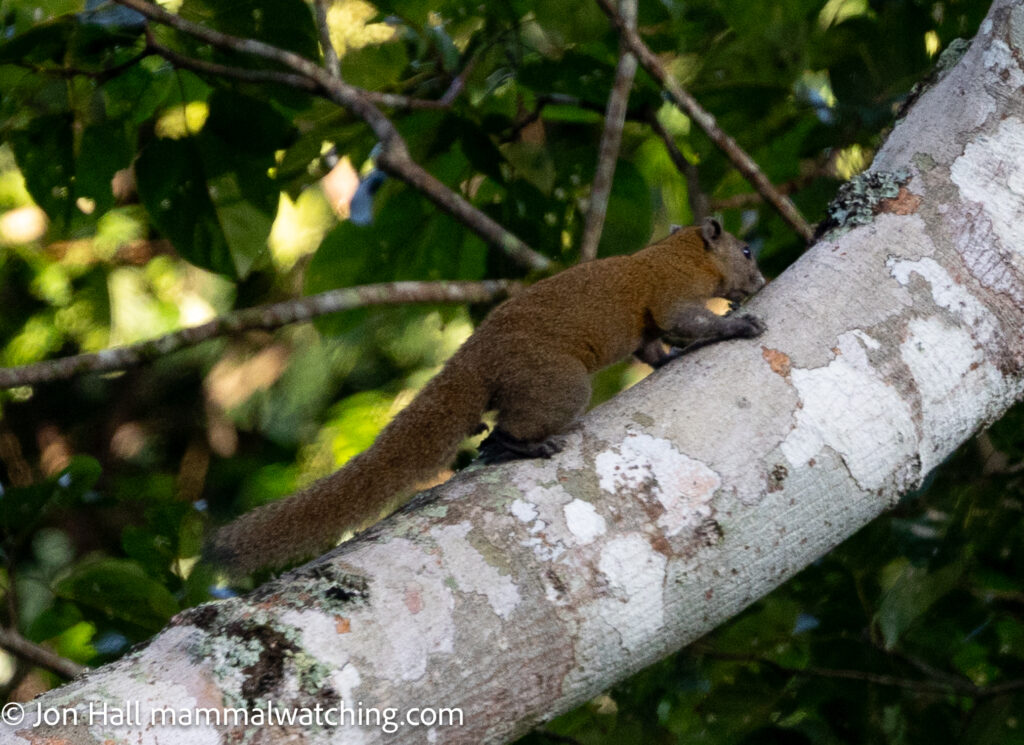
Northern Gray-bellied Squirrel (Callosciurus caniceps)
We saw one or two Northern Gray-bellied Squirrels as well as Black Giant Squirrels where I often see them around the lower campsite.
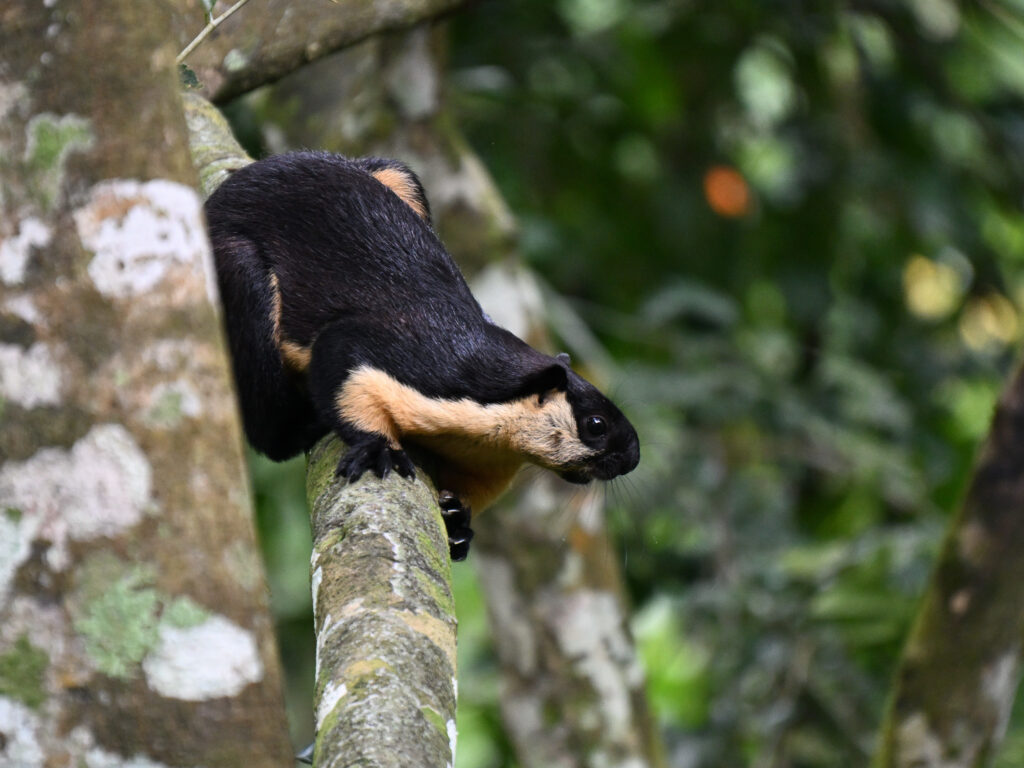
Black Giant Squirrel (Ratufa bicolor), photo José Gabriel Martínez-Fonseca
We missed the macques but Jirayu spotted a troop of Dusky Langurs along the road.
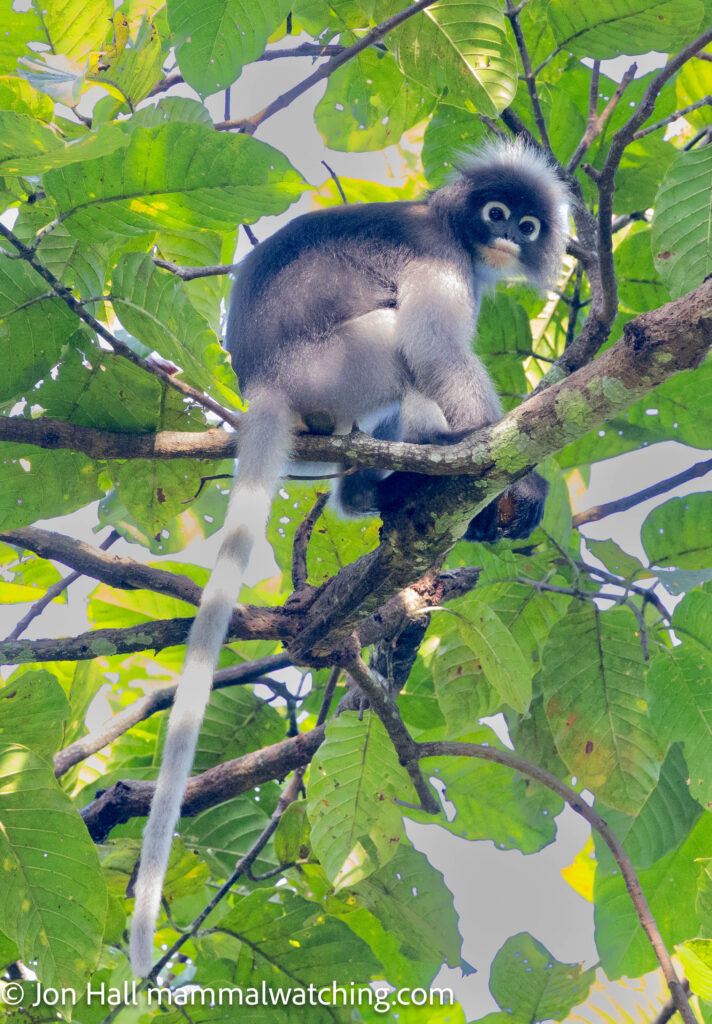
Dusky Langur (Trachypithecus obscurus)
And then a kilometer above the lower campsite we hard, then had great views of, a family of Lar – or White-handed – Gibbons.
The upper stretch of the road doesn’t reopen until 1 November and so we weren’t able to try for Robinson’s Langurs or some of the culvert roosting bats further up.
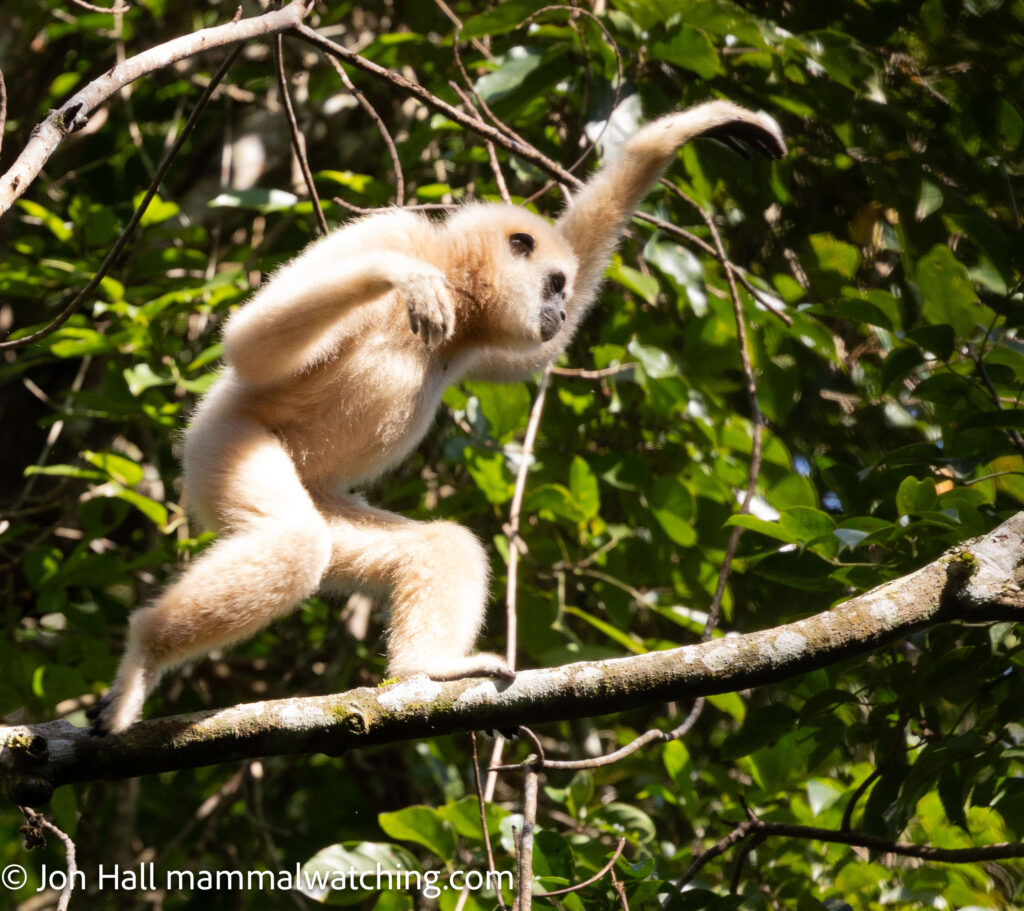
Lar Gibbon (Hylobates lar)
Sun Bears were a key target for the group and five different bears are now regular visitors to the two campgrounds. We left the park in search of coffee in the mid-morning and as soon as we had ordered Jirayu had a call to tell him a bear was in camp. We sped back up the road, arriving in time to get a very close look at a young male the locals have named Watermelon.
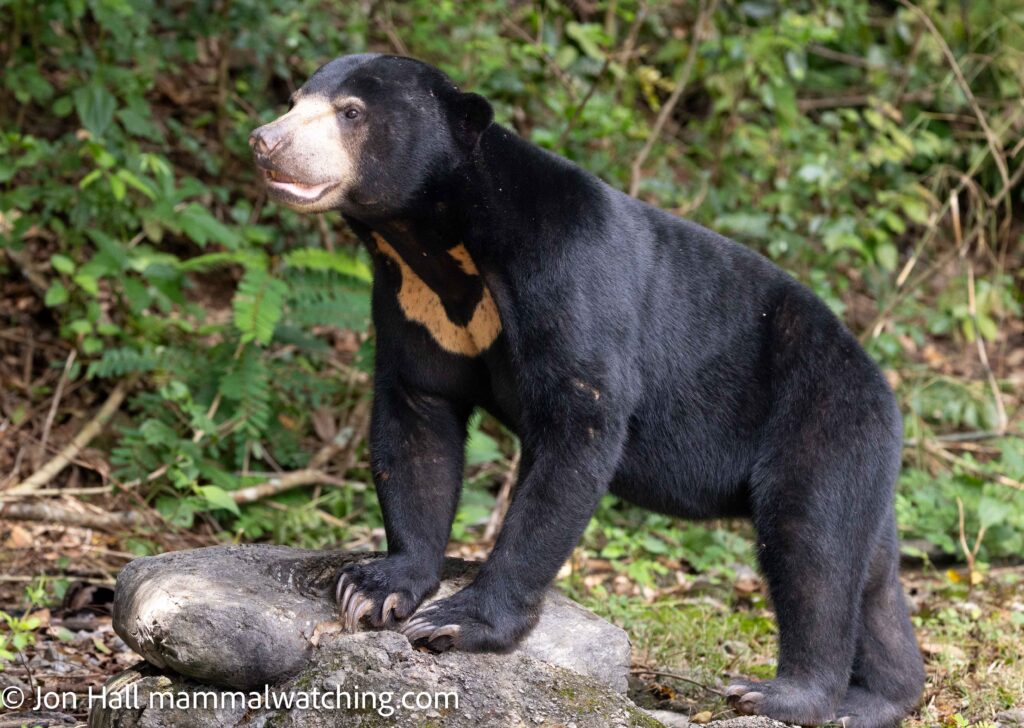
Sun Bear (Helarctos malayanus)
We spent both our evenings batting at Baan Maka lodge where we also had dinner. We caught the same five species on both nights.
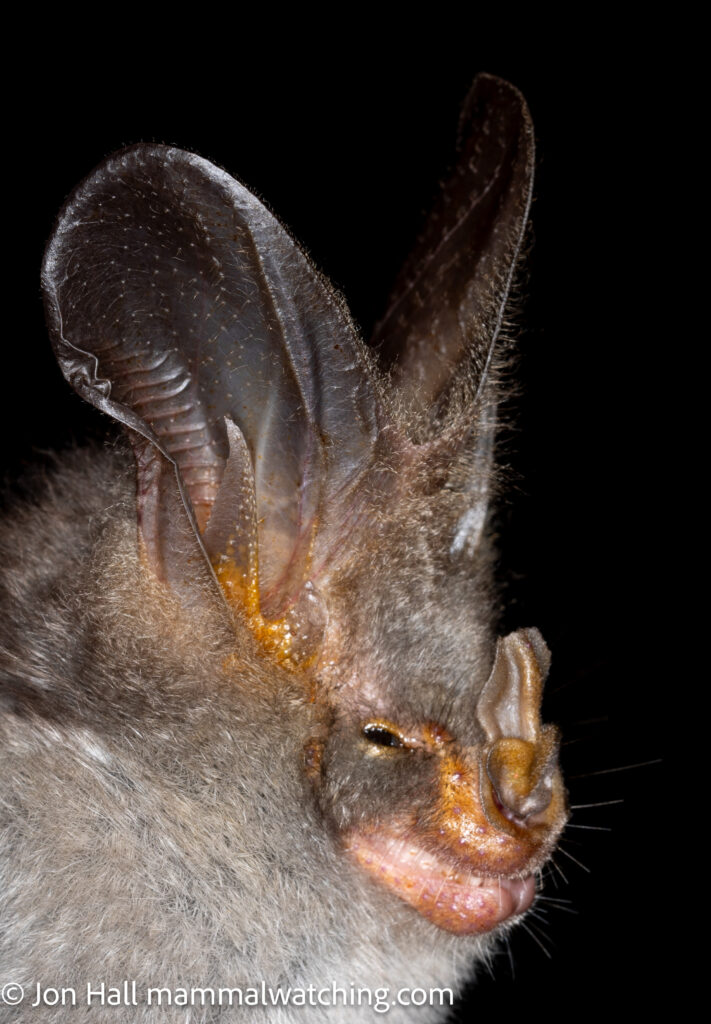
Lesser Asian False-vampire (Megaderma spasma)
The team had already caught three of the five species at the Huai Khayeng Nature Park: Lesser Asian False Vampires, Greater Short-nosed Fruit Bat and Lesser Dawn Bat.
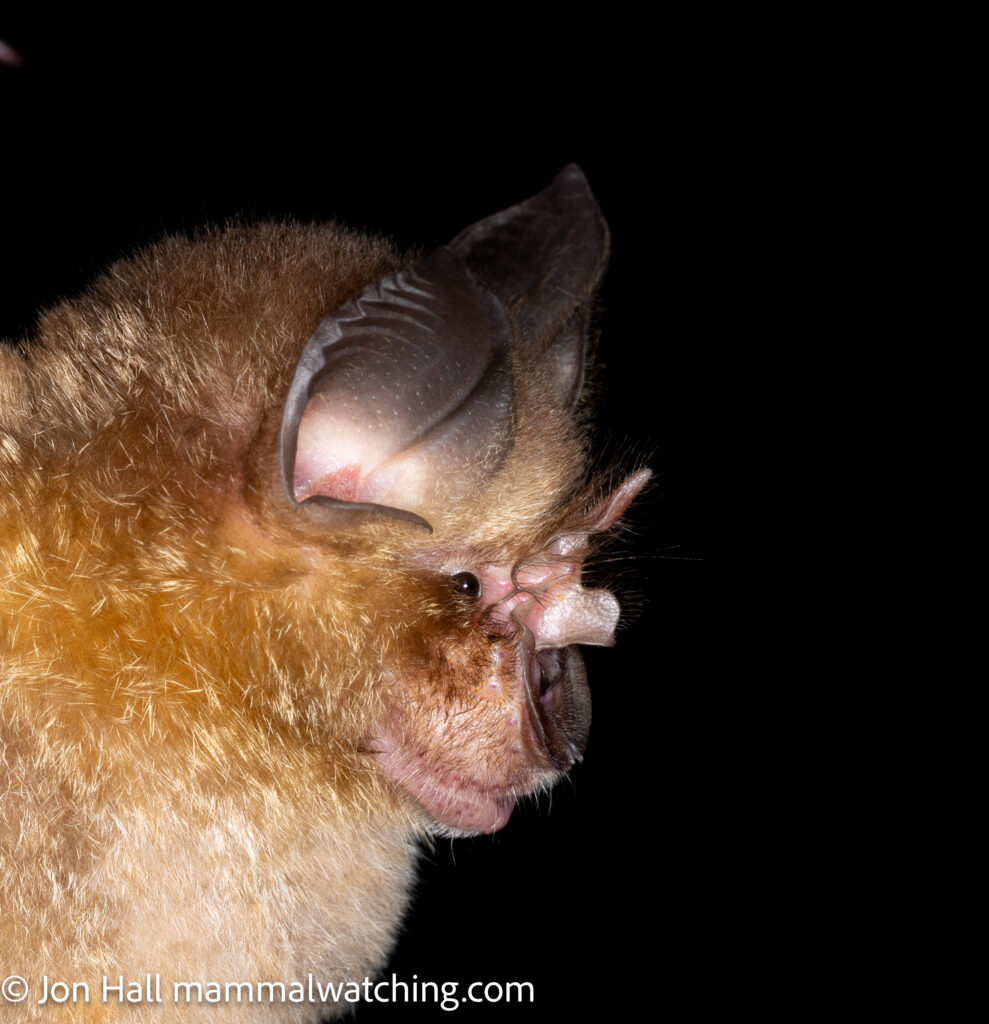
Intermediate Horseshoe Bat (Rhinolophus affinis)
We also caught two horseshoe bats: Intermediate and Thailand.
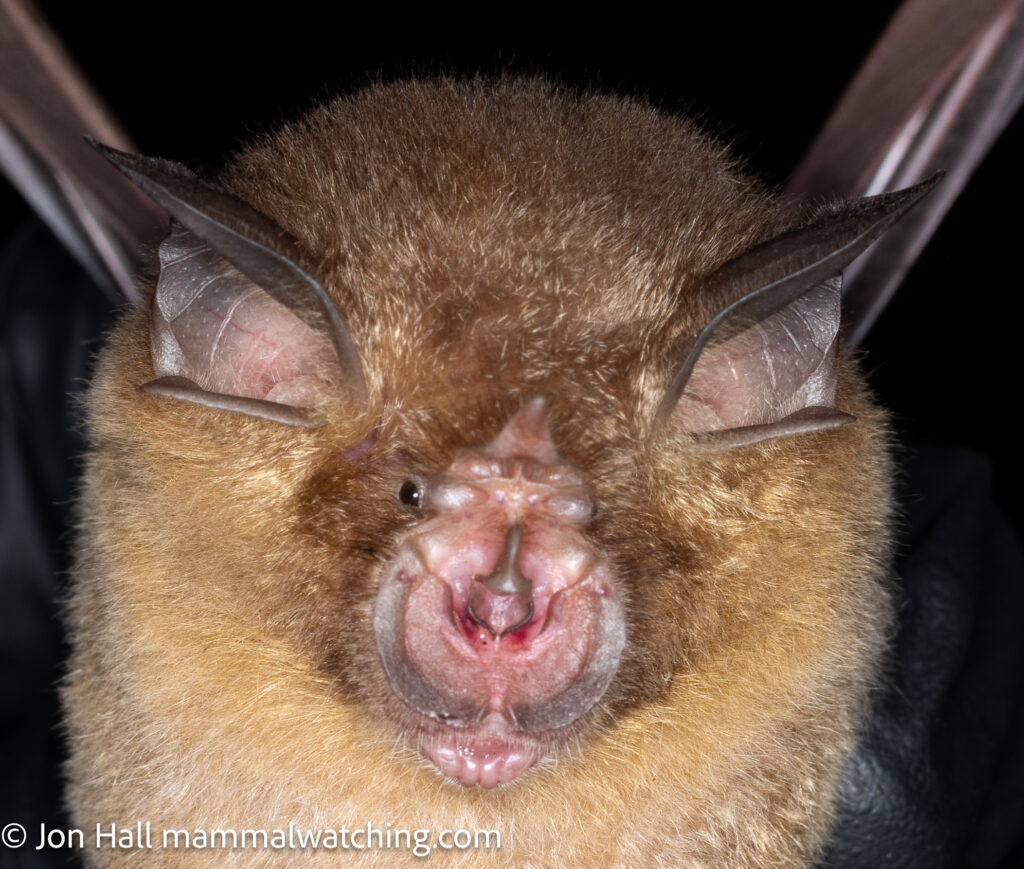
Thailand Horseshoe Bat (R.thailandensis)
The Thailandensis was a lifer for me.
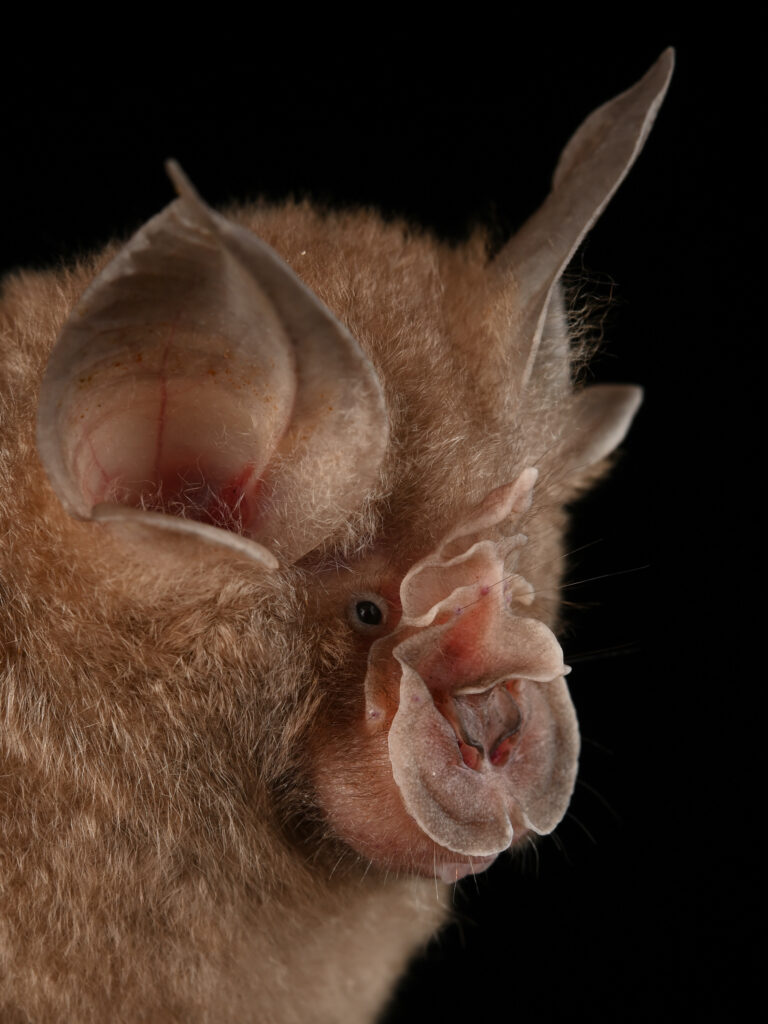
Thailand Horseshoe Bat (Rhinolophus thailandensis), photo José Gabriel Martínez-Fonseca
The final suprise at Baan Maka was a large rat that Emma spotted near the dining room, something she may have announced a little too loudly in front of the other diners. I didn’t pay enough attention to it, and didn’t even take a picture, thinking it was just a shaggy looking rattus. And then I remembered that Greater Bandicoot Rat has been reported here. By the time I realized what we had seen the bandicoot rat – a lifer for me – had gone. There were several much smaller rattus rattus too around the lake.
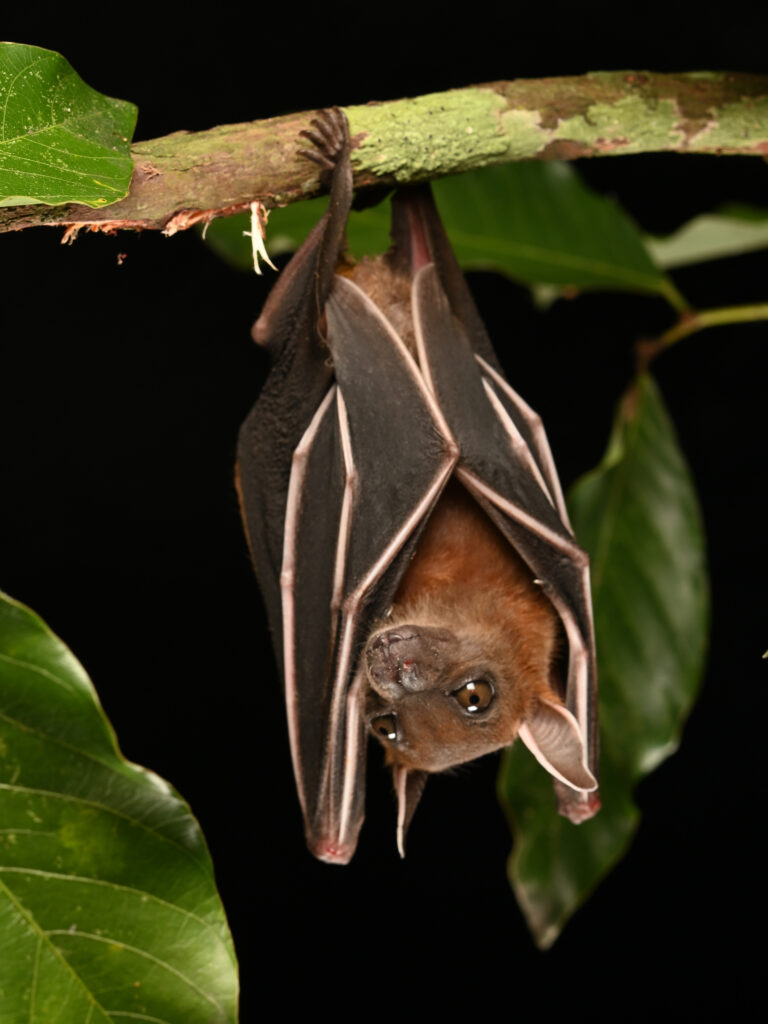
Greater Short-nosed Fruit Bat (Cynopterus sphinx), José Gabriel Martinez Fonseca.
On the way back to Bangkok on our last day we visited one last cave in search of bats.
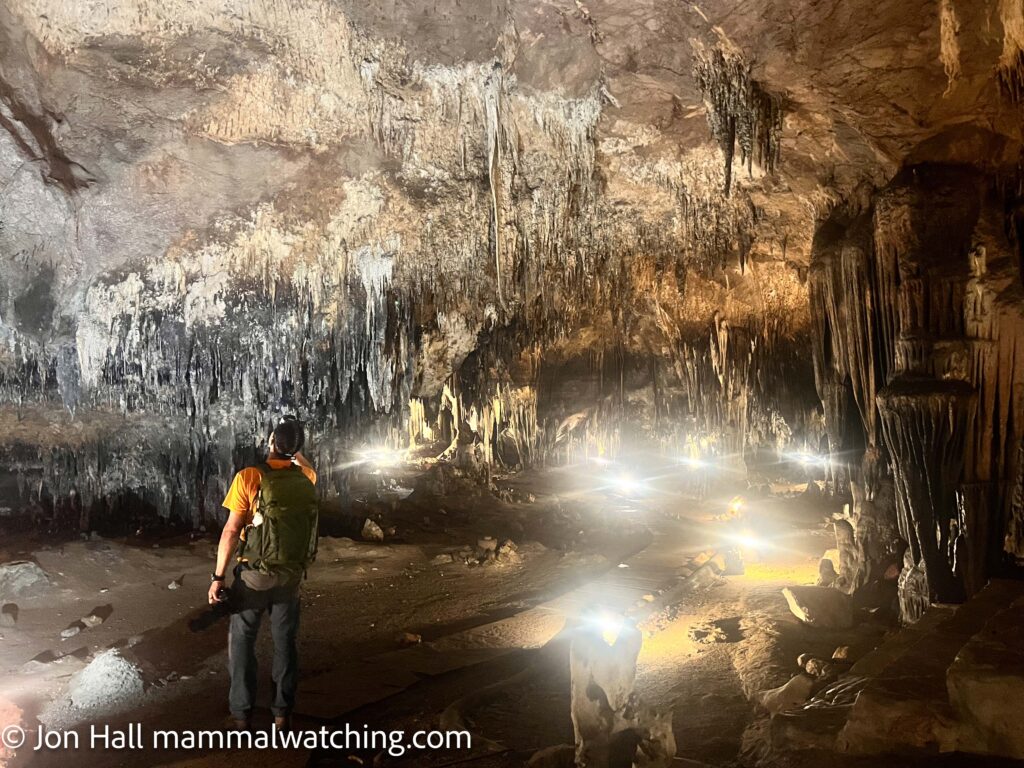
Khao Bin Cave
The cave we wanted to visit – which Jirayu had never explored but was told contained myotis bats – was closed from the recent floods. So we stopped at nearby Khao Bin Cave. It was more notable for the humidity and tourists inside than its bats, but we did see a few Least Roundleaf Bats inside and many Long-tailed Macaques outside.
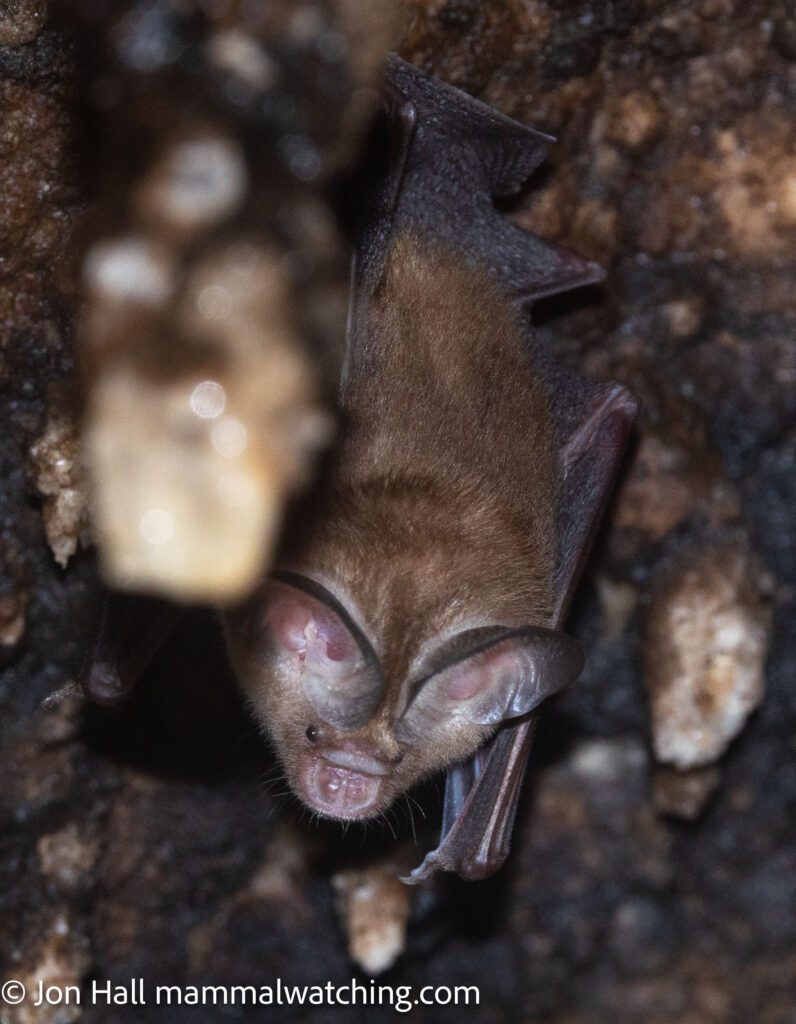
Least Roundleaf Bat (Hipposideros cineraceus)
Back in Bangkok for a final night, José, Emma and I took in the ‘sights’. Some of these were sights that neither José nor I had seen before or want to see again. And Emma almost won a prize for audience participation. We left with a new level of appreciation for the human body’s versatility. Or parts of it. One part in particular.
Thank You
A big thanks to Darryl Sweetland for letting us explore his Huai Khayeng Nature Park and for delivering a suitably mega 2500th mammal. It was a lot of fun travelling with José, Emma, Mimi: great company and fabulous bat catchers and photographers. Thank you too to our tireless driver Lip and Sky from Wild Encounter for looking after us so well. And of course many thanks to Jirayu for designing and organizing the whole trip to perfection and for covering most of the cost.
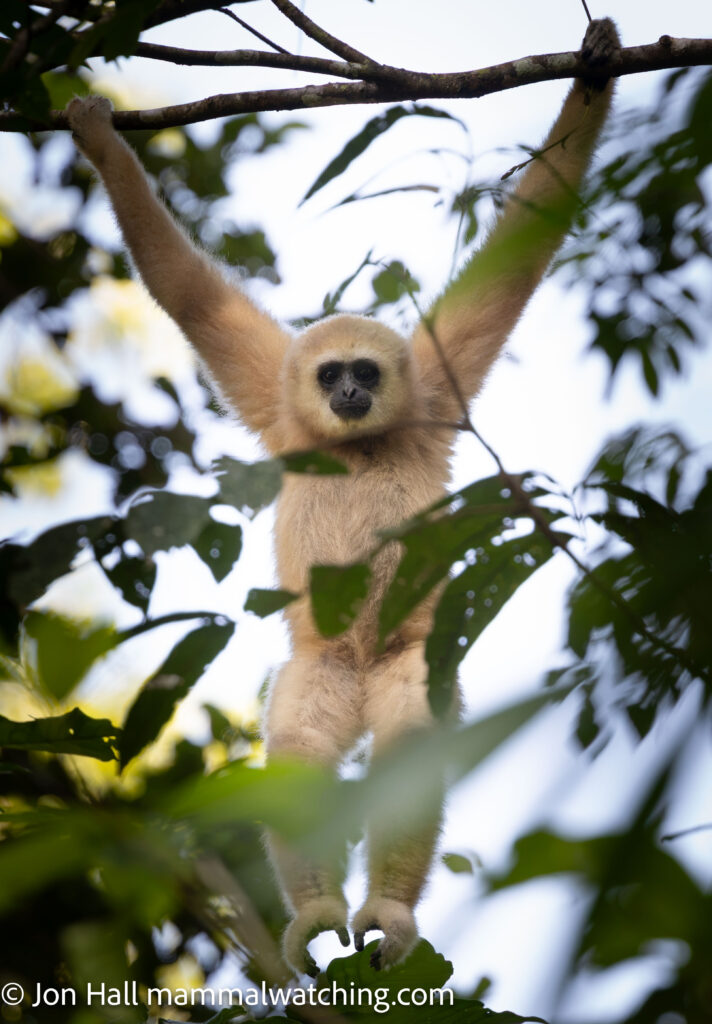
Lar Gibbon (Hylobates lar), Kaeng Krachan National Park
Trip List
Long-tailed Macaque (Macaca fascicularis)
Northern Pig-tailed Macaque (M.leonina)
Dusky Langur (Trachypithecus obscurus)
Lar Gibbon (Hylobates lar)
Northern Gray-bellied Squirrel (Callosciurus caniceps)
Black Giant Squirrel (Ratufa bicolor)
Greater Bandicoot Rat (Bandicota indica)
Roof Rat (Rattus rattus)
Black-bearded Tomb Bat (Taphozous melanopogon)
Hardwicke’s Woolly Bat (Kerivoula hardwickii)
Lesser Short-nosed Fruit Bat (Cynopterus brachyotis)
Greater Short-nosed Fruit Bat (C.sphinx)
Lesser Dawn Bat (Eonycteris spelaea)
Lyle’s Flying Fox (Pteropus lylei)
Kitti’s Hog-nosed Bat (Craseonycteris thonglongyai)
Stoliczka’s Trident Bat (Aselliscus stoliczkanus)
Great Himalayan Roundleaf Bat (Hipposideros armiger)
Least Roundleaf Bat (H.cineraceus)
Andersen’s Roundleaf Bat (H.gentilis)
Lesser Asian False-vampire (Megaderma spasma)
Intermediate Horseshoe Bat (Rhinolophus affinis)
Croslet Horseshoe Bat (R.coelophyllus)
Thailand Horseshoe Bat (R.thailandensis)
Sun Bear (Helarctos malayanus)
Large-spotted Civet (Viverra megaspila)
25 species and 4 lifers (bold)
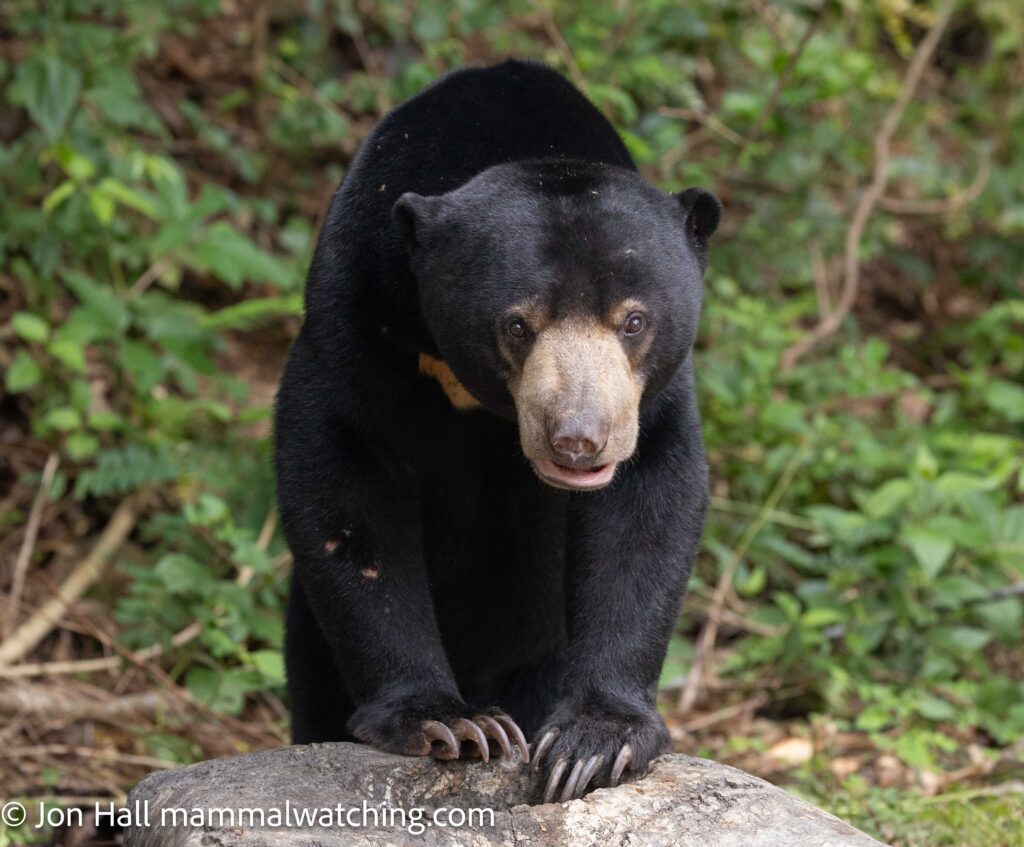
Sun Bear (Helarctos malayanus)

Post author
Leave a Reply
You must be logged in to post a comment.