

Hoary Foxes near Brasilia, June 2026
Here’s a quick report of a weekend in Brasilia two weeks ago.
After finishing the Primates and Porcupines trip, Ellen Linton and I travelled to Brasilia for a couple of nights on a mission to see Hoary Foxes, one of the last two canids I was missing. Unfortunately Ellen, continuing her catalogue of mishaps when traveling to and from Brazil, got sick and decided to stay in Brasilia itself.
Regina Ribeiro had recommended Brasilia as a place to try for the fox: there is a Hoary Fox project in the city, and sightings are not uncommon in the region including the Brasilia suburbs. But Regina wasn’t able to contact the fox project. And nor was my buddy Marcelo Marcos, a bat biologist and all round good guy based in Brasilia. Marcelo had been the bat catcher in residence on two Amazon cruises I’d taken with Fiona Reid and I had been waiting for an excuse to visit him.
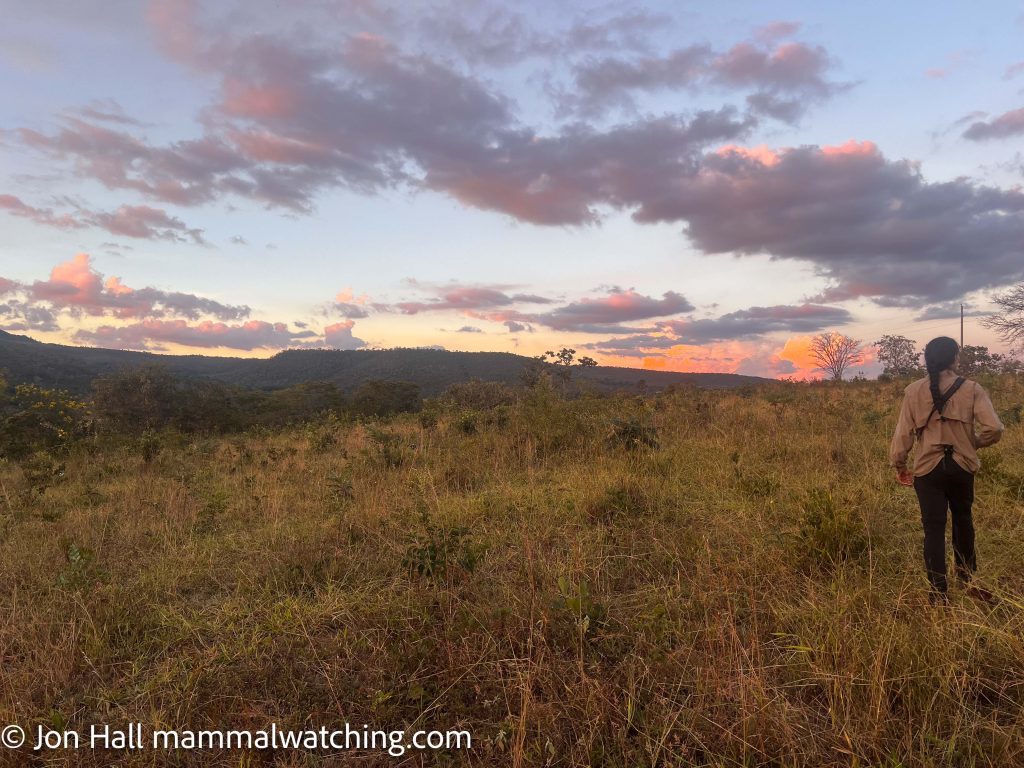
Estavao and Hoary Fox habitat
Although there was a chance we might run into the foxes around Brasilia, Regina kept on investigating and found a young bird guide – Estevao Santos – based at Pirenópolis, two hours west of Brasilia. Estevao regularly saw foxes around his place and knew of an active den.
I had also realized that Bearded Capuchins (Spajus libidinosus) are common around Brasilia,. Keeping up-to-date on capuchin taxonomy is about as easy as keeping track of British Prime Ministers. But they would be a lifer for me, Marcelo said they should be easy to see in the city or around Pirenópolis. Famous last words…
Pirenópolis
Marcelo agreed to come with me and we booked rooms for the night at the Pousada Vereda da Serra, outside of Pirenópolis very close to Estavao’s place. Although the pousada is about half an hour along a dirt road – and not a great dirt road either, you would probably want to rent an SUV – the hotel itself was surprisingly large and comfortable, with a pool and good restaurant.
Estevao and I spent a couple of hours in the late afternoon looking for the Bearded Capuchins. No luck though we did get obscured views of some Black and Gold Howlers.
Marcelo, who has permits to catch bats in most of Brazil, set up some bat nets while Estevao and I walked through a large field in search of the foxes. Estevao said a pair had been denning here. Although he believed that their den was now empty he often saw the foxes here.
Right on sunset I got a slightly hotter blob on my thermal scope. After several seconds of staring through my binoculars I realized I was looking back at a Hoary Fox looking at me, its perfectly camouflaged head poking through a clump of grass.
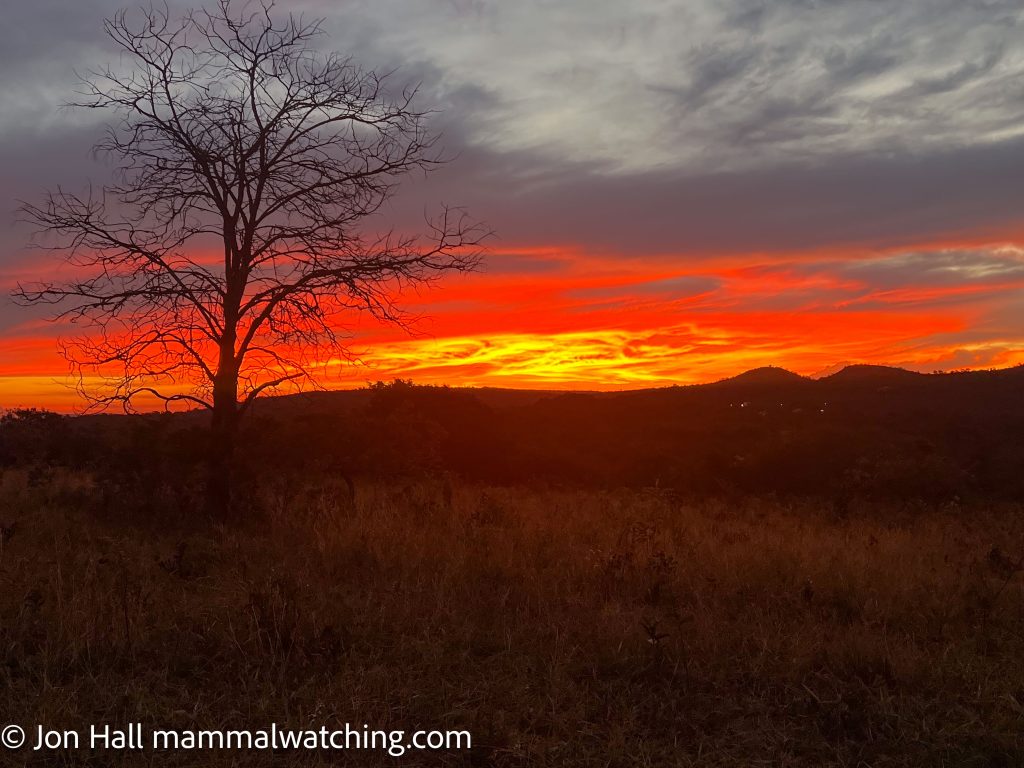
Hoary Fox hour
Once the fox realized I could see it, it trotted off into the sunset. No photos, but a great look at my penultimate canid. Just Bush Dogs left now … wish me luck.
We wandered around the field for the next hour but couldn’t see any more foxes. Close to the edge of the field I found a tiny animal low in a clump of grass that refused to move as we approached it.
I could have picked it up. In fact I should have picked it up given how bad my photos are. Photography was very difficult as I had to be right on top of it to actually see the thing. It was one of the mouse opossums. And given how tiny it was – about the size of a house mouse – it appears to be Agricola’s Opossum. Thank you to Venkat Sankar for helping me with the ID. A second lifer of the night for me.
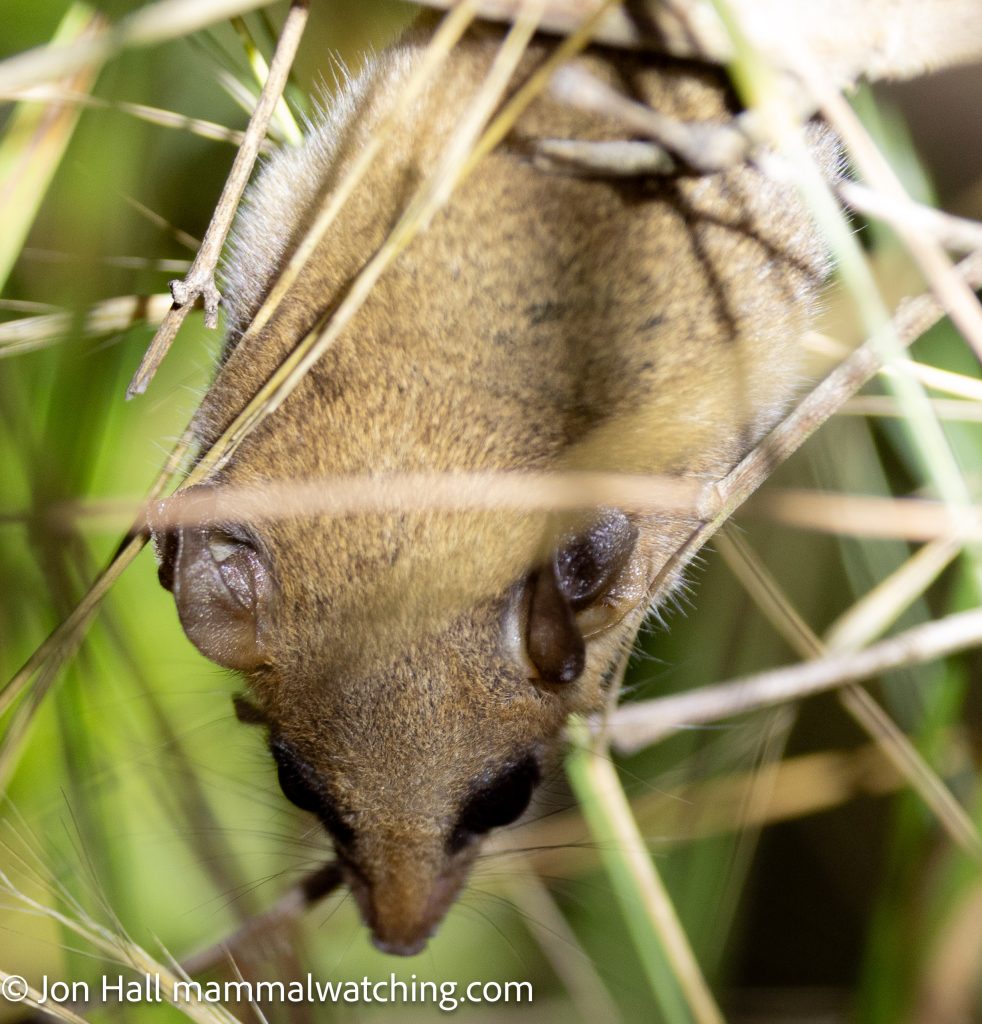
Agricola’s Opossum (Cryptonanus agricolai)
Here’s another photo.
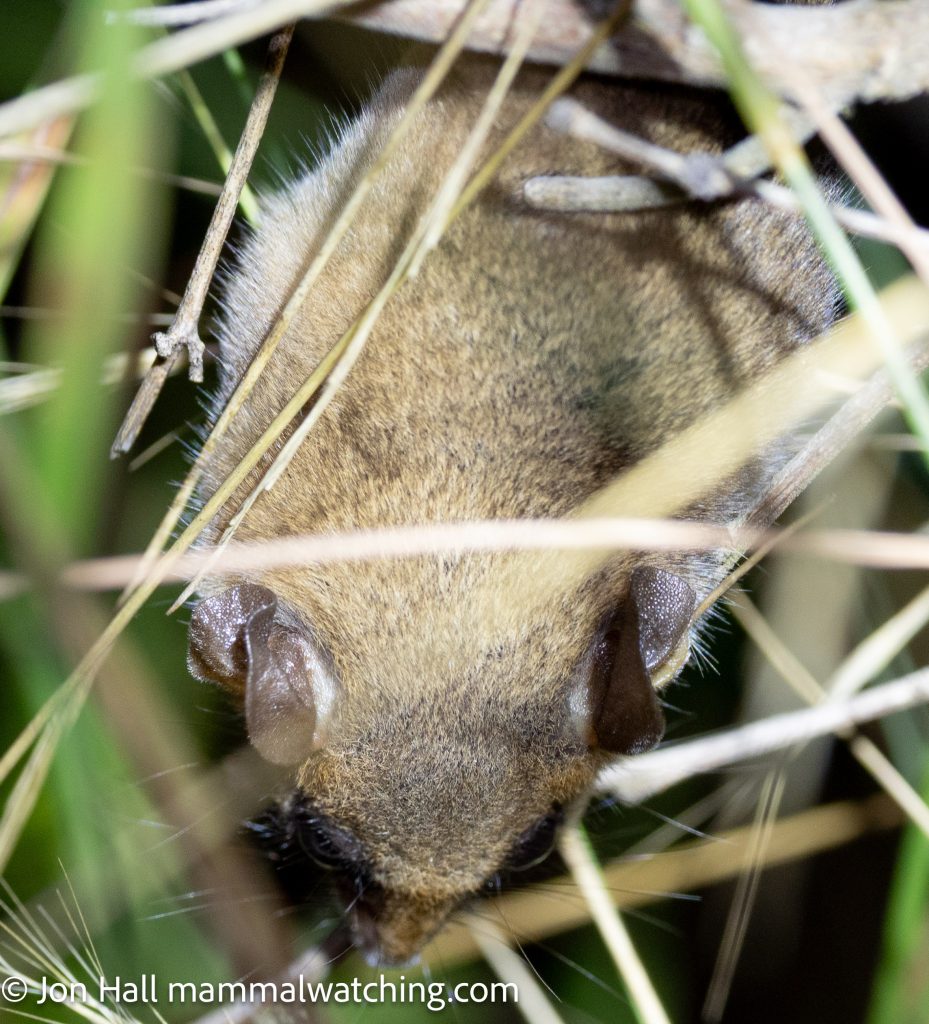
Agricola’s Opossum (Cryptonanus agricolai)
Back on the road we met Marcelo who had just had a run in with a Giant Anteater, a minute after we had walked past. He was within 5 meters of the animal when he saw it and thought he’d stumbled on one of the local Jaguars.
Marcelo had caught three bat species, all of them common in the Cerrado.
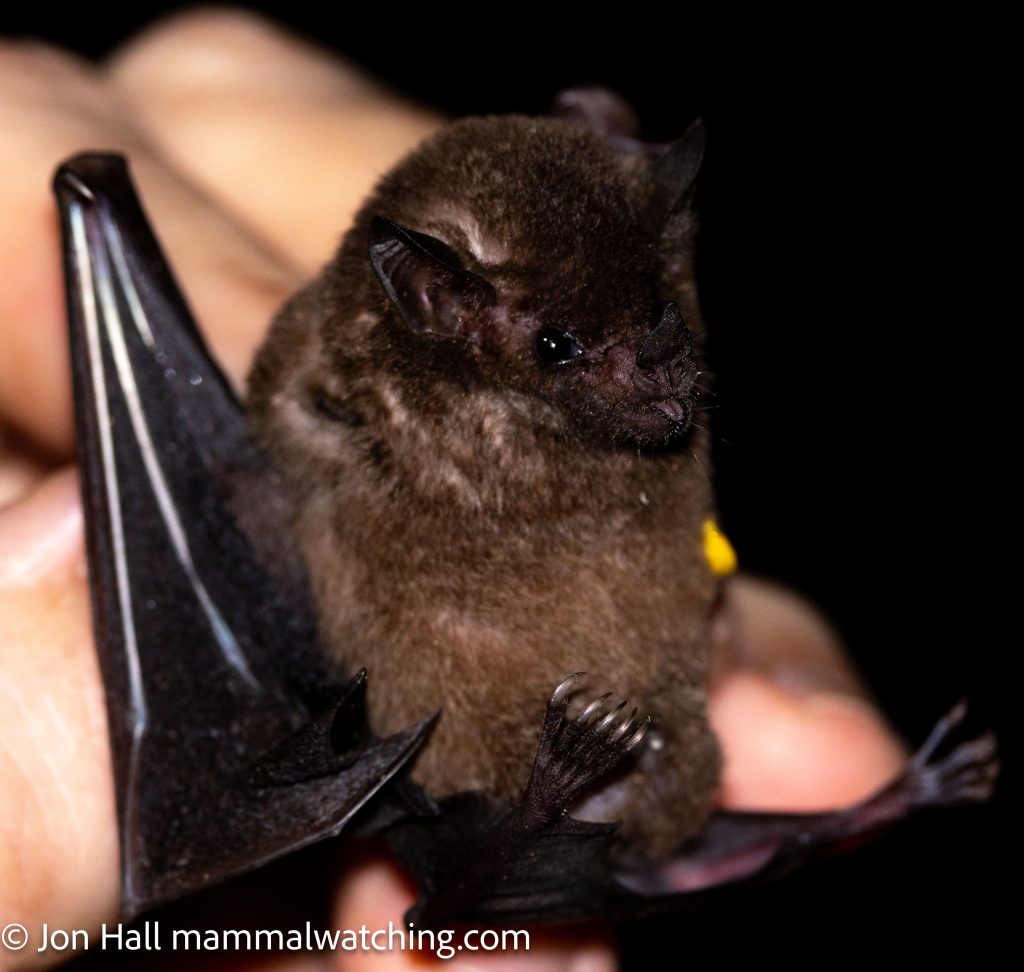
Pallas’s Long-tongued Bat (Glossophaga.soricina)
The first two I had seen before: Pallas’s Long-tongued and Seba’s Short-tailed Bat.
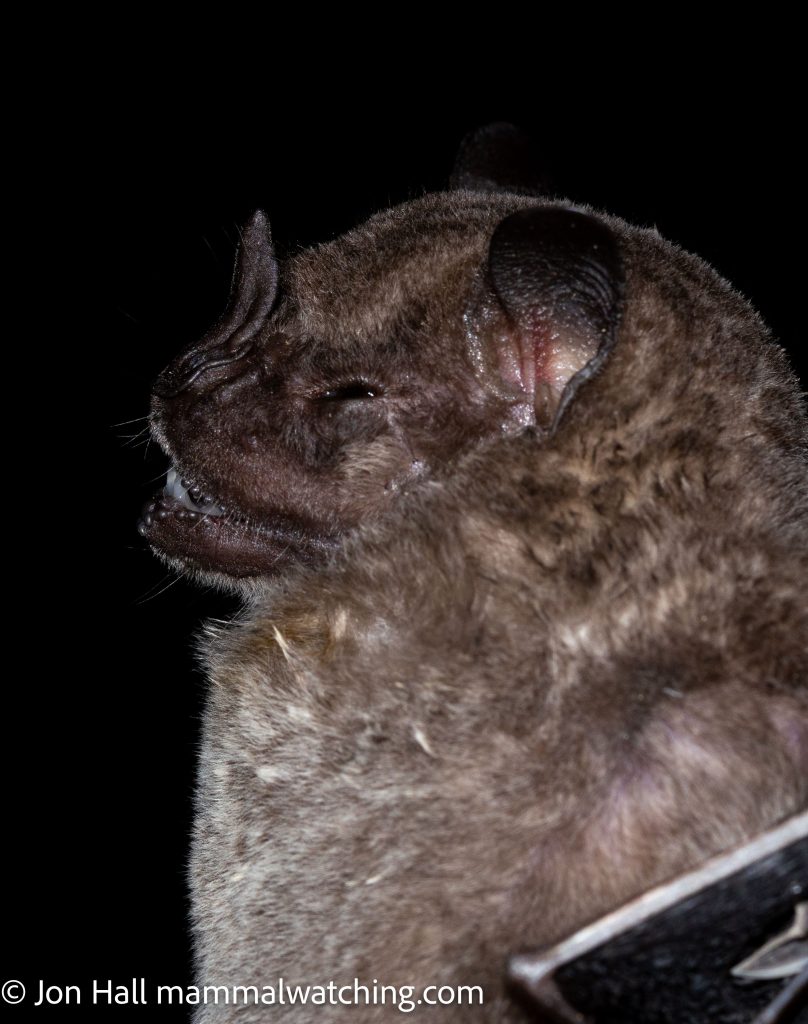
Seba’s Short-tailed Bat (Carollia perspicillata)
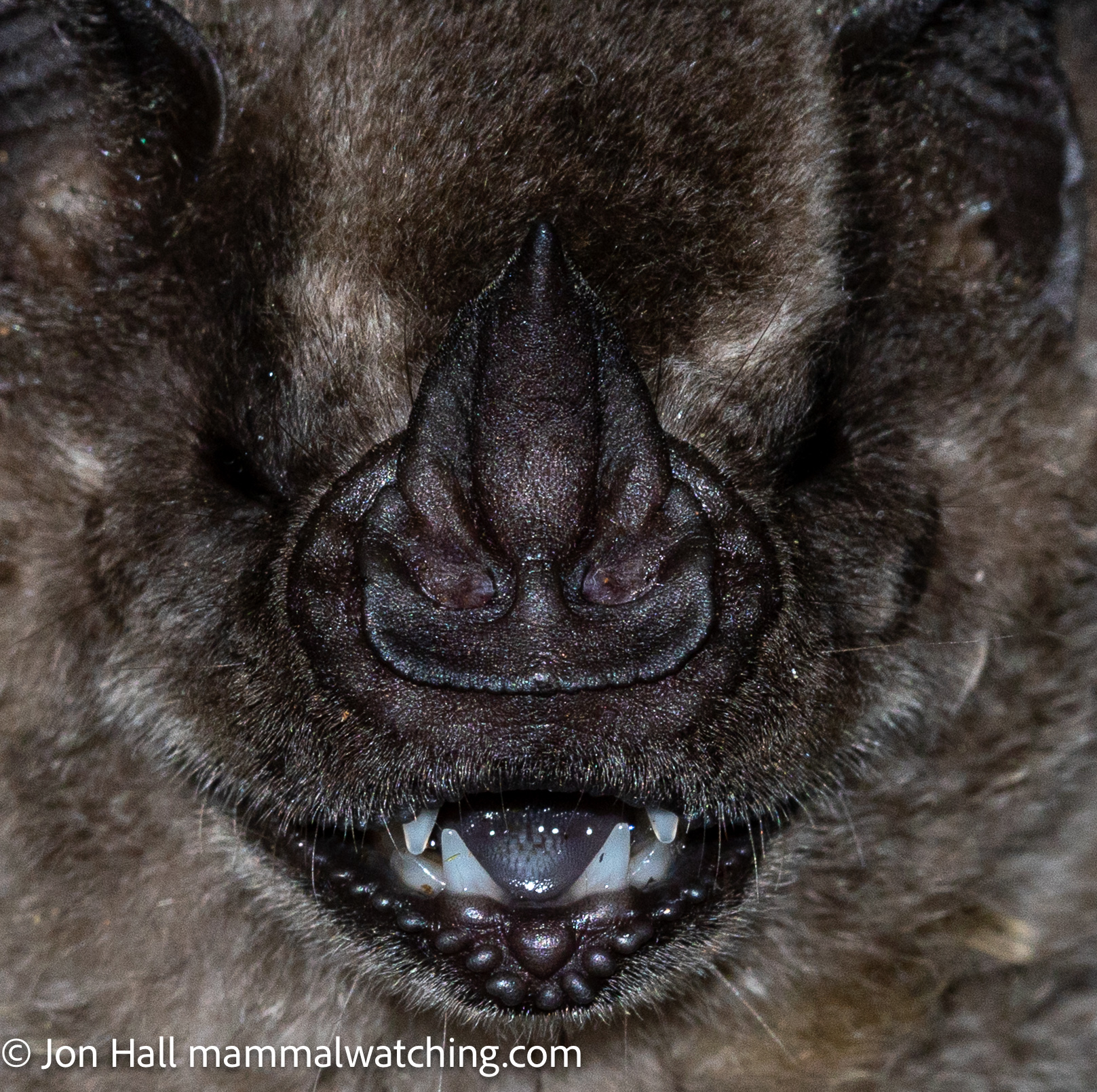
The third was new to me: a chunky Fringed Fruit-eating Bat.
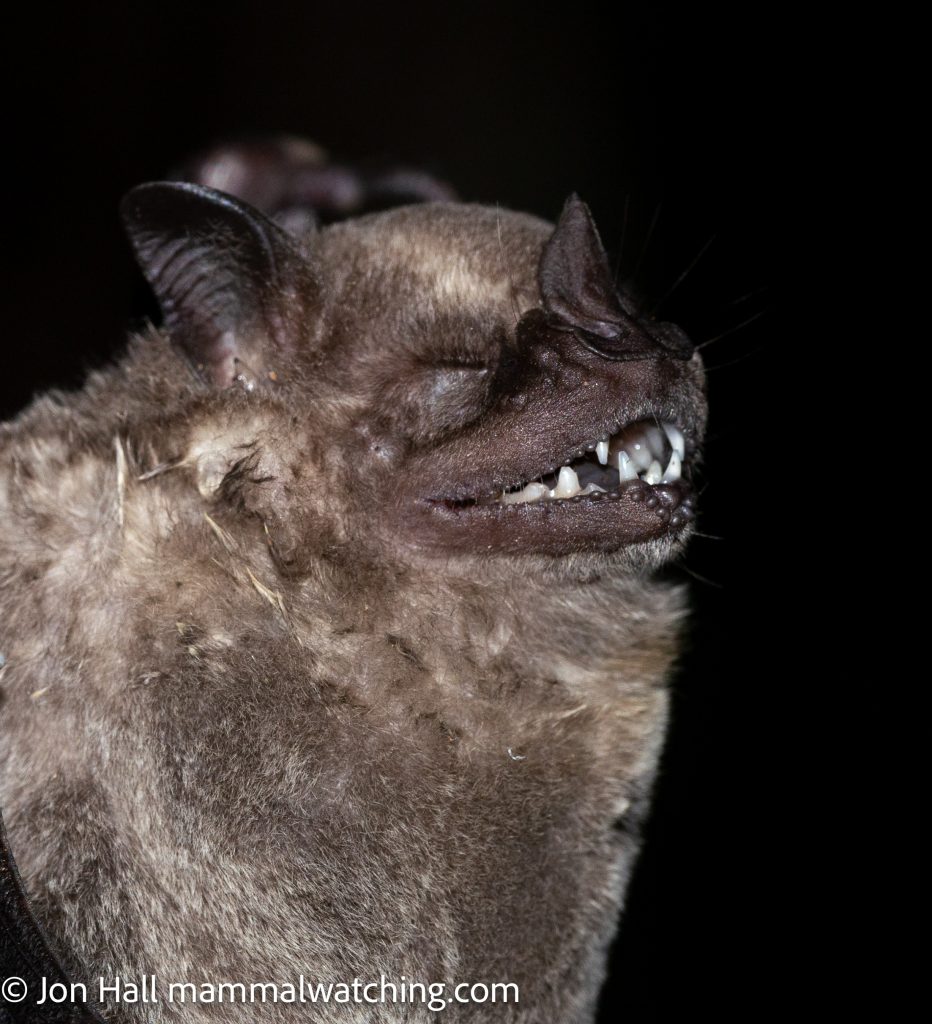
Fringed Fruit-eating Bat (Artibeus fimbriatus)
We spent an hour or two driving the roads in search of Hoary Foxes in the fields without luck. To be honest I am not sure we looked in the best areas as most of what we drove through was covered in long grass (this was the first time Estevao had guided anyone in search of mammals).
When we drove out the following day we assed though many fields with much shorter grass on the way back to the highway. I would recommend simply book into the pousada for a night or two and spending your time spotlighting along the dirt roads on your own and focussing on the most open habitat.
The following morning Estevao led us in search again of the Bearded Capuchins in an area where – he said – they “always” were. Always … except for today.
Brasilia
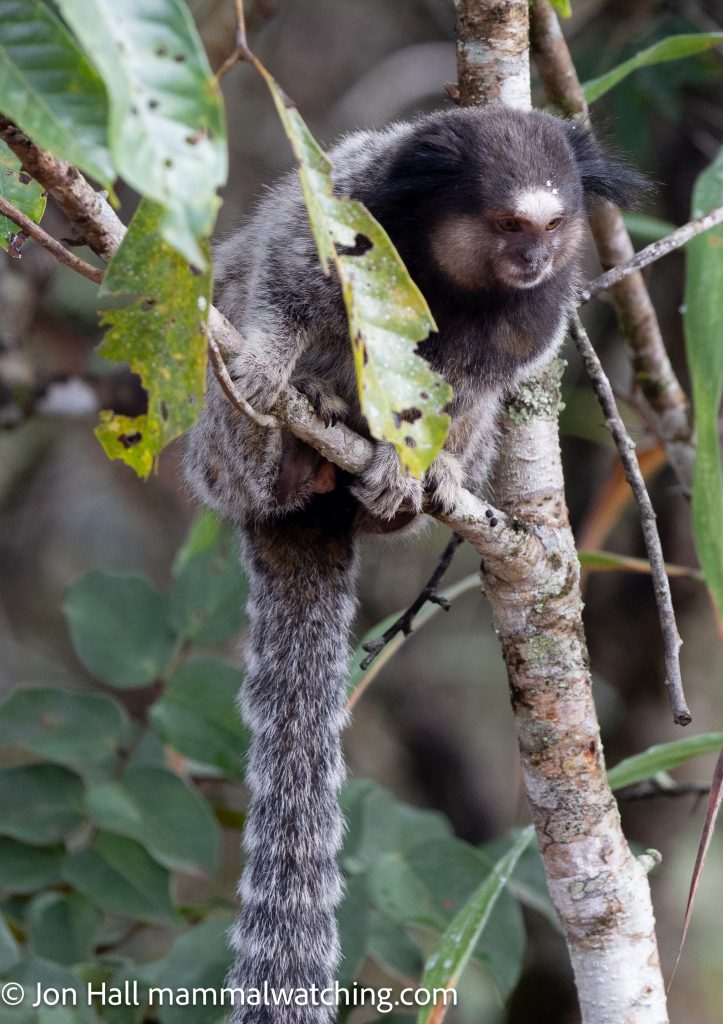
Black-tufted-ear Marmoset (Callothrix penicillata)
Back in Brasilia we picked up a now recovered Ellen, and went to Brasilia National Park in search of the capuchins. They are usually very easy to see here: they hang around two natural pools in search of snacks from the tourists. But the pools were closed for repair and the capuchins and moved into the forest. We couldn’t find any on the Capybara Trail either, which is often a good spot to look. The only mammal I saw was a Black-tufted-ear Marmoset on the drive into the park.
At this point I might have gone to the Brasilia Zoo, where wild capuchins are common. But today was monday and the zoo was closed. Ellen saw them there the following morning after I had left. Oh well.
A massive thanks to Marcelo for joining me on the trip and helping with the bat and capuchin search. So good to see him again! And thanks also to Estevao.
Trip List
Agricola’s Opossum (Cryptonanus agricolai) – endemic – Lifer
Black-and-gold Howler (Alouatta caraya)
Black-tufted-ear Marmoset (Callithrix penicillata) – endemic
Seba’s Short-tailed Bat (Carollia perspicillata)
Pallas’s Long-tongued Bat (Glossophaga soricina)
Fringed Fruit-eating Bat (Artibeus fimbriatus) – Lifer
Hoary Fox (Lycalopex vetula) – endemic – Lifer

Post author
Leave a Reply
You must be logged in to post a comment.