

Introducing the Lost Mammals Initiative
Hello everyone. As I mentioned in my post last week on plans for the future, I am pleased to unveil the Lost Mammals initiative.
As you can, this is a list of mammal species that are either lost or very poorly known. Most of them have not been seen for many years. You, the world’s mammalwatchers, are the perfect people to rediscover them.
The list covers a broad set of mammals from the tiny Thor’s Hero Shrew to the 100kg Saola. Carlos Bocos, Charles Foley, Ellen Linton and Venkat Sankar – the mammalwatching illuminati – helped select the final set. It was a difficult selection, because so many mammals are missing. These species were chosen because they cover a wide geography, occur – or might occur – in mainly accessible areas, and on the basis that they ought to be identifiablein the field and can confirmed through photographs. And also – let’s be honest – because we think they are cool and want to seem them ourselves.
We’ve also included a few ‘found’ species that this community has rediscovered to showcase what we have already achieved.
As an added incentive to go looking – beyond your chance at immortality in mammalwatching Valhalla, or at least on this website – we are planning to offer prizes for those who are successful.
Carlos Bocos’s new Mammalia Tours has already stepped up to offer a free place on one of their trips to the first person under the age of 35 who rediscovers a species on this list. Fitting indeed, as Carlos himself has been instrumental in rediscovering a bunch of mammals in the past few years including the Pygmy Long-finged Triok in West Papua, which was though not just to be lost, but extinct for 6,000 years! So if you win a trip with Carlos you have every chance of discovering another species on the list.
As Ellen Linton – who did most of the work in preparing this list and writing up the species accounts – wisely notes “Anyone familiar with Carlos’s tours should be foaming at the mouth over this prize, which is the only reasonable reaction to such an opportunity “.
We are looking for other sponsors to show their support and offer prizes. Tour companies, optics companies – or anyone really – reading this please let me know if you would like to come on board to support the search.
I also want to say thank you to Lynx Nature Books, who publish the superb Handbook of the Mammals of the World, for generously allowing us to use their artwork for the lost species (photographs, by definition, were largely not available).
We hope that this list will inspire mammalwatchers to take a trip into the unknown. Whether or not you succeed in your quest, the adventure of a lifetime is pretty much guaranteed.
We will keep you updated as more prizes and sponsors come on board.
Is anyone already inspired to go searching? And does anyone want to places bets on which of these will be found first?
Jon
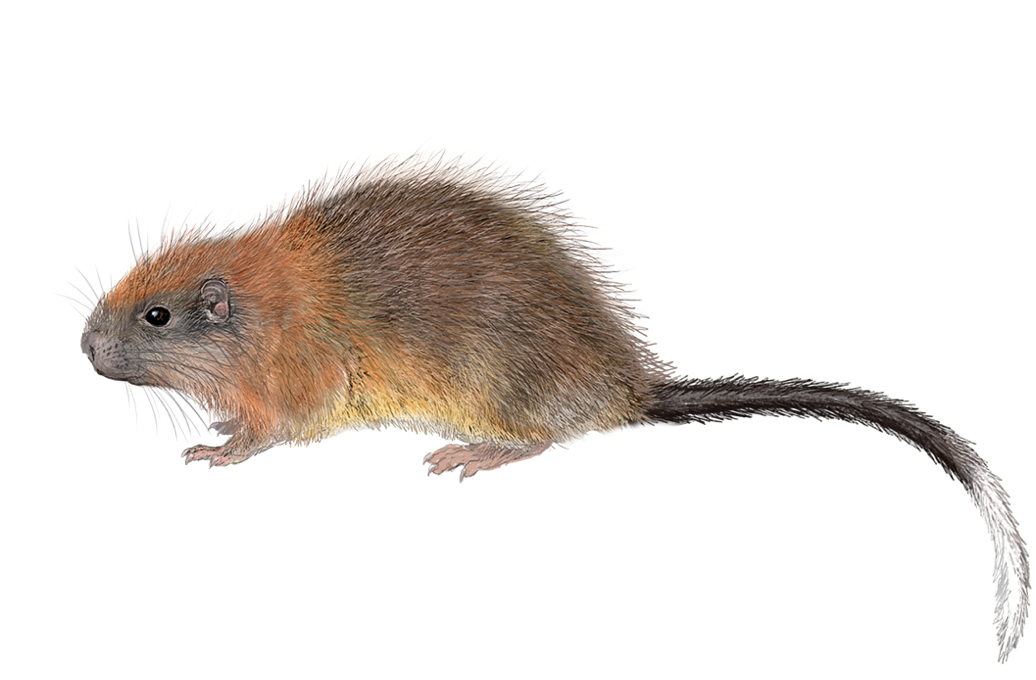
Cover art: Red Crested Tree Rat, last seen in Colombia in 2011. Toni Llobet, © Lynx Nature Books, Source: Handbook of the Mammals of the World, Volume 6: Lagormorphs and Rodents I

Post author
24 Comments
-
-
-
Vladimir Dinets
Sure.
Silver pika: not lost at all; it was easy to find at the type location in 2006 and there was a more recent survey that found it to have larger range than previously thought.
Sumatran porcupine: iNaturalist is a very poor tool for estimating small mammals’ abundance. Sumatran porcupine is still detected by camera trapping surveys (for example, in G. Leuser in 2023) and the reason it’s rarely seen by mammalwatchers is probably that mammalwatching in Sumatra is mostly limited to a small number of locations.
Mt. Nimba otter shrew: there’s been some research and conservation effort since this species’ discovery, and it is still present in the area, so it’s not “lost” in any sense.
Cuban solenodon: still not particularly rare in its core range, seen by locals and park employees, and takes only a few hours to find with a thermal scope in good habitat. Lack of records in the last few years is simply due to near impossibility of fieldwork in far eastern Cuba because of fuel shortages, also, AFAIK research permits to visit the area are no longer issued.
Bulmer’s fruit bat: unless I’ve missed something there are still known active colonies, plus recent records suggesting wider occurrence in inaccessible caves.
Somalian trident bat: a 2017 survey in Socotra found a bunch of active colonies, so it’s neither lost nor particularly rare.
Garrido’s hutia: described from one skull based on lousy morphometrics; not known as subfossil unlike other Cuban hutias and claimed to occur on tiny keys that were part of Cuban mainland in Pleistocene and are frequently visited by fishermen. IUCN now considers it a synonym of widespread and highly variable Desmarest’s hutia. A strange choice considering that there is at least one true lost species among Cuban hutias (the dwarf hutia) and also small hutias in the east that probably belong to one of the species now considered extinct or critically endangered.
Blue-eyed spotted cuscus: Carlos probably knows better, but I was under impression that it’s still not that rare on Supiori?
Pu Hoat muntjac: basically a taxonomic artefact, synonymous with one of taxa in M. rooseveltorum species complex (likely M. r. s. s.), but unclear which one.
Personally I’d love to see even more arboreal rodents in the list since they tend to be difficult to trap but easy to t-scope and that’s where amateur mammalwatchers are most likely to score, but that’s my personal taste and there’s already a bunch 🙂
-
CarlosBocos
Hello Vladimir and thank you for your comment, very interesting and highly appreciated.
We are far away from the birding world where they have the initiative of Search for Lost Birds but as Jon said, we can create our own initiative, to promote mammalwatching specially amongst the younger generations and trying to encourage them to go and try new places, off the beaten path. Now going to your comments one by one, i have few things to say about some of the cases that i know particularly well.
Sumatran Pocurpine: As long as i know, nobody knows any area where you can go and try to see it, with relative high sucess. And i wouldnt say its because there is not access to places where they can be found (Bukit Barisan Selatan, Bukit Tigapuluh, Gayo Highlands etc)
Mount Nimba Otter Shrew: Again, as far as i know, only in very recent times the naturalists, mostly birders, are visiting the Mount Nimba. The accesible area of the mountain range, in Liberia, could have them but as far as i know, nobody has seen it yet.
Bulmer’s Fruit Bat- I would love to get in touch with anyone that has seen the species recently. Could you please add more information here? Thank you
Blue-eyed Spotted Cuscus- Again, i dont know anyone that has seen the species recently. Biak is nowadays visited by a number of naturalists, many of them with a taste for the mammals but unfortunately, no records yet!-
Vladimir Dinets
OK, looks like I misunderstood your criteria a bit.
Bulmer’s FB: I thought you needed to have it in hand to tell from Dobsonia – that might explain lack of sightings?
Cuscus: There were apparently surveys on Biak that failed to find it except as a pet, but wasn’t Supiori always considered the species’ stronghold? I haven’t looked into this since planning a trip a few years ago that didn’t happen.-
CarlosBocos
Hi Vlad,
No problem at all, we are in the early stages of the initiative and we have to make It crystal clear for everyone and i take full responsability of my part.
The Bulmers i think its possible to find for mammalwatchers, posible to identify and therefore, a great candidate. But mammalwatching in PNG is extremely limited and very difficult. Westerners working with mammals like Jim Thomas or Lisa Dabek arent particularly helpful when It comes to help and support mammalwatching initiatives and if anyone wants to find this bat, should have a specific trip to “unknown mammalwatching territories”
The cuscus is simply hunted to death and the human population in the Geelvink islands is growing fast.
best
-
-
-
-
-
Jon Hall
Thanks Vladimir. This is useful and we will look into these. Part of the reasons we picked some of these species though was that they are ‘lost’ to mammalwatchers and it’s a way to encourage people to visit new areas (eg for Sumatran porcupine) or discover new ways to find things like the otter shrew. So I will explain that better in the intro. But need also to check on some of these species you mention. Of course we hope none of them are really lost and will all be found before too long.
-
Charles Foley
Useful discussion. As mentioned above, part of the rationale for putting this list together is to track down mammal species that we know are still out there, but for which the mammal watching community still lacks reliable places to find them. Anything with records within the past 20 years or so probably falls in this category. My daughter for instance has a photograph of a Cuc Phuong Ferret badger that she took in a captive setting, but I don’t know of anyone who knows where or how to find one in the wild. Consider these species the ‘low hanging fruit’ to motivate people to start looking and hopefully leads to someone setting out to find one of the species that are almost completely unknown. Jon has re-worded the introduction which hopefully now better explains the rationale. Of course we don’t want anything that is too easy, so feedback from the community on recent records for this species that we might have missed, or where there is considerable taxonomic uncertainty, is useful and appreciated.
-
vnsankar
Great discussion here, and thanks Vladimir in particular for your comments. Definitely a couple of oversights on our end with Ochotona argentata and Asellia italosomalica – given the (many) recent records, those have been removed from the list accordingly. Appreciate feedback / corrections like this.
Most of these species were pulled from a set of ~100 poorly known mammals that I shared with the others. This list included everything ranging from species that are certainly present across a large distribution but very irregularly and unpredictably recorded (e.g., Caluromysiops irrupta) to mammals that may well be truly extinct (e.g., Nilopegamys plumbeus). I’m not sure about how the final prioritization of species for this list was conducted, as I was less involved with that decision making, but hopefully that context will clarify some things. Also, to address two other cases mentioned:
– Garrido’s Hutia: I had a couple other hutias on my larger list, in particular also Dwarf Hutia. I’d agree that that species is a better candidate here. I’m unclear on why C. garridoi was chosen over e.g., M. nana, but regardless we’ve chosen to remove it altogether given the taxonomic uncertainty. Maybe we’ll add M. nana in the future.
– Pu Hoat Muntjac: I included both that species and M. rooseveltorum on my initial (100-species) list, as both seem to be fairly unknown in the field and confounded by taxonomic uncertainty. I think the muntjac was on a lost species list proposed by Re:wild and that may have been the rationale for its inclusion? But either way, I think it’s better that we remove this species as well.Agree that Melogale cucphuongensis is both a very cool species, and likely quite difficult to find! Would love to see someone (maybe me, haha) try to find it.
Finally, wanted to mention again that like Charles says, the goal here is not just to get modern records of species that have been “lost” for 50-100 years (as a subset of these species have been), but also to 1) find ways to reliably detect species/groups of mammals that are only recorded sporadically and 2) through these species, open up new areas for mammal watching that are currently under-visited and hopefully record other poorly-known mammals in the process! Also, I think before this challenge is finalized, we’ll need to put forth an objective standard on what kind of proof needs to be submitted to “claim” records of each species, particularly those that are tricky to ID in the field.
-
Vladimir Dinets
My friend and I have an expedition to Vietnam all planned out, the idea is to gain access to places not yet visited by any mammalwatchers and look for all those enigmatic species including the ferret-badger. We keep postponing it for unrelated reasons but might be able to do it next summer – I’ll keep you posted.
-
Jannicokelk
Might I suggest the combination of raw camera files, georeferenced phone image/video (this is generally an automatic feature on phones now), GPS co-ordinates (taken from a phone app is fine and shared privately if required). Final identification verified by at least 2-3 independent experts in the relevant taxa and location (assuming that all experts would NERD out over a lost species). This would mean for some species you will need in hand shots. I would also rule out any vocalisation as a primary identification. IE Vocalisation can be used as supplementary evidence in conjunction with an image/video.
Also as an ethical rule the credit must also include the names and company of guides that have helped any party.
It would be cool to include a methodology component to the standard as well – IE how did you start the desktop assessment ? Did you use historical literature, similar sister taxa, geological or veg maps, local knowledge. How did you carry out the expedition? Did you use local guides, spotlight, thermal, trapping, active search? How did you identify the species?
I know this might sound a bit extreme, but all of this information is generally in our heads any way and if we’re trying to push for a conservation component, I think having all of this information present would help any researcher.
-
-
-
-
Jannicokelk
Very cool. I’m already scheming.
Would be cool to have some very minor prizes or some sort of component that includes Lost Mammals that are NOT on the list.
Could be a book or just a high five from Jon and Charles.
The link below is a website made by a friend of mine and might be handy! It’s a work in progress (so if you see any mistakes feel free to let me know) but it’s a database used to keep track of black list species. I’ve been playing around with it lately and it uses the Long & Rodríguez 2022, Oryx 56(4), “Lost but not forgotten” definition.
-


Leave a Reply
You must be logged in to post a comment.
JanEbr
I can see the Carlos footprint here with like half of the animals somewhere around Indonesia 🙂 But it really does seem that the multitude of islands is pretty good in creating obscure species. I am not sure how realistic it is to look for small rodents and shrews, but it’s maybe more for the trappers?