

Patagonia & Buenos Aires Province, December 2025
If your life goals are entirely comprised of the mammals on your 21 Most Wanted List then discovering a reliable spot for Species Number 4 is a huge deal.
Side note: if your life goals have even a little space for anything other than mammals then I hope your family and friends appreciate how well-balanced you are.
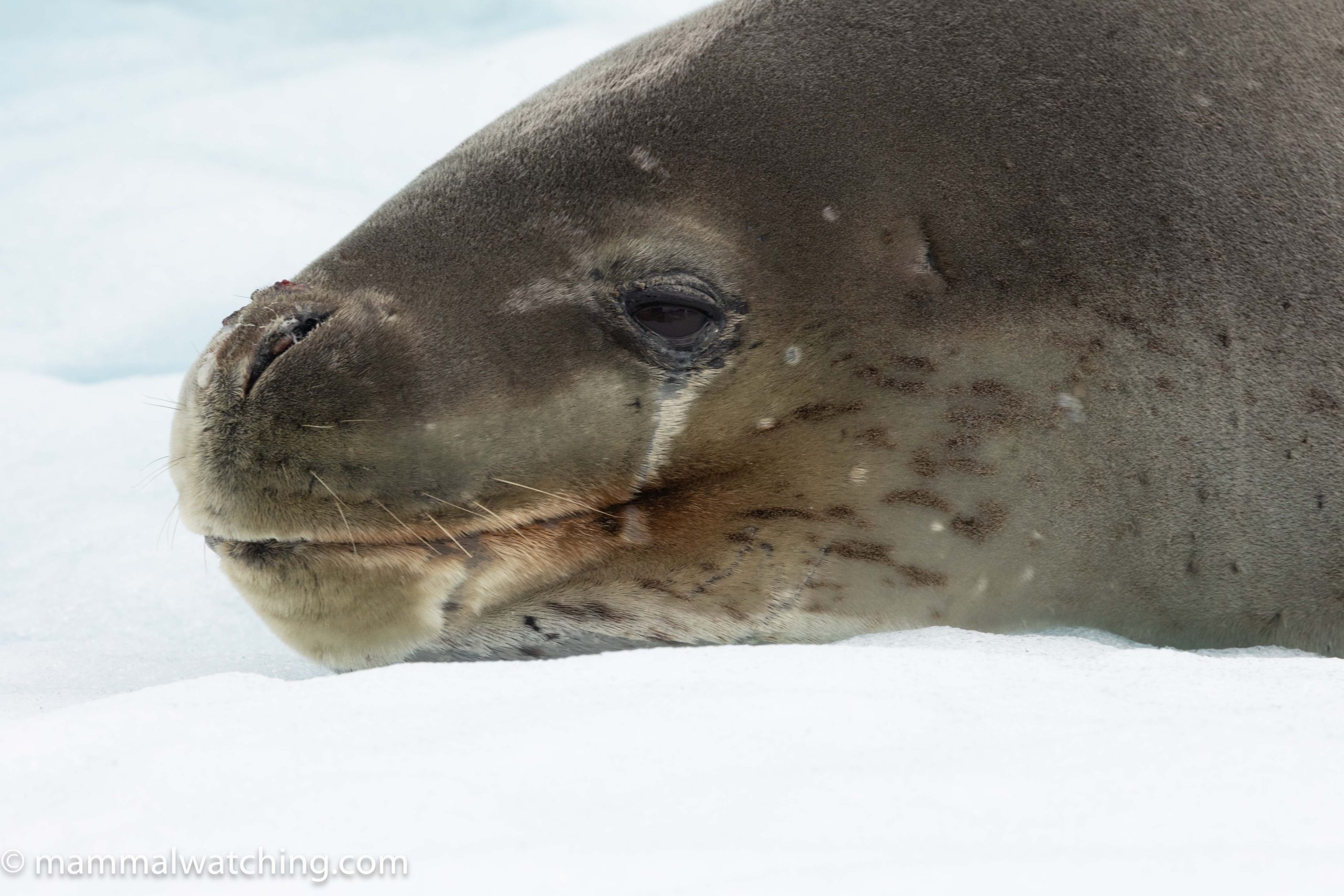
Leopard Seal (Hydrurga leptonyx)
Leopard Seals, that glorious reptilian apex predator, part phocid part Voldemoort, have been near the top of my most wanted list since I made the mistake of creating it. I’d just missed vagrant animals a couple of times in Australia and had resigned myself to having to wait until I visited Antarctica to see one.
As some of you might know I will be traveling to Antarctica a year from now. A more patient man might have waited. But I had already begun to worry. What if I missed them? What if the stress of not seeing them ruined a trip of a lifetime? At a bare minimum I knew I would be somewhere between distracted and depressed until I saw one.
So when Argentina’s first – and greatest – mammal guide Marcelo Gavensky told me he had learned of a resident population of Leopard Seals in a remote fjord in Chilean Patagonia it was hard to resist. So in late November 2025 I met up with Mike Richardson, Sion Hughes and Marcelo in Buenos Aires to go see one.
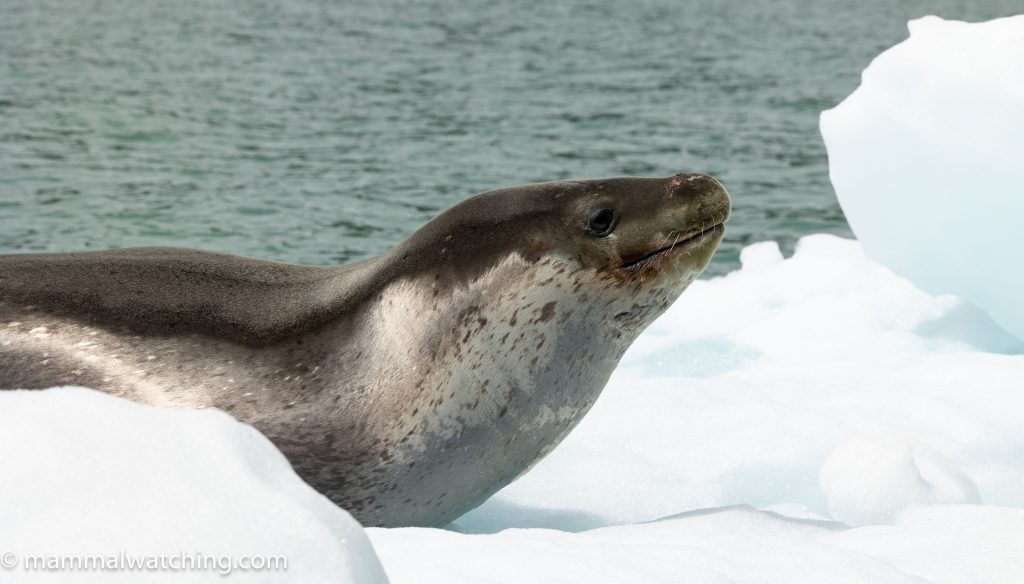
Leopard Seal (Hydrurga leptonyx)
Marcelo and I planned the trip around the seals, but we added in stops for other Patagonian mammals along the way. Mike and I stayed on for a couple of extra days to look for stuff close to Buenos Aires.
Planning a Trip
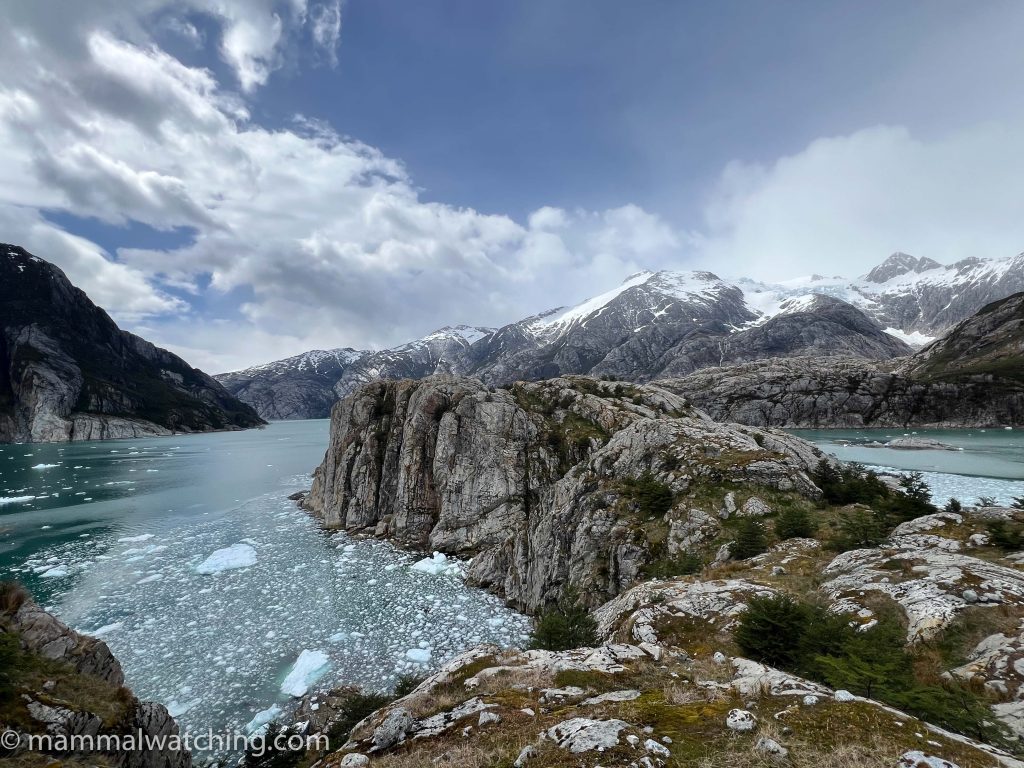
Parry Fjord, Tierra Del Fuego
Our route was as follows.
Fly Buenos Aires > El Calafate and drive to El Chaltén
Fly El Calafate > Ushuaia and drive to Parry Fjord in Chile
Fly Ushuaia > Buenos Aires > Bariloche and take the boat to Puerto Blest
Fly Bariloche > Buenos Aires and explore Buenos Aires province
Argentina was ridiculously affordable two years ago. Reality has caught up with the Argentinian economy and prices are now pretty much what you might expect in the USA or Europe. El Calafate, El Chaltén, Ushuaia and Bariloche are all popular tourist destinations and were particularly expensive, as were domestic airfares. The food, the scenery and the wildlife remain as good as ever.
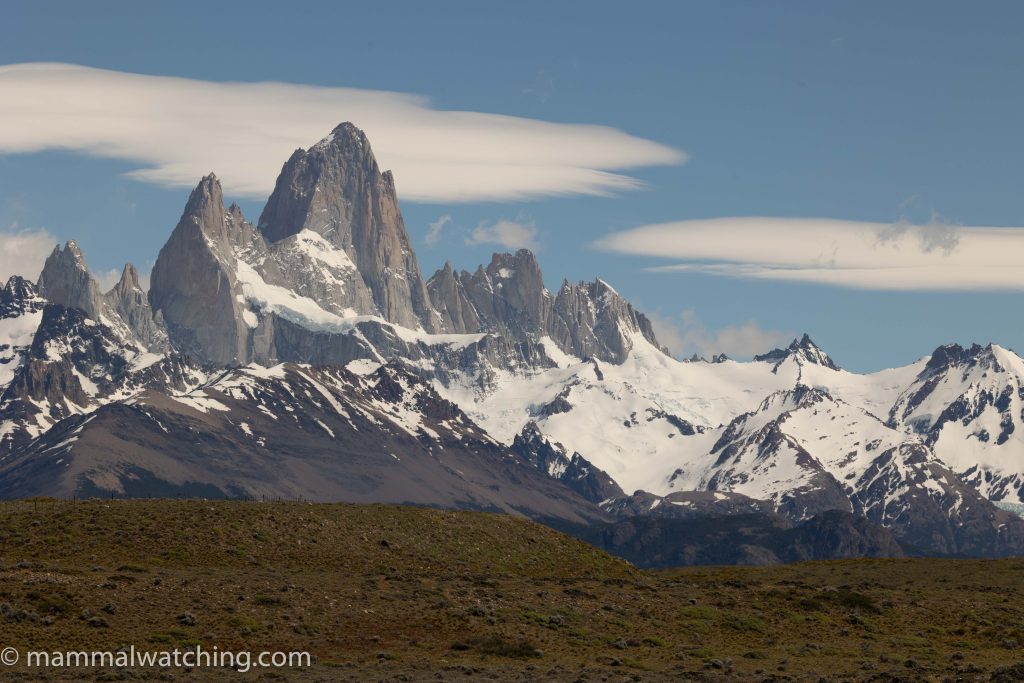
El Chaltén
Marcelo planned the route, researched the mammals and made most of the arrangments, all of which he did perfectly. He’s a knowledgeable, hard working and super-enthusiastic guide who is doing great work bringing mammalwatching to Argentina, something he loves to do when he isn’t running a successful birding company. He is also an extremely nice guy and I cannot recommend him highly enough. For more information on Marcelo, including his contact details check out my 2023 trip report or listen to him on the mammalwatching podcast.
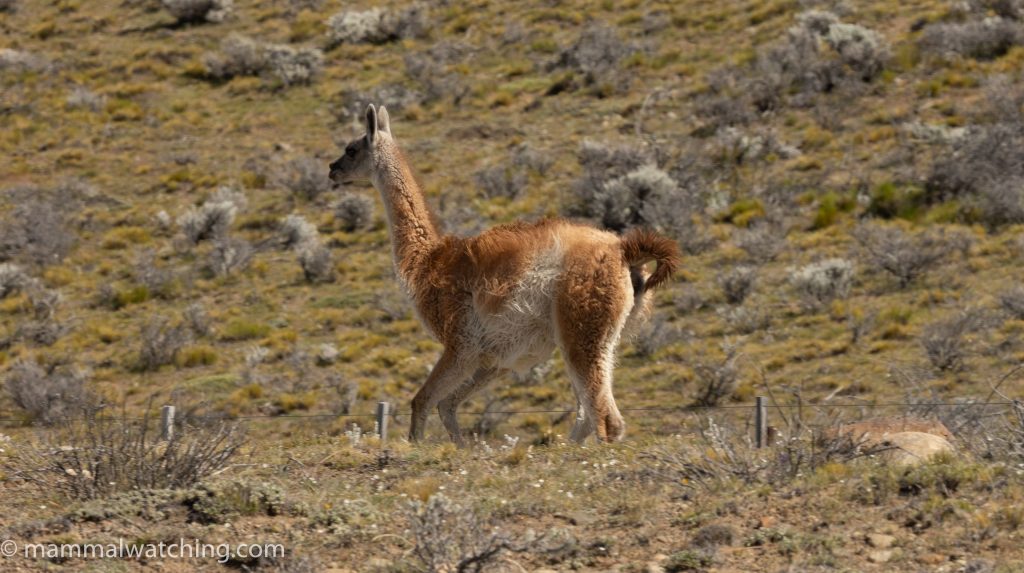
Guanaco (Lama guanicoe)
This was my fourth time in Argentina. Key targets other than the Leopard Seal on the trip for me were few but included Wolffsohn’s Viscacha, Pichi, Kodkod, Valdivian Long-clawed Mole Mouse and Long-nosed Shrew Opossum.
It was Mike’s first time and he was looking for all of the above plus a lot more including the three local fox species, all the armadillos, Geoffroy’s Cat, Hog-nosed Skunk and Huemul.
I’ve known Sion since I was 7 years old. He didn’t have any target species. Though in a strange twist of fate – possibly because of Marcelo’s grooming – he appears to be on the verge of becoming a birder. Marcelo 1 – 0 Jon.
Santa Cruz Province
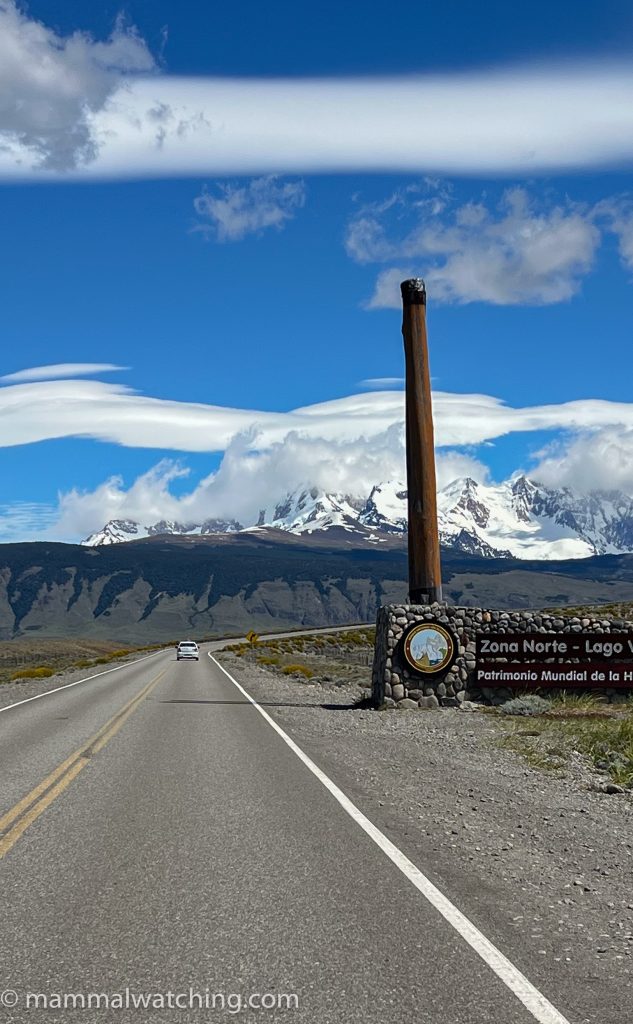
El Calafate

Magellanic Tuco-tuco (Ctenomys magellanicus)
We spent a night in this tourist hotspot. Marcelo took us to a ski resort just out of town which is home to a a great many Magellanic Tuco-tucos. We saw lots of animals poking out of their burrows in the late afternoon and early the following morning.
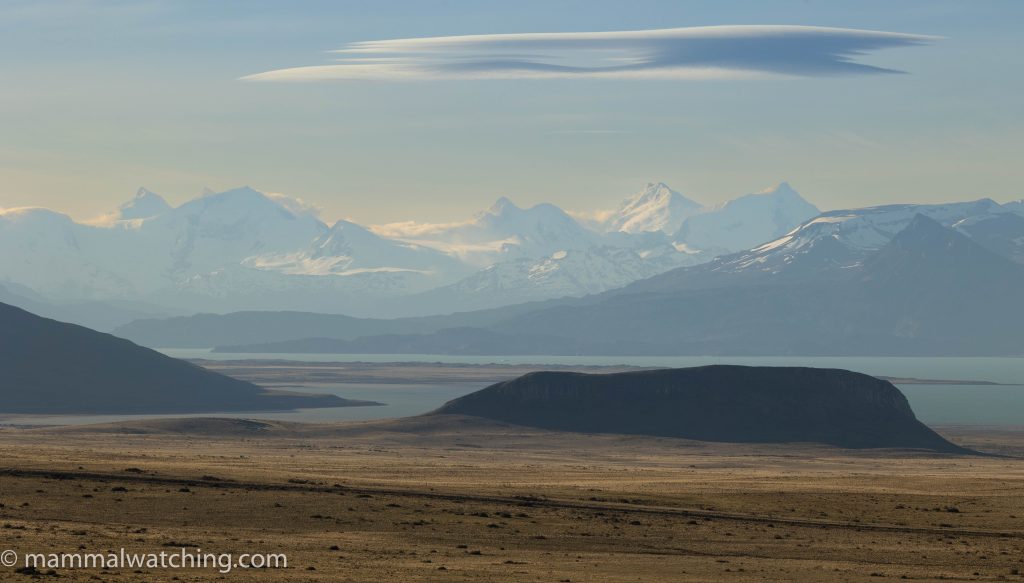
Magellanic Tuco-tuco habitat
Our thermals found three mice early in the morning and we managed to photograph two of them, both of which appeared to be Olive Grass Mice. The other – unphotographed animal – looked a little different and we thought it was likely a Hairy Grass Mouse.
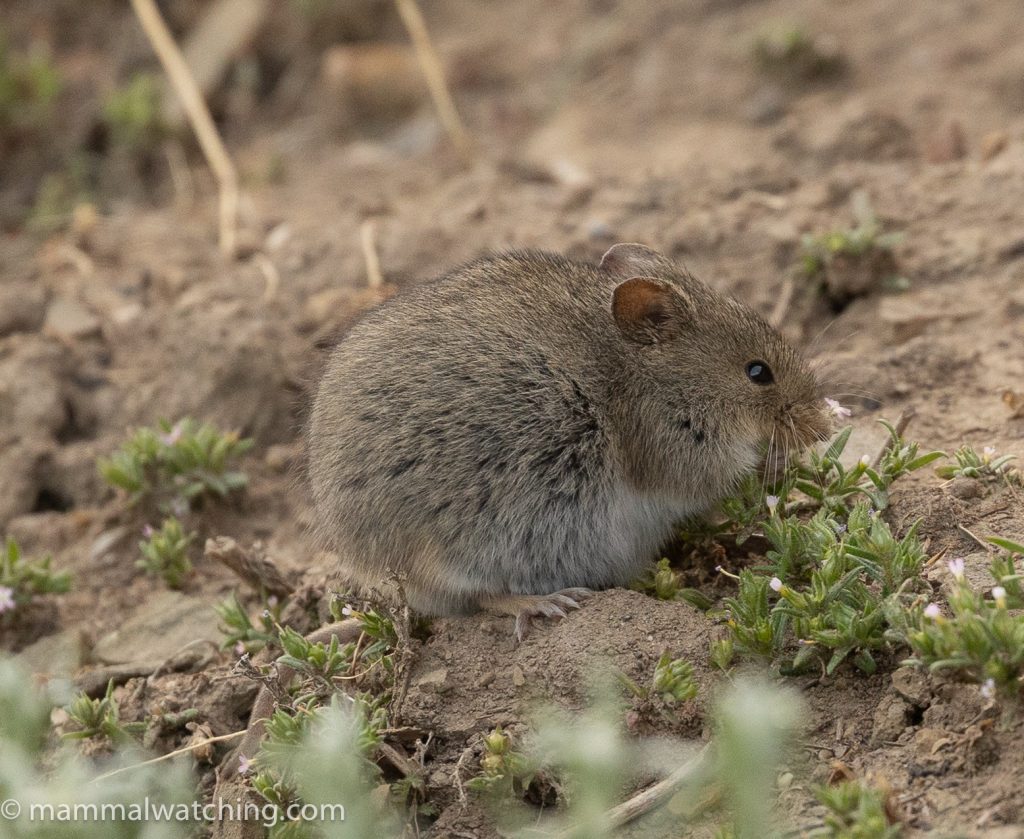
Olive Soft-haired Mouse (Abrothrix olivacea)
Here is the second animal in case anyone thinks it is a different species.
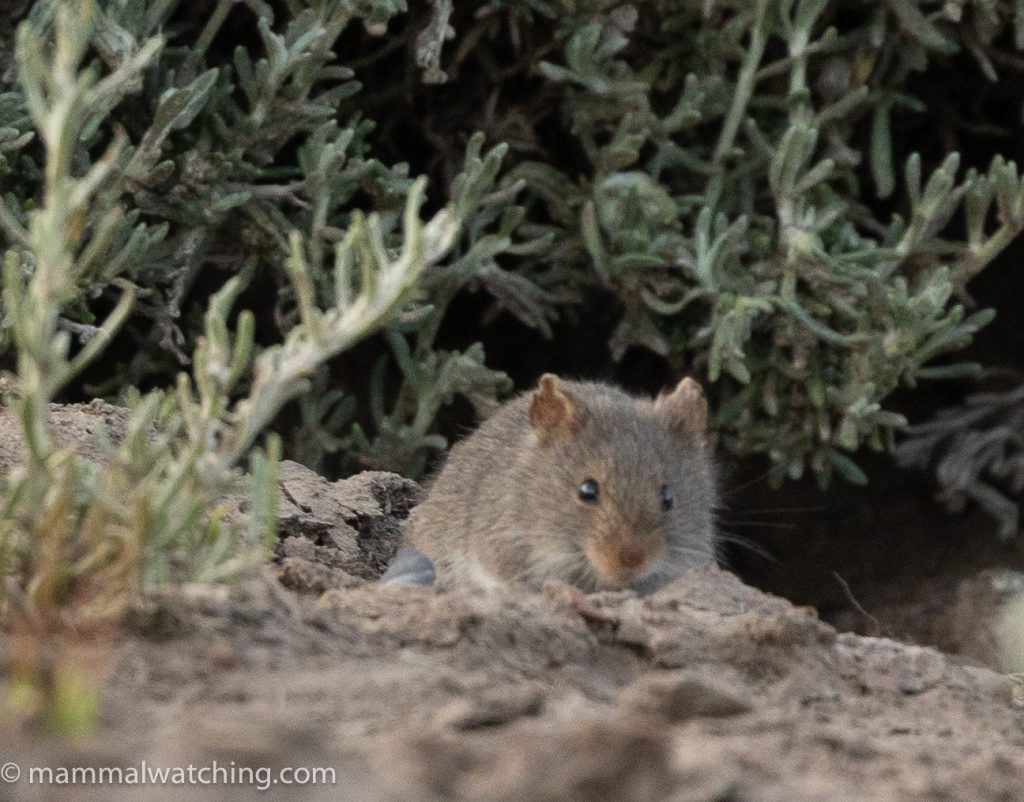
Olive Soft-haired Mouse (Abrothrix olivacea)
Southern Colocolo has been seen here, presumably because of all the tuco-tuco food. We weren’t lucky.
El Chaltén
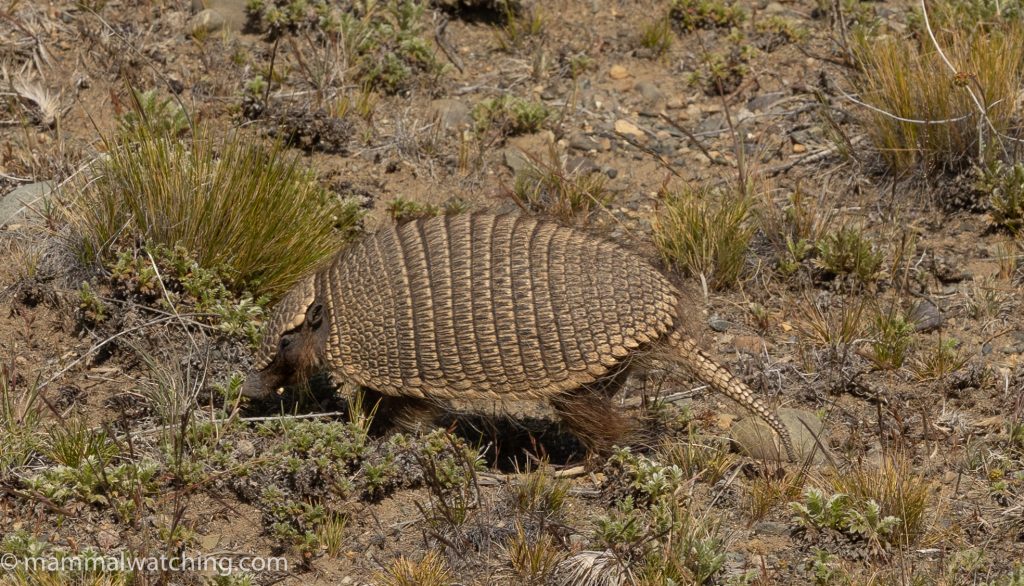
Pichi (Zaedyus pichiy)
Marcelo had learned from a researcher that the cliffs around El Chaltén were home to Wolffsohn’s Viscachas. The area is also good for Pichi (a small armadillo) and the rare Huemul (South Andean Deer).
Unfortunately – and just a few days before we arrived – the viscacha researcher told Marcelo that he had been unable to find any animals during his last survey. We tried of course and spent several hours at various times of the day scanning the cliffs around town and failed to spot one. They are clearly not common even at the best of times. No one in the town we spoke to had ever seen one. The species seems much easier to see further north.
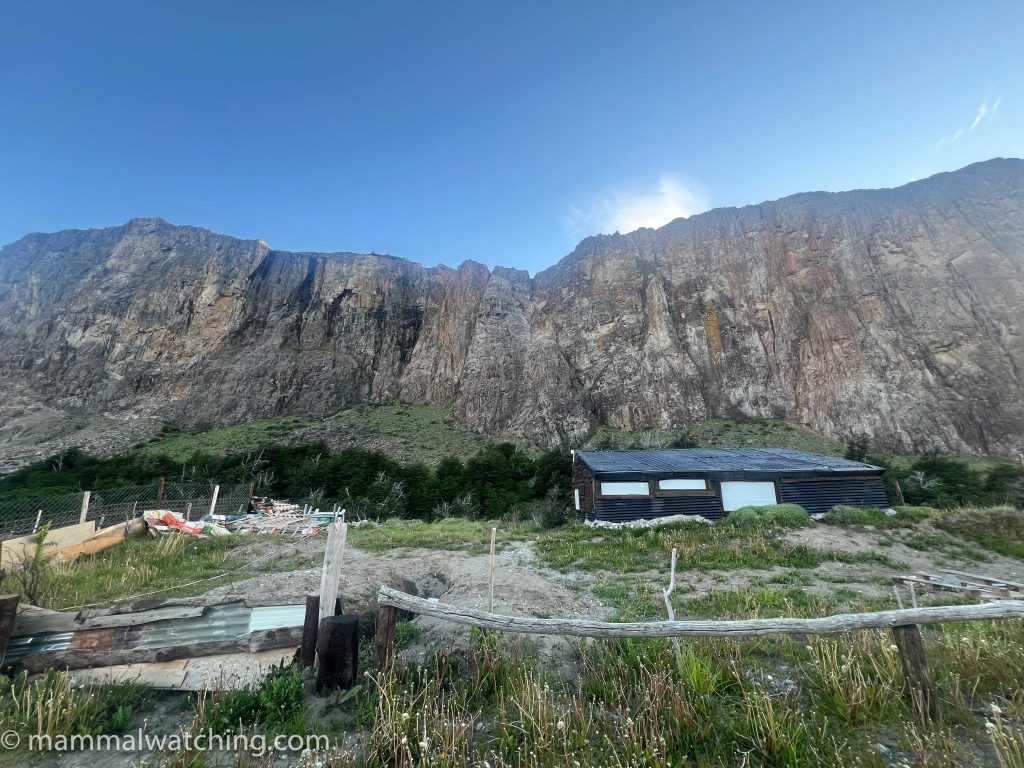
Wolffsohn’s Viscacha habitat
Armadillos are best spotted along the roads and mid-morning is prime viewing. We finally saw a Pichi about 50km out of town crossing the road that runs to El Calafate. Large Hairy Armadillos are also around so you need to see the animal well to be sure. The Pichi is more rounded in profile and their scales have dark centres.
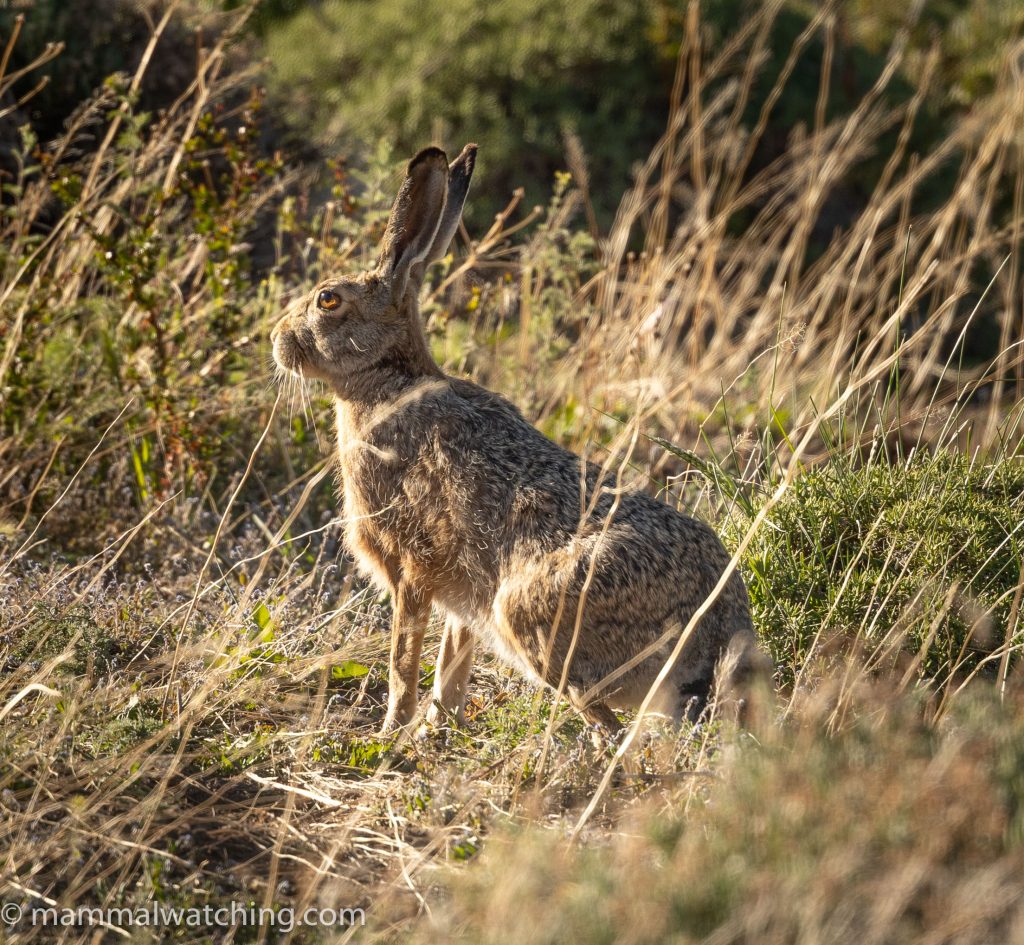
European Hare (Lepus europaeus)
El Chaltén is a popular hiking destination and walkers often see Huemul in the mountains. We spent many hours driving dirt roads through the mountain forest searching for them but did not see any mammals other than numerous European Hares. The deer are still there, and not particularly shy, but hard to predict.
Tierra Del Fuego
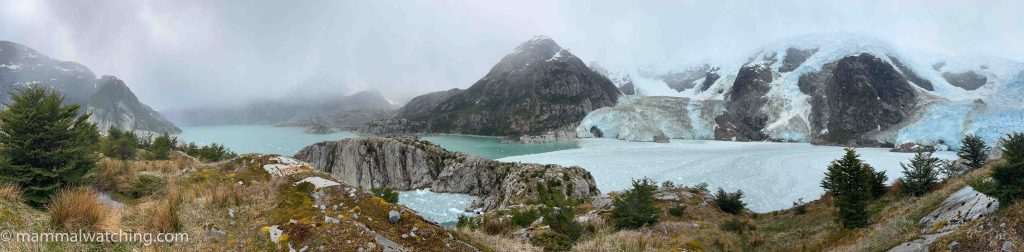
Parry Fjord, Chile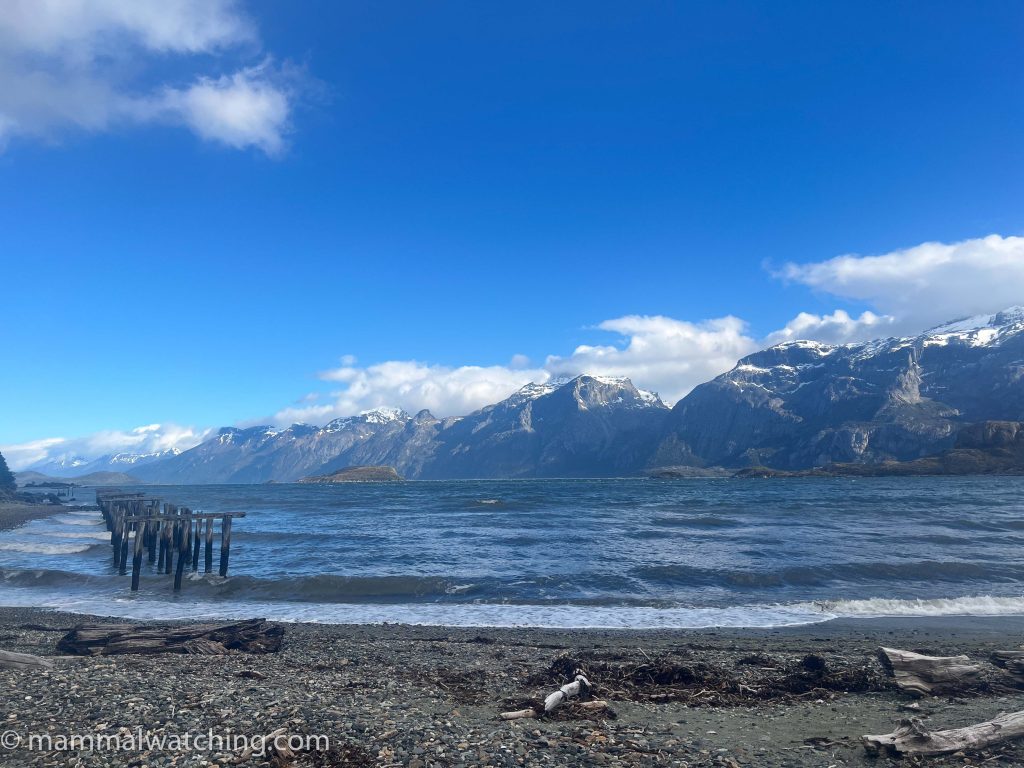
And now for the main event. Although vagrant Leopard Seals occasionally turn up on Australian beaches (they are pretty regular each year in Tasmania for instance), they were thought to reside permanently only in Antarctica. It turns out a small colony has been living around glaciers in Parry Fjord in Tierra del Fuego since the 1980s, possibly much longer, though the area is so remote that scientists found out only recently.
This is not an easy place to reach. Whether you come from the Chilean or Argentinian side, the fjord is over 300km from the nearest gas station or store. We arrived into Ushuaia at dusk and after collecting our 4WD pickup truck, and filling out the paperwork to take it over the border, we drove three hours to the coastal town of Rio Grande.
Our hotel had shut for the night and figuring out the door codes to enter the lobby, retrieve our keys and then work the elevator was probably the greatest piece of decoding since the Brits cracked Germany’s Enigma Machine.
Talking of Brits, the entire province was surprisingly still preoccupied with the status of the Falkland Islands. Just about every cafe had a map of “Las Malvinas” along with information about the conflict between Britain and Argentina more than 40 years ago.
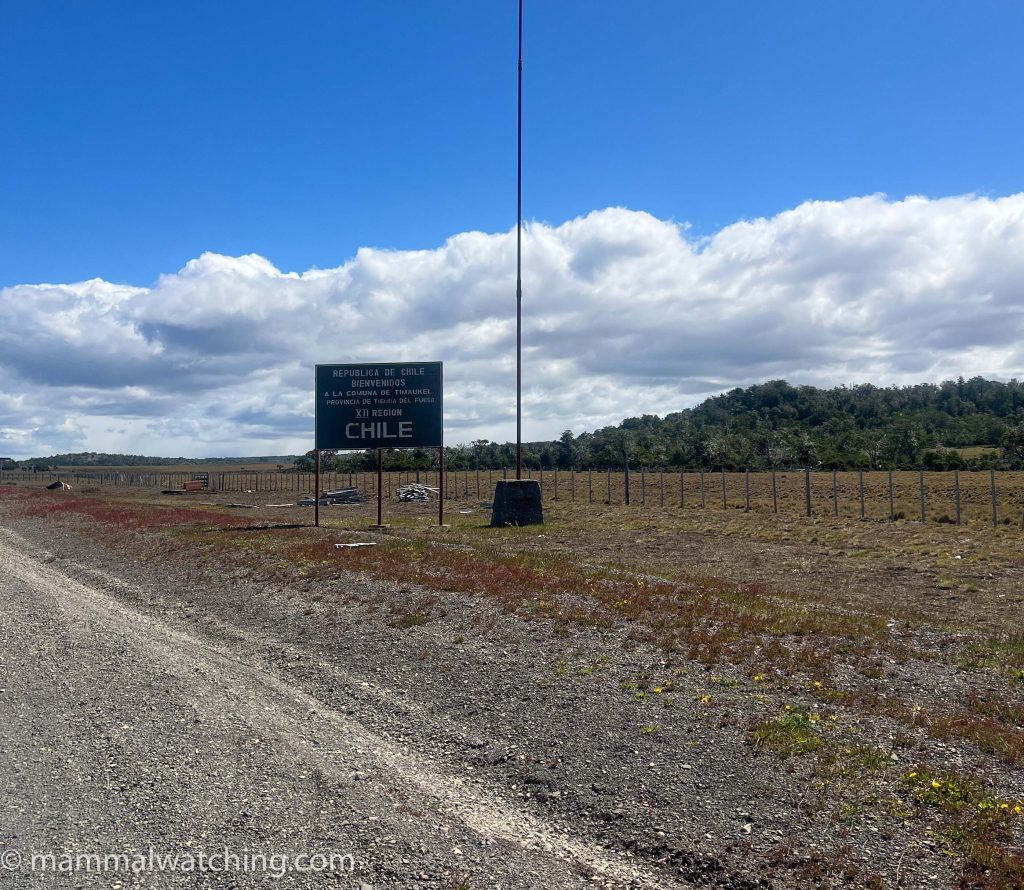
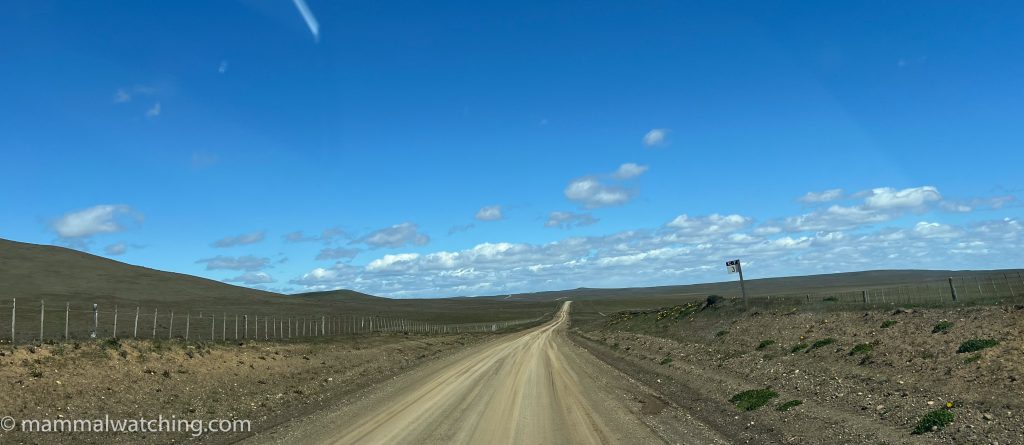
After buying way too many groceries for our three night adventure we got onto the dirt and drove three hours to the isolated Rio Bellavista Border Crossing. Only a few people cross each day and so the Argentinians had plenty of time to make sure we weren’t planning to export our car, while the Chileans could search for illegal groceries (most fresh food isn’t allowed over the border). We lost our eggs.
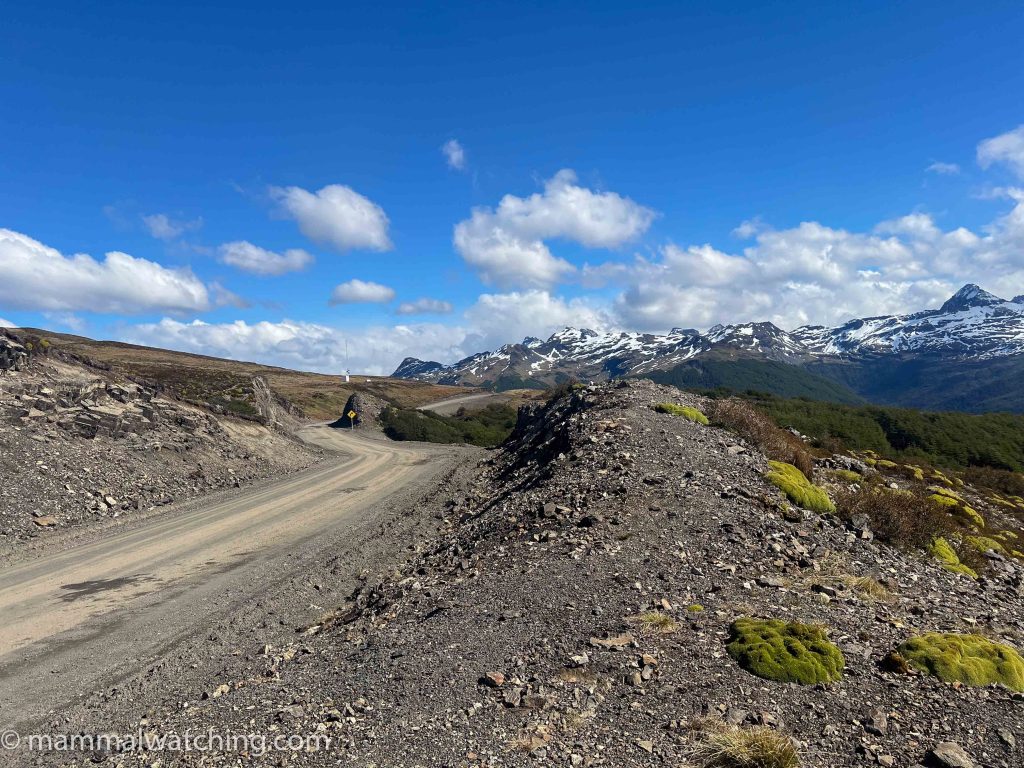
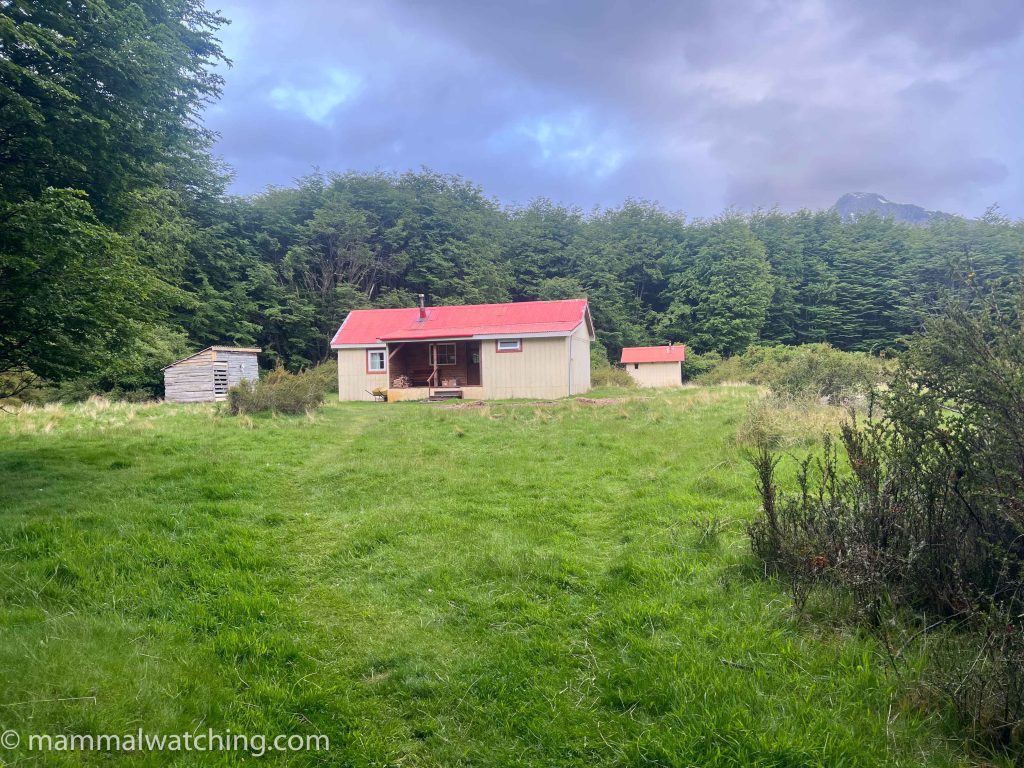
From the border it was another two hours to the rental cabin at Estancia Lago Fagnano that our boatman had recommended. It was a simple cosy cabin in the woods, 30 minutes from our boat.
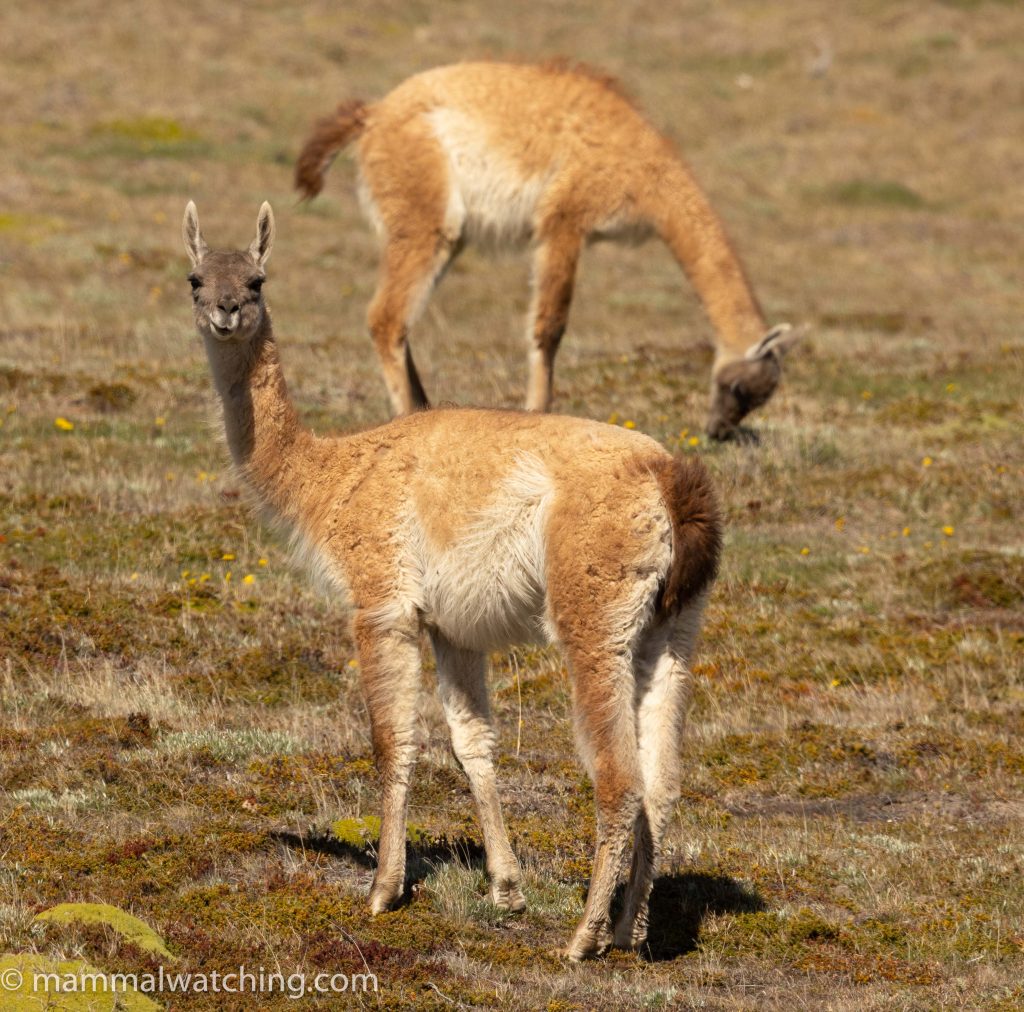
There were plenty of Guanacoes along the road: strange to see them inside the forest. We also saw a couple of Chilla Foxes including this leucistic animal.
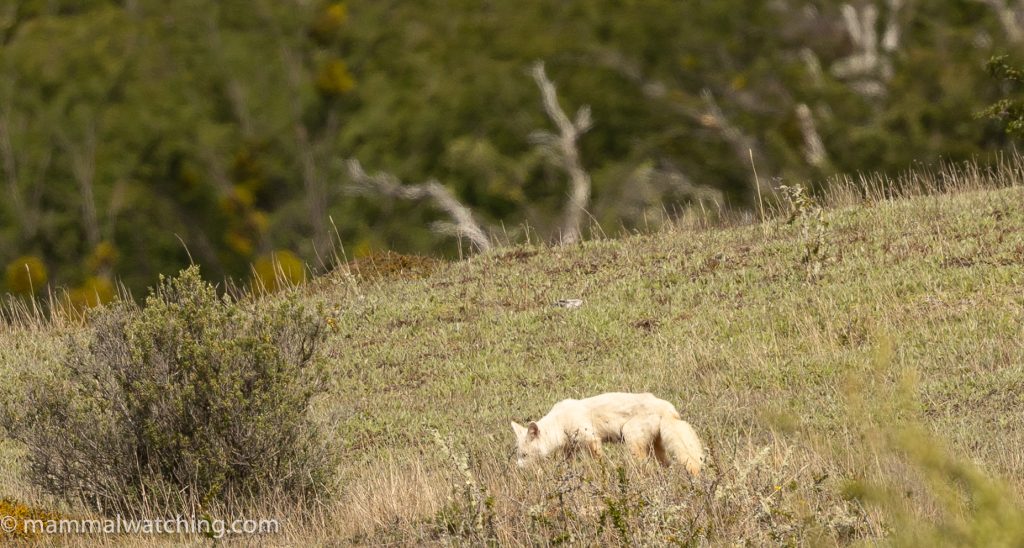
South American Gray Fox (Lycalopex grisea)
Our boatman – Juan Bahamonde – has been visiting Parry Fjord since the early 1980s. As a teenager he would spend his summers fishing here, and later moved to the area to fish commercially for King Crabs. The seals had been here for as long as he could remember and could usually be found in front of three glaciers.
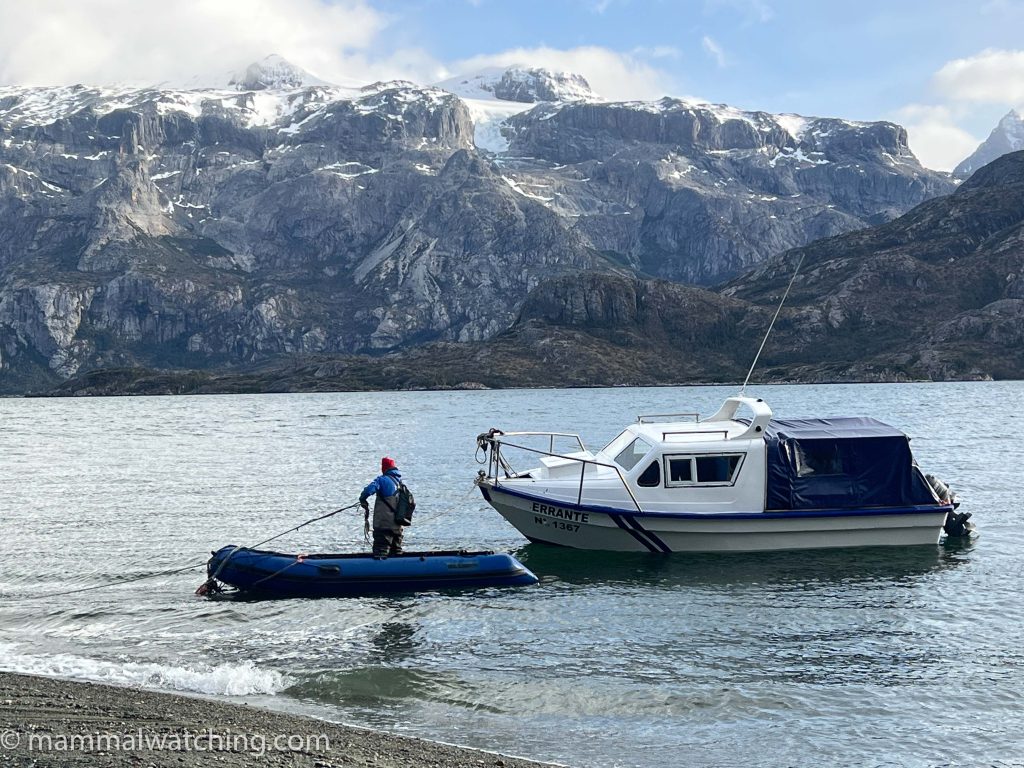
A few years ago he switched from fishing to tourism and now runs sightseeing trips for groups of up to 12 people. Though pretty much everyone who visits is interested in nature, we were the first group to come explicitly for the Leopard Seals.
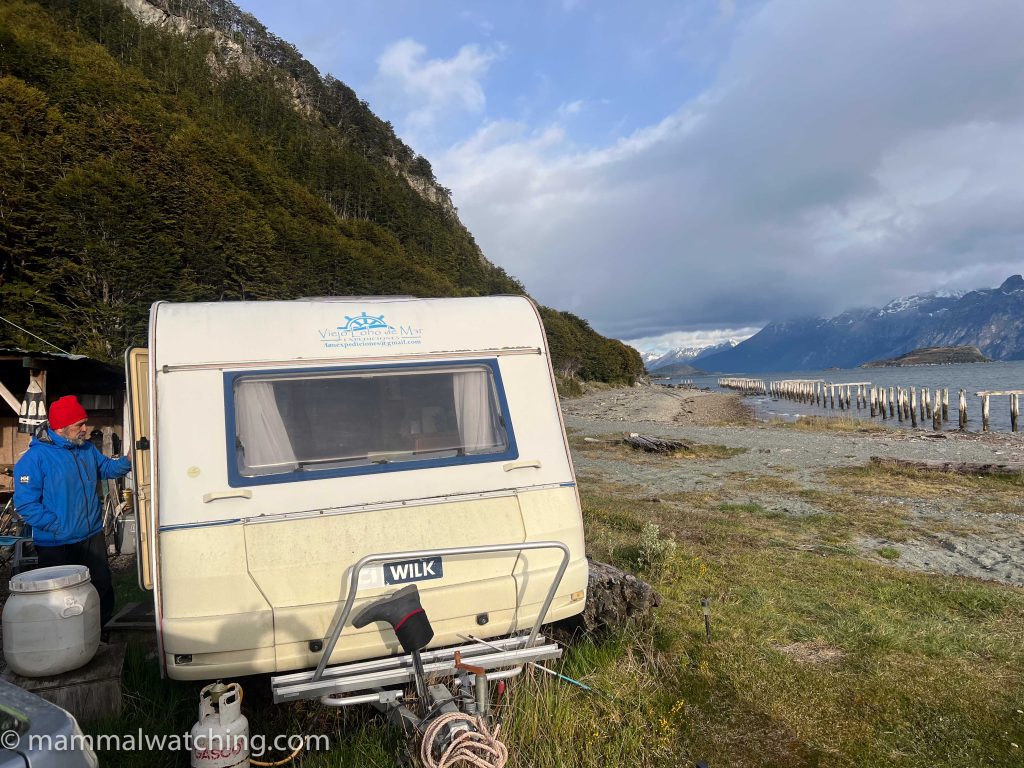
We met Juan at his caravan on the edge of the fjord and drove along the beach – and briefly into the sea – to reach his boat.
The scenery was magnificent and would only get better as we sailed up the fjord towards prime seal habitat. I can’t do justice to the beauty of the place or the sense of adventure but perhaps the photos will help.
The wind was strong and viewing conditions were not ideal. As we approached the first – and main – glacier, Marcelo spotted a Leopard Seal in the water and I relaxed. This, I thought, was going to be easy.
I was wrong.
We drove on towards the ice floe at the edge of the glacier where the seals often haul out. There were no seals out on the ice. Perhaps, Juan said, because the wind was blowing in the wrong direction. I never did discover what the right direction was.
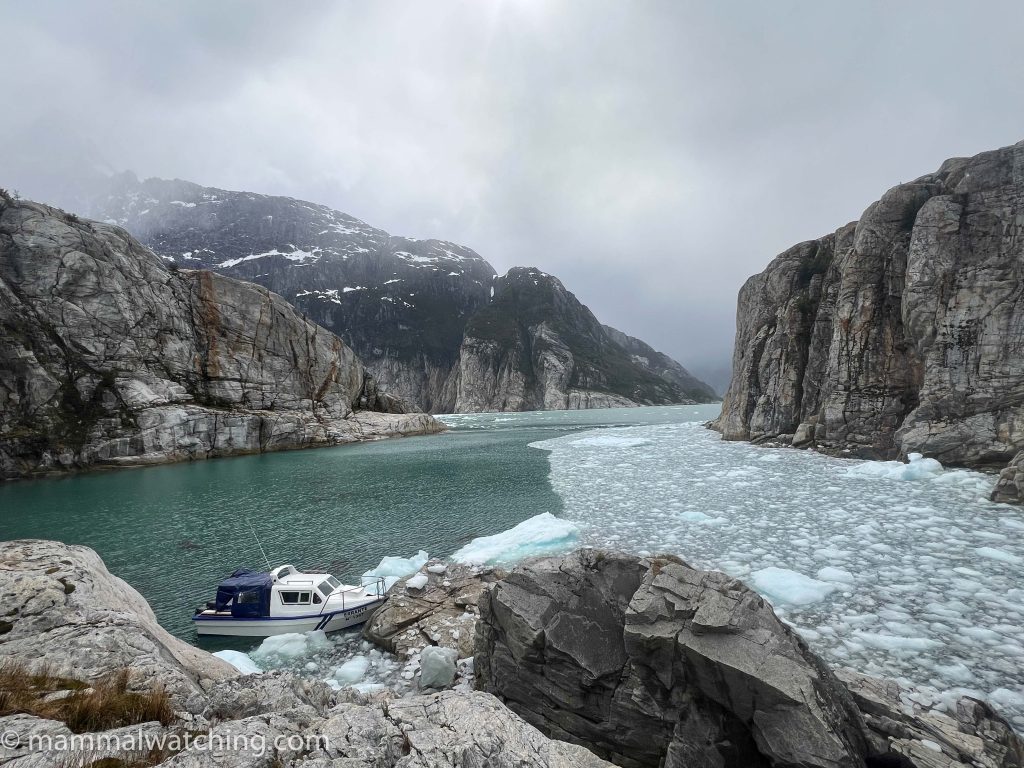
We tied the boat up to some rocks next to the glacier and scrambled up the cliffs to get a better vantage point of the ice-filled bay. Still no seals on the ice though we did spot a distant animal swimming. A tickable view but hardly a satisfactory one.
Back on the boat Juan served up a delicious chicken casserole. A casserole he had made from scratch, even peeling the potatoes, while driving the boat that morning. Who said men can’t multitask.
We continued our search in front of the other two glaciers.
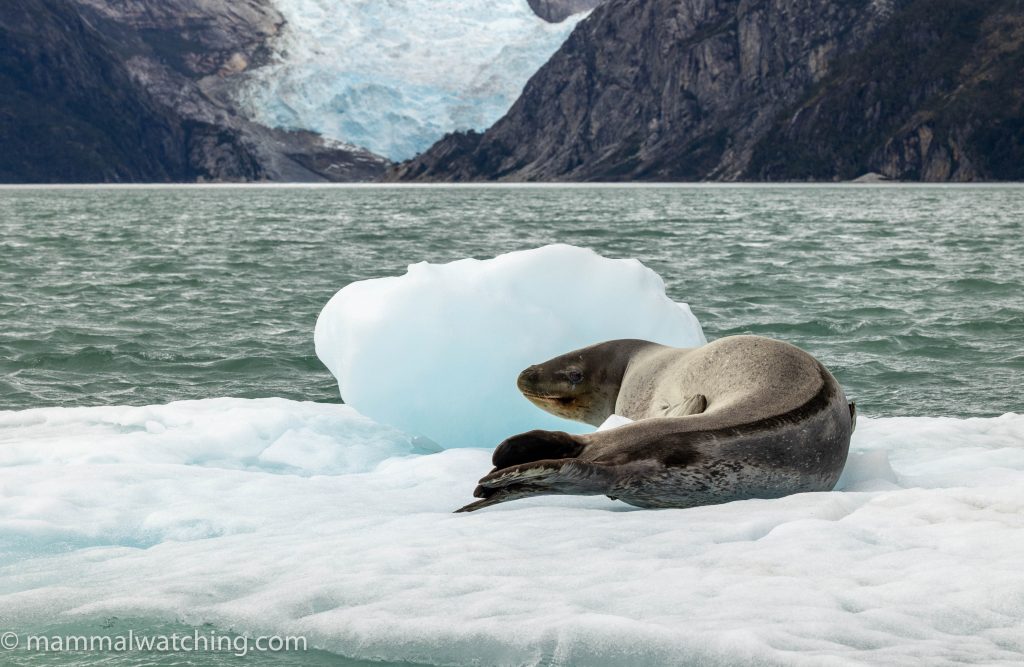
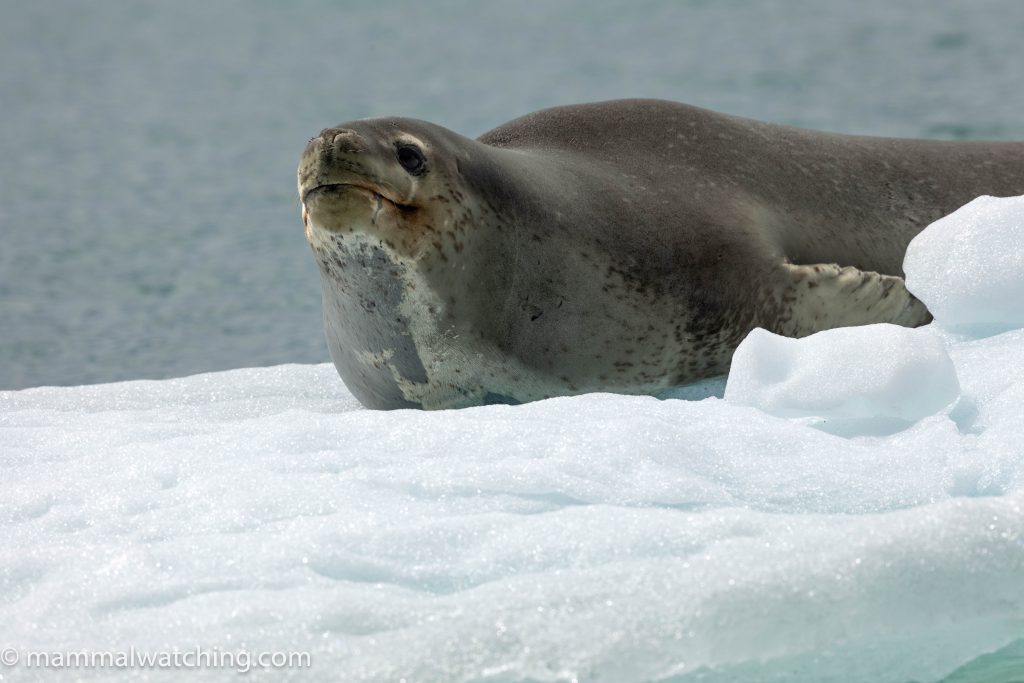
Leopard Seal (Hydrurga leptonyx)
By this point I was getting too stressed to enjoy my casserole. But when the boat changed direction Marcelo pointed enthusiastically at a dark lump on a lump of ice ahead of us. Boom!
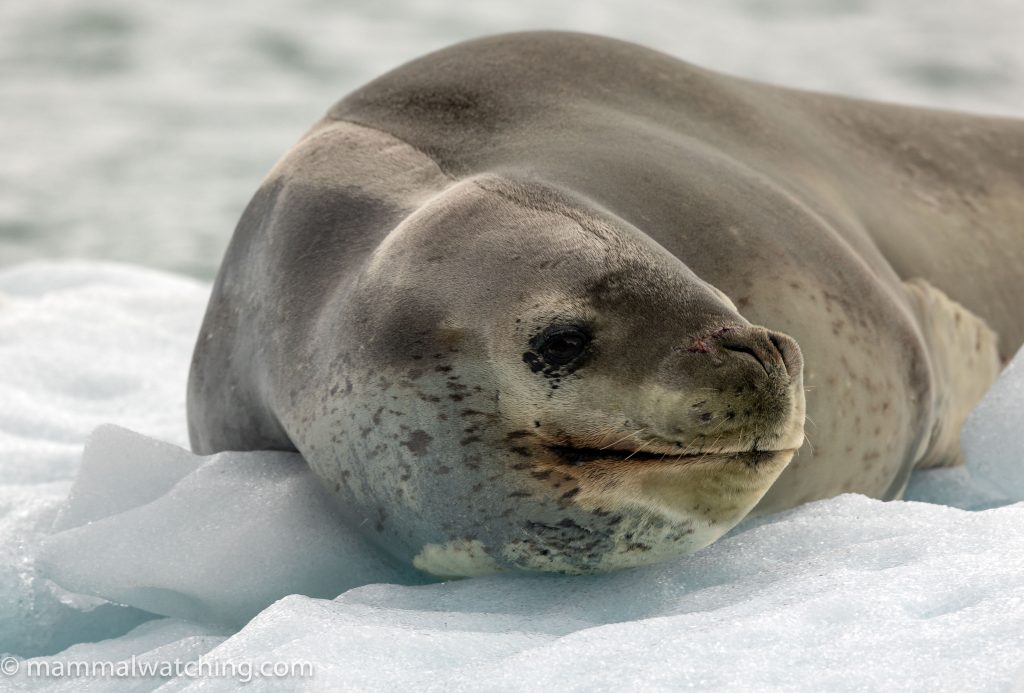
Leopard Seal (Hydrurga leptonyx)
We drove to within a few meters of the lounging seal and slowly circled the iceberg it was lying on. It was casually interested in our presence, occasionally moving it’s head to check us out, though that may have been through culinary curiosity more than nerves. This is, after all, a 4m predator that has been known to kill people. After a lengthy photoshoot we sailed on, leaving the seal looking as relaxed as when we found it.
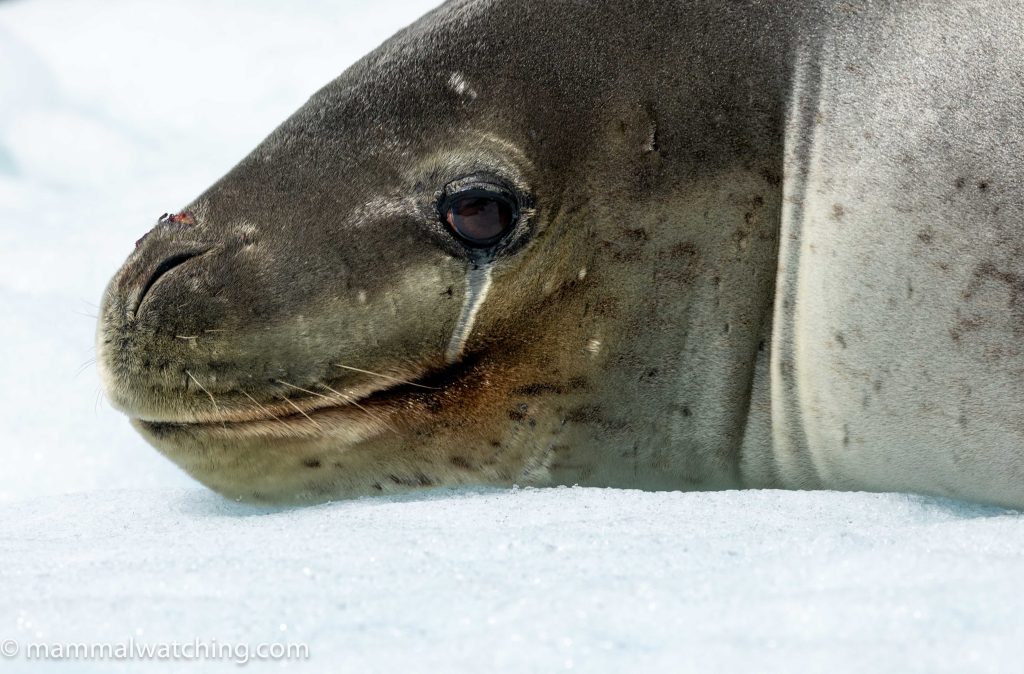
Leopard Seal (Hydrurga leptonyx)
Magical. One of my all time favorite mammal encounters. And not just for the seal, but for the scenery, the isolation, the adventure and – once I could fully enjoy it – the chicken casserole.
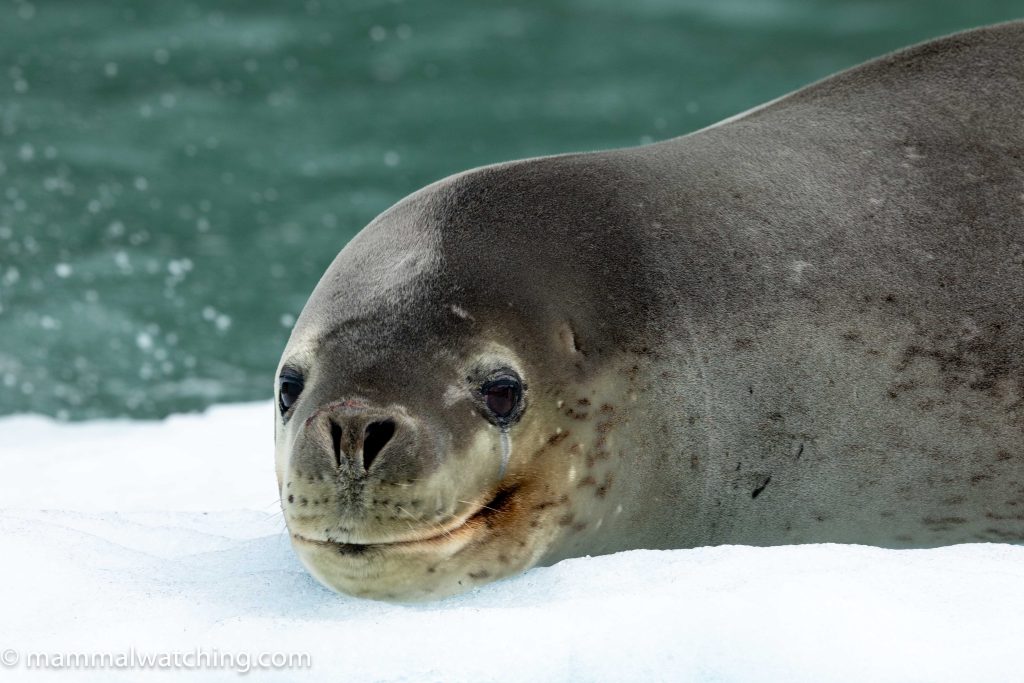
Leopard Seal (Hydrurga leptonyx)
On our way home we visited a different area to enjoy a colony of Black-browed Albatross and a group of Southern Elephant Seals, getting back to shore around 4pm.
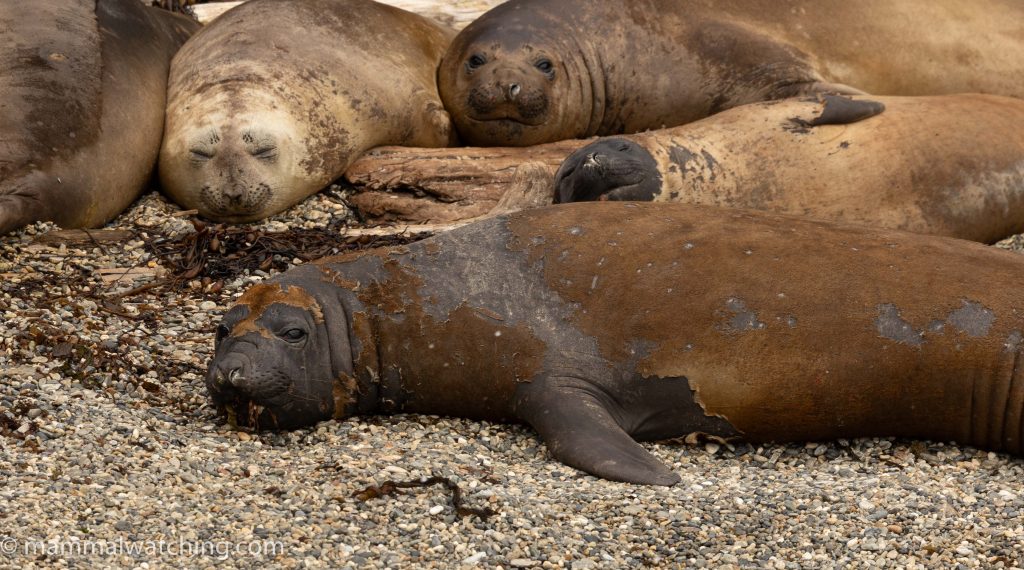
Southern Elephant Seals (Mirounga leonina)
We’d booked two days on the boat to be safe. Although few trips are cancelled because of the weather, it would have been horrendous to have gotten all the way and missed the seals (which after our initial struggles seems not as unlikely as I had imagined). But the next morning the wind was much stronger and the captain canceled our trip and refunded our deposit.
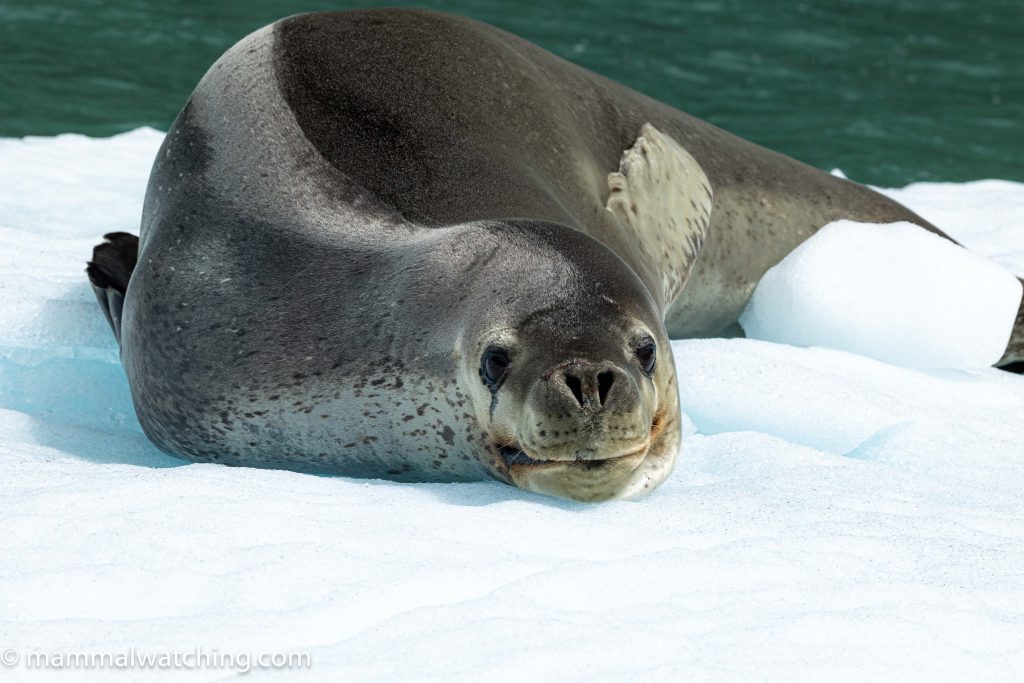
Leopard Seal (Hydrurga leptonyx)
Fortunately this was not a huge disappointment. Nothing could have topped the day before and we now had a free day to search for cetaceans around Ushuaia. We packed up and arrived back to Ushuaia in the early evening.
A massive thank you to Juan. This is a man who loves his job and the nature around him. When he tied up the boat and walked up the cliffs to search for the seals it was obvious he was excited. He told Marcelo he had only been up there once in his 40+ years there.
His focus was very much on making sure we enjoyed our day. Though he had space on the boat for extra passengers he had turned down another booking from a group wanting to join us so we could have the fjord to ourselves. He also makes a mean chicken casserole.
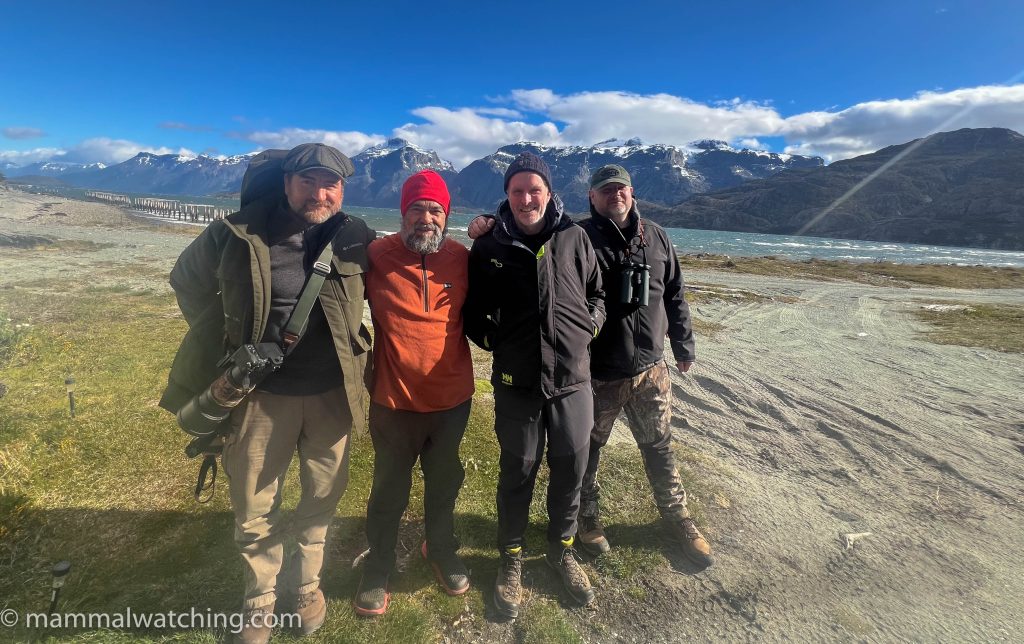
From Left to Right: Marcelo, Juan, Sion and Mike
If you want to visit then he is the man to do it with. In fact he is the only man to do it with. But don’t wait too long. Even here there were signs of development and talk of plans for a new hotel on the edge of the fjord.
By far the easiest way to visit here from Argentina is through Marcelo. He has a local guide who can handle the logistics which are complicated to say the least. If you prefer to visit alone please let me know and I can give you Juan’s contact.
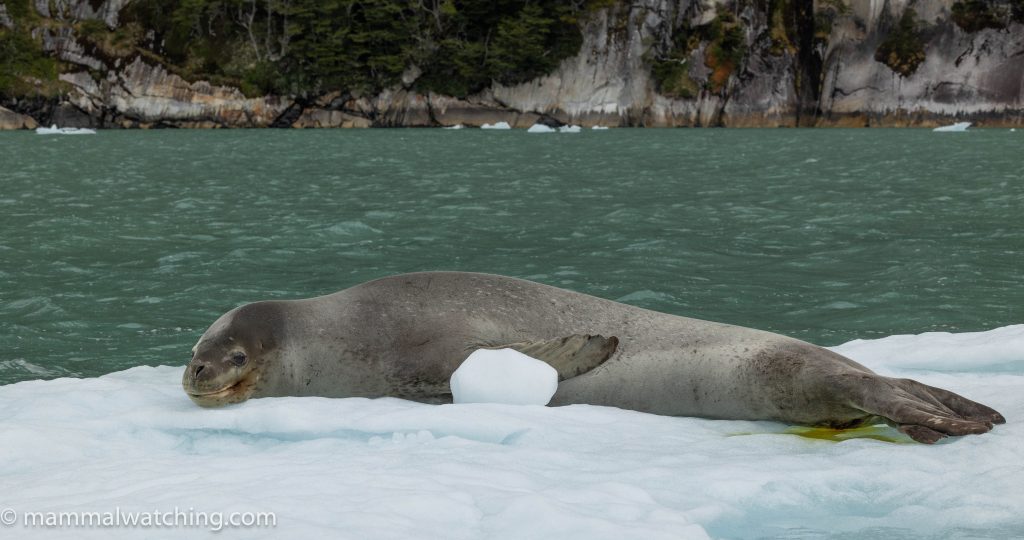
Leopard Seal (Hydrurga leptonyx)
Ushuaia
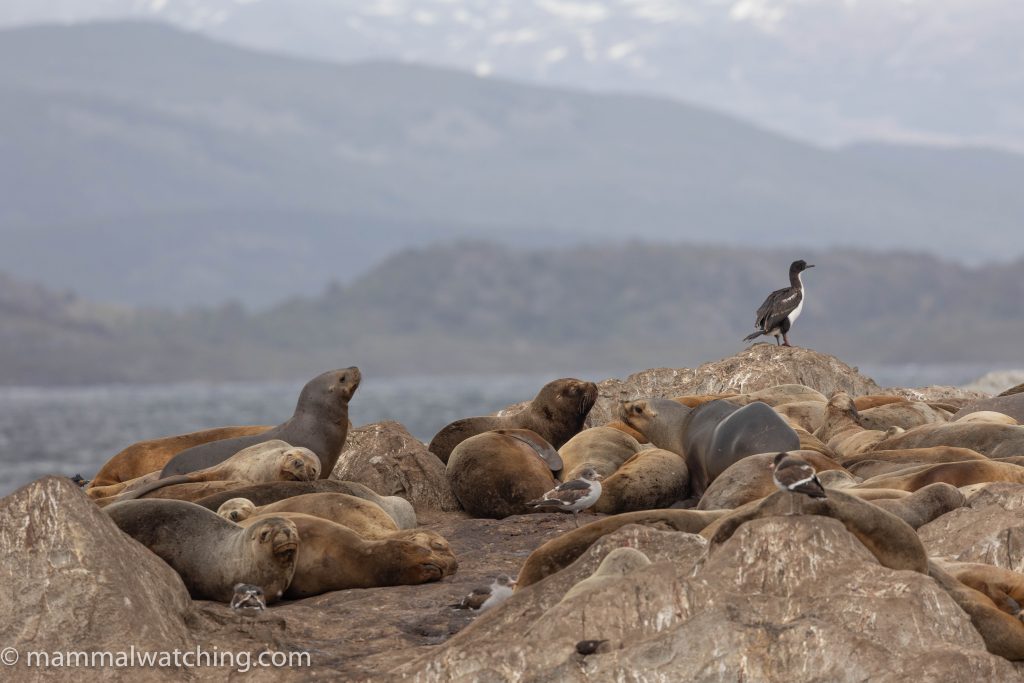
South American Sea Lions (Otaria flavescens)
With 24 hours in Ushuaia before our flight back to BA, Marcelo recommended we take one of the many day cruises along the Beagle Channel to search for cetaceans. Cetaceans are not abundant but some good species show up occasionally. Marcelo has done this cruise many times and once saw Southern Right Whales Dolphins just off of Puerto Williams for example (and knows of other records from the same area).
Our boat was packed with tourists who in between mistaking cormorants for penguins, spent a great deal of time banging on the windows whenever someone outside blocked their view. The stark contrast with our day in the fjord reminded me how lucky we were to have had that experience to ourselves.
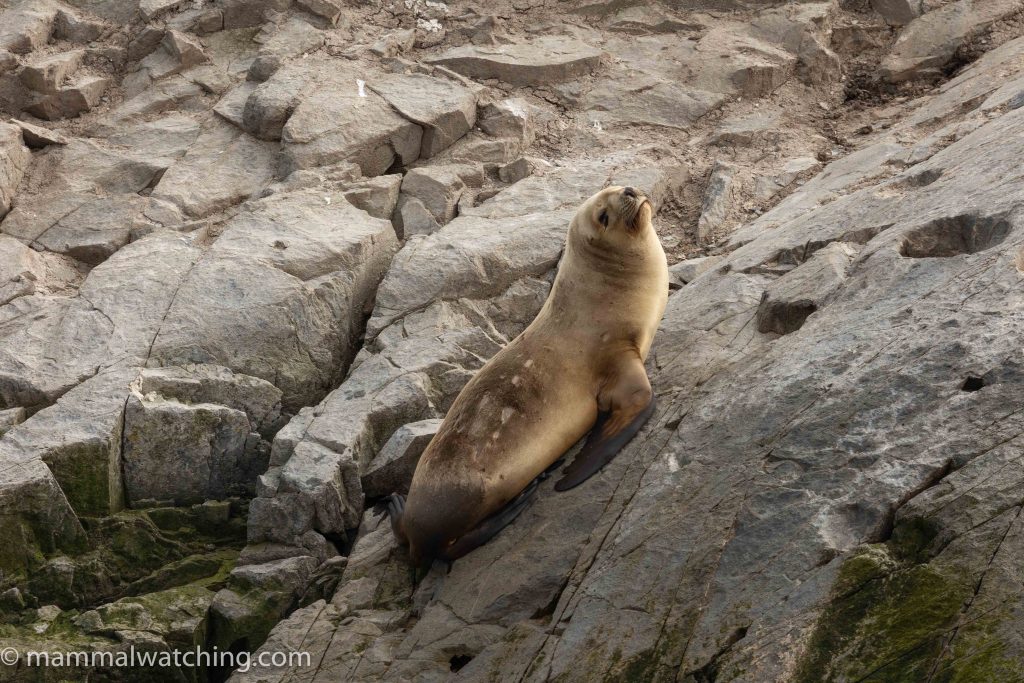
South American Sea Lion (Otaria flavescens)
We did not see any cetaceans. We did see plenty of birds (even I could tell the cormorants from the penguins) plus a few South American Sea Lions, a lifer for Mike at least.
We flew back up to BA that evening for a few hours sleep before flying south again, this time to Bariloche in northern Patagonia.
Rio Negro Province
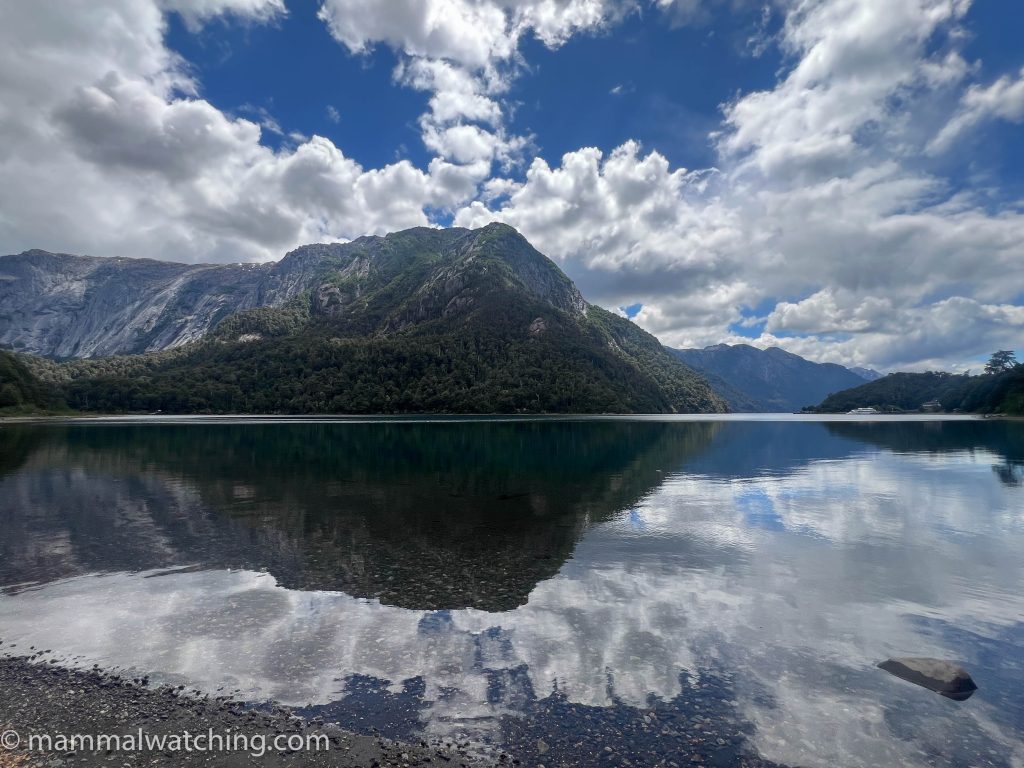
Lake Nahuel Huapi
Puerto Blest
When Martin Royle and Marcelo visited Puerto Blest, near Bariloche, in 2025 they loved it: interesting mammals, a beautiful area and a great hotel.
I can confirm it is an excellent place to stay for a few nights, with great forest and plenty of small mammals.
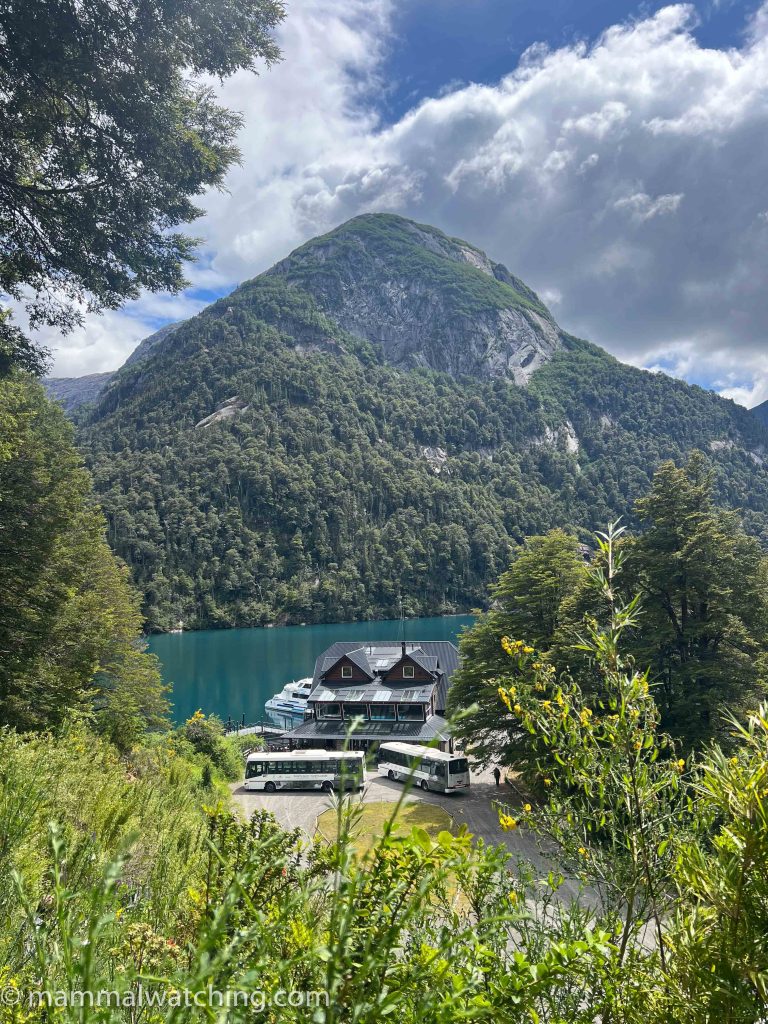
Puerto Blest Hotel
Puerto Blest is essentially a hotel and a few research cabins inside Nahuel Huapi National Park on the edge of Lake Nahuel Huapi. It is beautiful. The hotel reminded me of one of those turn of the century lodges you might find inside a US national park. Thankfully it was much quieter and less expensive. The food was – as Martin had said – excellent.
Access is by boat. One ferry a day leaves from Puerto Pañuelo on the outskirts of Bariloche. I was concerned about the schedule. The ferry left at 10am and we were told to be at the port by 9am. It can take an hour to reach the port by taxi and our flight to Bariloche – the first of the day – was landing at 8.15am. It sounded very tight.
In the end we had plenty of time. Our flight was a few minutes early, the luggage came out immediately and the drive to the port only took 30 minutes (Sunday traffic helped). Plus we’d have been fine arriving at the port much closer to 10am.

Southern Monito del Monte (Dromiciops gliroides)
We spent three nights here and had the hotel largely to ourselves.
There are plenty of mammals to look for. Southern River Otters are regularly reported. Mike looked for them once or twice but wasn’t lucky. Kodkod are also often seen in the daytime along the park trails, and one was reported while we were there. In the winter someone had taken this photograph of one inside the hotel keeping warm near the boiler!
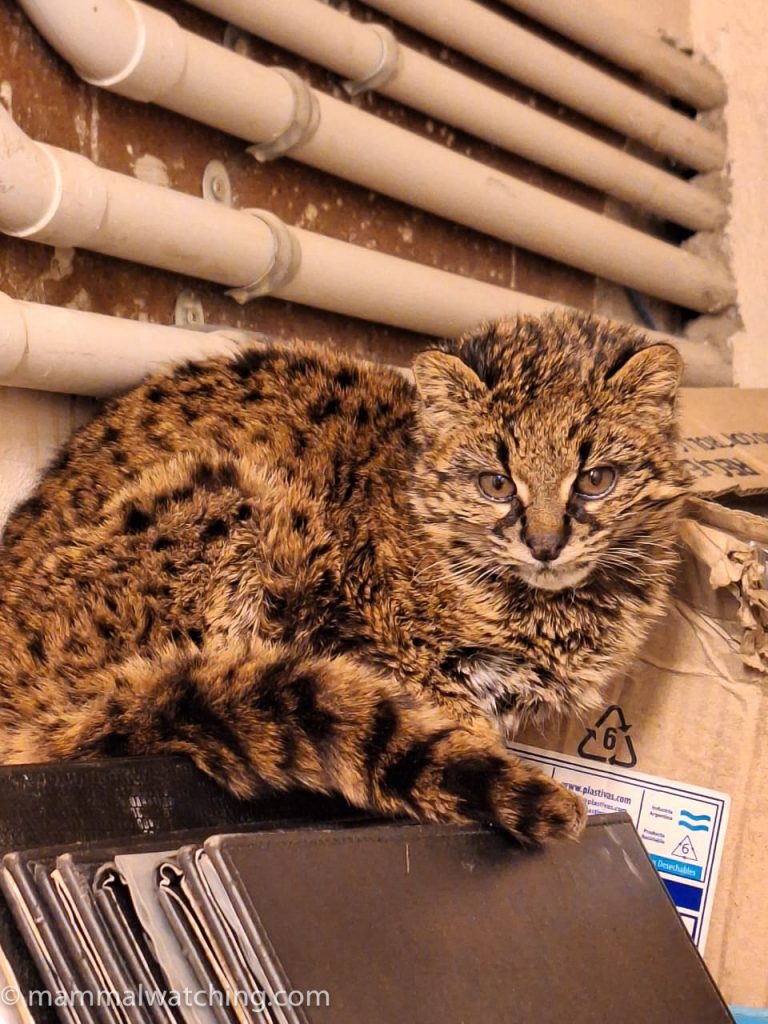
Kodkod in the Puerto Blest Hotel, photographer unknown
I didn’t do very much at all during the day, saving my energy for long (4 – 5 hour) spotlight/thermal walks each night to look for small mammals. We were joined by Daniel Gómez, a helpful local guide from Bariloche, who knows a great deal about the park and its fauna.
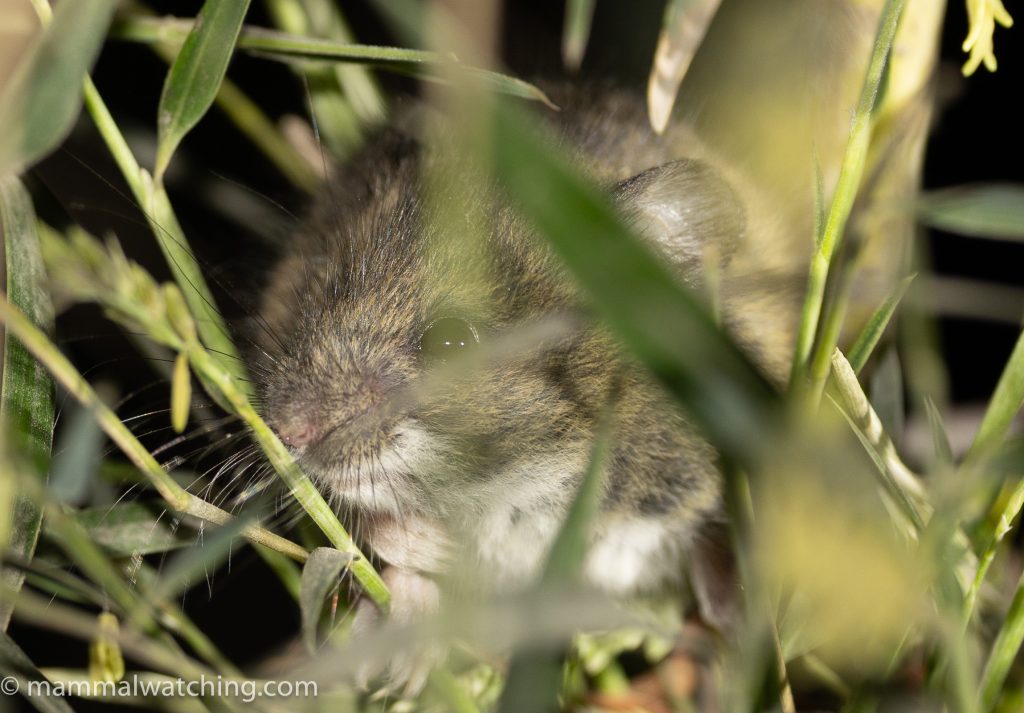
Long-tailed Pygmy Rice Rat (Oligoryzomys longicaudatus)
Numbers and diversity of species was good, though animals were often hard to see well let alone photograph. Though the forest looked similar whichever direction we took from the lodge, different areas seemed better for different species. Whether that was real or imagined, and whether it would hold true during another visit, needs to be tested.
We saw the following species (a map of the trails is here).

Southern Monito del Monte (Dromiciops gliroides)
Southern Monito del Monte (Dromiciops gliroides). Remarkably common with several animals seen each night. Easy to recognize from there very bright eyeshine, which was a surprise to me as I’d found their eyeshine hard to pick up on Chiloe Island.
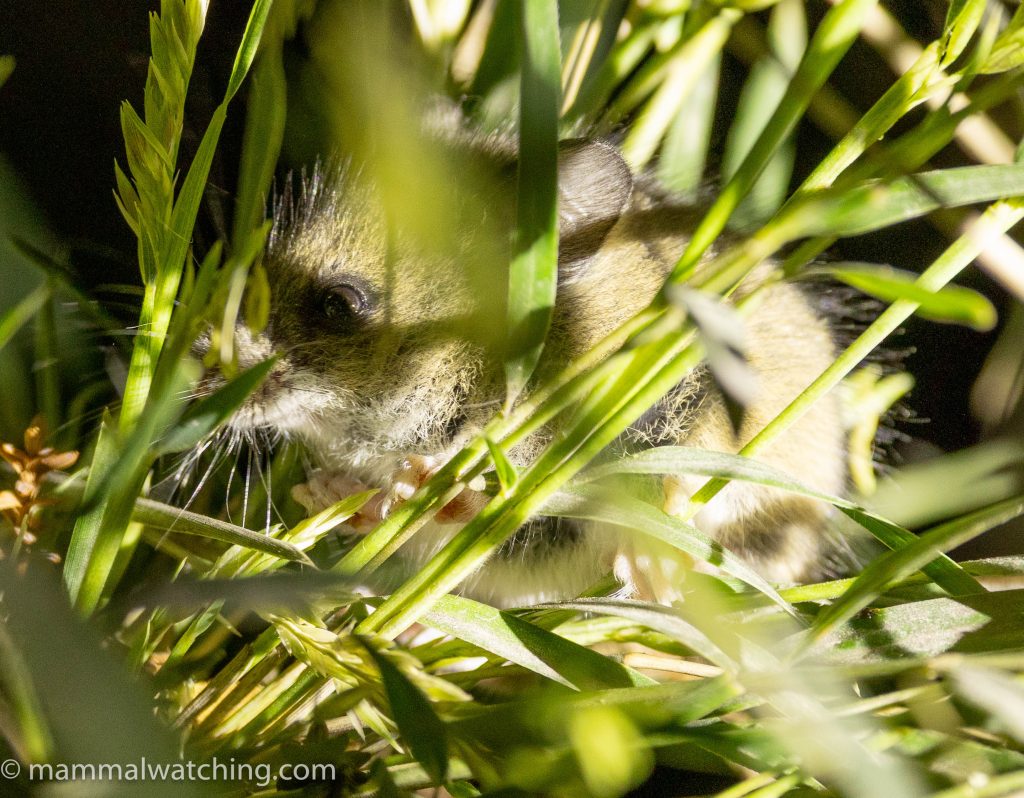
Long-tailed Pygmy Rice Rat (Oligoryzomys longicaudatus)
Long-tailed Pygmy Rice Rat (Oligoryzomys longicaudatus). Quite common, especially along the ‘road’ leading from the lodge towards the picnic area and into the park.
Chilean Climbing Mouse (Irenomys tarsalis). We only saw one climbing mouse we were sure about, with its very long tail, in shrubs on the steep bank to the right of the road that leads from the lodge to the picnic area, just 50 meters or so from the lodge.
Southern Big-eared Mouse (Loxodontomys micropus): one or two on our final evening, both in clearings near the hydroelectric turbine.
Valdivian Long-clawed Mouse (Geoxus valdivianus): one seen quite well, but one segment at a time, lurking in a hollow log in a clearing close to the hydroelectric turbine. The animal seemed very shy of the light. It was quite easy to observe in the thermal but as soon as we lit it up it would retreat. These are fabulous little mammals and I would love to have had a longer look at one. It would be fun to return here with researchers while they were trapping.
Martin and Marcelo had seen at least one Long-nosed Shrew Opossums here in February. We tried hard, hoping to pick up a new mammal family, but were not lucky. There was plenty of great habitat, and we focussed on searching open areas covered in leaf litter. They also saw a Hairy-soled Coney Rat, which we missed.
Bats were common, though all of them appeared to be Chilean Myotis (Marcelo was using a detector and there are only a few possibilities here). We saw a Culpeo in the garden of a national park house.
Bariloche
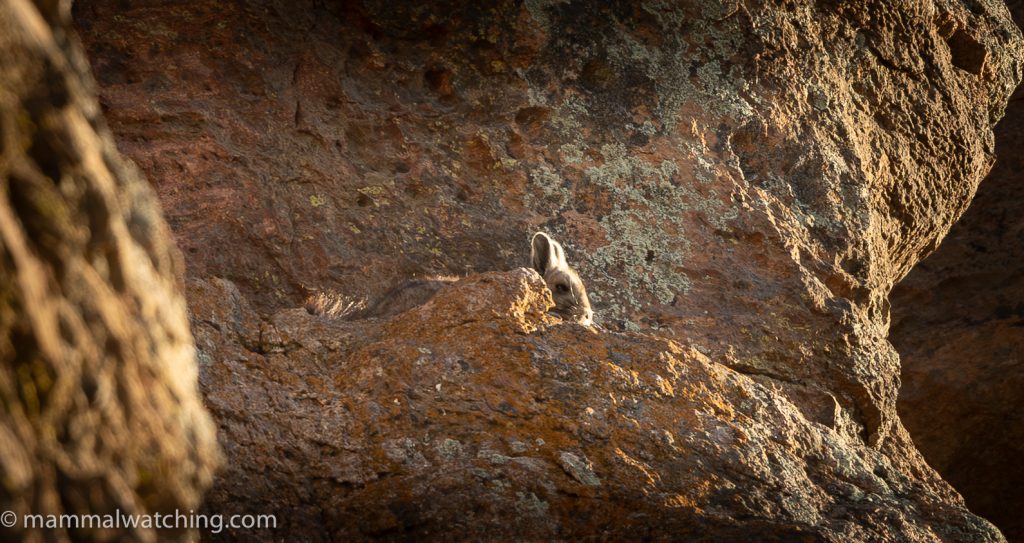
Southern Mountain Viscacha (Lagidium moreni)
We returned to Bariloche in the late afternoon and made use of the last few hours of daylight to search for Southern Mountain Vischacas just outside town at a spot Daniel recommended.
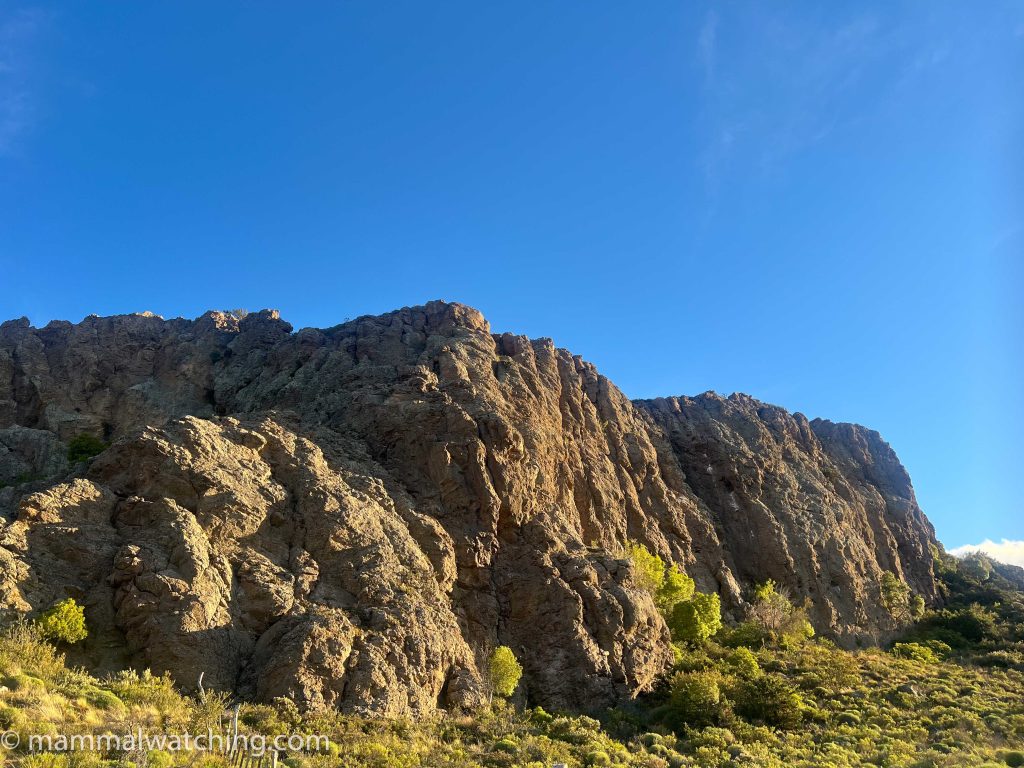
Southern Mountain Viscacha (Lagidium moreni) habitat
The animals seemed quite shy and it was windy, though we eventually had good, albeit distant, views of one viscaha sunbathing in a sheltered spot until it was spooked by a low flying raptor.
Buenos Aires Province
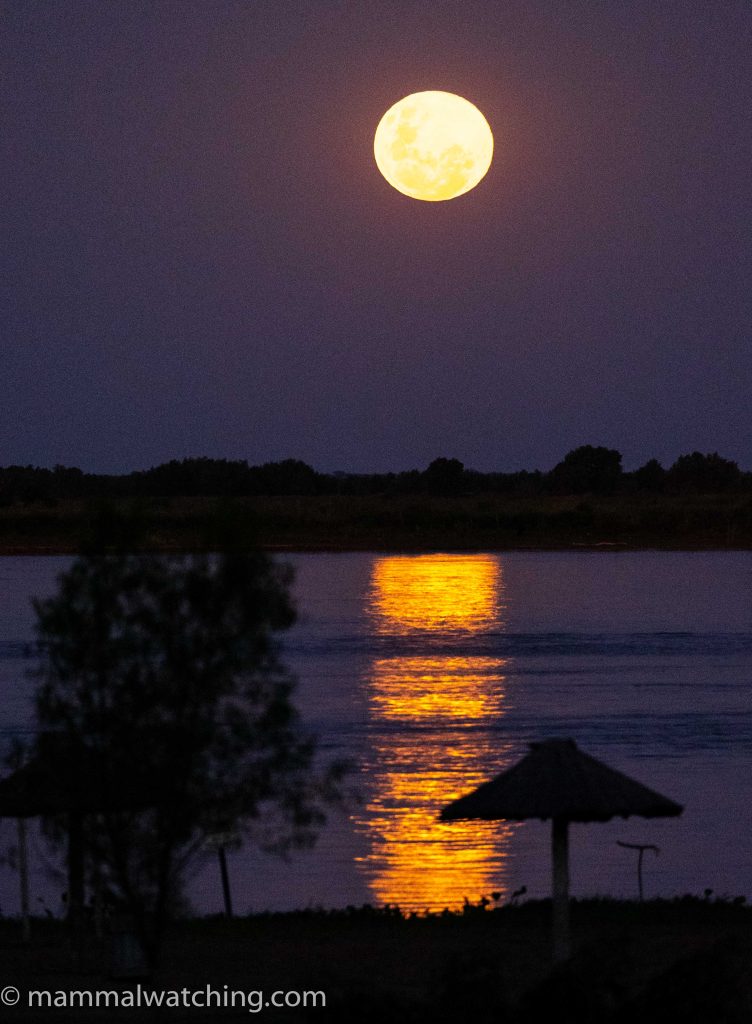
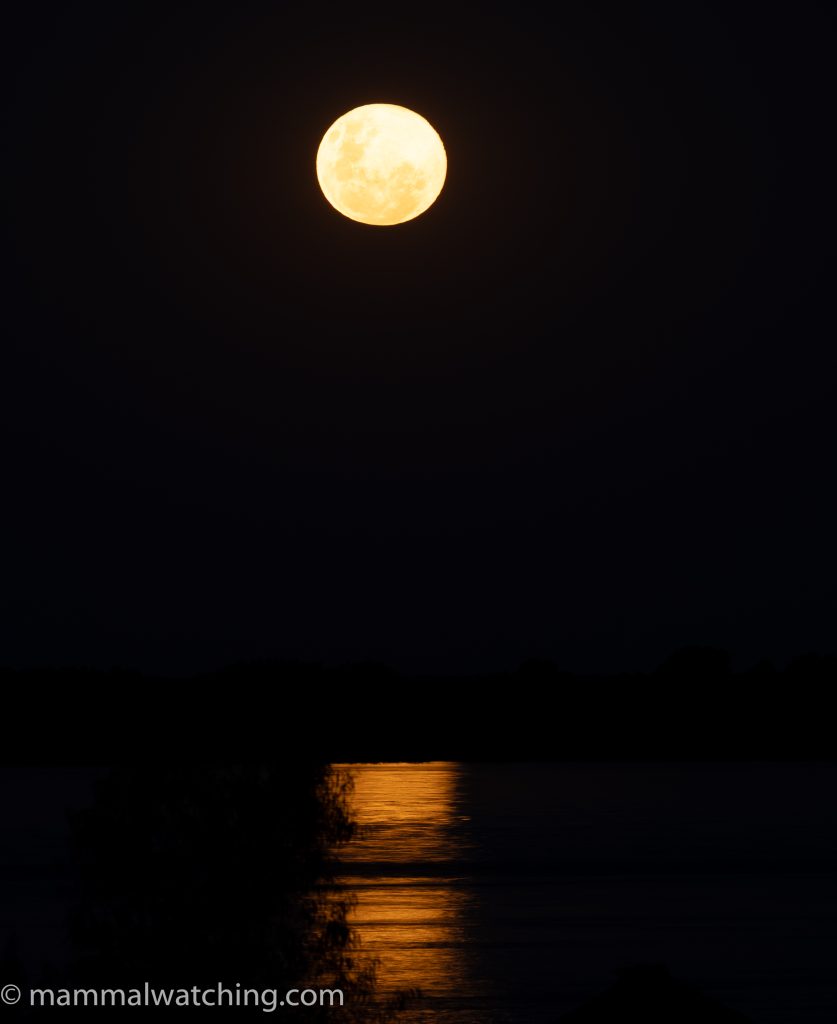
Supermoon over the Rio Paraná
After our time down south, Mike and I stayed on for 3 nights in Buenos Aires province.
San Pedro
Thomas’s Mastiff Bat (Molossus currentium)
Marcelo hooked us up with Estrella Montalibet and Germán Tettamanti, two biologists based in San Pedro, who were ready to catch bats and show us around for a couple of days. They in turn enlisted Ecoturismo Vuelta de Obligado for additional help and their boat.
This is a good area for bats. The entire San Pedro District is designated as an AICOM site (an Important Bat Conservation Area).
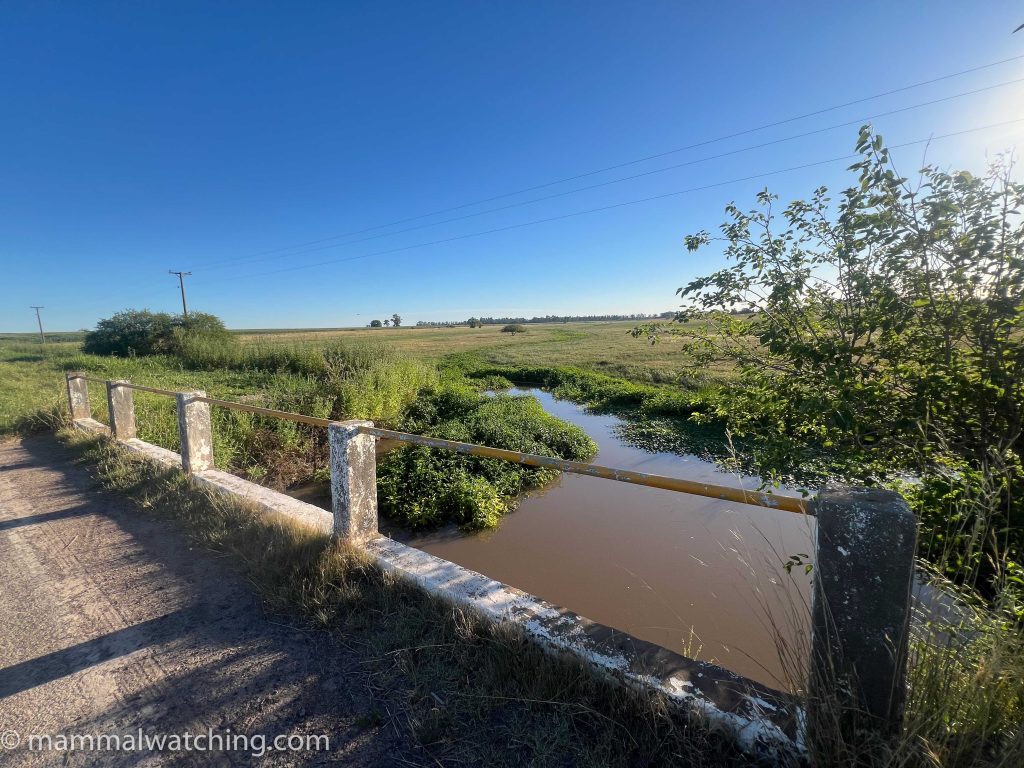
Bat bridge
We spent two evenings netting with Germán and Estrella, who also cooked delicious dinners over campfire. During our first afternoon they showed us some roosting bats around Vuelta de Obligado and we netted at a campsite in the village. During our second afternoon we took a cruise along the Santos Vega stream and its islands, part of the middle delta of the Paraná River, which was led by Ecoturismo Vuelta de Obligado. We set up nets on an island in the river that night.
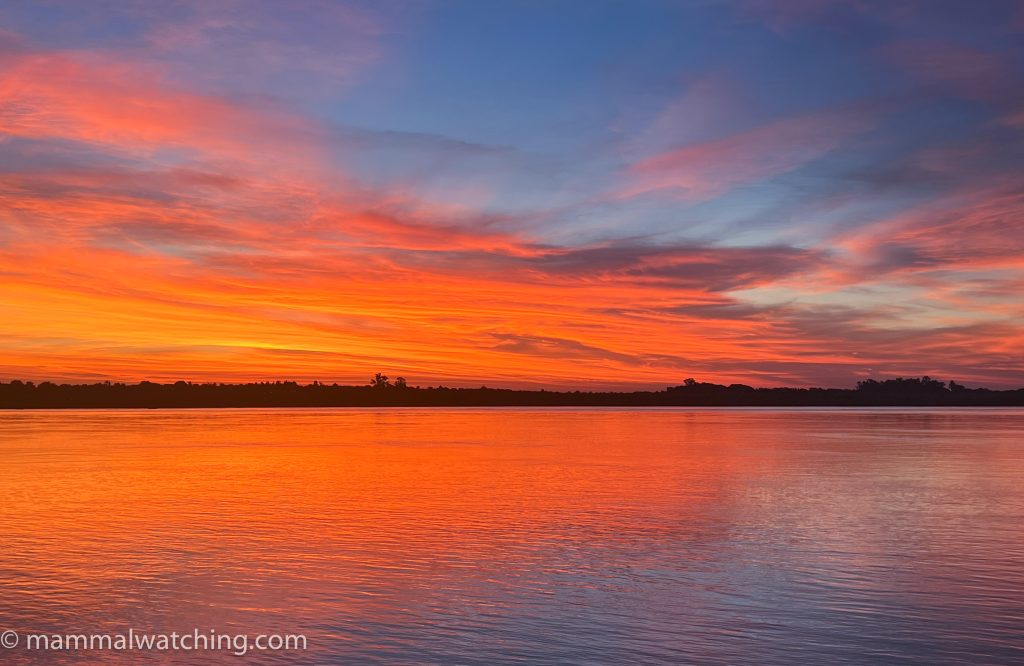
Rio Paraná
It was a relaxing way to finish our trip. Germán is a bat expert, and one of the authors of the Mamiferos de Buenos Aires, a useful book from Argentinian publishers La Biblioteca del Naturalista (who ship internationally and have also just released an excellent 3 volume set to the mammals of Argentina which I will try to review at some point).
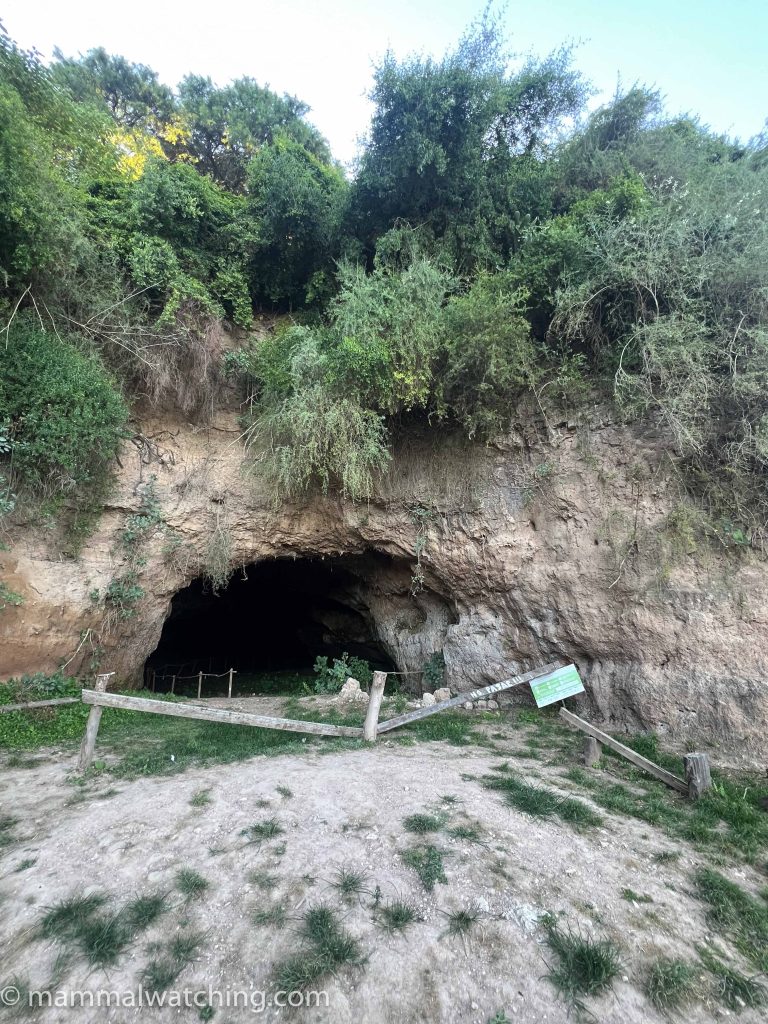
La Salamanca Bat cave
We stayed in San Pedro, at the Vistal Rio, a comfortable hotel, run by a friend of Marcelo’s. It came complete with Brazilian Guinea Pigs in the garden, which Mike easily found with his thermal scope.
We saw the following species.

Silver-tipped Myotis (Myotis albescens)
Silver-tipped Myotis (Myotis albescens): Germán took us to a roost under a bridge containing both this species and Yellowish Myotis. He also caught at least one while mist netting.
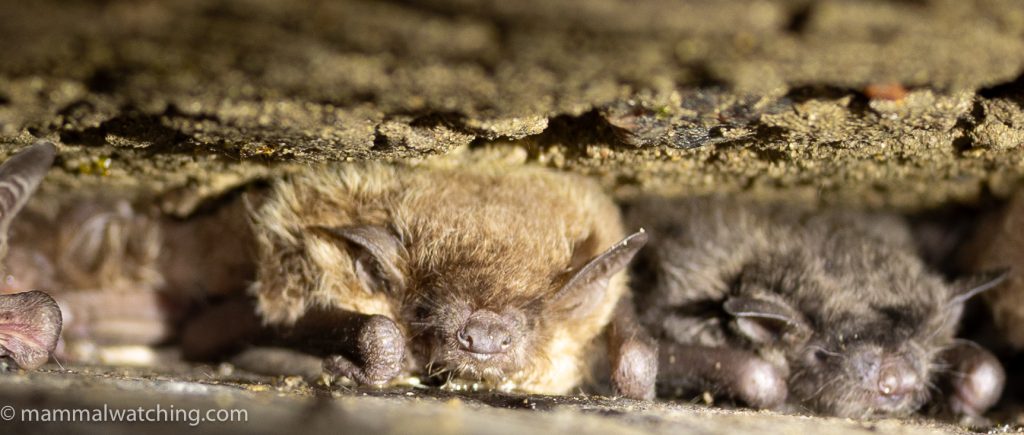
Yellowish Myotis (Myotis levis)
Yellowish Myotis (Myotis levis): Germán took us to a roost under a bridge containing this species and Silver-tipped Myotis.
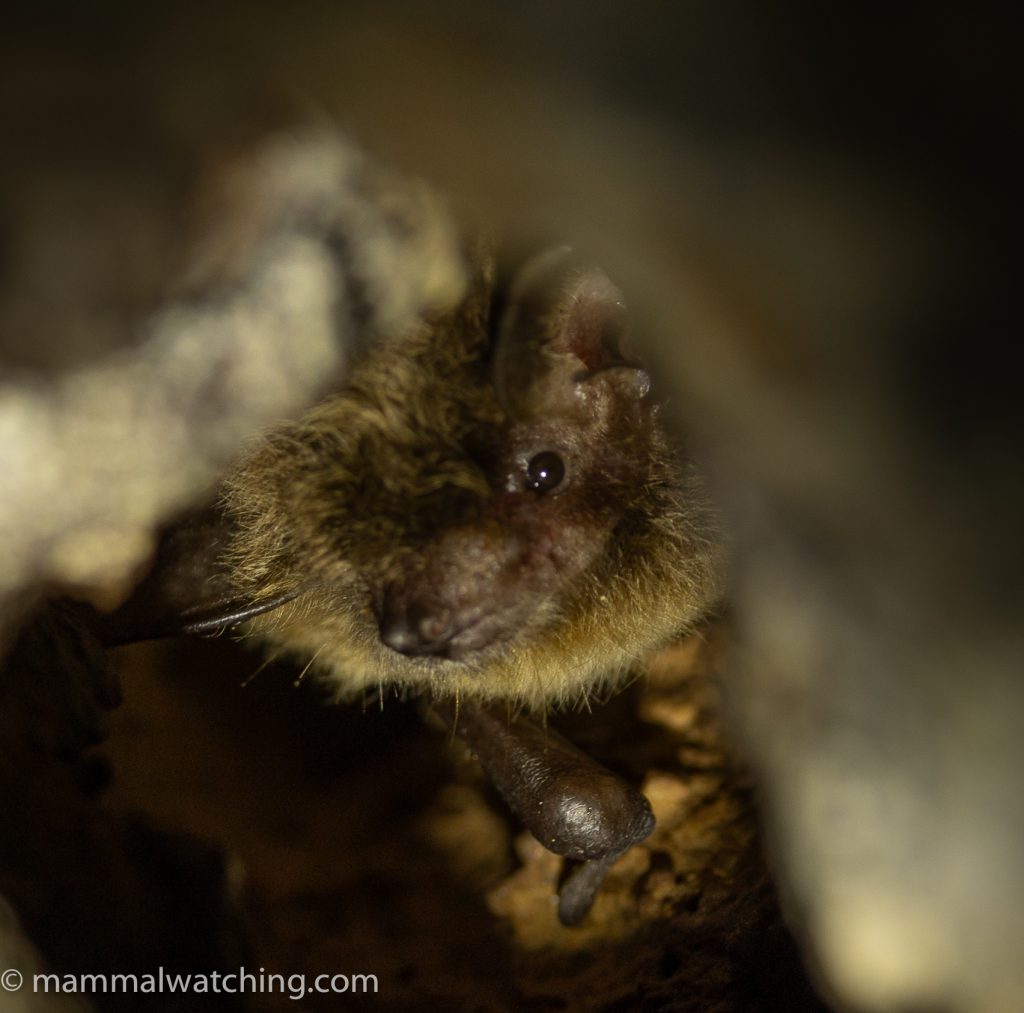
Dinelli’s Myotis (Myotis (dinellii) levis)
Dinelli’s Myotis (Myotis (dinellii) levis): Germán took us to a cave containing a few of these bats. Taxonomists disagree over whether Myotis dinellii is a true species or a subspecies of Myotis levis. Germán’s book treats it as a species in its own right, though the Mammal Diversity Database (and therefore my master list) does not. I won’t count it on my own list for the time being.
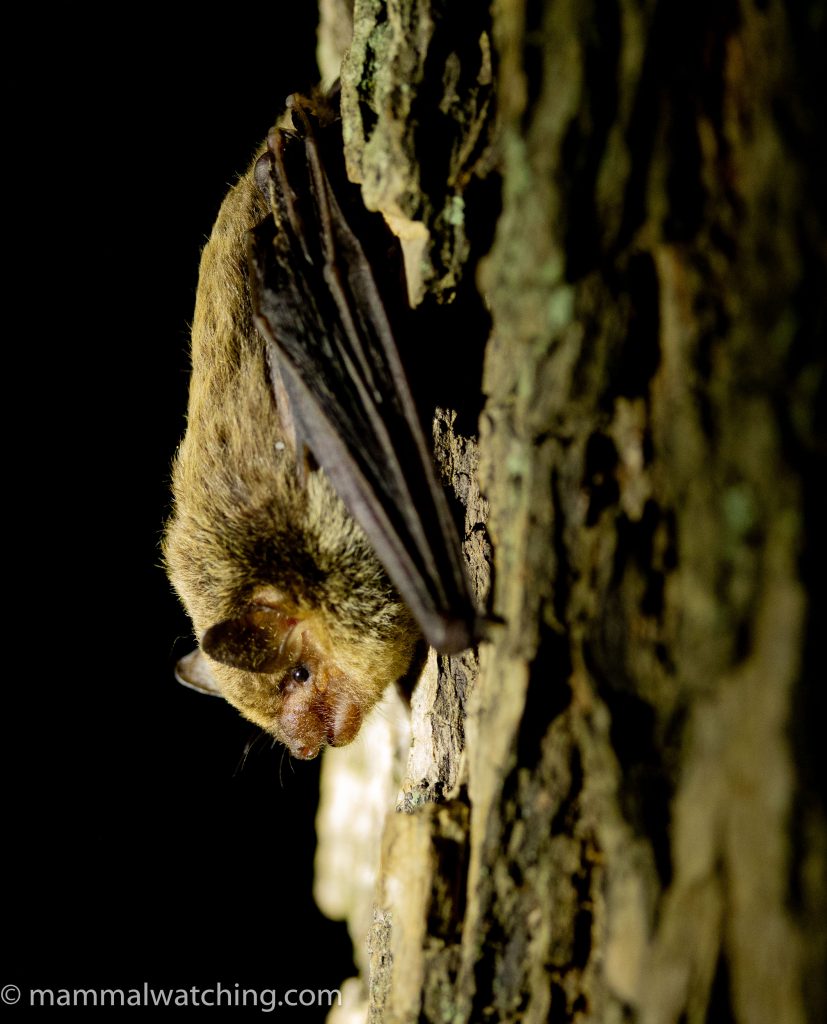
Argentine Serotine (Neoeptesicus furinalis)
Argentine Serotine (Neoeptesicus furinalis): several netted on the island.
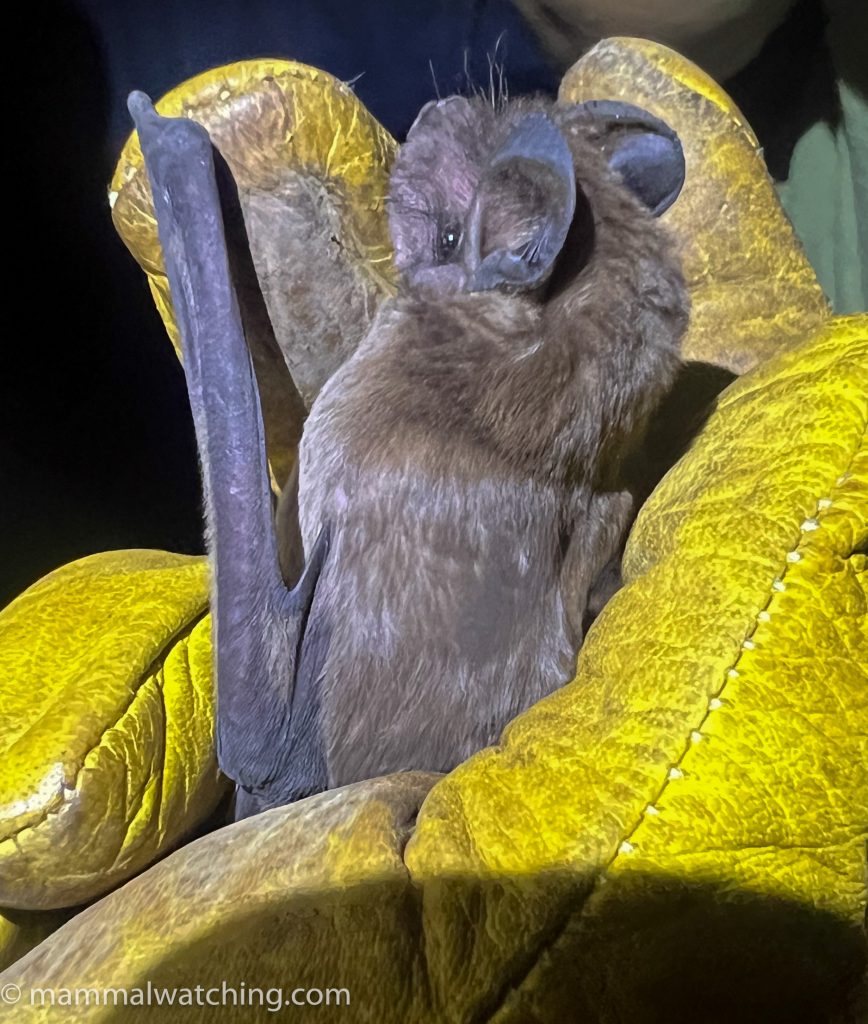
Common Dwarf Bonneted Bat (Eumops bonariensis)
Common Dwarf Bonneted Bat (Eumops bonariensis): netted on both nights, including a few emerging from a roost in a hollow tree at the campground.
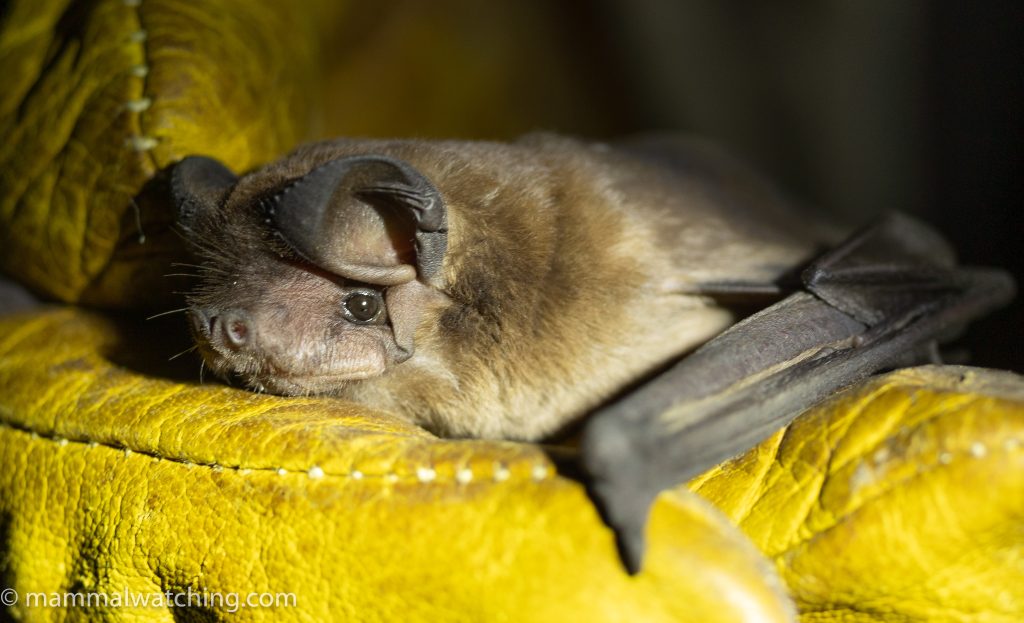
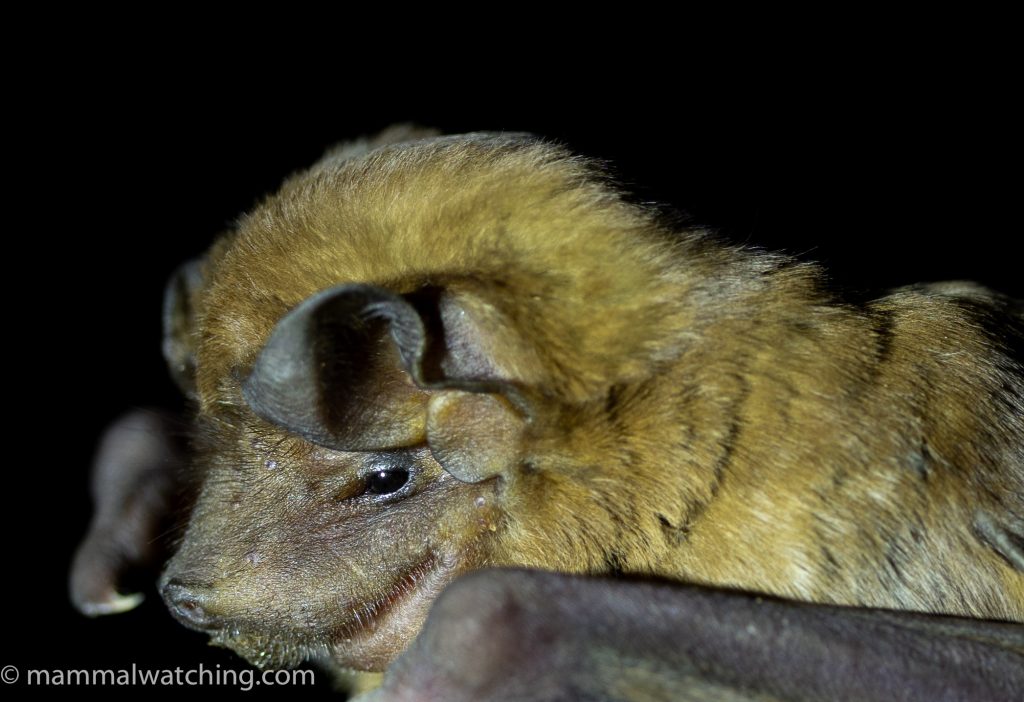
Thomas’s Mastiff Bat (Molossus currentium)
Thomas’s Mastiff Bat (Molossus currentium): netted on both nights, including a few emerging from a roost in a hollow tree at the campground. This species is rarely recorded in the region.
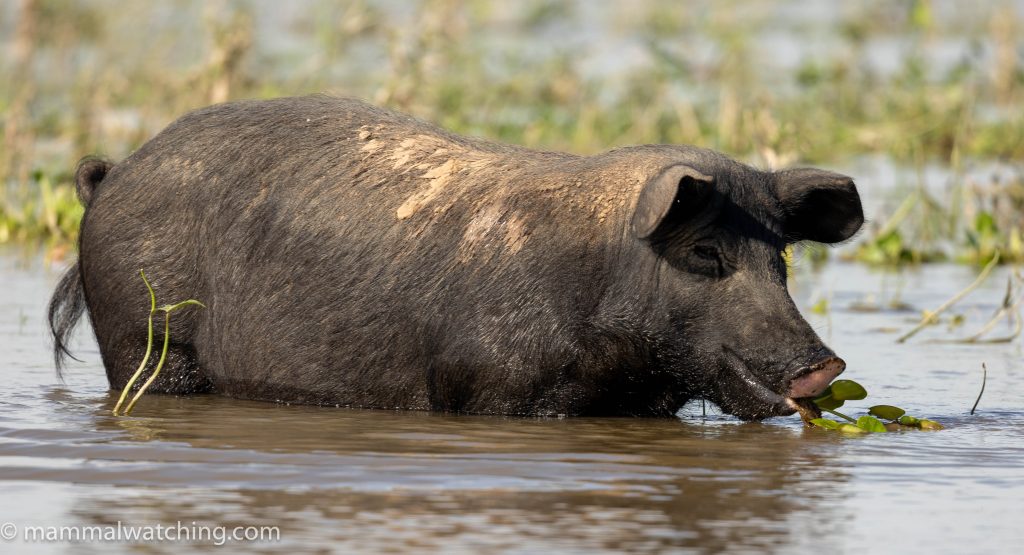
Domestic (Feral) Pig (Sus domesticus) – introduced
During our afternoon boat ride we saw Greater Capybara and a very large feral pig.
Returning from the island at night we took a night cruise the highlight of which was a brief look at a melanistic Geoffroy’s Cat and more capybara. We saw another cat later that night on the road close to our hotel.
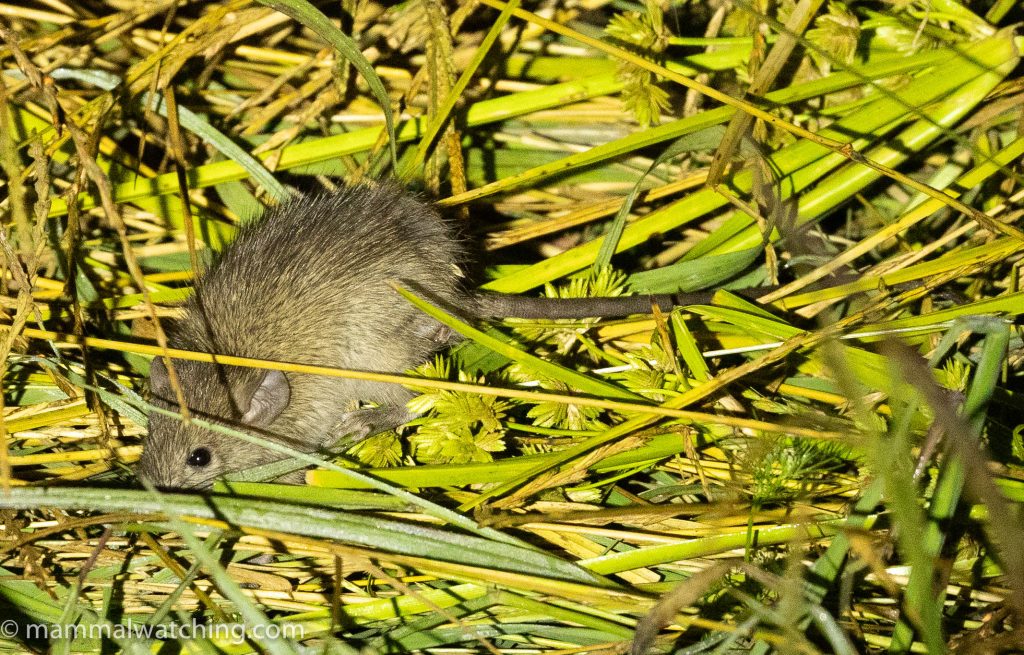
Black Rat (Rattus rattus)
Thermal scoping between the batting site and our hotel was productive. There were a great many rodents along the edge of the road. We identified several Black-footed Pygmy Rice Rats, while a Black Rat caused some temporary excitement when I thought it was my nemesis Crafty Marsh Rat, a species that eluded me in 2023.
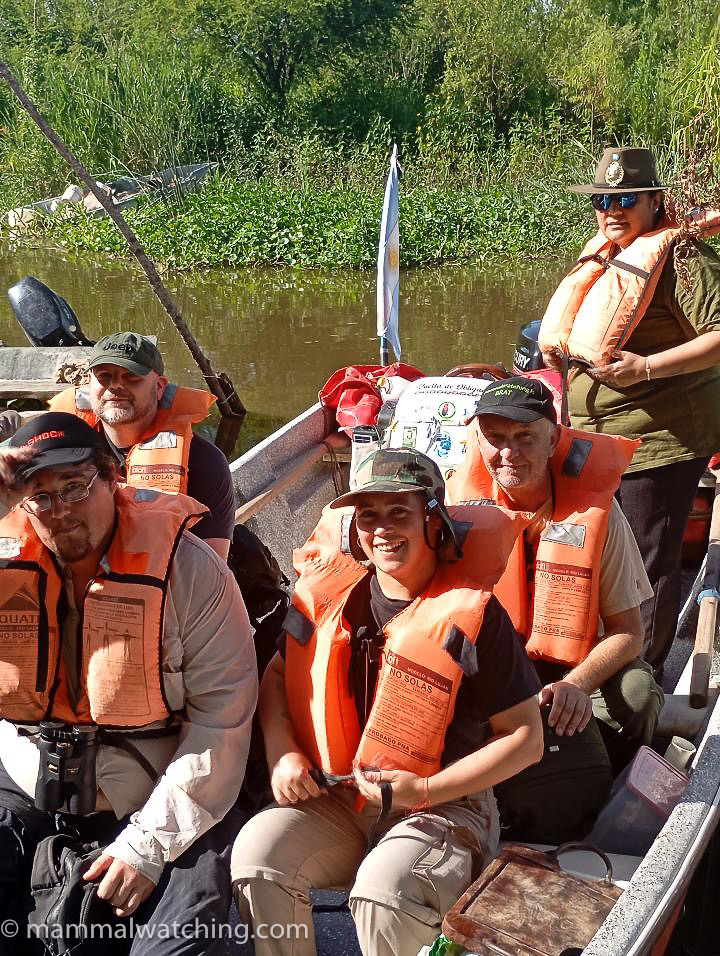
Germán and Estrella at the front, Mike and me at the back
You can contact Germán and Estrella via Estrella’s WhatsApp (+54 9 11 6426-0506). She also runs ecotours in protected areas close to the La Plata River (her company Instagram is here).
El Manatial
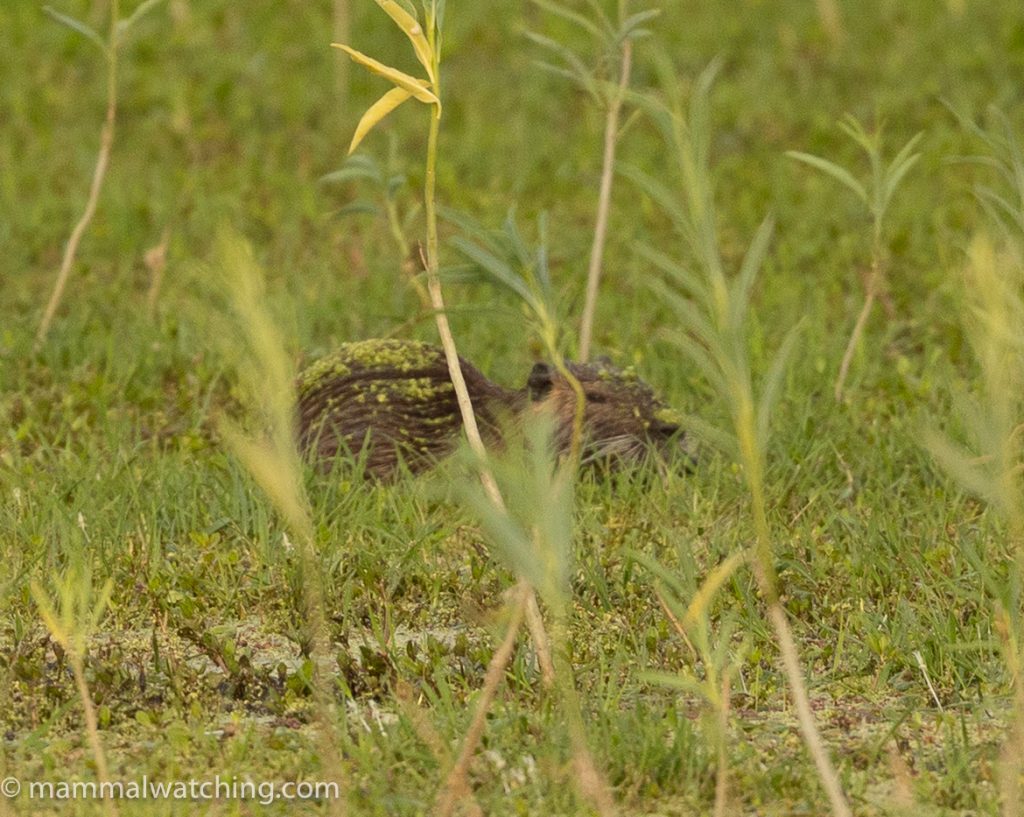
Coypu (Myocastor coypus)
We still had a night before our flight home so I returned to Samborombón Bay, which I’d visited with Marcelo two years earlier.
It was unlikely I would see anything new here but there was lots for Mike to look for.
Unfortunately the wonderful Refugio El Manantial which I stayed in last time was full so we stayed at the closest hotel Marcelo could find, the Hotel Pipinas in the town of … yes, Pipinas!
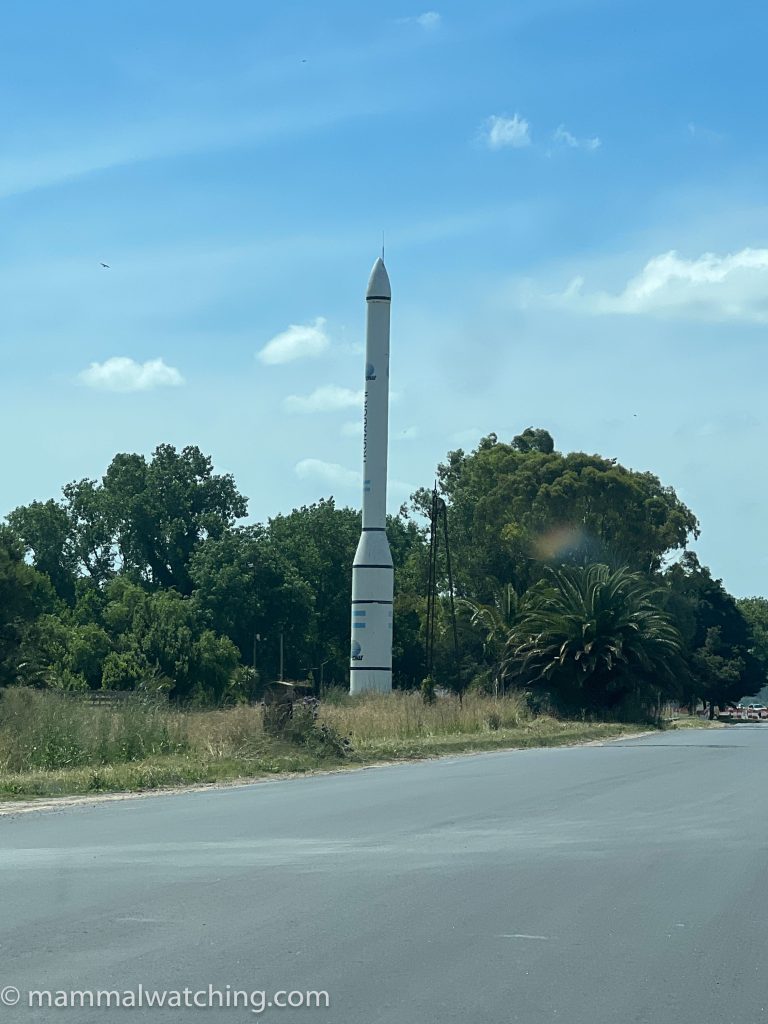
Pipinas: turn left at the random rocket
On the upside, the hotel was only $20 a night. On the downside … well everything else. This was a down at heel Shutter Island, with serious asylum for the criminally insane vibes. The vibes got worse after I unknowingly broke a bottle of red wine I was planning to give to the owners of the Estancia to say thanks for their help in letting us spotlight there.
The wine dribbled along the corridor behind me as I took my bags to my room and when I walked back down the corridor I was convinced the corridor was covered in blood. Amazing how much mess a single bottle of Malbec can make.
Against all the odds we survived the night, and dinner. I should not have expected much from a town that harks back to its glory days when the cement factory was still open. To be fair dinner was pretty tasty and the hotel staff were all friendly if somewhat surprised to see us.
Maria Eugenia at El Manatial greeted me like an old friend and was very happy for Mike and I to roam the fields at night searching for armadillos. We saw Coypu here, exactly where I had seen them two years earlier (see my 2023 report), a Pampas Fox, just one Large Hairy Armadillo and about 50 European Hares. Industrial quantites of mosquitoes after dark made it all but impossible to leave the car: they are the worst I have ever encountered and yet I don’t remember any here in December 2023.
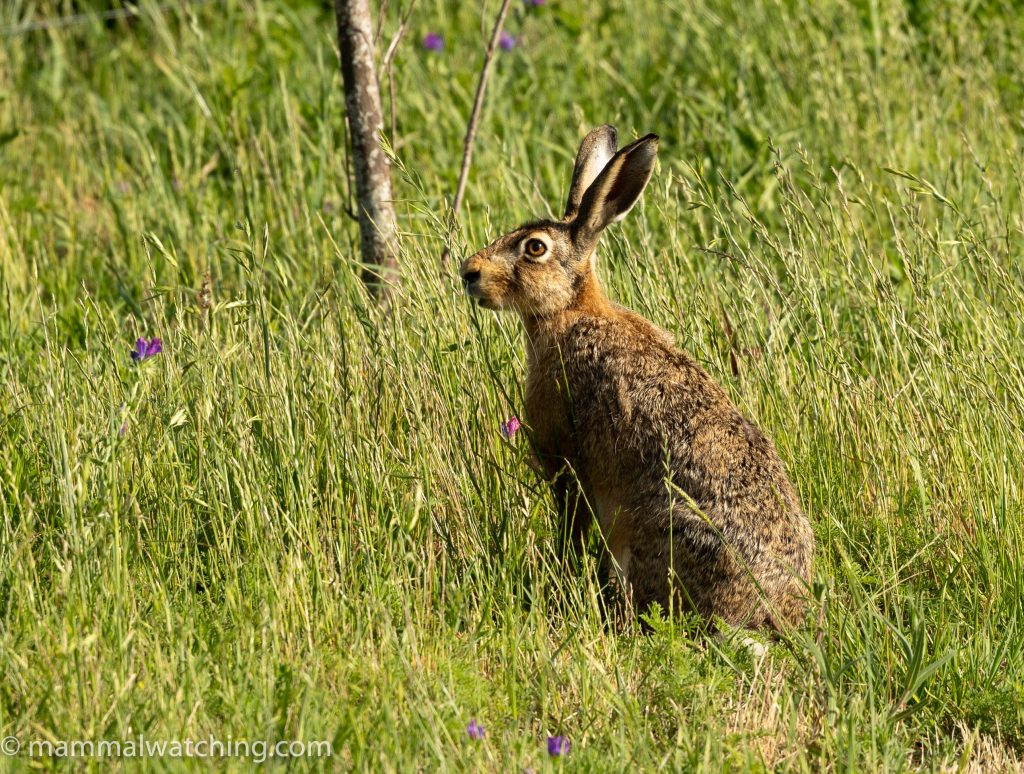
European Hare (Lepus europaeus) – introduced
Driven away by the insects, which attacked every time I left the car to open a gate, we decided to focus on the roads between the estancia and our hotel. My flash had broken and so I wasn’t taking any photographs.
We found a couple of Plains Viscachas out of their burrows at a spot Marcelo shared with us, a Crafty Marsh Rat (finally!) in the middle of the road, plus we had very good looks at two Molina’s Hog-nosed Skunk, another Large Hairy Armadillo and a family of Pampas Foxes the following morning.
Final Thoughts and Thanks
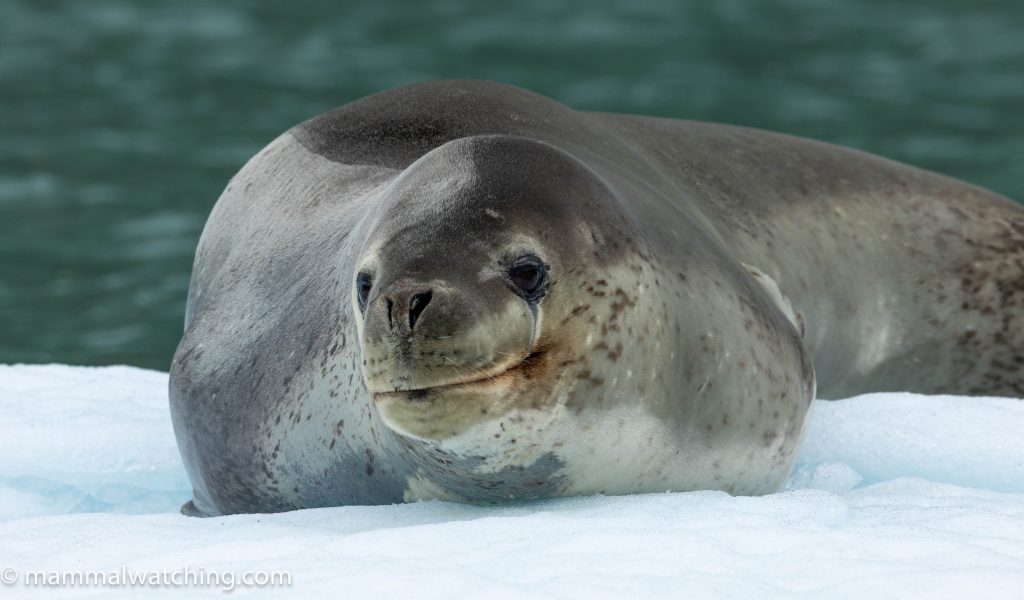
Leopard Seal (Hydrurga leptonyx)
As usual I want to say thanks to many people. To my travel buddies Sion and Mike, thanks for being great company and for never complaining. I also learned a great deal about the finer points of UK small business tax deductions! A big thanks to Daniel in Puerto Blest, and to Estrella and Germán in San Pedro and the Ecoturismo Vuelta de Obligado team for looking after us so well. Thank you to Maria Eugenia at El Manatial for letting us visit, showing us around and even giving us insect repellent.
Captain Juan at Parry Fjord is a total legend. If the Tintiin books had been written more recently I would swear that the Captain Haddock character was modeled on Juan. It was worth driving 8 hours to spend a day on the water with him. The world’s best scenery and the world’s best seal are a bonus.
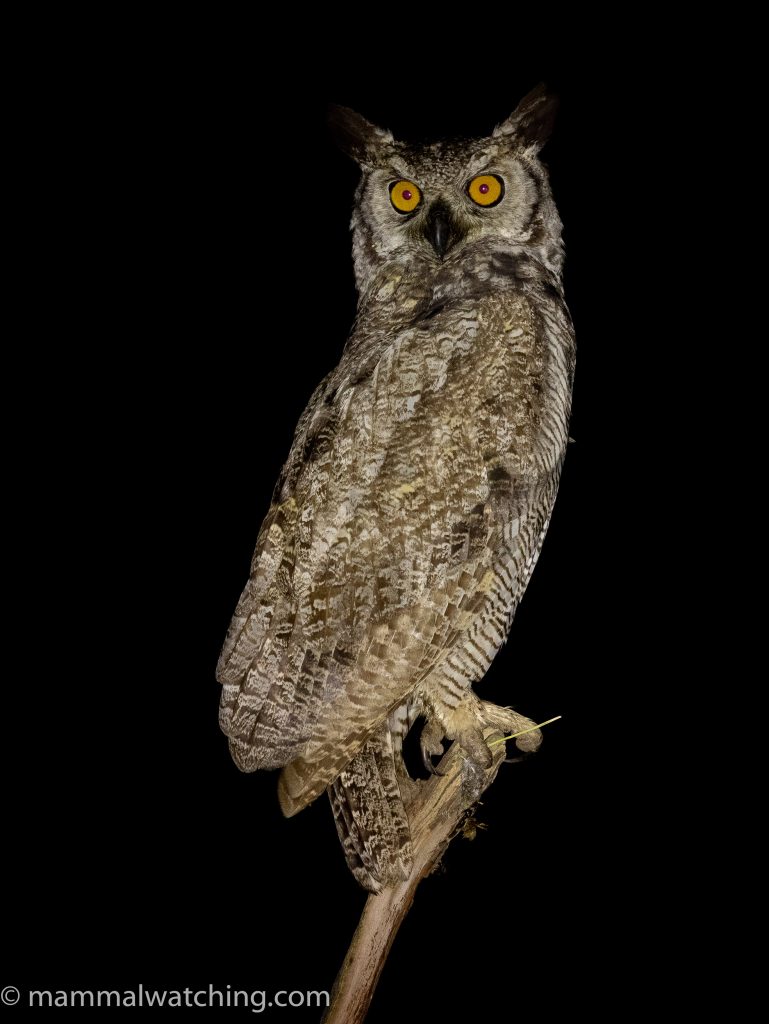
A bird (for Marcelo)
And finally thank you Marcelo for working so hard to organize and guide the trip and for your great patience in answering the same questions 20 times, though admittedly these were mainly bird questions from Sion. This is the price you pay.
Argentina is a jewel in the mammalwatching crown and there is so much still to explore.
Trip List
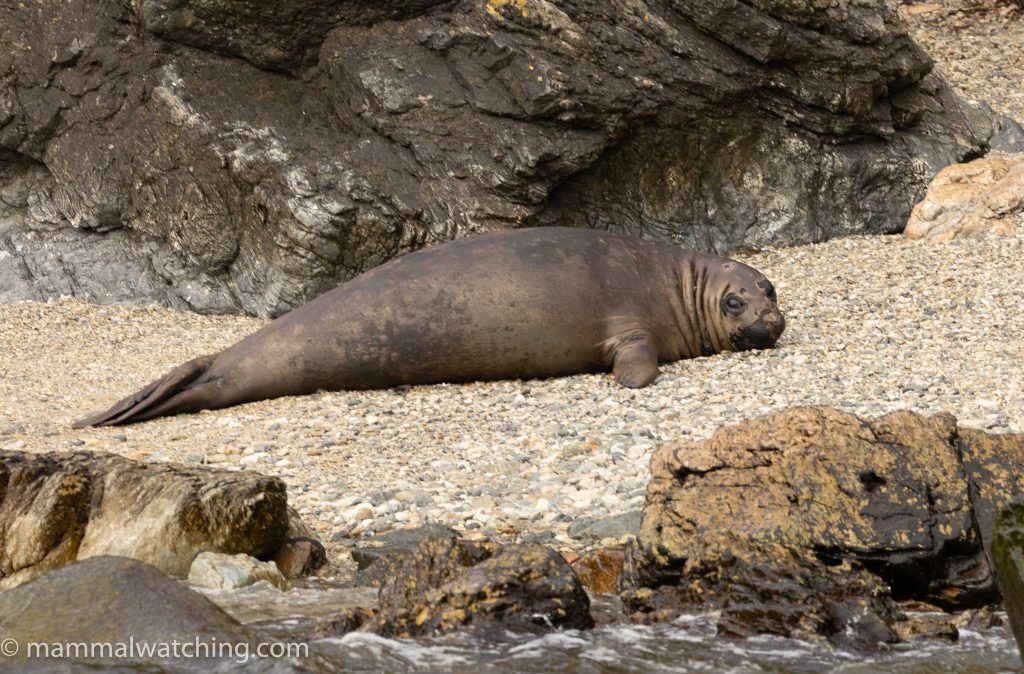
Southern Elephant Seal (Mirounga leonina)
- Southern Monito del Monte (Dromiciops gliroides)
- Large Hairy Armadillo (Chaetophractus villosus)
- Pichi (Zaedyus pichiy)
- European Hare (Lepus europaeus) – introduced
- Brazilian Guinea Pig (Cavia aperea)
- Greater Capybara (Hydrochoerus hydrochaeris)
- Southern Mountain Viscacha (Lagidium moreni)
- Common Plains Viscacha (Lagostomus maximus)
- Magellanic Tuco-tuco (Ctenomys magellanicus)
- Coypu (Myocastor coypus)
- Greater Capybara (Hydrochoerus hydrochaeris)
Hairy Soft-haired Mouse (Abrothrix hirta) – probable - Olive Soft-haired Mouse (A.olivacea)
- Valdivian Long-clawed Mouse (Geoxus valdivianus)
- Chilean Climbing Mouse (Irenomys tarsalis)
- Brazilian Marsh Rat (Holochilus brasiliensis)
- Long-tailed Pygmy Rice Rat (Oligoryzomys longicaudatus)
- Black-footed Pygmy Rice Rat (O.nigripes)
- Southern Big-eared Mouse (Loxodontomys micropus)
- Roof Rat (Rattus rattus) – introduced
- Common Dwarf Bonneted Bat (Eumops bonariensis)
- Thomas’s Mastiff Bat (Molossus currentium)
- Silver-tipped Myotis (Myotis albescens)
- Chilean Myotis (M.chiloensis)
Dinnelli’s Myotis (M. (dinellii) levis)* - Yellowish Myotis (M.levis)
- Argentine Serotine (Neoeptesicus furinalis)
- Molina’s Hog-nosed Skunk (Conepatus chinga)
- South American Sea Lion (Otaria flavescens)
- Leopard Seal (Hydrurga leptonyx)
- Southern Elephant Seal (Mirounga leonina)
- Culpeo (Lycalopex culpaeus)
- South American Gray Fox (L.grisea)
- Pampas Fox (L.gymnocerca)
- Geoffroy’s Cat (Leopardus geoffroyi)
- Domestic Pig (Sus domesticus) – introduced
- Guanaco (Lama guanicoe)
*Treated here as a subspecies of Myotis levis but some treat it as a species in its own right.
35 species plus a potential split (Myotis dinellii) and one probable (Abrothix hirta).
11 lifers in bold.

Post author
7 Comments
-
-
-
Asanoth
Interesting report!
I visited Caleta Maria in 2019, that time as a part of more of a trekking trip to Torres and also Atacama. I really wanted to see the elephant seals at that time, even considering hiking there from Estancia Lago Fagnano, but eventually found Nativo Expediciones y Asociadas who made the boat trip for us – maybe those were the same people 🙂 . Your essay brings back fond memories, thanks 🙂 .
Logistically, we arrived from Punta Arenas, as we wanted to explore not-really-visited Chilean Tierra del Fuego; I actually lost that immigration paper and needed to drop by Paso Río Bellavista border crossing/police station to get the new one 😀 . -


Leave a Reply
You must be logged in to post a comment.
JanEbr
To me it’s most fascinating to see how many rodents you found in the forest around Puerto Blest. I wonder if it’s something particular to that area or I have been doing something wrong, because it has been generally pretty hard for me to find small rodents in the southern cone so far. Not that I would change my mind about ever going to Puerto Blest to investigate that further 🙂