

Quick Trip to Tianmu Mountain, Zhejiang Province, China
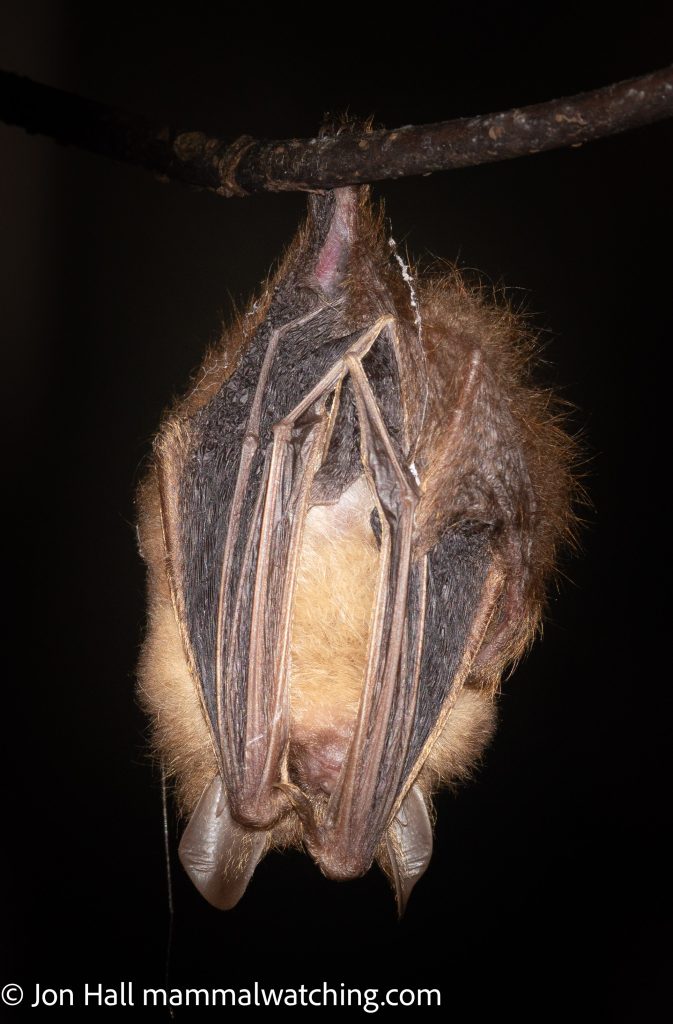
Hairy-winged Bat (Harpiocephalus harpia), possibly…
I spent the final few days of my month in China in the southeast, around Hangzhou. The mammalwatching wasn’t as successful here as we’d hoped but after 4 weeks in China I was able to take the chance to catch up on life.
Man Fu, a star photographer, who works for the Nanjing Finless Porpoise Association accompanied me for this leg of the trip.
After spending three long nights near Zhoushan and failing to get a whiff of a Chinese Pangolin (but seeing very many Reeve’s Muntjacs, Asian House Shrews and feral cats), we headed to Tianmu Mountain about two hours’ drive from Hangzhou.
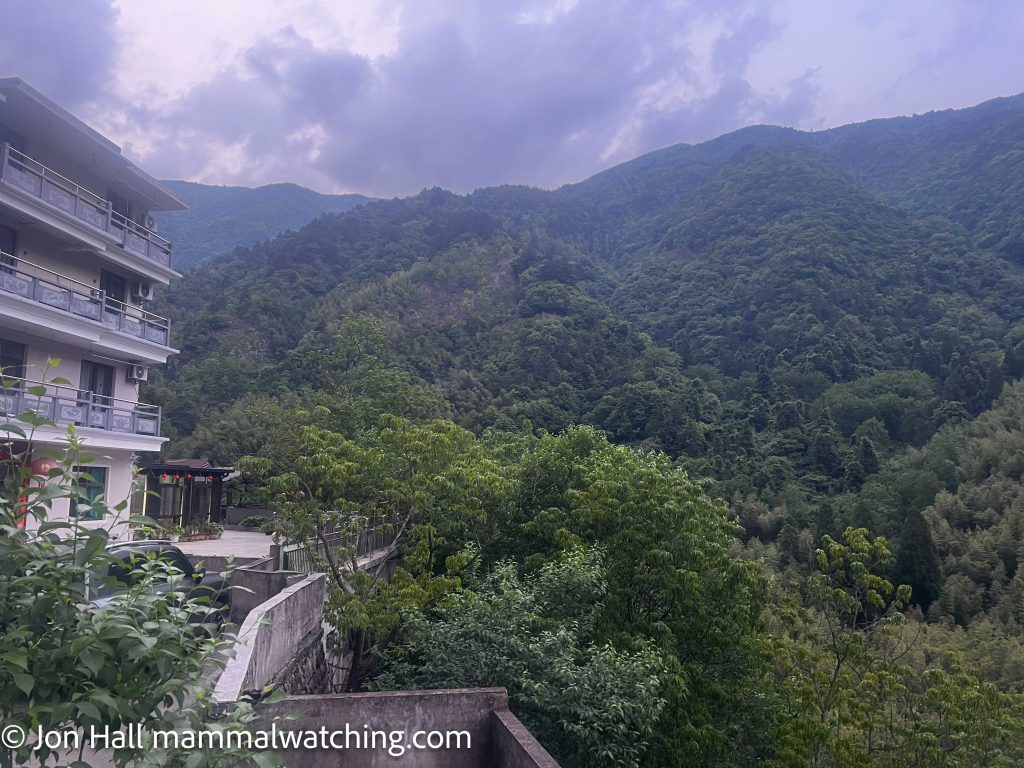
Tianmu Mountain
The mountain is popular with birdwatchers and good mammals are occasionally reported: most notably Black Muntjac. Plus a group of herpers once saw a Chinese Pygmy Dormouse (Typhlomys species) here, which would be a new mammal family for me.
We stayed at the comfortable ‘Honey’ Homestay (here). I am not sure what the Chinese name is for the lodge but Man Fu told me it translated as honey.
We spent two evenings driving and walking the roads up the mountain through both the East and West Gates of the reserve. Although both gates were open at night, the road was closed to visitors further up the mountain (at night at least), and we were unfortunately not allowed to visit the stream-side trail along which the Pygmy Dormouse had been seen.
The road past the west gate climbs the mountain steadily. The forest is thick and offers little chance for looking for the Black Muntjac. I only saw one muntjac in my DV2 thermal camera but couldn’t find it with my flashlight and in any case it was much more likely a Reeve’s Muntjac which are very common here. I also picked up the heat of several small mammals on the ground that were most likely shrews though I didn’t see any of them properly.
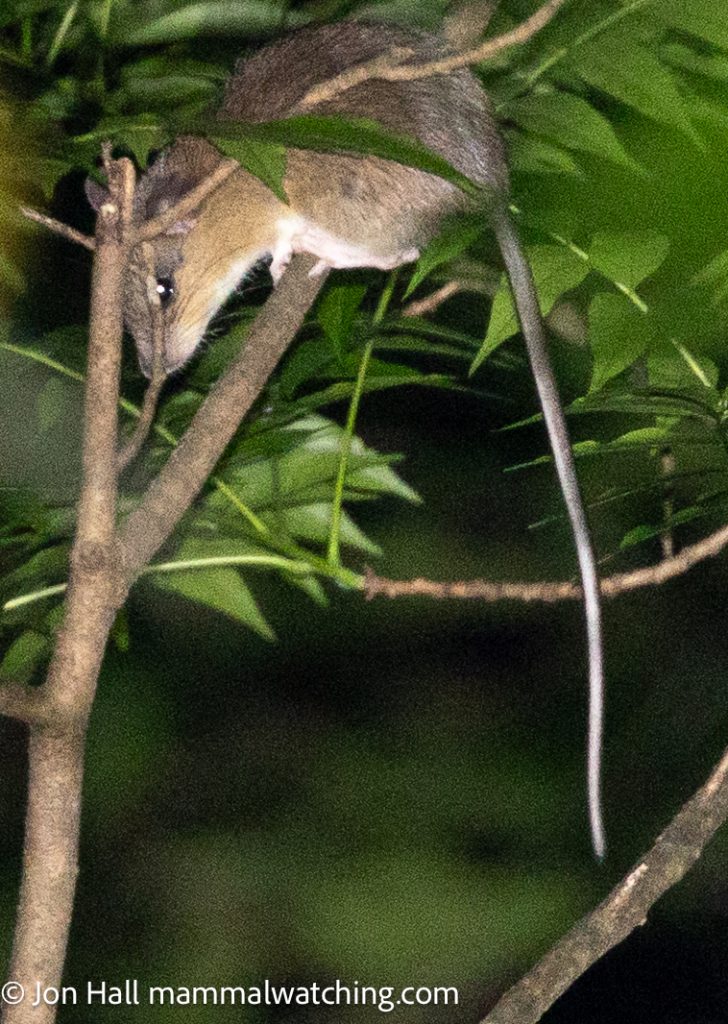
Hainan White-bellied Rat (Niviventer lotipes)
The road into the reserve after the east gate was better. The forest is more open and in a few hours we saw one Northern Hog Badger well (though no photos) and another two through my thermal camera. We saw dozens of muntjacs though they were all Reeve’s Muntjacs. Black Muntjac occurs here but – as everywhere in its range it seems – they occur in very low density.
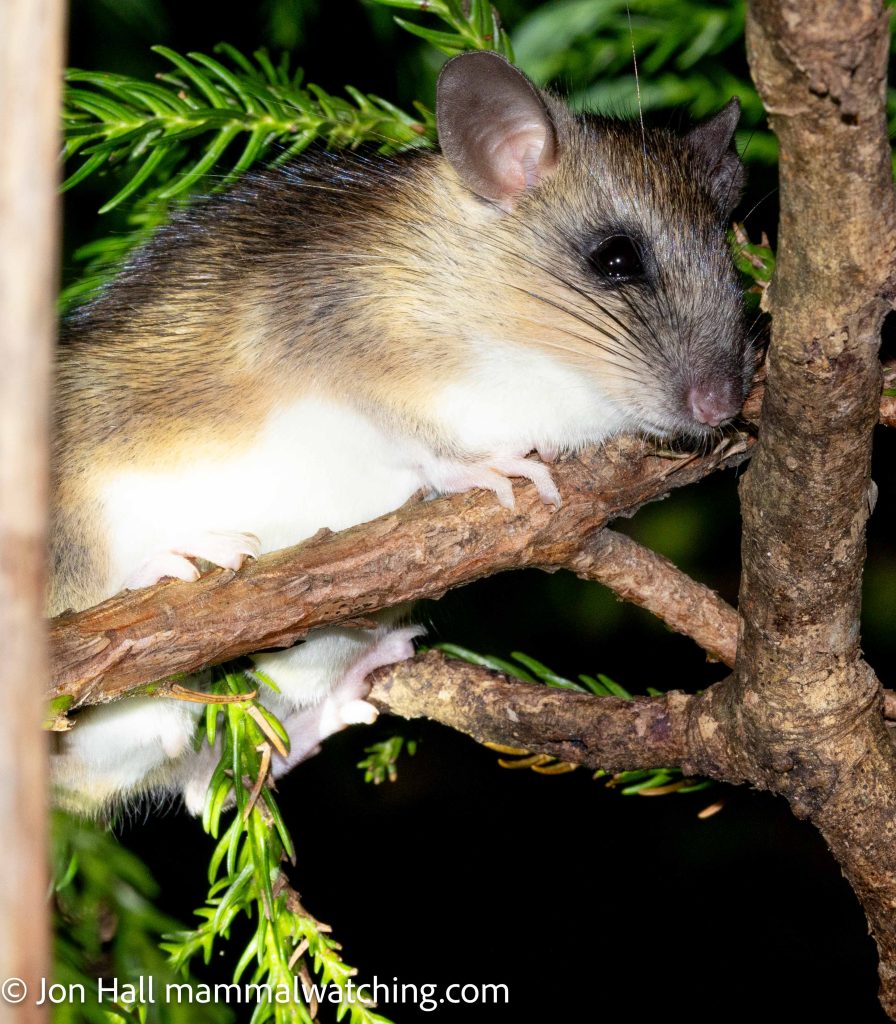
Hainan White-bellied Rat (Niviventer lotipes)
We saw numerous medium-sized rats, that all appeared to be the same species: at first I hoped they were South China White-bellied Rats (Niviventer huang) but a local scientist believes they were all Hainan White-bellied Rat (Niviventer lotipes) as N. huang tend to have a more orangish hue.
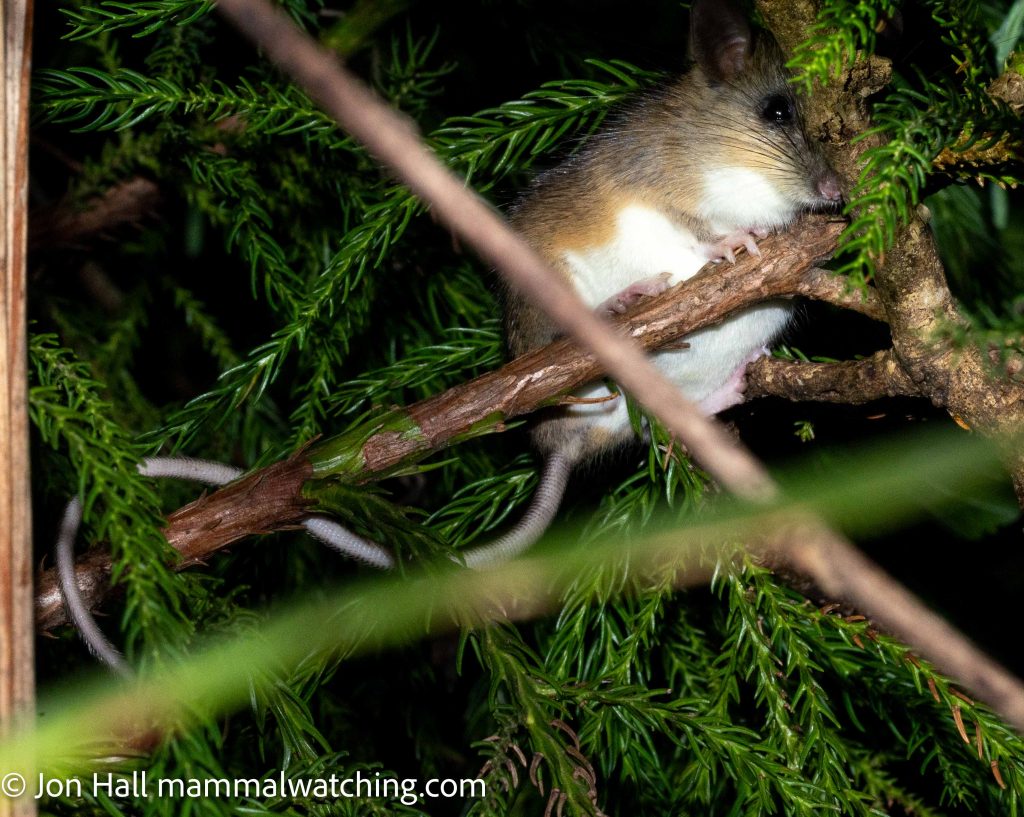
Hainan White-bellied Rat (Niviventer lotipes)
I am including several photos here of the rat – and its tail tip – in case someone thinks anything different.
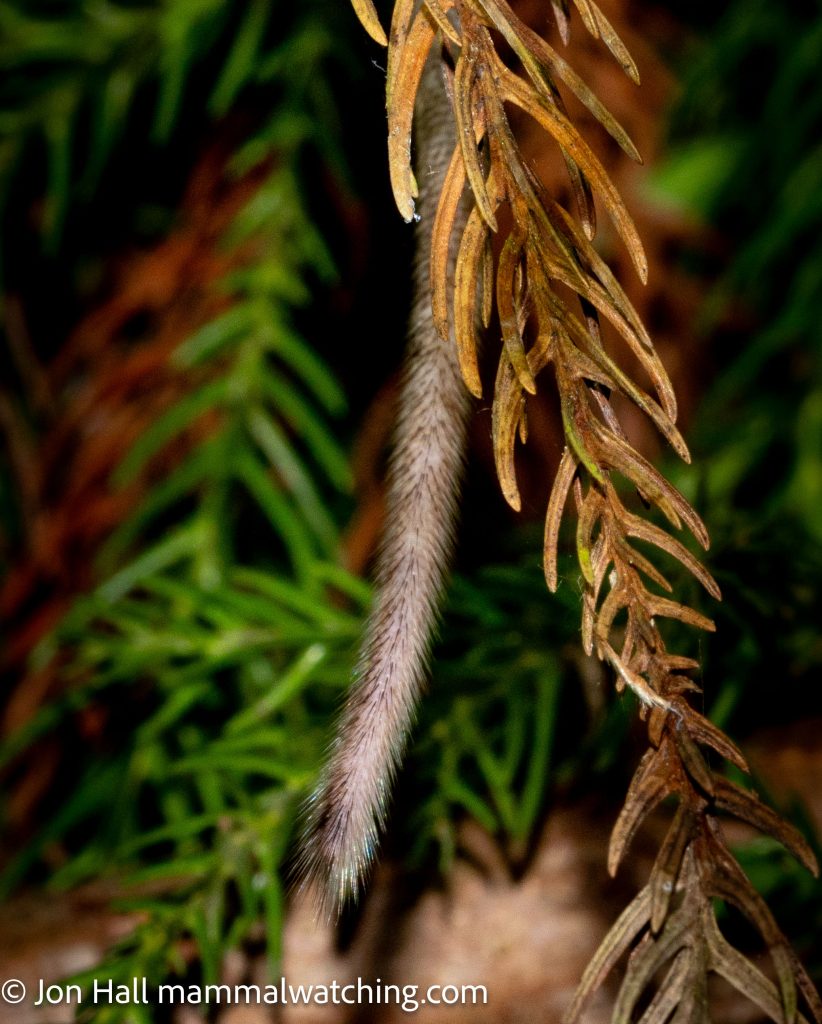
Tail tip of a Hainan White-bellied Rat (Niviventer lotipes)
Best of all, my thermal found two bats hanging from slender branches.
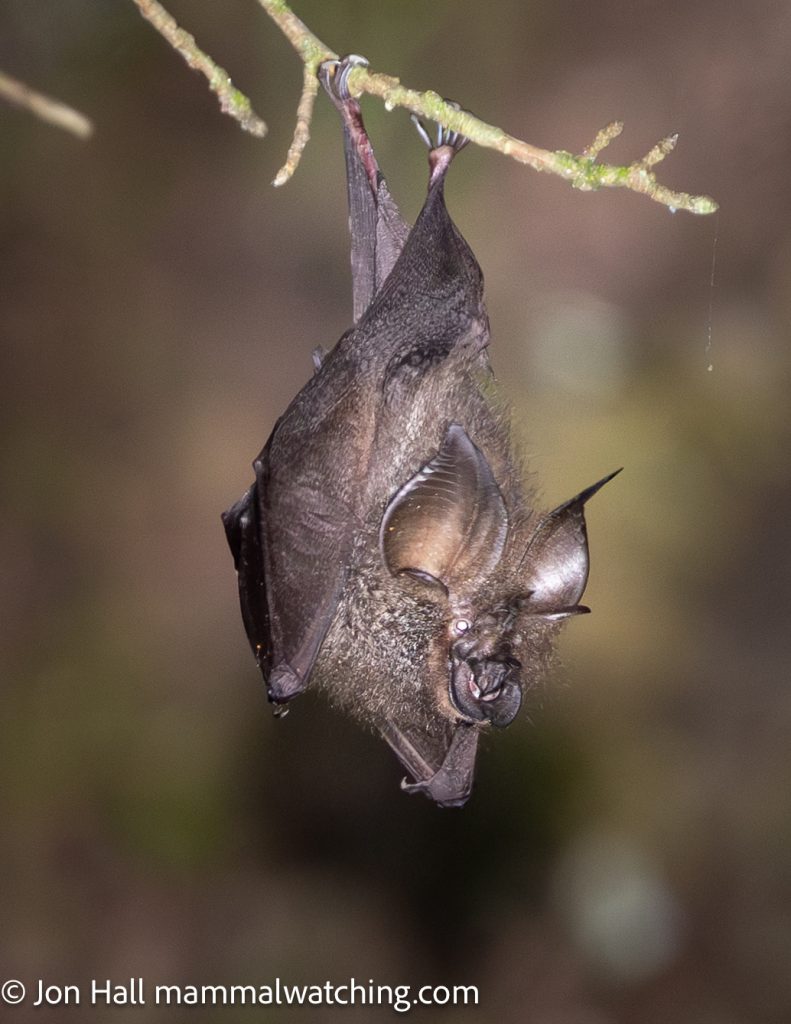
Northern Woolly Horseshoe Bat (Rhinolophus perniger)
This one looks to be Northern Woolly Horseshoe Bat.
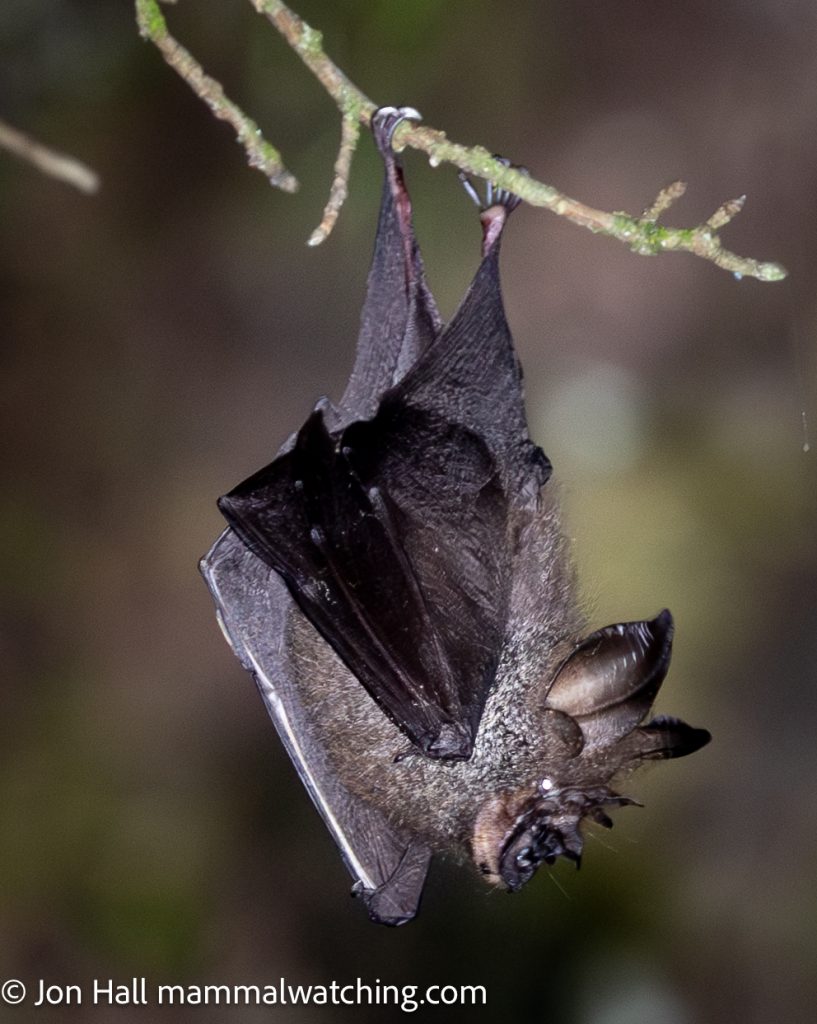
Northern Woolly Horseshoe Bat (Rhinolophus perniger)
The other is more of a mystery. It was a medium-sized bat that obligingly let us approach to within a meter to photograph. It looks very like a Hairy-winged Bat to me: the size, color and very hairy wings all suggest that species.
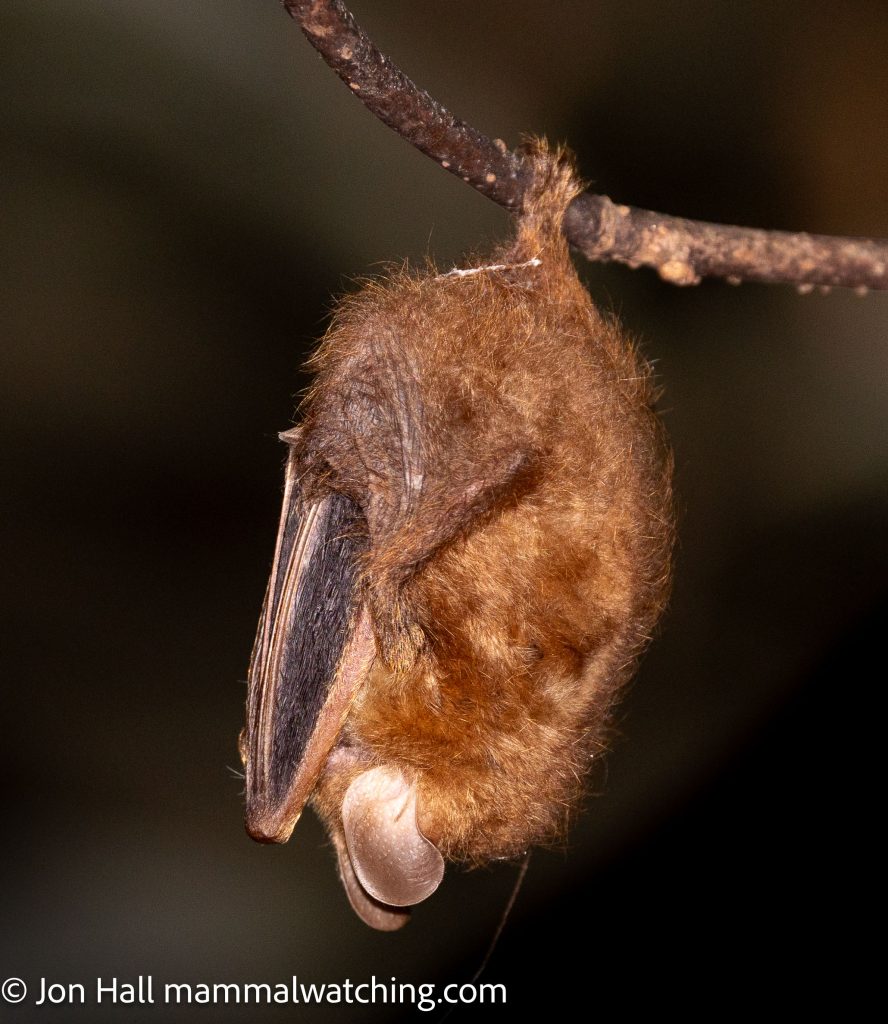
Hairy-winged Bat (Harpiocephalus harpia), possibly…
However a bat expert on iNaturalist thinks the ears are too large to be a harpiocephalus and suspects this is either the barely know Hutton’s Tube-nosed Bat or an undescribed species. My impression is that it was too large to be Murina huttonii (based on the only specimen!) and I am not sure whether that species has hairy wings. I am checking with Chinese experts and will update this if I get more information.
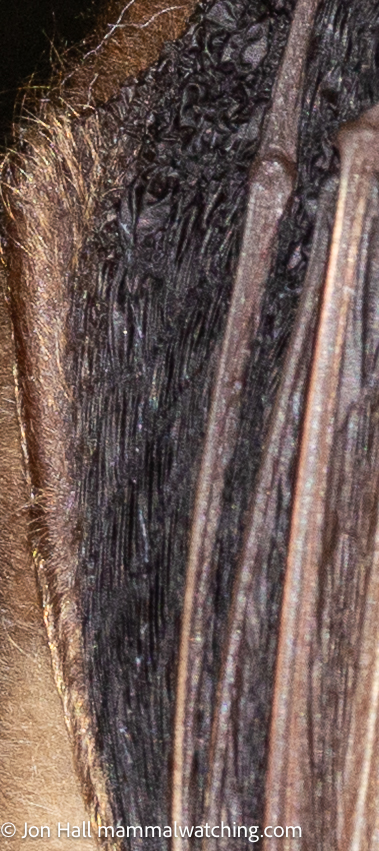
wing detail of a Hairy-winged Bat (Harpiocephalus harpia), possibly…
A very big thank you to Man Fu for coming along, making all the arrangements and helping to search for and photograph what we saw. We walked a lot of kilometers in seach of that pangolin!
And that was the end of a wonderful 30 days in China during which I recorded 52 species, 17 of which were lifers.
What a country this is! I cannot wait to return next year.

Post author
Leave a Reply
You must be logged in to post a comment.