
Remote mammal watching
Remote mammalwatching – what does it mean? You’ll probably know what mammalwatching means – yes, it’s watching the wild mammals i.e mammalwatching. But remote mammalwatching? Well, in remote mammalwatching you don’t need binoculars, thermal monocular nor camera, but you must have an internet connection and TV to watch mammals.
I started remote mammalwatching just for fun and to experiment, two days ago, and so far I have seen 20 species, some of which are completely new to me, and I didn’t even know about them before. It’s a really fun pastime, e.g. with breakfast and lunch. 😁
Here’s a link to mt remote mammalwatching blog: https://remotemammalwatching.blogspot.com/ Each article contains a link to live webcam.
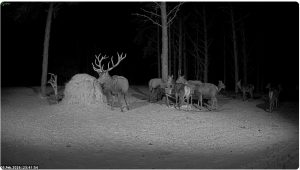
Deers at feeding place

Post author
11 Comments
-
-
Olli Haukkovaara
Here’s a better photo of Aardwolf: https://blogger.googleusercontent.com/img/b/R29vZ2xl/AVvXsEhTIzCIoXYUFLdvdR60y1xvnDRCOUdx__ozj62EaoC-moRW4NovOdIWqaZ9L4jbtuWCJNVitzbt-_1hLyJF0fxMPXGjyz7GSHgro_GJUeMtauZWwEBo3sXT3NZucztDZECs3TJgfB34cW7cP_zFJ_L1qjAJ-XM1f7j1LckuFypidPg6EsWY5-DGK-a3IzSq/s1292/Aardwolf3.jpg
-
Ben W
No worries, happy to hear it hasn’t impacted your list. BTW, I think the Dik-Diks are Cavendish’s not Kirk’s (the latter prefers drier areas and hasn’t been recorded in the Masai Mara or Serengetti), and the striped hyena is probably something else (there’s been a hyena pack around Lentorre for a few days and they look a lot bigger and stockier).
-
Olli Haukkovaara
I think we are both technically right. This is one of those classic cases where biology and common names overlap in a confusing way. The animal I saw in the Maasai Mara is Cavendish’s Dik-dik, but because it is almost always classified as a subspecies of Kirk’s Dik-dik, nearly everyone (including guides, books, and researchers) simply calls it “Kirk’s Dik-dik.”
-
-
-
Olli Haukkovaara
On what comes to striped hyena, my online mammalwatcher friends were wrong. It’s actually African Golden Wolf, (Canis lupaster). While the photo is slightly blurred, several identifying features point to this species:
Coloration: The warm, sandy-gold coat matches the “yellowish to silvery grey” fur typical of this species.
Build: It has the leggy, slender build of a canid, distinct from the heavier, sloping frame of the hyenas frequently seen at this waterhole.
Confirmed Presence: “Golden jackal” is specifically listed as one of the “small creatures” that inhabit the Olkiramatian Conservancy surrounding Lentorre Lodge.
Tail: You can see the relatively short, bushy tail, which is a characteristic of the African Golden Wolf. -
Ben W
Hi again, nice to see you’re still adding to the list.
FYI, the bonobos are in an enclosed sanctuary a few hundred kilometres from their native range – you probably know this already and to each their own as far as listing goes, but I want make sure you’re aware! Also I’ve just reached 100 species myself, feel free to check my list in case there’s any cams you’ve missed (https://docs.google.com/document/d/11afEcDOmSJShStg_cfoGMR-NQq6YIhfB6PJC4flp6m8/edit?usp=sharing).


Leave a Reply
You must be logged in to post a comment.
Ben W
Hi Olli,
Great to see the list coming along, and I’m glad to see you’ve reached your first target! Just letting you know though, it looks like the animal you put down as an Aardwolf is an overexposed white-tailed mongoose, and your honey badger might be as well… though in any case it seems like it’s still a new one for you!
Regards, Ben