

3 Weeks in Thailand and North Sulawesi
Hello mammal watchers,
This will be my first post about one of my trips, and I am very excited to share some of the things I find interesting in nature. To introduce myself: I am Frank, a computer vision PhD student from Germany. In my free time I try to work on bat conservation, for example by giving excursions, finding roosts, training AI bioacoustic models, and also on ocean conservation, for example by helping to recover ghost nets as a diver.
On my vacations I like to look for and record some of my favourite animals that I have on my bucket list. I am mainly looking for bioacoustically or behaviourally interesting animals. I am not really trying to see every mammal out there, but I will happily take any other bat or cool critter along the way. This time my girlfriend and I went on a three-week trip to Thailand and Sulawesi, with a one-day stop in Singapore.
Thailand
Khao Yai
Our trip started in Thailand at the end of March, so it was quite hot, usually around 34°C at noon. After one day in Bangkok, which was already enough, we headed to Khao Yai National Park with the amazing Jirayu Ekkul from Wild Encounters for some batting, and to look for gibbons and elephants.
Lar Gibbons are famous for their loud and complex songs. Gibbons are among the most vocal non-human primates, and their songs are one of the rare examples of highly elaborate primate vocal behaviour. In many species, males and females combine their calls into coordinated duets, which are thought to play a role in pair bonding, territory defence, and mate attraction [1, 2]. Hearing them call through the forest in the morning was one of the most beautiful sounds of the trip.
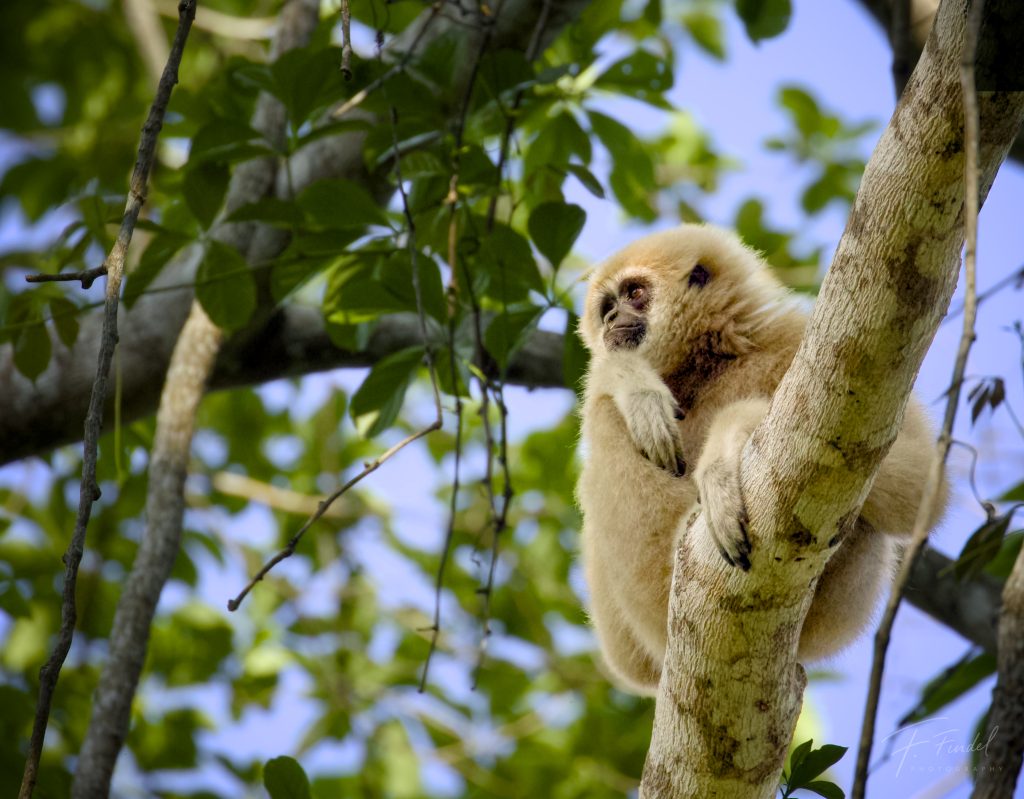
Lar Gibbon
There is also another, much rarer, gibbon species in Khao Yai: the Pileated Gibbon. Khao Yai is especially interesting because Lar Gibbons and Pileated Gibbons meet there in a narrow contact zone, where hybridization can occur [3]. Compared with Lar Gibbons, Pileated Gibbons look quite different. Females are pale grey to whitish with a dark face and black underparts, while males are mostly black. Both sexes have a dark cap-like crown and shaggy cheek tufts [4]. Their call is also very distinct from the Lar Gibbon, with a fast sequence of notes rising in pitch, which sounds extremely cool. While I managed to get several nice pictures of Lar Gibbons, I only got one bad picture of a Pileated Gibbon. But at least I managed to record some of their distinct vocalizations.
Around Khao Yai, we visited several caves that were protected by monks. Inside these caves it was very hot and humid, but we had a great time looking for bats. We saw many Great Roundleaf Bats, Intermediate Roundleaf Bats, Andersen’s Roundleaf Bats, some Cantor’s Roundleaf Bats, Shamel’s Horseshoe Bats, and Common Bent-winged Bats.
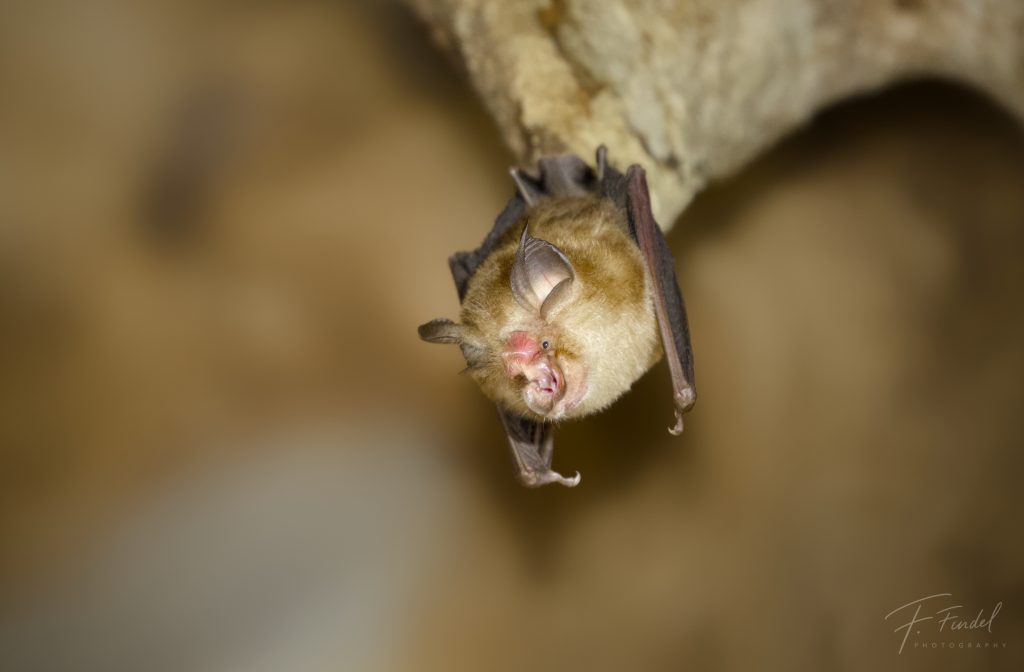
Shamel’s Horseshoe Bat
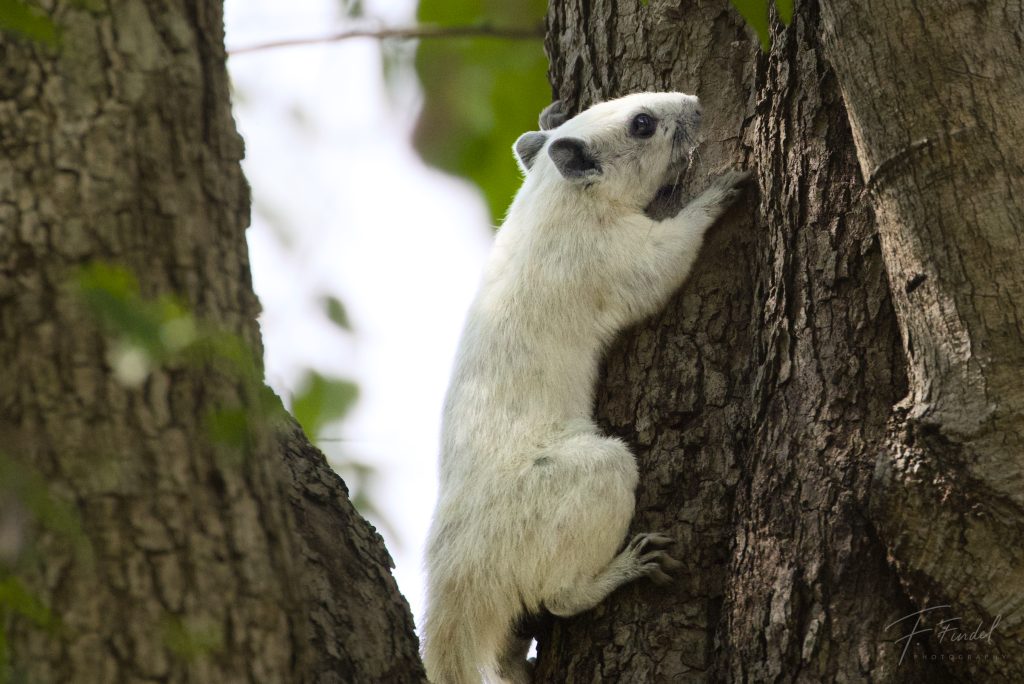
Finlayson’s Squirrel
I was especially amazed by the Black-bearded Tomb Bat and Lyle’s Flying Fox, which I had wanted to see for a long time. We also had some Lesser False Vampire Bats and spent one evening watching around three million Wrinkle-lipped Free-tailed Bats emerging from their cave high up on a mountain. It took them more than 30 minutes to all fly out in a huge spiral, while some birds of prey were trying to catch them in mid-air. Additionally, we saw Asian Elephants, Red Muntjac, Sambar Deer, Northern Pig-tailed Macaque, Giant Black Squirrel, Grey-bellied Squirrel, treeshrews, and Finlayson’s Squirrel. Big thanks to Pipat Soisook for identifying all of the bat images I sent him!
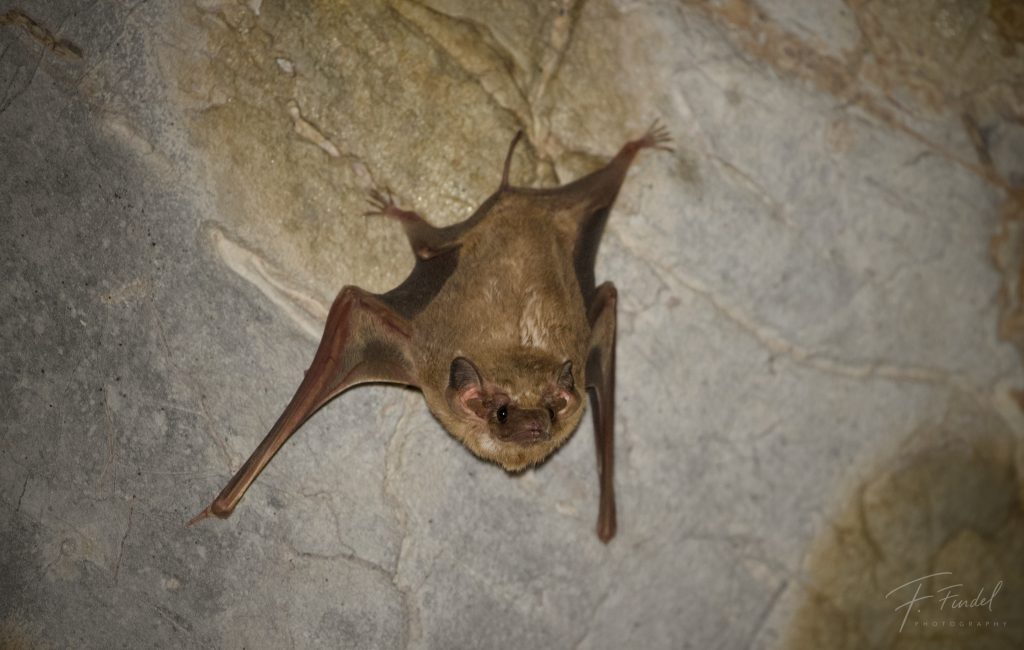
Black-bearded Tomb Bat
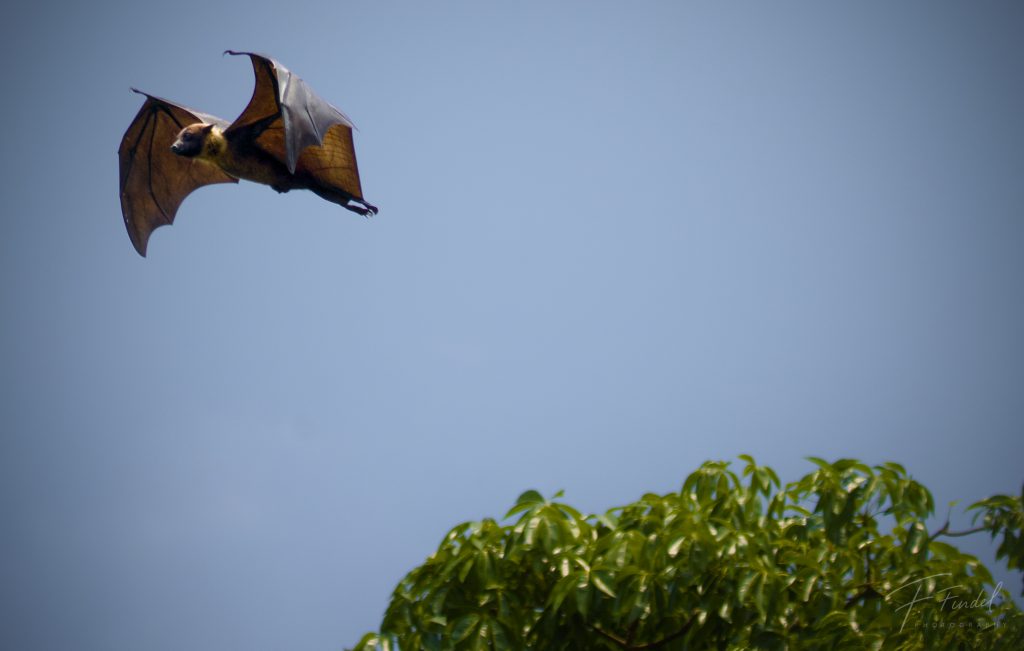
Lyle’s Flying Fox
Sai Yok
Next, we went to Sai Yok National Park using a beautiful five-hour train ride from Bangkok. While staying on a floating raft house on the river, we were looking for the smallest bat in the world. This tiny bat, which was very high on my bucket list, is only known from a limited number of limestone caves in western Thailand and south-eastern Myanmar [5]. The cave could be reached by foot in about 30 minutes from our accommodation, which was very nice because I could go there multiple times.
Inside the cave, I first noticed the larger bats, mostly Great Roundleaf Bats, and then some smaller Stoliczka’s Trident Bats. Only after a while did I realize that the tiny dark specks high on the cave wall were the actual target: Kitti’s Hog-nosed Bat, also known as the Bumblebee Bat. With a head-body length of only around 3 cm, it is considered the smallest mammal by body length [5, 6]. It was only described in the 1970s and is the only living species in its entire family, Craseonycteridae [5]. Seeing it in real life was surreal. Sadly, its small size and limited distribution also make it vulnerable. Tourism and habitat degradation are its main threats, and after its discovery, some roosts were reportedly disturbed by collection for the souvenir trade [5, 7]. At one point I was also heavily spooked by some badger inside the cave, presumably an Asian Badger.
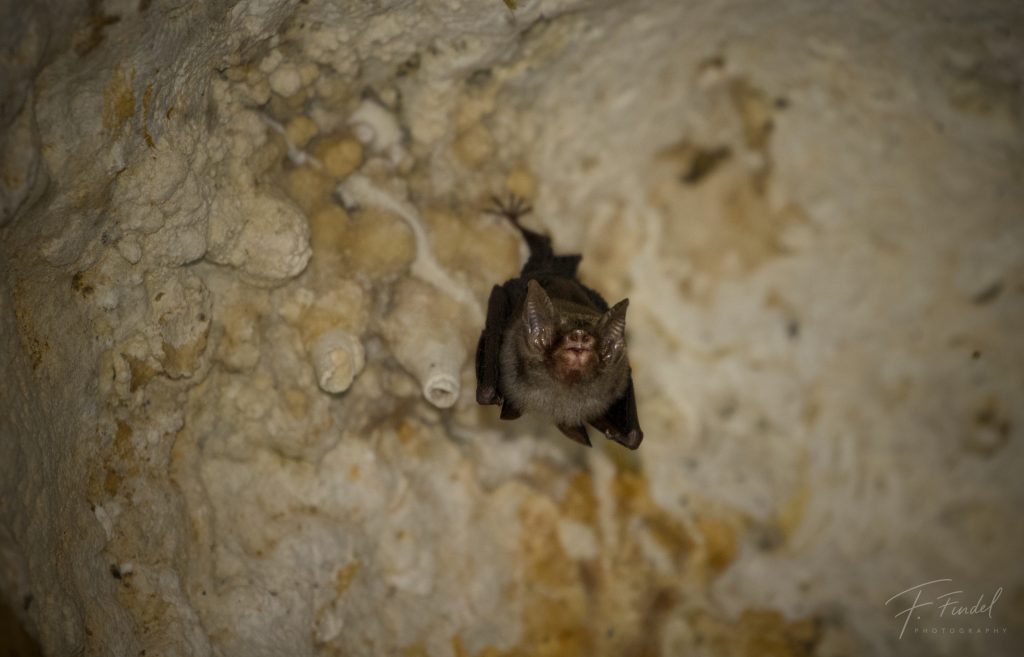
Kitti’s Hog-nosed Bat
We also had a brief 1.5-day stop in Hat Yai, in the south of Thailand. Initially we wanted to go to Hala-Bala, but then decided not to go after hearing about a very recent attack at the research centre of the park. Nevertheless, of course, we went to another bat cave close to the airport that Pipat had suggested to me. There I found another beautiful bat, in an also beautiful cave where a small creek runs through: the Diadem Roundleaf Bat.
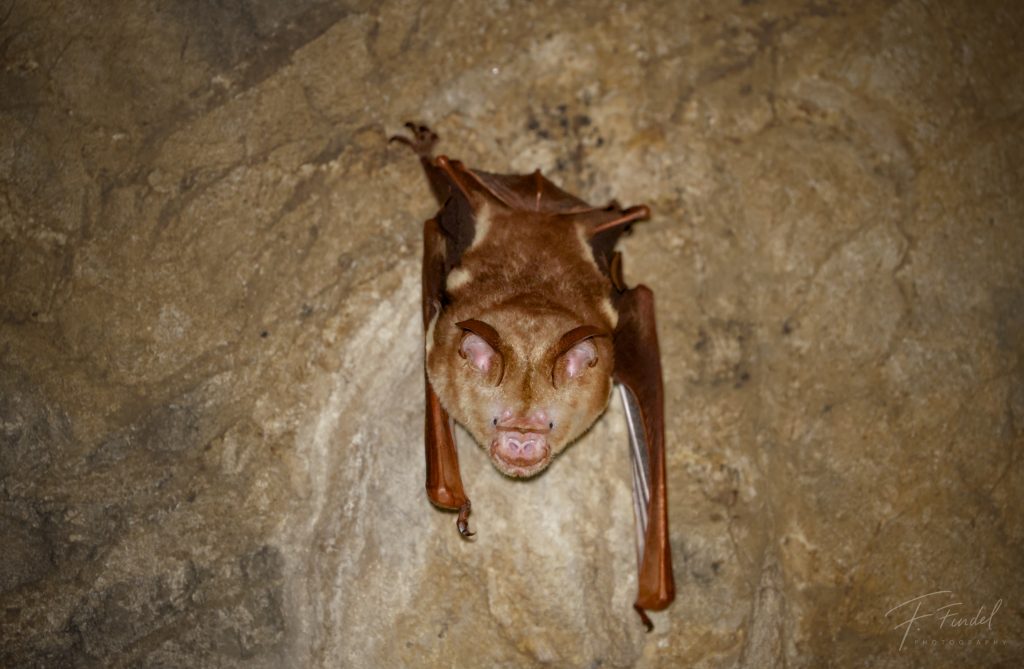
Diadem Roundleaf Bat
Sulawesi
After all the caves and hiking, we took four days to relax on Bunaken Island, a small island next to Manado in North Sulawesi, Indonesia. We spent the time eating a lot, diving, snorkelling, and playing Monopoly. We saw many Green Sea Turtles and a bunch of Whitetip Reef Sharks. But after relaxing, there has to be some hiking again, of course. Therefore, we went to Tangkoko National Park together with the amazing Stefen Bee, because there is a very unusual and interesting animal there.
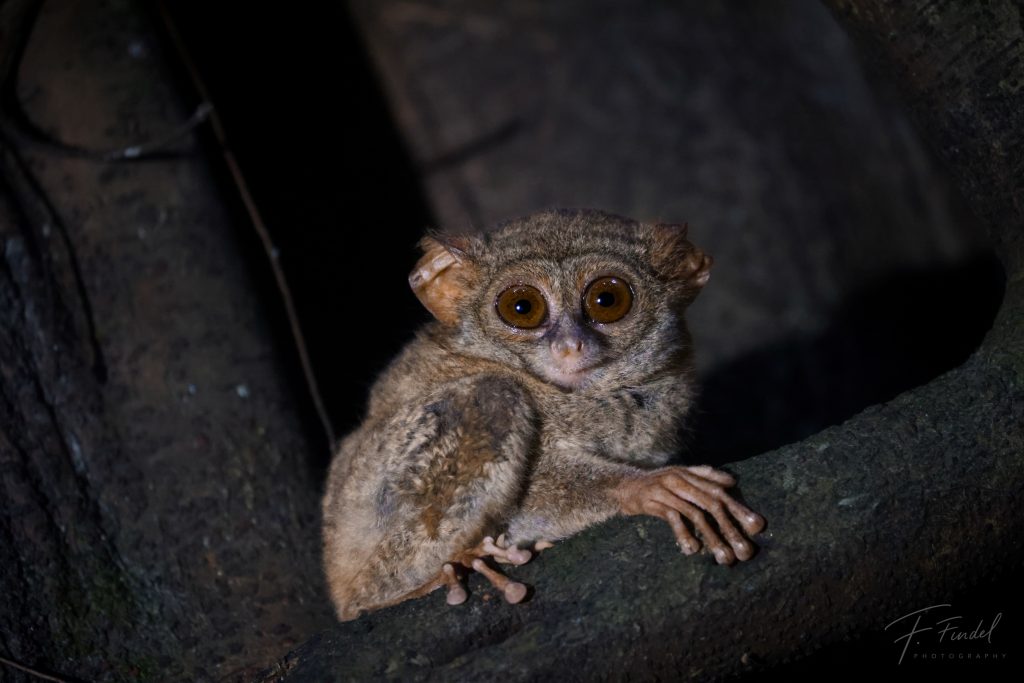
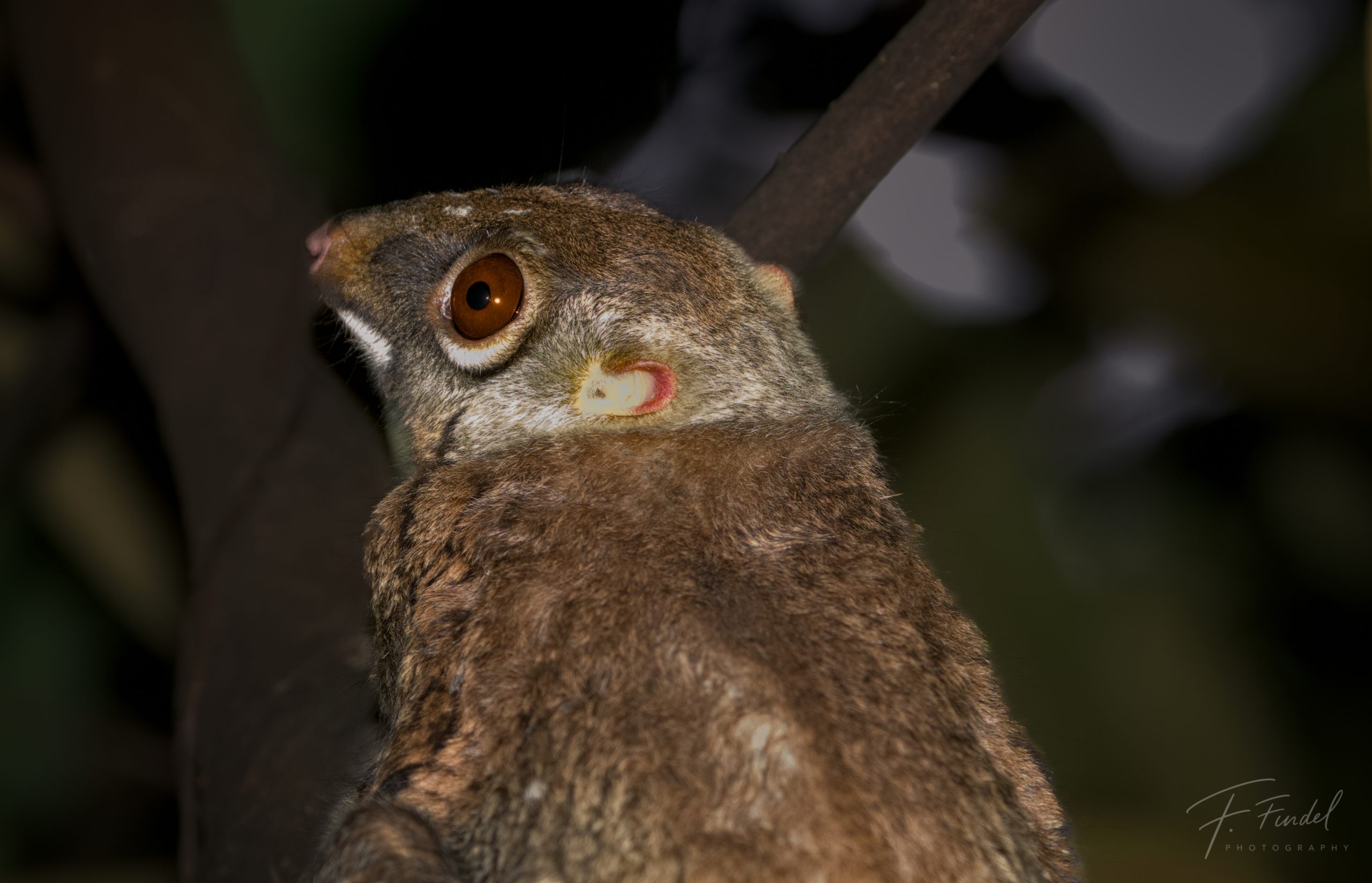
Gursky’s Spectral Tarsier
A 2019 study by Sharon Gursky found that the Spectral Tarsier, now Gursky’s Spectral Tarsier, uses ultrasound vocalizations. They described five different call types: chirps, twitters, choruses, doubles, and whistles. Chirps, twitters, and choruses extend from the audible into the ultrasonic range, while doubles and whistles are purely ultrasonic [8]. Some sounds are presumably even used for echolocation [10]. There are several known trees where these tiny primates are roosting, so it can be quite easy to find them. However, there are usually quite a lot of people around those trees, so we decided to look for some other, less well-known roosts. Luckily, we found one with one individual sitting outside. I was recording it while it started to duet with its friends nearby. I even recorded its extremely loud calls with a bat recorder, where the ultrasonic vocalizations were clearly visible on the spectrogram. Truly an amazing animal.
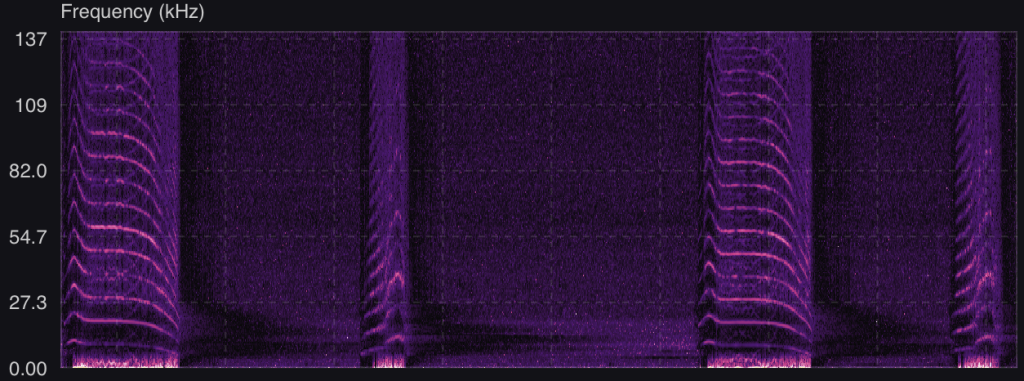
Duet calls of Gursky’s Spectral Tarsier
There are some other very cool mammals inside Tangkoko, like the Crested Black Macaque and the Sulawesi Bear Cuscus. We also went out at night to look for bats up in the trees, where we found Sulawesi Horseshoe Bats, Sulawesi Rousettes, Sulawesi Naked-backed Fruit Bats and some more Lesser False Vampire Bats. We also saw many beautiful kingfishers.
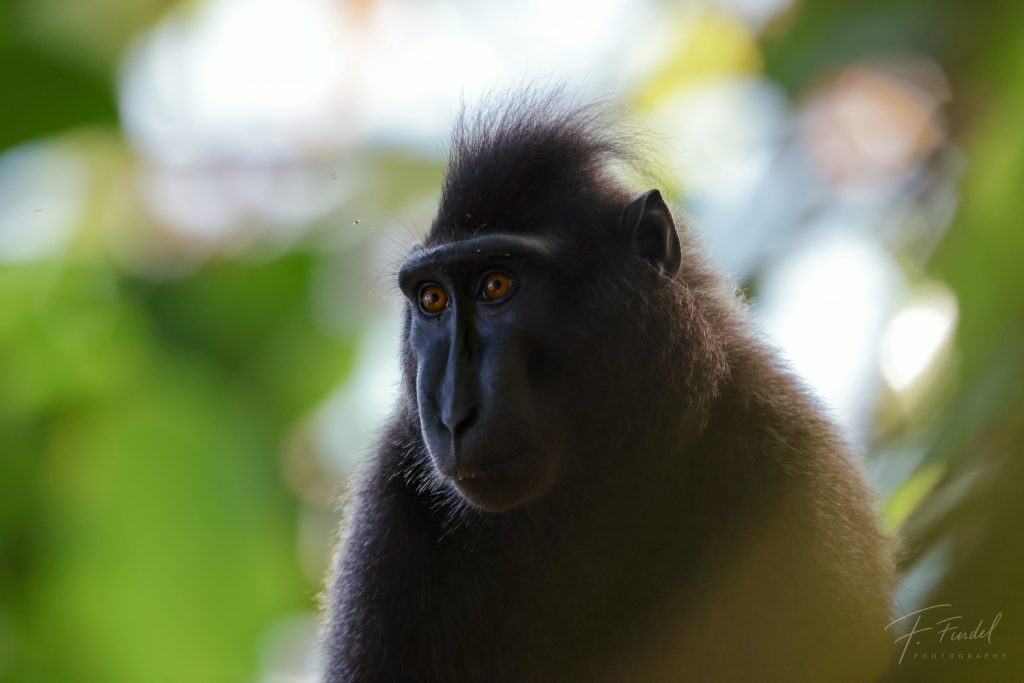
Crested Black Macaque
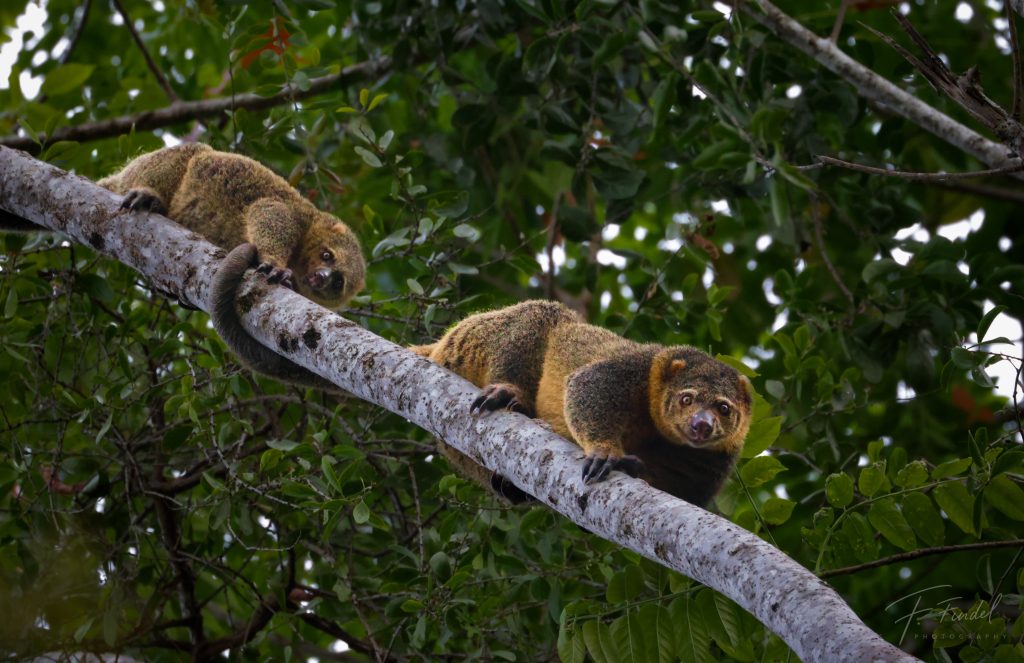
Sulawesi Bear Cuscus
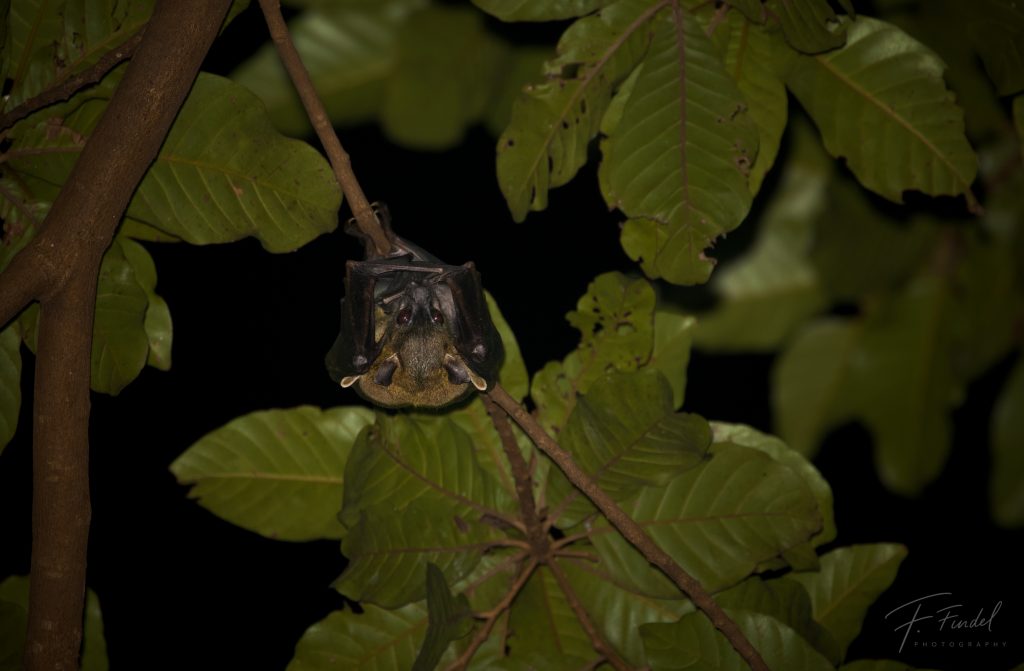
Sulawesi Naked-baked Fruit Bat
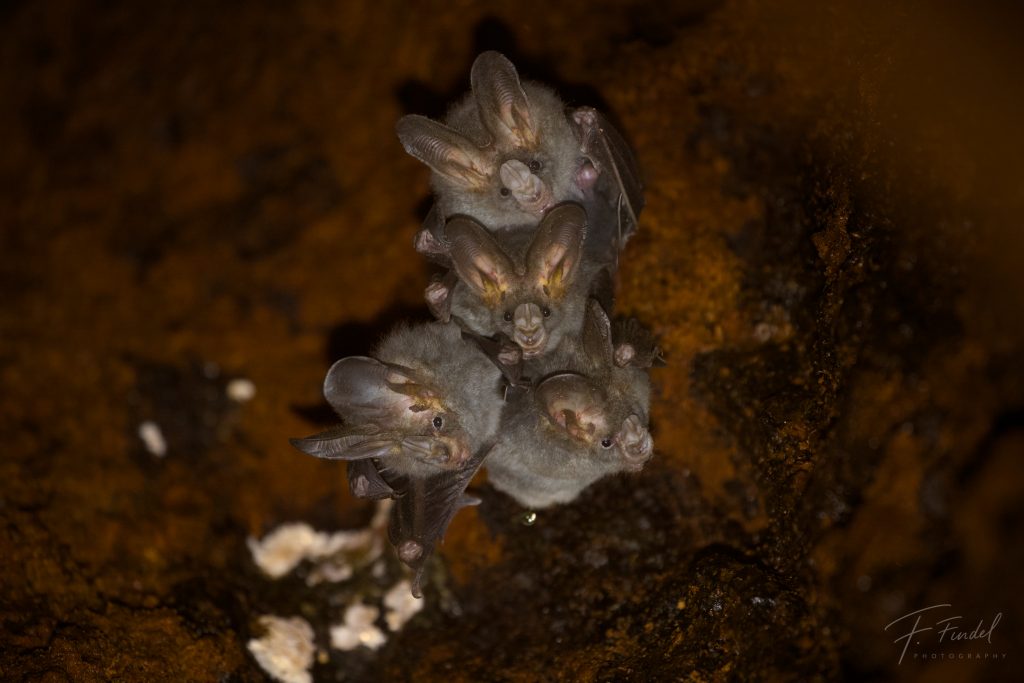
Lesser False Vampire Bats
Singapore
Since our flight back was delayed, we had to stay one full day in Singapore. At first I was annoyed, but then I found out that one can see an extremely cool animal there quite easily, which I had always wanted to find.
They are extremely cool looking (to me they look like aliens), they can fly and they use ultrasound calls. No, it is not a bat! I am talking about the Sunda Colugo, also called the Sunda Flying Lemur, which is neither a lemur nor can it actively fly.
In 2017, while a team of scientists were out on a night hike surveying bats, one of their microphones picked up ultrasound calls that were very different from those of bats. It turned out that these were vocalizations from Sunda Colugos. A paper published later showed that these calls had maximum energy around 37 to 39 kHz and suggested that they may function as cryptic anti-predator alarm calls, territorial vocalizations, or communication signals between animals in the dark canopy [11].
I managed to find two of them hanging on trees inside Bukit Timah Nature Reserve. They are very swift, if you look away for one second, they can suddenly be gone. I tried recording their vocalizations, but I think I only recorded some horseshoe bats. Still, it was a perfect final mammal highlight for the trip.
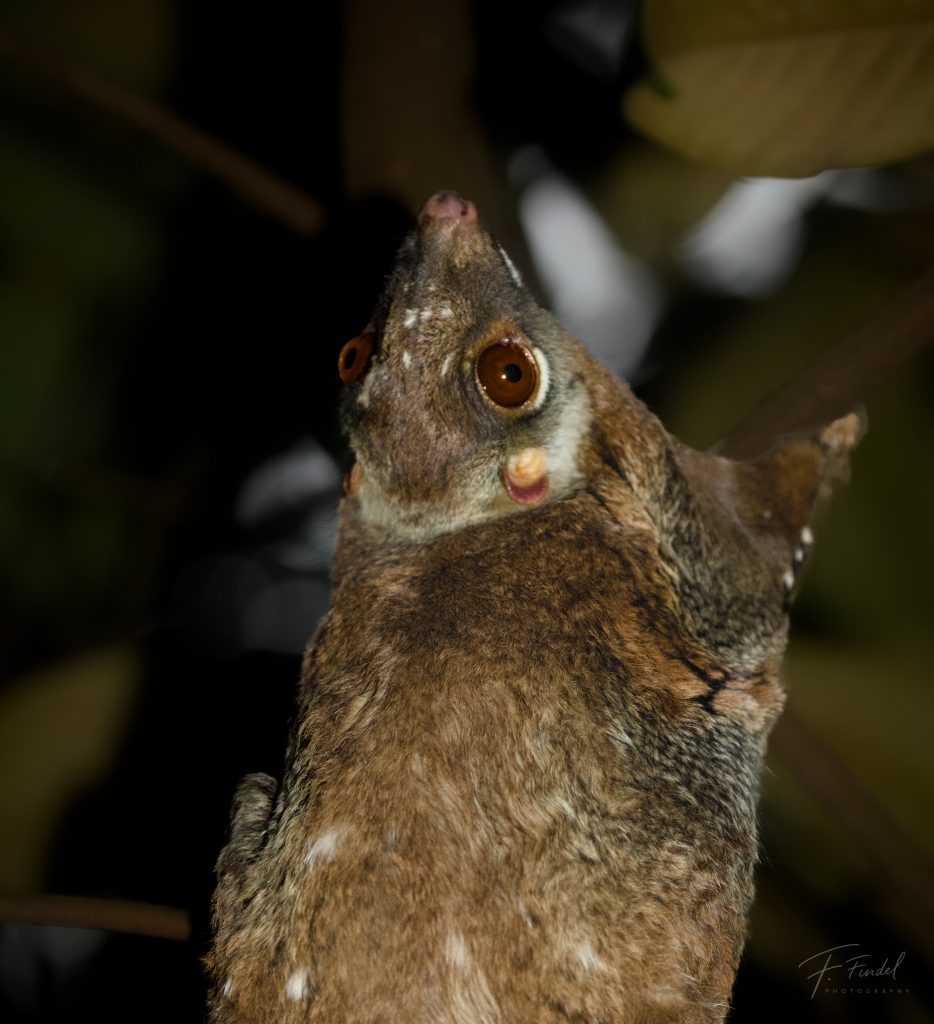
Sunda Flying Lemur
References
[1] Clarke, E., Reichard, U. H. & Zuberbühler, K. 2006. The Syntax and Meaning of Wild Gibbon Songs. PLoS ONE.
[2] Geissmann, T. 2000. Gibbon songs and human music from an evolutionary perspective.
[3] Matsudaira, K. et al. 2022. Introgression and mating patterns between white-handed gibbons and pileated gibbons in a contact zone in Khao Yai National Park, Thailand. PLoS ONE.
[4] New England Primate Conservancy. Pileated Gibbon, Hylobates pileatus.
[5] Kitti’s Hog-nosed Bat species overview, including distribution, size, taxonomy, and threats.
[6] Guinness World Records. Smallest mammal.
[7] Lee, B. P. Y. H. et al. 2015. Increasing concern over trade in bat souvenirs from South-East Asia. Oryx.
[8] Gursky, S. 2015. Ultrasonic Vocalizations by the Spectral Tarsier, Tarsius spectrum. Folia Primatologica.
[9] Xeno-canto taxonomy entry for Tarsius spectrumgurskyae, Gursky’s Spectral Tarsier.
[10] Gursky, S. 2019. Echolocation in a Nocturnal Primate? Folia Primatologica.
[11] Denzinger, A. et al. 2018. Ultrasound use by Sunda colugos offers new insights into the communication of these cryptic mammals. Bioacoustics.

Post author
Leave a Reply
You must be logged in to post a comment.