

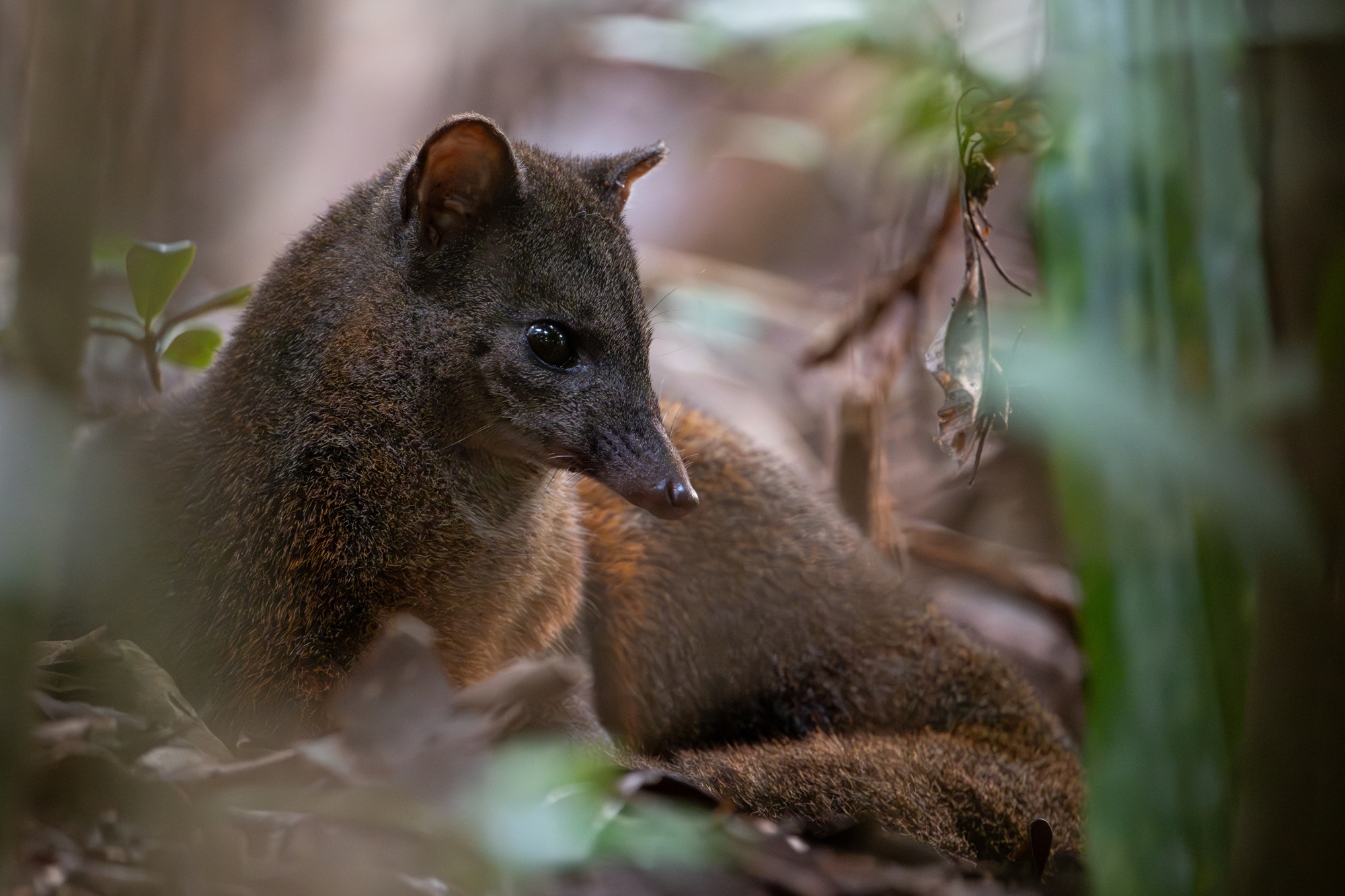
Madagascar: Special Mammals (& Birds) from the Remote North
Dipping my toe in, have been meaning to do a few mammal-centric write-ups but never have the time! PDF report is attached from an awesome tour I ran last year to Madagascar, but I have written some extra details about mammal watching in the below paragraphs which I didn’t include in the report itself.
Far beyond my expectations, amongst 38 species we recorded six (!?!) Malagasy carnivores, some particularly good lemurs like Aye-aye (real ones in the wilderness, not on an island), Madame Berthe’s Mouse Lemur and Coquerel’s Giant Mouse Lemur, plus had a wonderful showing of Giant Jumping Rat. I was doing most of my night work with the spotlight rather than the thermal, since lemurs are so easy by eyeshine and having the light on allowed me to do reptiles concurrently. I blame this for the lack of rodents on the list.
We intend to run this tour most years going forward, see https://www.ornis-birding.com/tours/madagascar-special-aye-aye for more details, but keep in mind it is as much about the birds as it is about the mammals!
Cheers,
Joshua Bergmark
AMBER MOUNTAIN
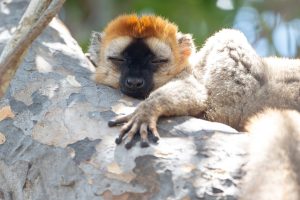
Didn’t have time this year for spotlighting, but a short afternoon quickly produced Sanford’s Brown Lemur near the top parking area.
BLACK LEMUR CAMP
Confusingly named, this is the place to see Perrier’s Sifaka, not Black Lemur! It is also not a camp, but a fancy lodge. The sifaka is easy during day walks with the lodge guides, and give intimate encounters. There are plenty of Ankarana Sportive Lemur sleeping hollows, but also several individuals which the local guides were identifying as a smaller undescribed sportive lemur, but to me the differences could have just been age-related. There is also the possibility that Daraina Sportive Lemur also occurs here, but the answer is unclear for now.
I spent a lot of time up the back at night on trails. The local guides were very happy to come with, seems they get few hardcore mammal watchers! Tavarata Mouse Lemur is common, whereas there was only a brief and distant sighting of what was most likely Ankarana Dwarf Lemur. Perhaps the first week of October is slightly too early for this species. Way up the back of the trails there were occasional Aye-aye bore holes in the trees.
TATTERSAL CAMP / AKIBA (DARAINA)
This area has changed hands recently, and is now owned by Akiba (the same company who run Black Lemur Camp and Marofandilia). Permission needs to be obtained from Akiba to visit this site (they will also be able to recommend agents for logistics), and there seem to be plans in the works to set it up properly in the coming years. Please do not be irresponsible and try to visit without obtaining permission, as this may result in them closing access to the reserve entirely. Best if they know how many people are coming on a yearly basis so that hopefully they can improve protection and setup of the site which is being hampered by illegal mining. I’m not sure if they will ever build a real lodge here, but it could become an excellent eco-camp with semi-permanent staff.
For now, the old camp is completely destroyed and we had to self-cater with tents set up on the parking area. We prearranged to meet a local team made up of young guys from the nearby villagers who knew the approximate Aye-aye territories. They scounted for a few days before we arrived, tracking two individuals, and finding an active nest with Aye-aye included while we were driving down from Black Lemur Camp. One of the team was watching from a distance that afternoon when suddenly a Fosa appeared, climbed the tree, and the Aye-aye bolted. Needless to say we couldn’t find it that night, despite myself and the team being out until 1am and then again from 4am onwards. There are a few dozen Aye-aye in this area, but the terrain is steep and coming across one at random whilst spotlighting I think is not hugely likely.
Thankfully one of the team was staking out a known old nest, and at dawn an Aye-aye appeared and entered. No Fosa appeared today, so at dusk we were all positioned nearby waiting patiently for the occupant to emerge. I’m not sure exactly what I expected, but I did not expect the events which actually transpired. Slowly clambering out into full view, the incredible Aye-aye proceeded to drop our jaws as he meticulously groomed himself in preparation for the night, this trusting but completely wild animal paying our group of bystanders little attention. Following a satisfying nose-pick with that magical elongated finger, he slowly wandered off and jumped leisurely between trees. Some of us followed him for an hour, watching with dimmed light as he rapidly tapped up and down the boughs of large trees before gnawing through to the tasty grubs inside with those huge incisors and probing finger. Absolutely incredible! A couple of times the miraculous creature came down low, using broken boughs are walkways and passing me within touching distance. One of my all time favourite mammal encounters.
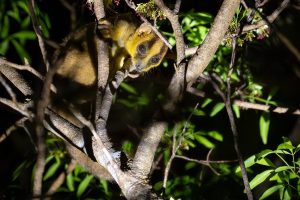
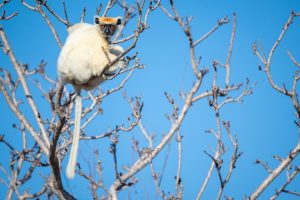
The forest has lots of Golden-crowned Sifaka, and smaller numbers of Crowned Lemur. Spotlighting produced many Daraina Sportive Lemur and the undescribed “Daraina Fork-marked Lemur”.
BLUE-EYED BLACK LEMUR
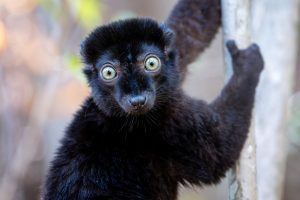
The information was not easy to find, but there are a couple of great spots to see Blue-eyed Black Lemur on the main highway going south towards Antsohihy. This is the golden GPS point: -14.326692, 48.029949. We arrived in the middle of the day, parked up, and one of the locals quickly appeared to take us into his forest where a family of very very very tame lemurs were encountered beautifully. Those eyes are just stunning.
BEMANEVIKA
This is primarily a birding destination, where people go to look for Madagascar Pochard. There is very little mammal watching information for the site, most birders seem to not be paying attention – shocking! Common Brown Lemur was the only diurnal mammal we saw. At night we were primarily looking for owls and chameleons, but during the many hours of spotlighting in forest near the lakes (-14.331460, 48.585052) I did briefly see one carnivore which I think was probably Fanaloka. There were very very few lemurs, none of which I confidently identified. At least one was probably a Greater Dwarf Lemur which has been seen here in the past. Hairy-eared Dwarf Lemur and an undescribed Sportive Lemur have also been reported previously.
For mammal watchers visiting this area, I would suggest trying the forest on the entrace road (-14.402539, 48.598085). We got stuck here on the way in for a few hours while a broken truck was moved off the road. We managed a short dusk walk where we saw several Greater Dwarf Lemur and what I think must be an Antafondro Mouse Lemur, but hard to work out which species is supposed to be present here. The long walk out in the study forest east of Bemanevika town itself is probably also very good for lemurs, but would be a whole-night job.
KIRINDY
This is a wonderful wonderful place. Sadly it is being slash and burned rapidly, to the point that some relatively recent satellite imagery I was using showed massive stretches of forest just a year or two ago which were gone during my visit. Fosa are still coming near-daily to scavenge around the research station, but not quite as reliable as in the past. Unfortunately many of the nearby lodges are now bringing general tourists for Fosa-spotting which has made the place a bit crazy, especially in late afternoons. Be aware that if you hire a local ranger to take you to the Giant Jumping Rat burrows, you will likely be sharing with a bunch of strangers with no optics or fieldcraft in sight!
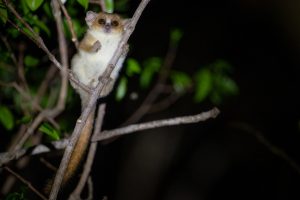
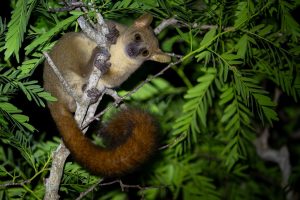
Anyway, enough negativity. The forest was truly astounding, and the spotlighting was insane. We stayed at Akiba Marofandilia Lodge, where Grey Mouse Lemur live in every bungalow. I had six in mine. There are plenty of Verreaux’s Sifaka and Red-fronted Brown Lemur around during the day. At sunset you can already see Pale Fork-marked Lemur and Red-tailed Sportive Lemur without trouble before dinner even starts, but the real challenge is finding Madame Berthe’s Mouse Lemur from amongst hundreds of Grey Mouse Lemur. They have a couple of very keen young guides, and just like up at Black Lemur Camp they were very happy to go hardcore with me all night. However it was quickly apparent that most of the Madame Berthe’s being called out were actually Grey, and by 1am on the second night I was starting to lose hope. By this point we had checked probably 150+ Grey Mouse Lemurs, but suddenly my light went on and the mammal in front of me was clearly dainty and orange. Like most tricky identifications, when you see a real one it is often quite obvious! It was not far from the lodge, only about 200m east of the dining area. We also found a single Coquerel’s Giant Mouse Lemur, much further away from the lodge. My guide was very excited, it turns out only one of their staff members had ever seen this one before (I think usually they are spotlighting just around the buildings).
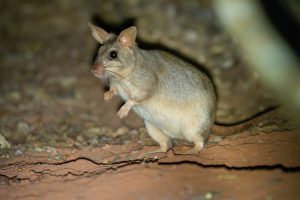
At Kirindy Forest Reserve itself, we spent some time around the research station waiting for Fosa to appear. Nothing on our first afternoon, but at dusk we were taken to a Giant Jumping Rat burrow. The rangers had a method where they turned the torch on to check once every five minutes, but I told them to forget about it and we just waited in the dark with the thermal. Eventually the numerous Bastard Big-footed Mouse were replaced with a pademelon-sized rodent, which was quite confiding for several minutes. A walk with the head ranger further afield produced Western Fat-tailed Dwarf Lemur (mid-October is still a little early in the season for this one, so a good find). He really knew his stuff, and said nobody has definitively recorded Madame Berthe or Coquerel’s anywhere in Kirindy Forest Reserve for several years, citing reduced insect numbers and a drying out of the forest. Was very happy to see my photos of both from Akiba. Both species clearly in a lot of trouble.
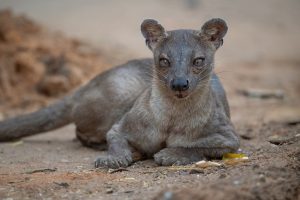
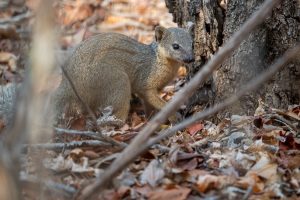
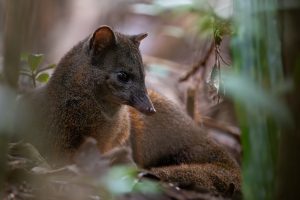
Our first Fosa sighting was around 10pm, when we spotted a subadult individual walking down the road towards the camp. It disappeared into the forest, but then appeared five minutes later at one of the drinking bowls which had been set out near the staff quarters. Next day we went early morning and had a great encounter with an adult female Fosa who hung around for several hours trying to scrounge up breakfast. We took a birding walk and happily stumbled across a party of Narrow-striped Bokyboki / Boky-boky about 300m south-east of the ranger station.
MASOALA
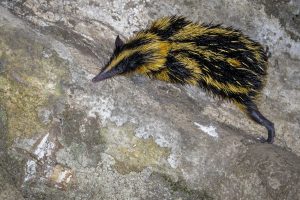
We planned four nights at Chez Arol, but had to evacuate after three nights due to an incoming cyclone. White-headed Brown Lemur not common, but seen twice around the lodge. After dark we easily saw Masoala Sportive Lemur, Masoala Woolly Lemur, Greater Dwarf Lemur, and the undescribed “Masoala Mouse Lemur”. There are many Lowland Streaked Tenrec in the garden, just do a walk along the dining room path a few hours after dinner when everyone is in bed and they become much more obvious.
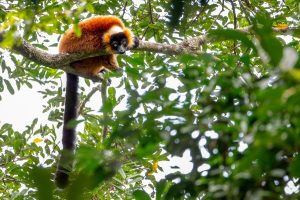
There is one main loop walk which starts at the back of the lodge and heads uphill before turning left and eventually leading back down to next lodge north along the beach from Chez Arol. This is where we did most of our birding, mammal watching, and spotlighting. Red Ruffed Lemur common along the trail during the day. Wasn’t trying hard for rodents, but did identify Webb’s Tufted-tail Rat and White-bellied Nesomys. What was really exciting were the carnivores.
I have had several people ask me what the hell I did to get this haul, but honestly I don’t know. Pure luck I guess. The day was overcast, calm, nice conditions. It was about 10:30am. We were up the back of the loop trail at -15.702439, 49.965855. I see a mammal run into a log. It comes out on top. It’s a Brown-tailed Vontsira. We all see it beautifully. It runs off, we are looking at birds, then five minutes later I see another mongoose. But this one is Ring-tailed Vontsira. He’s a bit too fast for photos, but again we see it well as it moves along the side of the hill. We head back for lunch and go up the trail again around 3pm. We’re birding and local guide Armund runs up to us – he had just seen a Falanouc cross the track! We leave the group on the trail and run down the side of the hill to see if we can find it or herd it back. He whistles at me, I look over, and this incredible creature is just lying on the ground under a bush. I watch it while the group repositions along the trail to a position where they can see the animal. After a few minutes it stands up and scurries off down the hill. Unbelievable. Not that this will help anyone, but here’s the point: -15.707076, 49.965513. We go to have dinner, and I head out again. Eyeshine on the trail, barely 300m away from the lodge oh, it’s a Fanaloka. Pretty good 12 hours if you ask me!
Madagascar Special 2025 (Ornis Birding Expeditions)

Post author
4 Comments
-
-
Claudia W.
Hi,
I was in Montagne d’Ambre about a week ago. We travelled independently and had no such problems, but were offered a 4-5h walk without even specifically asking for a long one. It probably helps if you mention you don’t just want to see the usual tourist stuff, but some specific species.
Camping in the park is also still allowed, although we unfortunately didn’t do so. Should be quite productive for lemurs (and rodents?), plus both Falanouc and Fossa have been seen occasionally at or close to the campsite.


Leave a Reply
You must be logged in to post a comment.
AntenneZoo
Ho Joshua ! Thanks a lot for your report,
I have been twice in Madagascar and I plan to go back there in 2027.
I have never been to Montagne d’Ambre, and reading some reports or google feedbacks, I see many tourists saying that they just were able to have a 1.5 hour guided visit, not much.
I remember ten years ago, it was possible to even camp in the park and have a overnight stay.
Do you know if it is still possible ?
Thanks